Posts Tagged ‘Improv’

Constellation – 3rd October 2025

Christopher Nosnibor

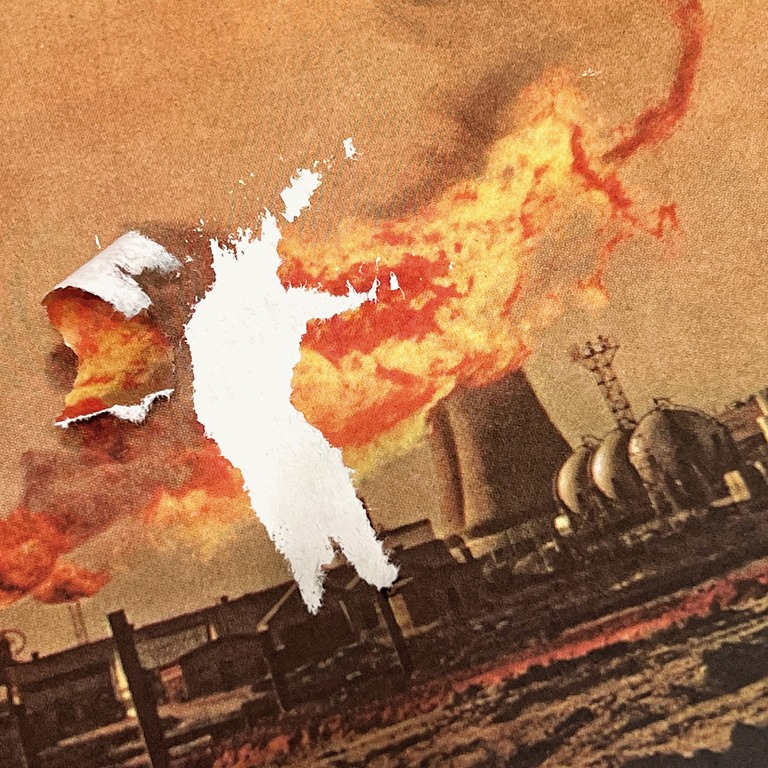
The third album by The Dwarfs Of East Agouza (Maurice Louca (Lehkfa), Alan Bishop (Sun City Girls, Sublime Frequencies), and Sam Shalabi (Land Of Kush) promises ‘a focussed set of rhythmic psych-trance free/improv’.

As their moniker and the album’s title suggests, they demonstrate a collective interest in urban myths, the strange, the embroidered and embellished tale, perhaps spun with a twist of esoteric mysticism, but at the same time, aren’t entirely serious about it all. That is by no means to imply they’re not serious about the music they make, even when the pieces have titles like ‘Goldfish Molasses’, ‘Saber Tooth Millipede’, and ‘Swollen Thankles’. Because it is possible to be intense and serious and at the same time retain a capacity for humour, a sense of the absurd.

Sasquatch Landslide is an album that’s knowingly ‘out there’, but at the same time, it’s clearly the work of a collective who are completely immersed in the world they’re creating through a conglomeration of sounds which border on the transcendental. Elongated, quavering drones and an array of percussion merge in a haze to forge loose, yet curiously intense grooves. The aforementioned ‘Sabre Tooth Millipede’ is a full-on wig-out jazz frenzy played with the psychedelic loopiness of Gong as their most far-out, and at the same time, amidst the twanging and clattering, there’s something of the spirit of The Master Musicians of Joujouka about it. For an added addling bonus, there are tempo changes galore, and some parts where there are multiple tempos crossing one another simultaneously as the players seemingly detach from this physical realm into different plains of consciousness, separate from one another yet still connected by some kind of telepathy. Because however weird and disjointed it gets, somehow it works.

‘Double Mothers’ goes spaced-out, haunting, and atmospheric. On the one hand, it’s one of the most overtly jazz pieces on the album, but the wandering, reverb-soaked saxophone weaves its way through a nagging twang of a distinctly Eastern influence, while a pulsing heartbeat rhythm creates an underlying tension.

Single cut ‘Titular’ is busy and adds an easy listening, lunge-like organ trill which is completely at odds with the hectic hand drums and frenzied fretwork. They really cut loose on the ten-minute ‘A Body to Match’, stretching things out in all directions – tempo, texture, detail, serving up a pan-cultural smorgasbord of noodlesome improvisation. There, they slowly pick apart the component elements, a slow-motion explosion or deconstruction of the composition, each part slowly moving further from the rest. ‘Goldfish Molasses’ slowly melts, a plodding beat reminiscent of ‘What A Day’ by Throbbing Gristle provides the spine for this slow, pulsating Industrial thudder, where a woozy bassline undulates in the background, and incidental noises and chattering yelps fill the space behind some indecipherable vocal.

Sasquatch Landslide is big on warped, looping drones and layers of intricacy upon layers of intricacy, which weave a shimmering sonic cloth that ripples and shifts before the eyes – and ears. Time itself bends and stretches, taking on an almost elastic quality as the threads unravel to reveal new layers and dimensions. One can feel the instrumentation expanding outwards into infinity – and infinite reverb – in the same way that the universe is continually expanding, only in an accelerated timeframe. For all of its abstraction, Sasquatch Landslide provokes quite visual interpretations of the sounds emanating from the speakers. I expect to have very strange dreams tonight after this.

AA
08 - The Dwarfs Of East Agouza cover art

Constellation are releasing the second album from the Beirut-based avant-rock sextet, SANAM this fall – who merge psych/kraut, improv/skronk, electronics, goth, and jazz elements with traditional Egyptian song and modern Arabic poetry in a compelling brew of widescreen hybrid avant-rock.

The new album, Sametou Sawtan expands on the genre-bending exploration of sound, memory, and cultural identity from their acclaimed 2023 debut Aykathani Malakon on Mais Um Discos, and is already garnering accolades from Uncut, Songlines, and Loud and Quiet.

Today, they share the track and video ‘Habibon’, a slow-burning, autotune-doused freakout, which follows their previously arresting lead single ‘Harik’ -  check out the new video below.

AA

In support of the new album, SANAM has announced headline dates in the EU and UK from October-December.

SANAM LIVE

Oct-Dec 2025 • Europe and UK

09.10 Nantes (FR) Stereolux

14.10 Geneva (CH) Cave 12

15.10 Grenoble (FR) Le Ciel

16.10 Lyon (FR) Le Periscope

17.10 Briançon (FR) Bruit Blanc

18.10 Gap (FR) Le Gorille

22.10 Paris (FR) Petit Bain

23.10 Brest (FR) La Carène

24.10 Ghent (BE) De Koer

21.11 Milano (IT) Spazio Teatro 89

22.11 Ravenna (IT) Transmissions

28.11 Mestre (IT) youTHeater

30.11 Leeds (UK) The Attic

01.12 Glasgow (UK) The Flying Duck

02.12 Salford (UK) The White Hotel

03.12 Bristol (UK) Strange Brew

04.12 Brighton (UK) Patterns

05.12 London (UK) Rich Mix

AA

images.disco

SANAM photo by Karim Ghorayeb

28th July 2025

Christopher Nosnibor

Beauty, as they say, is in the eye of the beholder. Certainly, it requires a fairly specific subjective standpoint to hear the beauty in a bleeping rush of effervescent electronic froth, but there is something in it – and yes, it is intense – to the extend that it’s like a fizzing chemical reaction, like vinegar and bicarbonate of soda, exploding in your brain. And it’s quite a high.

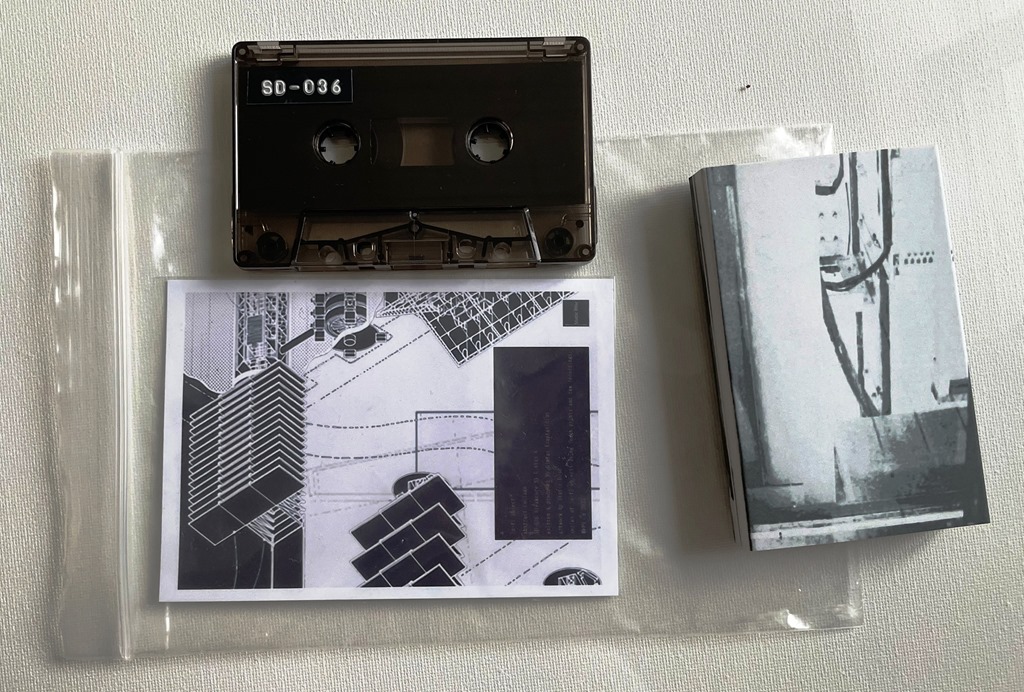
Intense Beauty finds Gintas Kraptavičius (Gintas K) in his most common setting, with the album being fully improvised, ‘recorded live, using computer, midi keyboard & controller’. Recorded in June 2025 of this year, by the power of the Internet and micro-labels, it was released as a limited cassette on Tokyo-based label Static Disc just weeks later on 10th July, before also becoming available on Gintas’ own Bandcamp page.

As is common to many of Gintas K’s works recorded in this manner and with this – seemingly unique setup, there’s something playful, even joyful and uplifting about the sound. It is chaotic, but it’s also carefree, and it’s not remotely dark or heavy: there’s nothing harsh or abrasive to be heard here. ‘intense’ is skittery and skittish, off-key electric piano thumps and stomps erratically, glitching in and out throughout, while cellular sounds fly around all over like plankton in a storm before gradually slowing, tinkling and flitting at a more sedate pace until grinding to a halt.

‘harmony’ isn’t particularly harmonious, instead merging static and drone with groaning whirrs before yielding to discordant bent notes playing across one another. One thing that is a constant throughout Intense Beauty is a sense of movement. There isn’t a moment is stillness, as sounds and ideas flit from one place to another with no discernible flow, and th9is is nowhere more apparent than on the shifting sonic collage of ‘gal bet’. It’s hyperactive, and should be exhausting, but the sheer energy is contagious and uplifting.

Watching the accompanying video of Gintas recording for the album is illuminating, particularly the vigour with which he plays, simultaneously striking keys on the keyboard with hands, wrists, forearm, seemingly at random, but with remarkable speed and dexterity, while cranking knobs hard and fast: the camera and table shake under his frenetic kinetic activity. K isn’t one of those who creates sound simply by pushing buttons here and there: this is a full-body physical performance. This, too, is an example of intensity, and the artist pours it into the act of artistic creation.

There are a lot of experimental electronic artists around, but no-one else sounds quite like Gintas K.

AA

AA

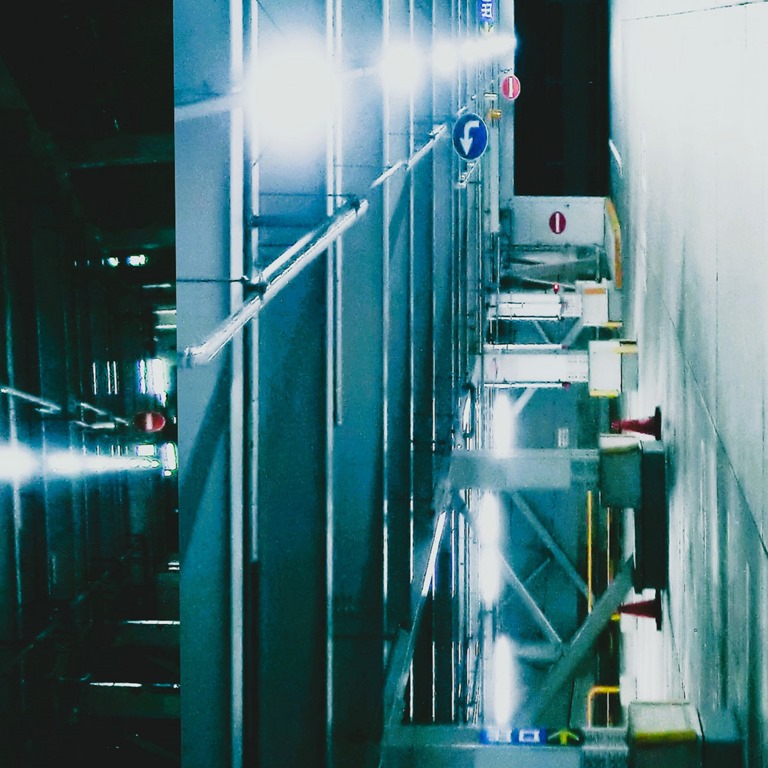
a3925363230_10

16th June 2025

Christopher Nosnibor

Gintas K’s latest offering was recorded live, using computer, midi keyboard and controller in January 2025, and first released by Japanese label Static Disc in May.

It’s worth perhaps mentioning that ‘Breakcore’ is – and I shall shamefully quote from Wikipedia here – ‘is a style of electronic dance music that emerged from jungle, hardcore, and drum and bass in the mid-to-late 1990s. It is characterized by very complex and intricate breakbeats and a wide palette of sampling sources played at high tempos.’ In the main, not really my personal field of expertise, or particularly within the remit of Aural Aggravation.

But this is a Gintas K album, and the nine pieces are typical of his style, combining experimentalism and the application of software and midi / laptop setup, producing a range of glitchy, frothy, gurgly sounds which stop and start intermittently, unpredictably. His live and improvised works always come with a sense of unpredictability, of spontaneity, while bearing his distinctive sounds. One of the key focuses within K’s work is on detail, zooming in on microtonality, granularity. When I say it sounds ‘bubbly’ or ‘frothy’, I mean it’s the sound one might consider the equivalent of the visual experience of slowly swirling a latte or a pint of ale, or hyperfixating on the bubbles in a bath. This is not, however, the gentle swill and flow of currents, but a frenzied effervescence, like the reaction between bicarbonate of soda and vinegar. And look long enough and hard enough, and patterns begin to emerge.

Listening to the bubbling blitzkrieg of digital clicks, beeps, and fizzing of any work by Gintas K can be stimulating to the point of eye-popping discombobulation. It’s almost too much – and this is nevermore true than the experience that is Breakcore. There are beats present – but they’re composed not of beats in the conventional sense, being neither rhythmic nor percussive, either from an analogue source or a digital sampled source or emulation. These are flickers, pulses, rapidfire stutters, hard sounds which replicate the essence of a beat without being a beat, per se. For example, those of a certain age may recall the successive ‘pink-pink-pink’ chattering digital babble of dial-up. Few would necessarily consider those sounds beats in context, but… yes, they have a certain beat-like quality. And this is how the beats often emerge from the clicks and pops, moans and drones or another quintessential Gintas K demonstration of circuit meltdown as an artform.

I had never considered his work in a ‘dance’ context before, and still wouldn’t: one feels as if the title is perhaps a shade ironic. But the tempo is certainly high and the beats are complex and intimate, emerging as they do from the thrum of what sounds like a revving engine, the whirr of an old hard-drive, the click of a CD driver whirring into action. Every second of this release sounds like some kind of digital or mechanical malfunction, as tempos whirl and blur, drawl and slow. Scrunching, crunching, twanging, springing, stammering and stuck, it’s a relentless attack of wrong sounds. But emerging from all of it, there are erratic beats, like a succession of deliberately jarring jazz fills and simply wild judders.

It is relentless, and it’s complete overload. The nine tracks run for a total of twenty-nine minutes: its intensity is such that you feel as if your brain is starting to melt after the first ten. In short, Breakcore is truly wild, and it’s not remotely easy or accessible – but it absolutely encapsulates everything that defines what Gintas K’s does.

AA

AA

cover

Not Applicable – 23rd May 2025

Christopher Nosnibor

For about five minutes, AI looked like it may provide some entertaining diversions in terms of creative potentials. It wasn’t so long ago that it produced glitchy, idiosyncratic writing and wild art that was so wrong it was hilarious, and lame synth-loop electronic music which had neither style nor substance. It didn’t look like the threat to humanity that dystopian sci-fi novels had portrayed.

But then more information began to emerge about how AI was ‘learning’ by essentially stealing from all available sources. AI is the worst plagiarist imaginable, and nothing is safe or sacred. Then there came the reports of the vast amounts of energy, and water, required to power it, and it started to look like AI will doom the planet by sapping its resources instead of going rogue and obliterating humanity. But then…AI evolved, and fast. In no time at all, people stopped having additional limbs and appendages, the writing transitioned beyond repetitious babble, and people have begun to use to AI chat as a substitute for expensive therapy, despite reports of rogue AI advocating suicide… and as its usage accelerates and it morphs into the nightmare of sci-fi dystopia we’d dismissed just a few months ago, so the use of energy and water increases exponentially. One way or another, it does now look very much like AI will finish us.

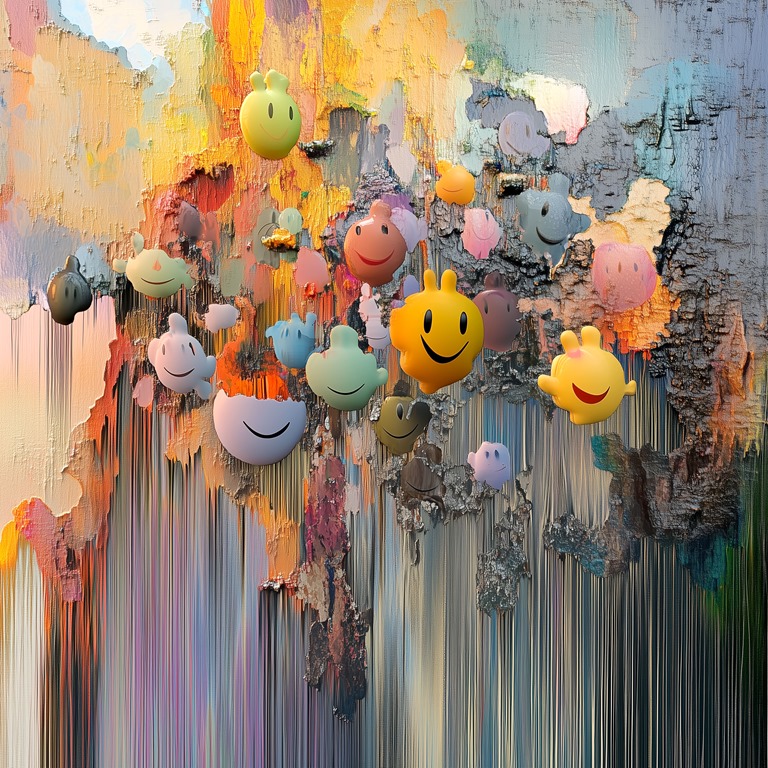
And so there’s a certain discomfort in approaching Put Emojis On My Grave by the spectacularly-monikered Ancient Psychic Triple Hyper Octopus, an album which is sold on the way it ‘boldly explores AI and improvisation on an album of freely improvised, experimental electroacoustic music’.

It features, as the press notes put it, ‘a new lineup of celebrated, British musicians’ (Alex Bonney (trumpet, bass recorder, Strohviol), Will Glaser (drums and percussion) and Isambard Khroustaliov, aka Sam Britton (electronics), and ‘ claims to forges ‘a new musical language’, with an album ‘which eschews traditional musical composition, seeks instead to “adopting the language of AI’s deep learning failures and glitches”, attempts to imagine how AI could make a positive contribution to the creative process’.

It’s hard to know how to really assimilate this. The six compositions which make up Put Emojis On My Grave are fine examples of exploratory jazz, with wandering trumpet tooting in meandering lines across clanking, clattering abstract percussion which sounds like cutlery and wind-chimes being knocked about while bleeps and bubbles interject seemingly at random. It has that avant-jazz, experimental, iprov feel which is in some ways quite familiar in its own strange way. That is to say, while it’s niche, the sonic experience is very much representative of a certain field. A field filled with jackrabbits, apparently.

‘Goats on Helium’ is bubbly, bibbly, scratchy, scrapy, wheezy, groany, a splatter and clatter of sounds piled up and colliding all over, and it gets pretty messy over its six and a half minutes. Warping drones and scratching, gargling abstract drones twist around deranged brass tootlings and crashing cymbals on ‘The Adiabatic Flux Differentials of the Id’, and I would challenge anyone to find a title that’s posier, more wankily intellectual than that this year. And while it’s a bit jazz-jizz in places, it’s certainly better than the title suggests.

This is, in my opinion, a fair summary of the album, a work which is concerned with space and time – not outer space, but inner space, the space which our minds explore in reflection like the clatter of 1,000,000 bongos, the space – or distance – between concept and execution, and virtual space, those our other selves occupy, both in the moment and, subsequently, leaving echoes and traces in infinite corners of the virtual world. It’s impossible to discern where the musicianship cedes to AI intervention here, which is certainly in its favour – and if Put Emojis On My Grave is used to train generative AI, then it could confuse it for a while, making for some interesting results. And Put Emojis On My Grave is certainly interesting.

AA

Ancient Psychic Triple Hyper Octopus – Put Emojis On My Grave cover 4000px

Nakama Records – 29th November 2024

Christopher Nosnibor

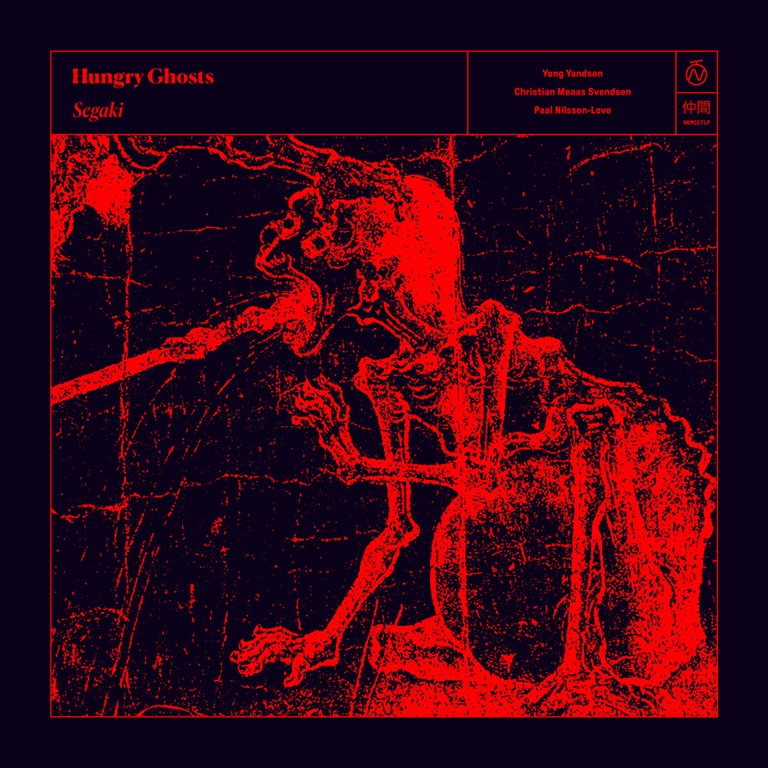
Is there such a thig as music-listening burnout? Probably not, but reviewing a new album on a more or less daily basis is knackering. There’s listening to music, and then there’s listening to music: one is passive, while the other is very much an active pursuit. But engaging – and fully engaging – with different forms of music can be strong and vigorous exercise for the mind, and when presented with music which is overtly challenging, there is a sensory workout involved, too. And Segaki, the second album by the Norwegian-Malaysian trio Hungry Ghosts, consisting of Malaysian tenor saxophonist Yong Yandsen ‘accompanied by the Norwegian powerhouse duo of Christian Meaas Svendsen on double bass and Paal Nilssen-Love on drums’ is most certainly challenging.

As their biography attests, ‘their debut record has been described as an album with an ‘unstoppable energy’ and like actual hungry ghosts (my italics) — the unfortunate souls who are reborn as pitiful creatures into their own miserable realm, punished for their mortal vices — the trio has an insatiable appetite for more… This appetite was temporarily quenched during their European tour in 2022. As part of this tour they played in a small Austrian town by the name of St. Johann in Tirol. That concert was recorded, and that recording became the raw ingredients for this release. Now, after having gone through a rather extensive two year long digestive system of listening, mixing, listening, mastering and listening again, the trio has brought us their second dish of hard hitting improv.’

The digestive system must be in quite a state if the album’s first track is anything to go by: ‘In search of filth like vomit and faeces to eat’ is sixteen sprawling minutes of frantic percussion and discordant sax frenzy. The title conjures an array of disturbing scenarios, from the dog, driven by stress, boredom, or anxiety to eat bodily waste, to something altogether more depraved and disturbed. The music itself provides no answers, only a crazed sprawl of rabid jazz which wanders and lurches in all directions, but amidst the mania, the phrase ‘shit-eating grin’ pops into my head uninvited. Of course it did. Some swear by various narcotics to open the mind, but for my money, music is the most powerful gateway to making unexpected associations and triggering recollections and reminiscences from almost out of nowhere. It’s not a grin I’m wearing by the end of this wild excursion, though, but a grimace, white knuckles gripping the sides of my chair as I exhale slowly. My head’s swimming, and I’m dizzy from the rollercoaster ride, and it’s the phrase ‘eat shit and die’ which bubbles up into my mind from my churning innards.

The viscerally continues on the altogether shorter ‘Small bits of pus and blood’ which completes side one. It’s sparser, atmospheric, uncomfortable. The percussion is altogether more restrained, yet dominates the minimal arrangement, and rhythms fleetingly emerge from the erratic clomps and clods before petering out to a lone trilling whistle.

Flip to side two and ‘Mountain valley bowels full of grime’ starts quietly but soon builds to a sustained crescendo, and keeps on crashing and braying away with a cranium-splitting intensity for almost twenty-two minutes. The drums explode in a perpetual roll, the double bass runs… run and run beneath sax mania that sounds like a jet engine.

‘A great decomposing odour’ delivers the final blow: at a minute and fifty-three seconds long, it feels like a jazzed-out sucker punch which takes unfair advantage of the dizzy, bewildered state one finds oneself in having seemingly, unknowingly, fallen down the mountainside into the valley and into the grime head-first.

The titles feel as if they belong to a gritty, grimy, sludgy metal album, but what Hungry Ghosts evidence on Segaki is that darkness, weight, intensity, and befouled viscerality are not exclusive to the metal domain, and that it’s possible to articulate sensations with a rare physicality without the need for distortion or snarling vocals – or, indeed, any vocals at all. With Segaki, Hungry Ghosts achieve a level of intensity and a power which is intensified by just how unexpected it is.

AA

a4155131662_10

Thanatosis produktion – 24th March 2023

Christopher Nosnibor

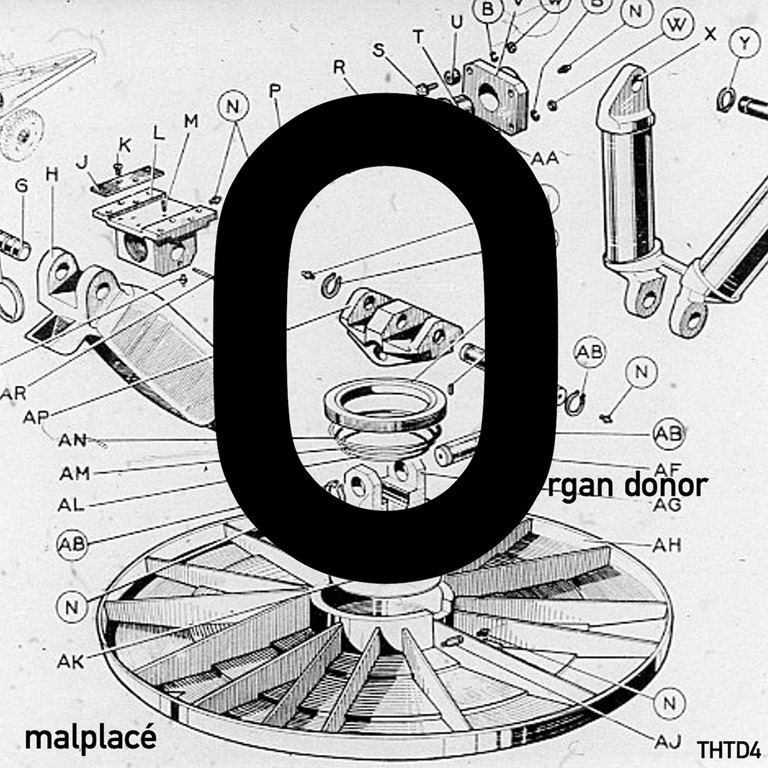
Having frothed with enthusiasm over Mammock not so long ago, I was particularly thrilled to discover Organ Donor, a Swedish/Greek outfit featuring members of Viagra Boys, Grismask, VÖ, Mammock, Angles, Fire! Orchestra, Aurora Ensemble, CBVB and the Mute. Admittedly, I’d expected something more guitar-driven and noisy in the rock sense, but expectations are best when confounded.

Malplacé evolved through improvisation, resulting in what they describe as ‘6 diverse yet coherent tracks, spanning from instrumental kraut, to mystic themes perhaps reminiscent of John Lurie or Loren Connors, to dark, minimal pulsating improv and punkish, full-on, noise outbursts.’ Diversity and coherence tend not to converge too commonly, and in truth tend to sit at opposite ends of the spectrum.

As the rippling vibes and subtly trilling horns of the abstract jazzy post-rock of the first track, ‘A Sleeping Beauty’ meander their way from the speakers, I’m struck by just how far a cry this is from Mammock and The Viagra Boys, and, on reflection, this is something to be pleased about. Why have a collaborative side project that sounds like your main project? It’s like having a hobby that’s the same as your dayjob. You can insert your own example here, because, well, I can’t help but feel that too labour  the point with explicit examples would be crass.

‘Touch’ spills jazz juices across a chiming guitar that jangles over an insistent yet mellow groove, where post-rock meets psychedelia and krautrock. Sometimes, for a moment, I find myself wishing there was slightly less sax, but then, again, the overloading nature of the jazzery is what makes this what it is, and things get really scratchy and discordant on the ten-minute ‘Stemless’. This is one of those freeform pieces that hurts the brain. Everything jars and flits, and toots and parps, squeaks and squawks and twangs and pings, like rubber bands being stretched and plucked across pans and bin lids, bowed notes bend, drone and grind, and it sounds more like a scrap than a song. It groans and wheezes and stutters and heaves, to the point that it’s enough to induce motion sickness.

‘A Sleepwalking Beauty’ provides a welcome moment of rest and tranquillity, before ‘Power Tools’ goes all out on the avant-jazz noise frenzy trip. It’s noisy, noisy, and noisy, a wild chaotic and cacophonous blast and an instant headache which feels a lot longer than a minute and a half.

In contrast, ‘Sci Fi Marmots’ is slow and smoky, an odd yet sedative piece where everything melts away into a haze. I’m tired, and need sleep. I’m all the more tired after experiencing the bind-bending chaos of Malplacé, but have to hand it to the guys in Organ Donor for creating an album that has the capacity to both exhilarate and drain the very life through aural excess. It’s a significant achievement.

AA

THTD4_art

Northern Spy – 24th February 2023

Christopher Nosnibor

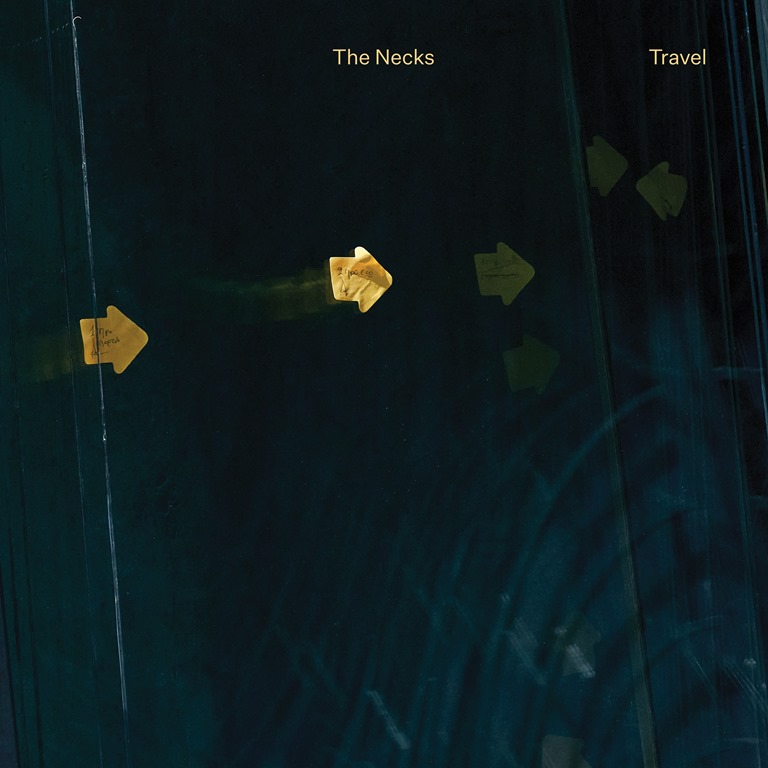
The Necks are never dull: an act that can be depended upon to deliver something different, which is no small feat for a band who’ve been going for more than thirty years. Travel sees them revisit the fundamental methodologies of Unfold, released in 2017 on Stephen O’Malley’s Ideologic Organ label. Admittedly, it’s not an album I’ve revisited all that many times since I wrote about it, but then, that’s true of many records I’ve appreciated. Some of it’s a time thing, but some of it’s an instrumental / jazz thing. I prefer to engage in the moment – and then the moment passes, and I too move on.

Where this album different from the majority of their others is that the format was integral to the form of the content, as the accompanying blurb points out, proving ‘four sub-20-minute pieces – instead of the typical 60+ minute arc for which the band is known – along with an obfuscated track list which leaves play order to the listener’s hand.’

Travel isn’t quite a straight live improv set, but does, they feel, come closest to recreating the live experience, and was recorded – save for some light overdubs and post- production – primarily live. And it’s very much oriented towards slow grooves and rhythmic repetitions. It’s hazy, mellow, almost sultry.

Side one is occupied by the twenty-one-minute ‘Signal’, built around a repetitive bass cycle and some rolling piano that brings with it a classical element, and, propelled by some busy hand drumming which transports the composition some way from what one would ordinarily expect off jazz-orientated works and into the realms of ‘world’ music (a term I try to avoid, with its connotations of western superiority and self-centredness, but sometimes short-cuts are necessary).

On side two, ‘Forming’, which again stretches languorously past the twenty-minute mark, is led by ripping piano, underpinned by some crunching bass stutters and rumbling groans. It’s jazzy in a psychedelic, Doorsy sort of a way. In this sense, it feels more like an extended mid-song workout than a piece in its own right, but it’s both pleasant and tense at the same time as it builds to a crescendo that never fully materialises.

‘Imprinting’, the album’s shortest cut at just over seventeen minutes, brings the multi-layered percussion to a more prominent position, and clanks and trembles along with almost hesitant-sounding keys and twanging strings drift in and out. It’s also perhaps the most overtly ‘jazz’ piece on the album, although it feels stretched out, the pieces pulled apart and as three instruments drift along together on a steady way, the sensation is quite hypnotic.

Organs always create a sense of grand scale and space, and the heavy drone and trill of ‘Bloodstream’ is utterly mesmerising. The piano is soft and ripples along atop the sustained mid-range drone as ethereal notes drift in and out. Part,

The album feels like a moment in time, somehow transient, and yet also something more. Travel may not really go anywhere, but it very much captures a mood – which is, for the most part, whatever mood you project onto it.

AA

Print

PNL Records – 16th December 2022

Christopher Nosnibor

Nice… as you’d probably expect from this three-way collaboration, Time Sound Shape is a work of atmospheric instrumental experimentalism with some strong jazz leanings. That’s not smooth or mellow jazz, of course: more the weirdy, spaced-out non-musical kind of jazz. So not so much nice, as awkward, uncomfortable, challenging. This is not jazz of the cardigan and slippers variety, and you certainly wouldn’t play it at a dinner party, apart from perhaps at thee point when your remaining guests have overstayed their welcome and you want them to fuck off home.

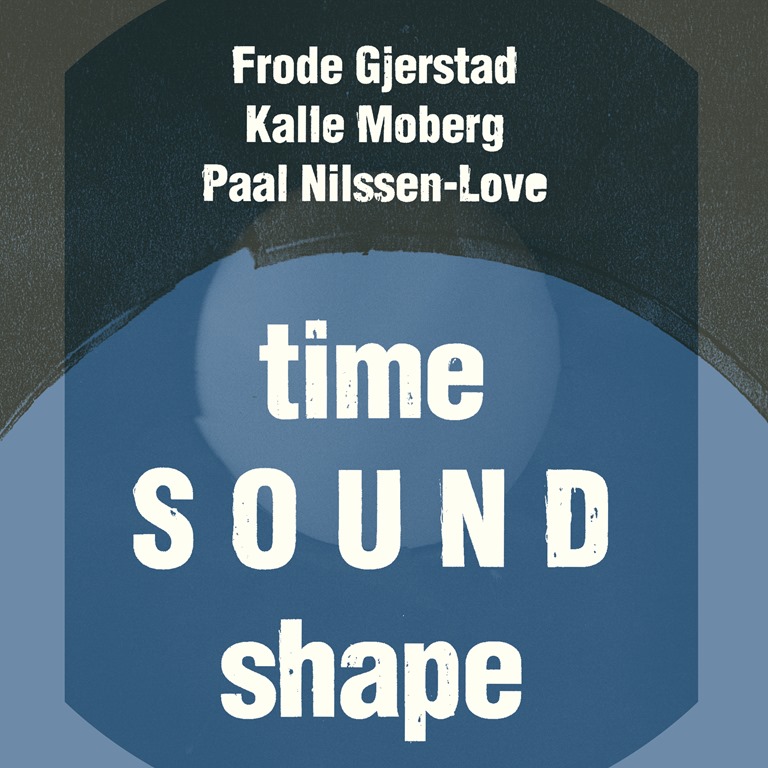
Time Sound Shape is a single continuous piece with a running time of a full-length album, clocking in at precisely forty-nine minutes, and it’s a great example of intuitive improvisational collaborative work, and it sounds far better than the clunky text-based cover art suggests.

There are some dissonant, discordant, even outright difficult to digest crescendos, and moments of queasy chamber orchestral meanderings, as they tweet and toot together in a sort of droning solidarity. It begins gently enough, with some trilling woodwind courtesy of Frode Gjerstad who brings flute, and clarinet to the party as well as sax, but it doesn’t take long before things shift in numerous different directions.

There are moments that almost feel ‘continental’ in vibe, perhaps not least of all on account of Kalle Moberg’s accordion work. And all the while, Paal Nilssen-Love brings texture and atmosphere with his application of a wide selection of Paiste gongs, bringing doomy dolorous chimes and rolling thunder. At times, the crashing gongs are strong enough to vibrate the internal organs within the ribcage.

In many respects, Time Sound Shape delivers precisely what you would expect from these three musicians coming together, and yet at the same time, it brings more. It’s a richly textured work, that evolves as it progresses, and it never stays stull, and yet the changes are often subtle. Time drifts and bends as the sounds transition, changing shape. Let yourself be carried.

AA

PNL052_front

Thanatosis – 7th May 2022

Christopher Nosnibor

Within Reach of Eventuality is the debut album by Swedish duo David Bennet & Vilhelm Bromander. Their notes on the album state that ‘Following a semi-open score, the duo is treating elements such as complex textures, non-pitched sounds, microtonality, beatings and intense pauses in an improvisatory and careful manner’.

I’m not entirely sure what that means, and I’m not certain of the meaning of the album’s title, either. It feels like it almost carries a sense of significant import, but then is equally so vague as to be almost abstract. And in a way, it’s representative of the four pieces on the album. There’s a grainy scratching flicker of extraneous noise running along in the background during ‘Part I’, like a waterfall in the distance, while in the foreground, elongated drones – atonal strings or wavering feedback – hover around the pitch of nails down a blackboard. Occasionally, more conventionally ‘orchestral’ sounds – emerge fleetingly – gentle, soberly-paced percussion, string strikes and soft woodwind, and it comes together to create a somewhat ominous atmosphere.

It’s a hushed, minimal ambience that fades out towards more sonorous drones that ebb and flow across ‘Part II’, and as the album progresses, the interplay between the tones – and indeed, atones – becomes more pronounced, and also more dissonant and consequently more challenging, as long, quivering, quavering drones rub against one another.

The structures – such as they are – become increasingly fragmented, stopping and starting, weaving and pausing. There is a sense of a certain musical intuition between the players, the rests coming at distances that have a sense of co-ordination, if only as much to confound expectation as to sit comfortably within it. In other words, Within Reach of Eventuality feels like a semi-organised chaos, and as it slowly slides towards the conclusion of the sixteen-minute fourth part, the sound thickens, the volume increases, and the atmosphere intensifies, become more uncomfortable in the process. And in this time, the meaning becomes clearer when it comes to understanding their approaching the sonic elements in a ‘careful manner’. There’s nothing remotely rushed about Within Reach of Eventuality. The notes are given space and separation, room to breathe. It all feels very considered, very restrained: it’s no improv free-for-all, there are no frenzied climaxes or blasting crescendos. Instead, they demonstrate a sharp focus on a fairly limited range of sounds and spaces, and the result is an album that has a strong cohesion.

AA

a4211091835_10