Posts Tagged ‘Immersive’

17th October 2025

Christopher Nosnibor

…and still, the COVID pandemic continues to yield new offerings, even if some are repackaged, or otherwise documents of events which took place during that strange, strange time. Real live music events were, during those dark days, simply things of memory, which we could only dream of happening again – because, for a while which felt like an eternity, there was no end in sight. Live streaming events were as close as we got. I watched a few, participated in a handful, too, but like having beers on Zoom, as much as they went some way towards filling the gaping chasm that was social life, these things were countered by a certain pang of sadness and consternation, reminding us as they did of what we were being deprived of, highlighting the fact that there is truly no substitute for the experience of live music. I write this as a fairly ardent misanthrope who will sometimes go to quite exceptional lengths to avoid other people. But sharing a room with musicians and people who seek to become one with the sound and the experience is something altogether different. Unless it’s one of those gigs where casuals turn up and yack at one another in loud voices for the duration, of course. I find that this happens less in proportion to the obscurity – and / or extremity – of the music. The more difficult, the more abrasive, the further from the mainstream the artist, the cooler the audience. In this context, Orphax’s audience must be bordering on godlike.

Embraced Imperfections features ‘two live performances recorded during a live video streaming event during the early covid-19 pandemic’, originally released as Embraced Imperfections and Live in your living room, now, remastered, they come as a two-disc release. The title reflects the nature of the recordings – both performances were improvised ‘with various synths, organs, and effects’, and as such are inevitably imperfect. But… how would we know? Artists – musicians in particular – are commonly their own harshest critics. They kick themselves for the most minor flaws that simply no-one else on the planet would notice in a million lifetimes. But still, making peace with and embracing imperfections is a significant step.

The first disc – Embraced Imperfections I – offers forty-one minutes of slow-sweeping organ drone which subtly undulates and quivers, humming on, ebbing and flowing, but in the minutest of microtonal shifts. Above all, it’s a continuous sonic flow, and the shifts in its sounds and structure are made at an evolutionary pace. You don’t listen to music like this to be affected, to feel impact, but instead to be carried along, to feel it envelop you, to wash over you, to experience full immersion. It isn’t that nothing happens… so much as very little happens, and does so incredibly slowly. If listening requires patience, so does the making. It is not easy to hold a single note for long minutes at a time without feeling a certain pressure to ‘do’ something. As this performance evidences, Orphax possesses the Zen-like ability to resist any urge to increase the pace of movement – so much so that time itself seems to stall and sit in suspension here. Even the first fifteen minutes feels like a lifetime, and the secret to appreciating this is to stop listening and simply let it become the backdrop as you slow our breathing and allow yourself to relax. Remember what it is to relax?

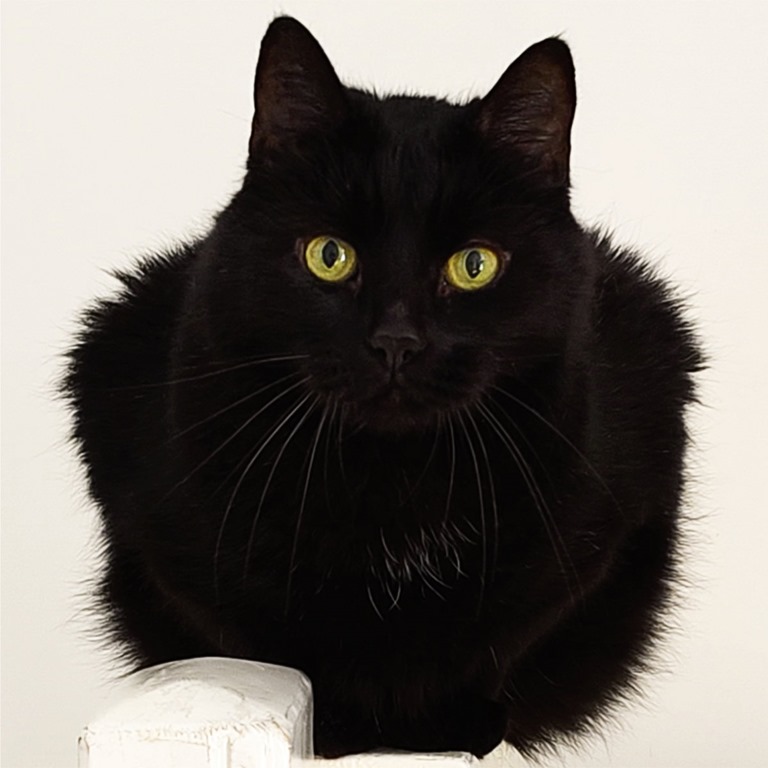
The shorter Embraced Imperfections II, which clocks in at just over thirty-six minutes, is less overtly organ-driven and more constructed around an electronic hum, and it’s dark, claustrophobic. It also feels more low-key, and more ominous. It’s still another extended dronework, the sound of which is absolutely the immersive dronescape, the hovering hum that feels like nights drawing in and claustrophobic depression descending on the dense darkness. It’s a dense, scraping, soporific endless polytone that scratches and hums for what feels like all eternity. While far from accessible or easy listening, it does make for an immersive journey. And cat pics always win… embracing impurrfection.

AA

AA
a0536185753_10

Vinter Records – 5th September 2025

Christopher Nosnibor

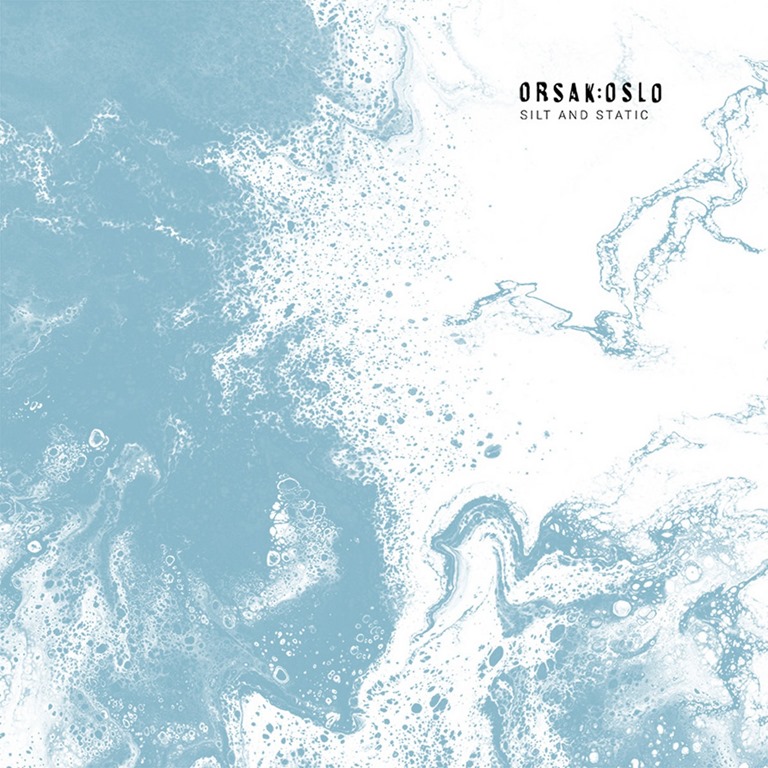
The post-rock boom feels like a long, long time ago now. Perhaps because it was: realistically, we’re talking about nearly twenty years since Explosions in The Sky and Her Name is Calla were super-hot topics. I discovered HNIC supporting iLiKETRAiNS on tour circa 2007, and Maybeshewill via their split 12” with Her Name is Calla, before seeing them playing with AndSoIWatchYouFromAfar… There are always chains and sequences, but the post-rock bubble burst in a tidal wave of oversaturation maybe around 2009. It all got a bit samey. But there was – and still is – always room for a band that take a genre template and take it somewhere else, offering something different, instead of a template-based rehash. Enter Osak:Oslo, who most certainly offer something different. Silt and Static is nuanced, but at the same time forceful.

There’s nothing like going all-out epic on an opening track, and that’s what precisely what Osak:Oslo do here, with the eight-minute forty ‘Biting In’, which begins with some enticing, chiming guitar that’s quintessential post-rock in every way, but then the rhythm section kicks in, and it drives along straight ahead, riding a solid motorik groove for a bit. After taking it down in the mid-section, they come back in, driving harder than before, a sprawling desert-rock soundscape expanding like a straight road headed to the horizon. Hell yes! You feel this. Exhilarating is the word.

They take things slower and bring more weight on ‘Days Adrift’, but still conjure rich layers of atmosphere, and bring things together with a chunky, chugging, bass-driven groove. In contrast, ‘Salt Stains’ is altogether more jangly, indie, at least to begin, and then, less than a minute in, a solid riff powers in, topped by soaring lead guitar work.

Over the course of the album’s nine expansive tracks, Osak:Oslo demonstrate a real knack for beefy riffery – nothing overloading, hugely overdriven, distorted or gritty, but just big, bold, solid and defined by a sense of forward trajectory, and what’s most remarkable is the way the band arrived at this work:

Recorded spontaneously, Silt and Static captures the band at their most stripped-down and unfiltered, balancing atmospheric fragility with crushing depth. With tape rolling and no roadmap, the album emerged naturally, giving shape to a sound that’s both deeply personal and bleak yet beautiful.

‘Bleak yet beautiful’ is a fair summary, but establishing, or unravelling, precisely what’s personal on an instrumental work is not easy, or sometimes even possible, although it is clear that certain elements, sounds, structures, transitions, which hit in a particular way are deeply evocative, often moving. But as a listener, those moments feel personal and are rooted in one’s own experience, one’s own individual response. I write this as someone who has sat with friends, playing songs saying, as I practically burst with enthusiasm, “Wait… there! That’s the key change!” or “That’s where the distortion comes in!” or “There! There!”, to be met with… mixed results. Is that moment which floors me the same one which the creators feel is the pivotal point in the song, the one which articulates, through the medium of sound alone, that deep-seated, complex emotion which has been tormenting your psyche for months, or even years? I suppose it doesn’t really matter. What matters – for artists and listener alike – is that connection, achieving that vital emotional resonance, where the music speaks.

‘Resonance in Ash’ slips into shoegazey territory, but also offers the most potent swell of noise that threatens the eardrums, bursting into a ragged explosion of noise, bordering on post-metal and racing to a blistering crescendo, and despite being one of the album’s shortest songs, ‘The Onward Strike’ feels like one of the most immense. Then again, there’s ‘Break and Sink’, which goes all-out to crush… It’s riffy, it’s heavy, and it lands hard. The bass… it grinds, alright.

The beauty – and creative success – of Silt and Static is that it succeeds on both levels. Because of the bold riffery – never succumbing to the post-rock cliché of the slow-build and epic crescendo, but instead forging these strong, cinematic, rock-orientated bursts of energy which are immersive, transportative, and reach far beyond genre confines. Silt and Static is an imaginative, inspired work, and the circumstances of its creation make it even more remarkable. It’s the work of a band operating with a rare level of cohesion, and it’s pretty special.

AA

a1841796365_10

Young God Records – 30th May 2025

Christopher Nosnibor

And so we arrive at the end of another era in the epic history of Swans. When they called it a day in 1996 with Soundtracks for the Blind, and a farewell tour documented on Swans are Dead, it really did seem as if that was it. Swans had run their course, and the colossal Soundtracks double CD summarised everything they had achieved over

It may seem strange that the bookend to this phase of their career should be titled Birthing. But such is the cycle of life, and indeed, the avant-garde: death gives way to new life, to build anew one must first destroy. And so in this context, Birthing, which Gira has announced will be the last release of this epic, maximalist phase, makes sense. With a running time of a hundred and fifteen minutes, it’s comparable in duration to its predecessor, The Beggar, and The Glowing Man (a hundred and twenty-one minutes and a hundred and eighteen minutes respectively) , but on this outing, the individual pieces are all immense in proportion, with the album containing just seven tracks, with only one clocking in at less than ten minutes.

‘The Healers’ makes for a suitably atmospheric, slow-burning opener. Around seven minutes in, the gentle eddying begins to swell, like a breeze which wisps and ruffles the leaves on the trees – a minute or so later, the drums have entered the mix, and the ambient drift begins to take a more solid form, and there’s a change in the air temperature, the barometer plummets and the breeze becomes a wind. In no time, there’s a swirling wail of sound surrounding Gira’s increasingly exultant enunciations, but as he growls and mumbles and raises his voice higher, he’s increasingly drowned by the maelstrom. And yet, it’s nowhere near a crescendo, and I’m reminded of their set on the 2013 tour, where, having told my friend that having seen them in the same venue three years previous that they took volume to another level, the first twenty minutes of the set was loud, but not remarkably so – and then suddenly, there was a leap of around thirty percent that felt like a double-footed kick in the chest. Will it happen here? Around the fifteen minute mark, it tapers down to a haunting whistle of wind – and it’s the calm before the storm, as a raging tempest suddenly erupts, a frenzied wall of noise that has become their signature, and the song surges to a powerful sustained climax.

While the delivery is considerably less brutal than it was in the early 80s, Gira’s lyrics are still riven with dark and disturbing imagery, and now coloured with a hint of abstraction and madness, and this is nowhere more evident than on ‘I Am a Tower’, which was aired as a lyric video a little while ago. ‘With thin boneless fingers and pink polished nails, I’m searching for the fat folds of your blunder. Speak up, Dick! …Bring your fish-headed fixer to whisper in my ear. Please worry me here, tongue that victim in there…’ he intones like a cracked messianic cult leader against a backdrop of swirling drones. Attempting to unpick sense or meaning from it feels futile, and potentially traumatic, so instead, it’s perhaps experienced holistically, as a jumble of images and impressions, a fractured collage, a derangement of the senses whereby you allow it to transport you to another plane, away from anything concrete or grounded, beyond all that you know. Seemingly from nowhere, a motorik rhythm kicks in and we get something approximating a driving Krauty post-rock riff, hook and all. It could be Swans’ most pop moment since the White Light / Love of Life albums in the early 90s.

The title track arrives in a ripple of proggy synth that has a hint of Mike Oldfield about it, but gradually builds into a dramatic swell of sound, the likes of which has come to characterise the last decade of Swans, with a single chord struck repeatedly for what feels like an eternity. And then, from nowhere, they launch into something approximating a jig – on a loop, where the bass and drums simply hammer away repeatedly, like a stuck record. It is, if course, pure hypnotic magnificence. Gira’s words slip into soporific sedation amidst descending piano rolls. ‘Does it end? Will it end?’ he asks at the start of an extend wind-down, and it does feel like this would make a perfect gentle close – but there are more jarring, jolting ruptures to come, whipping up a truly punishing climax by way of a close, and by the end of the first disc – a full hour in duration – we’re left drained and hollowed out, tossed this way and that on a sonic – and emotional – tempest only Swans could create. Disc one, then, feels like a compete album. But this is a Swans release, and a landmark one, at that there isa whole further album’s worth of material yet.

‘Red Yellow’ begins in a dreamy drift, but soon slides into a warping drone pitched against another of those relentless, repetitive grooves, this time with some jazz horns freaking out in every direction. And at this point, there does arise the question of what new this iteration of Swans is offering at this point, but the immense, immersive soundscapes provide the answer in themselves. Swans have certainly evolved, but they have always done so gradually. The first half of the eighties was devoted to crushing slow grind, and you’d have to be a glutton for punishment to listen to more than one album in a sitting. The point is that Swans have always pleased themselves and made music that tests the listener’s limits, and Birthing is no exception.

Reviewing a Swans album is always a challenge, especially their comeback releases. They’re not about songs, and, broadly speaking, not really about impact in the way their early works were: instead, they’re about transcendence, about moving beyond mere music.

‘Guardian Spirit’ starts out textured an atmospheric, but ends full Merzbow, before ‘The Merge’ takes noise to the next level, albeit briefly. It’s as if Gira is toying with us. Perhaps he is, but when the noise erupts, it really erupts. ‘Rope’ returns us full cycle to there My Father Will Guide Me, while making an obvious connection with all phases of their career, through which ropes and hangings have been a perpetual theme.

Birthing is not an easy album, but it is one which requires listeners (and reviewers) to do something different in terms of approach. You don’t listen so much a feel it, and ride its endless waves: sometimes slow, gentle, at others an absolute roar, Birthing brings together everything Swans have done, and achieved, over the course of this iteration. It’s often overwhelming, and almost impossible to reduce to words. The second disc does feel softer, more abstract, and leaves on wondering precisely what the next phase will look or sound like.

SwansBirthingalbum-cover-artwork-

French/Irish alternative rock-metal outfit MOLYBARON, known for their energetic, hard-hitting sound, will release their new album Something Ominous on September 15th on InsideOutMusic/Sony Music. The announcement of the new album comes following the success of the recent single and video ‘Something Ominous.’

Over the course of two subtly radical records, 2017’s self-titled debut and 2021’s acclaimed The Mutiny, this eclectic quartet have casually bent and broken all the usual rules of modern heaviness.

In 2023, they return with their third and most fervently diverse record to date, Something Ominous: further evidence that MOLYBARON are operating in a field of precisely one.

When MOLYBARON released The Mutiny in 2021, the world was still reeling from the effects of a global pandemic. Nonetheless, the album struck its mark with ease, garnering countless glowing reviews and comparisons to the likes of System Of A Down, Tool and Muse. Two years on, Something Ominous reveals a band that have sharpened their focus and found their groove. Comprising ten succinct and characterful songs, which range from thunderous acts of aggression to noirish, mutant balladry, MOLYBARON’s third full-length is invigorating and immersive in equal measure.

“I don’t think our sound can be defined by one genre,” says guitarist/vocalist Gary Kelly .“It’s certainly not by design. I write and produce all the music in the band, but I’m strange – I never really listen to music. I have no idea what’s hot or what’s not these days. I suppose this makes it easier for me to create songs, I’m not trying to mirror any one style, I just write as it comes to me, probably based on what I hear floating in the ether; in the cinema, on the TV, on the elevator, it really doesn’t matter!”

MOLYBARON are also pleased to share the second single from the album.

You can check out the lyric video for ‘Breakdown’ here:

AA

VcN6SaCA

Photo Credit: Teddy Masson

Christopher Nosnibor

This was supposed to be the perfect bookend to the year: after Percy supported Soma Crew at The Crescent in May, the roles were to be swapped tonight following the release of Percy’s new album, Monorail, in June. But sadly, it wasn’t to be, on account of Percy’s drummer Jason royally fucking his back.

Gigs at this time of year are always a risk, and not only on account of the potentials for injury (as the icy pavements on the way only highlight): the fact that it’s hard sub-zero means a lot of people can’t face wrapping up again after work to turn out on an evening, and then there all of the obligatory work / mates drinks and all that cal. Throw in Steve Mason playing across town and this one was always going to be a gamble, but despite the headliners’ late withdrawal, it’s a respectable crowd who witness The Rosettas emerging sounding stronger than the last time I saw them at the end of September. The sound is solid, buzzy, grungy.

The singer’s confidence leans into arrogance throughout, and not just in ignoring advice sagely dispensed in my coverage of said show in September, while actually mentioning the recommendation not to drop a cover as their second song, they slam in with a faithful rendition of Blur’s ‘Song 2’ as the second song of the set. But it makes sense, and it is well played, as is the majority of the rest of the set. I suspect the singer’s suffering from a cold or something that gives his voice quite a ragged edge, but actually, it sounds decent.

Rosettas

The Rosettas

Unfortunately, technical issues and a lack of organisation means the set ends abruptly and somewhat chaotically, but they played with enthusiasm and were a lot less reliant on covers, and ultimately made the best of a less than ideal situation.

They seem to clear out and take half the audience with them, but, undeterred, Soma Crew take the stage and drench it with sonorous droning feedback. Then they build into a single chord dragging for all eternity as the muffled drums plod away in the back and they hit peak hypnotic. And then the tremolo enters the mix and the volume steps up with the arrival of the snare drum and…. and… and… the set drifts, and my mind drifts, and it’s a most pleasant experience. Time hangs in suspension. ‘Mighty Forces’ is indeed mighty, and the mid-pace one chord chugs are supremely soporific. Everything is measured, mellow, hazy. Everything comes together to conjure a thick sonic mist, and it’s absolutely magnificent. It’s also seriously loud, as I come to realise about two-thirds of the way into the set. When did that happen? Did it get louder? Perhaps. Probably. I can’t help but feel that Soma Crew are seriously underrated, and tonight they really hit all the sweet spots at once.

Crew 2Crew 1

Soma Crew

Leeds trio Nervous Twitch are worthy headliners, and launch into their set without a word, no fuss, not a single note of level checking. Pow! It’s proper, unfussy, old-school punk, three and four chord thrashes played with big energy, and they’re as tight as any band you’ll hear. Sure, with a female singer (who also plays bass), they invite obvious comparisons to X-Ray Spex and Penetration, and as much as they’re punk, they’re catchy and poppy at the same time, and ultimately, they’re good fun.

Twitch 2Twitch 1

Nervous Twitch

There are, of course, many bands playing in the next fortnight, in every city across the nation. Some will draw crowds, others less so. While I enter temporary hibernation, it feels like an appropriate time to reflect, and to celebrate the venues we’re fortunate to still have, and the fact that while times remain tough, 2022 has at last seen live music return to the social calendar. And for all the other shit we’re surrounded by – I can’t even begin the list – this is something we can be immensely grateful for.

Anna von Hausswolff presents an immersive new video for "Dolore di Orsini." The track appears on the latest album All Thoughts Fly, out now on Southern Lord. 

The breathtaking new video for "Dolore di Orsini" was directed by Ludvig Holtenäs and Gustaf Holtenäs, with animation effects by Mathias Söderberg.

Anna von Hausswolff writes, "’Dolore di Orsini’ is a song about profound sadness and finding freedom in grief. It’s inspired by the idea that Pier Orsini, a wealthy patron of arts, created the garden Sacro Bosco as a way to cope with grief and loss after losing his wife, Giulia Farnese. I look at the park as a symbol for love where love is an incitement for chaos and harmony. The video depicts Mr. Orsini burying his wife, the passing of time in nature, and sculptures taking shape and being set up by the help of a spirit. A movement forwards whilst looking backwards."

Watch the video here:

AA

thumbnail_AnnavonHausswolffbyGianlucaGrassellilores

Photo credit: Gianluca Grasselli

Panurus Productions / Inverted Grim-Mill Recordings – 22nd March 2019

Christopher Nosnibor

It feels like I’ve been bombarded with spectral oceans lately, what with Teeth of the Sea’s Wraiths and now The Sea to Which the Body is Drawn by Wreaths, the project of Northumberland based artist Michael R. Donaldson, which utilises ‘four track experimentation, aged equipment, drones and field recordings to build haunting soundscapes’ lands in my inbox.

And such soundscapes are precisely what Wreaths deliver here. ‘Sea Lulled | A Spire Remains’ is what you might call a ‘classic’ example of contemporary ambient music, and opens the album in the most spectacularly understated style. It’s background, bit it’s also deep, layered, and multi-faceted.

Listening to the vast washes of sound in context of the album’s title, I become preoccupied with drowning. So often, I’ll describe ambient works as enveloping’ and ‘immersive’, but what is it like to be truly immersed?

‘Sorries’ hangs on a desolate, metallic drone that scrapes and swirls for some nine-and-a-half minutes. Ambient as it is, with soft piano notes ringing out into the air, the dominant textures and tones are harsh mid-range.

It’s a contrast to the titles, which allude to the soft, damp, organic, and also tell dark, depressing tales in Twitter-flash form: ‘Her Ornate Gown Marred by the Sea’; ‘Tides of Soil and Loam, Tides of Wreck and Ruins’; ‘Fell Foul of the Shallows’ – these all tell bleak and harrowing tales in their own rights, oblique hints of tales like tsunamis, tales like the flooding of Mardale Green beneath Haweswater Reservoir in Cumbia, and the creation of Ladybower Reservoir with Derwent village’s church spire rising above the water for some years after the village was submerged.

Water always wins, and even man’s harnessing of water is but finite, a power held on a knife edge.

The final track, the eighteen-minute ‘Timbers Sodden’ is a low, slow drone that hovers and drifts, conjuring the smell and feel of dank dampness, the sensation of slow decay. And herein lies the power of Wreaths: The Sea to Which the Body is Drawn is an album of atmosphere and evocation. It celebrates the transient, the fleeting, and conjures the ebb and flow, the mists and slow tidal pulls to create a listening experience that draws the mind as the sea draws the body.

AA

Wreaths - The Sea

Touch TO:104 – 25th May 2018

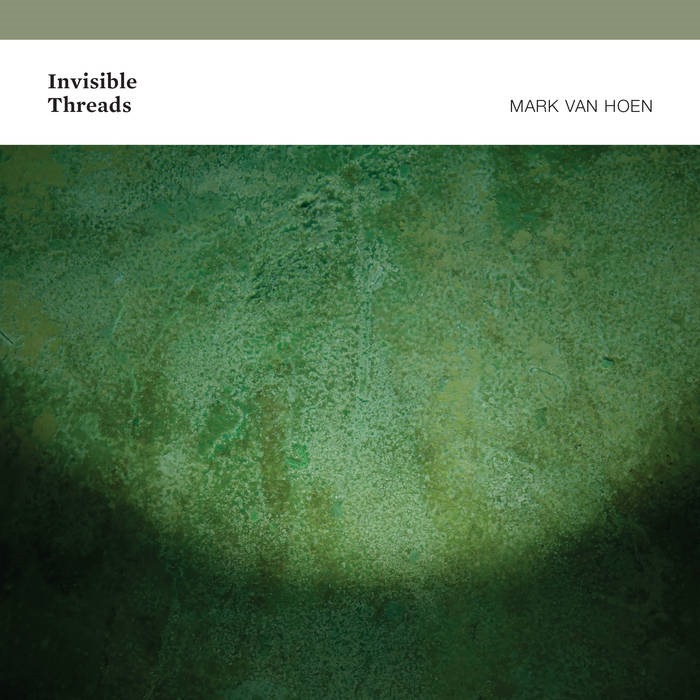
The Revenant Diary feels like a long time ago now: perhaps because it was. Six years is long time (although Mark Van Hoen has released two albums as The Locust in between). And yet, it continues to haunt me in some way. Returning with Invisible Threads, Mark Van Hoen continues to explore ominous, shadowy territories.

This is a dark, immersive work. I’d had a tough – and very strange – day at work. Oftentimes, when weary, stressed, dazed, I will select an instrumental work as my review project for the evening, as I find I can simultaneously write and relax, allowing the sound to wash over me. It transpires that this may have been precisely the album – or not, depending on perspective – for the occasion. I say, staring blankly. Not really listening, not really engaged, and certainly not typing. Not thinking, and not doing anything else. I don’t know exactly how long I remained like this, to all intents and purposes, immobile, in a sort of fugue state.

On returning, and attempting to remain focused, I find Van Hoen’s dark, churning sonic nebulae every bit as arresting and distracting.

The album’s inspiration stems from multiple sources, not least of all Edgar Allen Poe’s short story The Conversation of Eiros and Charmion which he re-read while on tour. The album is in some respect designed as a soundtrack to this, but equally, the Invisible Threads refers to the intangible connection between all of the musical and personal influences that brought the record into being.

In truth, the context and background have only limited effect on the reception. The reception is pure: a direct engagement between sonic output and listener.

Low, humming, hovering tones undulate across the album’s seven subtle compositions. Creeping, interweaving, fragmentations of light dance across these cold, bleak expanses which often bleed together. Even the silence between seems to provide an integral part of the listening experience and contributes to the shape of the overall arc of the album.

It’s distinctly background but in a way that fulfils that criteria of ambience that affects and colours the mood rather than being sonic wallpaper, disappearing into the background unnoticed. Repeated listens to Invisible Threads have not lifted my mood: instead, I feel claustrophobic, tense, weighted by an indefinable oppression. I give up: my critical vocabulary is as exhausted as my mental state when faced with this album at this time. I take a shower. Reflect. Accept that perhaps this work is so immersive that I am, temporarily, drowned.

AA

Mark Van Hoen - Invisible Threads

Macaque Records – 21st August 2017

Christopher Nosnibor

Gilman Mom is the musical vehicle for Dominic Francisco (which has a star quality of its own). As Dominic explains, Manifest Destiny ‘plays heavily with texture and field recordings melding with emotional chords and words in attempt to convey my mental transformation from a vulnerable state to a confident one’.

The text which accompanies the release is almost uncomfortably direct, and it seems appropriate to quote in full:

I want it to feel like a troubled night walk of self-reflection that blossoms into realization.

This album isn’t for you so much as it is for me. I needed a way to document my circular thought process. Around and around until I stumbled upon developments. It’s not for everybody but it’s what I felt in my head when I thought about you for so long after that night. Nature surrounded me almost perfectly as this unfolded; you left me in the rain and by the time that storm ended I had found myself again. With this piece I want to remember who I was and how I got here. However fragile we were and unfit for each other, I gained so much insight into who I am from what was us. With your inadvertent help I’ve entered a state of definity. This is my journey to that place.

It’s clear from this that Manifest Destiny originates from an intensely personal place and one feels almost voyeuristic by simply being in its presence, without even listening to it. Should you listen to it? It sounds more like a work of therapy following a sequence of breakdown and recovery. Is it even intended for the ears of the casual listener?

In contrast to the write-up, the music the album features is uncomfortably indirect. Rumbling piano, distant discord that rolls like thunder way, way off, an unsettlingly sparse piano and muttered vocal snippets, the words inaudible, congeal into a dense mass of sound which offers little by way of shape, form, or tangibility.

At times barely there, eddying arabesques of synth contrails surround distorted, hushed vocal snippets, the actual words unintelligible. Gloopy tremors shiver amidst subaquatic hums and bubbling drones. Clicks, clatters and muffled extranea ebb and flow in the sonic swamp.

Any sense of linear progression, narrative flow, or emotional shift over the sequence of the album’s eleven tracks is difficult to determine: it feels more like a murky sonic miasma, slowly pulsating through a fog of introspection, apart from the glimmers of light briefly afforded by ‘Fool’s Gold’ at the mid-point. This is in no way a criticism: as an experience in ephemera, a vague allusion to sequence of events and emotions largely unknowable, the context matters less than the recordings themselves. And these are deeply atmospheric, sparse yet subtly immersive compositions, which exist in a realm of detachment, a world between worlds.

AAA

Gilman Mom - Manifest Destiny

Kranky – 19th May 2017

James Wells

‘Atmospheric’, ‘haunting’, ‘hypnotic’… these are the first words which spring to mind while the resonant bass notes pulse long and slow beneath Irma Orm’s uniquely sedate voice, bathed in radiant reverb like a sonic halo. These words are all cliché, the everyday tools of the music writer’s trade, and in being cliché, their power has been eroded over time. But what words are there which truly convey, and do justice to, the depths of the music which comprises Nektyr?

The album’s seven tracks are expansive in every direction: textured, rich, slow in tempo, they gradually unfurl to reveal an enigmatic sonic vastness and deep emotional pull.

‘Morgon’ drifts, fugue-like, the dense cloud of sound utterly immersive and with Orm’s vocal, Jarboe’s most intoxicating work comes to mind by way of a touchstone. Woozy synth tones lurch and sway over a stuttering heartbeat of a drum in the fade of ‘Korridorer’.

This is deep material that reaches into the soul on an almost subliminal level: to dissect its power to the point at which it can be readily conveyed n words would be to diminish that power. This is music which communicates on another level, one which transcends language and as such, renders any critical appraisal in mere words not only challenging, but essentially obsolete. This is music you feel, intuitively, instinctively, and in your core. It’s a spiritual, if not a religious experience. Indescribably moving on a level far below the conscious, it really is quite an album.


KRANK209_10x10_300dpi