Posts Tagged ‘House of Mythology’

House Of Mythology – 9th January 2026

Christopher Nosnibor

Zu just keep on defying genre and creating music that lands from a different angle every time, even after the best part of thirty years. While postmodernism – which emerged in the 1950s and became the defining mode of art and culture from the 1980s – fundamentally revelled in endless recycling, embracing the notion that anything original has already been done, and that the future of creativity lies in how creatively one may appropriate and hybridize the past, Zu have spent their career bucking that trend with relentless creative innovation.

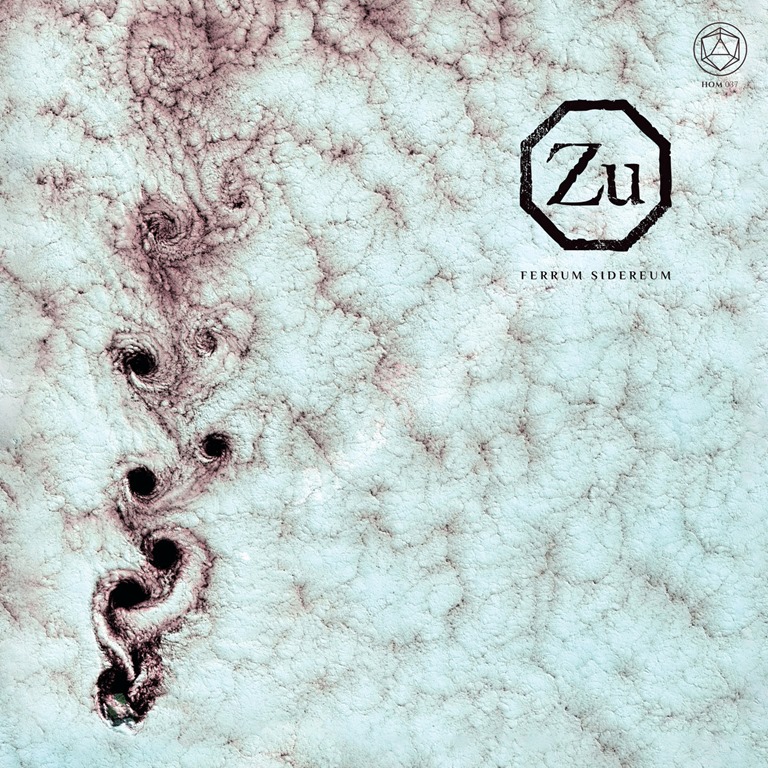
After a six-year lull, Ferrum Sidereum is their second release of 2025, following the wildly eclectic Jazzisdead under the moniker of RuinsZu in April, a live document of a collaboration between Zu bassist Massimo Pupillo and saxophonist Luca T. Mai, with drummer Yoshida Tatsuya, founder of the Japanese band Ruins.

Ferrum Sidereum – Latin for ‘cosmic iron’ finds the core trio back in the studio, and drawing inspiration ‘from the mythological significance of meteoritic iron, found in artefacts like ancient Egyptian ritual objects, Tibenta ‘Phurpa’ blades, and the celestial sword of Archangel St Michael. This elemental force,’ they write, ‘imbues every moment of the album’s apocalyptic sound.’ On a purely personal level, I’m drawn immediately by the idea of an ‘apocalyptic sound’. We live in what feels like apocalyptic times, after all. I am surely not alone in feeling that since the arrival of the pandemic, we’re racing towards the end of days, and if anything, the exponential rise of AI only seems to be accelerating that race.

Zu are staunchly anti-AI when it comes to their own approach to art – a topic they touch on with single cut ‘A.I. Hive Mind’ – and explain, “We are very spiritually-oriented people,” says Massimo. “Machines and AI do not have spirituality. So they can mimic and they can assemble existing things, but they cannot create. That spirit is probably the most important thing that our music carries.”

Recent AI releases by the howlingly abysmal artificially-generated retro-rock act The Velvet Sundown and even more cringe-inducingly gash country wank of Breaking Rust may show how far the technology has come, but simultaneously reveals just how it’s absolutely no substitute for real, human-made art. This derivative, soulless wank is beyond derivative: that is to say, it’s precisely what you’d expect from melting down the entirety of a genre and regurgitating the lowest common denominator output. It also demonstrates precisely why Zu could never be recreated by any kind of digital modelling. They are completely off the wall in every direction all at once, and on Ferrum Sidereum, ‘The music combines the complexity of progressive rock, the grit of industrial music, the precision of metal, the spirit and energy of punk, and the freedom of jazz. The result is a sonic journey that is as cerebral as it is visceral, defying easy categorisation while remaining unmistakably Zu.’

‘Charagma’ makes for a forceful opener. It’s a full-on sonic blast, at first harsh noise, then pounding industrial riffery, which lunges into sprawling jazz-infused metal, then lurches back to the riffery but with an expansive, proggy twist. It’s a big seven minutes – which is different from a long seven minutes. It doesn’t drag, but what it does do it leave you with whiplash. ‘Golgotha’ whips out all the brass and woodwind at once, and this provides the backdrop to some highly-detailed math-rock which goes all-out crazed around the three-minute mark. And it turns out they’re just warming up.

There’s some hefty chug and churn going on here. There’s also a whole load of manic horns blasting away. Recent single ‘Kether’ is representative, but at the same time not, in that it’s a seven-and-a-half-minute beast of a piece that lurches and lumbers all over, but there’s no way anything can be truly representative of an album that covers so much ground, and is so wildly unpredictable. ‘Kether’ reflects the heavier end of the album… and also the more twisty, melodic side, too – which essentially makes my point. Any thirty second snippet of the album would present a different story. The aforementioned ‘A.I. Hive Mind’ is spasmodic, jazzy, mathy, frenetic, intense, six songs in one.

‘La Donna Vestita De Sole’, the first of the album’s megalithic cornerstones cocking in at nearly ten minutes stands, towering, in the centre. Initially it’s soothing, smoothing, restful, ambient, but of course built to tumultuous towers of monumentally powerful prog, and they lay down some seriously solid grooves. ‘Hymn of the Pearl’ – clocking in at just over nine and half minutes again starts out easy in a haze of slow-building bass and electronic, a bass groove building until it eventually erupts – and when it does, it does, massively.

Arriving at the title track and finale, amidst a whirlwind of noise and all kinds of otherness, there’s something of a post-punk vibe in the build-up… not to mention bass to make you shit your pants. But then it’s got desert rock vibes and elements of Krautrock as it pushes forward, and they still find time for an explosive post-rock crescendo around a third of the way in. The finale is devastating. It’s too much to keep up with – and at the same time, it’s perfection. Zu do zu, as they say. Alright, not, but close enough. The bottom line is that this is a uniquely crafted work, to which AI could never get close. Not remotely.

Ferrum Sidereum is simply huge in every respect: scope, scale, ambition, sound, production. It’s heavy, it’s inspired, and it’s an album to lose yourself in.

AA
a2137056100_10

House of Mythology – 31st December 2025

Christopher Nosnibor

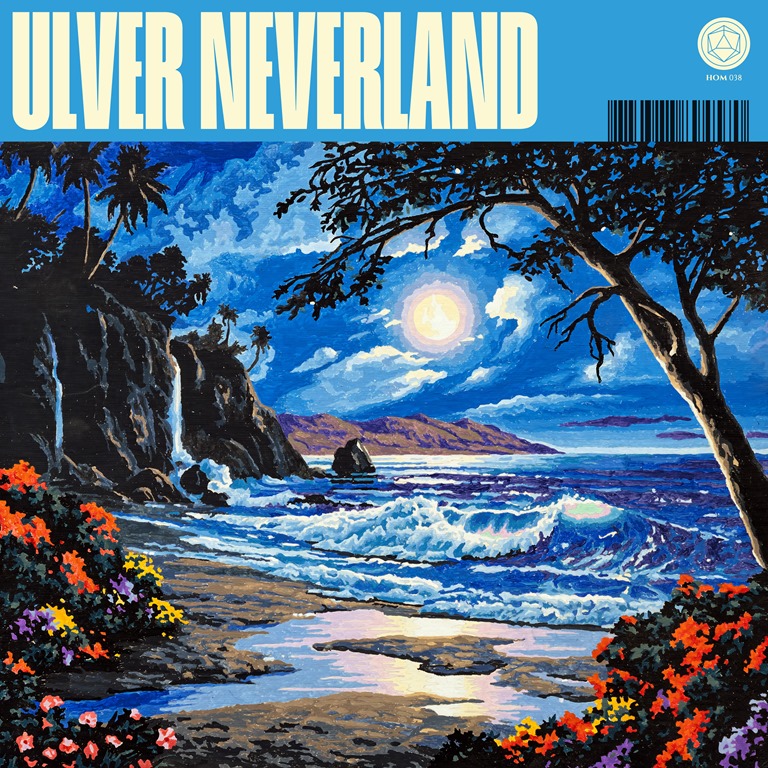
Ulver’s fourteenth studio album is described as ‘a journey into undiscovered lands’, and promises ‘more traditional song and production structures’; than the preceding three, as well as marking ‘a new chapter in the revered Oslo band’s history’. By this, they explain that “With Neverland we embraced a more ‘punk’ spirit – more dreaming, less discipline – freer, quite simply”. For a band which started out black metal before shifting towards electronica and ambience, this does seem like another substantial shift, at least on paper. This is encouraging, as some recent releases – not least of all The Assassination of Julius Caesar had seen them push quite some way into pop territory, and not in a good way.

It begins promisingly enough: ‘Fear in a Handful of Dust’ presents a collage of tweets and chirrups, jungle birdsong and a suitably bombastic spoken word narrative, which sounds quintessentially sampled, reverberate across atmospheric ripples and washes of synth, paving the way for some melancholic neoclassical piano work on ‘Elephant Trunk’. Glitches and static haze cut across this as atmospheric electronics build, and before long we find ourselves in expansive electronic post-rock territory, the likes of which sits neatly alongside the likes of Nordic Giants.

The transitions are subtle, and the changes creep up on the listener in such a way that one finds oneself nearly halfway through the fourth track, ‘People of the Hills’ to the nagging awareness that this is some quite upbeat trancey dance tune which doesn’t feel in any sense out of place. I mean, it’s not fucking Pendulum and there’s a meaty bass groove and some rather pleasant progressive stylings going on, but it’s a bit pop, a bit commercial-sounding, too.

‘They’re Coming The Birds’ blurs the lines still further: the samples are warped, the synths cinematic, the bass in places a deep, dark post-punk groove, but the beats veer from gothy electronica to more club-orientated fodder. In contrast, there are some magnificent widescreen ambient moments to be found, as on ‘Horses of the Plough’ and ‘the evocative and stirring ‘Quivers in the Marrow’, while ‘Pandora’s Box’ is an exploratory noise work which delves deep into dissonance amidst a swirling quasar of sound where Krautrock meets late 70s early 80s industrial. But then ‘Welcome to the Jungle’ returned to some pretty naff ‘90s new age dance tropes and it feel corny and cheap. There are dudes all over tinkering away with expensive gadgetry in the back bedroom and trying it out to twenty people at EMOM (Electronic Music Open Mic) nights up and down the UK and around the globe creating stuff so, so much better than this. And perhaps this is the frustration with not only Neverland, but Ulver’s work more broadly: some of their compositions are great, absolutely outstanding, rich in atmosphere, big on texture, the concept and execution so perfectly aligned, but a similar number are just lazy and frankly shite.

Neverland is definitely an improvement on The Assassination of Julius Caesar and the Sic Transit Gloria Mundi EP – which deterred me from bothering with the next few releases – but it’s still very hit and miss, with the emphasis on very here. Experimental and varied are one thing, but this is simply wildly uneven and unfocused.

In their summation, they proffer questions as to what Neverland actually is: ‘Pop music from in-between worlds? A sonic hallucination? Or better: a collage of dreams. It’s up to you’. It’s generous of them to leave it open like that. A collage of my dreams would be a lot scarier and more intense, and would consist of buildings collapsing, ruins, cars crashing, being late, being lost, being chased. Neverland certainly isn’t that. It seems that in pushing the question to us, they’re trying to avoid the question of their own identity crisis. Come on then, Ulver, what is it? What is it supposed to be, and is what you’ve given us what you intended when you set out? Is it?And is it punk? Really? Really?

AA

579539

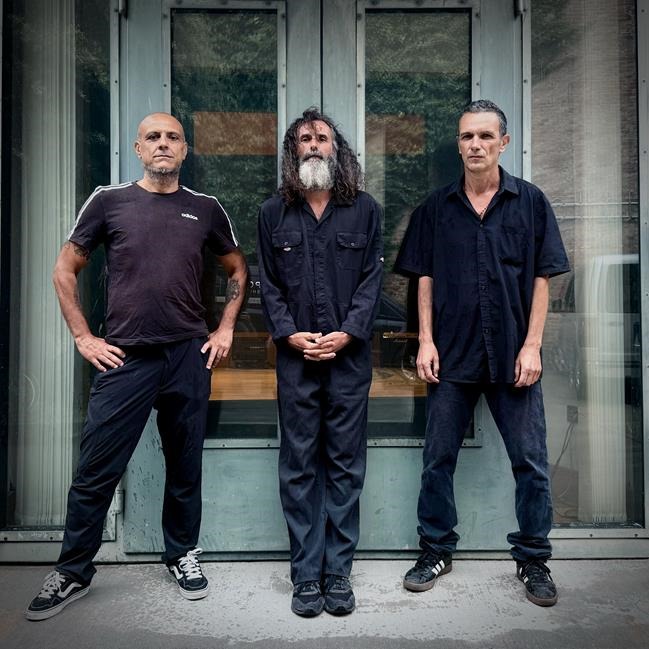
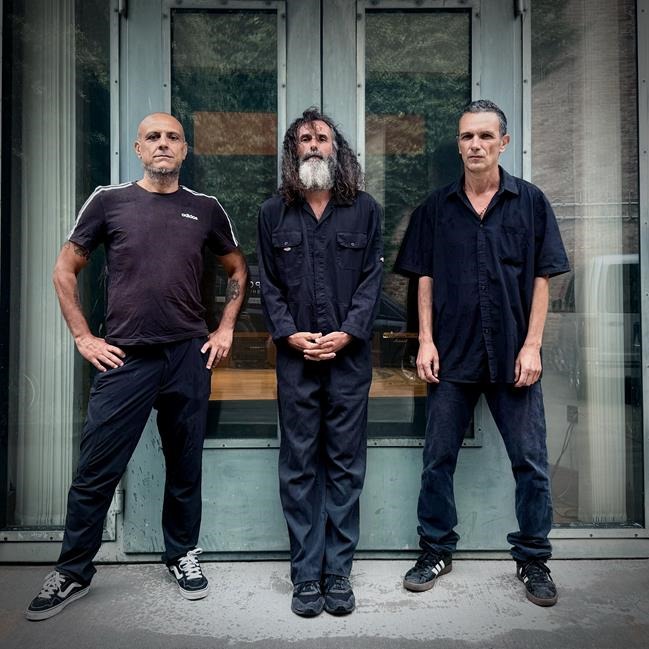
Legendary Italian experimental trio Zu recently announced their return with Ferrum Sidereum (produced by Marc Urselli), a big and bold double album arriving on House of Mythology on the 9th January.

The music combines the complexity of progressive rock, the grit of industrial music, the precision of metal, the spirit and energy of punk, and the freedom of jazz. The result is a sonic journey that is as cerebral as it is visceral, defying easy categorisation while remaining unmistakably Zu.

Today they share the new single and video for ‘Kether’ – about which the band comments,

“Kether is the crown, the halo, the nimbus, the corona. Since it has been symbolically attacked, we symbolically take it back.The golden crown became the sign of kings, but it is a much older and deeper symbol, and it is at anyone’s reach to reactivate the crown.”

AA

IMG_18602-9903cf03cf05143c

Photo credit: Marco Franzoni

Legendary Italian experimental trio Zu recently announced their return with Ferrum Sidereum (produced by Marc Urselli), a big and bold double album arriving on House of Mythology on the 9th January.

The music combines the complexity of progressive rock, the grit of industrial music, the precision of metal, the spirit and energy of punk, and the freedom of jazz. The result is a sonic journey that is as cerebral as it is visceral, defying easy categorisation while remaining unmistakably Zu.

Today they share the new single and video for ‘A.I. Hive Mind’ – about which the band comments, “Smart cities, brain computer interfaces, internet of things, singularity. This particular track addresses all of these things as well as questioning the loss of self, the idea of single consciousness and collective predictable behaviour. Perhaps the most burning question for us is: What does it mean to be human in a world increasingly shaped by artificial intelligence, simulated realities, and technological control?”

AA

Zu have also shared live dates in support of the new album – dates and details below.

2026 LIVE DATES

10/01/26 – Bologna, TPO – Italy
21/01/26 – Caserta, Lizard Club – Italy
23/01/26 – Palermo, Candelai – Italy
24/01/26 – Catania, Zo Culture Contemporanee – Italy
28/01/26 – Milano, Santeria – Italy
29/01/26 – Verona, Colorificio Kroen – Italy
30/01/26 – Zagreb, Mocvara – Croatia
31/01/26 – Nova Gorica, Mostovna – Slovenia
01/02/26 – Bratislava, Žalár – Slovakia
02/02/26 – Prague, Palac Akropolis – Czech Republic
05/02/26 – Berlin, Neue Zukunft – Germany
06/02/26 – Copenhagen, ALICE – Denmark
07/02/26 – Malmo, Inkonst – Sweden
09/02/26 – Bruxelles, Magasin 4 – Belgium
10/02/26 – Eeklo, N9 – Belgium
11/02/26 – Amsterdam, OCCII – Netherlands
12/02/26 – Paris, Le Chinois – France
13/02/26 – Bulle, Ebullition – Switzerland
14/02/26 – Torino, Magazzino sul Po´ – Italy

Ferrum Sidereum – Latin for ‘cosmic iron’ – draws inspiration from the mythological significance of meteoritic iron, found in artefacts like ancient Egyptian ritual objects, Tibenta ‘Phurpa’ blades, and the celestial sword of Archangel St Michael. This elemental force imbues every moment of the album’s apocalyptic sound. Whilst heavy in tone and subject matter, bassist Massimo Pupillo comments that their music also aims to "raise good energy… people would come up to us after the show and tell us that they felt alive."

The trio – Paolo Mongardi (drums, percussion), Luca T Mai (baritone saxophone, synth, keyboards) and Massimo Pupillo (electric bass, 12-string acoustic guitar) – spent a year refining this sprawling 80-minute epic through relentless rehearsals and live studio recordings in Bologna. Produced and mixed by three-time Grammy-winning engineer Marc Urselli, known for his work with Laurie Anderson, Lou Reed, and Mike Patton, the album balances raw intensity with refined production tweaks and textures.

“We are very spiritually-oriented people,” says Massimo. “Machines and AI do not have spirituality. So they can mimic and they can assemble existing things, but they cannot create. That spirit is probably the most important thing that our music carries.”

AA

IMG_18602-9903cf03cf05143c 

Photo credit: Marco Franzoni

Legendary Italian experimental trio Zu returns with Ferrum Sidereum (produced by Marc Urselli), a big and bold double album arriving on House of Mythology on the 9th January.

Ferrum Sidereum – Latin for ‘cosmic iron’ – draws inspiration from the mythological significance of meteoritic iron, found in artefacts like ancient Egyptian ritual objects, Tibenta  “Phurpa” blades, and the celestial sword of Archangel St Michael. This elemental force imbues every moment of the album’s apocalyptic sound. Whilst heavy in tone and subject matter, bassist Massimo Pupillo comments that their music also aims to "raise good energy… people would come up to us after the show and tell us that they felt alive."

The music combines the complexity of progressive rock, the grit of industrial music, the precision of metal, the spirit and energy of punk, and the freedom of jazz. The result is a sonic journey that is as cerebral as it is visceral, defying easy categorisation while remaining unmistakably Zu.

Today they share the track "Golgotha", about which Massimo says; “Once upon a time, the stars spoke to men, but now cosmic destiny brings a silence. Silence in which lies what men say to the stars. Man radiates atmospheres and is in continuity with the cosmos. These are atmospheres of colour and atmospheres of sound.  What we radiate is colour and sound. And the cosmos listens.  The return of what it incessantly gives to the earth.”

AA

The trio – Paolo Mongardi (drums, percussion), Luca T Mai (baritone saxophone, synth, keyboards) and Massimo Pupillo (electric bass, 12-string acoustic guitar) – spent a year refining this sprawling 80-minute epic through relentless rehearsals and live studio recordings in Bologna. Produced and mixed by three-time Grammy-winning engineer Marc Urselli, known for his work with Laurie Anderson, Lou Reed, and Mike Patton, the album balances raw intensity with refined production tweaks and textures.

“We are very spiritually-oriented people,” says Massimo. “Machines and AI do not have spirituality. So they can mimic and they can assemble existing things, but they cannot create. That spirit is probably the most important thing that our music carries.”

Set for release in January 2026, Ferrum Sidereum is Zu’s biggest and boldest statement yet that challenges all conventional boundaries. Uncompromising, innovative, fiercely original.

Zu

Photo credit: Marco Franzoni

House Of Mythology – 7th December 2018

Christopher Nosnibor

Having unveiled the Sic Transit Gloria Mundi EP via their Bandcamp page last November – and subsequently on all of the usual digital platforms, Ulver are finally giving the EP a physical release. The initial release was somewhat hurried as the band were about to embark on a lengthy tour to support the album The Assassination of Julius Caesar – so now, in addition to the three studio tracks (two originals which had lain dormant, incomplete for a time, and a cover of Frankie Goes to Hollywood’s ‘The Power of Love’) – they’re giving fans four live tracks recoded on the aforementioned tour as an added bonus.

The studio material – offcuts from The Assassination of Julius Caesar – continue the band’s pop-orientated evolution, and as with the material from album which spawned them, there’s a very mid-80s synth-rock style in evidence. Now, some aspects of 80s revivalism make sense: the dark times in which we find ourselves seems to demand bleak post-punk inspired sounds. But is there anything that can truly justify the revisitation and recreation of radio-friendly pop-rock, the overproduced sound of mullets, hair gel and rolled jacket sleeves? Ulver have fully made the transition into purveyors of sleek, slick and ultimately overtly commercial. I’ve no objection to pop per se, but let’s not pretend that sonically or lyrically, Ulver 2018 are any more challenging than Bastille. Then again, there are shades of darkness in a lot of 80s chart music that are often overlooked, and Ulver still brood, with hints of Depeche Mode and Disintegration-era Cure in the many-layered mix. And the cover – a song that feels somewhat underrated in the FGTH discography – is done justice with an extremely faithful rendition.

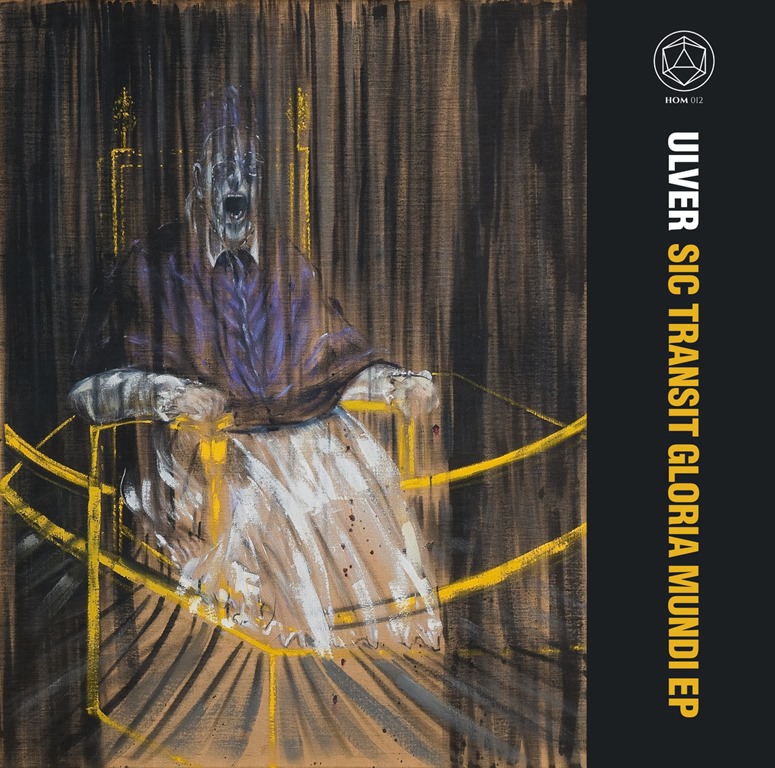
The live tracks are, as one would expect, pristine in both performance and production. It’s perhaps easier to marvel at the fidelity and the quality than it is the dynamics and the passion, and there’s nothing that connects the silent scream of pain of Francis Bacon’s ‘Study After Velasquez’ used on the cover art, but music where synths are dominant tends to sound a lot cleaner and more polished live anyway.

The Assassination of Julius Caesar opener, ‘Nemoralia’, is presented here in extended form, its dreamy disco on sedatives groove stretching past the six-minute mark, and ‘Rolling Stone’ is allowed to breathe in all its epic glory. ‘Southern Gothic’ (which does bring some atmosphere and emotion to the partly) ‘Transverberation’, both recorded at Labirinto Della Masone, Fontanellato showcase the band’s stadium-filling, reverb-soaked sound to optimal effect. And the fact of the matter is, I can’t fault it. I’m just not really feeling it, either.

AA

Ulver – Sic Transit Gloria Mundi

House Of Mythology – 6th July 2018

Christopher Nosnibor

In expressing my lack of enthusiasm for David Tibet’s collaboration with Youth under the moniker of Hypnopazūzu, I seemingly gave rise to mirth with my reference to ‘pseudomystical bullshit’. Tibet can laugh it off, but after so long churning out material that veers between the indulgent and the vapidly whimsical, I’m not convinced it’s a laughing matter.

Now, I’ll admit, I’ve never really got to grips with Current 93 – their catalogue was beyond overwhelming long before I even discovered music beyond the mainstream, and their output exists s far beyond the mainstream that I had to pass through Throbbing Gristle, Whitehouse and a slew of others having spent my early teenage years mining the seam of goth and (what was then) contemporary industrial and real indie to even learn of their existence. Context counts, and however influential Tibet has been in ultraniche, cult circles, it doesn’t alter the fact that some of his art and affiliations over the course of his career have been questionable.

ZU93 is the effectively named new collaboration between David Tibet and the ever-changing Italian group Zu, centered around Massimo Pupillo and Luca Mai. Mirror Emperor operates around a concept or theme that’s never really rendered with any clarity. All of the song titles reference the titular Mirror Emperor, but they who, what, and wherefores are absent, and there’s little guidance in the lyrics, which are fragmentary, hallucinatory, abstract and non-linear. This in itself is no problem: life is fragmentary, hallucinatory, abstract and non-linear, and we’re all accustomed to postmodern art and its fragmentary, hallucinatory, abstract and non-linear representations of the life experience.

Musically, it’s sparse but powerful. In terms of composition and arrangement, Mirror Emperor is widely varied, but very much leans toward the dark and ominous. There are brooding strings that soar and sway, drift and drag. There are moments of deep resonance and thick sonic density. Far from being a skippy, trippy, easy ride, it’s often difficult and challenging. ‘Confirming the Mirror Emperor’ is built around a dense, murky bass that booms and surges over a slow, heavy beat, before layers creep over and lift it somewhere altogether different.

Tibet’s delivery is the stumbling block. Every word is delivered with the same sense of immense portent, as if each phrase is a revelation of cosmic proportions. Which it isn’t. ‘And quickly…. A knuckle cracks… into space… Opens up her… and feels…’ he gasps with breathless wonder. I’m more breathless with wonder as to how he can still pull this shit off.

Tibet’s despondency at the emptiness of contemporary culture is something to which I can relate: his wide-eyed mysticism, more of a throwback to 60s hippiedom than the escape routes available now, I can’t. It feels oddly disjointed and out of place. While his fans’ belief in his visionary prowess and the potency of his lyricism, convinces that posterity will see him aligned with Dylan and Cohen, I’m looking at the Mirror Emperor to check out his threads, and I’m seeing none.

It does get easier with exposure: Tibet slowly diminishes into the background as the music intensifies as the album progresses. ‘The Heart of the Mirror Emperor’ is forged from woozy electronic pulsations which glitch and glow. Ignore the breathy, triptastic babble about the sun and moon and it’s pretty good.

AA

ZU93 – Mirror Emperor

ZU93 is the effectively named new collaboration between David Tibet and the ever changing Italian group Zu, centred around Massimo Pupillo and Luca Mai. House of Mythology are proud to release their debut album Mirror Emperor on the 6th July.

“The album is the closing of a long circle for me,” comments Massimo Pupillo…“I’ve been following David’s work since the early days and count Current 93 as one of the main inspirations behind my work with Zu. For me his poetry and music is like a light in the depths of human experience, a soundtrack for one’s personal descent into the unconscious fields”. Tibet says of their union,  “Zu made something very beautiful and very powerful for me to skip into. I love this album,”  Mirror Emperor adds another chapter in Tibet’s ever expanding oblique vision, personal, dense and hallucinatory. A voice through a cloud, indeed.

On Mirror Emperor, the demiurge of our demise hides in the cracks of a broken world, beneath stones and moss, among the comets, in tears and things and on BloodBoats, as if a “cosmic melancholy” (Ligotti) is being articulated. More mourning than light. Tibet explains: "We all carry different faces, different masks, and all of them will be taken from us. We were born free, and fell through the Mirror into a UnWorld, a Mirror Empire. In this Mirror Empire we are under the Mirror Emperor, and there are MANY Bad Moons Rising. At the final curtain there is scant applause."

Ahead of the album, they’re streaming ‘The Absence of the Mirror Emperor’ as a taster. Get your lugs round it here:

AA

House Of Mythology – 7th April 2017

Christopher Nosnibor

‘Patchy’ would be a reasonable assessment of Ulver’s work over recent years. While ‘ATGCLVLSSCAP’ was the manifestation of a band pushing themselves experimentally, ‘Wars of the Roses’ was pretty toothless. Their collaboration with Sunn O))), on the other hand was a belter, but then, the extent to which the album’s success was down to the hooded doom colossi is not easy to measure. It’s not that there’s anything wrong with a band trying out something different – in fact, nothing could be further from the truth. Few phrases are more irksome than ‘I know what I like, and I like what I know’, and bands who churn out the same predictable fare album after album, Quo style are simply careerists, not artists, and personally, I’m not interested. It all becomes wallpaper, aural chewing gum after a while.

But Ulver, a band who’ve evolved from their black metal origins to become a band synonymous with variety, perhaps suffer from a lack of self-awareness. Pursuing a different trajectory is fine, but it’s important to be able to assess whether or not it’s actually any cop.

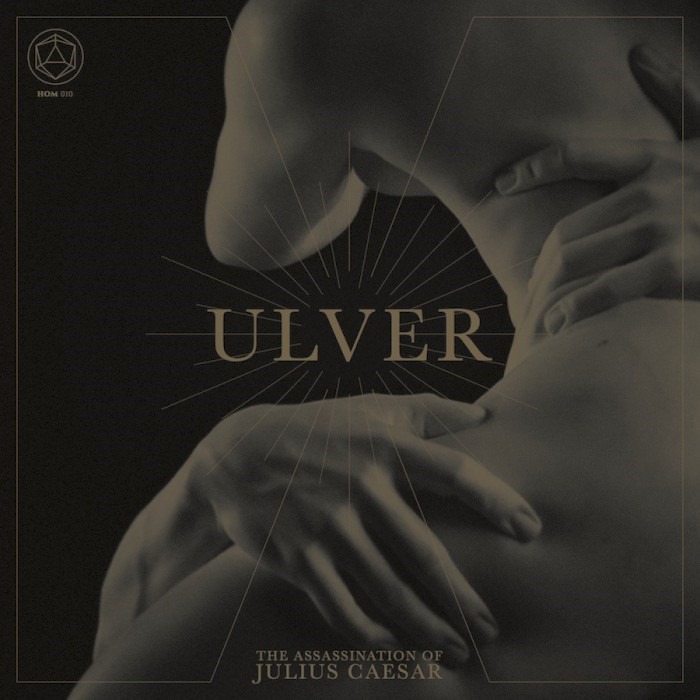
And so it is that their pop album fails not on account of the fact that it’s a pop album, but on account of the fact it’s a second-rate pop album. It apes the slick production values of the mid to late 80s, and is dominated by bombastic but bland mid-tempo synthscapes. The choruses are ultimately forgettable and there really isn’t much to get a hold of, despite what the cover art seems to imply.

Modelled on A-Ha but without any nuts, filtered through the blandening contemporary reimagining of the 80s a la Bastille but minus the hooks, and with some sub-Depeche Mode stylings thrown into the mix, it all makes for a bollock-numbingly dull affair.


ulver-the-assassination-of-julius-caesar

House Of Mythology – 26th August 2016

Christopher Nosnibor

So, House of Mythology released two albums simultaneously in August, and having exhausted myself dissecting the David Tibet / Youth collaboration, Create Christ, Sailor Boy under the Hypnopazūzu moniker, it’s taken me a while to steel myself for this.

It’s important to be clear that this is a very different kind of album, the three (or four*) long-form tracks manifesting as darkly ambient instrumental works, which build layers of dissonance and feedback over textured drones and rumbling lower frequencies. While flickers of pan-cultural influence emerge from the thrumming layers of sound, Remoteness Of Light is entirely devoid of any of the trappings of pseudomystical bullshit.

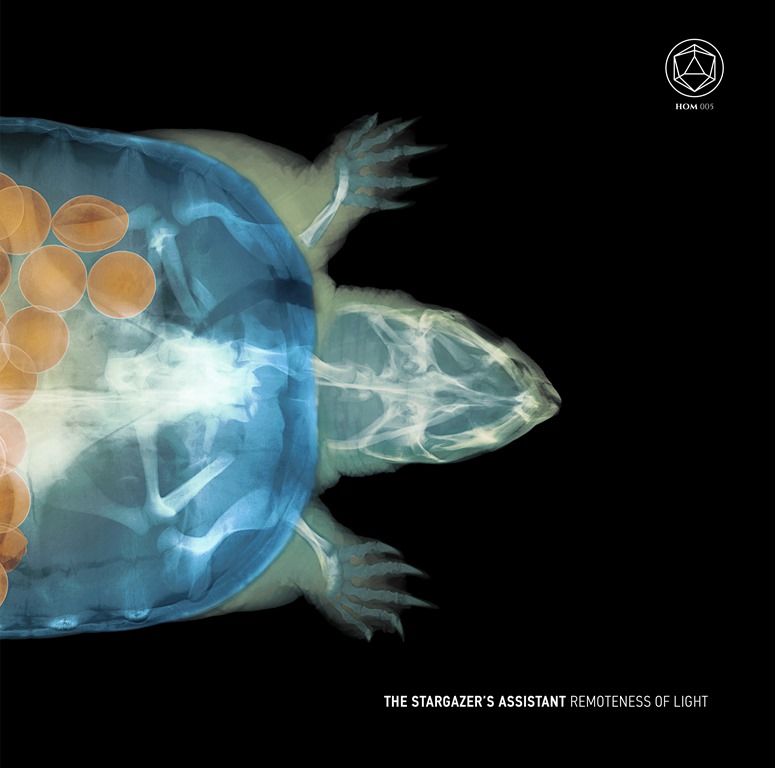
And while ‘Agents of Altitude builds layers of sound which unsettle and unnerve, ‘World of Amphibia’ which follows, is altogether more sparse and delicate, and corresponds more obviously with the nots which accompany the album and situate it in the deep submarine world, which remain every bit as intriguing and unknown as outer space.

In describing the journey of a deep-sea dive (‘Dive a kilometre into the ocean and you leave all surface illumination behind… Descend another ten and luminous forms flicker and burst through the endless black’), The Stargazer’s Assistant contextualise Remoteness Of Light. Of course, the tribal drumming and whining pipes aren’t a literal representation of the underwater experience, but they convey the strangeness of the deep-sea world and the excitement of the decent.

Moreover, there are essentially three areas which offer endless fascination, but have been wholly inadequately explored: space, the oceans, and the human mind. Remoteness Of Light delves into, and connects with, all of these:

The droning, sonorous and subtly rhythmic sonic turnings of the title track are, at times, so quiet and careful as to be barely present, but as ever, dark and unexpected, and it builds o a wheezing, whining, moaning undulation of sound, with a long, slow playout of heavy, echo-drenched percussion and a log-tapering drone. Credit where it’s due: this s sonically and texturally interesting. With a lot going on, it conforms to no specific gene, but engages the listener in unexpected ways, and the varied textures and shades of light and dark unquestionably have the capacity to tweak at the psyche.

* Track 4, ‘Birth of Decay’, is a live recording only available on the double vinyl edition, or as a download for people ordering directly from the House of Mythology web site. It wasn’t included in the digital review copy we received, so it might be awesome or utterly shit, but if it’s on a par with the rest of the album, it should be pretty good.


Outside_8