Posts Tagged ‘Hip-Hop’

Panurus Productions – 20th June 2025

Christopher Nosnibor

You’d think that cassette labels would be not only niche, but few and far between, and in the main, they are, but Newcastle is home to not one, but two labels who provide a near-endless supply of releases to satiate the need for weird shit the world over, with Cruel Nature Records being one, and Panurus Productions being the other. The labels have a considerable amount in common, too, not least of all in that they both favour music that’s of a quality, rather than a style.

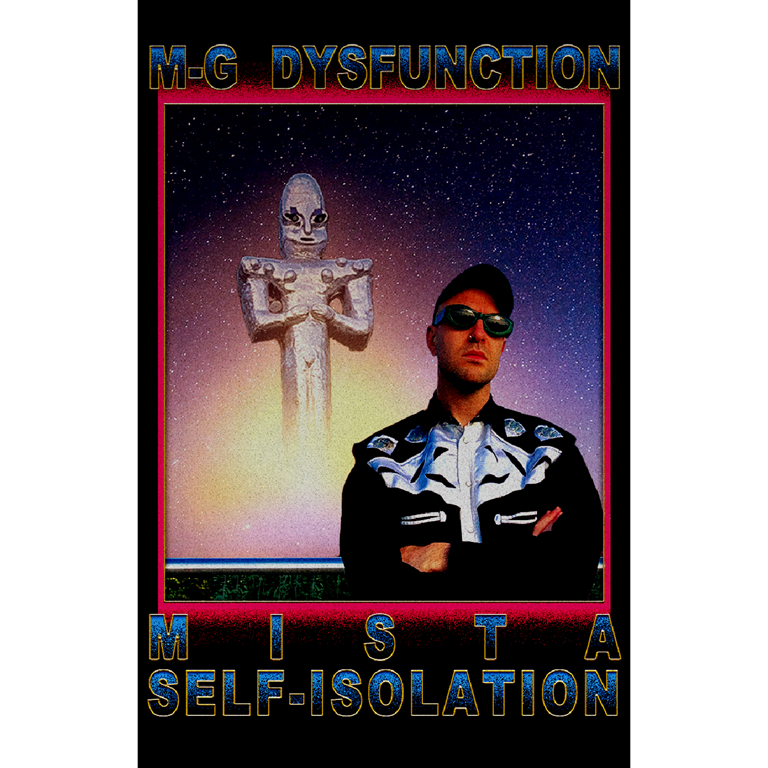
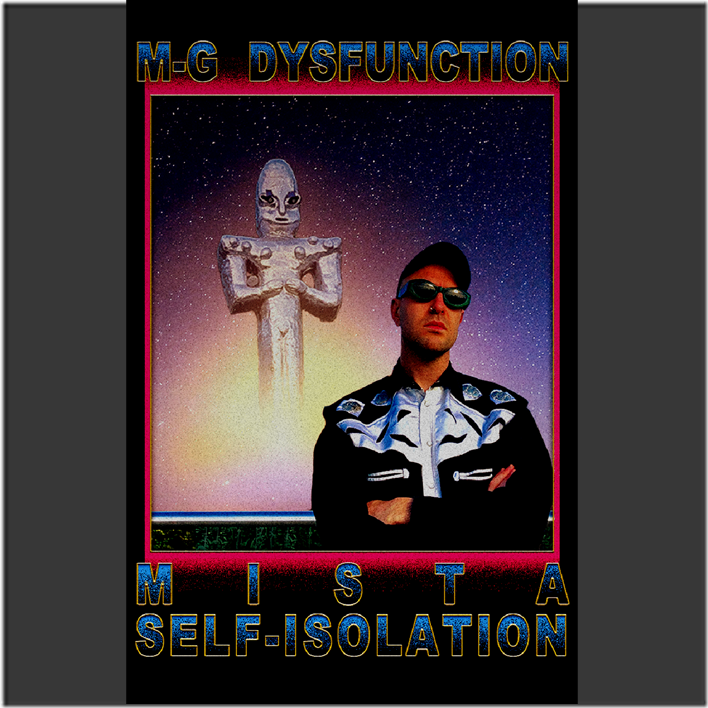
The latest Panurus release is a perfect case in point. The label’s previous offering, a split release from Belk and Casing was a raw blast of guitar overdrive. In contrast, the third album from M-G Dysfunction is of an altogether more experimental bent, leaning toward hip-hop and beat-driven electronics, but once again marking the close connection between the scenes in Leeds and Newcastle, both of which have become significant spawning grounds for the offbeat, the difficult, the wilfully obscure.

According to the blurb, ‘Mista Self-Isolation is the fullest realisation of the M-G Dysfunction project to date – a record of trepidation and humour, of lopsided passion and warped poetics. This album is about surveying the wreckage of monoculture and navigating the act of making music amidst a land-grab of rights, melodies and rhythms by people who never liked music in the first place. It’s about properly honest artistic expression – what “keeping it real” looks like, sounds like, feels like in 2024. It’s about getting some official beats and saying fly shit over them.’

That it’s quirky may be obvious, but it’s a necessary headline observation. On the one hand, it’s white rap, so there’s an awkwardness, but on the other, there’s some dirty experimental electronic noise layered over the beats, and this is an act that shared a stage with Benefits, a band who may have made their reputation by being angry, shouty, and noisy, but who aren’t without humour or an appreciation of nuance.

As tracks like ‘Roger Daltrey (Permanent Record)’ illustrate, M-G Dysfunction are multifaceted – something likely to leave many quite nonplussed. How can they do jokey, daft, a bit random and be serious at the same time? In truth, the answer is simple: because human beings are complex creatures, capable of a vast range of emotions and infinite ways of expressing them. It’s something we seem to have lost sight of in recent years, when everything has been boiled down to binaries, and everything is a conflict because the lines have been marked in such either / or terms. It’s no longer possible to be a woolly socialist: suggest that, I dunno, people on disability benefits are right to receive free prescriptions, and you’re labelled a left-wing extremist, a communist, and by the way, disabled people should get back into work or die. Something is severely fucking wrong with this picture.

Back in the early 90s, genre crossovers were all the rage, and the Judgement Night soundtrack was a real watershed moment that took the idea of rock / rap crossover, first witnessed in the mainstream when Run DMC and Aerosmith did ‘Walk This Way’ to the next level. At that time, it felt like a new future was emerging, and perhaps, even a future where boundaries and differences were dismantled. But here we are, and times are bleak.

But with Mista Self-Isolation – an album which is by no means an exercise in buoyant pop tunes – M-G Dysfunction show that in 2025, there is still scope to create something that speaks of what it is to be human.

The structured, beat-led songs are interspersed with self-reflective spoken word segments, spanning CBT meditation and contemplations on experiences and life in general. It is truly impossible to predict the twists and turns this album takes.

’50 Words for Blow’ comes on like a hip-hop-inspired barber’s shop quartet, while ‘John Wick’ is a critical memo, and the title track is abstract, minimal, dreamy but quietly intense. ‘Junglists Only’ is a perfectly executed pseudo-banger which knows it’s absurd and works because of it. The last song, ‘All that is Solid Melts into Deez Nuts’ evokes both humour and at the same time draws attention to M-G Dysfunction’s hip-hop credentials. If you know, you know, as cunts say, but for those who don’t, it’s a reference to Dr Dre’s ‘Deeez Nuuuts’ from The Chronic in 1992.

Postmodernism is alive and well after all, at least in some quarters, and it’s very well in the world of M-G Dysfunction. There is a lot going on on Mista Self-Isolation – and it’s all good.

AA
cover

12th July 2024

Christopher Nosnibor

As genre crossovers go, Post-Punk/Alt Hip Hop is quite a rare one. Perhaps not as radical or as extreme as the kind of crossovers with alternative and metal bands and hip-hop acts that took place on the groundbreaking Judgement Night soundtrack in the early 90s, but at this point in time, where pretty much anything goes, this is unusual. Actually, I’d like to step back from that for a moment. Not so long ago, it felt as if anything went, that postmodernism had truly reached its peak and you could have grindcore with a kazoo and not be too surprised. More recently, while pockets of weirdness are strongly entrenched – as the recent Guardian article on Nerdcore, which managed to mention Petrol Hoers and BxLxOxBxBxY, both vehicles for beardy, ferret-keeping, pant-wearing York legend Dan Buckley (disclosure – Noisenibor performed a one-off collaboration with him in his guise as Danny Carnage, which was everything you’d expect) – things seems to have become more siloed, more set, more fixed, when it comes to genre parameters. Fluidity and crossovers remain, but wild invention seems to have given way to something of a return to convention.

‘Imagine Beck meets Sleaford Mods, meets Slowthai’ the bio says. Only, listening to this, you don’t have to imagine.

What’s noteworthy about these touchstones is that two are very white, and two are very British, the British acts both being overtly political, while all three draw on elements of hip-hop in their work. None of this is to denigrate anything about Oscar Mic or ‘Sun Star’, and nor is it a criticism to comment that it’s a hip-hop tune which is overtly white, as delivered by a pale guy with a vaguely gingery moustache. It’s a true testament to multiculturalism and artistic cross-pollination, and what’s more, ‘Sun Star’ boasts some truly sinister bass frequencies which strike way low and hit hard like subsonic torpedoes beneath the shuffling beat that clatters away nonchalantly all the way. Toss in some Beastie Boys and you’re getting a sense of where this is at.

Then there’s the really melodic indie break, and the thing has something of a quirk / arty / studenty vibe, while the video bursts with experimental oddness. And when you piece it all together… it’s gloriously mismatched and off-kilter. And we should celebrate its non-conformity.

AA

SUN STAR COVER ART

15th December 2023

Christopher Nosnibor

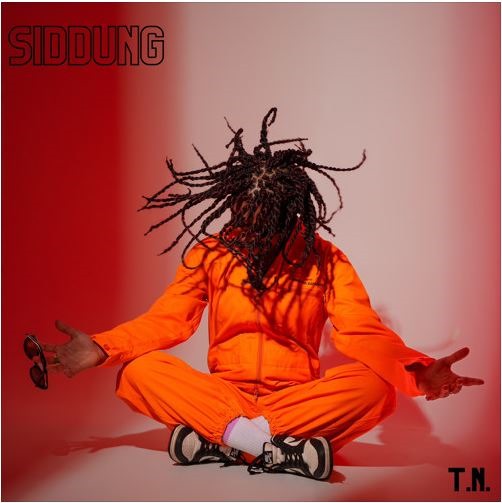
This is an odd one which will likely baffle and bewilder many of those who encounter it – which will likely be far fewer than it deserves. It’s rare for a track that isn’t thrash or grindcore to run to less than a minute and a half, for a start. I know absolutely nothing about T.N. beyond that they’re from Spain, but T.N.’s ‘Siddung’ is a sliver of minimalist hip-hop that sends a shiver down the spine.

If commercial hip-hop has come to be synonymous with bragging and banging, flashing cash and blades, it’s worth remembering that its roots were a different kind of ‘street’, and with acts like Last Poets emerged from spoken word, the jazz and beat scene of the late 50s, giving a voice to black culture and the civil rights movement.

This track is something of a hybrid – it’s ‘street’ but it’s introspective and uncomfortable, and after an atmospheric introduction, halts just as it seems to be finding its groove. It’s difficult to unravel the track’s meaning or intent: ‘siddung’ is patois for ‘sit down’ – as the cover art relays in a literal sense – but beyond that…?

It feels more like a sketch than a complete song, but one could imagine an album containing maybe twenty or so of these vignettes would add up to paint a quite compelling picture.

1st December 2023

Christopher Nosnibor

I’m aware that there’s a conspicuous absence of rap and hip-hop to be found in my coverage. I suppose that’s largely because it doesn’t really fit the rubric I envisaged for Aural Aggravation when I decided to do my own thing back in 2015. But occasionally I worry that this feels discriminatory, not to mention unjustly dismissive, of a huge swathe of music that could well appeal not only to myself, but visitors to the site. The fact I’ve raved about dälek on more than one occasion not only evidences that I’m not completely hip-hop averse, but also reminds me of the same. Some hip-hop is pretty dark, and also pretty heavy.

Snoop Dogg isn’t a name one commonly associates with dark or heavy, and my interest in this release was in fact piqued by noticing that Ooberfuse are playing a tiny venue in York ten minutes up the road from me here in York next week. How does an act who’s just released single with Snoop come to be doing that? The music industry is screwed, but it’s clear Ooberfuse aren’t doing it for the fame or the glory.

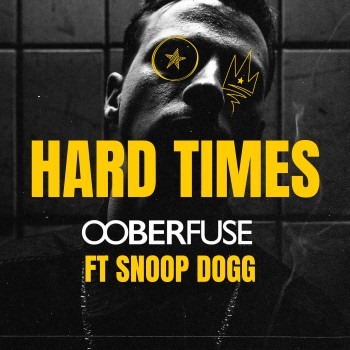
Said single, ‘Hard Times’ represents the best of hip-hop. It is dark, and it is heavy, and comes with a hard social message.

That many people find Christmas a challenging time, and in particular the homeless, is widely documented, but this documentation tends to remain the domain of the further corners of news outlets and adverts from charities. But against a stark, dark musical backing – and this is when hip-hop is absolutely at its best.

The first-person lyrics are direct and powerful, and backed by a shuffling beat and stark piano, it’s a hard-hitting track paired with an equally powerful video. One gets the impression that Snoop’s contribution serves primarily to draw attention – and I say ‘good’. This track needs to be heard and people really need to fucking listen. In a world where we have billionaires, there should be no such thing as poverty.

AA

su80596-Hard_Times_Artwork_29

Panurus Productions – 1st December 2023

Christopher Nosnibor

What better way to mark the start of advent than with a new release on Newcastle’s Panurus Productions, home of noisy and weird shit on tape, eh?

This latest offering covers both bases, being noisy and weird, but predominantly weird.

Panurus releases always come with cracking explanatory notes, and they’re worth quoting for this one, too:

‘Glitching and laced with interference from its temporal transit, Splat R. intercepts nine broadcasts of lo-fi noise drenched beats from a possible future. Hooks lead you through what could be samples, generated electronica or interference noise, that at times meshes and augments the beat and others swells over and underneath it with a sense of menace. There’s a sense of retro-future to the album in its tones and the recognisability of some of the sound used, but presented as if those ideas were carried further forward before being thrown back towards us, warped and distorted; as if it was constructed from pieces of culture scavenged in the aftermath of some distant cataclysm.’

My work here is done.

Of course, I’m not being entirely serious, but whereas many press releases bring a heap of hype, much of which is a world apart from the product being presented, or otherwise fails to really explain what the release is about, Panurus always absolutely nail it in their summaries.

But of course there is more. ‘Kill Spill Thrill’ is a murky, messy mash-up which evokes The Last Poets, Dalek, and RZA’s Bobby Digital, as well as glitched-up, chewed-up, mangled elevator music. It’s chilled-out hip-hop, trip-hop, and ambient tossed together, melted down, and left to fester and ferment for a while. ‘peace to you, if you’re willing to fight for it’ adds a whole load of wrecking bass and distortion to the bubbling dingy mess, lurching into the territory of dirty experimental industrial noise in the vein of Throbbing Gristle, only with samples thrown in hither and thither. ‘reality denied comes back to haunt’ is plain fucking horrible: lurching booms of thunderous noise and trills of feedback and wailing synths pushed to their limits in a power electronics meltdown suddenly segues into a crackling mess of club-friendly dance, but distorted in a nightmarish way.

‘authentic creation is a gift to the future’ lurches so hard as to reach the pit of the stomach, before ‘there is nothing new under the sun, but there are new suns’ pumps a beefy beat that’s pure nightclub – but obviously, the vibe is anything but buoyant or euphoric. It’s bad trip, apocalyptic, the dance dynamics distorted to the shade of a nightmare, fizzing sparks and subsonic detonations occurring simultaneously, like a nuclear blast landing a direct hit on a night club.

I can’t decide if I need to puke or shit as the messy mass of stuttering overload stammers and rolls and lurches onwards. This is glitch of the highest order: the briefest, almost imperceptible of stammers are amplified to the most uncomfortable, blurring, bilious horrors which emulate the worst post-binge room-spin.

Kill Spill Thrill is a splurging, intestinal-churning, head-shredding sonic attach that lands thick and heavy. For all of its touchstones, it doesn’t sound quite like anything else, and it rips the ground before it to devastating effect.

AA

Cover

Both deft and wacky this new single sees Jeshi return with a signature bang. Lyrically, he’s at his best and never sacrifices on ambition even when delving into detail.

Beginning with a knight in a suit of armour wistfully watching videos of galloping horses on an iPhone, the visual is a wild ride from the first frame to its final. Filmed in East London, local landmarks like the historic George Tavern form the atmospheric backdrop to the hilarious ‘Big Knight Out’. Jeshi has cultivated a cult following who expect nothing but the best from the AIM award winner’s visual offerings. It’s safe to say he never disappoints.

The video which was directed by previous ‘Sick’ collaborator Francis Plummer, known predominantly for his photography (Stussy, Bone Soda, The Face), who proves direction is a skill he truly excels in.

With production by early Jeshi collaborators by Max Frith and Cajm.

Jeshi explains the making of ‘Air Raid’: “We went and stayed in this house in the middle of a field in Wales to work on the project and ‘Air Raid’ was one of the tracks we made in that living room. We were all losing our shit so hype on it jumping around the room playing it over and over… happy to have it out in the world now.

Soon as we made the song we wanted to have a knight getting sturdy to it and Francis just built on that for the video idea… we follow his quest through London to link me at the pub.”

AA

This year Jeshi hasn’t stopped. With the touring schedule of an 80s rock band Jeshi has stunned festival crowds at Glastonbury, Project 6, We Love Green, Outbreak, Dour, Midi, Latitude, Luzern Live, Sundown & Warehouse Projet’s Repercussions. He also managed to fit in playing his first headline show in Tokyo and time to front campaigns with Nike Air Max and Dr. Martens. On top of that Jeshi secured his second Top Boy soundtrack feature with ‘Killing Me Slowly” appearing on the final season opening Episode 2. Cementing his impending global domination fans can look forward to enjoying ‘Protein V2 ft. Obongjayar & WESTSIDE BOOGIE’ while playing the new EA FC24 game (out 29th September).

Since his critically acclaimed EP ‘Bad Taste’, Jeshi has been creating an enviable legacy of work. Arriving in May of 2023, Jeshi shared his ‘era-defining’ debut album ‘Universal Credit’ with the world. Incredibly multidimensional, ‘Universal Credit’ was searing, personal, relatable & humorous. Wowing critics and fans alike it had an undeniable impact.

AA

40428ed3-8b2f-f724-068f-c8d223da32e4

Credit: Francis Plummer

Ipecac Recordings – 29th April 2022

Christopher Nosnibor

Dälek emerged in the late 90s when hip-hop was transforming in all directions. But while the Wu-Tang Clan and their offshoot projects had a level of dynamism and radicalism about them, it’s no understatement that Dälek shattered through their achievements, and if there was any debate about that, then Precipice really should settle it. It’s felt like we’ve been teetering on the edge of a precipice for a long time, and that pre-millennium tension has, over time, proven justified as the entire world careers into some kind of end-of-days chaos. If this sounds like some hysterical end-of-days paranoia panic, you’re probably not paying attention. The pandemic was just a sideshow, a distraction from global tension, climate change… Trump, Brexit, the war in Ukraine and the threat of nuclear war stepped up to levels not seen since the 80s… Are we still at the edge of the precipice, or have we just tipped – or powered, full-throttle – over it? I’m too dazed and bewildered to know, but Dälek have provided a soundtrack that conveys the sense of confusion and dislocation brought on by uncertainty and tension.

‘Lest We Forget’ is a mid-shade, mid-tempo swell of ambience that swirls around densely before ‘Boycott’ hits hard and heavy. Christ, that booming bass! That eddying noise that drones and warps! The beats! Man, the fucking beats! They’re heavy alright, and there’s no let up on ‘Decimation (Dis Nation)’.

If so much mainstream contemporary hip-hop has been overtly commercial, with Precipice, Dälek remind that hip-hop’s origins were a voice of protest, of antagonism toward the mainstream, against the government, against oppression, against suppression. N.W.A were telling it like it is with ‘Fuck Tha Police’, and fuck shit, nothing has changed thirty-four years later.

Dälek are a whole lot more subtle and less up-front and in your face in their antagonism, but they’re no less aggrieved, and no less political. This means that their impact is just as powerful, albeit in different ways, and sonically, Dälek are devastating. There’s a physicality to their music, and where the lyrics aren’t necessarily so prominent, the weight of the beats, the density of the bass and the murk of the midrange combine to create a force like colliding with a wall of breeze blocks.

‘The Harbingers’ slows things down, and it’s dark, stark, the atmosphere desperate, desolate, while ‘Devotion (when I cry the wind disappears)’ feels almost uplifting as the synths soar and their subtle, sonorous sounds swoop upwards before the seven-minute ‘A Heretic’s Inheritance’ crashes in, hard, cyclical, heavy, an urgent throbbing riff marking the intro amidst a maelstrom of scratching feedback and extraneous noise. It throbs and thrums, and this isn’t hip-hop like you get on the radio, it’s not the shit—hop of the mainstream beloved by the masses. No, this is fucking brutal, and it kicks and punches hard, repeatedly, leaving you winded, breathless, gurgling., while MC dälek repeats the mantra ‘I hold myself to high standards / I don’t give a fuck if the gods are angry’. No doubt that applies to the gods of capital. Fuck them.

The title track is weightier still, and it’s positively skull-crushing, and it goes to show that it doesn’t have to be metal to be heavy, and the final track, ‘Incite’ is stark, tense, and gloomy, rounding off an album that packs a lot of weight and tension. It’s hard to place exactly how it feels as an experience, and how it sits, musically. Precipice is the sound of dislocation, of alienation. It’s real life.

AA

12_GF_SLEEVE

Cruel Nature Records – 11th March 2022

Christopher Nosnibor

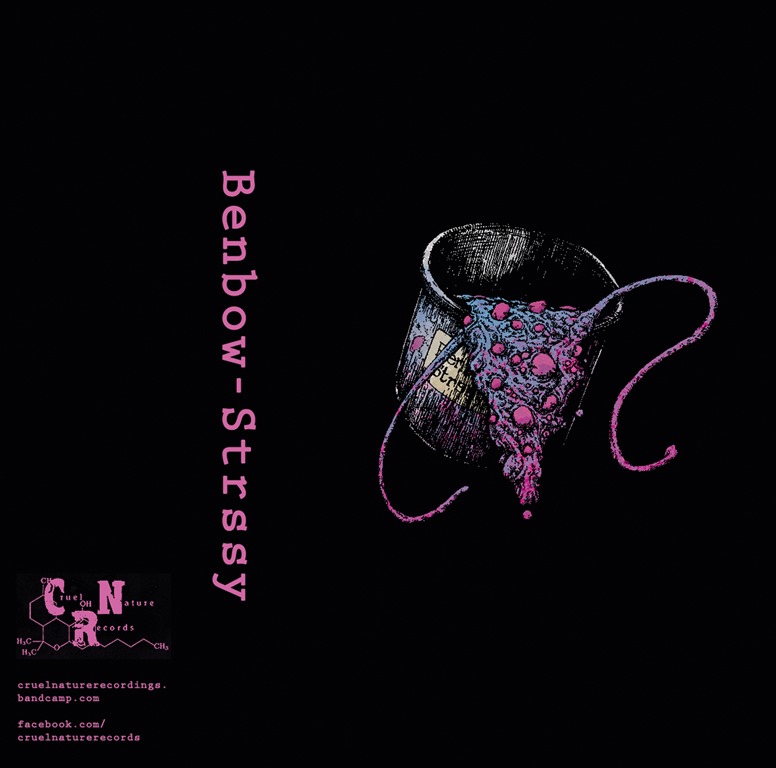
This is something that the CD or digital release simply cannot really do justice to as a full, multi-faceted, multi-sensory experience: the split LP. And while I’m more of a fan of vinyl and cassette, this most certainly does the job: you have to turn the thing over. It is truly an album of two halves. In this case, half Benbow, and half Strssy. And while some split releases simply stick two artists back to back – and there’s nothing wrong with that – Benbow and Strssy have history.

As the biographical notes detail, they first met ‘in a basement café in Lausanne, Switzerland just before the first sliced loaf was presented at the World’s Fair. Benbow had just finished a tour of the Alps with wandering trapeze troupe, NORMAL MAN while Strssy had taken a well-earned sabbatical from conjoined mime act, DIET PILLS. Over the following years they exchanged correspondence and encouragement as they independently began making experimental electronic music’. This split release, then, is pitched as ‘a celebration of this journey’.

Benbow’s eight cuts make for a hell of a journey in their own right. The tone is far from celebratory: it’s dark, claustrophobic, driven by dense beats and even denser atmosphere. Short, fragmentary snippets that straddle the space between sketched ideas and something more fully realised, all bar two are under three minutes in duration, but pack in a lot. Broadly, Benbow explores the tropes of minimalist, dark-hip hop, with thwacking solid beats and phat bass that gnaws at the gut with simple repetitive motifs or only three of four notes. It’s kinda heavy, and the effect is cumulative.

‘Slowly’ grinds, chugs, and churns away, the bass thick and gnarly amidst a swirl of reverberating synth oscillations that emulate the nagging call of a siren toward the end. Benbow’s final track, ‘Two’ marks quite a shift, with strings galore and an altogether lighter mood.

Strssy similarly trades in contrasts and juxtapositions. ‘Off a Watering Can’ starts out gentle, but when the beat kicks in, it’s pretty bloody heavy, and the mood changes significantly. It’s no longer chillout, ambience, but dense and tense, and layers of noise build exponentially to incorporate shrill whistles of modular synth abuse. ‘Deep Interior’ is all the twitch and bleep against dank, rumbling caverns of sound and then, from nowhere, it’s more rapid and relentless wails like a misfiring smoke alarm, only with a squeaky toy embedded in the circuitry. On a bad day, I’d likely find this seriously fucking annoying, but in a balanced and objective mood, it’s possible to give kudos to the way in which Strssy incorporates dance elements into a more freeform approach to electronic music which also incorporates industrial and ambient leanings. ‘Bath Night’ is a thumping industrial melting pot that’s more like drowning slowly than floating serenely, while ‘A Beautiful Brown Catalogue’ is all about the bowels with its booming bass frequencies, plus additional wild trumpet action. It’s got that late 80s wax Trax! vibe, but with a more experimental twist, and it pinches the brain.

Paired, Benbow and Strssy make for a formidable duo, a tag-team of hard-hitting genre-splicing, slow-groove bashing behemoths.

AA

Xcover

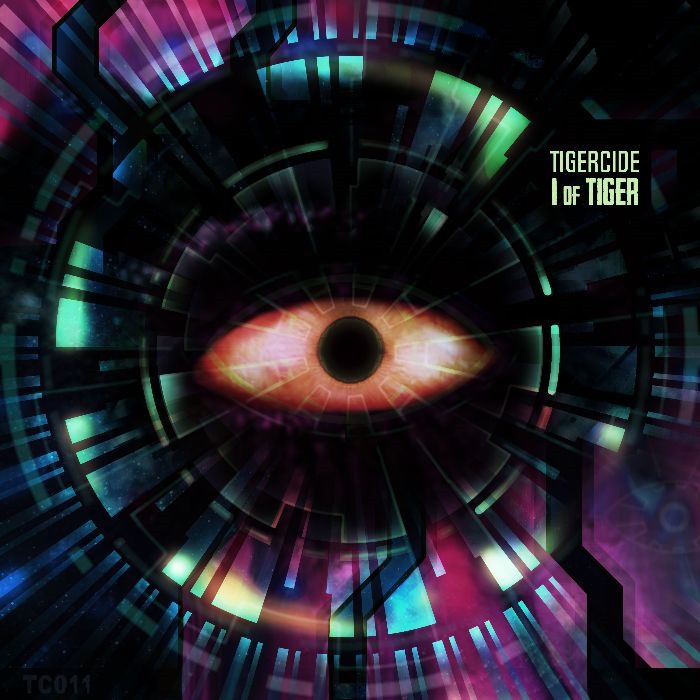
Beneath the bright lights, and beyond the velvet ropes of Hollywood lies a different Southern California: a desolate land filled with darkness, punctuated by unrealized dreams, and broken down with anguished hearts. TIGERCIDE, formed half a decade ago in LA, gives musical form to this landscape with the ethereal, melancholic vocals of Shexist and the sparse, shadowy, and balanced beats of Saint Brendan.

The post-punk of bands like Joy Division and The Fall embodied a de-industrializing Manchester. The Bristol sound of Massive Attack and Portishead gave voice to the multicultural grittiness of their city. So too does the darkwave trip-hop of TIGERCIDE capture the ethos of Angelenos anxious about their future. In a city characterized by soaring rents, temperatures, and population, can there be any more California dreaming?

Watch the video here:

AA

f4f4cd55-d4ee-124a-c744-229065ba3ea9

SIGE Records – SIGE100 – 25th June 2021

Christopher Nosnibor

Woah! Dizzying, head-spinning chaos and cacophony! Twangs and bangs – strings stretched to within a millimetre of snapping, bending and scraping and scratching. Every instrument is playing across the others at an angle. About ten minutes into side one, you realise the discoordinated racket, having had some flickers of brass bubble through – like tentative flames licking around an oversized log on a fire that’s yet to fully establish itself -has congealed into a dense, soupy drone with industrial strength hip-hop beats played by a live drummer. And it just doesn’t stop. For twenty minutes straight. It gargles and parps and booms and toots and parps and growls and farts on and on and on, while the drums clatter and crash and thwack and thwock and bump and fuck me it’s an almighty headache-inducing din.

Details about this release are fairly limited, but details tend to be lost to history anyway. And most of history suggests that White People Killed Them is a common recurring theme throughout. There are so many of ‘them’, anonymous, often buried in unmarked graves in the name of progress – white progress. History is a narrative of shameful exploitation and bloodshed.

Whether or not the three musicians, Raven Chacon, John Dieterich, and Marshall Trammel, intended any such connotations when they came together in New Mexico in 2019, I have no idea, but the forty minutes of music recorded and relayed on this eponymous release would certainly make for a fitting soundtrack to the sheer brutality of history as a catalogue of killing. It’s so relentless, it makes you want to stand up and shout ‘stop! Enough is enough!’ But of course, as history shows us, it never stops. And nor, seemingly, does this album. It’s not a particularly pleasurable experience. It is an intense experience, and one that instils a kind of anxious excitement, even exhilaration. But pleasure… not really.

Things take a turn for the strange on side two, where from some warped, stretched-tape nastiness, there’s some twangy, spaghetti western weirdness that emerges briefly, before everything gets fucked up and mangled again. And it just builds and then sustains this massive wall of thick, discomfiting sound. The end leaves you absolutely drained, desiccated, mentally and physically decimated. If it was possible to achieve death by avant-jazz, White People Killed Them have slain us all with this monster.

AA

SIGE100_front