Posts Tagged ‘grief’

Helmed by Black and Cherokee composer and multi-instrumentalist Takiaya Reed, Divide and Dissolve will release their new album, Insatiable, on April 18 via Bella Union.

The 10 track album run the gamut of doom metal – from the ear-splitting depths of lead single ‘Monolithic’, to contemplative, softer moments on the aptly titled song ‘Grief’, released today. Like all of Divide and Dissolve’s music, Insatiable is almost entirely instrumental.

While the album’s sheer grandiosity represents an evolution in Divide and Dissolve’s sound, it also marks the very first time that Takiaya has ever lent vocals to a D//D song. On ’Grief’ her distorted voice echoes atop a vibrating bass tone, repeating the lyrics: “I don’t know what I’m supposed to do/ I’m so lonely without you.” Takiaya explains, “The voice is such a mysterious  instrument. This album feels different, and I wanted to honour that”.

The director of the music video, Sepi Mashiahof, adds; “The music video for ‘Grief’ is an ode to the feelings of empowerment, resistance, and sadness that Divide and Dissolve weaves into our bodies. It’s an expressionist diary made up of dissonant and revelatory memories. Grief eclipses everything around us, innocuously lingering in the functional movements of our daily lives, then aggressively literal in the reflective silence behind our eyes. Grief is inherent to our existence, knowing that a better world exists for all of us and its potential is boundless, yet we’re made to suffer the atrocities of greed and exploitation instead. We can honor Grief as a passage of life, but we must resist the forces that impose it as a numbness to injustice.”

AA

Divide and Dissolve live dates (so far):

18-05-2025 Desertfest London – London
30-08-2025 Supersonic Festival – Birmingham

AA

Screenshot2025-03-25145553-99079e0b6d03cf3c

Photo credit: Brandon McClain @eathumans

THURNIN present the video clip ‘Arcturus’ as the first single taken from Dutch dream folk pioneer Jurre Timmer’s forthcoming new album Harmr (Old Norse for ‘grief’ or ‘sorrow’), which is slated for release on March 14, 2025.

THURNIN comment: “For the first advance single of this album, I have chosen ‘Arcturus’ the most obvious track,” composer and instrumentralist Jurre Timmer writes. “The track offers a mix of traditional Thurnin songwriting and a glimpse of the atmosphere that defines Harmr. This song celebrates the value of life, for there would be no grief without love.”

4689472b-02b1-7661-189b-77c15614f208

THURNIN’s third album Harmr was born out of the deep feeling of grief that only love can bring. The title refers to an old Icelandic word that is probably more literally translated as ‘grief’ while its contemporary meaning rather implies ‘sorrow’. The loss of one or even more loved beings is hard to bear for any person.

It is therefore hardly surprising that the lower key and a reduced tempo are permeating Harmr throughout most of the songs; and much more so than on its predecessor Útiseta (2023), on which THURNIN mastermind Jurre Timmer interpreted this numinous act as a way to commune with nature, and to gain spiritual wisdom in a time of introspection and transcendence.

Greek black metal collective Eldingar is excited to announce the release of their second album, Lysistrata, due out on November 1st via Vinyl Store. Following the success of their 2021 debut Maenads, the band’s latest effort builds on their intense and philosophical approach to music.

The band shared their thoughts on the track: “’ODE’ is a hymn to the enduring pain and the human struggle to assimilate grief, often finding it difficult to express sorrow through tears. The lyrics touch on the emotional states that can lead people to despair, and in some cases, to suicide. Psychological dead ends, a timeless affliction, plague humanity and ultimately bring destruction—both in our era and throughout history.”

Lysistrata delves into themes of the dissolution of armies and the rejection of power, while exploring emotional liberation from submission. Eldingar’s music combines anti-war sentiments and reverence for nature, drawing inspiration from ancient Greek philosophy and weaving them into their sound.

Listen here:

AA

19493eca-1067-4e24-b4d3-1f161dc80ff3

Fysisk Format Records – 26th January 2024

Christopher Nosnibor

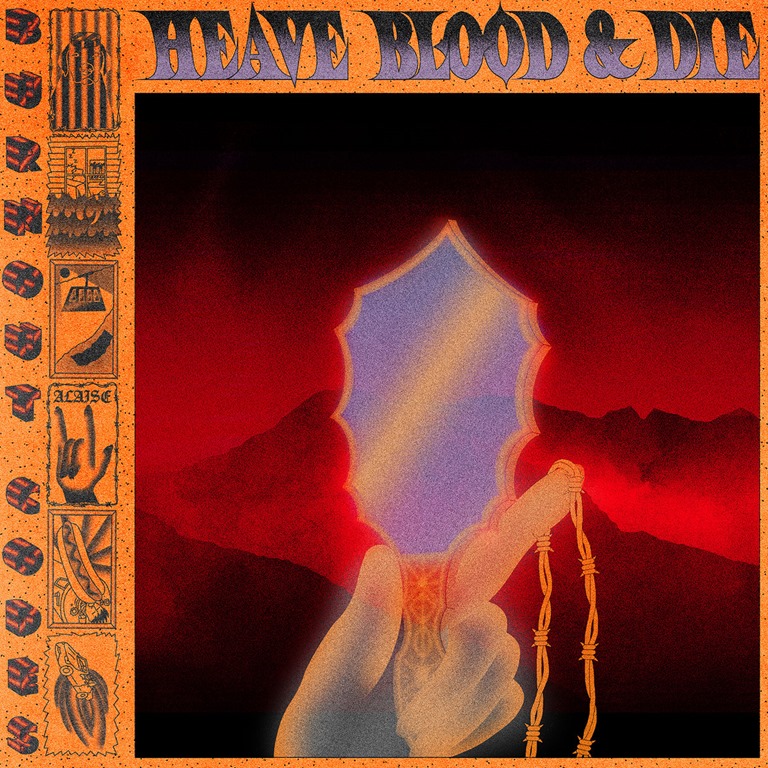
The arrival of single ‘Mjelle’ just the other day provided a strong alert to the imminent arrival of Heave Blood & Die’s Burnout Codes. The band’s name may have a certain comic-book flippancy about it, but their fourth album comes with altogether less cartoony connotations: as the accompanying text explains, ‘Dedicated to bassist Eivind Imingen, who decided to end his life just following the recordings of the album, Burnout Codes is shrouded in sadness and tragedy, and shows the Norwegian collective offering their most textured and innovative album to date.’

It’s not even a mater of English as a second-language: the phrase ‘decided to end his life’ is a difficult one to digest, and one which reminds us that there is no comfortable way to articulate death, and particularly premature death by suicide. Words simply don’t work, they don’t fit, they don’t sound right, they don’t read right. There are no words. But of course, the job of the artist it to find words, and to articulate these essentially unspeakable, incomprehensible things, by various media, be it words alone music, visuals, a combination of any or all of these.

Some albums stand out, at least to me, as being weighted by the perspective of events which would follow soon after: Nirvana’s In Utero and One Last Laugh In a Place of Dying by The God Machine, and, of course, Joy Division’s Closer all resonate with the echoes of foreshadowing deep tragedy, and would also add the altogether lesser known album Nails Through Bird Feet by Chris Tenz – one of the first albums I reviewed on here (positively), to learn some time later that Chris had not only taken his own life just a few weeks later, but did so after visiting York in his final days.

I struggle with the dichotomy between the contemporary dialogue around these things: while there is a huge drive to encourage open discussions about mental health, some feel that anything mentioning anxiety, depression, and suicide should come with a trigger warning and that people should be able to be excused from being confronted with these topics. I do understand that they’re difficult and upsetting, but how does one navigate life by avoiding anything difficult, upsetting, even traumatic? Being recently bereaved myself, I feel I need to front up to one of life’s only certainties, namely that it will end.

Like all of the albums mentioned previously, Burnout Codes is not an album which is about suicide, or grief, but a dark album which explores these challenging themes, and has taken on further dimensions on release due to the addition of unforeseen context. We shouldn’t judge the album within these contexts alone, though.

Sonically, Burnout Codes is a fiery blast of fury out of the traps with the buzzing throb of ‘Dog Days’, a furious collision of grunge and raging hardcore punk which leaves you dazed and breathless, and it’s immediately followed by the sub-three-minute assault that is ‘Men Like You’, which slams in, drums to the fore before locking into a scuzzy wall of guitar and synth, like Girls vs Boys produced by Steve Albini.

‘Hits’ is built around a nagging, throbbing pairing of guitar and synth and a shouty vocal that evokes all the fist pumping. But no, there’s more detail than that. The synths are stark, chilly, droning, the sound of Closer­ era Joy Division, early New Order, The Cure even, but the guitar is positively grungy, and these contrasts create a dynamic tension that serves to sonically articulate a mood of internal conflict, of the experience of feeling jittery, adrenalized, and it’s ramped up threefold on ‘Stress City’, a crackling soundtrack to that sense of feeling overwhelmed, overloaded, overstimulated. If you’ve ever been there, it will resonate deep and hard – and if you haven’t, it’s still a rush of a tune.

Single cut ‘Mjelle’ sits in the middle of the album and marks a shift in placing the synths to the fore and pulling back the guitars, and it’s an obvious single choice with its more clearly-defined chorus and hints of Gary Numan. A slower song, and the album’s longest, extending beyond five minutes, it stands out in the set, but make no mistake that the atmosphere is pretty fucking bleak.

‘Things That Hurt’ races back in with a fierce post-punk darkness, a serpentine synth intertwining with a slippery guitar lead and pounding drums which bring an explosion of energy.

The contrasts and shifts in pace and mood are integral to Burnout Codes, and for this reason, ‘HEATWAVE 3000’ packs a late surprise with its rawness and 80s synth oscillations and strolling bass: it comes on like Killing Joke, with a full, bass-led production.

‘Seen it All’ brings a harrowing conclusion, and bringing the album to a heavy conclusion, Desolate (Keepin) repeats the phrase ‘everything burns’, a crunch of distortion and a rasp of desperation accentuating the pained, ragged appraisal of the mess of life. The statement can be taken metaphorically and literally as we recall how wildfires ripped through Greece last summer in the world’s hottest year on record. The worlds is on fire. Wars rage around the globe. Everything does, indeed, burn… and eventually, burns out.

AA

945712