Posts Tagged ‘Fågelle’

Self release – 27th February 2026

Christopher Nosnibor

‘Riv mig’ is so quiet at first you can hear slight shuffles during the introduction, but it builds, first with the vocal intensity, her voice cracking slightly, before the instrumentation explodes. Nothing could be more fitting for a song the title of which translates as ‘Demolish Me’, and the beefy electro groove at the start of the segmented and transitional ‘Before the Moths Get In’ is prefaced by a brief interlude in the form of ‘Skogsskrik 1’ which contains the faintest of ambience and a raw, primal scream. The title’s translation ‘Forest Scream 1’ is self-explanatory, and this seems like an appropriate point to delve into what Bränn min jord is really about.

In a sense, it’s about homecoming, but it’s also so much more. The accompanying notes are worth quoting at this point:

‘The inland of Halland, a patchwork of forests and abandoned mills in southern Sweden, is the backdrop for Fågelle’s most personal album yet… After years in Berlin and Gothenburg, she returned home — not out of nostalgia, but as an act of reclamation. She wanted to reconnect with the soil that shaped her and let something new grow from what had been left behind.

Bränn min jord (“Burn my soil”) grew from this process of renewal. Its title references the tradition of burning the ground to spark new life — a metaphor for the personal upheaval and rebuilding at the heart of the album. The music explores the tension of growing up somewhere you know you’ll have to leave, yet which keeps pulling you back. It speaks about identity, memory, and the hidden emotional landscapes of overlooked places.’

Here in England, we used to burn stubble in fields of corn and when after harvest. The practice was ended a good time ago for environmental reasons – the smoke and emissions were grim – and while the practice of heather burning on moorland continues, it’s been subject to significant reduction of late. We burn less soil, but still we do, and for the precise purpose of clearance and renewal. And there is much to be said for the power of the purge, the clearing of dead wood – and not just in the physical landscape.

Returning to a place can be difficult, too; reconciling the changes which have taken place, the difference between the past and the present. All of this feeds into the wide-ranging forms of this detailed, crafted album. ‘Det blev våra liv’ is unexpectedly poppy and light, but rather than feeling at odds with the main body of work, it feels like part of the natural flow of a work which is already rooted in nature.

The album’s form is shaped by brief interludes, with samples and fragmentary segments sitting between the ‘proper’ songs, and rather than interrupt the flow, they add to the depth of this exploratory work.

Title track ‘Bränn min jord’ is nothing short of epic: it’s poppy, but also operatic, cinematic, and essentially encapsulates the while of the album’s form in four dramatic minutes, and ‘Satans jävla fan’ is powerful and dense, worthy of comparison to Big | Brave, with whom Fågelle toured in 2022.

Bränn min jord is not an album which conforms easily to any specific genre. It’s expensive epic. It’s post-rock, but its more, so much more. But genre definitions are only so helpful anyway: what matter is that Bränn min jord is a great album, rich in emotional resonance and heavy atmosphere.

AA

AA
a0512399592_10

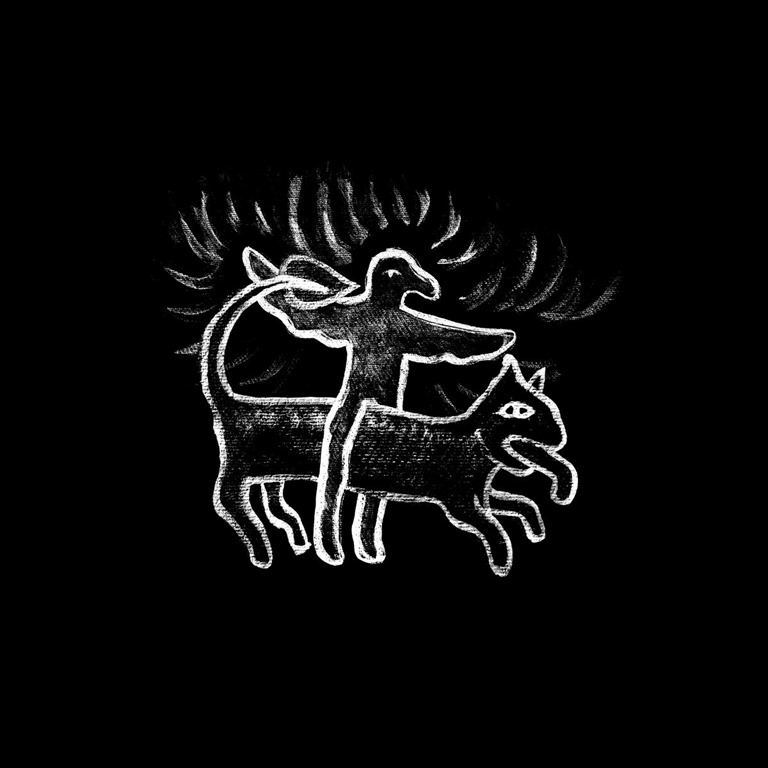
Nordic experimentalist Fågelle returns with an album whose backdrop is the inland of Halland, a patchwork of forests and abandoned mills in southern Sweden – her most personal album yet. Bränn min jord (‘Burn my soil’) will be self-released on 27th February. Fågelle shares ‘Det blev våra liv’ today.

‘Det blev våra liv’ is a journey into Fågelle’s upbringing on the Swedish countryside. Built from a collage of old recordings from school hallways, samples from computer games, and hissing harmonium tones, the track unfolds as a meditation on growing up and accepting how things turned out.

Liam Amner’s hypnotic drums guide you through fragments of memory and rhythmic electro-pop. Lyrical choirs collide with warped electronic grooves, before resolving into the beating heart of a car driving by into the night.

AA

After years in Berlin and Gothenburg, Fågelle returned home — not out of nostalgia, but as an act of reclamation. She wanted to reconnect with the soil that shaped her and let something new grow from what had been left behind.

Bränn min jord (“Burn my soil”) grew from this process of renewal. Its title references the tradition of burning the ground to spark new life — a metaphor for the personal upheaval and rebuilding at the heart of the album. The music explores the tension of growing up somewhere you know you’ll have to leave, yet which keeps pulling you back. It speaks about identity, memory, and the hidden emotional landscapes of overlooked places.

Fågelle worked with local musicians, dancers, and communities to bring the region into the recordings. She captured dancer Nathalie Ruiz moving across forest floors and wooden stages; collaborated with Våxtorp and Sennan Brass Orchestra; and recorded Stefan Isebring’s self-built hurdy-gurdy and Lars Bylund’s singing and screaming. She also created a 24-hour “sound time capsule” in the communal hall of her small high school town, inviting locals to drop in and leave sonic traces in the album, and worked with EDM producer Samuel Reitmaier and local teenagers to capture the sounds of passing EPA cars, a uniquely Swedish rural subculture. Instrumental sessions took place at Folkhemmet, a forest studio in Unnaryd, with Petter Eriksson and drummer Liam Amner (Hey Elbow, Alice Boman).

Sonically, Bränn min jord blends organic and industrial textures — distorted guitars, brass, field recordings, and unguarded vocals. Atmospheric yet physical, it shifts between light and shadow, desolation and tenderness.

By integrating local musicians, dancers, and even the ambient life of small towns into the recordings, Bränn min jord reimagines how music can reflect and reshape the landscape it comes from and bridge the gap between folk tradition and contemporary sonic art.

Though rooted in Halland, the album reaches beyond, asking how places shape us, how memory lives in the land, and how returning — even when wrenching — can be a way of fully coming home.

AA

ph_KlaraAnderssonresize-99028a045104513c

Medication Time Records – 27th January 2023

Christopher Nosnibor

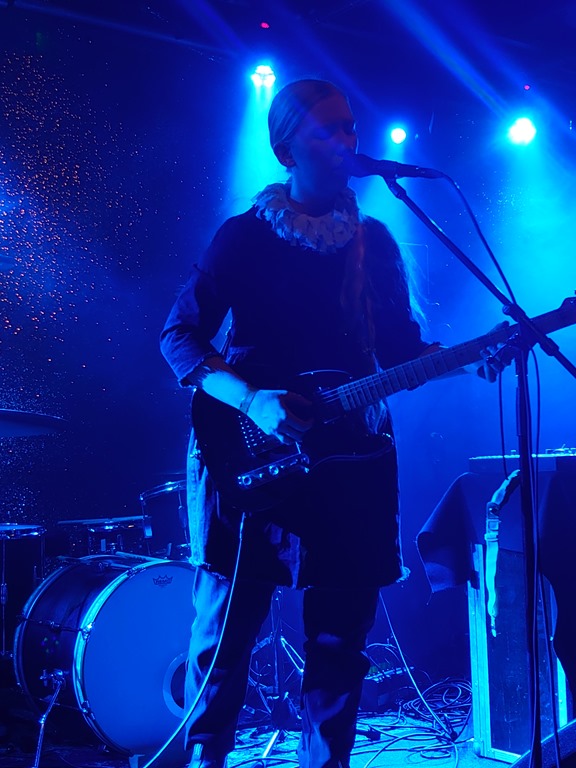
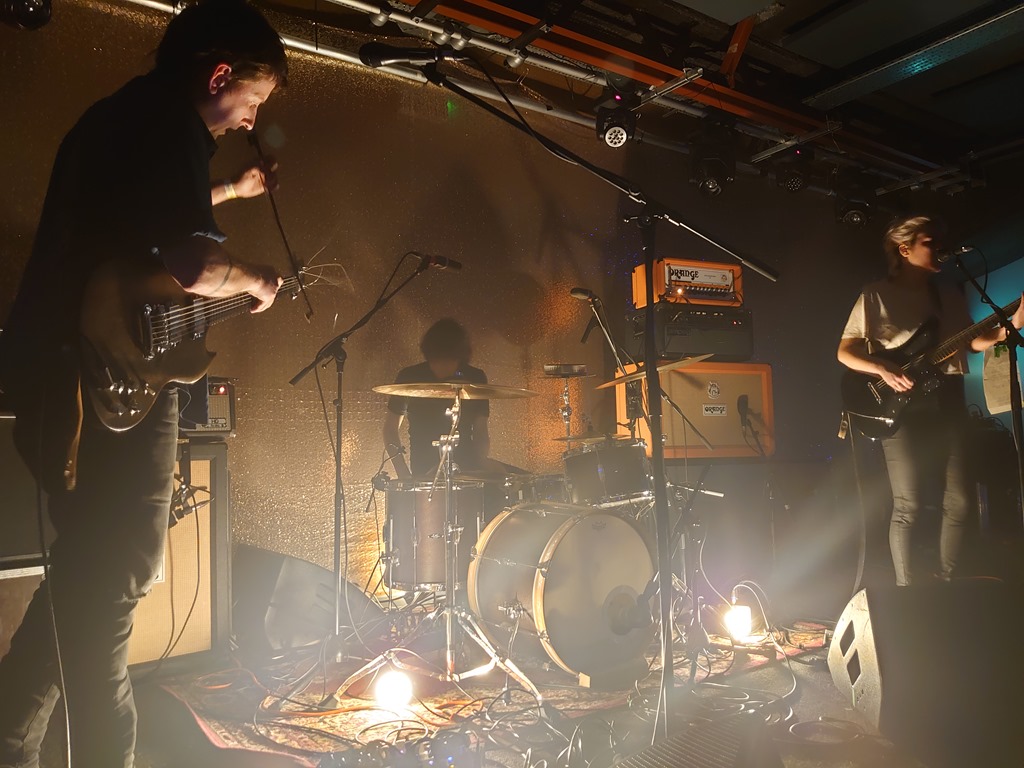
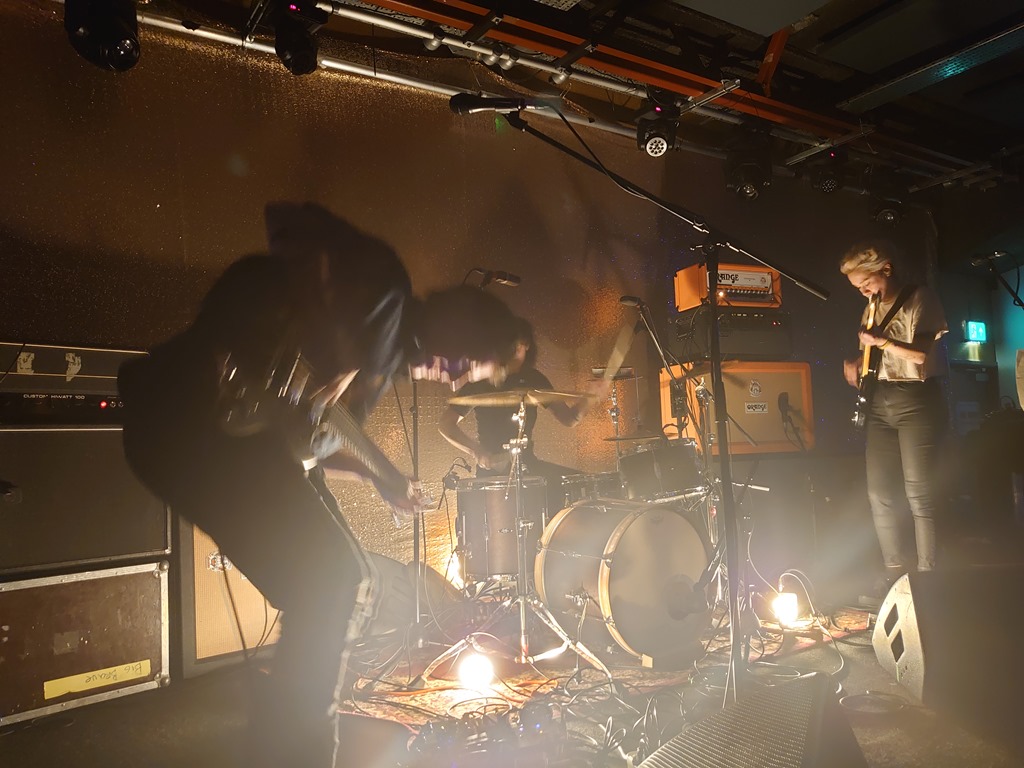
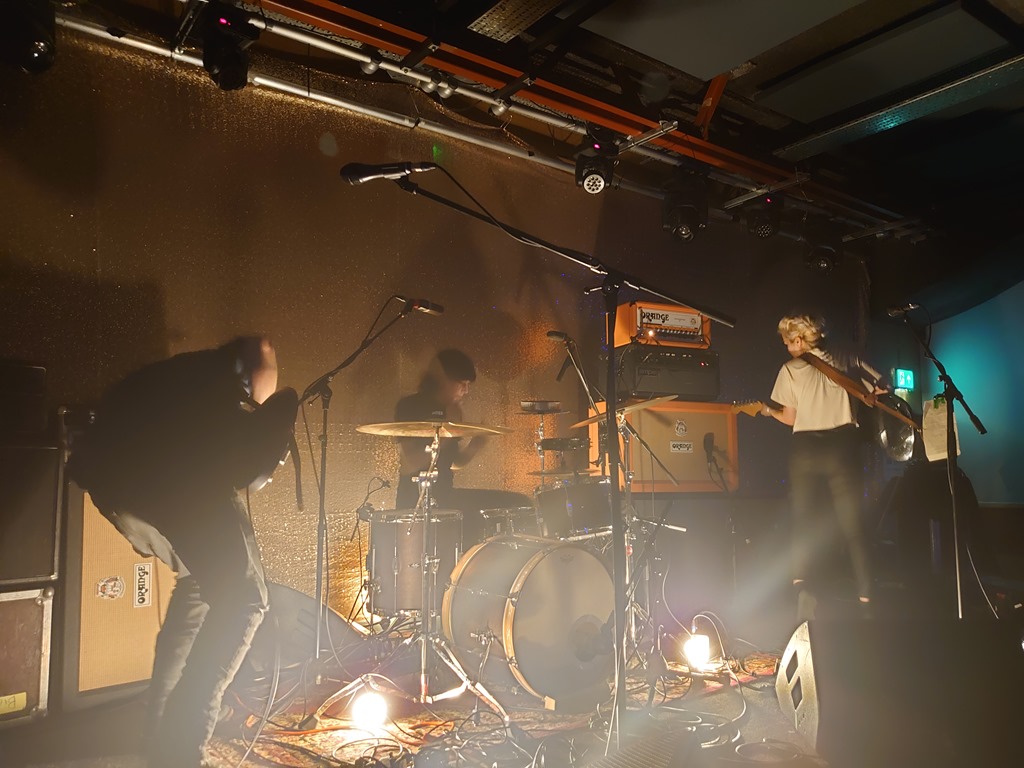
My first encounter with Fågelle was supporting Big | Brave in Leeds last spring. Despite suffering some technical difficulties and being on before a band so mighty that I still haven’t quite got over the experience, I wrote that ‘Fågelle proves to be an absolute revelation’.

The release of her new album, album Den svenska vreden (The Swedish rage), affords proper time to digest, and to reflect on this. And live, I remarked on her understated presence and the variety, shifting from quiet restraint to some heavy noise, and with experimental elements. Those are all present here, to forge what the press release set out as ‘collage-like soundscapes made with twisted field recordings, mobile memories, digital trash, dark electronics, and howling choirs while moving between harmony and noise.’

For the most part, Den svenska vreden is subtle. There are soft, electronic washes and the slightest of glitches ripple and stutter almost subliminally. The layers rub against one another to create tensions, but still, the overall mood of the album is comparatively light, particularly given the album’s title and her explanation of the album’s context and contents.

“I was so angry and had been for years.” explains Fågelle, “A kind of adult rage that was new to me. Feeling forced to accept and stay in circumstances making me miserable. To patiently suffer now for a better future. But also, a subdued Swedishness that doesn’t hold space for flaring, tearing, wallowing rage but rather pushes it down from the surface and inwards. Question is, where does the rage go, and which forms does it take? That became a starting point for the record where I kept exploring my personal boiling points, pressures and releases, where to hold my rage, in words and in the body, as a swede and as a woman.”

She continues, “Swedish social norms value the level headed and emotionally subdued. There is a pressure put especially hard on women to function like social glue and to always be consensus oriented. It’s a pressure to practice self control, a self choking of non-agreeable ideas and feelings. Rage being one of them.”

As such, one senses the rage is very much tempered by the Swedish restraint. And that’s something that there is a strong sense of, listening to Den svenska vreden – that there is in fact far more beneath the surface, simmering.

‘Slavar’ is dark and tense, tentative, mysterious. In contrast, ‘Aldrig mera här’ is almost minimal pop in its flavour. As a prelude to the soft folk reflections of ‘Fåglar’, which in parts invites comparisons to Suzanne Vega while in others goes quite wonderfully weird, ‘Tredje långgatan tretton’ begins as hushed ambience and builds into dramatic strings. It’s on the title track that the rage burst forth, manifesting as two minutes of mangled noise, and the album culminates in a thumping burst of beat-driven electronica which I wouldn’t go so far as to describe as dance, but it’s certainly got enough groove to get down to.

There’s a sense that Den svenska vreden reflects its creator: complex, inscrutable, enigmatic, and multi-faceted.

AA

919308