Posts Tagged ‘Experimental’

1st May 2020

Christopher Nosnibor

Pocket Signs is Sly & the Family Drone’s Matt Cargill and UKAEA’s Dan Jones, and according to Matt’s mail, Signs of the Times was ‘fired out in an afternoon with the aid of lager and pepsi max. Lights out, volume up, watch yer face bins.’ He describes it as the result of ‘plugging in all the objects and making a haunted, sprawling, disorientating racket. Blown out electronics, lacerated drums, churning bass and crumbling voices’. Which means I know I’m going to love it, along with at last 50 other people.

The album features two longform tracks, each a magical, mystical 23 minutes in duration, and like the times in which they were created, they’re a confusing mess of incoherence, a fractured and nonsensical sonic collage.

‘What About Obedience?’ starts out with what sounds like an engine roar – but not a real engine, so much as an engine on a racing console game. Then a deluge of clanks, bleeps, whirrs, clicks, pops, shoot-‘em-up laser guns and twanging elastic bands melting in a nuclear storm all pile in, more or less simultaneously and it feels like watching the news while scrolling through social media (as I do around five every evening while cooking dinner). The experience is utterly bewildering and to even attempt to unravel it all is futile, because the world has truly gone mad.

Searching for structures in this chaotic morass of noise is like trying to find logic in the UK government’s strategy for loosening lockdown, but there are some amazing moments to be found here, as snippets of tunes and spacey krautrock synth motifs emerge briefly from the blistering howl of undifferentiated nose that funnels like a gale.

Gurgles and glops and electronic extranea combine to forge an aural blitzkrieg that could easily be the soundtrack to a digital apocalypse. Everything swirls and melts into a maelstrom that builds a physical mass and hits with an impact that’s more than simply sensory.

Where do you go from a piece that concludes with a sustained squalling blast of white noise that leaves you with the sensation of the end of days? More of the same, of course: ‘How to be Saved’ begins with a series of murky vocal samples, echoed and overlaid, atop burrs of electronic discord, and in no time at all, later upon layer of dissonance has emerged to forge a raging torrent of noises. Feedback strains and scrapes, sharp and metallic with knife-like edges while surging currents gurgle and synth sounds squelch and quirt, titter and tweet around a vortex. Abstraction and chaos reigns, pulsing, bouncing, screaming and bumping in all directions. At time, the melee is impenetrable, bewildering, as it echoes around your cranium. Voices emerge and fade again at random: seemingly, everything is at random, and it’s a glorious headfuck. Not so much a dronewerk as a metadrone assemblage, it’s a wild and brain-frying journey, this may just be the perfect soundtrack to the now – or it may just tip you over the edge.

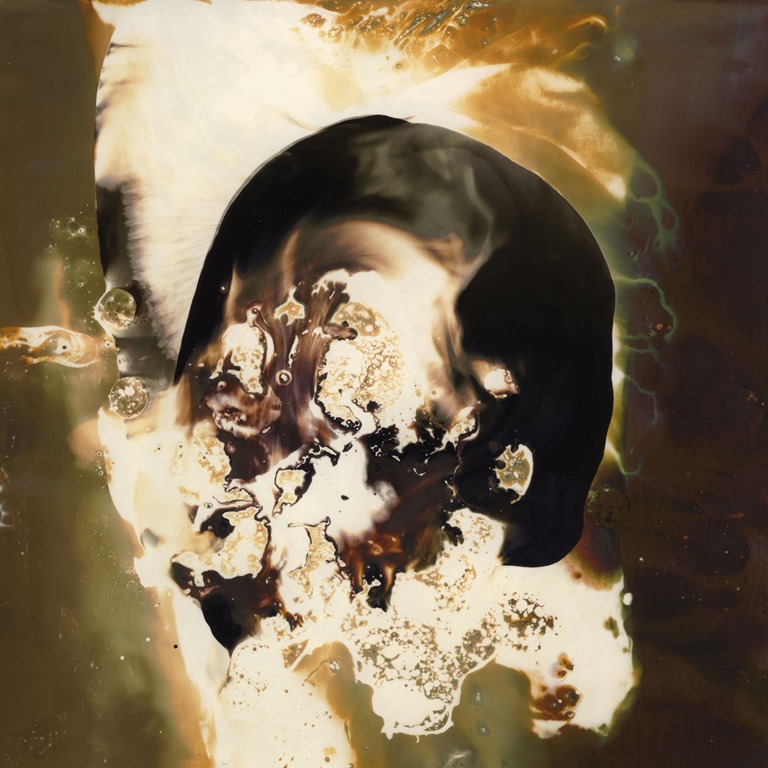
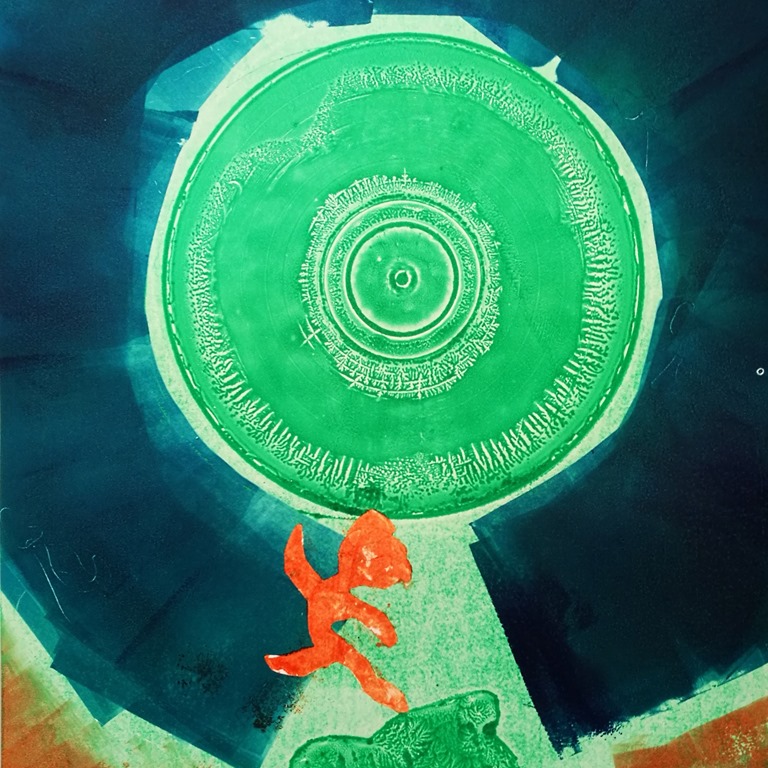
Oh, and the cover art is truly special.

AA

cover

Nahal Recordings – 10th April 2020

Christopher Nosnibor

Because detail is important, let’s begin with the parenthesis. The label’s press release announces ‘We teamed up with the extraordinary French ondist Christine Ott to create an unprecedented album entirely made with Ondes Martenot, one of the very first monophonic and experimental synthesizers in history’, resulting in ‘a cosmic journey of layered waves of sound’.

Maurice Martenot’s invention may not have acquired the popular status of the theremin, but Christine Ott’s instrument of choice is nevertheless significant in the evolution of sound generation as one of the very first monophonic and experimental synthesizers in history back in 1920.

Chimères begins with a pause, at least metaphorically: ‘Comma’ is six minutes of instrumental hauntology, as the notes trail, taper and quaver into still air and silence. As the album’s title suggests, this is a curious hybrid work, and while perhaps less monstrous than all that, the Ondes Martenot conjures strange, otherworldly sounds that are, at times, quite unsettling as they yawn, quiver, and squelch into seas of reverb. At times resembling analogue synth sounds, and at others approximating strings and even woodwind, the

‘Todeslied’ is the sound of disembodied spirits flittering around in the physical world, a phantasmagorical freakshow of sonic ectoplasm which gradually bubbles its way through a succession of bursts and plumes via something semi-industrial into a tranquil sunlit meadow of sound. Meanwhile ‘Sirius’ brings some deep ambience, while the eight-minute ‘Eclipse’ brings swirl of darkness that’s more of a sucking black hole than a fleeting dimming of light, building to a whupping rotary sound and blizzard of bleeps in the final minute.

It’s a lot to take in, and closer ‘Burning’ is a magnificent if slightly disorientating combination of slow-glooping electronica and orchestral chamber music. It isn’t easy to assimilate, but it is wonderfully executed, and once you can overcome the unfamiliarity of the form, there are some magical moments to be discovered.

AA

a3802769926_10

Christopher Nosnibor

Coaxial is one of a number of musical vehicles for musician and academic Benjamin J. Heal. For the uninitiated, it’s perhaps worth running some of his biographical information:

His prolific COWMAN project (2005-present) continues to plumb the depths of puerile noise-punk and a lo-fi trash aesthetic, following the footsteps of a more composed Hanatarash and early Boredoms. 2014’s acclaimed Tosokurui-no, under the pseudo-Japanese guise of Hitobashira-ni, illuminated the artistic potential found in exploring the limits of control and chaos in a band environment utilizing guitar, drums, synthesizer, sampler and gong. 2016’s The Brightness on Dead Water (as morimori) showcased contrasts between digital and analog, electric and acoustic, songs and sounds; nudging the chaotic themes of its predecessor into fields of more organic abstraction.

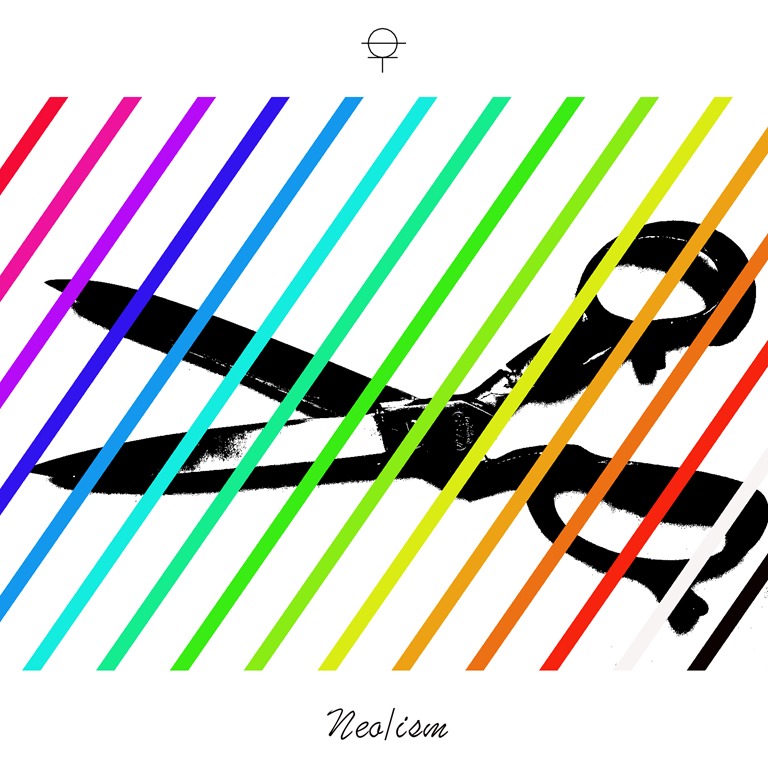
Coaxial – shortly to be reissued on casette by Cruel Nature represents the outlet for his explorations in instrumental electronica, and on Neo/ism there’s humour and wordplay not just in the song titles, but in the compositions themselves. This is apt, given that the Neoist art movement was largely satirical in its purpose, revelling in the depthlessness of postmodernism, and sometimes defined as ‘a prefix and a suffix with nothing in between’. Accordingly, the atmosphere on Neo/ism is denser than its light and airy predecessor, Ear Kites I (2018), but rather less heavy and sinister than 2017’s Reductio ad Absurdum.

It’s a vintage organ synth sound and even more vintage drum machine track that kicks starts the album with the seven-minute ‘Homobile’ (geddit? Linguistics jokes are always a nonstop laughriot). It lands between chillwave and krautrock, but some subtly de-synced chord changes have a vaguely disorientating effect at the start, before tapering off towards semi-ambience around halfway through and the beats dissolve to vapour.

‘Jocks v. Cocks’ is all about the juxtaposition: the track goes harder on the percussion, while the bubbling synths warp and twist, before ‘The Gay Gun’ plunges deeper into bloopy robotix territory, a melting pot of textures and tones swimming in a kind of sonic Brownian motion. ‘The Lonesome Onanist’ goes darker, and Heal’s application of long, grating drone notes that defines many of the tracks on Neo/ism is very much at the fore here.

There are strong technoindustrial elements in the mix, but then there’s a lot going on throughout, often simultaneously. Moreover, the composition seem to become increasingly strange and dislocated as the album progresses: ‘Homocrcy’ marks the mid-point with some spaced-out, space-age dubtronica, ‘Pink Noise’ crackles and pops in a time-shifting microtonal explosion, and ‘Gay Baby’ sounds like it should have featured on the soundtrack to an episode of Nathan Barley.

This all perhaps leads to the question of how serious any of this is, which in turn leads to the question of whether or not it actually matters whether or not the intent is parodic: one can’t hear intent in a recording, and can only engage with the contents of the recording itself. Given the way in which the sound of Neo/ism is characterised by contrast and variance, the experience elicits no one response, but many. And it’s quite a groove.

cover

Panurus Productions – 29th May 2020

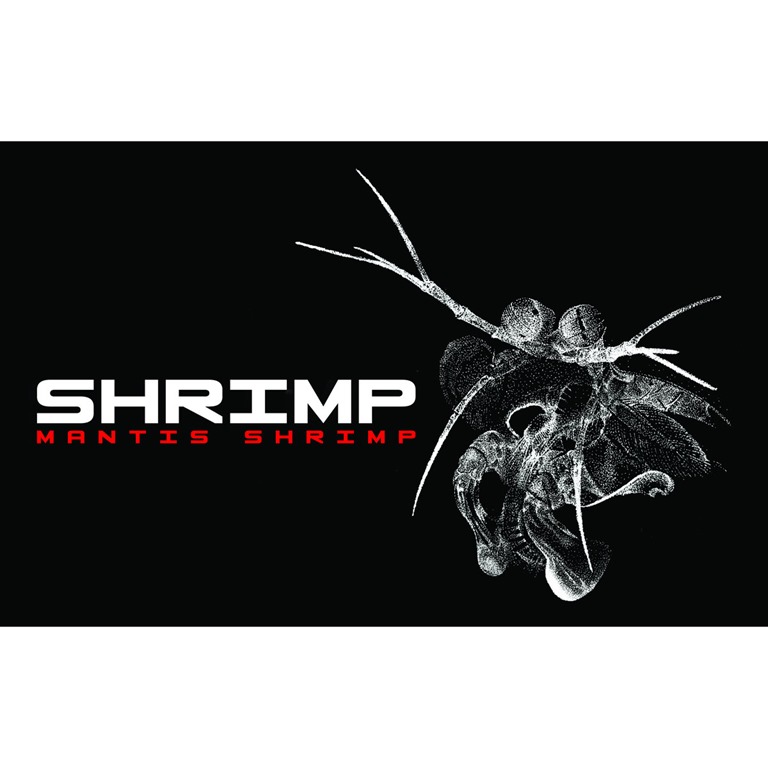
Mantis Shrimp is the second Shrimp release following their eponymous debut released just over a year ago, in January 2019. A collaboration between various luminaries of the underground scene in Newcastle, England, and Ryosuke Kiyasu, who has enough projects to his credit to render him a one-man music scene in Japan, they describe their sound as ‘chitinous free grind onslaught’.

Now, if ‘Shrimp’ has connotations of small fry, the proverbial puny weakling, and their debut laid waste to those associations with a devastating cacophony , then it’s perhaps worth approaching this instalment with the knowledge that the mantis shrimp is the brutal bastard of the small crustacean world: a violent predator, mantis shrimp typically eat fish, crabs, clams, snails, worms, shrimp and squid, and can take on animals significantly larger than themselves thanks to their ‘calcified clubs’

According to Wikipedia, these hard exoskeletal bastards are sometimes referred to as ‘thumb splitters’ ‘because of the animal’s ability to inflict painful gashes if handled incautiously…—mantis shrimps have powerful claws that are used to attack and kill prey by spearing, stunning, or dismembering’.

This pretty much how it feels listening to the four pieces here.

There’s a strain (and strain is an apposite word choice) of experimental jazz that sounds like the end of a piece, where the instruments all clatter and rumble as they wind down from a climax, only that is the piece, and each piece lasts an eternity. That’s this. Only with grating guitars and bowel-ripping guttural vocals, which add depth and detail to the calamitous, chaotic racket.

‘Sealed Explosion’ eases it in gently, with thirteen minutes of stop / start percussion and stuttering discord that crashes and stumbles in all directions. It’s an absolute headfuck, and it’s only more intensely difficult from hereon in, with the sludgy squall of ‘Grasping Pincers’ bubbling through a relentless racket of crashing cymbals and stammering anti-chords and screeding feedback. The lull after four and a half minutes feels like an immense relief – but then you realise there’s another ten minutes to go as Watts starts up the gasping growl (first mistyped amusingly but perhaps appropriately as ‘sharts up’) that will continues to rasp through the bewildering tempest of noise. There’s some wild funk bass played at a hundred miles an hour around the ten-minute mark, but it’s submerged beneath a brain-shredding wall of noise. That’s no criticism, just a mere statement of fact.

‘Boiling Swamp’ spring and spurs, eddying electronics and guitars that sound more like they’re tuning up than playing actual music dominate the thrumming, humming drone of feedback and bass groans and tweeting sonic contrails. It gradual descends into a bass drone miasma, while shrill top-end feedback shrieks all around. Not a lot happens, but amidst the turbulence, there are wordless howls and hollers. Or, if words, impenetrable. As they ought to be. Watts resorts to guttural snarls in the dying minutes of this chthonic noise dirge that evokes Sunn O))) minus the growling low end crossed with Whitehouse, and which leaves ‘Endless Collapsing Staircase’ in prospect.

It’s 28 minutes of trippy experimental electronica that straddles noise, power electronics and various ambient forms. Percussion rattles erratically amidst trilling industrial scrapes, gradually building through wordless vocal drones and swelling layers of extranea. Anguished howls, shrieks, and barks punctuate a mess of feedback and flailing percussion. It’s a fucking horrible mess of noise: there’s a stab at a fractured bass groove in amongst it all. It never quite gets going, and 14 minutes in, it sounds like it’s all over as it collapses into a mess of pedals, but we’re barely at the midpoint. Watts sounds like he’s being gutted in a ceremonial act that’s been incorporated into a Large Unit performance. Or something. It hurts. But it works.

a3330396040_10

Karlrecords – KR077 – 24th April 2020

Christopher Nosnibor

For those unfamiliar (and that may well be many), die ANGEL is the collaborative project of Ilpo Väisänen (ex Pan Sonic) and Dirk Dresselhaus, which began in 1999 on a joint tour with Pan Sonic and Dresselhaus’ Schneider TM, with an objective to ‘use electronics, string instruments and effect loops to develop a sonic world that goes beyond fixed structures and clearly defined genres’. 30 years and 10 albums on, they’re still pushing those boundaries, and on this outing, the duo are joined by Oren Ambarchi.

It’s interesting to note that the material was recorded between December 2015 and January 2016, with Ambarchi adding overdubs in the spring of 2016, and the album being edited and mixed in the May of the same year, meaning it’s languished for the best part of four years., although it’s unclear as to why.

The album, available only on digital formats, comprises four longform tracks that would commonly correspond to a double 12” format

The album starts with ‘Epikurous’, which begins with a long, quavering drones that oscillates menacingly and ambulates directionless, a dark ambient cloud that drifts into the minimal throb of ‘Cargo Cult’. This piece is loosely formed around a rhythmic pulsation, a long, sonorous drone, interspersed with occasional interjections of ranging textures and frequencies. Sharp clustering bleeps and squiggling electronic fizz disrupt the smooth flow as echoic explosions and fractured rattles skitter and scuttle and scrape in and out of the frame.

‘Coup d’État’ is a bubbling foment that foams and froths unsettlingly, like a rumbling gut: it’s queasy, uncomfortable, a difficult, awkward churning that nags and grumbles, and filters into the dank miasma of the fourth and final piece, the ten-minute ‘Khormanoupka’. This is the deepest and darkest of the set, and rumbles almost subliminally, creating a deep, subterranean atmosphere, and as it crackles to a close, the listener is left empty and alone.

There is nowhere to go after this. The world didn’t end but what are you left with? An uncomfortable silence after half an hour of uncomfortable noise, noise that’s dissonant, difficult, and murky. And it works well.

AA

KR077_front

Wormhole World – 10th April 2020

Christopher Nosnibor

Aaagh! It’s food porn overdose on ‘Jesus, God of Tower Hamlets’, the first track on ‘Looking After The Duck’, the new album by Crumpsall Riddle, aka Steven Ball and Jude Cowan Montague. Ball drones out ingredients – an Instagram wet dream or recipe for disaster dependent on your perspective – and a ream of random shit that seemingly splices news headlines and myriad found phrases read in a monotone like a shopping list over a thrumming drone that’s reminiscent of Suicide before Cowan Montague wails the fuck over it all in a truly demented fashion… and there it is: the soundtrack to our times. Nothing makes any fucking sense. To return to a paraphrased third-hand summary of Deleuze and Guratari’s assessment, a schizophrenic mindset it the only sane response to a late capitalist society. So what about now? Is this the end days of capitalism? What does anything even mean? And is looking for answers the most futile pursuit ever?

It’s clear JCM thrives on collaboration, and to describe her as ‘flighty’ is no criticism here: eclectic and diverse would be equally fair synonyms, but would fail to fully capture her free-spiritedness where it comes to her myriad creative projects. Steven Ball proves to be an inspired choice of co-conspirator for the making of musical mayhem. Suffice it to say that the abstract post-punk of Looking After The Duck, which comes with hints of Wire, couldn’t be much further from Hammond Hits, the uber-retro collaborative album recorded with Matt Armstrong, recently reissued on vinyl: while this album was an exercise in reconstructing a vintage pop aesthetic, Looking After The Duck indulges a far more experimental urge, and manifests as minimal, lo-fi indie affair that’s more reminiscent of Young Marble Giants.

‘Is this the end of the clock?’ they chant drably, repeatedly, on ‘Terra Unknown’, while circuits fizz and analogue synth sounds whizz and swish every whichway around them.

Wibbly electronic drones, pulsations, and oscillations abound, and a disembodied, wordless backing vocal provides the backdrop to abstract atonal spoken word on the nine-minute ‘Songs of Sol’, a would-be folk shanty in a parallel universe. And then it descends into a humming wash of bubbling pink noise and an analogue thrum that rises and falls, ebbs and flows, while Ball continues a never-ending monologue diatribe of randomness, a William Burroughs style cup-up without the focus. Yes, I’m struggling to find a thread of sense here, but sense of overrated in a world in which sense and linearity have all but dissolved.

The album as a whole is a disconnected, disjointed testament to postmodernity, collaging more vintage sounds – a trilling organ synth sound quivers a mournful backing to ‘The Old Man’ – with fragmented slivers of extranea, and leaning toward more arbitrary song structures over linearity. Looking After The Duck is, to my ears, leftfield and brilliantly out there: many will find it plain weird and tuneless. Many would be wrong: it’s oddball experimentalism that spawns innovation and progress. It’s also truer to the internal dialogue than many would admit, and it’s this uncomfortable truth that can be unsettling. People are scared to be presented with a mirror to their minds. This knowledge doesn’t make Looking After The Duck any less awkward or uncanny. But it is strangely brilliant, and no mistake.

AA

cof

Carrier Records – CARRIER049

Christopher Nosnibor

We’re deep into skittery microtonal bleeping territory with this 24-track extravaganza. Sussman’s work is algorithm-based, meaning there’s a certain formality to the proceedings, however chaotic the notations become. And they do indeed become chaotic, explosive,

The first of these tiny sonic snippets, ‘Kr 22.2.6’ is a hyperspeeded barrage of blips that sounds not dissimilar to the old dial-up sound. Wonky chimes and clanging digital bongs abound, along with stammering, clattering metallic beats and popping electronic arrythmia jitter through EQ filters.

Variety comes in the form of splurging squelches, parping electronic squiggles that wobble digital farts: ‘Kr 28.1.6’ almost forges a semblance of a funk groove from the bubbling sonic swap. In contrast, ‘Kr 29.4.13’ ebbs and flows ins surging pulsations that set the teeth and nerves on edge with a squall of digital fizz’, while ‘Kr 30.3.14’ is fun but warped, a detuned piano bouncing every which way in a tidal wash of delay. ‘Kr 31.3.18’sounds like a call from a mobile phone in a washing machine, while ‘Kr 33.5.8’ is a sparking digital blastbeat that showers treble explosions are several hundred shards per minute.

The album as a whole is a morass of digital experimentation, and each piece is but a fragment, with running times ranging from 2:28 to 2:49. It’s bewildering, disorientating, difficult. It isn’t for everyone. But it is interesting.

AA

CARRIER049_art

Industrial Coast – 20th March 2020

Please Call Me Fuck In Front Of My Friends, the latest dispatch from the prodigiously prolific Theo Gowans, aka Territorial Gobbing, finds oodles of discombobulating discord and dissonance thrown together in a set of skewed sound collages. As such, it’s business as usual. TG’s wildly experimental approach to rendering and processing sound by means not just of founds found and myriad effects, but the (mis)appropriation of random objects means you never know what the hell you’re actually listening to: loud crackles and scratches are probably the sound of sweet wrappers and paper towels being scrunched up close to the mic. It’s supposedly Theo’s most ‘organised’ work to date, and maybe it is, but of course, it’s all relative and one man’s organised is another man’s chaos – as anyone who’s seen my office will probably appreciate.

Amp hum and scrambled tape loops twist and entwine into a massive twisty knot of noise, a clashing conglomeration of aural chaos, a crazed cataclysm of random elements thrown together in the most haphazard of fashions. This shit’s impossible to pin down.

Garbled groans and wheezes, bleeps and blasts of noise collide with static and radios being tuned detuned, and retuned; there are prolonged periods where not a lot happens, which are annihilated by brain-bending bursts wee everything happens all at once.

‘Pyrex Chalice’ is representative, with something that sounds like bottles and cutlery being used as an improvised xylophone while dustbins clatter in a city alleyway and someone close to the mic stifles the breaths of a crafty wank.

Metallic scrapes and clatters coagulate into messy improvised chimes, and there’s some kind of whispered, gallic-sounding sleaze that descends into sobbing and is backed by clattering pots and pans on ‘Massage the Scar, Five Minutes, Five Times’. If none of it makes any sense, then that’s entirely the point.

Playful but bleak and as twisted as fuck, Please Call Me Fuck In Front Of My Friends again suggest that Territorial Gobbing is one of the acts closest to the spirit of the other TG, and Genesis P-Orridge’s absorption of the influence of William Burroughs’ cut-ups. The Industrial Records release of a collection culled from Burroughs’ archives of tape cut-ups on Nothing Here Now But the Recordings marked a direct link: Territorial Gobbing very much continues the trajectory in creating music that discards linearity in favour of simultaneity.

Weird times call for weird music, and Please Call Me Fuck In Front Of My Friends is the perfect brain-bending soundtrack and exactly the distraction you need.

AA

a3230074679_10

Base Materialism – 12th January 2020

Christopher Nosnibor

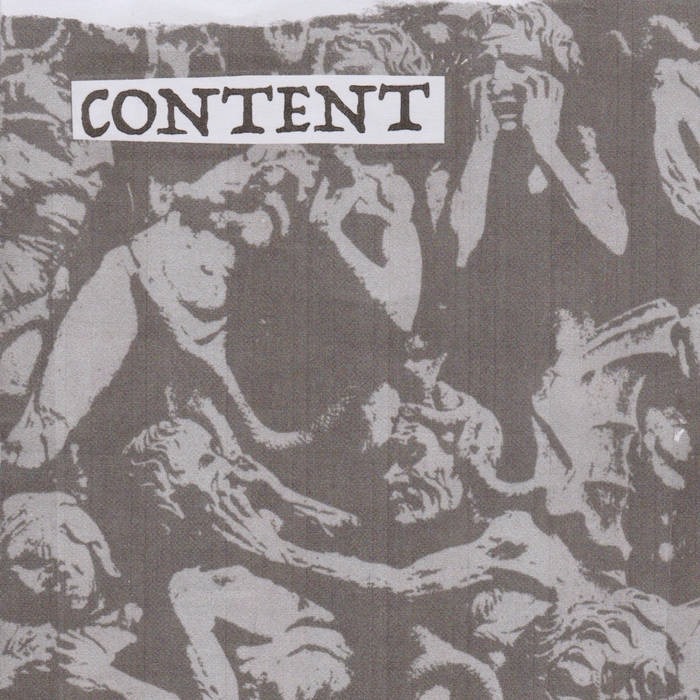
Nothing says ‘niche’ and ‘underground’ more than a limited edition of 17 copies. Pitched as a work of ‘radical ideology for fans of Crass, Pet Shop Boys and Nitzer Ebb from the rotten half of Normal Man’, this six-tracker is a gnarly mess of electronics, popping beats and a disorientating sonic swirl.

It’s an aggressive spluttering nailgun blast of percussion that assaults the ears first on ‘Permanent Contract’. There’s a bumping bass beat beneath it, but it’s the clusterfuck of cranium-splitting treble that dominates. The vocals veer between Sprechgesang and wavering atonal singing as layers of extraneous noise build and passages of warped discordance provide the breaks, before everything slides into a buzzing whorl of flange.

‘If Hard Work Pay Show Me Rich Donkey’ is more minimal, an ominous multitonal drone providing the primary backdrop to the repetition of the title for two minutes and twenty-one seconds. ‘No Big Idea’ and ‘Nu Cringe’ grind out gritty, primitive synths geared toward the lower end of the sonic spectrum over insistent bash-bash-bash electronic percussion, and ‘What You Want’ doesn’t exactly deviate too much from the same formula. ‘You’re Stupid and So Am I’ presents a more overtly punk sound – although it’s punk with the mechanoid twist of Metal Urbain or Dr Mix.

The production is ultra DIY, the audio quality is murky and clangs with swampy reverb, and Content very much channel the spirit – and the sound – of Throbbing Gristle here. Lyrically, when decipherable, they’re keen exponents of the three Rs – repetition, repetition, repetition, and the ethos and aesthetic is very much in line with that of post punk and the origins of industrial, with slogans and soundbites welded to cyclical motifs.

Combining vintage sounds with contemporary politics, it’s not necessarily ‘clever’, but it’s uncompromising and highly effective, and gets my vote.

AA

Content

Bearsuit Records – 20th March 2020

Because I like my shit weird, I’m always thrilled to receive new releases from Bearsuit Records, and Harold Nono’s latest is one of a brace of fresh releases – brimming with weird shit, of course.

The title We’re Almost Home suggests a relaxation, an easing into the home straight. Instead, what Nono delivers is a brain-bending sonic tempest, with ideas lifted from all corners of the planet.

Nono’s straight in with insistent stuttering rhythms that pound systematically over the point as the title intimates, against a jolting japandroid clash of fragmented robotix. Like all of Nono’s previous releases, it’s a whimsical culture clash, stop-start chillout dance grooves are juxtaposed with trilling synths, samples, scratchiness and warping

‘Shaking on an Iron Bed’ is a calamitous crash of wild jazz horns and cymbal bursts that give way to pulping disco with orchestral strikes, while the jazz tones keep on coming. All the ‘what the fuck?’, all the ‘why?’ and all the ‘no need!’ and yet, despite everything, it’s all the reasons Nono is worthy of you ear. It shouldn’t work, and on paper doesn’t work, and even at times in actuality is kind of off the mark, but the transitions are so rapid that it’s doing something else completely different before it’s even registered.

There are moments of Stereolab-like mellow doodling to be found in places, as on ‘Let the Light In (Prince of Darkness)’, heavy dark ambience, as on ‘Ron’s Mental Leap Coach’ and tripped out semi-ambient space electronica, as on ‘The Fall Reprise’. There is oddness and drama, and a whole bunch of abstract glitchiness, and it’s all characteristic of both Nono and Bearsuit. If you’re curious to take a walk on the weird side, then this comes recommended. If you’re not, then you need to expand your horizons, and this is still recommended.

AA

Harold Nono – We’re Almost Home