Posts Tagged ‘Experimental’

Midira Records – 25th November 2022

Christopher Nosnibor

This album is, as the title suggests, a soundtrack work. Although released under the moniker Houses of Worship, it’s essentially the second album by Thisquietarmy x Hellenica.

The summer of 2020 saw Eric Quach (thisquietarmy) and Jim Demos (Hellenica) come together to record a collaborative album, which emerged as Houses of Worship, described as ‘an epic work of experimental industrial ambient, is an ode to dying buildings and the unwelcome gentrification of neighborhoods’.

This, the follow-up, came about after they ‘played their first concerts in the streets of Montreal from inside of a cube truck. These performances were filmed and recorded to produce "TQAXHLNKA: MIGRATION,” a twenty-two-minute experimental art documentary and an accompanying soundtrack. The film simulated the cautionary tale of what the Montreal arts and music scene could look like in a post-pandemic world. As the title suggests, it reflects the highly concerning exodus of artists constantly being divided and pushed out further from their community.’

At twenty-two minutes in duration, it’s a minute short of the magic spot, but this is a magnificently atmospheric work that goes beyond dark ambience and ventures into the vastly cinematic, space-drifting expansiveness that transports the listener beyond the terrestrial domain.

The album contains more audio than the film’s running time, and drags the listener through a bleak journey which articulates via the medium of sound the themes and scenes which preoccupy the duo, who explain, ‘With the current struggles linked to the pandemic restrictions, we have seen the acceleration of the gentrification process in neighborhoods where the heart of these activities takes place. As a result, a multitude of venues, studios and artistic spaces – places used for exchanging ideas with our peers and building communities meant to inspire and nurture our souls had to shut down.’

The tone is dark, the textures industrial, yet tinged with echo-heavy melancholy, a combination of anger, emptiness, and sadness. The soaring drones inspire a certain elevation, while the gritty grind is the sound of construction, regeneration. Gentrification is the face of capitalism eating itself; having run out of new ideas, it’s simply fallen into a cycle of recreation and rehashing. Upscaling, upwhatevering, it’s all about selling the new version of the same od shit at a higher price to the same saturated market. When will enough ever be enough?

Meanwhile, capitalism follows the former tropes of the avant-garde, destroying to rebuild, and Migration is the soundtrack to that.

There are lots of drones, lots of dolorous tones, lots of scraping, sinewy mid-range and gravel-grabbing, churning lower spectrum sounds, as well a haunting piano and infinite empty space. The titles paint the picture in themselves, and it’s dark, smoggy, sulphurous. ‘Total Waste Management’; ‘Polytethylene Terephthalate’; ‘Oil Terminal Tank Farm’ are all evocative of stark industrial scenes.

‘Industrial Estate Bird’s-Eye’ is a haunting wail, presumably of a theremin – over a low, throbbing drone that’s reminiscent of Suicide, and elsewhere, the duo conjure thick, billowing clouds of doom that sound like Sunn O))) behind a power station, as dense rumbles ripple forth. The twelve-and-a-half-minute finale, ‘Throbbing Magnetics’ fulfils the promise of its title, a bucking beast of claustrophobic, crushing gloom, and you feel yourself dragged into the sludge of that relentless, interminable cycle of collapse and construct.

It’s an accomplished work, but a depressing one, and listening places to the fore the abject nature of late capitalism, and the fact that any attempt to save the planet is futile in the face of the onslaught of bulldozers. Redevelopment has nothing to do with environment, only profit, and hard as you might rebel, as strongly as you may protest, you’re powerless against the big money. It’s not a conspiracy, it’s the sad truth. Houses of Worship recognise this. They may hope for better, but Migration is not a protest record, but the sound of grim acceptance.

AA

a3486628679_10

It is no wonder that the experimental string duo Lueenas often work with film music. In their recent collaboration with animator and video artist Jonas Bentzen, their affinity for the magic that can happen moving image and moving music is highly apparent. From the p.o.v of a solo traveler, the camera takes us hauntingly through underground tunnels and fantastical sci-fy spaces of ancient aesthetics while the violent track ‘Nyx’ is carrying us through it all. For Lueenas darkness and beauty are two beautifully intertwined sensations and this duality is a driving force in their video collaboration with Jonas Bentzen, creating an eerie yet alluring and sensual journey.

For fans of Tarkovsky’s Stalker and Mica Levi’s soundtrack to Under The Skin, this music video from Lueenas and Jonas Bentzen is one to watch. “Nyx” conjures the story of Hemera’s mother, the Goddess of Night, born from Chaos and feared by all, even Zeus. Through distorted and shrieking layers of violin, and the mammoth double bass figures, she carries at once a brutal wrath and conciliatory power. Transforming into

upward blazing howls, we are reminded that there is beauty in darkness. Nyx is part of the self-titled album by Lueenas, released November 4th, 2022.  Cinematic, strings & electronics duo, LUEENAS, announce self-titled debut album, out Nov. 4. Intuition and acceptance are at the core of the debut album from Danish electrified string duo, Lueenas. Exploring the complex spaces between typical emotional dichotomies, their language emerges brimming with imaginative uses of form and texture. Born over a year of improvised sessions, and informed by their involvement in other projects across pop, jazz, electronic, experimental and post-classical music, Maria Jagd and Ida Duelund then set out to puzzle together the luring soundscapes that make up their self-titled debut. Experimenting with the limits imposed by their stringed instruments, and pushing the boundaries between acoustic, amplified and electronic sources allowed them to draw on a much broader and expressive colour palette of sounds.

Taking inspiration from ancient sacred practices, the album encompasses millennia of storytelling from distinctly female perspectives. Lueenas’ fully-cast debut album is at once the evocative score for a lauded expressionist film yet to be made, and a sermon for the fluidity of the emotional experience across time and space. As an ode to the communicative power of strings, it tells us what would otherwise remain untold. Lueenas is an experimental string duo formed in 2019 by Ida Duelund and Maria Jagd, and based in Copenhagen, DK. With violin, double bass, effects and amplifiers, they create violent and beautiful soundscapes full of panoramic grandeur. Their cinematic aesthetic has roots in both classical minimalism and improvisational rock music.

Watch the video here (click image to play):

Nyx 2

23rd September 2022

Christopher Nosnibor

Perhaps it’s that media has a numbing effect, or perhaps it’s simply that however strong the quality of the reportage, it can never truly convey the details in a way that are relatable. I’ve spent the best part of the last year seeing footage or the War in Ukraine and seeing and reasoning about the humanitarian crisis, and, like most people, it’s been quite overwhelming. And yet, ultimately, it’s just more TV, more news media online, on the radio.

I receive missives from around the globe, most containing new music for my ears, and this week, the arrival of Nefas EP by Sora, an offshoot of Kadaitcha piqued my interest with the offer of instrumental southern Ukrainian jazzcore.

Sure, I’m up for a challenge, and hell it’s definitely that. But if the music is a challenge – and if you look up ‘challenge’ in the dictionary, you’ll find it starts playing this EP – the backdrop to its release is even harder to process, with the context of its having been recorded and released shortly before its makers fled Ukraine and decamped to Estonia for their survival, leaving their musical equipment behind and a new Kadaitcha album in the can and in suspense.

Like many, I simply take my home and possessions for granted, writing in my review of the last Kadaitcha release – a lathe-cut 7” ‘with a true physical format, apart from fire or flooding, you have something pretty robust’. It feels pretty crass in the face of everything, in hindsight.

But… but… these guys have continued to make music right up to that moment of departure. It’s not heroic, but a real indicator of just how essential art is, even in the most desperate of time. And more than anything, it shows how strong the need for normality is in the most extreme of situations. The world is seemingly ending, what do you do? Keep going, do as much as you can of what you were doing before. Because it’s a way to cope. Channel that anxiety creatively, and who knows?

Well, we know now. Sora is something special.

The five tracks drag the listener on a wild journey, with the first piece, ‘kings’ but a prelude to the frenetic manic sonic explosion of ‘limit’, a frenzy of crashing drums, jagged guitars, freewheeling bass grooves and crazy brass that brings a whirlwind of discord and by the end, it’s all whipped into a head-spinning cyclone of chaos. It’s a maelstrom of madness, there’s just so much going on all at once, and so much noise and dissonance.

‘Schizoid’ brings some truly nefarious low-end to the party, and it’s hurled against some crashing drums, and in combination conjures a tempestuous storm of sound that rages and pummels, before ‘No’ lumbers heavily onto a hooting, tooting onslaught of mayhem.

There’s a serious risk of a headache with this one, but it’s a headache that need poking: Sora is brain-bending, dizzying, and at times intense and harsh. But that’s why we like it.

AA

a3705471243_10

Front & Follow – 25th November 2022

Christopher Nosnibor

Longtime Aural Aggro faves Front & Follow have delivered the third in their series of truly immense Rental Yields compilations, with another twenty-five tracks of remixed works which showcase the community spirit they espouse as a label and among those in its orbit.

They describe it as ‘a multi-release collaboration project raising money to tackle homelessness in Manchester… Inspired (if that’s the right word – perhaps ‘motivated’…) by our current housing system, the project encourages artists to steal (or borrow, nicely) from another artist to create their own new track – in the process producing HIGH RENTAL YIELDS. Over 100 artists are now involved (the spreadsheet is fun), each one tasked with creating a new track from the sounds created by someone else – we are then collating the tracks and releasing them over the course of the next year.’

Some would describe the project as ambitious, others as simply crackers, and it’s likely both in equal measure, but this is why we love F&F. That, and the fact that they seem of have a knack for attracting and releasing interesting artists who exist far beyond the peripheries of any kid of commercial radar (or even most alternative radars).

This compilation really does make the most of the medium: unrestrained by the limits of vinyl, cassette or CD, and has a playing time of about a week. Yes, I exaggerate, but the point is, each contribution is the length it needs to be, or the artist feels it ought to be, rather than cut or constrained, meaning that while a fair few pieces sit around the five minute mark, the Decommissioned Forests vs Pulselovers rendition of ‘Rental Yields’ runs for nine minutes and forty-four seconds, ahead of the ten-minute workout that is IVY NOSTRUM vs The Snaps Jar’s ‘AND MONEY LESS’ and a few other six- and seven-minute monsters.

But what is time, anyway, and what’s it for? As much as it’s a measure of time, it’s a tool by which lives are ordered, limited, constrained, controlled. The vast majority are paid work by the hour, not by output, and time on the clock is not your time, but your employer’s. You don’t own your time, and you don’t own your space, and you give your time to some company who profit from your time and output in order to pay for a roof over your head, a space to eat and sleep, for the profit of a landlord or a bank you owe tens, even hundreds of thousands.

How often do you hear people shrug about their shit jobs saying ‘well, it pays the rent’. Imagine lying on your deathbed, reflecting on a lifetime of drudgery to say ‘I paid the rent’, while your landlord’s spent their life living it up in restaurants and on overseas holidays and celebrating their success because you’ve paid their rent too.

Audio Obscura VS Secret Nuclear’s ‘Vacant Period’ opens the album with an apposite sample from a TV show discussing gross and net yield before embarking on a glitchy, flickering journey of droning industrial Krautrock, and paves the way for an extensive and magnificent-curated collection of variant forms of ambience. Pettaluck Vs Giant Head’s ‘Dot to Dot’ is disorientation yet soothing and hypnotic – and fucking strange. But we like strange, and Front & Follow provide plenty.

If it’s a long, long listening journey of crackling stating, looming darkness, bleeps, bloops, and extraneous noise intercut with snippets of radio, film, and TV, and ultimately forges an immense intertext of sources.

Sometimes it’s swampy, eerie, tense, others it’s quite mellow and finds a subtle groove, but Rental Yields is unyieldingly brilliant, both in terms of range and quality. And you really can’t go wrong for a fiver – the worthy cause is simply a bonus.

a2023857748_10

2182 Recording Company – 2nd December 2022

Christopher Nosnibor

While books have blurbs that likely indicate whether or not you want to read them, records are altogether less pitch-orientated in their physicality, which, back in the day, used to make sifting through vinyl in shops and at record fairs an exercise which was a measure of one’s attitude to risk. Sometimes you’d take a punt on a record because you’d heard of the band and they sounded interesting, others, you’d go by the label or the cover or something.

Some traders – and this is something Jumbo records in Leeds still do – is put a short summary on a sticker on the PVC sleeve the record is stored in.

The virtual equivalent, for me, is scanning press releases. No way can I listen to everything I receive, let alone write about it, and some nights my inbox feels like flicking through boxes of records, unsure of what I actually want to hear until I find it. And lo, as I wander, aimless and befuddled, fatigued from another day of corporate chairpounding to keep the roof over my head and the bills paid, I stumble upon Damage Mécanique by Diminished Men. I’ve never heard of them, but on reading the pitch, I felt as if this was the thing I needed but didn’t know I needed until I found it.

Drawing from elements of film noir, psychedelic exotica, experimental rock, deviant surf and musique concrète, Diminished Men refocus their influences into something entirely unique. Collaged with menacing electricity, the raw materials are broken up and reassembled in their crude private facility. The group has spent more than a decade crafting their style and have established themselves as an integral part of Seattle’s underground music scene.

Their latest record, Damage Mécanique, thrusts the listener into a malfunctioning industrial sci-fi soundscape. Trance inducing guitars beckon with haunting wails, high-tension wires spin and spit with a crackling hiss. Circular kosmische rhythms and anxiety-drenched beats destroy and rebuild around fractured melodies and noise. The band oxidizes and melts into experimental post-punk and acousmatic environments as hypnotic groove and vertigo copulate in cinematic assemblage.

And there’s no question that they’ve got pedigree: drummer Dave Abramson is also a member of Master Musicians of Bukkake, Spider Trio, and has collaborated with Eyvind Kang and Secret Chiefs 3 among many others.

As ‘Double Vision’ crashes in amidst clattering, explosive percussion and dingy bass, I’m hauled by the collar into the realms of early industrial in the vein of Test Dept and Perennial Divide, and instantly, I’m home, knowing that this was indeed what I needed. It’s sparse in terms of arrangement, but dense in terms of sound, and it’s abrasive, rhythm-orientated, loud, heavy, and batters away at the brain.

It may seem counterintuitive to suggest that when your thoughts are in a mangled disarray and your focus is no-existent that the answer lies in music that bashes you round the bonce from all directions at once, but for me, at least, it’s infinitely more beneficial than any kind of chillout shit or ambient – although amidst loping, rolling rhythms, ‘Wet Moon’ conjures a shimmering ambience of sorts, while pointing towards esoteric oddity.

‘The Maze’ confuses and confounds with its daze-inducing cyclical riff and motoric beats which are pure Krautrock, evaporating into a mist around the mid-section of its six-and-a-half minute duration that sees it build through a jazzy post-rock segment before tumbling back into that nagging, dislocated groove – and it’s a nagging dislocated groove that dominates the wig-out weirdness of ‘Panopticon’. It’s likely of help to no-one to comment that it sounds like Murder the Disturbed but with the wild sax of These Monsters, but there it is: obscure post-punk collides with obscure jazz-infused noise rock, and it’s a corking way to end the first side of the album.

If ‘Axiel Tremors’ suggests rock excess played at a crawl, then it’s equally dragged out via some expansive jazz expressions into the realms of darkness. ‘Silver Halides’ brings a bold, brawling swagger to a cautious and subdued party of picked guitar introversion, and the final piece in this mismatched musical jigsaw, the six-minute ‘Spy’ hits the groove and drives it out of the door – while the door is still closed. Just as they clearly know how to make an entrance, they obviously understand the importance of a memorable exit.

There’s no particular or overt theme which unifies Damage Mécanique, and nor is there really anything that’s obvious stylistically speaking, as the album tosses a whole load into the mix and feels, in many respects, quite introspective in its influences and inspirations. There are, however, strong and unusual contrasts in evidence, with doomy bass and twanging desert rock working in tandem to forge a unique sonic experience., alongside, well, you name it. Quirky, atmospheric, Damage Mécanique is odd, but also compelling. It could be just the album you need, too.

kHz-1009_front

Birdfriend – 2nd September 2022

Christopher Nosnibor

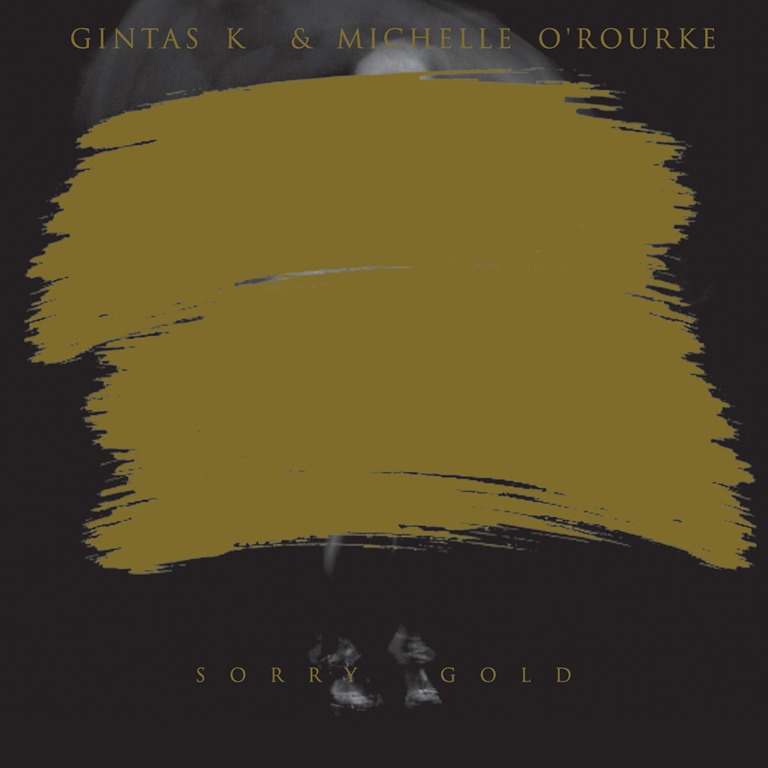
Gintas K is at it again! Last year I was compelled to break my vow not to listen to, or write a word about any Christmas-themed releases on account of his album, Christmas Till the End, released on December 25th, and now, just when I’m getting into full foaming at the mouth mode over how there’s Christmas stuff everywhere since the week before Halloween, I discover he dropped an album bearing a title with overly festive connotations, which was, in fact, released at the start of September – and which was recorded in July!

Jingles With Bells was, like a number of other works, recorded live, using computer, midi keyboard, and controller.

Despite the album title being in English, and offering something of a play on words with jingles suggesting advertisements as well as festive chimes, the track titles are in K’s native Lithianian, and I’m not entirely sure I trust Google translate when it tells me that ‘irgi dugnai auksti ir aopacia garsai gerai visai’ is ‘the bottoms are also high and the background sounds are quite good’ – although it is a fair description of the six-and-a-half-minute opener. It begins with sparse drips and drops echoing as if in a giant cave, before Kraptavičius introduces his trademark flickering electrostatic glitches and whirs. The layers build as crunches and crackles clamour into a frenzy of fucked-up robotics.

Stammering, fractured beats collide and disperse in all directions, a wheezing, groaning, creaking array of electronic simulations and rapidfire thumps like hammers and nail guns, jazz percussion and despite the complete absence of any actual percussion, Jingles With Bells is marked by a complete absence of any actual beats, instead being driven by clattering short sounds that resemble beats and even trick the ear and mind with their (ar)rhythmic explosions. The last thirty seconds of the seven-minute ‘is to pacio tesinys geras’ (which may or may not translate as therefore the continuation is good’ is marked by silence, and it’s a welcome reprieve from the blindingly busy blitzkrieg blast.

‘istisinis is to pacio’ is a snarling drilling grind of bass, but also introduces the first jangling treble that might pass at a distance as a jingle, but it more resembles a dentist’s drill than sleigh, and the whole experience is less jingle and more nerve-jangling and uncomfortable.

Echoic droplets and sounds reminiscent of jangling jamjars trickle through the album, and the ten-minute monster that is ‘varpeliai noiz bugn bosas neblogai’ (‘bells noiz bugn boss not bad’ – yeah… nah) begins with what sounds like a bath being run down the plug and a crackling blast of blocks of distortion against – finally – chimes. But against a creaking croaking, cracking low end like the bow of a wooden ship breaking against rocks in a storm, those melodic tinkles soon build to forge an oppressive, head-compressing sonic torture; it’s simply all too much. But too much is never enough, and as such, it all adds up to another album that bears all of Gintas K’s quite unique hallmarks forged from some mangled laptop machinations, manipulated in real time.

AA

cover

Efpi Records – 18th November 2022

Christopher Nosnibor

Time flies when… life. And especially when a pandemic and a series of lockdowns rob you of two tears of doing anything. And so it is that Let Spin are marking the ten-year anniversary of their fourth album, Thick As Thieves.

The band are something of a supergroup: Formed in 2012, Let Spin feature four highly acclaimed musicians: Ruth Goller (Melt Yourself Down, Vula Viel), Chris Williams (Led Bib, Sarathy Korwar), Finlay Panter (Beats & Pieces Big Band, Sound 8 Orchestra), and Moss Freed (Union Division, Spike Orchestra), and Thick As Thieves features ten segued tracks of what they describe as ‘adventurous post-rock, experimental jazz’.

Thick As Thieves may be a cliché, but the music it contains is anything but. In fact, quite the opposite is true. Much as it subscribes to aspects of both jazz and post-rock, it’s an exploratory instrumental set that doesn’t really conform to any specific genre trappings, instead borrowing from them in order to form a unique hybrid.

While it’s largely driven by some crunched-up, noodling guitar work, Thick As Thieves very much mines an overtly jazz theme, and while it starts out quite gentle and doodly, on the third track, ‘Red’ it takes a hard lurch into altogether nor challenging terrain, and not just because it gets louder and more percussive: it’s altogether more jarring, the tempos and signatures tumbling into stop/start confusion before the brass ruptures into a cacophonic maelstrom.

‘Broken, I Told You!’ brings a chubby, strolling bassline that’s got some serous groove in a stuttering sort of a way and packs in some deft runs that weave in and out of the wild woodwind and jittery guitar work that’s disorientating and discombobulating. It’s pretty much ok that this feels a bit weird and woozy: it needs to be. ‘North Sea Swim’ takes things down a way and meanders along before swerving into ‘’Mixed Messages’. ‘Bead’ is perhaps the most overtly post-rock / jazz hybrid work, an expansive succession of crescendos with a soaring sax undulating into waves of stratospheric reverb. Closer ‘Liminality’ is almost nine minutes long, and is a space-rock jazz monster that’s absolutely dizzying.

This is one of those albums that not only feels like its album status is essential – you don’t seek out or skip to particular tracks, but experience it as a whole – but there’s a keen sense it would lend itself nicely to being performed live, in its entirety. It flows from end to end, with judiciously-placed peaks and troughs. The ten songs may be marked out individually, but this really feels like a single continuous piece segmented out into ten slices, and it’s a listening journey. At times intrepid, at times curious, it’s got a lot going on, often all at once. Brace yourself!

AA

LS03 Thick As Thieves FRONT

Bearsuit Records – 21st October 2022

Christopher Nosnibor

To recap on a long and often retold tale of mine: I love weird shit, but I’m not quite so mad keen on remixes – unless they’re inventive and interesting. So what to make of a remix album of Eamon the Destroyer’s A Small Blue Car?

When I reviewed the album on its release back in November of last year – which barely feels like three months ago, let Alone the best part of a year – I was perhaps ambiguous in my appreciation, describing it as ‘downbeat’, gloomy’, and ‘soporific’. It is very much all of these things, but these are reasons to appreciate this understated collection of songs, with their lo-fi bedroom production style being integral to the Eamon the Destroyer listening experience as he rasps away darkly to aa droning backdrop in a crackle of distortion

One frequent niggle with remix sets is the repetition, but here, only a handful of tracks appear twice, with three interpretations of ‘My Drive’, which is fair enough having been the lead single, and dispersed among sixteen tracks in total, it doesn’t feel like overkill.

The reimaginations of the original songs certainly capture their spirit and essence, from the stop/start glitchy gloopiness of the wandering Like this Parade remix of ‘Nothing Like Anything’ to the longer, more abstract reworkings, like the six-and-a-half-minute festival or reverb and cavernous slow-mo, downturned echo that is Société Cantine remix of ‘Tomahjawk Den’ that’s as experimental as you like and quite disturbing in places, to Michael Valentine West’s seven minute spin on ‘My Drive’, A Small Blue Car – Re-Made / Remodelled is the definition of eclecticism. There’s low-level pulsating electronica and swerves into electronic chamber pop, against ambient electro and scraping industrial noise.

Yponeko brings swirling synths and grating distortion together in a drowning space-rock drift, while MVW deconstructs ‘My Drive’ to a junkyard of spare parts that’s somehow elegant and delicate as well as a wheezing, droning hum that wheezes and groans.

There are no obvious rehashings here, no lazy no-effort remixes that do the usual thing of whacking a booming beat behind the original. In fact, there are absolutely no stonking beats, techno or disco remixes here: these are all most sensitive to the original intent. Sometimes there are beats – as on the thrumming Ememe remix of ‘Avalanche’, but it’s a stuttering wall of drilling noise, ploughing into a mess of glitching loops, a mangled cut-up collage of sound – and often there are not: The Moth Poet’s take on ‘Slow Motion Fade’ is nightmarishly dark, a whirling churn of sound, which drifts into sepulchral opera at the end

Across the course of the album, there’s a lot of cut-and-paste splicing galore, resulting in an ever-shifting sonic collage, and John 3:16 brings gloomy, stark industrial to ‘Humanity id Coming’. House of Tapes turn ‘My Drive’ into a throbbing grunge beast, with additional helium. It’s hard to imagine anything further removed from the original, and that includes Halai’s twisted tribal techno take on the same song.

Alongside one another, it should all amount to a horrible mess, but is, in fact, an absolute triumph, because this is exactly how it should be: Eamon the Destroyer’s original work was a kaleidoscope of darkly disorientating oddity, and this revisitation is more of the same, only different. It’s unlikely to land any spins in nightclubs across the land, and even less likely to find any of the tracks landing Radio 1 playlisting, and it’s even unlikely to win many new fans – but then again, Eamon’s acquired some admirably influential fans, and moreover, that’s not really the ambition for any artist releasing work through Bearsuit. And it’s so refreshing when so much emphasis is placed on not just sakes, but airplay, streams on Spotify, and likes and followers on various platforms, that there are still those who value artistic freedom and exploration above all else.

A Small Blue Car – Re-Made / Remodelled is a source of pleasure, not only because it’s genuinely interesting, but simply because it exists.

AA

a0817555736_10

Tenchpress’ bio reads ‘6-string guitar, 12-string guitar, keys (for doors, not the instrument), keys (the instrument, not for doors), concertina, trumpet, a friend’s electric bass, sturm, und drang, 1x LA Galaxy-branded drum stick, free soft synths, A Very Old Snare Drum.’ Which ultimately translates as rather wonky weird shit, judging by their forthcoming album, Tombmagic, released through Cruel Nature in September 5th.

As a taster, they’ve released a video for the track ‘Quaternions’, which bears the distinctive emerging style of Jason Kester.

Check it here:

AA

a2641475574_10

24th August 2022

Christopher Nosnibor

There are certain popular adages which are, frankly, and demonstrably, bollocks. The first is ‘if you can’t do, teach’. Admittedly, the state off education here in Britain means that academics at all levels are forced to teach outside their field with the scantest of time to prepare. I discovered this first-hand while working on a PhD thesis on William Burroughs and postmodernism and being tossed a semester’s teaching on Elizabethan literature. But moreover, most teachers wo get to teach in their specialist areas clearly can ‘do’ having attained a certain level of qualification. Can teachers of musical instruments also not ‘do’? Can diving instructors not drive?

And then there’s the popular notion that music reviewers are failed musicians. Perhaps the people who cast this aspersion should speak to Neil Tennant or more pertinently John Robb, Jim Irvin, and Sally Still. I might not point them in the direction of my own ongoing musical activities so much, but would highlight Oscar Quick, the man behind the ‘Needs More Cowbell’ site, where he posts considered reviews of new releases, who has recently turned in a handful of live shows and delivered the album Weaponised Soup.

In his bio, Quick explains how Weaponised Soup ‘features influences from disco, hip hop, rave and progressive rock, while remaining true to its core 80’s post punk sound. Dealing with Oscar’s experiences with insomnia, this record is a stream of consciousness during those many long nights, covering the extreme highs and destructive lows of staying awake for days at a time.’

As a lifelong insomniac, it’s relatable: the output happens because how else do you distract a fevered, restless brain that won’t let you rest? As you may guess, it’s not only a stylistic melting-pot, but also very much an album that jumps all over the place in a way which conveys the mania and erratic impulses that arise from protracted sleeplessness.

Weaponised Soup Album Cover

Opener ‘I Should Sleep’ sounds like The Pixies, only staggering weary with fatigue and mumbling, slurred, and fugue-like. But if you’re looking for reference points, look no further than the title of ‘Assorted Psycho Candy’, which is, unexpectedly, a remarkably atmospheric, downtempo trip-hop / post-rock crossover that finds Quick picking through a medley off musings. ‘Over the Garden Wall’ is a contemplative wash of Cure-esque synths and packs more than its necessary share of cowbell.

Some songs are more successful than others: ‘Chrysanthemums’ is a weird, almost baggy slice of dance that twitches with paranoia and tension and switches into frenetic territory around the mid-point, but the sub-Goldie Lookin’ Chain white rapping takes some absorption., and the New Order-esque ‘Respect for Dinner Ladies’ brings more Sprechgesang and even straight spoken vocals that likely sit in the Yard Act bracket, and in its simmering tension and up-front awkwardness, by accident or design, Weaponised Soup seems to capture the post-pandemic zeitgeist.

Something clearly changed during lockdown: artists are now talking openly about mental challenges and neurodiversity, and embracing these experiences creatively, and this is reflected in a new wave of music that refuses to be bound by genre, as Andre Rikichi’s wonderfully weird exploratory stylistic explosion on which I wrote only yesterday exemplifies.

As we continue to crawl from under the psychological rubble of the pandemic and successive lockdowns, into a new world that’s not brave, but fearful, tremulous, and ultimately fucked-up and swinging ever further to the right, these are truly terrible times – but as history shows, terrible times tend to spur the creation of great music. With Weaponised Soup, Oscar Quick forges a small but unique space in that fucked-up world, and it’s very much a good thing.

Derby-Uni-UGG-038