Posts Tagged ‘EP’

Heavy Baby Records – 21st January 2017

Christopher Nosnibor

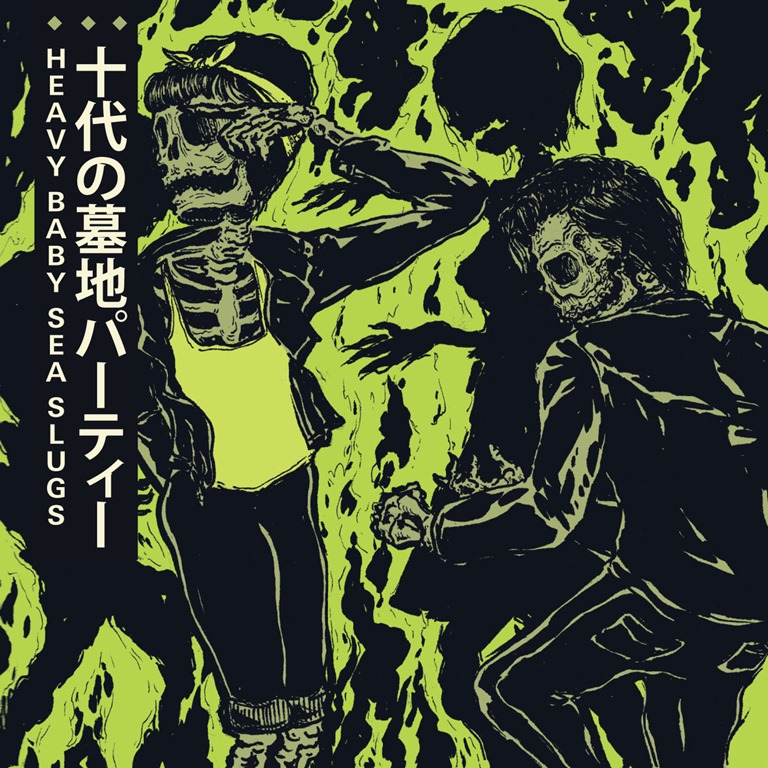
Ok, so I’m not one to judge a record by its cover, but obviously there’s a lot to be said for packaging music in – or with – cover art which reflects the contents in some way. Heavy Baby Sea Slugs’ new offering, the Teenage Graveyard Party EP has artwork which says ‘sixteen minutes of raw, full-tilt sludge-metal racket’, and funnily enough, that’s precisely what it delivers (as one might reasonably expect from a band who previously released an album entitled Fistula Missile and who seemingly enjoy considerably more success in Japan and Taiwan than at home in Texas).

‘King Midas of Shit’ launches the EP with a savage deluge of nasty, gnarly noise, piledriving in at a hundred miles an hour. Talk about a sonic slap round the chops! It’s a frantic, frenetic and stubbornly unpolished aural assault which spits and snarls and spews in all directions.

The title track slows the pace and actually offer some semblance of a tune, with some proper singing and everything – at least until about halfway through when the band put their collective pedal to the metal and thrash their way senseless to the end. Don’t expect any cuddles from the bass-led thunder of ‘Pit Bait’, either. It comes on like a Motorhead 45 being played at 33.

The six-minute closer, ‘Zero-One’ really brings the grind with a downtuned, gut-churning trudge that’s somewhere between early Swans and early Melvins. It’s a gruelling dirge which makes no real attempt to get going, and instead spends is time making threats, with slow, heavy drums, scrawling feedback and yawning bass drone. It’s crushingly heavy, and feels like the soundtrack to an eternity in purgatory.

It may only be sixteen minutes in duration, but Teenage Graveyard Party is a gloriously unpleasant, dirty, mangled mess of noise. Party on, dudes.


Heavy Baby Sea Slugs – Teenage Graveyard Party

2nd September 2016

Christopher Nosnibor

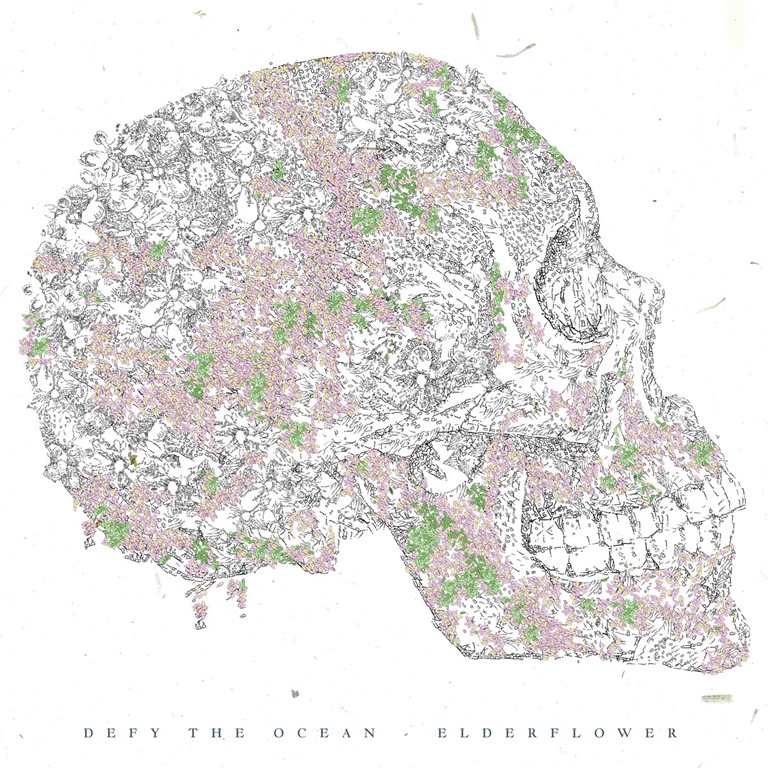
With seven tracks and a running time in excess of half an hour, it’s one hell of an EP. ‘Elderflower’ is also a whole lot more than the prescriptive ‘post-rock’ tag attached to the duo. Much as I appreciate labelling as much as the next time-pressed music journo struggling to place a band and clutching for pointers for pitching a band in a review, and much as I like a lot of what slots into the post-rock bracket, Defy the Ocean are a band who create music that simply cannot be readily classified on their expansive and accomplished new release.

For a start, it’s more rock than post rock. It’s pretty loud. It’s pretty heavy. There are a lot of vocals. None of these are bad things, and ‘Elderflower’ is a work of depth, range and power. From the get-go, they demonstrate a knack for shifting between segments and moods with real panche, dragging the listener along with them: ‘Rest’, the first track may only clock in at two minutes and fifty-five, but it’s got more twists and turns and ideas and emotional range than some bands’ entire albums.

‘Veils’ is restrained, darkly atmospheric, moody and is perhaps the most post-rock track of the set. But it’s got a bleak, metallic edge that also tips a nod to the mid 90s alternative rock sound.

The title track breaks into full-on grunge mode, the quiet / loud dynamic and brooding atmosphere more Alice in Chains and Soundgarden than I Like Trains, and the crushing power chords are thick and heavy, and paired with a drawling vocal delivery, it calls to mind Melvins – the mellow piano breakdown notwithstanding. ‘Brine’ is serpentine, stripped back, and provides a distinct contrast with its chiming guitars which does call to mind I Like Trains – but then again, the burst of powerchords, distorted vocal and full driving climax, alludes to millennial progressive acts like Oceansize, Amplifier, Porcupine Tree, Anathema, and if anything, ‘Vessel’ amalgamates neoprog with the desert rock vibe of Queens of the Stone Age and their ilk. There’s a lot going on here, and it’s all well-assembled and musically articulate.

Everything about ‘Elderflower’ points to a band who aren’t confined to any one format or bank of instruments, which makes for a refreshingly varied collection of songs, and one which demands repeated listening in order to reveal its full richness.


Defy the Ocean EP

Christopher Nosnibor

Mark E Smith has oft claimed that everyone rips off The Fall. Mark Wynn even has a song about it, which does precisely that, entitled, appropriately, ‘Rip off The Fall’. While Smith’s claims are unquestionably exaggerated, the band’s influence is undeniably vast, and far exceeds the reach of their commercial success. One band who are unashamed in their ripping off of The Fall is Leeds / York-based combo The Wharf Street Galaxy band. But then, they only rip off The Fall inasmuch as they belong to the lineage of Can, Kraftwerk and The Fall, with a hefty dose of Public Image’s angular post-punk underpinned by dense, dubby basslines. Originally released as a three-track cassette (what else?), this expanded reissue features a brace of demos and a rehearsal recording.

A particularly Wobble-esque bass run kicks off the first track, ‘No Puffins for YOU Lad’, which finds northern churl Dave Proctor spilling a semi-abstract narrative that lurches on myriad detours in an increasingly tense and intense style that calls to mind the ranty racket of tracks like The Fall’s ‘Neighbourhood of Infinity’ and the vibe of earlier works like Perverted by Language. Angular and challenging, this is s what it’s all about, and even in 2016, this kind of stuff sounds every bit as antagonistic and uncomfortable as it did 30 years go.

The wandering spaghetti Western vibe of ‘Sergio Leone Comes to Keighly’ is suitably surreal, but grounded by a gritty Yorkshire sensibility, which essentially defines the WSGB. ‘Organised Freedom is Compulsory’ forges a monotonous groove, a long drone sustaining for some eight minutes over murky drumming and a chanted lyrical refrain of ‘Freedom is compulsory’. (I’m reminded of both The Fall and Scumbag Philosopher, another band who both rip off The Fall and have supported them, as well as Bauhaus, by the way in which the guitar serves to provide texture against the bass, instead of any kind of melody).

Of the additional tracks here – a brace of demos and a rehearsal recording – ‘Selfie Stick’ is sonically dark and lyrically savage and marks it as one of the band’s standout tracks.

But The Wharf Street Galaxy Band aren’t really about standout tracks, and as this debut EP demonstrates, they’re all about nagging away, bludgeoning the listener into submission with a blend of ragged guitar, urgent bass and hectic drumming while the vocals hector and harass.

Needless to say, I totally dig their scene. You know what you’re going to get, so go listen or bugger off back to your mundane mainstream shit.

WSGB

The Wharf Street Galaxy Band Online