Posts Tagged ‘electronica’

Karlrecords – 10th March 2023

Christopher Nosnibor

When I started out reviewing, I always thought how cool it would be to get to hear new releases by acts I like in advance, and to opine on the latest releases by acts familiar to many. But I’ve come to realise that the real joy – and what I now see as my purpose – is to discover and share new and lesser-known artists. It is a gift which keeps on giving, for I hear so many people in my demographic moan about the lack of any decent new music. It’s simply not true: they’re just not looking in the right places (and their idea of ‘decent’ music tends to be rooted in their youth and coloured with nostalgia, which is sad really. Opening one’s ears and opening one’s mind is the key to keeping young. Or something). Of course, it’s always subjective, but there is a rare exhilaration and delight in – after all this time – hearing something that doesn’t sound like anything else.

And so here we have the debut EP from Sara Persico, which prefaces a full album in the pipeline. It doesn’t remind me of anything – but it does give me a rush, but also chills me to the bone.

It’s dark and it’s stark, and it’s challenging.

According to her bio, she was ‘born and raised in Naples, Berlin-based sound artist/vocalist Sara Persico cut her teeth experimenting on the fringes of Naples’ fiery underground experimental/noise scene, developing a technique that would integrate her voice with analogue electronics, field recordings, and samples.’

Fiery would be a fair description of the six tracks on Boundary, released on cassette. It’s big on bass and beats. Big big big. The percussion bashes at the cerebellum and kicks the cerebral cortex, while bass resonates through every fibre of the body. This dense and weighty stuff. It’s the elements of dance music slowed to a glacial crawl. Instead of making you want to move, it absolutely freezes you solid, tense, immobile. And as for Persico’s voice – it’s something else. She sounds tortured, trapped, and transcendental.

Stripping things back to a stammering, glitched drone on ‘Exit’, she switches between ethereal lilt to banshee howl, and the two are overlaid in a sonic collage that’s compelling and terrifying simultaneously. ‘Under the Raw Light’ is tense, aggressive, even, in its ferocious beats and Persico’s voice that sounds as if it’s coming from the other side, frenzied, tortured. In contrast, the closer, Umbilical’ is a disconcerting spoken word work pitched against a thudding heartbeat and muffled bass. It leaves you feeling… what? Detached, in some way.

Despite being built around familiar elements, Boundary doesn’t sound like anything else, and launches Sara Persico as a unique and exciting voice.

AA

KR107_front

Human Worth – 10th March 2023

Christopher Nosnibor

There’s something of a tightness around the noise scene , especially around a nexus of London acts who swap members for side projects and collaborations on a remarkably frequent basis. This is a good thing, for while all of these projects share much common ground, each offers something distinctive and unique, too, a different twist or angle from the others.

Human Worth has given a home to a number of releases from acts which have emerged from this mini-melting pot, notably recent output from Remote Viewing and Fucking Lovely. And now they’re really spoiling us with the latest endeavours from The Eurosuite, who, their bio informs us ‘consist of 4 lovely people who make disquieting no wave songs that will equally pierce your ear drums and move your hips’ and whose ‘previous musical endeavours include USA Nails, Nitkowski, Screen Wives and Mister Lizard.

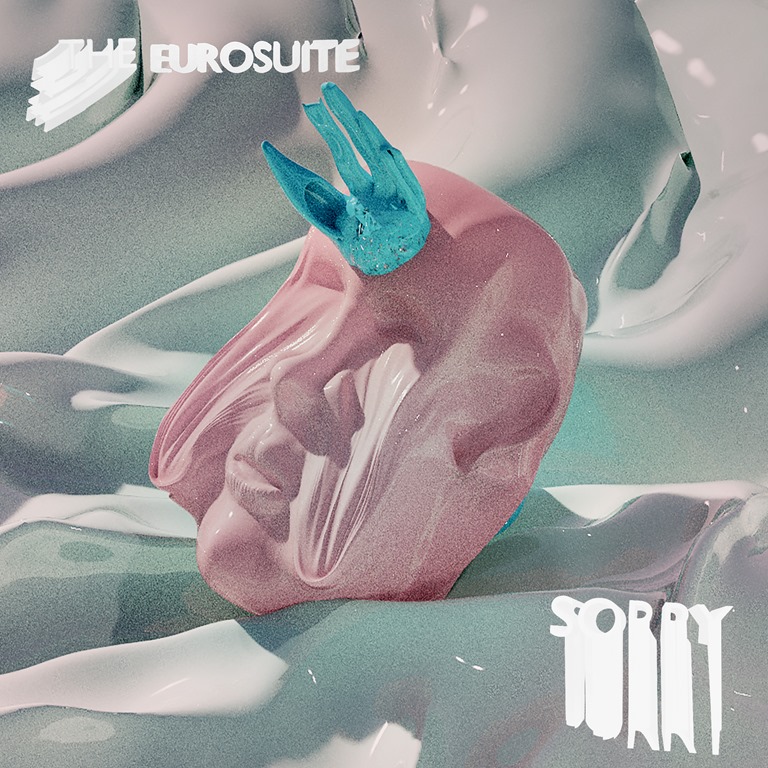
What Sorry has in common with both the Remote Viewing and Fucking Lovely releases is, that like most Human Worth releases, it’s noisy. It’s also absolute class.

But it’s also very different, with electronic elements not only incorporated, but highly prominent. The first track, ‘Cup of Water’ is sparse and atmospheric, with glitchy mechanised drums bouncing about, and it’s intriguing and really quite gentle – and then they bring the noise with ‘BODY’ where it really does all kick off – and kick off it does, with frenetic drums and guitars blasting away like crazy.

The electro/noise rock crossover is unusual – while they’re by no means the first act to do it, their approach means they don’t really sound like anyone else, not least of all because the range across the album’s span is quite remarkable. Noisy as it is, the noise is quite contained for the most part, or otherwise countered by the synths to conjure an equilibrium of sorts – or, at times, a jarring, jolting contrast.

‘Seven’ showcases just how hard it can hit when everything’s cranked up and going full-tilt, but then again, ‘LIB’ throbs and pounds and nags like a melding of DAF’s ‘Der Mussolini’ with I Like Trains’ latest output, but as performed by Big Black. They leap and lurch between jarring, jolting blasts to rather more accessible structures, and I’m variously reminded of Killing Joke, Selfish Cunt, and Daughters – the latter not least of all because of the manic energy and intensity, as well as the skewed angular noise that cuts across the rhythm section.

‘Total’ throws it all into the mix as it goes big on a mathy post-punk vibe while packing on some dense guitars and thudding bass into its two-minute duration, with hints of …Trail of Dead, and again, it positively crackles with a frenetic energy. The last song, ‘The Dream’ is truly climactic, an explosion of squalling guitars, thudding drums and sparking electricity.

Sorry is an album of contrasts, of variety, and an album that doesn’t give a fuck for genre or convention. For these reasons, Sorry is an exciting album. It’s an album that doesn’t sit still for a second, and it’s impossible to predict where it’s going to go from one bar to the next, never mind one minute to the next. It’s dizzying, but also – to use a phrase popular in the tabloid press – jaw-dropping. Sorry is a sonic frenzy and endlessly inventive, and if it leaves you feeling punch-drunk and giddy by the end – Sorry, not sorry.

AA

TheEurosuite_Sorry_Artwork-Cover

BEBORN BETON reveal ‘Last Chance’, a cool new clip taken from their forthcoming full-length Darkness Falls Again. The performance video of the groovy synth pop hit ‘Last Chance’.

BEBORN BETON comment:”Troubled boy meets emotionally depraved gynoid beneath silvery moon which then, for no adequately explored reason, fails to explode”, vocalist Stefan Netschio writes on behalf of the trio. “Last Chance!”

Watch the video here:

AA

azVJ0xho

Beborn Beton by Chris Ruiz

Christopher Nosnibor

The third – or fourth, depending on your source – album by electronic duo Akustikkoppler, is a work of starkness, of austerity, and a collision of vintage and contemporary, and quite the contrasting experience.

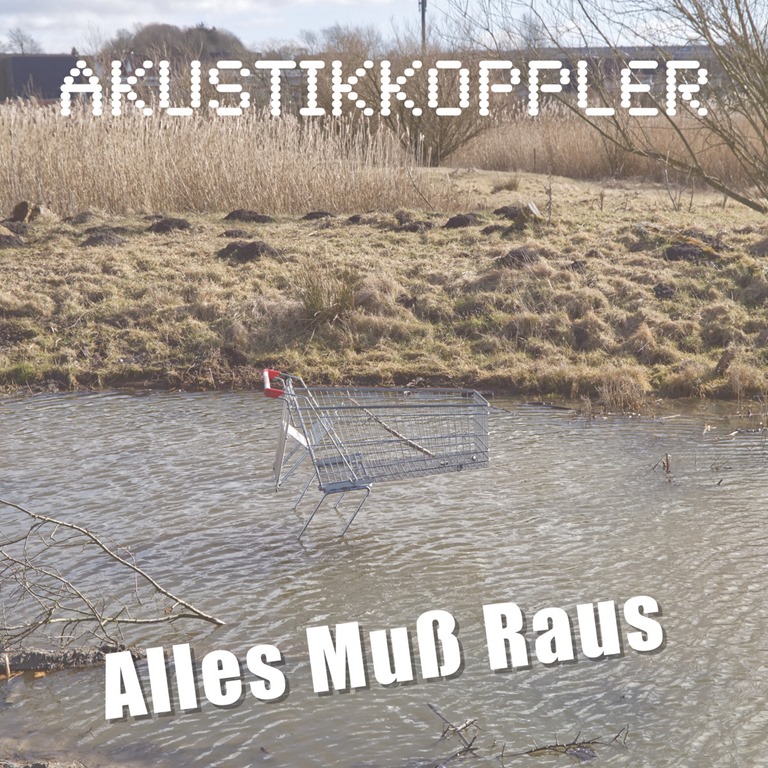
The cover looks like a photo I may have taken from my daily wanderings. I’m not saying it’s a good cover or a bad cover, this is merely an observation. The duo would likely say the same about the cover itself. It’s a snapshot that speaks for itself of the nature off people in our all-waste capitalist society.

I feel an almost inevitable shiver of nostalgia listening to this, despite the fact that the album’s style and sound predate my musical awareness. Instead, it makes me feel a nostalgic tug for my teens, when I was introduced to all of the weird and wonderful, experimental and starkly harsh music that had emerged in the late 70s and early 80s, to which Alles Muß Raus demonstrates a clear lineage.

As the blurb explains, ‘Inspired by the rough commercial industrial surroundings of Schusters Studio back then in Hamburg, Alles Muß Raus was produced on vintage and modern equipment. The two artists combine past and future to a sparkling, shimmering darkness.’ And industrial it is – not in the Ministry sense, but in the spirit of the early innovators utilising primitive synths, drum machines, and tape loops. And it ignites a spark of excitement, in that even now, this kind of music doesn’t sit comfortably with anything in the sphere of ‘normal’ music. The nostalgia, then, is in remembering how hearing TG, Test Department, DAF, et al for the first time completely changed my world, and my concept of what ‘music’ could be.

The analogue drum machines, mixed to recreate the sound of the late 70s and early 80s with a dominant synthetic snare is a defining feature. The first track, ‘Entrümpelung’ is a head-cracking, gut-smashing sub-bass groove that’s anything but vintage and pulls you in before the bass-driven churn of ‘Mitnahmequalität’ steps boldly into grinding, bass-led Throbbing Gristle-influenced industrial. In contrast, ‘Mittenmang’ is almost playful, with tempo changes and some d‘n’b rapidfire drumming bouncing alongside some busy, bloopy electronica. One of the shorter tracks, ‘Horses And Carriages Burn’ hints in the direction of The Cure’s ‘Carnage Visors’ while recreating the spirit of ‘Pornography’.

Entirely instrumental and assimilating so many disparate elements, despite some insistent grooves and accessible, melodic ,moments, Alles Muß Raus certainly isn’t a pop album, but contains many elements of electropop, even if the shade is turned down to twelve. While Kraftwerk may be an obvious touchstone, the vibe that radiates from Alles Muß Raus is much more DAF, with insistent, snare-driven beats driving relentlessly to define the sound and structure of a varied and meticulously arranged set.

AA

a1894982188_10

Mille Plateaux – 20th January 2023

Christopher Nosnibor

Less than a year on from Faces & Fragments, Neuro… No Neuro are back again with another substantial instalment of scratchy, glitchy electronica that’s rich in retro vibes.

Each piece is short – around two minutes – and drifts into the next. As the air floats past carrying soft analogue notes on a gentle waft, you suddenly realise you’re already five tracks in. It’s not that Compartments is undemanding, so much as that it’s subtle, meaning that it circulates in the atmosphere without dominating your headspace in an intrusive fashion.

The beats are backed off, even as they stutter and troll, flicker and jar. There’s a softness about the sounds and the way these woozy, warped snippets trickle together that’s almost soporific, especially when tinkling chimes cascade in ripples.

The Mille Plateaux website describes Compartments as Kawaii-Glitch (Kawaii being the Japanese culture of cuteness), noting that ‘The very artificial glitch aesthetics are not, as usual, depicted by a cold and sterile feeling; but quite contrary have the qualities of an artificial sweetener… Be careful when associating kawaii with just sweet, innocent or cute notions… just as Anime often masks grown-up topics with ‘childish’ surface structures, the album underlies a soft darkness & melancholy. Sometimes the unspeakable comes in disguise. Like the fashion style Yami-Kawaii, a bizarre mixture of kawaii-aesthetics with questions of depression and suicide, this album offers a mixillogical splice of life in which every second might take a turn into the irreal and eerie. To make distinctions between what is real and what are delusions, dreams or nightmares, emotional highs and lows, becomes impossible. In some sense it is ‘too much’ while still minimalistic in style.’

On the penultimate track, ‘Just Crumbling,’ things seem to come apart at the seams as stammering beats fly away from sounds firing in all directions like breaking springs. The temperature drops further at the finale, as those split sprockets echo into the cold night air and as the final sounds of the bonus-length last track, We’ll be Seeing You Soon’, which clanks and echoes for a fill four minutes, fade away, I sit, full, aurally content and calm… and worried. What subliminal toxicity has this album dispersed internally? How will I feel about Compartments once I begin to process and digest its multi-faceted contents? I don’t know but then, I don’t know if II trust what I heard, or my instincts on how to react. There is definitely more to Compartments than first meets the ear.

MP53_front

Christopher Nosnibor

Coldwell’s own notes which accompany this – truly epic – album explains and articulates it best, when he writes ‘This new retrospective is certainly not your typical album. Each track is almost an album in its own right! The material sees CC at his most experimental, stripped back, noisy and immersive. Following on from last year’s Music for Documentary Film, this collection gathers together some of Michael C Coldwell’s sound art work and music written for exhibition and gallery contexts.’

This is very much one of the benefits of the digital format: there is no restriction of duration on account of data capacity. Time was when physical formats restricted the running time of a release, with a vinyl LP optimally running for around forty-five minutes but having the capacity to squeeze in about an hour, with CDs being able to hold seventy-two minutes and while a cassette could – precariously – take two hours, no-one released a two-hour single cassette.

Conflux Coldwell’s collection of installation works is immense, and with a running time of around two-and-a-quarter hours, it’s in the realms of recent Swans albums. While it’s by no means a brag, I’ve endured longer, notably Frank Rothkamm’s twenty-four-disc, twenty-four-hour Werner Process, and am also aware of Throbbing Gristle’s legendary 24 Hours cassette box set, but the point is, Coldwell has really made the most of the space available to him here.

I sometimes differentiate albums as being foreground or background, and Music for Installation is very much background, the very definition of ambient. That isn’t to say it’s uninteresting or unengaging. It’s simply a vast set of field recordings and sound collages that make you feel as if you’re in a certain environment. Unlike the aforementioned Swans albums, which I find are difficult to listen to because they require a commitment of time to sit with them and focus, to actively listen, Music for Installation is a very different beast which works while rumbling on while you’re doing other things. And as an experience, this very much works.

The fifty-five minutes excerpt (!) of Remote Viewer is exemplary. Passing cars, scrapes, drones, the sound of metal on metal, clanking, indistinguishable muttered dialogue, and extraneous sounds that range from – possibly – the rush of wind to the sound of feet gently passing on creaking timbers, all sit side by side and overlap in various shapes to create a latticework of real-life founds the likes of which you probably would ignore if you even noticed them at all under normal circumstances. Of course, if this is an excerpt, where’s the rest? It’s the kind of immersive soundwork that could run for hours and that would be perfectly fine.

The live performance of ‘Dead Air’, which runs for an album-length headline performance is superb. It’s testing, but it’s also magnificently executed. The sounds and textures are balanced, but the overall sound is gloopy. The result is a piece that’s creepy, evocative, and dissonant, and built around wailing whistles and pulsating drones that coalesce intro their own organic rhythms, drawing together elements of Kraftwerk and Throbbing Gristle to conjure a dark, dingy soundscape.

‘Dismantle the Sun’, running for fourteen minutes feels concise in comparison. It’s barely there for the most part, the most ambient of field recordings. It’s hard to identify any of the individual sources, but again, there are rhythms that emerge from the rumble off passing cars and the whisper of the wind, and the piece transitions both sonically and spatially as it progresses, at times evolving from a whisper to a howl. One feels a sense of movement, which in turn creates a sense of disorientation, although the voiceover detailing ‘solar oscillations’ in the closing minutes provides a certain grounding.

The final brace of compositions, ‘Alternating Current’ and ‘The Specious Present (How Long is Now?), which have a combined time of around ten minutes feel like barely snippets or sketches in comparison to the other three immense pieces, but what they lack in duration, they compensate in depth, being richly textured and showcasing some interesting beats and conjuring some dark, confined spaces. And for all its vastness, Music for Installation is quite a dense, claustrophobic experience at times – and it’s a quite remarkable experience, too.

AA

cover

10th December 2022

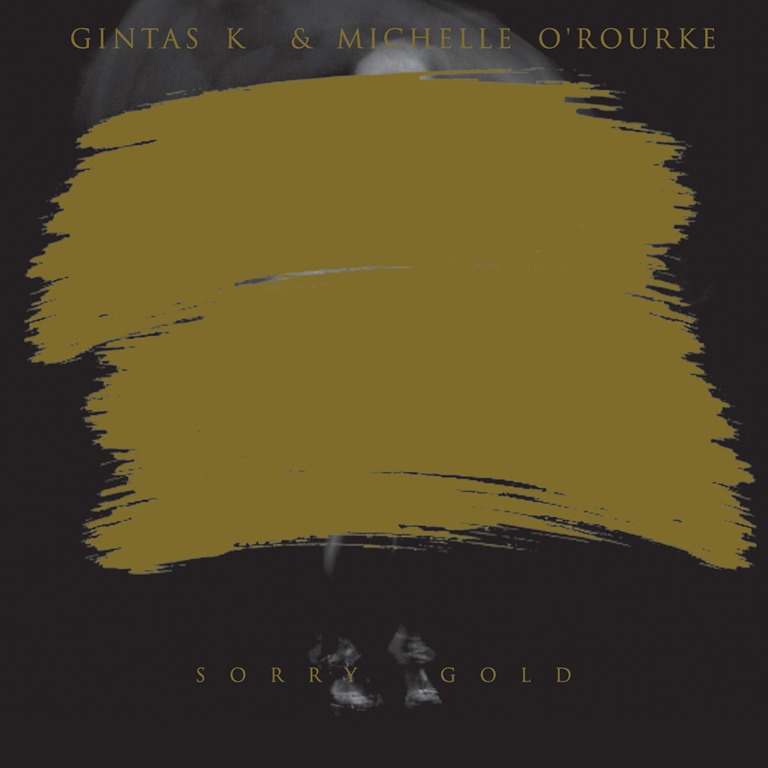
Gintas K wraps up a(nother) truly prodigious year with a collaboration – and an apology. The Lithuanian sound artist hasn’t strayed so far from his experimental electronic roots, at least fundamentally, but at the same time, Sorry Gold does mark something of a substantial and significant departure.

As the accompanying text explains, ‘this recording was made on stage at the Project Arts Center in Dublin, during the making of the film Sorry Gold Emily Aoibheann. The artists improvised to the visual landscape of the rehearsal space, stage design and dancers…’ it was funded by the Arts Council / An Chomhairle Ealaíon and Dublin City Council, supported by Dublin Fringe Festival, add the performances premiered as a part of Dublin Fringe Festival at Project Arts Centre in September 2019.’

With additional production and resigned from the original project, the album is only sort of a soundtrack, and the track numbering is both confusing and frustrating, with #1, #2, #4, #3, being followed by #4 #2, #2 #2, #4 #3 and #3 #2 before the more sequentially logical #5 and #6 conclude this most eclectic listening experience.

Replacing the glitching frenzy of bubbling, frothy digital frenzy that is Gintas K’s trademark is a much sparser, more minimal approach to composition, with single notes that sound like ersatz strings being plucked, atop quivering drones and low-rumbling organ sounds that fliker erratically like gas lights and resonating out into a spacious room. It has an almost orchestral feel, albeit distilled to absolute zero. The notes are a little fuzzy and ring out into emptiness, while the haunting vocals of Michelle O’Rourke are utterly mesmerising and border on transcendental. In combination, the atmosphere is deeply absorbing and heavily imbued with a spiritual, other-worldly element.

The first piece introduces us to a strange, haunting space beyond the familiar, and while it’s not by any means unpleasant, it is disconcerting, and sets the tone, ahead of ‘Sorry Gold #2’, which is melancholic, brooding, spaced-out notes hovering while O’Rourke ventures into almost operatic territories. It’s a not only a different atmosphere, but a different mood when placed alongside K’s other works: it feels a lot more serious, and has a different kind of energy, a different kind of intensity. I’m accustomed to feeling bewildered by the frenetic kineticism and abundant playfulness of his work. Sorry Gold isn’t entirely without joy, but it is much darker and much, much slower-paced, delivering a different kind of intensity.

It’s not until ‘Sorry Gold #4’ that things even hint at K’s more characteristic and overtly electronic noodling, and as the album progresses, we do encounter more of his feverish electronic tendencies, notably on the grinding ripples of ‘Sorry Gold #3’, but they’re much more restrained. ‘#4 #2’ brings a surging swampy wash of noise that’s a buzzing, grinding industrial blast of fizzing distortion. O’Rourke, barely audible in the sonic storm, sounds lost, detached.

Of the ten tracks, only two are under four minutes in length, and the pair use these extended formats to really push outwards: the ten-minute ‘Sorry Gold #4 #3’ brings helicoptering distortion that crashes in waves, at times low and rumbling, at others, crackling and fizzing with treble, and it creates a different kind of disturbance. Dissonance howls desolately on ‘#3 #2’, and so does , wracked with pain and spiritual anguish.

By the time we arrive at the brief and delicate bookend that is ‘Sorry Gold #6’, one feels inexplicably drained. The experience is somewhat akin to wandering ancient tunnels by flickering candlelight, observing ancient wall art while a subliminal mind-control experiment blasts random frequencies directly into your brain. You’re left feeling somehow detached, vaguely bewildered and bereft. And you feel deeply moved. Sorry Gold is special: Sorry Gold is bleak and harrowing, but it’s solid gold.

cover

There is more than one way to listen to BEBORN BETON’s ninth album "Darkness Falls Again": it is possible to just dance and enjoy contemporary synth pop hymns that have a solid musical based in the golden 80s with a dash of cool 90s influences. Catchy tunes and mature songwriting combine to form a sonic joyride.

Yet there is another side to BEBORN BETON, which is mostly expressed in their lyrics. On "Darkness Falls Again", the Germans wade right into the political battles and culture wars of our times. BEBORN BETON speak out against the attempts to deny and deprive women of their rights. They take a strong stand against those who try to restrict love, the freedom to choose gender, and sexuality. The trio clearly call out racists, demagogues, preachers of hate and violence, and those who destroy our planet in order to enrich themselves. In short, BEBORN BETON put their finger right on the pulse of our time.

BEBORN BETON were founded by vocalist Stefan Netschio, keyboard player and drummer Stefan Tillmann, and keyboard player Michael Wagner in 1989. The trio set out with the declared aim to keep synth pop relevant and give it meaning. Their first signs of life were three self-released works, ‘Pyre’ (1989), ‘Scythe’ (1991, and ‘Die Stahlbetontour’ (1992) that came out on tape.

Following their first two regular albums "Tybalt" (1993) and "Concrete Ground" (1994), BEBORN BETON found a label-home where they joined renowned acts such as WOLFSHEIM and DE/VISION. Having conquered home, the three electro-musicians rapidly expanded abroad and the 1996 full-length "Nightfall", followed by "Truth" in 1997, and "Fake" (1999) gained the Germans strong acclaim by critics and fans around the globe.

By the time, "Rückkehr zum Eisplaneten" (‘Return to the Ice-Planet’) was released in 2000, BEBORN BETON had firmly positioned themselves as a headlining act within their scene and toured in all the strongholds of electronic music such as Canada and the US, the Netherlands, Norway and Sweden, Switzerland, Poland, and even Russia among other places. In the North of America, the Germans had scored a veritable club hit with the track ‘Another World’ in 1997. Across the Atlantic, the track’s ever-growing popularity finally led to the exclusive US release of a best-of double-album entitled "Tales from Another World" in 2002, which was followed by extensive touring in North America with APOPTYGMA BERZERK in the same year.

Yet the heavy touring and the creatively highly demanding output of so many excellent albums in quick succession started to take its toll. After the release of "Tales from Another World" (2002) and the associated touring, BEBORN BETON went on an extended hiatus.
It took 13 long years, until BEBORN BETON returned to the delight and surprise of their still huge following with a new album on Dependent Recordings. "A Worthy Compensation" (2015) was showered with accolades from the relevant magazines such as an "album tip of the month" in German Sonic Seducer and Orkus Magazine called the record an "undisputed masterpiece".

Having learned from previous experiences and not to fall back into a relentless production cycle, BEBORN BETON took their time to write another masterpiece. "Darkness Falls Again" has all the ingredients that make synth pop great. Catchy songs that make the legs twitch, a dash of melancholy, a pinch of irony, and a knife-tip of anger. Music with a meaning, welcome back BEBORN BETON!

Watch the video for ‘Dancer in the Dark’ here:

AA

lD868gSQ

Photo: Chris Ruiz

18th November, 2022

James Wells

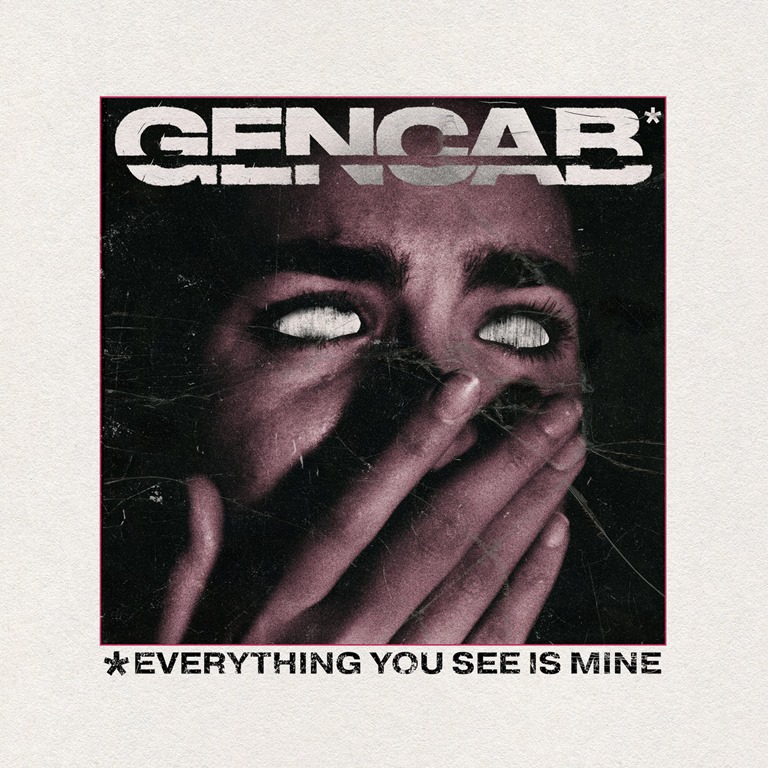
Perhaps I’m sensitive. Perhaps I’m just aware, attuned. But certain phrases trip me. And on reading ‘Everything You See Is Mine’ I feel my skin crawl a little. Something about it says power trip, something about it says control, something about it says manipulation, something about it says shades of wrong. It’s not something that explicitly makes its way through the music, but then, who do you trust?

This gnarly four-tracker is a furious frenzy of high-octane, uptempo industrial that draws many cues from early NIN with snarling electronica driving things hard from the get-go, with first song, ‘Soft’ being anything but as driving electronica slams home with the kind of abrasion that blasts the chest. It’s a strong start to a release that tapers off rather after that initial blast.

‘Wasp Factory’ – which I like to think tips a nod to Ian Banks’ debut – goes a bit emo and hints a bit awkwardly at Linkin Park and then the last song, ‘Only Skin’ brings a satisfying trudging crunch but also an unexpectedly accessible vibe, as it drives the EP home to its conclusion.

It’s not as dark or hard as all that and perhaps isn’t the dominant sneer the title suggests, but Everything You See Is Mine is certainly not an entirely accessible attack either. One to explore.

a1987592192_10