Posts Tagged ‘electronica’

Cruel Nature Records – 3rd December 2021

Christopher Nosnibor

Cruel Nature’s release schedule for December is heavily snake-orientated, with Cavesnake’s eponymous album emerging on the same day as Mitternacht’s The Snake, although the two serpents are very different beasts.

For Cavesnake, the bio informs us that ‘Oxgoat and Sikander Louse came together through a shared love of ugly, blown out Black Metal, achingly beautiful ambient soundscapes, and deep space horror’, and that ‘They use the interstitial zone of Cavesnake to explore themes of loss, emptiness, ontological insecurity and the righteous acceptance of the impending apocalypse.’

It’s seriously fucking dark from the opening, with creeping fear chords and dark ambience drifting slowly across the horizon.

Cavesnake record straight to tape and through a rigorous process of layering, drenching samples in reverb, re-amping guitar drones through monstrous cabinets, they force their music to hang listlessly in a void space akin to an event horizon. And dark it is: ‘Pseudohalo’ may only be four minutes in duration, but it’s a bleak and oppressive opener, although it’s nothing to the whiplash black metal mudslide of ‘Bloodless Weapon’. This is murky, dark, heavy. It growls and grinds and churns and burns, and shrieks howling screeds of sonic lesions, an aural excoriation that scrapes and drones for almost nine minutes.

The ten-minute ‘Posture in Defeat’ is a swirling back hole, a deep, dark eddy of slow collapse, the pretty mid-frequency glimmers rent by earth-shattering sonic donations like planets colliding, while ‘Vipers Dance’ which stretches and twists a full twelve minutes is serpentine, dark, ominous, bleak. Without an explicit context, it’s for the listener to place and utilise this listening experience to suit their experiences, and for the most part, for me, I find myself nervous, anxious, uncertain, as every composition is dark, oppressive, the sound of impending doom. It’s thick, swirling, a dense swirling vortex of airlessness from which there seems to bee no escape as it envelopes your entire being. You simply cannot breathe; all you want to do is breathe. The snake is constricting now, your ribs and lungs are tight. Please…

The final track, ‘Fleshware’, offers no respite, a churning grind and whisper or multi-layered noise that offers no breaks, no moments of calm, only increased tension. It scrapes and screeds and snarls and growls, and near the end, a distorted, impenetrable voice speaks, rasping the album to a close.

It’s pretty heavy, and so intense. Prepare to be bitten.

AA

a1638098834_10

Canadian industrial act, DI AUGER has just unleashed their new video, a commentary on world-wide geopolitical issues called ‘Brave New World’. The concept for the ‘Brave New World’ video was designed to capture the literal content of the song.

The  message in the song is this: We are one people, one race and we exist to perpetually destroy ourselves and erase our existence from this planet. The song closes with the sarcastic view of our new collective mindfulness. Prove me and the next generation wrong.
Fighting racism, climate change, pollution, overpopulation, human rights. Where has it gotten us?  We are reliving the past here and now. The ideology is the same as are the reactions and the emotions.

Now we live in this brave new world; one with its promises for salvation under a unified umbrella as long as YOU stay in line and do what the government tells you. OBEY and don’t criticize, or comment, make a fuss or subjectively analyze. 
‘Brave New World’ appears on the album, Under The Skin Of The World and is available digitally NOW.

Watch the video here:

AA

AA

84fec614-45d6-ebdd-f4f0-7175ea2844c9

Bisou Records – BIS-019-U-B – 2nd December 2021

Christopher Nosnibor

Maybe it’s because I’m tired, and I’ve had quite a bewildering couple of weeks in terms of dayjob and quite simply life, but this is one of those band bios that leave me wondering quite simply ‘what the fuck?’ and more specifically ‘is this for real?’ Either I’m delirious, or this really is completely off-the-wall nutsness.

The facts, it seems are that The Snobs were ‘Formed by brothers Mad Rabbit (singer and producer) and Duck Feeling (multi-instrumentalist) near Paris’ and that Blend The Horse! was written and recorded between spring 2019 and autumn 2020.

Is this a real band? Then I read that the track ‘Long Winter Evenings’ follows a sonata form blending ethereal singing and a motorik groove’ and that ‘Over a minimalist rhythm section borrowing from Joy Division, Miles Davis and Kraftwerk, The Snobs restate their loyalty to rock music with Tropical Fuck Storm’s sharp guitars. Tropical Fuck Storm sounds like a character from Mark Manning’s warped rock-band novel Get Your Cock Out, and this is surely satire… right? Right?

Nope, it’s just whacky and irreverent, and it reminds me that not so long ago, humour and irony were commonplace, and art was whatever it wanted to be. And so since their formation at the turn of the millennium, The Snobs Have built quite a body of work, with a substantial number of releases recorded in collaboration with artists of various disciplines and styles. Blend The Horse! presents six compositions – bookended by songs that stretch beyond the ten-minute mark – that explore a massive range.

‘Long Winter Evenings’ is a minimalist protoindustrial effort, but then about three minutes in, there’s a kind of baggy / rappy break, before it spirals into some kind of psychedelic electro that’s a bit trippy, driven by a droning bass while squdgy bleeps and all kinds of going on go on. It’s an intense and eye-opening way to open an album. It feels cohesive, but it feels uncomfortable at the same time, and not just because it’s a genre-defying melting pot of hybridization.

There is a lot going on, even when there seemingly isn’t. ‘The Low Angle’ is sparse and minimal in its arrangement, with a thick, ambulating bassline dominating the arrangement. It’s low, slow, and dubby, and an exemplar of the ‘less is more’ adage.

What to make of this? It’s kinda trip-hop, kinda low-tempo hip hop with an experimental leaning, kinda… kinda what, exactly? There are expansive reverbs and echoes in the mix is, too, and it’s hard to know what to make of it.

Sonically it feels dislocated and difficult, with no real specific plan set: lo-fi, bedroomy wooziness lumbers and lurches as old-school drum machines provide crispy snare cracks around the reimagined Bowieness of ‘Plastic moon’, and as the thumping industrial drums of ‘Cable Call’ that combines the looping synths of KMFDM and the easy 90s popness of Jesus Jones and the like.

It’s a mish-mash of everything, and some of the elements work better than others, although there’s likely little benefit to dissecting which aspects of which track work or don’t, not least of all because there’s so much happening, and it sort of feels ‘outside’. Neoprog and post–rock melt into dreamy electro and shoegaze all mixed with a hefty dash of psychedelia, and no one of it makes sense, and yet, at the same time, it does. And it’s kinda nice, but kinda frustrating, too. It’s as though the range and exploratory nature of this project is prejudiced by an increasingly conservative market where genres and categories are core to marketing, and I’m aware I’m in some small way complicit in this process. But then, sometimes, an album simply doesn’t fit, and it’s not that Blend The Horse! doesn’t connect to any genres, so much as they’re all thrown in together to create a mind-bending stew.

‘The Sixth Dragonfly’ throws everything into the blender all at once, and it all happens, from mellow ambience to fill Nine Inch Nails guitar attack. It’s an eye-popping climax to an eye-popping set. It’s deranged, but a perfect summary of out times.

AA

BIS-019-U-B_cd_front

gk rec – 31st October 2021

Christopher Nosnibor

I have a sort of anguish-tinged relationship with artists who I admire who are super-prolific. First and foremost, I hold the utmost respect, where it’s not just the occasional creative burst, but a way of working that means they can maintain an almost endless stream of creativity and output. The anguish, selfishly, comes from the awareness that their output pisses on mine and my aspirations – and while I am of course aware that quantity is no real measure of anything, the ability to simply produce, relentlessly, is something that provokes, if I’m honest, a degree of envy. How do they do it? How do they have the headspace? How do the even have the time?

Gintas K is an artis whose work I’ve been covering for quite some time now, and I’ve long-marvelled at his output. Having come to understand his process over this time, and having watched some of the videos of his improvised recording sessions, the means of production is a significant factor in his ability to produce so much output. But that is by no means to say that he’s tossing out any old thing, and when it comes to his album releases, there are always multiple elements and sources involved, and if there isn’t specifically a theoretical element that’s integral to the process, there’s nevertheless a theoretical aspect in the mix.

For this album, ‘an electroacoustic music work that consists of stretched granular motives during the entire piece’, there are ‘voices and stories told by people of different ages and gender’, where ‘Stories blossom out of humorous fairytales told by 5 years’ child, stories about death, narrations of mindfulness, stories about consequences of WW2, deportation during Stalin regime and life in Siberia.’ It’s a mish-mash that features abstract voices in the most disturbing way. Then again, GK has a knack for the disturbing as well as for extranea.

There’s a lot of that to find here on Nervus Vagus. The album is dominated by GK’s trademark bubblebath of bloops and gloops, fizz and fuzz, and it’s often difficult to tell what’s going on. This kind of abstract mish-mash of electronica is difficult to process. ‘Rising’ is a whiplash blizzard or blips and blops, while on ‘A Dream. Relatives Story’ the dank atmosphere is hard to penetrate, and while the album may be abrim with stories, following any form of narrative is nigh on impossible. That’s no obstacle to enjoyment or appreciation of the work, though, provided you’re not averse to chaos and cacophony, and besides, the notion that narrative should be linear, or even cogent, is outmoded and based on the construct of linearity, which is by absolutely no means representative of lived experience or perception in real-time. Linear narrative exists simply to enable us to process things more readily, to simplify, and to make us feel more comfortable by imposing order on disorder. But that comfortable, ordered way is not the reality.

Gintas K’s chaotic concoction is a slice of life. Granular bubbles and extraneous noise dominate as ambient drones undulate, eddy and swirl into an uncomfortable mess of awkward noise. There are rumbles of thunder amidst the endless froth of microtones that cloud the brain and claw at it. The whole experience is quite bewildering. Sound familiar? Feel like life? It may not sound exactly like life as you know it but Nervus Vagus is likely to be uncomfortable because it’s real and interrupts the mediated flow of linear perception. But believe me, it’s good.

AA

a1479087284_10

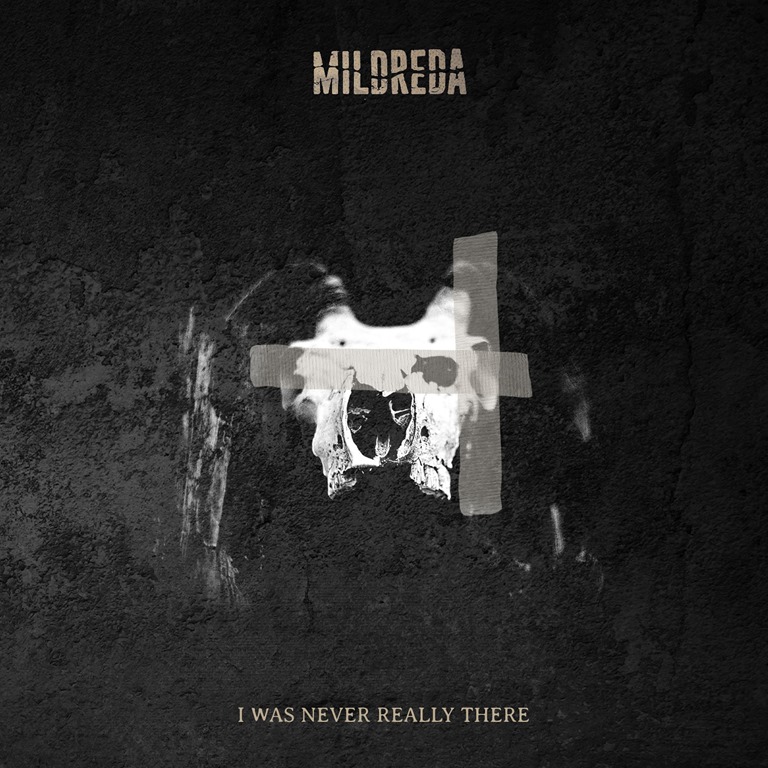
In the wake of the release of their critically acclaimed physical debut full-length I Was Never Really There, Belgian dark electro trailblazers MILDREDA are now unveiling the illuminating video clip ‘Inner Judgement’. The single had scored #4 in the German Alternative Charts.

MILDREDA comment: "The ‘poisonous muse’, who casts her dark shadow across I was Never Really There and who made her first visible appearance in the ‘Liaisons Dangereuses’ video, now returns to full view in the ‘Inner Judgement’ clip", explains mastermind Jan Dewulf. "This enigmatic being remains cool and impassive in the face of all the anger and biting frustration that push this song forward."

Watch the single here:

AA

C3M6WCN0

Anticipating Nowhere Records – 24th September 2021

Christopher Nosnibor

With the colossal five-volume ‘Isolation and Rejection’ lockdown compilation series and the one-off final final FINAL Front&Follow project, the compilation You Can Never Leave released in June, the eternally restless Justin Watson can put his label to bed and resume work with his current musical vehicle, the collective who operate as The Incidental Crack to deliver album number two. After all, it has been more than three months since second album Municipal Music.

The three – Justin Watson, Rob Spencer and Simon Proffitt – are still yet to meet, and their third album, like its predecessors, took form with ‘them exchanging field recordings, samples and random noise between Manchester, Wigan and North Wales’.

As the liner notes recount, ‘Detail contains within three new long-form pieces and a couple of shorter ones filling in the gaps. The adage goes that the devil is in the detail, and Detail brings exactly what the title promises, with the first composition, ‘We Might Bump Into each Other’ beginning with some muffled dialogue and an ominous hum, then hums, bubbles and slurps against a backdrop of echoic reverberations, before ‘Fish Dance Tank Track’ marks a shift in style, with more defined beats – an insistent bass bump occupies a different space from the glitchy fluttering woodpecker-type stammers and stuttering hi-hats which all make for something quite complex beneath the drifting drones and quavering hums. It’s an interesting and complex composition that brings together elements of ambient and minimal techno, and as birdsong flutters in toward the end, the piece takes on new aspects that juxtapose nature and artifice.

That the grating looping throb of the six-and-a-half minute ‘Waterfalls Per Capita’ should be considered a gap-filler is a matter of context, and it comes after the harrowing dark ambient collage of ‘I Lost It’, that is by no means a comfortable or easy listen.

The seventeen-minute ‘Morning Tram’ combines field recordings where the original source remains clear, but with subtle but insistent beats, and it’s perhaps there – the finale – that everything comes together. Fragmented samples and snippets of dialogue collide with tumbling trees and slow-turning washes of ambience to create remarkable depth. Passengers pass on and off, engines rumble past, there is endless chatter and a wall of extraneous sound. Assimilating it all may be difficult, but it’s rewarding. The beat is almost subliminal, but it’s relentlessly insistent and registers almost subliminally as the sound swells and voiced clamour and congeal among a rising tide of horns and other momentous sounds. And then it stops, abruptly.

It may be short in terms of tracks, but Detail has substantial depth – and much detail, all of which is very much worth exploring.

The Incidental Crack - Detail (cover)

Khatacomb – 7th July 2021

Christopheer Nosnibor

Some artists clearly thrive on collaboration, throwing themselves fully into the possibilities and potentials ideas from other quarters offer. Ukrainian experimentalist Kojoohar, aka Andrii Kozhukhar, is clearly one such artist, with the self-explanatory Split– a collaboration with fellow Ukrainian Acedia and New Zealander Acclimate – is his second release of the year so far.

Split is something of a celebration of darkness, and a coming together of artists with fundamentally divergent styles, and its finding a home on Ukrainian label / webzine Khatacomb is no coincidence, given its commitment to ‘covering various manifestations of Ukrainian post-industrial music, from dark folk to experimental electronics, and art in general’. It’s an immense departure from anything Kojoohar has done before, with his 2019 and 2021 collaborations with ködzid goo exploring the realms of industrial and avant-garde hip-hop.

The way Split is split is interesting in itself, with four solo Acedia pieces, one Acedia and Kojoohar composition, and a brace from Kojoohar and Acclimate, making it very much an album of three segments – and as such, split.

In context, the vocal element of Acedia’s contributions come as something of a surprise: against minimal, stark electronic backing, with snaking percussion and strong snare sounds that cut through, Acedia delivers a vocal that’s glacial yet warm in its human vulnerability. Ugh, comparisons feels like lazy journalism, but serve their purpose: Depeche Mode, Ladytron, and New Order’s Movement coalesce in the tone and style on these chilly tunes.

‘You’re already dead’ she intimates in a blank monotone on the cold as ice ‘Cocoon’, and the insularity closes in as each song progresses: ‘Slaughterous Game’ is as dark and dangerous as it gets, so cold that it strikes chill to the very marrow. It’s bleak but bold, and the four Acedia cuts feel like an EP in their own right.

I can’t help but feel that this release would work best in physical format, either as n album with the Acedia tracks on one side and the rest on the other, or as a pair of 12” to give each segment clear separation.

Acedia with Kojoohar conjure some darkly dreamy drone with ‘Forget my Name’, with its rolling, woozy bass and whipcracking snare that slashes away at a slow pace, and dark gets darker with ‘Enwomb’, the first of the pieces jointly forged by Kojoohar and Acclimate. It’s nearly ten minutes of ambient drone that billows and rumbles while treble bubbles and bounces eddy this way and that amidst the grumbling mid-range fog. Sparks fly and stutter incidentally but without effect, and the horizon grows broader in the face of this vast vista despite the grumbling discomfiture and whispering in tongues. It’s unsettling, a squirming, churning, twisting and turning with no breaks in which to find a position that’s comfortable. The same is true of the final track, the second Kojoohar and Acclimate cut, and it’s a cut that cuts deep: serrated edges burr and saw away, and tribal percussion thuds away insistently against subdued but wince-inducing trails of feedback.

None of this is comfortable; none of this is easy. But it’s a contrasting set that strains the edges of convention to create something quite, quite different.

AA

a4099095908_10

Biomechanimal and Sentinel Complex join forces to bring you ‘Crown of Glass’, an intense mashup of sounds and styles, leaving a trail of destroyed genres in their wake. Both acts deliver huge vocal performances and brutal production, pulling from symphonic metal, midtempo, harsh industrial, dubstep, and more. Liberation in Domination!

‘Crown of Glass’ refers to the ego that we see in ourselves; this fragile symbol of our own strength. The song deals with the negative side of this ego, how it can lead us to view others and ourselves in a distorted way.

Watch the video here:

AA

a3551925102_16

Blind Mice Productions – 18th June 2021

Christopher Nosnibor

As the liner notes to Australian electro-industrial band SHIV-R’s fifth full-length album explain, ‘there is a Zen teaching that if you meet God on the road, you must kill him… What the killing of God means to each listener will be a unique and personal revelation. In a world full of gatekeepers and figureheads whose only interest in you is to tell you what to do, illusions will need to be shed and those who profess to have all the answers will need to be confronted’.

The title track launches the album with some harsh metallic guitars pitched against a pounding technoindustrial groove, where beats and synthesized bass are melded together perfectly. And while a lot of bands in this vein – even the likes of KMFDM to an extent – peg the guitars back in favour of pushing the synthesised elements of the instrumentation to the fore, to give a harsh, but ultimately slick, digital vibe overall, SHIV-R to crank up the guitars, and they punch hard, providing a strong counter to the danceable, mechanoid beats and throbbing low-end.

While growly or distorted vocals are common to the genre, it’s often strained-sounding or raspy, whereas Pete Crane has a rich, full-throated metal roar that has real depth and proper guts. That said, on ‘Spark’ and ‘Promises of Armageddon’ where they slip into grinding electrosleaze mode, evoking Pretty Hate Machine era Nine Inch Nails and mid-90s PIG, Crane shows a cleaner tone that’s poppy, but dark – which is a description that fits the slower pace of the Depeche Mode-like minimal electro of ‘Blue Turns to Black’. It’s well-placed at what would conventionally mark the end of side one – and highlights another strength of Kill God Ascend: it feels like an album in the classic sense, with ten tightly-structured and concise tracks that are sequenced in such a way as to drop the tempo, and conversely, slam in with an absolute banger, at just the right time. More than anything, it’s reminiscent of Stabbing Westward’s debut – but at the same time, Kill God Ascend is very much an album with its own identity.

Sixth track, ‘Empire’ is exemplary, kicking off virtual side two with a dark stomper on which Crane snarls, “I’m on my own path. Get the fuck out of my way.” He sounds like he means it, too.

There are some solid hooks, and Kill God Ascend sustains the angst from beginning to end – even when they bring it right down for the brooding penultimate song, ‘Valley of Death’, it’s as a prelude to the epic finale, the dark, slow-burning ‘Turpentine’ that’s gnarly and hefty and brimming with twists, turns, and glitches, a track where the machines finally devour the human components in a mangles mess of rust and dirt, blood and guts. And it’s at this point, you realise that god is indeed dead.

AA

AA

395781

Christopher Nosnibor

The news just in is that ‘Electro-Industrial band MICROWAVED has just unleashed their new EP, Save Me’, and that ‘The EP contains 16 tracks, 14 of which will be available on streaming platforms June 12th. The Bandcamp release will contain two bonus tracks: a collaboration with LIEBCHEN on a cover of Pink Floyd’s “Comfortably Numb” and an additional remix from the talented and outstanding remix artist Steven Olaf.’

The last I was aware, EP stood for Extended Play, and LP for Long Play, and sixteen tracks is pretty bloody long (unless it’s grindcore, when 16 tracks would likely have a running time of about ten minutes). No matter: I’m being picky (for a change), and they’ve released the title track as a lead single, and it features Kimberley Kornmeier of electrogoth act Bow Ever Down.

‘Save Me’ is a brooding blur – the agitated, fast-paced percussion that pounds and stutters like a palpating heart contrasts with the deep, broad, sweeping synths and a gloomily wistful melody which leans heavily on The Cure’s ‘Pictures of You’. The contrasts work, despite being quite difficult to reconcile on the first listen or two. There’s also a subtle but definite harder industrial edge to it, and it makes for a bold yet sensitive song which reminds us that beneath exteriors, so many of us hold on to pain and suffering and loneliness, and that to feel lonely and to be alone are not the same thing.

It’s when it takes a step away from itself around the three-minute mark and there’s a brief segment that sounds more like Eminem that’s hardest to assimilate in the overall shape of the song. It may be incongruous, but at least you could never describe the song as being predictable, and ‘Save Me’ is pretty damn powerful on multiple levels.

AA

f31c61a9-e908-b188-9cbe-533f008d1f1a