Posts Tagged ‘Dub’

Christopher Nosnibor

The Ruts always stood out amongst the class of ’77 for being that bit different. Sure, early singles ‘In a Rut’ and ‘Staring at the Rude Boys’ were quintessential rabble-rousers, although clearly more sophisticated than the standard meat ‘n’ potatoes pub rock turned up loud kicked out by many of their peers, and on their debut album, The Crack (1979), classic punk bangers like ‘Babylon’s Burning’ sat alongside straight-up dub tunes like ‘Jah War’ and moody cuts like ‘It Was Cold’ which were closer to post-punk than punk. Commercially, they’re nowhere near The Sex Pistols and numerous others, and never were, despite ‘Babylon’s Burning’ going top ten in the UK, but that’s likely because they were never as packaged and required that bit more work to fully appreciate.

What’s even more remarkable is that since reforming in 2007, they’ve expanded their recorded catalogue significantly, with the second exploratory dub Rhythm Collision album, the fiery, rockier Music Must Destroy, and, most recently, Counterculture?. They’ve remained attuned to current affairs and done so without falling into that common pitfall of old folks trying to be relevant. But then, this is a band who were staunchly anti-racist and anti-nazi from their very birth, even if not necessarily in the songs themselves – and where we find ourselves now means that their stance is as relevant now as it ever was.

Another thing is that while they tour frequently, they keep things varied: the last time they played York, they were touring Electracoustic Volume One – a collection of not-quite acoustic reworkings of songs from their back catalogue. It was a fairly sedate performance, with Segs and Leigh Heggarty seated, as they played two sets, the second more electra- than acoustic, the songs interspersed with some moderately lengthy anecdotes. It felt fitting for a band who had – shall we say – accumulated some years, forty-five years on from the release of that seminal debut.

DSC05587DSC05583

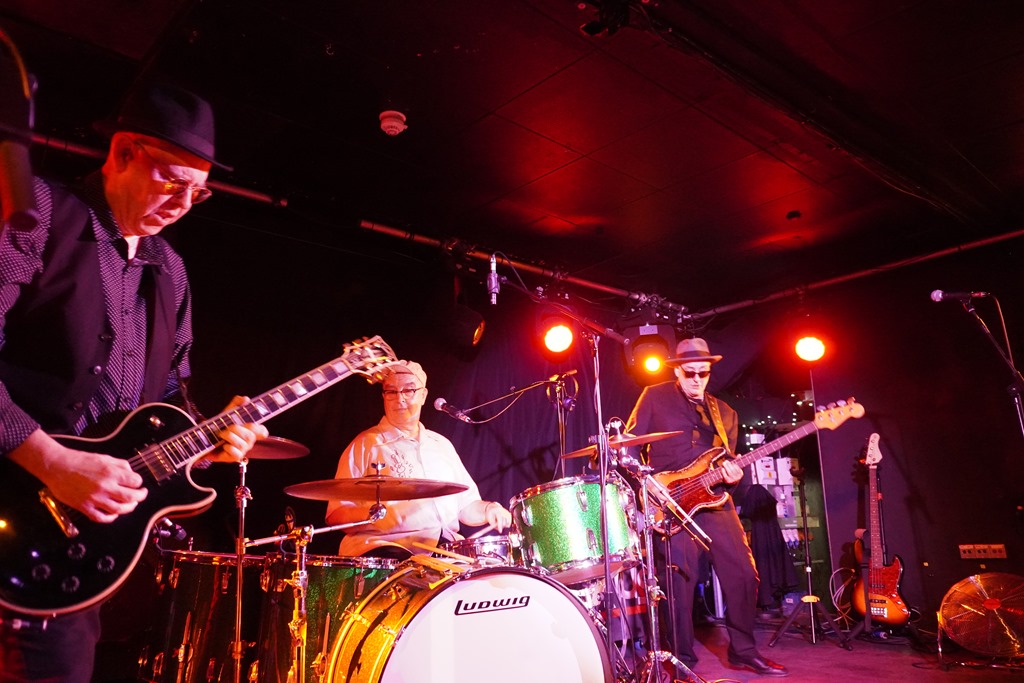
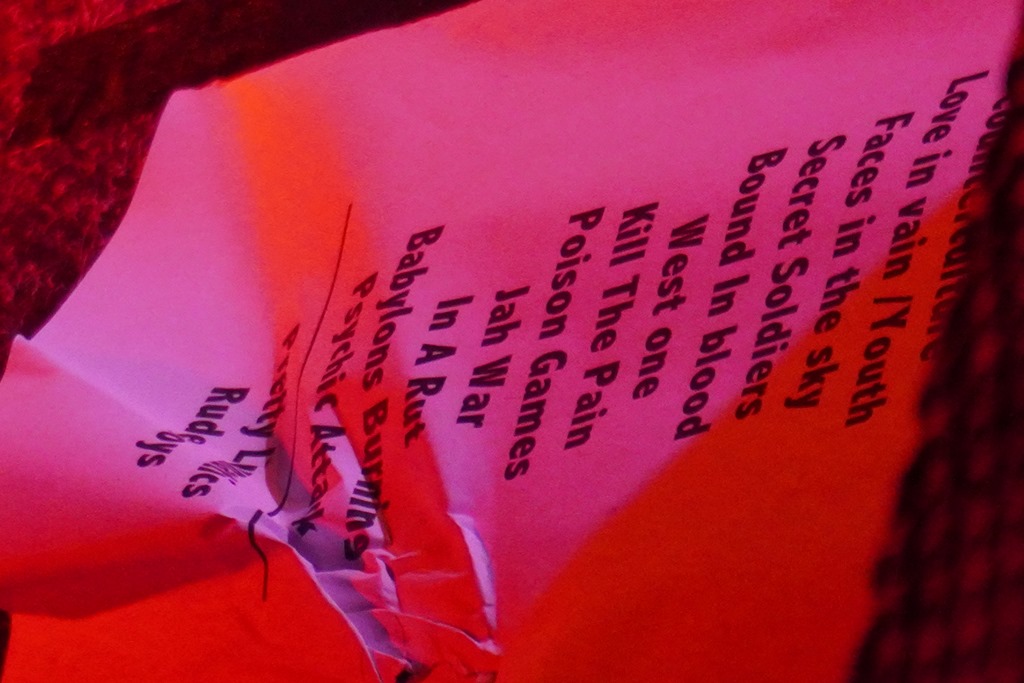
Tonight is a very different proposition, and with a very different set-list. For a start, it’s fully electric, and while the obvious songs that simply have to feature in every set are present and correct, there’s a substantial portion of the set devoted to newer material – ‘Psychic Attack’ is a standout – and even a brand new, unreleased song, ‘Bound in Blood’. As a consequence, there’s no ‘H-Eyes’ or ‘This Music Must Destroy’ – but we’re rewarded with rarely-performed deep cuts like ‘Backbiter’ and other classics such as ‘Love in Vain’ instead.

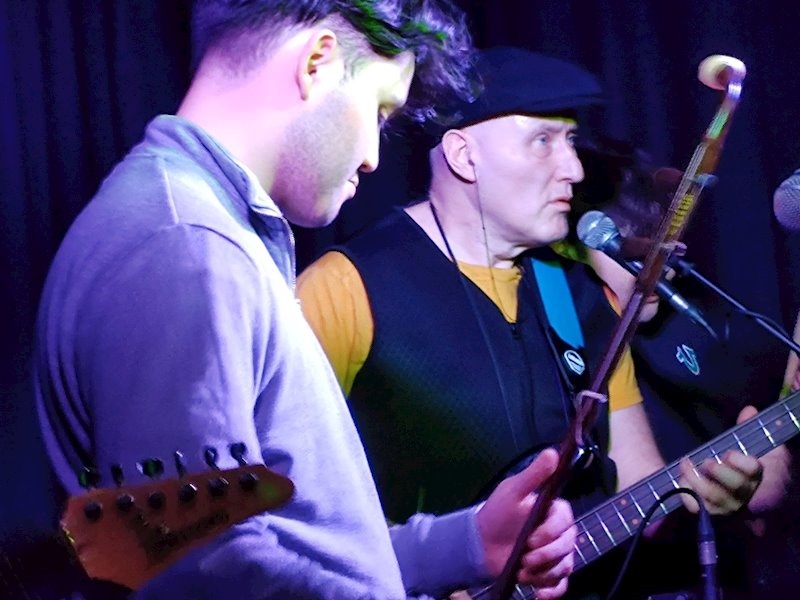
I did feel a niggle of concern when Ruffy shuffled onstage with a stuck and looked awkward getting himself positioned on his stool, but once in place, he was at ease, and his drumming was nothing short of magnificent. An old hand, for sure, he’s laid back and knows his kit like the back of his hand.
DSC05552

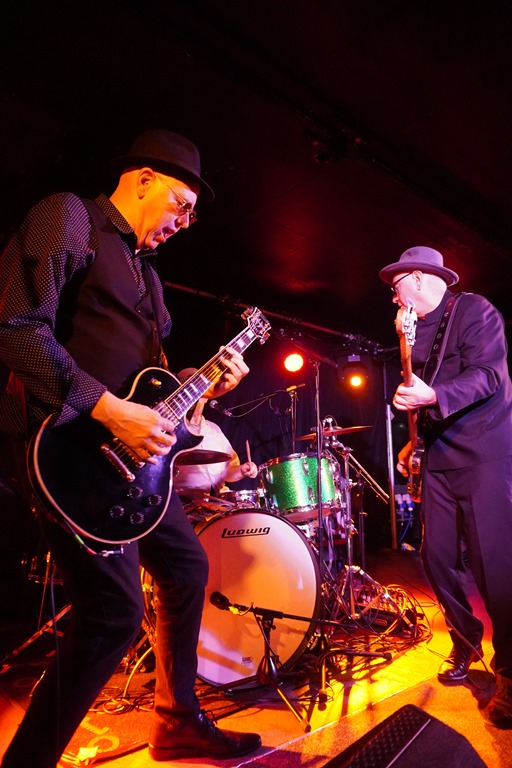
There’s significantly less chat this time, too. Ruffy does briefly reminisce about his childhood before the encore – having been born in York, it’s clear he still feels an affinity and affection for the city, and while The Crescent is a top venue that always brings them a voluminous and enthusiastic turnout, one can’t help but wonder if this is also a factor in their tour booking. But less chat equals more focus on packing in the songs, and they play every last one with total commitment. The musicianship is outstanding throughout, again serving as a reminder that The Ruts could always play – I mean really play: not in a wanky way, but the detail to the guitar parts, the basslines, is remarkable, and they’re so, so tight: it’s no overstatement to say you won’t see a better live act. They pack ‘In a Rut’ (still without any debate, one of the best punk tunes ever), ‘Jah War’ and ‘Babylon’s Burning’ Rut’ (also, still without any debate, one of the best punk tunes ever) into the back-end of the set, and after starting the encore with the comparatively gentle ‘Pretty Lunatics’, wind up with a rip-roaring rendition of ‘Staring at the Rude Boys’.

This is one of those shows which is pure quality, and thoroughly uplifting, energising. Yes, they played the hits, but this was more than some nostalgia trip. This was a night seeing a band as good as they’ve ever been. As the lights went up, there was a palpable buzz about the venue. They’ve still got it, alright, and they still matter. Never surrender!
DSC05564

Genre-defying UK-based music outfit Tian Qiyi presents their impressive new single ‘Dharma’ featuring the legendary Jah Wobble on bass. This is the final single to be released ahead of their sophomore album Songs For Workers, out June 27 via Pagoda Records.

Tian Qiyi is more than just a band, bringing together brothers John Tian Qi Wardle and Charlie Tian Yi Wardle with their father, Jah Wobble (John Wardle). Their unique sound reflects their rich family heritage, blending their father’s pioneering work in post-punk and dub with the Chinese cultural influences of their mother, Zilan Liao.
’Dharma’ flows with a captivating blend of Eastern psychedelic melodies and Charlie’s ethereal vocals, all underpinned by a hypnotic fusion rhythm and beautifully primordial percussion. As groovy as it is addictive, the trio serve up a truly grounding experience here.

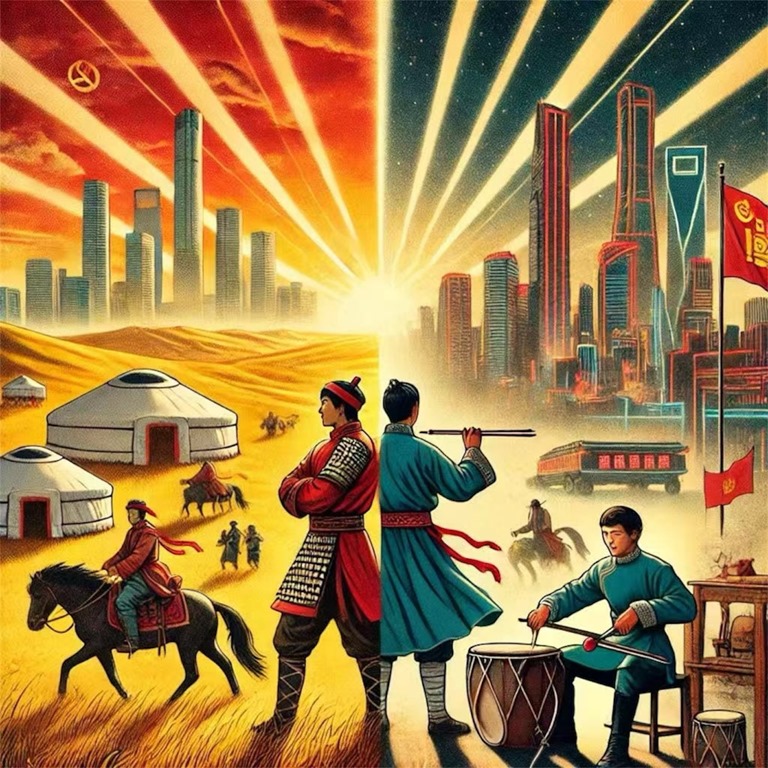
This new offering follows their stunning lead track ‘Watch The Sunrise’ and Bandcamp exclusive  ‘Mongolian Dub’, a fascinating ethno-psychedelic initiation into this 10-track musical journey. Like much of the goodness found on this album, Tian Qiyi’s music bridges generations and cultures, blending deep dub grooves with Eastern traditions.

“‘Dharma’ is a track that brings together our Irish, Chinese, and Mongolian roots. It features flowing, psychedelic melodies, with Charlie’s otherworldly vocals adding to the vibe. The rhythm section, anchored by a laid-back, hypnotic pulse from me on percussion and my dad on bass, creates a psychedelic dub fusion”, says John Tian Qi Wardle.
”And Songs For Workers is an album where we have moved away from influences and inspiration, instead embracing instinct and familiarity. Our background played a crucial role, from the traditional Chinese music we learned with our grandad and mum, to the improvisational, instinctive playing we developed from performing and recording with our dad.”

AA

Tian953964

Sound in Silence – 5th December 2024

Christopher Nosnibor

As my final review of the year, what could be more fitting than a work, the title of which, suggests an element of reflection on the recent past. Businesses provide regular reports, people and musical ventures tend not to, with perhaps the notable exception of Throbbing Gristle, but then, they were an exception to more or less everything before or since. Their debut album proper, The Second Annual Report, which followed a brace of cassettes, The Best of Throbbing Gristle Volume I, and The Best of Throbbing Gristle Volume II, set new precedents in so many ways.

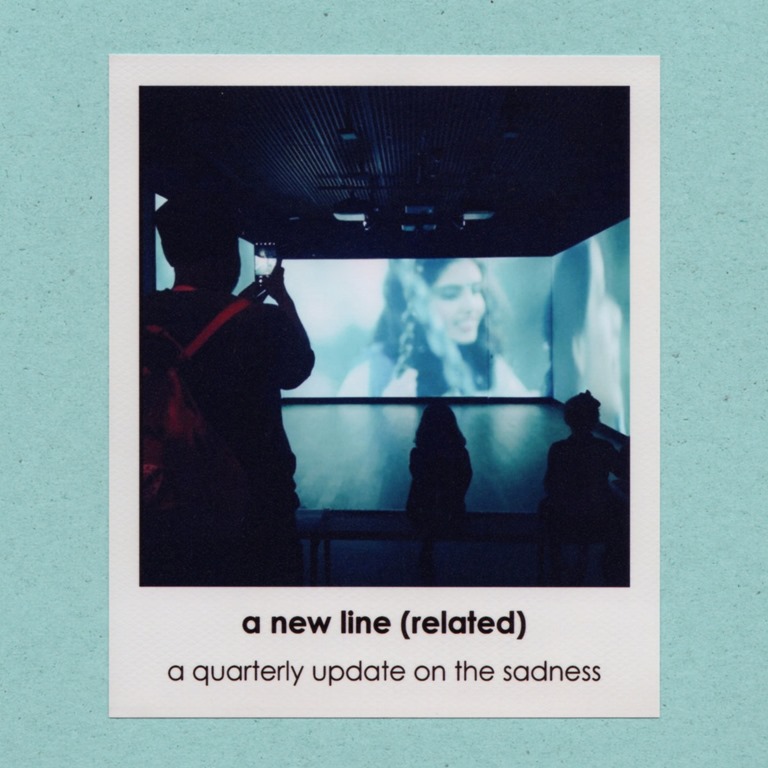
Arriving to the latest release from A New Line (Related) – the solo project of Andrew Johnson, who has previously released music as a member of bands such as Hood, The Remote Viewer, and Famous Boyfriend among others, one feels compelled to wonder ‘just how is The Sadness, and how has it been of late?

This is his third album, which we’re forewarned is an ‘immersive’ work, which ‘balances between minimal techno, dub house and ambient pop.’

‘Calapsis’ drifts in with low-key beats pulsing beneath delicate waves which ebb and flow subtly, gusts of compressed air which build to a hypnotic close. It’s not until the glitchy, disjointed groove of ‘3AM Worry Sessions’ arrives that we begin to get a sense of The Sadness. Stress and anxiety manifest in many ways, and while worry and panic may manifest differently their cousinly relationship It heaves, jittery unsettled and tense, conveying an uncomfortable restlessness.

The globular grumblings of ‘The Ballad of Billy Kee’ emerge from a rumbling undercurrent or mirk to glitch and twitch like a damaged electrical cable sputtering and sparking. Elsewhere, there’s a certain bounce to ‘Only Star Loop’ which gives it a levity, but the scratchy click of cymbals which mark out the percussive measures feels somehow erratic and the time signatures are apart from the bubbling synths and the distant-sounding, barely-audible vocal snippets, which give echoes of New Romanticism. Overall, the track has an elusive air of whispering paranoia.

In many ways, not a lot happens on A Quarterly Update On The Sadness, and the sparse and repetitive yet curiously dynamic title track is exemplary. It leaves you feeling strangely disconsolate, bereft, not only as if you’ve perhaps missed something, but that you’re missing something – not from the music, but from your own life. It seems, in conclusion, that The Sadness is thriving in its own, understated way.

AA

a0970760296_10

4Bit Productions – 19th July 2024

Christopher Nosnibor

Ulrich Troyer’s output this year has taken an interesting turn. While he’s often favoured comparatively short-form releases (NOK 2020, released in 2020, surprisingly enough, featured six tracks originally released on a 3” CD twenty years earlier, bolstered by additional material to render a full-length album, while other albums in his catalogue contain only four tracks, or more very short ones). But ‘Autostrada del Brennero’ represents this third seven-inch release of the year after four years of silence. However, while ‘Moments’, which we covered here in March was a standalone release, ‘Autostrada del Brennero’ is a companion to ‘Echoes’, released in May, and both are prefatory pieces to the forthcoming album, Transit Tribe, slated for release later this year.

As with Echoes, Troyer has brought on board guest to feature here, with reggae luminary Diggory Kenrick contributing his signature flute to the lead track, and Taka Noda bringing melodica to flipside ‘Brennerautobahn’.

Continuing his pursuit of some deep dubby vibes, as formed the basis of Dolomite Dub, and the Songs for William trilogy, ‘Autostrada del Brennero’ is four and a half minutes of spacious, echo-drenched rimshots which crack out from shuffling drums and cut through spectacularly swampy bass. It’s got groove, but it’s low, slow, and mellow, with Kenrick’s flute adding an almost trippy folk aspect, which is a perfect counterpoint to the fizzling space-rock synth details which burst like laser-beam Catherine wheels.

Either my ears are deceiving me, or ‘Brennerautobahn’, which has exactly the same running time, is the same track but with the flute substituted with the melodica, and as such, this release follows the format of the previous two, where an alternative version occupies the B-side.

This was, of course, common practice on old reggae releases, whereby the B-side would contain a dub version – often simply as a ‘version’ – of the A-side. Here, there’s a certain irony in maintaining this tradition when the A-side is already essentially a dub version, and one doubts this irony will be lost on the artist.

Both cuts are solid – sparse yet dense, confident experiments in bass frequencies and massive echo and reverb it’s difficult to resist the urge to nod along to, slow, heavy-headed, mellow to the max. Good vibes, for sure.

AA

a2643141048_10

Christopher Nosnibor

Forty-five years on from the release of their debut album, The Crack, The Ruts – or Ruts DC as they subsequently became – as still going, and perhaps unexpectedly, they’ve been more prolific in the second half of their career than the first.

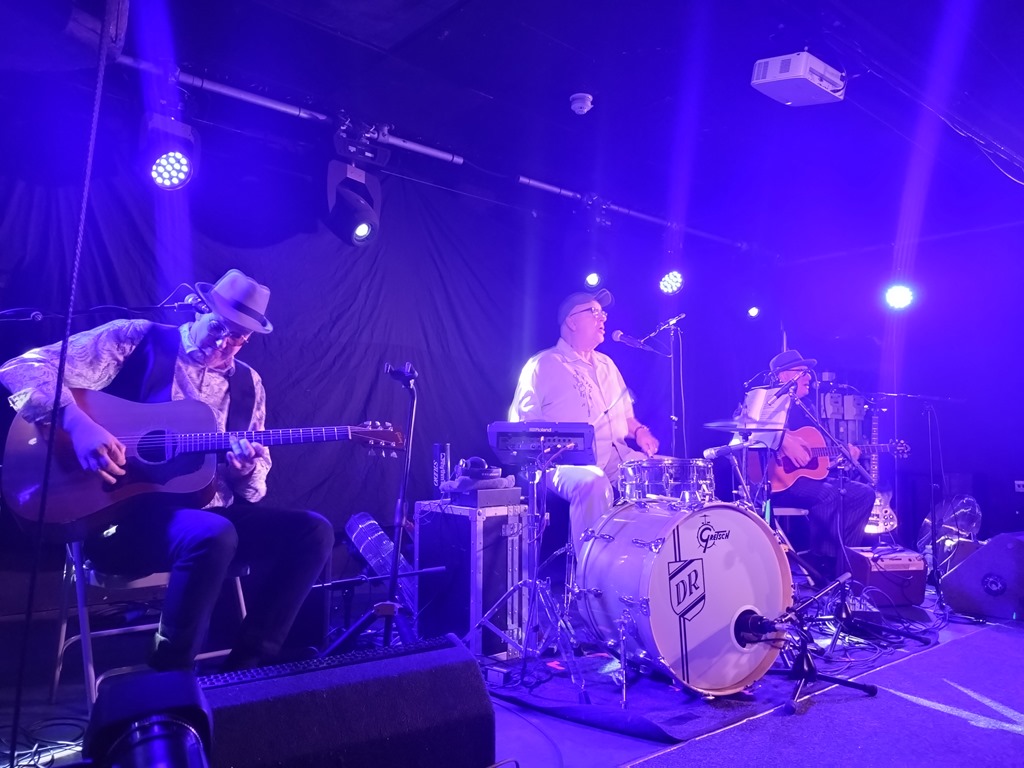
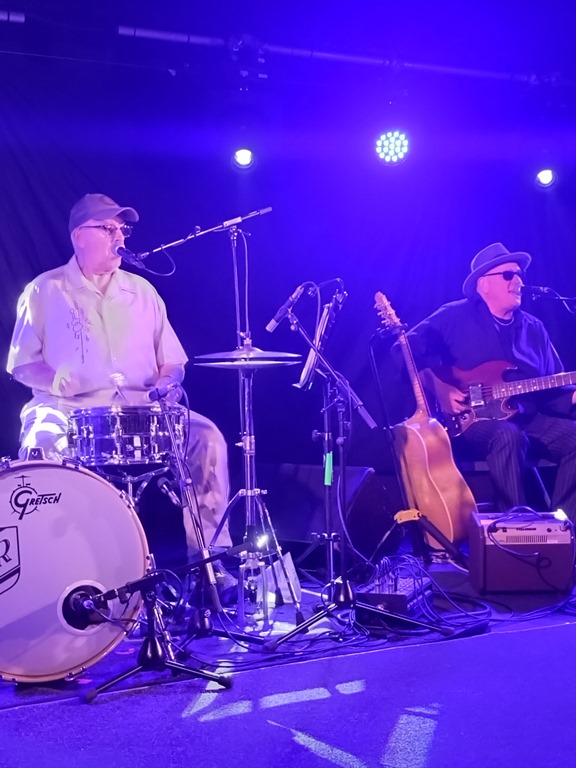
Having released two Electracoustic albums – stripped back versions of material from their back catalogue, they’re back on the road with this format, too. The trio seated in a line on the stage befits a band whose members are in their late sixties / early seventies. They’re done being ‘cool’ or staying ‘punk’: “punk’s dead”, Segs shrugs at one point during tonight’s set. It’s striking just how honest and open they are during the lengthy intros and meandering anecdotes which seem to spring spontaneously, often without punchlines or clear endings. These are off-the-cuff, unrehearsed, down the pub type chats, which provide some real insight into the workings of the band and its members. Unpretentious, grounded, it’s a joy to feel this kind of intimacy with a band of such longstanding who truly qualify – and it’s not a word I use often – as legends.

They’re a band at ease with one another and the audience, Ruffy particularly happy to be back in his home town and regaling us with a lengthy tale about his early life, his father, and shoplifting out of necessity.

Not being able to get out so much lately, I have to pick my nights out carefully and strategically, and I had been in two minds about this one, for a number of reasons. But within minutes, it became apparent that coming down had been the right decision. Y’see, music can reach parts that practically nothing else can. Once comes to associate songs, bands, albums, with people, places, life experiences. They become indelibly connected, for better or worse. And The Ruts are a band who carry substantial emotional, reflective weight for me on a personal level. Of course, this is about me rather than the band, but this is a contemplation on how we engage with music and how songs and bands, become the soundtrack to our lives, and it’s something we only really realise in hindsight. And I feel that sharing the details of this complex and intimate relationship with a band is part of a dialogue we need to open up.

I was around thirteen or fourteen when I began hanging round the second-hand record shop where I would subsequently become the Saturday / holiday staff. The owner was – to me, being fifteen years my senior – an old punk, and he introduced me to a shedload of bands, and would air-bass around the shop to ‘In a Rut’, a song he would also cover with his band. This song – indubitably one of THE definitive punk singles – would become an anthem to me in my life, a song I always play to remind myself to get my shit together when times are tough. If punk has a solid link with nihilism, ‘In a Rut’ provides a counterpoint, as a rare positive kick up the arse. It’s a song I play when I need to remind myself that I need to get my shit together. It must surely be one of the greatest songs of all time. And what a debut! And that was even before ‘Babylon’s Burning’…

The first time I met my (late) wife’s dad – who died in 2003 at the age of 50 – he was blasting The Ruts and Rage Against the Machine on his car stereo, and I knew immediately we’d get on well. And we did. He was a grumpy fucker who hated anything establishment, and had great taste in music.

And so The Ruts and Ruts DC are a band who run a thread through my life. I find it hard to hear them without a pang of sadness, but ultimately, they’re an uplifting experience, and this is so, so true of tonight’s show.

‘Music Must Destroy’ makes for a strong opener and provides an opening for a not-quite anecdote about number-one fan Henry Rollins (another hero of mine and my wife’s, we got to see The Rollins and numerous spoken word performances, including one which included an expansive tale of his obsession with The Ruts and how he came to front the band at their reunion fundraiser for guitarist Paul Fox in 2007), who provided additional vocals to this, the title track of their 2016 album. It provides an early reminder of the fact that they’re more than merely a heritage band, and that they’ve always been, and continue to be, political.

‘West One’ and ‘Love in Vain’ land early, and the range and quality of the material stands out a mile. The set spans punk, reggae, rockabilly, anthems… and they have songs that mean something, too.

20240718_202740

One thing that sets Ruts DC’s acoustic(ish) sets apart isn’t that the lead guitar has some pedals and tweaks and that it’s not a straightforward acoustic strum, but the fact the arrangements rightly bring the details to the fore. Listen to The Crack and it’s apparent that the basslines are special. And paired down, you can really hear everything that’s going on. Their material is so much more than the lumpen three-chord thud of regular pub-rock derivative punk. They switch slickly into dub mode, with echoed rimshots and booming heavy bass, and the sound – and musicianship – is outstanding.

‘Something That I Said’ arrives as the penultimate song of set one, before closing with a new song, ‘Bound in Blood’ that’s a strong new wave cut. And suddenly, with the introduction of an electric guitar, it’s louder, too.

The second set is more electric, but still minimal in terms of arrangement, and stripped back: ‘Dope for Guns’ shows the song’s solid structure. It’s a rapturous experience to hear them powering through ‘Staring at the Rude Boys’ and ‘Babylon’s Burning’ towards the end of the set, and then to hear them segue ‘In a Rut’ with a full-lunged rampant chorus of Neil Young’s ‘Rockin’ in the Free World’ was truly rapturous. Again, there’s a personal element here: a song I associate with my wife, and a song she in turn inherited from her dad, I found myself shedding a tear at hearing a great song well-played. It wasn’t just a token gesture to enhance and pad the set: they meant it and felt the power of the sentiment. And right now, we need to cling to that. These are dark and fucked-up times.

They ramped things up to slam in a fully electric, fully punk rendition of ‘Criminal Mind’ to draw the curtain on the night. And what a night. And what a band.

20240718_215617

While they do still thrive on their early material, and do it justice, they have so much more to offer, too, and significantly, they’re not attempting to recreate the experience of the late 1970s with some sad old punk nostalgia trip. They’re clearly happy onstage – that is to say, loving the fact they’re up there, still going, and playing these songs. They’ve every reason to be: tonight, they deliver solid gold.

5th July 2024

Christopher Nosnibor

Sometimes, I really do feel as if my brain is my enemy. Word association and wordplay are a particularly frequent and annoying curse. Oftentimes, I keep this to myself, but midway through listening to this, it struck me, completely at random, that Killzones isn’t a million miles away from Calzone, at least when written down. So why share this? A problem shared, and all that, for one. But as much as anything, I felt the urge to purge, or moreover to crack open the challenges that present themselves as part of the creative process. Writing – and finding something new and interesting to say – about music, day in, day out, is a challenge in itself, without other factors.

Seemingly, the recording of this EP proved rather less challenging for its makers, who came together and developed it swiftly and fluidly –although the same can’t be said for listening to it. That’s by no means a criticism. In a climate where the airwaves are jammed solid with anodyne sameness and slickly-produced beige sonic slop disguised as raw or edgy on account of some explicit content and some choice language that requires beeps or asterisks in the mainstream media, anything that does something different offers a welcome challenge in the way many pit themselves against the Great North Run or similar. We’ve grown accustomed to everything being delivered neatly-packaged and pre-digested, and feeling like following a recipe from Hello Fresh makes us a Michelin chef. Collectively, we’ve forgotten how to chew – meaning that this will either kick-start your metabolism or simply make you spew if you’re unaccustomed to anything that’s this high-fibre. Just look at that cover art. It’s dark, grainy, uncomfortable. It’s the perfect encapsulation of the music it accompanies.

Machine Mafia is quite the collaborative paring: Adam Stone of gritty northern grimsters Pound Land and Jase Kester of ever-evolving experimental noisemakers Omnibael / Omnibadger have come together to do something different. Very different.

As Jase explained to me, the EP features ‘no live instruments, leaning into the way dub reggae was so embraced by punk right in the early days.’ And there’s no question that it has both – simultaneously – the spaciousness of The Ruts (D.C) and the density of early PiL. It’s a formidable combination, that’s for sure.

The title track assembles sampled snippets as its foundation, drawing parallels with the collaging methods of Cabaret Voltaire and Throbbing Gristle, evolved from William Burroughs and Brion Gysin’s late-50s tape experiments – in turn a progression from the cut-ups on paper. Atop of this slice ‘n’ splice selection of political speeches and an almost subsonic, floor-shaking bass, Stone delivers a mumbling, drawling semi-spoken spiel. It’s like Sleaford Mods on Ketamine, a heavy trudge of ever-degenerating sound which eventually collapses to a low-end buzz and a crisp sample that makes the pair’s political position clear through antithesis.

On ‘Faces’, scrapes of discord, distortion, and a thudding beat half-submerged in the mix grinds out the opening before a dark, dense bass groove starts a gut-shaking growl. The drawling, atonal vocals, too, are distorted and low in the mix, and I’m reminded of some of the more obscure Ministry offshoots witch Chris Connelly – the vibe is dingy, sleazy industrial, a bit early Pigface, and sounds like it was recorded in a damp mould-stained basement on a salvaged reel-to-reel.

The songs get slower and heavier – and longer – as the EP progresses. ‘I Am Not You’ comes on as if Dr Mix and The Remix had done dub, while ‘Lecture 0.3B’ goes all out on transforming a simple spoken-word piece into a cut-up tape experimental headfuck with loops and delays and effects galore, all laced with crackles of distortion and sonic degradation fuzzing and fading the edges. It lands somewhere between the JAMS, Max Headroom, and Throbbing Gristle’s ‘Hamburger Lady’ – weird, unsettling, dystopian, with near-familiar elements twisted and recontextualised in an ugly mash-up collage work.

Conceptually, Killzones is far from new – but then, there’s no claim to innovation here, explicitly drawing a line from the past. But the kind of reference points and influences in evidence here are not the ones you find often, if ever – independently, perhaps, but the whole point of intertextuality as a method of creating is the nexus of divergent touchstones and the way in which they’re combined. With Killzones, Machine Mafia deliver a crash course in experimental music 1976-1994. It’s a mangled, messy cognitive assault. It’s knowingly, and purposefully, difficult, unpleasant, and a complete creative success.

AA

a0890048129_10

This first collaborative track is from upcoming album – Mark Stewart VS – (OUT March 2022) on eMERGENCY heARTS.

Alpha is a music collaboration between Mark Stewart, the late Lee ‘Scratch’ Perry (1936-2021), and Peter Harris, mixed by Adrian Sherwoodwith additional music production from artist/ producer Xqui.

The VS album is a unique collaborative audio-visual project helmed by Stewart that is a mash-up that pits him against artists who either originated, propagated, or currently upholds incendiary aesthetic, cultural, and socio-political intentions including members of Cabaret Voltaire, Consolidated, Pan Sonic, Front 242, Adrian Sherwood, MINUTEMEN, KK Null along with the late dub legend Lee ’Scratch’ Perry.

Check i here:

a0817125372_10

Mark Stewart VS Lee ’Scratch’ Perry VS Peter Harris

Front & Follow – 15th November 2019

Christopher Nosnibor

Front and Follow is a label that’s carved a special niche in the cassette release corner of the industry, and has, for those in the know, become a trademark of quality. But sustaining such consistency – or even anything – as a one-man operation is hard work, and often with little reward. As such, while I was sad to learn they’re taking a break, they’re signing off with an incredibly strong release, courtesy of Ekoplekz, who is also embarking on an indefinite break.

The album’s pitched as ‘drawing parallels between present day Britain and that of the turn of the 80s, Ekoplekz looks back to that era’s industrial and post-punk soundtrack for inspiration,’ and the press release continues: ‘In a land increasingly brutalized by austerity and divided by nationalism, the tensions that informed some of the post-punk era’s most important works (Red Mecca, Unknown Pleasures, Metal Box) haunt this collection of bleak postcards from the present’. The present is indeed bleak, unless, of course, you perhaps run a hedge fund with billions backing a no-deal Brexit or you’re a major corporation invested in climate change denial or pharmaceuticals. But then, if you’re in that bracket, you’re probably on your private jet grabbing bitches by the pussy and going gammon about these smelly hippy protestors or somesuch. For the rest of us these ae dark times that require a dark soundtrack, and as I’ve said elsewhere, it’s no surprise that we’re experiencing a different kind of 80s revival at the moment. Brutal and divided pretty much sum up both UK and US politics and cultures , as well as further afield. Who actually feels safe on the street? Who actually feels safe as a career artist? Who isn’t remotely concerned, doesn’t feel concerned, panicked, anxietised? We don’t need Duran Duran replicas like The Bravery, and even Editors and Interpol’s take on post-punk feels lightweight in the face of the crises that define the current – and so Ekoplekz plunge deep back to the late 70s source to dredge real darkness and despondency here, and in doing so, In Search of the Third Mantra soundtracks the present – bleak as it is.

With In Search of the Third Mantra, Ekoplekz sets his spheres of reference out early, with ‘High Rise Dub’ carrying Ballardian connotations and ‘K-Punk’ taking its title from the seminal blog of the early noughties by the late Mark Fisher, to whom the album is dedicated. This, then, without wanting to sound elitist, is no mindless replication of an array of retro tropes, but a considered assimilation of myriad sources, distilled into something wilfully challenging. We would expect nothing less of K Craig, filmmaker and front man of currently-resting Last Harbour. This is quite a departure, but works in context: while we don’t get brooding vocals and arch-gothic sonic structures, there’s a brooding nihilism that rumbles at the core of In Search of the Third Mantra in the same way it lurks so many albums of the period, and a lot has to be credited to the production.

It’s got grooves and danceable beats, but it’s also possessed of a dehumanised detachment, a sense of distancing and dislocation: you’re in the zone and in the space where you’re feeling the distance, the disfunction. The fact that this doesn’t fit, the fact that you don’t fit.

The spartan electronica of the former, with its dubby bass and rhythm that shuffles and clatters conjures a sense of alienation and otherness, while the latter brings things down a notch darker, laser bleeps and eerie vaporous notes hover ominously. ‘Do the Meinhof’ goes full motoric, channelling the insistent industrial grooves of DAF and Cabaret Voltaire into a tense death disco pounder laced with icy synths.

The sonic touchstones are all very much in evidence as the listener is led through a haunting desert of sound, dark, murky, menacing. ‘Accept Nothing’ has hints of The Cure’s Carnage Visors soundtrack, and the atmosphere which permeates all ten compositions is unforgiving and inhospitable.

There’s a degree of linearity to the album’s sequencing, and each track feels sparser, less defined, and with this progression there comes an increasing sense of collapse, of emptiness, and while sonically, the pieces are spacious, the atmosphere is evermore paranoid. One feels as though familiar structures are falling away, disintegrating. By the time we arrive at ‘Heart Addict (In Make Up)’, there’s little left beyond an almost subliminal, stunted dub bass that twitches anxiously alongside a barely perceptible beat, and we’re left, alone, disorientated, and teetering on the precipice just inches from the void.

AA

Ekoplekz_cover

Sound on Probation – SOP018 – 17th April 2018

Christopher Nosnibor

Zonk’t is one of the many guises of polychrome composer Laurent Perrier. According to his biography, while many of these projects often share many common elements, they are all built on a strong individual identity, and are therefore distinct and different from one another. Thus, Zonk’t ‘has always been a way of exploring the most ambient fringes of dub, and the transition from the all-digital to compositions made entirely on modular synthesizers has overall not changed its approach in depth’.

The album takes its title from the cryptanalytic process developed by Alan Turing during the Second World War, which ultimately facilitated the deciphering of the coded messages the German military produced via their Enigma machines. The track titles all relate back to the theme of the title. However, this album seems more concerned with the evocation of messages buried or encoded than the application of complex formulae to the compositional methodology.

‘Square’ (which I assume to be a reference to the Polybius square, also known as the Polybius checkerboard, which in cryptography, is a device invented by the Ancient Greek historian and scholar Polybius, for fractionating plaintext characters so that they can be represented by a smaller set of symbols, at least according to Wikipedia). occupies the entirely of side A, almost 20 minutes of slow-paged ambient dub propelled by thick, heavy beats. Thin, twisting sinews of sound like strings stretch across the space and spin layers of texture.

Side B contains three more short-form compositions in the shape of ‘Chronogyre’, ‘Colossus’, and ‘Conditional Probability’. The first of these forges a low, deliberate groove that undulates at a deliberate pace, while erratic, glitchy beats and crackles of static flitter and clank through the swampy tones. ‘Colossus’ picks up the pace and the bass-centric density, thwupping and thrumming in waves. A stark synthesised stab echoes out before the final track – the most direct and beat-orientated of the set – conjures an immersive retro-futurist groove.

It’s the combination of space and bass-orientated groove dislocation that makes Banburismus worth the effort. It’s not immediately accessible, and doesn’t sit comfortably in either the ambient or dub genres. Crossovers as far removed from not only the mainstream but the mass market as this will inevitably slide into ultra-niche categories, but this by no means devalues the work. If anything, the existence of Banburismus only further illustrates the need for art more than mere entertainment.

AA

SOP018_front

23rd June 2017

Christopher Nosnibor

Ashley Reaks’ relentless release schedule continues apace with the arrival of Track Marks, his eleventh album. Because it’s an Ashley Reaks album, it’s characterised by off-kilter experimentations in dub and socio-political commentary. But whereas jazz provided the core influence on 2015’s Growth Spurts, it’s spectacularly spacious prog-rock wizardry that arrives fresh on Track Marks to bring the all-important new, unexpected and so-incongruous-it-shouldn’t-work-but-somehow-does feature of the material.

‘Stale Mate’ opens the album with a suitably eclectic mix of ingredients, with the blippy electronica of the opening bars immediately being submerged by one of the wandering basslines that define Reaks’ output regardless of what he’s doing. Somehow it moves from here to ultimately culminate in a knowingly gratuitous guitar solo.

‘I’ll Take My Pilgrimage’ is seemingly about as much a yearning to find faith as a criticism of religion per se, and melds a stormy, rolling drum to another phat bassline and some progtastic guitars and synths, while packing in some jazzy sax too. The jazz direction, which came to the fore on previous album, Growth Spurts, becomes increasingly dominant as Track Marks progresses. ‘Exposing Fiona’ gets pretty wild in its horn-parping intensity.

‘Stick Thin Worms’ pitches a stomping rhythm beneath some more abstract lyrical content, while poet and bluesman Paul Middleton (who hails from Reaks’ hometown of Harrogate) provides spoken word on ‘Tank From Grimsby’, which continues the extending thread of collaborative efforts which have become stablished as a feature of Reaks’ receny output. It’s actually a piece about some musicians, and marks a departure into mellow flamenco guitar.

If it all sounds like overload, it’s credit to Reaks that somehow, it all hangs together with a remarkable cohesion. It’s not immediate: one has to first surrender to the strangeness, the otherworldliness that Reaks creates. But there are some – many – undeniably great musical moments here. They’re not preoccupied with hooks or choruses, but there’s a certain atmosphere that envelops Track Marks – an album where the darker second meaning is (wisely) left unhinted at in the cover art. And once again, it’s Reaks’ refusal to pursue any obvious avenue which is the key to his success as an artist. Whether it’s a detriment to him in commercial terms, well, who knows? But that’s not what he’s about, and precisely why he deserves respect and attention.

cover