Posts Tagged ‘Doom’

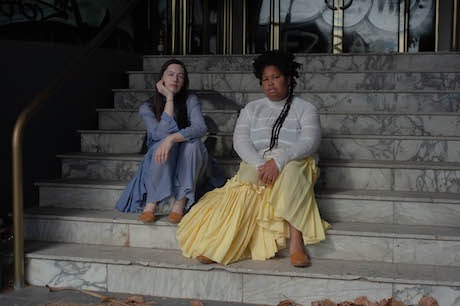
Multidimensional duo Divide and Dissolve share the video for “Prove It”, originally released as a stand alone single in 2019, and appearing on their forthcoming album Gas Lit (Invada, 29th Jan).

The visual expression of Divide and Dissolve’s message has varied across each of their music videos to date (revisit “We Are Really Worried About You” and “Denial”) but the intention of the music remains unchanged: to undermine and destroy the white supremacist colonial framework and to fight for Indigenous Sovereignty, Black and Indigenous Liberation, Water, Earth, and Indigenous land given back.

About this latest single, Divide and Dissolve explains, “Prove It – calls into question the need to prove you experienced something. If someone wasn’t there to witness it, it still happened and may have caused harm. Colonial power structures, power dynamics, and societal expectations rely on Black, Indigenous, and people of colour being Gas Lit and denying our experiences, because the predominant white supremacist narrative demands us to. When a tree falls in the forest, it has fallen. Prove It is about the acceptance of experiences of pain without expectation.”

Watch ‘Prove It’ here:

AA

DandD

Magnetic Eye Records – 11th December 2020

Christopher Nosnibor

Often, the measure of a band’s quality is in their live performance, especially in the domain of metal when you’re up close and can feel the force, the viscerality and the volume – although these things don’t always necessarily translate to the live recording.

Magnetic Eye Records’ document of flagship band Horsehunter ‘destroying onstage at the “Day of Doom” label showcase at Brooklyn’s Saint Vitus Bar’ in November 2019 at the event held to commemorate the label’s 10th anniversary definitely does translate and makes for an absolute monster of a life album.

The four tracks are almost a quarter of an hour apiece, and the audio quality is exceptional – that is to say, studio sound with the added bonus of live volume. Yes, this SOUNDS loud. Played through speakers and given room to breathe, the sense of volume is suffocating and exactly the way it should be – like you’re in the room as the band lay down monstrous riffs.

For the most part, the pace is a crawl, the chords grinding out slow and sludgy, with throat-ripping vocals in the middle of the mix. Around five minutes into ‘Nuclear Rupture’ things slow to the point of almost stopping, and time stalls, and in this hanging moment we find the absolute essence of Horsehunter: that moment of perfect tension that hangs before the next chord crashes in like a landslide with a power that is utterly decimating in its destruction.

There is beauty to behold, but it’s the kind of beauty elicited in the watching of the bombing of Hiroshima in slow-motion. And with its frenetic guitar solo work and gut-churning bass that thunders across the abyss with earthquake-inducing force, this live recording is little short of devastating.

AA

a0106130191_10

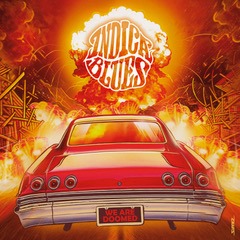
As the world reels from a deadly pandemic and the U.S veers towards civil war, 13,890 nuclear weapons lie dormant. In their first single since signing to APF records, Indica Blues’ imagine a catastrophic very-near-future scenario in which current world events lead to all-out war and nuclear annihilation: We Are Doomed.

Indica Blues (in-deh-ka) are a four-piece psychedelic doom band from Oxford, U.K. Once described as ‘bong filling rock that is platinum heavy, but blessed with a melodic sensibility underneath it all,’ the band’s unique sound has garnered fans across the world since their formation in 2014. They have gigged with stoner rock luminaries such as Elder, Samsara Blues Experiment and Mars Red Sky.

On the new video for ‘We Are Doomed,’ Tom Pilsworth (guitars/vocals) comments, “This song is our vision of near future nuclear annihilation, written in response to the chaotic world events of the last four years. We spent six hours in pouring rain at an abandoned cold war missile facility with director Josh Horwood and his team, and he couldn’t of done a better job. We hope people enjoy watching it as much as we enjoyed making it.”

The video reminds us just how much we miss seeing bands knocking out heavy chords in small rooms. This shit hurts. It’s a top video though.

Watch the video now:

A

thumbnail_INDICA-BLUES-WAD-2020

4th December 2020

Christopher Nosnibor

Bandcamp Fridays have been providing a rare and unique lifeline for struggling artists, and while times are still ridiculously tight in what continue to be utterly bewildering times which have hit the music industry where it really hurts – namely grass-roots venues and the artist who depend on them – the opportunity for artists to actually make a proper revenue from sales or downloads and physical releases is a big deal.

And if one thing’s become apparent, its that artists are going all-out to create releases that offer something different for their fans, and the unexpected arrival of an EP of 90s grunge covers from U.S doom quartet Embr.

Recorded in August of this year – in an actual studio, no less – with Matt Washburn (Mastodon, Royal Thunder, Artimus Pyledriver) the EP finds the band bringing a full-blooded sludge tone and a doomy, old-school, Sabbath-esque twist to four songs by leading exponents of the grunge era – with each member of the band selecting a song for inclusion.

Confession time: I absolutely fucking loved Nirvana, and still do. Alive in Chains, I dug, but never really found any enthusiasm for Stone Temple Pilots or Soundgarden, preferring Mudhoney, and the greasy heft of Tad. Nevetheless, what’s clearly apparent from listening to these four cuts is the degree of sincere affection for the songs and the sound that’s on display here. Moreover, they’ve done a great job of selecting songs that suit their own sound, showcasing the strengths of the original songs while sounding like Embr. It’s also something of a revelation hearing songs originally sung by men delivered by a female vocalist, and again, that they’ve pitched them in Crystal Bigalow’s range is a major factor in their success.

If the half-tempo trudge of their take on ‘Heart Shaped Box’ (Crystal’s choice) takes some getting used to, its impact – as the immense power chords drive down hard and heavy – is strong. The ultra-low bass that rumbles at a crawl through the stripped-back second verse is worth the money alone, but ‘Junkhead’ is probably the heaviest track here – which is no real surprise, given that AIC were always at the most overtly metal end of the spectrum in the grunge canon.

Then again, despite the rather poppy middling rock chorus, the repetitive chord sequence of ‘Mailman’ is well suited to a sludgy trudge-along, and ultimately, Embr have done a good job, making Idolatry well worth a punt.

AA

Embr-Idolatry

Panurus Productions – 4th December 2020

Christopher Nosnibor

Although August is the peak of the British summer, its end often seems to mark a sharp shift into Autumn; less a transition than a rapid cut. It’s a trick of the mind and a distortion of memory, of course, but summers always seemed longer and hotter in childhood; the realisation that what once felt like an infinite expanse of time which was free to fill or squander at will is, in fact, but a heartbeat in a life is a source of deep anguish. There is never enough time. No-one ever lay on their death-bed lamenting that they wished they’d spent more time watching repeats of Bargain Hunt or Homes Under the Hammer or whatever, no-one complains that they read to many books or spent too much time living their life, do they? The torment of a constant awareness of the passage of time is self-sabotaging, as the paralysis of panic grips hard. And pitched as ‘a screaming elegy for lost moments and isolation’, this is precisely what Centuries of August, which takes its title from a line from a poem by the solitary and reclusive Emily Dickinson, articulates.

If everything seems to be dominated by themes of isolation and derangement in 2020, then perhaps that’s because the magnitude of the events – or non-events – we’re living though exit on a scale that is truly all-consuming. Even the most introverted and reclusive are finding the isolation difficult to deal with: there’s a world of difference from choosing not to go out and see people, and not having the choice, especially as for many, music events provide a safe space where it’s possible to feel included and among people without the need for the kind of forced interaction that’s part and parcel of the workplace, and where it’s possible to experience a sense of community and collectivism without conforming to the less comfortable social conventions.

2020 has revealed new shades of darkness, and Centuries of August expresses anxiety, panic, rage, fear, isolation, in every one of those shades – as long as it’s black.

It’s a low, ominous synth drone that brings fear chords like creeping mist in a graveyard that marks the stealthy arrival of ‘Ripe for Solitude, Exhausted by Life’ – before all hues of murky black metal hell break loose. It’s a thunderous tempest of the darkest, densest noise, pounding hard and fast, before eventually dissipating once more into to quiet clouds of synth.

‘The Breezes Bought by Dejected Lutes’ is by no means the Elizabethan romantic piece the title suggests, but a savage blast of bleak and brutal mid-range sludge. There are drums, guitars, and vocals in the mix somewhere, but everything is a grimy blur and it’s impossible to identify anything distinctly.

Quavering dark ambience cast shadowy shades of gloom over the opening moments of ‘This Lamentable Autumn’; a picked lead guitar line adds a rich, brooding atmosphere, and then there’s everything else, coughed up from the very bowels of hell, a swirling sonic fog that goes beyond pea soup to the consistency of treacle, and wading through the barren soundscape for sic and a half minutes almost precisely recreates the experience of the last eight months in sound, before eight-minute closer ‘Under the Lowering Sky’ bulldozes in with cranium-crushing density.

That Centuries of August takes the lo-fi production values of the genre to its more extreme limits is integral to its appeal: the fact it’s so murky as to border on the frustrating is a source of power here, accentuating the oppressive density of the compositions to a level of intensity that hurts. But it’s the kind of pain that’s the perfect mirror, reflecting the conflicting nature of time, amplified by the anguish of living in the now.

AA

cover

16 November 2020

Christopher Nosnibor

The latest six-tracker from GHXT goes for the slow-building intro with the low, slow ‘Shimmer’, where the murky, distorted guitar drone and twang cascading out over a retro drum machine stutter that’s backed off in the mix but cuts through sharp as a whip. It’s the Sisters of Mercy’s Reptile House EP slithering into a stranglehold of The Black Angels on ketamine with a dash of Barbed Wire Kisses era Jesus and Mary Chain.

Two years on from the appropriately-titled Gloom EP, the New York duo return with another batch of weighty, dark material which demonstrates their continued evolution, and the fact the EP format is one which suits them particularly well.

While operating from a comparatively limited sonic palette – dense, overdriven guitar that’s got a big, thick valve sound, minimally-programmed drum machine, and reverb-swamped female vocal they manage to do a lot with it: ‘Come Home’ is Curve-y shoegaze, while ‘It Falls Apart,’ released as a single in October, is a big, bollock-swinging swagger of messy blues, boasting a monster lead solo that sprawls over the entire track. Gloom and blues and murk dominate, casting heavy shadows and a hint of goth over the mood, but there’s so much more besides: the rich timbre of the guitar as it spins a slow-unfurling picked riff on closer ‘Die High’ calls to mind recent works by Earth and Dylan Carlson.

As the nights draw in on the approach to winter and the world feels like an increasingly apocalyptic hellhole, there’s something comforting about GHXST’s brand of immersive darkness.

Divide and Dissolve members Takiaya Reed (saxophone, guitar, live effects/ (Black & Tsalagi [Cherokee]) and Sylvie Nehill (drums, live effects/ (Māori) are very excited to announce the signing to Invada Records.

Today they release their new single and video for “We Are Really Worried About You”, from their forthcoming album Gas Lit,  which is produced by Ruban Nielson of Unknown Mortal Orchestra and set for release in late January 2021.

Watch the video here:

AA

About the new single, Divide and Dissolve comment:

‘We Are really worried about you’ is a call to transformation and freedom. This song and video seek to undermine and destroy the white supremacist colonial framework. We are weaving together our fight for Indigenous Sovereignty, Black and Indigenous Liberation, Water, Earth, and Indigenous land given back. Decolonise now.

At the start of the song, Takiaya’s formidable saxophone sound resonates strikingly like a siren song, beautiful with an undertone of danger. This gives way to a sudden surge of crushing percussion courtesy of Sylvie, and heavy guitar riffs, revealing the magnitude of their exhilarating multidimensional sonic, and powerful expression of their message.

thumbnail_DivideandDissolveimagebyBillyEyerslores

Photo credit: Billy Eyers

28th August 2020

James Wells

If a band can’t sell itself up, what hope have they for anyone else? So fair play to Horrible Youth, who pitch themselves as ‘an Icelandic five-piece sludge and grunge band that sprang to life in Oslo in 2016 and quietly recorded their stunning debut, Wounds Bleed.’

And you know what? It is stunning. ‘Monkeys’, the album first track is a low-tempo grunger that blends Nirvana and Metallica and ultimately comes on like Melvins – and if you’re going to for sludge and grunge, Melvins is the band against which any other is going to be judged.

The songs on Wounds Bleed are concise (the majority being under four minutes) and built around simple repetitive riffs cranked out with a big, overdriven guitar, and favouring the mid to lower ends of the EQ spectrum for a dense, murky sound. Only the cymbals crash through the

Single cut ‘Blissful Tropes’ brings a psych twist to the lumbering riffery, and it’s got hooks and weight in equal measure (it’s hardly a pop tune, but there’s a sinewy lead guitar behind the shouting), making it a standout on what is, undeniably, a really solid album.

It sure as hell ain’t soft or gentle, and doesn’t do the cliché ‘mellow’ track at the end of side one or anything, instead slinging riff after riff, with the rawness of Tad at their best. ‘Serve the Plague’ hits a particularly hefty, low-slung, goth-doom groove, and the tempo picking up around halfway through to thrash out a full-throttle attack.

Combining density and intensity, and packing a megalithic dose of angst, Wounds Bleed distils the sound of 1994 and turns the volume up to eleven, and the result is something special.

AA

AA

a2274728220_10

EMBR are four musical kindred spirits who have delivered a crushing, yet beautiful debut album in 1823. At this point, it is worth stating that the title 1823 has special significance. It’s not just a numerical title, it has substance. Eric Bigelow (drummer) has been on the list for a kidney for around 4 years.

Eric received a kidney transplant in May of 2019. This happened right in the middle of writing the album. The kidney was from a deceased donor and all Eric and Crystal Bigelow (singer and Eric’s wife) know about the donor is that it was a young woman between the ages of 18-23. The album is dedicated to the donor and the surgeons at Vanderbilt hospital in Nashville TN. And what a fine tribute it is.

Musically, 1823 could be categorized as ‘Doom’. However, on this debut it’s obvious that EMBR have range, drive and a desire to add to the genre, to broaden it whilst staying true to its core fundamentals.

Rest assured, the band have all the nuts and bolts in place. Mark Buchanan (guitar), Alan Light (bass) and Eric Bigelow (drums) keep everything tight and weighty. Massive drop-tuned guitars, chest rattling low end, pounding drums, fuzzy distortion, it’s all there. But they also add in synths, a bit of grunge and alt rock flavours.

The vocal talents of Crystal absolutely soar and strengthen the music. Her range, patterns and harmonies transport the band’s music skyward. Crystal adds soul and an air of melancholia to the musical creations. If a pointer were needed, think Mastodon meets Witch Mountain with epic sweeps and a shade of gothic drama.

The songs on 1823 are loud, brutally beautiful, aggressive, abrasive and at times atmospheric, uplifting and emotional. Welcome to the next chapter of EMBR.

Ahead of 1823, they’ve offered up ‘Where I’ve Been’ . Check the video here:

AA

EMBR

Cruel Nature Records – 3rd July 2020

Christopher Nosnibor

On the face of it, Newcastle has a conspicuously large and thriving scene devoted to all kinds of noisy / experimental metal shit, until you realise that about 75% of the bands feature James Watts and a number of his mates. Ultimately, that’s col, because Watts is a versatile vocalist – maybe not Mike Patton, but more than adept at affecting all kinds of low-throated metal, as well as anguished elongated notes and monastic incantations, and, as the last song evidences, human didgeridoo.

The band are described as ‘a unique weirdo blend of improvised doom with a drunken psychedelic vibe which is anywhere between THRONES to The Melvins to a very pissed off Butthole Surfers.’ The blurb also goes on to detail that ‘They normally play as a 3 piece, with bass, drums, a little sax and vocals which sound like they are coming out of someone’s mouth who has been trapped in a basement for 20 years and staying alive by licking the mould that grows on beer barrels.’

It’s a fair summary, although there’s more than a little sax here. But no violins. For all the sonic assault, they’re very much pacifists.

There’s nothing like easing the listener into an album gently, and the twenty-three minute opener, ‘Ioniser’ is absolutely nothing like easing the listener into an album gently. An overloading crackle and buzz churns and distorts like hell. It eventually settles into a Shellac-like groove, hectic Todd Trainer-esque drumming driving a grungy low-end grind that provides the backdrop for a display of vocal contortions that celebrate all things tortured and guttural.

Christ, that bass! It’s so low and grindy it could relieve constipation within a matter of bars, and against a jazz-influenced rhythm played with explosive force, ‘Shan patter’ is an absolute beast. The vocals are barely audible and as low, if not lower, than the bass, a chthonic gurgle

‘Shenanigans’ has the looping structure of a dance track crossed with the nagging circular motifs that defined Therapy’s sound on Nurse – only it’s a twisted jazz-funk odyssey, and it’s a complete contrast with the ultra-slow, ultra-minimalist drone-plod of ‘Wallow’ that crawls into a droning boom of repetition, a single chord ringing out for an eternity, the sustain twisting to feedback. Any Sunn O))) comparisons are entirely justified, although the percussion has a certain swing that lifts it from the domain of sludgy doomy drone and into that of something more jazz/low grunge in style.

And if the title of the final cut inspires references to Derek an Clive, the thirteen-minute ‘Horn’ is less to inspire a rush of blood to the penis than a crawling sensation over the skin as another lumbering bassline strolls, battered, bruised, dust and dirt-covered from amidst a fizz of noise before a heavy-hearted brass brays, wails, and honks all over.

While the freeform elements of the pieces give them a sense of looseness, or non-conformity, of spontaneity, of disarray, the way they come together so tightly and intuitively on the extended riffy segments is indicative of a real musical competence and a high level of intuition. It’s special and it’s rare. And it’s a defining feature of an album that’s properly heavy, and at the same time, way jazzy without sucking.

AA

a0908613782_10