Posts Tagged ‘Compilation’

Artoffact Records – 5th December 2025

Christopher Nosnibor

In the last few years, CD box sets have become quite a thing. And I for one am a real fan. It’s not just about ‘fuck Spotify’ or the realisation that stuff has a tendency to disappear from streaming services at no notice – something true of Netflix and other TV streaming services, too. But, it is a fact that if you don’t have something physically, in some form or another, even if it’s only a digital file, you don’t have it, and you certainly don’t own it. But not all CD box sets are equal, and not all serve the same purpose. Much as I’ve come to appreciate the ’five albums’ sets and the like as instant collection fillers when it comes to acts I’ve previously managed to skip for whatever reason, they’re beyond stingy on bonus material. When it comes to releases for fans, releases like the monster boxes with all B-sides and bonuses galore, such as those by Fields of the Nephilim and The March Violets have been far more exciting.

Industrial Overture: Studio & Live Recordings 1982-1985 is definitely exciting. It’s no simple repackage of the albums, and the chances are most people – even the staunchest fans of Test Dept – don’t own the majority of the material on this one, consisting as it does primarily of scarce material, outtakes, and Peel Sessions.

Industrial Overture: Studio & Live Recordings 1982-1985 consists of 42 tracks across 4 CDs and also available digitally. It’s a document of their earliest, most abrasive period – not that they exactly mellowed in the years after, as perhaps their most commercially successful album, The Unacceptable Face of Freedom (1986) attests, and includes a first ever reissue of the group’s 1983 cassette-only debut album Strength Of Metal In Motion, the classic Ecstasy Under Duress and Atonal & Hamburg albums (both unavailable for over three decades), plus a disc of hitherto unreleased studio recordings that incorporate two sessions recorded for the John Peel show on BBC Radio 1.

As the notes inform, ‘In total, 26 tracks are new to CD and digital formats, of which 12 have never been previously available at all. All contents have been compiled by Test Dept and are newly remastered by Paul Lavigne (Kontrast Mastering)’.

Disc one gives us Strength Of Metal In Motion – a collection of raw live recordings. The first five were recorded at Albany Empire, Deptford, in August ’82, and it’s fucking brutal. Even remastered, it has something of a bootleg sound quality about it, that muddiness that’s particular to 80s recordings. In many respects, this adds to the appeal here. It opens with the dissonant blasts of harping faux-brass blasts of ‘Last Rites’ – heraldic, but askew – before giving way to the pummelling percussion and shouting of ‘Shockwork / Workshock’, which is brief but brutal. ‘Prokofiev’s Dream’ is a full-on assault of clanking percussions with occasional horns, before ‘Drum and Body’ drops a shard of industrial punk noise, with rabid vocals-riding a wave of the most relentlessly aggressive beats. The dark ambience of ‘Death of God’ is nothing short of purgatorial, and showcases a different side of the band. Four more of the thirteen tracks were recorded at Temperance Hall, Newbury, four months earlier, and with samples, synths, and drum machines flashing in all directions, their debt to Cabaret Voltaire is clear there – as is the sense of their future direction. That said, ‘Kindergarten’ is pure Throbbing Gristle, laced with heavy hints of Suicide and the bibbling synths of Whitehouse. But the wayward experimental jazz elements are also strong. Overall, this is the sound of punk in a head-on collision with Throbbing Gristle and drumming that sounds like they’re battering the shit out of sheet metal. Unless you were actually there, one can only imagine what it must have been like to witness any of these early shows.

Ecstacy Under Duress was initially released in 1984 and is another (largely) live compilation consisting of recordings which again were captured in ’82 an ‘83, although this time featuring future debut single ‘Compulsion’. The compositions feel more evolved, and perhaps as a consequence, more honed in their attack. ‘Hunger’ builds to a punishing climax and sets the tone. The aforementioned ‘Compulsion’ is relentless. Samples and crashing percussion dominate the stark industrial landscape, and the intensity of these performances translates well despite the separation of time and medium. I suppose it’s here we can really identify the point at which Test Dept carved a path which departed from their industrial predecessors and peers in their pursuit of the most punishing percussion. Only Einstürzende Neubauten really compare, but even they’re not quite as up-front with the hammering beats, despite their love of sledgehammers and metallic objects. The twelve-minute ‘Efficiency’ takes the percussive assault to a whole other level, leaving the listener feeling pounded, pummelled, bewildered.

The third disc offers some respite by virtue of being studio-based and therefore not having that muffled 80s live sound to the recording – although it’s marginal. ‘Blood and Sweat’ – one of three demos from 1982 – is primitive and raw and very, very drum-orientated: the vocals are relegated to the back of the mix, anguished shouting buried in a barrage of noise. It’s cruel and it’s harsh and it’s heavy, and the demo version of ‘Shockwork’, recorded during the same session is similarly hard on the ear, with its combination of machine-gun drumming and squalling avant-jazz tones.

The two Peel Sessions, recorded in ’82 and ’85 shows a honing of the sound: between the two sessions, they would release their debut album proper, Beating the Retreat, which included contributions from F M Einheit and Genesis P. Orridge, as well as Shoulder to Shoulder, with the striking miners choir, and which would finally see the release of an official studio version of ‘Shockwork’ – another version of which featured in the 1983 Peel Session, which comes on as heavy and mercilessly brutal as Swans on Filth – which was released the same year and channels the pain of life enduring the crushing slog of capitalism.

AA

Of the four discs, this perhaps has the greatest impact, and not just sonically. Atonal, anguished-sounding vocals reverberate vast sonic swamps dominated by the ever-present barrage of industrial-strength percussion. It’s relentless in intensity, and the effect is cumulative. Between the pulverizing six-and-three quarter minute ‘Efficiency’ (which feels in some way to be their answer to Throbbing Gristle’s ‘Discipline’), and the six-and-a-half-minute ‘Red Herrings’ version of ‘Gdansk’, with the disorientating mutter of ‘State of Affairs’ in between, this is a sustained assault that hammers blows from every direction.

AA

Disc four, which contains the Atonal & Hamburg album – released in 1992, but documenting two live performances from 1985 marks a significant shift from the earlier live shows. Containing material drawn predominantly from Beating the Retreat and The Unacceptable Face of Freedom, the punishing volume translates well, and the force is more controlled. There is structure, too, building from dirge-like crawls – again comparable with Swans around this time – quickening the pace and the all-encompassing ferocity of the percussion.

Those familiar will likely already know, but in addition to providing a truly magnificent document of Test Dept at their most uncompromising early best, Industrial Overture shows how they were right at the heart of an emerging zeitgeist spawned in the wake of Throbbing Gristle, as represented by the likes of Neubauten, Cabaret Voltaire, Swans… this was not a scene or a movement, but a disparate array of artists channelling frustration at the dark underside of a time when the charts were dominated by the likes of Duran Duran and Culture Club. In pop culture, the early 80s is presented and remembered as being glitzy, aspirational, fun. But that was not the lived reality of many. Test Dept may have been underground not least of all because their racket was largely unpalatable to the majority. But as Industrial Overture evidences, they were providing the soundtrack of the grim realities of working life, drudgery and trudgery. Essential listening.

AA

AA

3fa9f627305a21e10fbc1f2455628c4f1a429e6e

Magnetic Eye Records – 28th November 2028

Christopher Nosnibor

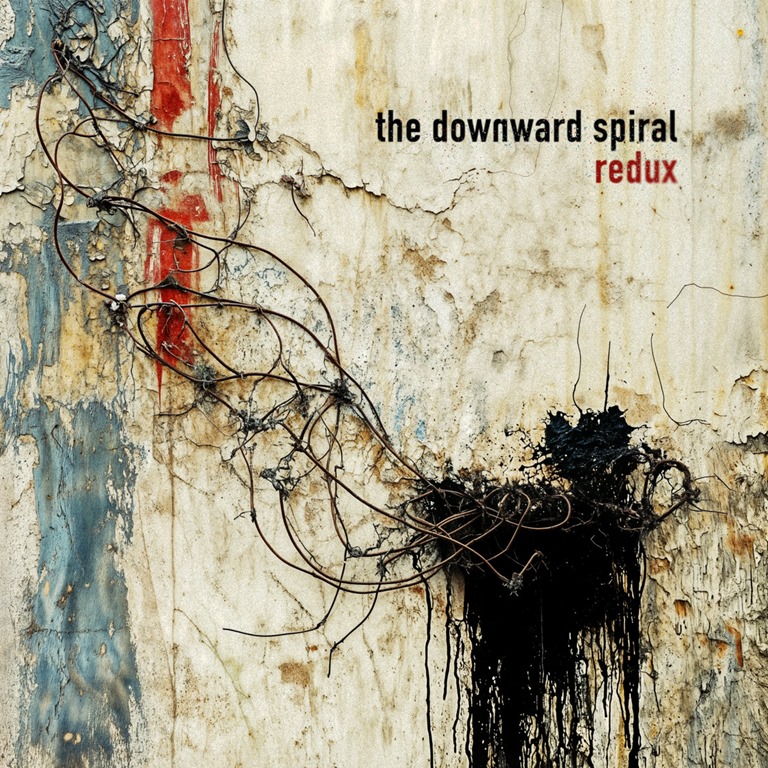
Magnetic Eye Records’ ‘redux’ series continues with another inspired choice in the form on Nine Inch Nails’ seminal release The Downward Spiral. The premise of the series is fairly straightforward – namely that a bunch of artists contribute versions of songs from a significant album to create a tribute rendition of said album from beginning to end. And then each release is accompanied by a ‘best of’ collection of covers of songs by the same band, where the contributors pick favourites ranging from greatest hits to obscure tracks lifted from the deeper territories of the catalogue. What’s impressive is that while many of the contributors to these releases tend to be relatively obscure, the standard of the interpretations tends to be high, which is testament to the curatorial skills of the guys at MER.

As a teen in the late 80s / early 90s, I was by no means alone in feeling like this was an exciting time for music, at a time of life when music comes to mean everything. Here in the UK, Pretty Hate Machine had created some minor ripples, and it was clear from ‘Head Like a Hole’ that Nine Inch Nails had something, even if that something did sound a bit like a harder-edged Depeche Mode. Landing just after my seventeenth birthday, The Broken EP was the most devastatingly brutal shock I had ever encountered. The thing is, it wasn’t metal – a lot of it wasn’t even guitars. And then, while the world was still recovering from that, Reznor delivered The Downward Spiral. It was – and in many ways, remains – the most fully realised, most expansive articulation of not only Nine Inch Nails, but of the human condition, in all its twisted, ugly complexity. It had everything, including vast emotional range.

The Downward Spiral landed at the perfect time for me, and as such, it’s an album I have a strong affection for now. Listening to this tribute version, it’s clear that the same is true of the artists who’ve contributed to it. That doesn’t mean that they’ve all delivered carbon-copy covers, and in many ways, it’s all the better for it. Kicking off the album, Black Tusk’s raging hardcore / thrash metal attack on ‘Mr Self Destruct’ is illustrative, in that it captures the nihilistic brutality of the original, and while it’s faithful to the structure, it’s very much about them channelling the raw emotion of the song in a way that they feel.

Grin’s take on ‘Heresy’ is dense and murky, dominated by a thick bass, and it’s solid. The chorus may not explode in a wall of rampant treble noise in the way the original does, but nothing could, so the fact they don’t even attempt to replicate it was a wise move. ‘March of the Pigs’ was one of the wildest single choices for a major-label release, and Sandrider’s version captures the song’s mania, while Daevar’s crawling sludge take on ‘Closer’ may lack the sleazoid groove of the original, but with the harmonic female vocals pitched against a wall of churning guitars, it’s still enough to bring on a bit of a sweat.

Author & Punisher – one of only a few of the acts I was familiar with in advance – present a stark, snarling rendition of ‘Reptile’. It’s an anguish-laden electro-industrial grind which captures the claustrophobic intensity of the original nicely, and credit to Between the Buried and Me for bringing more dark electronics and atmosphere to their rendition of ‘Hurt’ which is otherwise a pretty straight take – but what else is there to do? You can’t mess with perfection, and nor should you. The execution of the chorus is perhaps a bit emo, but it’s one of those songs that just hits so hard as long as you don’t try anything too radical. I don’t suppose Trent loses much sleep over the fact that the majority of people don’t even know that the Johnny Cash version was actually a cover.

a1197718638_10

The counterpart Best of set packs quality from beginning to end, too, with notable names including Thou and Evi Vine. The latter’s choice is interesting, being ‘This Isn’t The Place’, culled from the 2017 EP Add Violence, and it’s dark and atmospheric, woozy and somewhat unsettling, making for a perfect homage and well-placed reminder that as much as NIN are a ‘songs’ band, their catalogue is bursting with cinematic, atmospheric instrumental works. And this is where this ‘best of’ set comes into its own: while there are, almost by necessity, takes on ‘Head Like a Hole’ (here presented as a stark, rolling, post-metal piece by Blue Heron) and ‘Terrible Lie’ (Orbiter actually taking it poppier in a 90s alt-rock way), there’s a leaning towards post-Downward Spiral material, from ‘Every Day is Exactly the Same’ (a song I really felt in my early years of corporate drudge) by Chrome Ghost and ‘The Perfect Drug’ (a song that felt a bit flimsy to my ears at the time but one I’ve grown to appreciate) by Nonexistent Night. Bees Made Honey in the Vein Tree tackle ‘Over and Out’ from Bad Witch… Then there’s Thou’s savage version of ‘Suck’… woah.

What this showcases is not just how Nine Inch Nails have broken so much ground over the course of their career, and how significant a band they are for so many, but also how they have evolved over their time in existence. Trent Reznor is an artist who has often been imitated, but rarely matched, in terms of songwriting or production, switching his angle every time other show signs of catching up. The esteem in which he is held by fans and other artists is entirely justified.

Taken together, these two releases go a long way to reflect and represent just why Nine Inch Nails ae so revered. Credit is, of course, due to every contributor on both of these albums, and to the label for its curatorial work – but ultimately, it all serves as a reminder of just how essential Nine Inch Nails have been in the evolution of music over the last thirty-five years and more. This makes for a timely and fitting tribute to a truly pivotal band.

AA

a1767921004_10

For the second single from the companion album Best of Nine Inch Nails Redux that will be released parallel to the forthcoming MER Redux Series instalment The Downward Spiral Redux, sludge metal outfit THOU from Baton Rouge, Louisiana pay an ultra-heavy tribute with their cover of the NIN track ‘Suck’.

THOU comment by quoting Emil Cioran: “True confessions are written with tears only”, vocalist Bryan Funck cites an adage of the Romanian philosopher from 1934: “But my tears would drown the world, as my inner fire would reduce it to ashes.”

Parallel to the companion album Best of Nine Inch Nails Redux, Magnetic Eye Records will release The Downward Spiral Redux that contains 14 cover renditions of the original album tracks in sequence, recorded by some of the most compelling artists in hard and heavy music today.

AA

2ae81971-8651-3744-5ade-071300a7f05b

The most inspiring bands are the ones that can create a world around themselves that is about far more than just the music. The artwork, lyrics, sounds and ethos all merge together perfectly to create its own universe, a secret club. The Lovely Eggs are one such band. And against all the odds, 2025 sees them celebrate their 20th anniversary as a band! Stubbornly and heroically independent, The Lovely Eggs have forged their own path and have achieved mainstream success without ever compromising their DIY ethics.

To mark their 20th anniversary, The Lovely Eggs have announced a very special LTD release entitled Bin Juice – a collection of self-recorded outtakes from their last album Eggsistentialism, alongside rare B sides.

Released on their own label Egg Records, with eye watering artwork by Casey Raymond and hand packed in a black plastic bin bag on neon toxic slime green vinyl, this is yet another collectible release from a band who care as much about the art and ideas in their records as they do about the sound.

There will also be 300 copies exclusive to Rough Trade with alternative coloured sleeve and sticker art, on special edition transparent vinyl with toxic orange and slime green Bin Juice splatters.

“We had all these spare songs after we released our last album Eggsistentialism, and we didn’t really know what to do with them,” explained Holly. “They just didn’t seem to fit in with the vibe of Eggsistentialism, but we’d recorded them and wanted to get them out there.”

“They’re kind of a sketchbook of songs,” added David. “They’re not polished or laboured over but we thought it would be interesting to release them. It’s why we called the record Bin Juice. These were songs we had thrown away. But hopefully people like going through bins collecting trash.”

You can have a pre-release peak inside their bins with the just released track ‘The Grind’.

“Everybody wants an excuse to escape the 9-5 and day to day normality,” said Holly. “It’s our raison d’être for being in a band. ‘The Grind’ looks at all that stuff and is a bit of a paperback anthem for the disenfranchised and disillusioned."

AA

Catch The Lovely Eggs live on their 20th anniversary tour on the following dates in October. Tickets available HERE.

OCTOBER

Weds 22 – La Belle Angele, Edinburgh

Thur 23 – Òran Mór, Glasgow

Fri 24 – Newcastle University, Newcastle

Sat 25 – All day 20th Anniversary Party at The Brudenell, Leeds *SOLD OUT*

Sun 26 – Concorde 2, Brighton

Mon 27 – The Garage, London

Tues 28 – The Globe, Cardiff

Weds 29 – Castle and Falcon, Birmingham

Thur 30 – Academy 2, Manchester

Fri 31 – Metronome, Nottingham

NOVEMBER

Sat 1 – Trinity, Bristol

AA

Bin Juice Cover

Magnetic Eye Records / Redux Records – 6th June 2025

Christopher Nosnibor

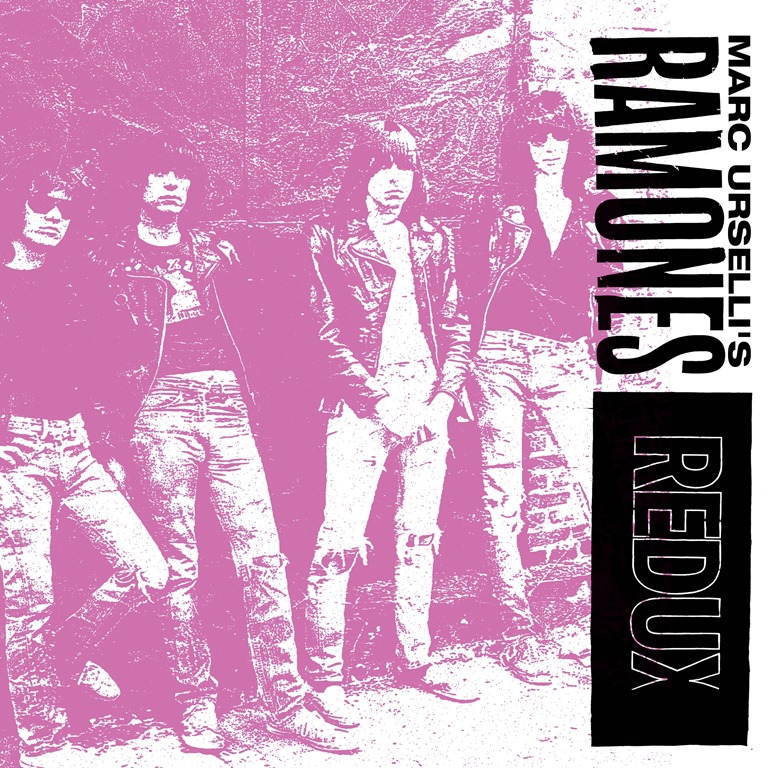
Magnetic Eye have released a few of these ‘Redux’ tribute albums now, each of which has come in two editions, and each of which has taken a different approach. Whereas the Meantime Helmet releases offered a standard and expanded version, for example, others have presented an album on one version and a ‘best of’ as a companion. And in all instances, they’ve managed to score some outstanding names as contributors. This time around, it’s the Ramones’ eponymous debut which is accompanied by a ‘best of’ set as a counterpart, and the project was ‘masterminded and curated by New York City and London-based Italian-Swiss audio engineer, sound designer, composer, multi-instrumentalist, and Grammy winner Marc Urselli’ – hence the titles.

Mondo Generator, Napalm Death, Ufomammut, Arthur Brown, David J, and Voivod are among the big-hitters featured here, but as I settle down with a cold pint of Oranjeboom, I contemplate the need for a Ramones tribute – or, more specifically, another one. There have been a few, perhaps most famously 2003’s We’re a Happy Family, which featured The Red Hot Chilli Peppers, Marilyn Manson, Green Day, Garbage, U2, Metallica, and The Pretenders, among others, and there are so many tribute acts out there, too, one has to ask ‘is this not overkill?’ Well, no, because that would be Motörhead, and what’s more, with a lower tier of ‘name’ contributors, it feels more authentic, somehow. I’m not saying U2 aren’t fans of The Ramones, but they feel like they’re on a par with the fans who bought a T-shirt in Primark and only discovered they were a band after the fact. Casuals, in other words.

Some might say that the debut album doubles as a ‘best of’, and there’s a case for that, given that every single song is a pure classic. Mondo Generator kick off the debut album covers set with a roaring ‘ONETWOTHREEFOUR’ before launching into ‘Blitzkreig Bop’, and it’s a faithful but fiery, fizzy rendition, the guitars like jet engines on what you could only describe as a proper punk blast.

Daníel Hjálmtýsson and Mortiis offer an altogether different take on ‘Beat on the Brat’ – slowed down, moody, gothic, a bit theatrical, a shade menacing, and yet somehow accentuating the pop currents which flow through this, and indeed, all Ramones songs. Boots Electric, with the help of none other than Wayne Kramer, push the pop to the forefront

Ufomammut bring the metal and convert the sub-two-minute surf-pop ‘Chain Saw’ into a six and-a-half minute grind that’s downtuned, dense, and dirty. It’s also absolutely brilliant in its execution. Napalm Death have enlisted Thurston Moore for their take on ‘Now I Wanna Sniff Some Glue’, which is a minute and a half of speaker-shredding thrash nihilism, and absolutely perfect.

The Ramones weren’t only punk progenitors, but purveyors of precise and often perfect pop songs, and this pair of albums represents the fullness of their influence (still not saying they. didn’t influence RHCP or U2., but…) Arthur Brown and The Berserker’s take on ‘I Don’t Wanna Walk Around With You’ is crazy, and absolutely perfect.

Voivod rope in JG Thirlwell for their hell-for-leather yet hooky as hell take on ‘Zero Zero UFO’ which opens the ‘best of’ set. And there are some corkers, with a slowed-down, heavy psyche yet oh-so-pop take on ‘Pet Sematary’ by Impostor Cult with Amy Tung Barry Smith being exemplary. So Hideous’ twangin’ take on ‘The KKK Took My Baby Away’ is one of the most radically different interpretations on the album, although Kayo Dot and Ihsahn push ‘Teenage Lobotomy’ in the most unexpected directions, while David J and Paul Wallfisch push ‘I Wanna Be Sedated’ to a soporific seven minutes. With a super-sparse arrangement, it sounds as if they’ve achieved their wish before entering the studio.

What these two albums illustrate, more than anything, is that The Ramones wrote superlative and truly classic songs, with earworms galore. And as tributes go, these albums do feel perfectly fitting.

AA

691820395539

Institute For Alien Research – 15th January 2025

Christopher Nosnibor

Bath-based microlabel Institute For Alien Research tends to focus on compilation releases, with open submissions, on various themes. One long-running series is Collage Music, each of which features fifteen works, the only stipulation being that their duration is 4:33. Not a second more, and not a second less. They’re not looking for interpretations of John Cage’s seminal work, and as such, the duration is in many ways arbitrary beyond the idea that artists respond to limitations and set parameters in different ways, and as this – the twenty-eighth in the series (as the title indicates) – illustrates the point unequivocally.

With ‘Circumstances’, Support Group ease us in gently with some slightly woozy, echo-soaked, ambience, before Lezet stammer and glitch through a multi-layered slice of abstraction with ‘Colonnades of Fear,’, which may also be ambient, but it far from relaxing, although it’s Robert & Lamy who are the first to venture into much darker territory, with the kind of doomy, drony warped tape and noise experiments that are reminiscent of Throbbing Gristle in places.

The arrival of ‘bruits de la vie’ by samelectronics feels like something of a watershed moment, being the first piece to present big, bold sounds – feedback and immense powerchords, which, instead of feeling heavy or oppressive, open an expanded horizon, to surprisingly uplifting effect. The rough, lo-fi punkiness of ‘Johnny got no respect’ by This is The Utter vs Chelsea comes as a surprise bang in the middle, being the album’s first straight-up guitar-based cut, and it’s a savage semi-cover to boot.

Along the way, there’s a superabundance of weird shit, with collages and field recordings and ethereal haunting soundtrack-like compositions, dark electronica, spaced-out BBC Radiophonic Workshop type soundscapes, and banging dance, courtesy of Sbilts, with ‘Acid Dog’, who mine a vintage techno sound propelled by old-school drum machine sounds. That snare! Samples! It’s a sonic time-machine!

Just as grassroots venues are essential on so many levels, so are labels who put out releases like this. Most of the contents of such compilations is ultra-niche, and will never expand beyond being so – and that’s ok. There is a huge audience with niche tastes who simply aren’t catered for by bigger labels, bigger venues. Most of the acts here are unlikely to ever play to more than twenty-five people, assuming anyone will put them on, and they’re never going to be snapped up by a label which has aspirations of making money. Self-releasing is find, but it’s hard to reach the tiny, fragmented target audience. But a label like Institute For Alien Research, having established a reputation for providing a platform for the full spectrum of experimental electronica and beyond, creates its own niche. It may seem hard to believe when there are maybe a few hundred or so people who are into it, but this really is what the world needs. Capitalism is killing cultural diversity, and it’s killing art.

The fact that Collage Music (28) is a mixed bag is a good thing. It would be all too tempting for the label to be picky, sniffy, selective, and offer up a compilation which is more homogeneous, unified, that presents, ultimately, a curated collection determined by personal taste. And that would have been fine, and entirely their prerogative. But Collage Music (28) is all the better for its wild eclecticism. You might not like all of it – and it would be probably be a bit strange if you did – but in listening to it, there’s a chance you’ll find your eyes are opened to something you didn’t know you would like, and it’s absolutely guaranteed you’ll hear artists you would never have otherwise encountered. So dive in!

AA

a3223356046_10

17th December 2024

Christopher Nosnibor

It’s inevitable that with the sheer volume of music in existence, there will be a fair bit which bypasses even the keenest enthusiast of the obscure. Trek and Quintronic is a pairing I feel I really ought to be familiar with. Emerging in 1980 Paul Wilcox (Trek) and David Kane (Quintronic) recorded two albums, noted for pioneering ‘electronic rock’, with Landing in from 1980, and the self-titled follow-up Trek w/ Quintronic LP the following year, created using an array of synths, plus pedals and six- and twelve-string electric guitars. There was a reissue, entitled Landing Plus, released in Europe in 2012 and the US a couple of years later, which featured the entirety of Trek w/ Quintronic and a couple of additional cuts by way of the ‘plus’, but twelve years on, it’s not exactly easy to come by, and this new release offers something quite different, featuring as it does ‘9 of the original Tw/Q tracks plus 11 new, never released songs written by Paul Wilcox, spanning a period of 40 plus years, all remixed and remastered.’

This means that some of the material was recorded after their second album, without seeing the light of day, while some of the contemporaneous recordings have been flaking away on old tapes since 1980 or thereabouts, and their restoration and repair has been quite an undertaking, achieved quite remarkably by David Lawrie of The Royal Ritual. The aim, as they state on the website, was to ‘present the definitive collection of the best of Trek with Quintronic’, and containing some twenty tracks, this is a wide-ranging, and in-depth summary of their work – and it’s often the case that musical careers consist of considerably more than the material that was released at the time, for whatever reasons.

That ‘You Might be Lonely’ and ‘As We Sing’ first appeared on Landing makes this a truly career-spanning document, which showcases the full span of their musical vision and innovation. It’s often easy to forget just how new to the market (affordable) synths were at this point in time. The advent of 80s synthpop and industrial music came about as a result of the emerging technology, which also, notably, included drum machines. It was a revolution.

There’s a gothic, church organ feel to the introduction, and its grandeur also makes a nod to the prog past of the pair, but it’s listening to ‘You Might be Lonely’ that the span of their influences coupled with the use of the kit at their disposal becomes apparent: it’s like Hawkwind but with synths, both rumbling and swirling and with additional laser blasts and primitive drum machine knocking out a metronomic rhythm, all coalescing to provide a backdrop to a vocal delivery that’s an overt Bowie rip.

The Bowie influence looms equally large on the glammy ‘All the Rave’, only here with the addition of sweeping string sounds. It sounds remarkably fresh, as well as prefacing – by a long way – the trend for orchestral flourishes which would be a big thing in the late 90s with, and winding up with a big, flashy guitar solo. It’s visionary stuff, and the execution is remarkably sophisticated, particularly for the time.

Some of the songs sound more of the era: ‘Zolian Space’ lands somewhere in the region of OMD and Ure-era Ultravox, but it’s a nifty enough pop song. There are a fair few of those on offer here, not least of all the bouncy Suicide-meets-Bowie ‘White Hoods’, and the hyperactive twitch of ‘Twin Forces’.

The guitars are to the fore on the previously unreleased ‘Built to Average’, hinting perhaps at one of the many directions they could have veered. It’s a solid tune, but coming on like a collision between Bauhaus and Mr Mister, it’s dated more than some of the other material, whereas, in contrast, the spiky ‘Wally And The Rich Kid’ is pure vintage yet still more impactful in its stark, dramatic stylings.

Some of – what at least I assume to be – the later material stands out because it sounds different: ‘Religion’ is slicker, the drum machine in particular more ‘real’ sounding, and in a way it tells a story of technological advancement and its effect on music-making. Objectively, it sounds better, in terms of clarity, fidelity, separation, but for everything that’s been gained, something has been lost, and it’s something that using emulators or even vintage gear can never fully recapture. There was an unmistakeable zeitgeist about the ‘79-’82 spell, which was unique, and Trek with Quintronic were right there and probably didn’t even realise at the time. No-one did, really.

Hindsight really is everything. Stranger Than Today is an outstanding compilation which goes beyond in providing a hitherto unseen insight into the context of their groundbreaking second album and beyond.

AA

a3920472662_10

ELEPHANT TREE are having a party and they’re inviting everyone to hitch a ride and join in! September 2024 marks ten years since Magnetic Eye’s release of the beloved British stoner doom quartet’s first album Theia (2014), and in observance of that milestone, the label is proud to showcase three releases celebrating one of the label’s landmark bands.

Theia (Anniversary Edition) and Habits (2020) are presented as reissues without additional audio content, but in new physical formats. The former comes packaged with updated artwork and significantly expanded background content (see below for more details).

The third release entitled Handful of Ten is a new full-length containing brand-new tracks, demos, and b-sides, and includes two of the first new ELEPHANT TREE tracks in numerous years, recorded specifically for this compilation. All three albums have been scheduled for release on September 6, 2024.

As a first delicious taste from Handful of Ten, the Londoners release the video single ‘Try’. You can see the video here:

…and order the album here.

ELEPHANT TREE comment on ‘Try’: “This was really a cathartic exercise in playing something a little different, written with an initial cast-away attitude after a few pints on a sweltering summer’s day”, guitarist and singer Jack Townley writes on behalf of the band. “We don’t play faster songs often, let alone get space to add them to records. The subject matter is about someone conforming to try be a model citizen, not wanting to step out of line in fear of the repercussions. He tries his hardest to not express his alternate views while others around him conform and in the end it all boils over, leaving him feeling ‘forever lost’.”

e9e48161-5f00-411a-e3cb-2e230973730b

Front & Follow / gated canal Community – 6th October 2023

Christopher Nosnibor

When Front & Follow called it a day as a label, it was a sad day, and their subsequent emergence from the mothballs for the Rental Yields series was extremely welcome. This was a project that came from the heart and really showed what F&F was all about – yes, music first and foremost, but also community. By working with a certain network of artists, the label built a community of its own, but there was always a sense of locale which was integral to this, and this is what compelled label-leader Justin Watson to resurrect the label to release a series of fundraisers to help raise money to tackle homelessness in Manchester.

This is a project which has clearly taken on a life of its own, and it seems unlikely that when first touting the idea, Justin could have ever seen the deluge of contributions which would pour in over the coming months. He writes, ‘Over 100 artists are involved (the spreadsheet is fun), each one tasked with creating a new track from the sounds created by someone else –we are then collating the tracks and releasing them over 2022 and 2023… This is VOLUME FIVE –THE FINAL VOLUME. 19 tracks, 38 wonderful artists. All money raised will go to SPIN (Supporting People in Need), whose purpose is to feed, shelter, clothe and generally support the homeless and people in need of Greater Manchester.’

This release simply shouldn’t exist. Homelessness shouldn’t exist, either. Levelling up my fucking arse. This government can’t even manage the basics, and while the imminent cancellation of the stretch of HS2 between Birmingham and Manchester is making all of the headlines and the government are refusing to comment on the ‘speculation’ about the inevitable, insisting that there are many other projects which are equally essential to the plan to provide the north with the same quality of life available to those in the capital, the fact that homelessness remains such a huge issue in Manchester is evidence that they’re not receiving the finding they need either. It’s not just Manchester, but charity begins at home and people can only do so much, so it stands to reason that F&F should donate to a local charity.

The one positive outcome of a truly depressing situation is that all five of the Rental Yields compilations is absolutely superb, and this fifth and final one is a glorious showcase of predominantly regional talent from a city with a long history of producing outstanding music, alongside Leeds. While it’s fair to say that much of this musical output has been born from frustration, it only serves to demonstrate just how much the north has contributed, and continues to contribute, to the nation’s creative output. And a nation without art… is simply dead. Over the last nineteen years, which I’ve spent living in York, I’ve often said that the best thing about living here is its proximity to Leeds. The city’s music scene is phenomenal, and where in London could you watch local / national / international touring bands while supping local ales for four quid a pint?

So, while the fact of the matter is that there should be no need for this album in terms of its social motivation, Rental Yields Volume Five is ultimately yet another essential release in terms of the fantastic music it showcases. More than any of the preceding editions, it’s a murky, atmospheric collection.

I’d been bobbing along nicely to the mellow drift before the penetrating feedback blast that heralds the arrival of ‘Rental Yields Weekend in Manchester Mix’ by Dan Gusset vs Omnibadger. Had to be these buggers, of course. Regular contributors / usual culprits, they bring another layer of discomfort to the party. It’s like Test Dept’s ‘Unacceptable Face of Freedom’ for 2023, a punishing, sample-filled industrial racket that tells it like it is, and without compromise. We live in harsh times, dominated by harsh language from government, and if ‘and then it was gone’ by gormless vs Distant Animals is superficially buoyant, the underlying stains of noise are dark and turbulent and this is the noise that fills our heads day in, day out, as we walk down the street. There is no escape, only the delusion. There is plenty oof harsh reality to be found on here, with thick bass blasts dominating Repeated Viewing vs Four Italian Pep Pils’

Most of the contributors on here are new to me, but as has been the case with all of the previous instalments, the quality of consistency is remarkable, and it’s incredible to think that this is a compilation assembled from open submissions. Rental Yields Volume 5 feels more like a film score than anything else, the tracks showcasing a cohesion and unity our government could only dream of. But then, this what happens when artists come together for a cause. And coming together is the crux here. The entire Rental Yields series is essentially about unity, and also about compassion. The government, and the capitalist world at large needs to learn from this. In the meantime, this glorious compilation provides a much-needed salve to the muscle-twitching rage the societal situation elicits. It’s yet another great album from Front & Follow, who deserve to hang up their virtual boots after this.

AA

dQGDqHAA

Twice a Man have released a video for their new track ‘Dahlia’, which is featured on the lavish 3-CD and 72-page artbook compilation entitled Songs of Future Memories (1982-2022) that was released on January 27.

The Swedes’ long-time artistic preoccupation with environmental issues is also reflected in the clip, which contrasts the beauty of the natural world with the urban landscapes created by humanity.

Watch the video here:

Twice A Man comment: “The song ‘Dahlia’ is a reflection about our time,” Dan Söderqvist explains on behalf of the trio. “The world is getting darker and uncertain with wars, pandemics, and above all: climate change, environmental destruction, and through that a loss of biodiversity that is all caused by human activity. We experience a conflict between the outer world and an inner imaginary world. We need to feel comfort, and music at its best grants us that inner peace. Two new songs, ‘Lotus’ and ‘Dahlia’, were made to be included in our new compilation album Songs of Future Memories and – in some respect – to epitomise the spirit of Twice a Man.

Cover Twice a ManV3.indd