Posts Tagged ‘collaborations’

The catalogue of material released by Papillon de Nuit, the ever-shifting, ever-evolving musical project of Stephen Kennedy, continues to expand with the release of single number eight.

Kennedy’s approach to the project is both interesting and unusual, with each song recorded at a separate session, often not even fully-formed in terms of writing and arrangement beforehand, and realised with various guest musicians and vocalists. Retuning once more to Young Thugs studio in York, ‘The Pilgrim’s Arc’ again sees Stephen handle a considerable range of duties, from drums to grand piano and providing spoken and sung vocals, as well as writing and arranging the song itself, while joined by Michalina Rudawska (cello) and Karen Amanda O’Brien (spoken word).

The Exceptional Mr Hyde make a guest appearance here, providing ‘menacing spoken word’, while Steve Whitfield  added bass and guitar, as well covering production work

The result is a striking, dramatic, percussion-driven piece with some chunky bass, and layered vocals creating an almost schizophrenic mutter behind a soaring melody.

AA

a2654860644_10

7CD Box-set PNL Records/Audiographic Records – 9th February 2024

Christopher Nosnibor

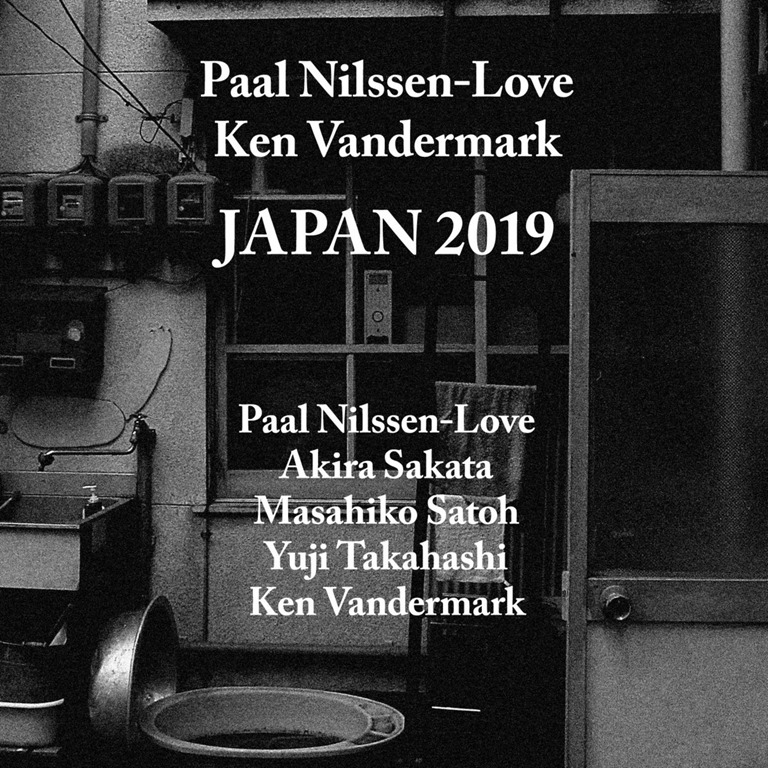
It may be a way off Throbbing Gristle’s 24 Hours box set or Kenji Siratori’s 12-disc Merzbomb set, but seven hour-long CDs culled from live recordings from a 16-date tour of Japan in 2019 is a huge, huge thing to be faced with. It’s extravagant, indulgent, and frankly excessive, but a boon for fans – at least the really hardcore ones with an obsessive bent.

This is, of course, a document – and a painstakingly detailed one that that. One may question the need to release recordings of almost half the dates of a single tour, but but when improvisational artists play, no two sets are alike, so there was never any danger that this would feature seven discs with the same set played as a carbon copy. But what’s more, this particular tour was noteworthy for introducing new collaborations with legendary Japanese musicians: Akira Sakata (reeds/voice), Masahiko Satoh (piano), and Yuji Takahashi (piano).

As the accompanying notes outline, ‘The group is known for its creative intensity, that constructs and deconstructs material with utmost freedom and spontaneity, and which has been documented on 11 albums since its inception. The addition of such incredible musicians from Japan only heightens the kinetic nature of their playing and the speed in the exchange of musical ideas documented with this collection.’ And this box set, limited to 500 copies – which while not massive, isn’t exactly a tiny run, and as such indicates the kind of fan-base they have, not only in terms of size but also devotion – is being released to coincide with their next tour of Japan.

Each disc features a set performed by a different permutation of players, bookended by sets by Paal Nilssen-Love / Ken Vandermark, with all the variants of the duo with the addition of one to three Japanese collaborators covered across the span of the seven discs.

Each disc is split differently, demonstrating just how different each set was. The first couple of discs, featuring Paal Nilssen-Love / Ken Vandermark and Paal Nilssen-Love / Yuji Takahashi / Ken Vandermark respectively, documents the performance on 4 December 2019 and contain a couple of pieces running for around half an hour and a couple more which run to the ten to fifteen-minute region. The next night’s performance couldn’t be more different, with the first two moments running for forty and thirty minutes respectively, followed by a further nineteen-minute behemoth.

I say it couldn’t be more different, but of course, all four sets are built around some epic jazz workouts which aren’t always easy on the ear – in fact, quite the opposite, as anyone familiar with the work around the Paal Nilssen-Love axis would reasonably expect.

Japan 2019, then, contains a lot of wandering, often straining, discordant, and manic sax, which runs every whichway atop thunderous arrhythmic percussion that clatters and thumps its way stutteringly, yet confidently, all over the place.

My appreciation of this type of brainbending jazzery has evolved over the last few years from a baseline of zero to quite digging its bold adventurousness and stubborn refusal to be shaped into anything remotely structured or normal, pushed outward by an immense respect for the way improv performers are capable of bouncing off one another with such intuition that they sound incredibly well-rehearsed. That’s real musicianship. But it doesn’t mean that it’s listenable all the time, or even half the time. And then there’s the fact that this release is seven discs: that’s around seven hours, or a full working day – of warped sax work and percussion which rattles and clatters all over and it’s still difficult to process, to contextualise. At times, it’s a frothing frenzy of energy; at other times, we hear the performers pull things back and create not only a space that’s broad, but allows for a leisurely stroll around the sonic geometry of their interplay, and as such facilitates broad exploration.

There’s simply so much of this that it’s easy to get lost and disorientated in the labyrinthine tunnels which twist and turn endlessly.

Ultimately, a Paal Nilssen-Love & Ken Vandermark album is the jazz equivalent of an absolute riot – and with this one spanning seven discs, it’s more of a war than a battle, and perhaps best digested in smaller doses.

AA

a3844906089_10

Ni Vu Ni Connu – 2nd November 2023

Christopher Nosnibor

While the late 80s and early 90s saw the absolute peak in format-driven consumer exploitation, with the major labels finding evermore extravagant and ostentatious ways pf presenting a single or an album to boost its chart position by milking hardcore fans who would buy every format for the sake of a bonus track, a remix, or a poster, there’s been a strong return for physical releases in recent years. Admittedly, the days of CD singles packaged in tri-fold 12” sleeves, cassette singles in album-sized boxes, 12” boxes in which to house a series of CD singles, albums released in boxes as six 7” singles, and the like are well over, the fetishisation of the object is very much enjoying a renaissance, most likely as a reaction to the years when everything became so minimal and so digitised that no-one actually owned anything.

This was a bleak period. As someone who had spent a lifetime accumulating books, records, CDs, even tapes, I found it difficult to process. I had grown up aspiring to own a library and a wall of records, and found myself foundering, drifting in a world where entire lives were condensed to a playlist on a phone and a few kindle picks. I’d walk into houses – admittedly, not often, since I’m not the most sociable of people – and think ‘where’s the stuff?’ Stuff, to my mind, is character. It’s life. People would endlessly wave their Kindles and tell me ‘it’s just like a book!’ and rejoice at their Apple playlists on their iPods because they had their entire collections in their pocket and no clutter. I suggesting I should clear out my ‘stuff’, these techno-celebrants were missing the point, and continue to do so. Rifling through a collection, finding lost gems, engaging in the tactility, remembering when and where certain items were purchased is an integral part of the experience. My collection isn’t simply a library of books and music, it’s a library of memories.

In more underground circles, the existence of the artefact remained more consistent, perhaps because more niche artists and labels always understood the relationship between the artist and the consumer as conducted via the medium of the object. The release of this epic retrospective as a 4-LP box set is, therefore, less a case of getting on board with the Record Store Day vinyl hype in the way that HMV are now carrying more vinyl – at £35 a pop for reissues of 70s and 80s albums you can find in charity shops and at car boot sales for a fiver (and you used to be able to pick up in second-hand record shops until they died because no-one was buying vinyl), and more a case of business as usual.
a2289573057_10

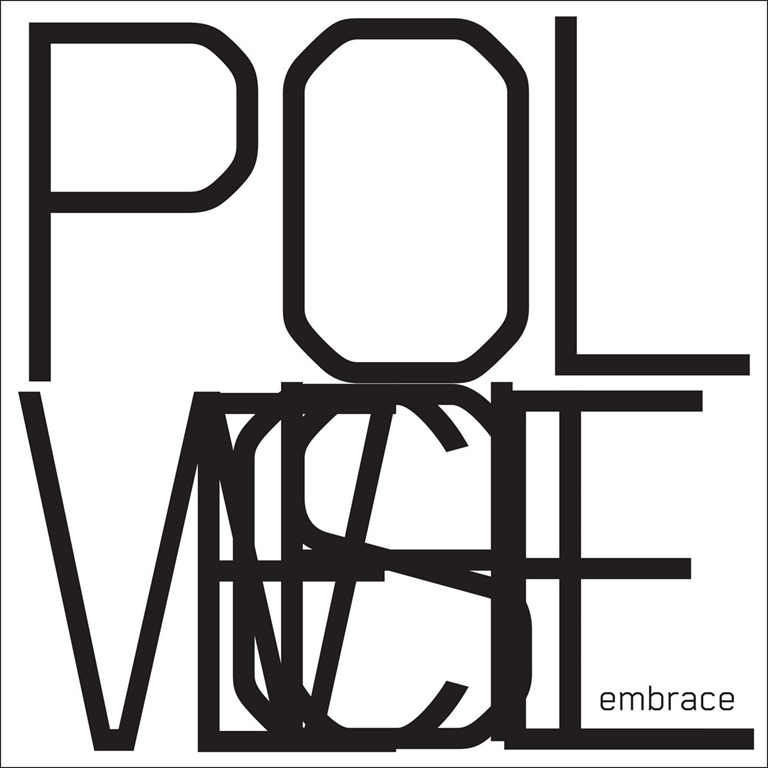
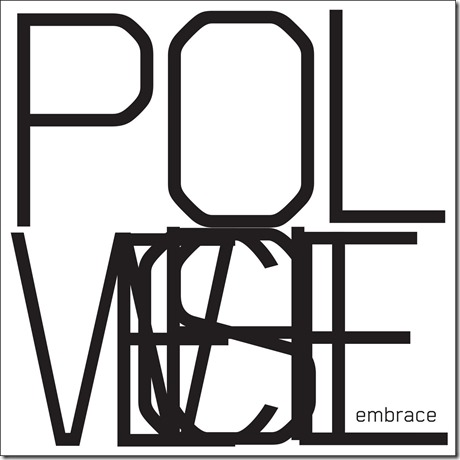
Vienna- and Berlin-based ensemble Polwechsel have a thirty-year career to reflect upon, and with a substantial back-catalogue to their name, and it’s a landmark that truly warrants a box-set retrospective. Although it’s not a retrospective in the conventional sense: this is a work created in collaboration with a selection of instrumentalists and improvisers who share their exploratory mindset. Traditional compilations feel somewhat lazy, and are ultimately cash-ins which offer little or nothing new to the longstanding fan. And so this set serves to capture the essence and style of their extensive catalogue, rather than compile from it.

There’s a lot of ground to cover, too. As the accompanying notes detail, ‘Vienna- and Berlin-based ensemble Polwechsel have been making music at the interface of collective improvisation and contemporary composition. With their changing cast, the group have been at the forefront of musical experimentation, from style-defining works in reductionism in the 1990s, which concentrated on silence, background noises and disruptions, to a change in direction in the 2000s, which saw the introduction of traditional musical aspects such as tonal relationships, harmony and rhythm. Through varying constellations, instrumentations and collaborations, Polwechsel have developed a unique body of work that has firmly established them as one of the driving forces in contemporary music-making… Their music has mostly straddled a line between contemporary music and free improvisation, and is characterized by quiet volume, sustained drones, and slowly developing structures.”

And so it is that for EMBRACE, Werner Dafeldecker, Michael Moser, Martin Brandlmayr and Burkhard Beins are ‘joined by a roster of likeminded guest musicians and former band members to perform a series of new pieces reflecting the whole breadth of their musical investigations.’

‘Jupiter Storm’ is spacious, spatial, strange and yet also playful, an assemblage of sounds that lurch from serious and atmospheric to sleeve-snickering toots and farts, and everything in between over the course of its eighteen minutes, with slow—resonating gongs and trilling shrills of woodwind and plonking random piano all bouncing off one another, while the bass wanders in and out of the various scenes in a most nonchalant manner. On ‘Partial Intersect’, drones and hesitant drones occasionally yield to moments of jazzification, parps and hoots and squawks rising from the thick, murky sonic mist which drifts ominously about for the track’s twenty-minute duration.

Sides C and D contains ‘Chains and Grain’ 1 and 2, again, longform pieces almost twenty minutes long, comfortably occupying the side of an album, are the order of the day. Clanking, clattering, chiming, bells and miniature cymbals ring out against a minimal drone which twists and takes darker turns.
cover

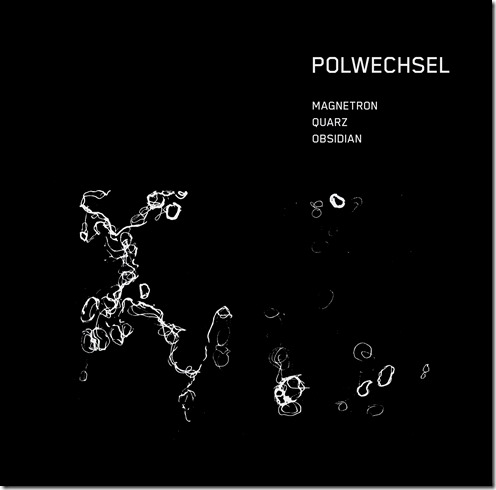
The tracks with Andrea Neumann are eerie and desolate, and occupy the third album. These pieces are different again, with the two ‘Magnetron’ pieces building from sparse, moody atmospherics to some piercing feedback undulations. The shrill squalls of treble, against grating extraneous noise, make for some tense listening. The second in particular needles at the more sensitive edges of the nerves. ‘Quartz’ and ‘Obsidian’, are more overtly strong-based works, but again with scratches and scrapes and skittering twangs like elastic bands stretched over a Tupperware container. The fourth and final album contains two longform pieces, with ‘Orakelstücke’ occupying nineteen and a half minutes with creaking hinges, ominous tones, and a thud like a haunted basketball thwacking onto a bare floorboard. There are lighter moments of discordantly bowed strings, but there’s an underlying awkwardness with crackles and scratches, muttered conversation in German. The fifteen-minute ‘Aquin’ is sparse, yet again ominous and uneasy, majestic swells of organ rising from strained drones and desolate woodwind sinking into empty space.

The set comes with a thirty-two page booklet containing essays Stuart Broomer, Reinhard Kager and Nina Polaschegg (in both German and English) and some nice images which are the perfect visual accompaniment to the music, and while it’s doubtless best appreciated in luxurious print, a digital version is included with the download.

EMBRACE is a quite remarkable release – diverse and exploratory to the point that while it does feel like an immense statement reflecting on a career, it also feels like four albums in their own right. It’s a bold release, and an expansive work that certainly doesn’t have mass appeal – but in its field, its exemplary on every level.

Thrill Jockey – 29th January 2021

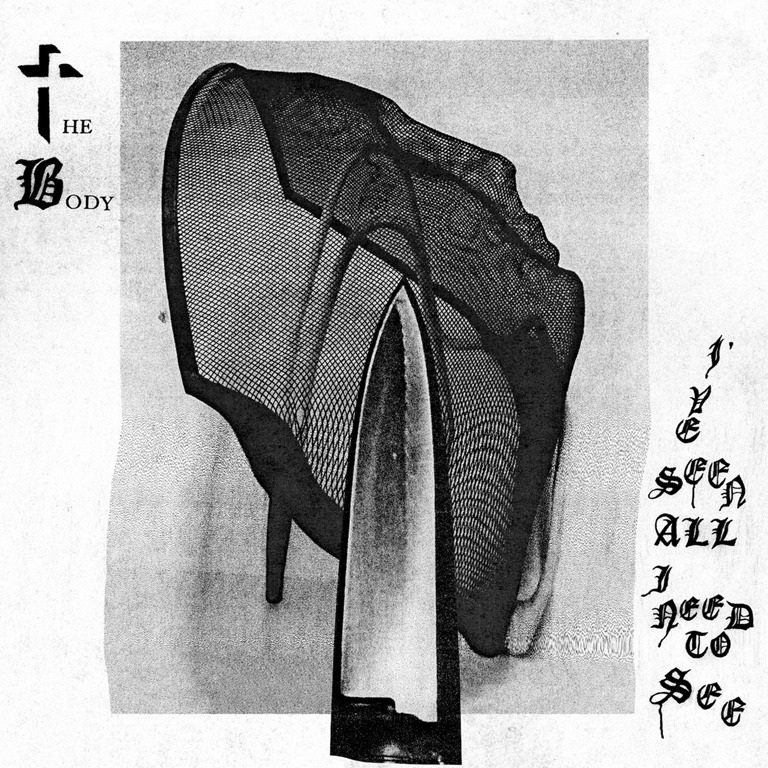
The sheer quantity of The Body’s output – often produced collaboratively – is little short of astounding, and since coming together some 20 years ago the duo comprising Lee Buford and Chip King have forged a reputation as masters of noise, and, as their biography attests, they’ve ‘consistently challenged assumptions and defied categorisation, redefining what it means to be a heavy band’.

There is no question that I’ve Seen All I Need To See is heavy: listening to it from beginning to end truly hurts.

It opens with crushing slabs of overloading distortion backing a monotone spoken-word piece. The juxtaposition of the blank, the bland, and the speaker-breaking blasts of bass-orientated menace is difficult to process, and that’s before the screaming demon-howl vocal begins howling its hellish anguish into the dense, murky mix of thunderous drums and bowel-churning low-end. ‘Lament’ is six minutes of pure heavyweight abrasion that tears at the guts and the soul. Every cymbal crash is an explosion, the decay distorted by deep bass detonations as it trudges doomily onwards – or down. Down. Down.

Everything simply splinters and overloads on the punishing single release, ‘Tied Up and Locked In’, which is a whole next level of heavy shit, a churning mess of overloading noise that’s utterly brain-pulping.

If the prospect of a slower song, which arrives as the album’s third track, Eschatological Imperative’, suggests some kind of respite, you’re going to be disappointed: slower, yes, but it’s a dirgy wall of noise that’s nothing short of overloading in every sense. It’s horrible, painful, but utterly perfect in fulfilling its purpose: there is no respite here, only pain, and pain articulated through brutal sound. ‘Pain of Knowing’ is so dense and dark, you could almost cry in the hope of a return to ignorance. A low, griding bass feedback noter hangs for eternity and rings a resonating pain, and the reminder that knowledge isn’t power, it’s pain.

The pain continues with the percussion-dominated slow throb of ‘The City is Shelled’, which crawls, bloodied, into the kind of territory occupied by Swans circa 1984, with crushingly slow beats and a buzzing bass that practically swallows everything. It’s a trajectory continued by on ‘They Are Coming’, a stop/start piece that’s utterly obliterative. The stops leave you hanging: the starts make your stomach lurch. There isn’t a moment’s respite or implicit kindness here. Hearing the bass drum downtune into a morass of distorted extranea and broken bass on ‘The handle The Blade’ is a most physical experience, and one that’s only heighted by the final track, ‘The Path of Failure’ which is utterly crushing. It’s megalithically, slow, and heavy, but also dark and punishing, and when noise does erupt on ‘The Path of Failure’ it does wo with a slow, brutal violence

I’ve Seen All I Need To See is a distillation of pain, and the production and mastering takes that to the max, to the point that I repeatedly found myself checking my connections and cables and even my speakers. In short, I’ve Seen All I Need To See is as brutal as anything you’ll hear, a work of total sonic overload.

AA

a0754428179_10