Posts Tagged ‘Catharsis’

Majestic Mountain Records – 28th February 2025

Christopher Nisnibor

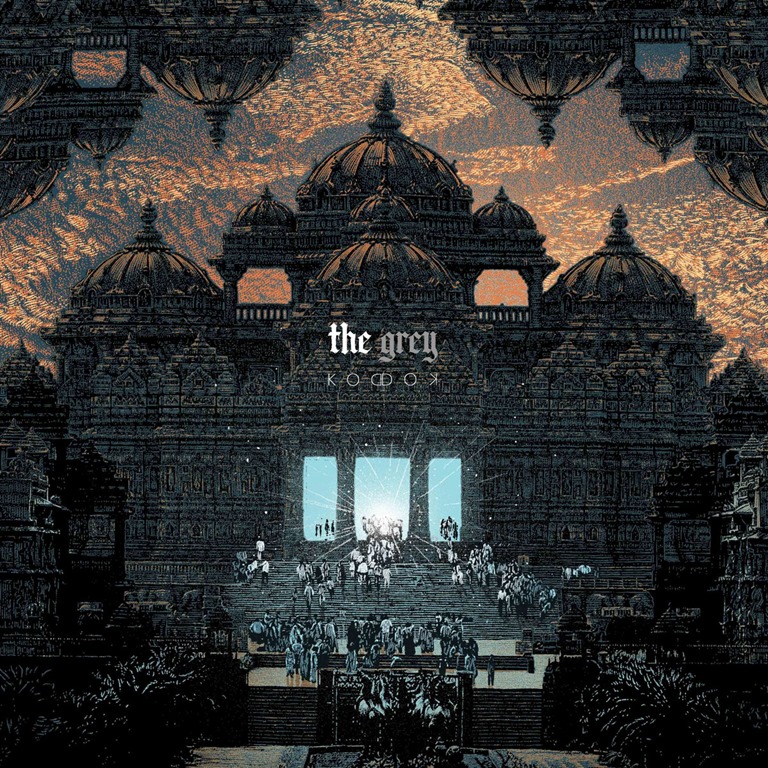
Kodok, the third album from The Grey, is pitrched as ‘a masterful fusion of raw energy, deep emotion, and undeniable artistic growth… carv[ing] a new narrative, guiding listeners through an intricate yet comforting journey of power, pain, and catharsis.’ They’ve also put a lot of work into broadening their range, or, as they put it, ‘Kodok expands the band’s sonic palette, offering a richly varied tonal composition. The album is further elevated by collaborations with an incredible roster of guest artists, including Will Haven, Ace Skunk Anansie, Ricky Warwick, fattybassman, and dARKMODE, bringing unexpected depth and fresh musicality to the project.’

The album contains only six tracks, but there are some bona fide epics here, in particular the first piece, ‘Painted Lady’, which extends to almost twelve minutes. It begins with dark, thunderous rumblings, and then the guitars crash in, and the riff GOES. It’s a slow, pummelling brute of a tune, with rolling drums and weighty bass, but the guitar has an unexpected brightness to it… and over it’s expansive duration, we’re lead through an array of soundscapes – sometimes rolling hills, others gathering storms over exposed rock summits, and around the eight-minute mark it goes full riff juggernaut.

It’s metal, it’s post-metal, it’s stonerish, it’s wide-ranging musically articulate. And it feels like an album. They explain how it’s ‘Designed as a sequential body of work—with a clear beginning, middle, and end’ and that ‘Kodok invites listeners to fully immerse themselves in its journey’, and it certainly does feel like a journey,

The seven-minute ‘La Bruja (Cygnus)’ really goes all out on the weight, the heft of the guitar churning out a supremely girthy riff is powerful, but the second half switches to amore ethereal sound, with subtly chiming guitars and atmospheric synths, and – for the first time – vocals, before a crushing flange-soaked riff assault by way of a finale. ‘Sharpen the Knife’ goes darker and heavier, with a grainer, sludgier feel and invites reference to Neurosis in its thick, dense, earthy churn… and then things get heavier still on the nine-minute ‘CHVRCH’, which is simply immense in every respect, its dynamics evoking not only Neurosis but Amenra. There is delicacy, grace, elegance here, and you feel yourself ache inside, and then the pedals are on and immediately it’s a tempest.

By rights, I should be yawning at another nine-minute riff-driven workout with dynamic, prog-influenced breakdowns, but there’s something in that wait, the suspense, then the release when it finally drops that’s exhilarating, and ultimately a source of joy. I suppose that just as some people get a huge buzz and the big laugh from the sitcom or comedian with a catchphrase or quintessential punchline that really is IT, the anticipation of the riff landing followed by that BOOM! moment is similar, only more cathartic. It’s not easy to articulate to anyone who hasn’t experienced that specific rush just how powerful it can be, and how it’s a multisensory explosion, something that’s physical, emotive, almost euphoric, as well as simply something you hear with your ears.

During the course of Kodok, The Grey deliver these moments with frequency and precision, with maximum impact. When there are vocals – as on the simple, acoustic ‘Don’t Say Goodbye’ – they’re compellingly melancholy, and it provides welcome transition ahead of the soaring epic that is ‘AFG’, a cut whereby its five-minute running time is simply nowhere near enough.

The download features a couple of extra cuts, but in terms of maintaining the album’s integrity, no extras are required.

AA
a3706604145_10

skoghall rekordings – 10th January 2025

Christopher Nosnibor

The notes which accompany this release are more of an anti-pitch than a promotion: ‘depression, dourness, gloom, sex, drinking, drugs and male anxiety – some of it true, some made up.’ I had been warned. Should this maybe even come with a trigger warning?

Hell no. Art is life., and life doesn’t come with a rigger warning. If you truly want to avoid anything that’s a potential trigger, you probably just need to die right now, because there is no other way to avoid everything.

But my misery is your reward is pretty fucking bleak. It’s not Dave Procter’s first foray into acoustic-based musical work, and by no means the first release to feature his first spoken word works, although it is perhaps his first to present both these and an array of other styles with the purpose of exploring a core theme, namely of being fucking miserable.

I should make the up-front presentation of the fact that I am absolutely by no means being critical of the album’s miserabilism. For years, the theme of much dialogue has been ‘we need to talk more about mental health! We need to destigmatise mental health! We need to talk about mental health more openly!’ And I agree without reservation… but… It seems that the limit of most conversations – and this is perpetuated, sadly, by sufferers, and by artists, and by bosses (especially bosses) and by social media –remains at ‘I’m having trouble with my mental health’/ ‘Oh dear’. That is not talking about mental health. But people are not comfortable discussing the details, the way those troubles manifest, what it really means. Tell someone what that really means and oftentimes it will likely be a very brief and one-sided conversation. Male anxiety: are we even close to a place where blokes can sit and talk about their disturbed sleep and panic attacks down the pub with their mates? Are we hell.

The spoken-word pieces – succinct and pithy – are impactful partly because they say so much with so little verbiage, but equally because of the monotone delivery recorded close to the mic, with no studio slickness, no compression or reverb, but dry, as if Procter is leaning forward to confess in low tones the unutterable darkness. ‘no sleep no peace’ is exemplary:

I get no sleep at night

No peace in the day

There’s shit in the kitchen

There’s shit on the floor

There’s shit all on my life

Since you walked through the door.

So many of us will have lived with some squalid fucker at some point, and what may on paper appear trivial can in fact become a living hell.

The majority of the songs are sparse acoustic guitar and vocal works which sit between bedroom gloom and neofolk, with similarly direct and downcast lyrics: ‘the choices are stark enough / between dope / and a rope / it doesn’t take much these days’, he sings on ‘not much’. They’re simple and super lo-fi, and wouldn’t work any other way, because the nature of the recordings imbues them with an intimacy which brings a lump to the throat on many occasions. Even the bits that are made up, because it’s all interwoven and ultimately inseparable.

Elsewhere, ‘the visitor’ has the haunting reverb-drenched melancholy of Leonard Cohen, while ‘his face, my place’ is like a demo for a goth take on the kitchen sink non-drama of The Wedding Present, and ‘when you want her back’ sounds like David Gedge in collaboration with Stereolab.

As the label’s Bandcamp page states, Skoghall exists to present ‘a collection of past and present work involving Dave Procter’, and my misery is your reward is very much a work mines from the archives, ‘originally recorded during several periods of the above in Leeds and Stockholm in 2007 and 2008, although the ideas have been around since late 2005…’ Procter adds, ‘I think they call it catharsis. This LP is meant to be listened to in one sitting.’

Almost twenty years since conception and seventeen or so years since its recording, some may consider it curious that an (extremely) active artist would serve up these somewhat primitive and one might even say juvenile recordings now. But there does come a point in life when, perhaps we make peace with our discomfort and awkwardness and with the distance of time, can appreciate the merits of those works which were necessary in the evolutionary journey to the artists we become. To finally release it… yes, there must be an element of catharsis in casting out those thorny thoughts, the kind of twisty, churny recollections that insist on needling away, years after the fact.

my misery is your reward is a world away from Procter’s work as Legion of Swine or Fibonacci Drone Organ, and even the no-nonsense spoken word of Dale Prudent, and there’s a touching humanity, and the lack of sophistication is an asset when it comes to conveying difficult emotional states in a relatable fashion. Yes, we need to talk about mental health, and what we also need is for documents of unflinching honesty and for artists to take the lead. This is what we need.

AA

AA

a2113781565_10

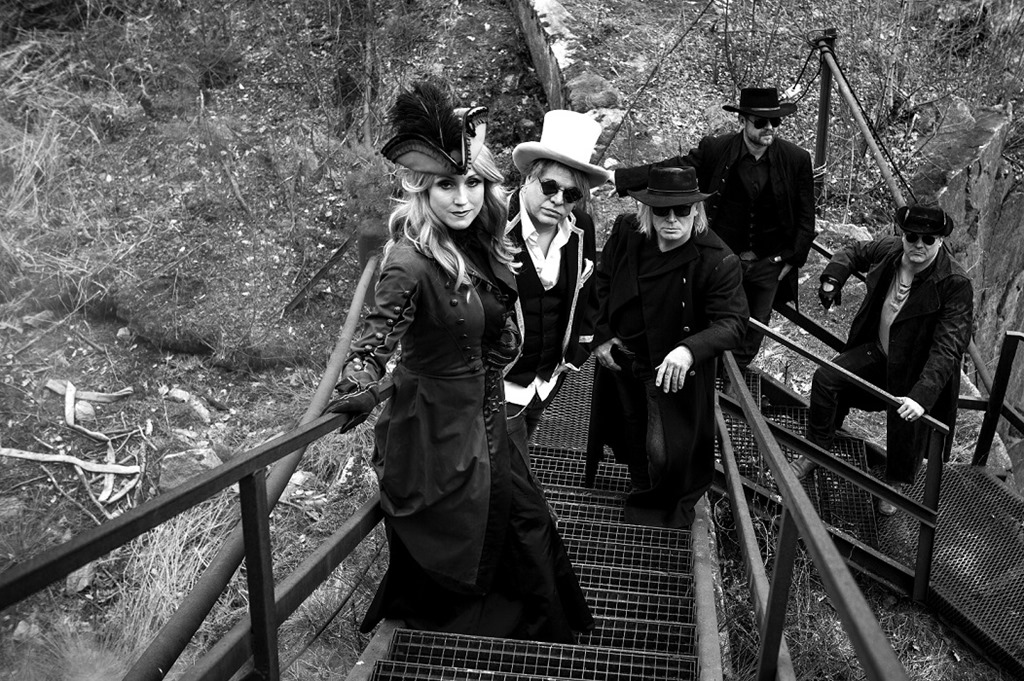
Prague-based gothic rock band, Cathedral In Flames presents their new single, ‘Release The Pain’ – a hypnotic ballad about coping with pain and death. Gatsby’s throbbing bass and Ambra’s angelic vocals complement Phil’s vocals about the contemporary unlearning of the perception of death and pain through social media.

Vocalist, Phil Lee Fall says,  “When the song was written, I was having a pretty bad time. I was taking long night walks through old Prague and I realized that all the people I meet are going to die sooner or later.”

And Gatsby adds: “’Release The Pain’ is a catharsis for our whole band. For me, there is so much emotion in this song that if it doesn’t knock you on your back, nothing will.”

A narrative music video was also created for the track, showing the band in the abandoned magical corners of Rudolphine’s Prague combined with the mystical hills above the contemporary city. Both sceneries are connected in the image and lyrics of the number 9 in various forms. 9 is the number of fulfilment, closure and completion. It also symbolizes the coming of age and the connection between dimensions and worlds on all levels.

Watch the video here:

AA

23ee6bd8-12b8-f634-756f-7ddb327adcb2

Lupus Lounge – 25th November 2022

Christopher Nosnibor

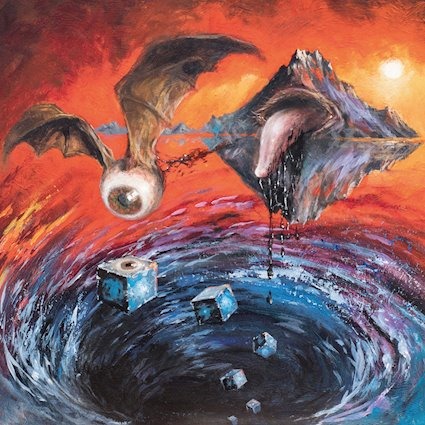
There’s catharsis and there’s catharsis. Extreme times heighten the tension and anxiety, and increase the urge to purge. This split release from Tchornobog and Abyssal – a truly international effort, with Tchornobog hailing from Portland, Oregon, and Abyssal representing the UK with their brand of Death/Black/Doom Metal that explores, according to Encyclopaedia Metallum, themes of oppression, and decay.

Tchornobog take this approach to catharsis and purging completely literally. As the press summary notes, ‘Any track opening with a multi-layered recording of a number of vomiting sessions is bound to continue on the darker side of the musical spectrum.’ And so it does, delivering on the threat / promise that “The epic song ‘The Vomiting Choir’ delivers 24:08 minutes that form a descending spiral into a bottomless pit filled with a mostly dissonant sonic miasma of pure negativity and surprising complexity.”

The sounds of regurgitation, guttural coughs and choking and spluttering echo on for a good minute and aa half before the band piledrive their way into an extended workout that finds them burrowing deep into the thick sods of the earth towards the molten pits of hell.

It’s relentless and brutal, and proper old-school: the lyrics are impenetrable and so are the guitars, as a thundering, grey blast of impenetrable distorted guitar blasts away hard and fast and dark and heavy against pummelling percussion, and delivered at a breakneck pace, there are rasping, dead walker noises. There are tempo changes, and mood shifts. And there is deep, dark, anguish and throbbing pain. ‘The Vomiting Choir’ is dark, dark, dark, heavy, and oppressive. Thirteen minutes in it feels like an eternity has passed, an entire album’s worth of anguish squeezed into an excruciating document of torture. But no: there is more, much more, as the next wave and the next movement crash in. For a moment, around the 14/15-minute mark there’s a feel of Joy Division being covered by a black metal band, and the piece drives on and on, ever harder, ever darker, toward the piece’s crushing conclusion with a heavy, throbbing riff of swirling hypnoticism.

Abyssal offer no relief whatsoever, not that you’d really want them to. ‘Antechamber of the Wakeless Mind’ could well be summary of my lifetime as an insomniac. There’s no chance of sleeping through this twenty-four minute barrage of jolting, jarring metallic rage, where everything blurs in a blizzard of fretwork and drums faster than an industrial knitting machine.

It’s a truly exhausting experience; after just five minutes of busted-lunch growling and wheezing against a screeding backdrop of mangled guitars and beats that explode like machine-gun fire, the experience is exhausting – but also exhilarating in the most primitive, purging, cathartic fashion. It’s an extended release, one that’s punishingly intense and physical as well as cerebral.

As a pairing, this split is truly harrowing, mentally and physically draining, dragging its way through the darkest depths.

AA

981549

Panurus Productions – 1st October 2021

Christopher Nosnibor

It’s a cliché to say ‘I don’t know where the time goes’, and it’s often, if not an outright lie, then at least somewhat disingenuous. Between dayjob work, school runs, cooking, other domestic chores, gigs, occasional TV, and writing reviews, it’s pretty obvious to me and most people who know me where my time goes. I know where my time goes. This doesn’t make it less of an issue. The fact I’ve been chipping away at this particular review for days, even weeks, adding a few words here and there, is testament to the time-deficient lifestyle. I can’t even quote remember where I was going at the start of this by the time of the finishing point, but ultimately, I suppose the point is that time is something that is ephemeral, fleeting, something of which we’re all too often acutely aware and are in thrall to and yet at the same time, it is simply a construct by which to structure our existences.

This split release on Newcastle cassette label Panurus Productions promises ‘two sides of bleak catharsis on this transatlantic split from Petrine Cross and Tower of Filargyria.’ And that is precisely what it delivers, with three tracks from each artist, both of whom scour the depths of darkness in contrasting and complimentary ways.

Black metal may have relatively modern origins in musical term, but its murky invocations speak of something altogether more ancient, and Petrine Cross has a way of transcending time and genre, taking the standard tropes and merging them with atmospherics so dark and dank as to blur to near-ambience. The muffled production values which are core to the genre are something not only embraced here, but utilised to create a distancing and a sense of ‘otherness’: this isn’t drums, guitars, vocals, it’s a dense wall of sound that envelops your entire being, and smothers the senses, stifling, suffocating, like a cloud of mustard gas.

There’s a point near the end of ‘Sobriquet’ where everything simply erupts into an explosive crescendo that hits like a bomb, and the sound is like mud, dirt, rocks and splintered body parts – being splattered in all directions from an immense crater. You’ve no idea of the song’s lyrics or real meaning, only the impact of this devastating moment. But there’s light. The third and final PC cut, ‘The Grecian Bend’ seems to offer glimmers from amidst the murk, with some delicate wisps and washes of sound. There’s a rare subtlety and delicacy about this that resonates on a subconscious level.

Tower of Filargyria, apparently referencing ‘the medieval term meaning love of money or silver, rail against their monumental namesake, produce three tracks of sample laden anti-capitalist black metal’. We have to take this on trust, of course, as what this manifests as is a blistering assault of guitars so trebly they hurt and snarling vocals with so much reverb everything clangs into a mesh of noise, the drums thumping away somewhere low in the mix like a pillow thwocking around in a washing machine.

Samples of lectures and speeches dissecting the beast of capitalism abound, and the semi-ambient opening to the third and final ToF track, the eleven-and-a-half-minute ‘Capitalfascist State Apparatus’ (no question about the sentiment / agenda there) works particularly well in the way it draws the listener in – which makes the ‘metal’ section all the more disappointing, being quieter, and of a very different sound quality. It feels more like a demo than a finished take – but for that, it’s true to black metal production values, and it’s one of those songs that gets better as it goes on, and builds and builds to a roaring crescendo of howled, raw-throated vocals and thundering percussion amidst a squall of guitars and feedback. It’s a real whorl of noise and comes on full-throttle, and this – THIS – is the release. It’s been a long time in coming.

Catharsis is hard to beat, but the downside is that it’s often hard to know how to manage the drop, the slump which follows – and it inevitably does. This split release is all the catharsis, and it’s one the listener can project onto and draw inwards from. It has immense (dark) force: the only slump is for the listener on the realisation that after forty-five minutes of immersion in the gnarliest, most painful depths of anguish, it’s over.

AA

cover

Rock is Hell / UNrecords – RIP 66 / unrec11 – February 2016

Christopher Nosnibor


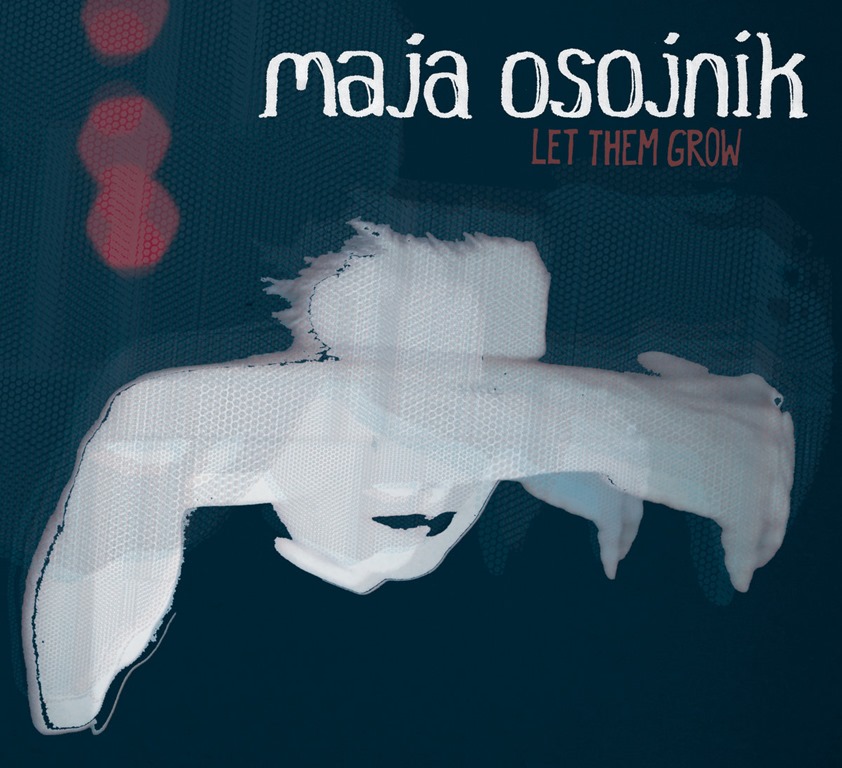
Maja Osojnik is an angry woman. A woman on the edge. A woman with inner strength. After 14 band albums, her first solo outing is a highly charged work, heavy with stark emotions and raw catharsis.

‘Tell me, what do you want me to be?’ she asks in an opium monotone on ‘Tell Me’. Slowly, her offers become more desperate and pained, her multiple voices speaking simultaneously before she slams it all down on the table, unable to maintain her decorum any further: ‘Ill become… all the images you want / so you can walk on me / sleep in me / so you can throw all your shit on me / Tell me, what the fuck do you want me to be?’ It’s chilling in its directness, its apparent lack of artistic distance.

‘Let Them Grow’ is one of those albums that hits like a punch to the solar plexus. It’s impossible not to laud the artist for her openness, her ability to convey so many painful emotions – but at the same time, it’s deeply uncomfortable. Listen, people who use terms like ‘TMI’ are, in the main, uncomfortable because they don’t like to face brutal truths, particularly those belonging to other people. On ‘Let Them Grow’, Osojnick pays no regard to these emotionally closed or stunted types and simply lays it all out there, telling it like it is, spilling her guts because she has no other choice. This isn’t simply music, this is pure art and the very definition of catharsis. Let Them Grow is a work of exorcism, of expulsion.

If you hadn’t already figured, this is a challenging work. ‘Condition’ is a full-tilt rant against a backdrop which amalgamates industrial noise and tribal beats. ‘Stick it up your ass… Come out, you rotten cocksucker, here’s your fucking POP SONG’ she hollers bitterly. And she fucking means it: this isn’t mere petulance, but a middle finger to an establishment and a wider world that’s failed and ultimately fucked up- and which doesn’t value the arts and doesn’t recognise the value of art. It’s a shame, because this is art.

It’s not just the music: I received the CD in its gatefold card sleeve enveloped within a four-leaf pamphlet type wrapper, accompanied by a sticker and five postcards of the artist beautifully shot by Rania Moslam in a range of striking poses. The whole package was in turn wrapped in a parchment paper bag. It’s about the artefact, the attention to detail, the building of suspense and expectation while gaining access to the disc itself, which, in turn, does not disappoint. This is not merely an album. It’s a grand gesture.

From the most subtle, delicate pieces, led by softly-fingered piano, she slowly drags out every sinew of anguish, draws on every drop of pain and presents real emotion. Emotion that can’t be faked.

Brooding instrumental passages offer moments of respite, but then there are sections of growling industrial noise, dark and sinister, grinding and crushing, which are nothing short of devastating. Taut, tense and from the heart, Let Them Grow sees Maja Osojnick present an album that is unparalleled in its sincerity and astounding in its emotional and musical power.

Maja Osojnik

Maja Osojnik Online