Posts Tagged ‘black metal’

Sacred Bones – 1st December 2023

Christopher Nosnibor

The unexpected and unannounced arrival of Khanate’s fifth album, some seventeen years after they declared that they were calling it a day, and fourteen years after the release of the posthumous Clean Hands Go Foul caused quite a stir in certain circles – predominantly those occupied by black-clad beard-strokers. Although this is very much a stereotype, I’m reminded of the time I went to see Sunn O))) at The Sage in Gateshead on the same night one of Cheryl Cole’s X-Factor protégé’s was performing in the foyer of the three-stage venue. Incongruous doesn’t come close, and suffice it to say, I wasn’t hard to tell who was there for the ultimate lords of drone-doom and who was there for the cheesy mass-market commercial cash-in shit. There were a lot of beards and leather coats.

The reason Khanate are such big news on the underground is that the band is comprised of James Plotkin, Stephen O’Malley, Alan Dubin and Tim Wyskida, and according to their bio, ‘Together, they make terrifying music.’ Between their formation in 2001 and separation in 2006, they managed to find time out from their main projects to record four monumental albums, and the release of To Be Cruel earlier this year came with the announcement of the reissue of all four, both digitally and physically. And so this brings us to the first of these, their eponymous debut.

The press release sets the expectation, for those unacquainted or unfamiliar, telling of how ‘The cramped corner of hell that Khanate takes the listener to, sonically and psychologically, has almost nothing in common with the doom bands that populate stoner-oriented music festivals across the globe. Khanate is doom as a foregone conclusion, as merciless atmospheric pressure, as a blunt object to crack you over the skull with, slowly, repeatedly, and forever.’

Having only released some demos and their debut ØØ Void, Sunn O))) had yet to really break by the time Khanate came out, and in some ways, they beat Sunn O))) to the mark on launching blasting longform drone to the masses, with an album that featured just five tracks spanning a fill hour. And their colossally expansive duration is matched every inch of the way by the sonic brutality.

The album arrives in a squall of feedback before intestine-crushing low-end chords crash in and grind hard, immediately unsettling the lower colon. Thew gnarliest, most demonic vocals shriek amidst the raging infernal wall of noise, dredged from the molten mantel of deep down below. ‘Pieces of Quiet’ is punishing in every way, but not least in that while its devastating, annihilative work is done after about five minutes, it pounds and grinds on well past the thirteen-minute mark.

In context, doom and drone had both crawled out of the depths a good few years before, and with Earth 2: Special Low Frequency Version in 1993, Earth had defined a new form of metal with what will likely stand for all eternity as the ultimate heavy drone work. And yet, these guys believed they could add something further to this – and they were right. Drums, for a start. And vocals.

‘Skin Coat’ is every bit as nasty as the serial killer enthusiast title implies, the guitars mangled to fuck, combining to optimal effect the snarling nastiness of the most blackened of black metal and the sludgiest, most gut-churning doom, with 23bpm drum crashes at the crawling pace of Cop-era Swans. It’s dark and its overtly unpleasant, snarling subterranean oozing tar-thick blackness which crawls like larva and destroys everything in its wake.

‘Torching Koroviev’ is simply a brief interlude which fleetingly opens a portal into hell, before the eighteen-minute ‘Under Rotting Sky’ brings what is arguably the definitive representation of Khanate, again, a squall of feedback prefacing a shredding wall of downtuned and overdriven guitar, billowing and thick with a sludge-like density. It is, of course, an absolute copy of the Sunn O))) model, but with demonic vocals echoing, anguished and wracked with eternal pain through the crushing mesh of noise. It’s fearsome, deranged, the crazed vocal screaming into the abyss. There is no rational or clear way of exploring this: it’s scary, and there is no other way to look. This is the final pulverisation, pacing the way for the album’s brutally dark last track. ‘No Joy’ is appropriately titled, and as heavy as it gets. I crawl, cracked, from the crushing drone experience and as long an hour as nature evaporates from my weary body Slowly the lack-hole darkness takes its grip and begins to crush the very life from my limbs.

This album is twenty-two years old. Yes: twenty-two years. And yet it hasn’t aged a day or even a second. While so much music – particularly rock and metal – has aged and sounds of its time, Khanate froze time when they came together, and the result was like nothing else – and still stands to this day.

AA

a0016720513_10

Following on from Marthe’s incendiary debut Southern Lord full-length, Further In Evil, released this October, she now teams up with †The Lord† (Greg Anderson) to release two brand new collaborative tracks, ‘The Eye Of Destiny’ and ‘Wisps of the Black Serpent’.

Marzia comments on this collaboration:

“Collaborating with The Lord was an exciting challenge, and something new, and stimulating to me. I don’t usually deal with such soundscapes and when Greg asked me to add vocals and drums to ‘The Eye of Destiny’, I accepted. The track was intended by Greg to be a tribute to Quorthon (Bathory), an artist who has been a huge influence on my moods. I had started to add in battle-drum beats, but soon faced the hard task of using words to describe what (to me) is the most talented artist of all time. How to contribute in words what I can’t even process in emotions?”

She continues, “There’s the person behind it, and along with the talent there’s the reality of the loss, since he’s not here anymore to witness the legacy of his sound. What’s left of his feelings on his blog, his emotions, his development as an artist and as a person and that spark in his eyes. The eyes are the mirror of the soul, we say. And I was reading some notes he left on a letter and it went something like "may the eye of destiny be wild with you and show you the right way through life". "The Eye of destiny" was an evocative image to me, to picture in my mind the aura of his memory, as a human being and a musical genius. As words are dominant in a tribute, it was impossible, in the most humble way, to find words for him. So, I took his own words: checked all the lyrics and made a caviardage of words that in the end composed a tribute in what I considered the most honourable way possible. I love the final result, it’s my small tribute to a musical giant.”

Listen to ‘The Eye of Destiny’ here:

AA

a2467399362_10

‘Wanderer’ is Këkht Aräkh’s first new music since the release of the highly praised album Pale Swordsman.

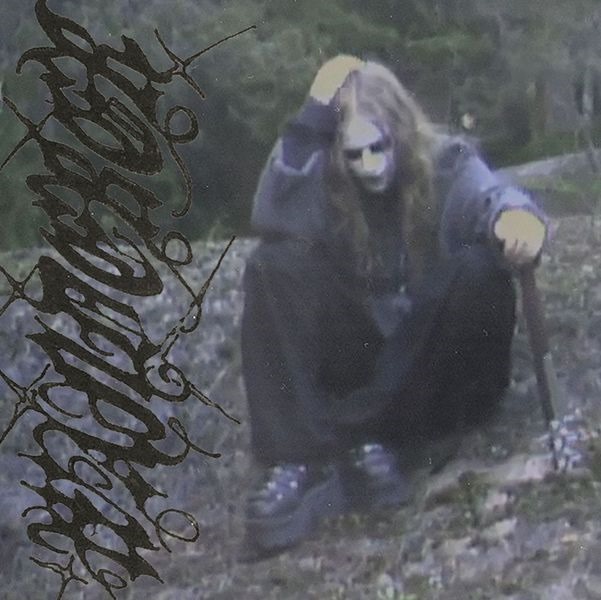
Of late, Këkht Aräkh has been a music project on the move. Originally from Ukraine, Dmitry called many places home, finally taking up residency in Berlin. So unsurprisingly, the themes touch on very real and personal experiences pertaining to the complexity of identity and belonging. His inner sensitivity, in the absence of and longing for a sense of home, is a physical one.

Sonically, Këkht Aräkh took inspiration from second wave black metal, as well as neo-folk, hip-hop, and nu-metal. ‘Wanderer’ is an evolution of sound but his signature melancholic atmosphere and escapist nostalgia are fully present.

Watch the video here:

Mirroring the artist’s life, the writing and recording process of ‘Wanderer’ was a nomadic journey in itself. Recording took place in two different locations – Berlin, Germany, and Espoo, Finland. Every borrowed guitar and impromptu studio session became a vital thread in the song’s intricate tapestry. Invaluable contributors also brought their unique elements to ‘Wanderer.’ Wanja from Mrtva Vod lent his raw drumming, and Chase, the Galrög from Lore Liege, played a crucial role in shaping the song’s brooding sound. Nick from IC3PEAK also provided a creative haven for the visceral vocal work.

The eerie tranquility of the Finnish woods provided the necessary space for Këkht Aräkh to breathe life into the song. Here, the finishing touches were added – the delicate keys and haunting vocals. The accompanying music video was also crafted in this setting, amidst dense forests and derelict churches.

The title, ‘Wanderer,’ is a nod to the well-known hook from Pale Swordsman; "Wandering in the night, Pale Swordsman." However, it’s also a reflection of Këkht Aräkh’s personal journey as an immigrant, perfectly encapsulating the essence of the song’s inspiration.

ZtqhIaVb

Avantgarde black metal outfit FARSOT unveil the first disturbing video single ‘Nausea’ taken from the Germans’ forthcoming fourth album Life Promised Death, which is scheduled for release on February 16, 2024.

Watch the video here:

AA

FARSOT comment: “The first video single, ‘Nausea’, which is taken from our forthcoming new album Life Promised Death deals with the radical realisation of nothingness”, vocalist X.XIX writes. “Within the absurdity of life we are like numbers without any deeper meaning. We are stuck in our roles and alienated from ourselves, which makes life feel surreal and sickening.”

67e3b9ae-a2f2-8142-0a9d-1b1d450433c3

Cirkeln, the black-metal project of the Stockholm-based underground musician known as Våndarr recently unveiled another from track his third album The Primitive Covenant, which is set to be released on November 3rd via True Cult Records.

“Writing this song was probably the most fun I’ve ever had writing for Cirkeln”, says Våndarr. “Usually, the process is quite laborious and takes a long time. There´s rarely a spark of inspiration that then flow naturally into the recording process. But, with the Witch Bell I knew I wanted to take a rawer approach to writing and recording. At that point I knew the mission of the record was to strip away and get down to the basics. I set up the recording as close to a live scenario as I possibly could in my living room-based studio. This meant that the drums were laid down first and then I tracked all the guitars and all the bass in one take for each instrument. There was no editing or refining of the recordings after the fact. There were rarely even second takes. I think this gives the song a sense of unapologetic ugliness and momentum. There was no click track, so the pace of the instruments is entirely dictated by listening to the drums. It’s not the tightest Cirkeln track – but to me it’s the one that sounds the most alive. I also wanted to experiment with incorporating a different vocal technique and style on this album – and the Witch Bell is one of the best examples of this. To me, this is the point where Cirkeln doesn´t allow itself to be confined by one idea of what Black Metal is. There’s more than one shade to darkness.”

On the follow-up to his critically second album A Song To Sorrow, Våndarr is once paying homage to the forefathers of black-metal, yet this time The Primitive Covenant sees the Swedish musician incorporating more elements of old-school thrash-metal, primeval death-metal and even punk.

AA

495aa846-642c-705b-6365-1a4eb637e1d3

1st September 2023

Christopher Nosnibor

Details around Scottish black metal act Euchridian and sketchy. They’re a trio, and the drums were recorded at a different studio from the rest of the instruments. And this is to the good. I don’t need to know, and ultimately, probably don’t want to know. What does it matter when they formed, where they live, what gigs they’ve done? The lack of social media presence is admirable: in the absence of corny posed photos and candid snaps and videos of them gurning away at their instruments, I have nothing to judge them on but the music and the enigmatic cover art. And a little enigma goes a long way.

The advent of social media has not been a great thing for many artists. Before social media, it was possible for the music and the record sleeves to represent, and promotion didn’t have to involve endless posts about pointless shit like pictures of the band’s takeaway delivery before a rehearsal. Social media says that bands now need to build a rapport with their fans, to interact, to engage, and frequently to keep them engaged. But acts like Sunn O))) and Khanate prove it’s possible to not do that and build an immense fanbase. Likewise, you won’t see JK Broadrick doing rounds of inane interviews, spouting pointless opinions on pointless subjects to flog a few more Godflesh albums, or GYBE raffling off drum skins and offering personalised hand-written lyric sheets for £75 or whatever.

Musicians by nature tend not to be as extrovert as the act of making and performing music may suggest – and there’s a world of difference from being a pop act with aspirations to performing arenas, to murky metal which channels all the pain and anguish of existence and is much less about reaching an audience than it is about having an outlet for all that shit.

Philia is, according to my light research, one of the four ancient Greek words for love, and compared to agape and eros, it’s perhaps the most obscure. This may in part be a reason for the choice for the EP’s title, but philia is usually translated as ‘friendship’ or affection, and this is what carries into the first track, the nine-and-a-half minute ‘Sweetness’.

Sweetness and black metal may seem unusual pairings, and sure enough, this absolute monster of a track. The guitar sound is quite bright, and it’s a solo riff that opens what starts a crunching slow-burner. The drums crash in slowly next, before Matt Davies’ manic mangled rasp of a strangled snake spitting venom enters the fray. There is a sense of pomp, a sense of ceremony, but above all, this feels maniacal, murderous, deranged and fucked up. The temp shifts here and there, and there’s the obligatory monster guitar solo, but it’s the driving riff that blossoms into something truly epic.

And on the subject of the truly epic, the second track, ‘The Rule Of Three’ is an absolute monster, clocking in at over thirteen-and-a-half minutes and built around a slow, trudging riff. The guitar may be bright, but it’s mangled as fuck and squirms in an agonised tandem with the raw, ruined vocals. Around the mid-point, it switches focus and embarks on a break that s beyond epic – but it’s not corny, either. It is, however, one of those chord sequences played in a way that makes you feel. And the it goes really dark.

Overall, Philia is properly nasty: this is the sound of a band fully committed to plunging the deepest depths of darkness, and ‘Philia’ doesn’t punch you in the guts, but pulls your guts out and squeezes them. Philia is full-on intensity, and hits where it hurts.

AA

a1811233614_10

Further In Evil is the debut full length from one-woman metal band, Marthe, which is due via Southern Lord on October 20th. An atmospheric and aggressive blend of punk, Further In Evil is a shift in gears from her musical background in the anarcho-punk scene and inspired by riot grrrl, crust and d-beat. The lyrics are full of rage and the music is full of strength; it has the power of Bathory and the sadness of Tiamat, tinged with the stench of Amebix.

Marthe is, at heart, a solo bedroom project— born out of introversion and a desire to explore new horizons and landscapes alone.  “Around 2012, I started feeling the need to express myself in a heavier and more atmospheric way,” explains Marzia, the woman behind the Marthe project. “I coincidentally started hiking more and more… getting closer to lonely soundscapes: my life, feelings and moods started being more introspective and introverted.” She continues, “Marthe suddenly became my comfort zone, my therapy, my shadow of loneliness, my book of truths, my mirror, my alter ego. Locking the door and disappearing in darkness recording music alone became something so powerful… I probably never really met myself before that.”

Further In Evil was composed and demoed over the course of a year during drives or hikes and, fatefully, the first look at the album – its title track – showcases the grandeur of Marthe’s surroundings.  Self-filmed and edited between Italy and Iceland, the "Further In Evil" video boasts the beauty of nature contrasted by Marthe’s devastating sounds.

Southern Lord have today unveiled a video for the snarling blackened title track, and it’s a monster. Watch it here:

AA

aLm2iwvu

Photo credit: Silvia Polmonari

Icelandic metal trio FORTÍÐ reveal the video single ‘Þúsund þjáninga smiður’ (‘A Man of a Thousand Sufferings’), which is taken from the forthcoming full-length Narkissos. Narkissos is slated for release on October 13, 2023.

The video ‘Þúsund þjáninga smiður’ depicts the endless cycle of bloody feuding that lies at the core of most Icelandic sagas and continues with usually less physical violence until today.

Watch it here:

Parallel to Narkissos, a 3CD artbook entitled Völuspá, which is featuring all three albums of the original trilogy will also be released. Each album comes with three bonus tracks and the book includes among other items introductions by Einar "Eldur" Thorberg Guðmundsson and Kári Pálsson as well as all lyrics in original language and English translations.

FORTÍÐ comment: “The title ‘Þúsund þjáninga smiður’ is a play of words, which is derived from the common Icelandic term ‘þúsund þjala smiður’; but instead of referring to a ‘man of a thousand traits’, we have changed it into a ‘man of a thousand sufferings’ here", mastermind Einar Thorberg Guðmundsson writes. "The lyrics are more abstract than the video. They revolve around mankind’s thin outer layer of civilization and the pure animal instinct that lurks beneath the surface. It takes little effort to reveal our true nature. The clear cut story-line of the video shows Icelandic farmers fighting over a piece of land. Such family feuds have been very common in Iceland throughout the centuries and lie at the core of our saga literature. Coincidentally, the farmer that so kindly lent me his fence for this video also had a very rough land dispute with the neighbouring farmer. I cannot go into the details, because it is still an ongoing court case that will hopefully get settled in a more civilized manner than what you see in this video.”

ed2c65bb-042c-bd83-1640-62385f1dd531

Testimony Records – 8th September 2023

Christopher Nosnibor

‘We are living in troubled times and it is hardly surprising that this is reflected in any form of art including music. On Mazzaroth, Sodomisery have spun a dark lyrical yarn about mental illness in society, religion, and the struggle of the individual, which is running like a red thread through their sophomore full-length. The Swedish melodic death four-piece are underlining their loosely conceptual approach with a remarkable musical evolution’, says the bio which accompanies this album.

There’s no misery like Sodomisery. At least, that’s what I’ve heard. For reasons I haven’t explored, while society has progressed – and I do mean this broadly and generally, being most aware of the fact that homosexuality and many things more widely accepted remain not only illegal but subject to severe punishments in a large number of countries – the word ‘sodomy’ carries brutal connotations which continue to hold currency in the circles of the

blackest of metal and industrial and power electronics. It’s true that Whitehouse’s Erector (with its blatantly unsubtle ‘cock’ cover) was released in 1981 and things have moved on a bit since then, but how much? Many of these bands are, as far as I can discern, less concerned with contemporary perceptions of anal penetration, whereby in permissive western society, it’s generally accepted regardless of sex or sexuality, and in pornography, it’s more or less considered essential, and more preoccupied with the harsh, perverse connotations of the writings of The Marquis de Sade – one of the few writers whose work still has the capacity to truly shock. And in this context, sodomy connotes the worst of sexual tortures, the infliction of pain, a statement of the ultimate power dynamics. It all seems appropriate given the band’s objectives.

This album had an interesting evolution, too: ‘When all the new tracks were written and pre-produced, SODOMISERY decided to create two versions of the album. One mix included keyboards and orchestration, while the other version had no such additions. After an extensive period of deliberation and many listening sessions, the Swedes decided that the new dimension and cinematic feeling added by the keyboards was exactly what their songs needed.’

Without hearing the two versions side by side, I’m in no position to comment, but the fact of the matter is that the keyboards certainly have not transformed this into some twiddly prog-rock effort: instead said keyboards are low in the mix but serve to fill out the sound with elongated droning tones against the relentless, thunderous fury of frantic fretwork and double-pedal drumwork that’s faster than the eye or ear can process.

There are some moments of such tunefulness that one has to take pause and breathe for a moment. We’re not just talking clean vocals or tuneful; there are moments, albeit brief, of outright pop sandwiched between the furious rage and overloading distortion. But rather than diminish the album’s power, I find myself respecting the band all the more. To have a softer breakdown in a song is one thing: to be so unashamedly clean and crisp and tuneful is bold.

‘Delusion’ balances all of the various elements nicely, coming together to forge a blasting yet grand and graceful dirty monster of a track which even packs in a heroic guitar solo near the end. Juvenile snickering ensues here with ‘A Storm Without Wind’, and I know it’s not funny and the delivery is entirely serious. Not least of all the lung-ripping bass that prefaces the throat-ripping vocals which snarl over guitars which alternate between old samples and snippets stolen from the present.

It feels scary, like being left alone on a platform and staring into the abyss. Any minute and it could retreat, and leave you falling into the void, and on the evidence here, you’d incinerate in seconds. Ultimately, we’re all scared. Mazzaroth is a worthy soundtrack to that fear.

AA

406169

‘A Cabin In Montana’, the glacial third single from Hexvessel’s Polar Veil album, is a paean to radical environmental advocacy and unflinching nature worship. Speaking to a “deeper sense of belonging” in the wilderness, ‘A Cabin In Montana’ draws from the eternal well of early nocturnal Black Metal, combined with hypnotic ritual chants and hypnotic synths and Hexvessel’s timeless themes of nature mysticism.

Main man Kvohst explains “You should all open this symbolic letter from a cabin in Montana. Step outside and get a deeper sense of meaning. Only then will life begin anew.”  

Watch the new video, suitably cobbled together from vintage footage taken from Canadian adventurer, Tommy Tompkins’ wildlife films of the 1970s:

AA

Polar Veil is released on 22nd September (Svart Records).

Hexvessel live dates:

22.9 YÖ-Talo, Tampere FI

23.9 Amplifest, Portugal

29.9 Suisto, Hämeenlinna FI

30.9 Kuudes Linja, Helsinki FI

6.10  Monari, Kannus FI

7.10  45 Special, Oulu FI

13.10 Dynamo, Turku FI

14.10 Torvi, Lahti FI

11/12/2023  Poznań Klub Pod Minogą PL

12/12/2023  Kraków Zaścianek Club PL

13/12/2023  Warsaw Hydrozagadka Club PL

14/12/2023 Vilnius SODAS2123  LT

15/12/2023  Riga Vagonu Hall LV

16/12/2023  Tallinn Kinomaja EE

AA

YhPCFq-w

Pic: AH