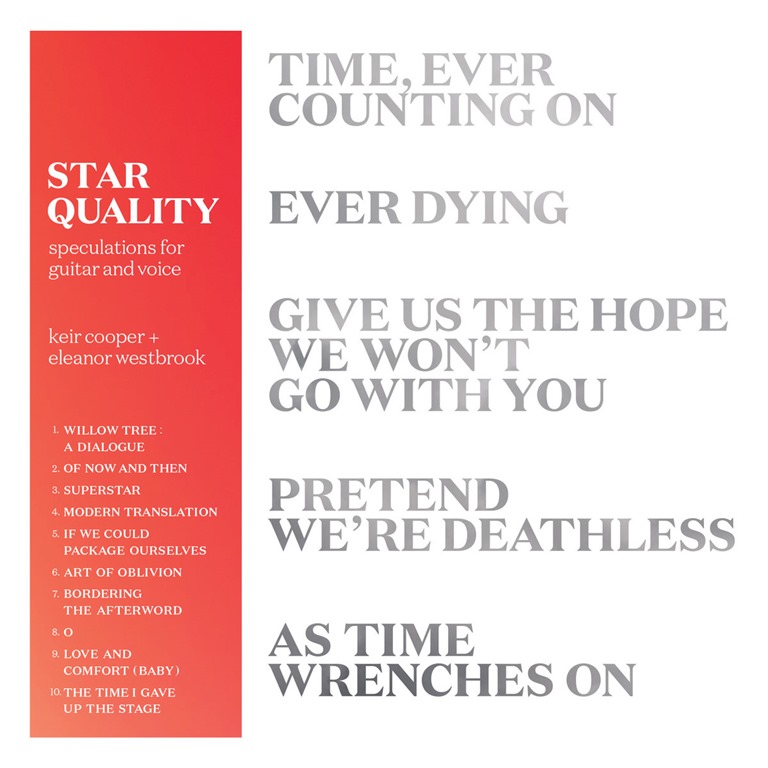
One way to tell an avant-garde musical work from its title alone is when the title provides a quite precise statement relating to its compositional nature. And so it is that this collaborative set of songs by Keir Cooper and Eleanor Westbrook are structured around guitar and voice.
‘Willow Tree – A Dialogue’ takes the interesting form of – perhaps not surprisingly – a dialogue of sorts, in which Westbrook’s adopts two contrasting modes of delivery, with a spectacular operatic aria juxtaposed with a spoken-word interrogation as a counterpoint. The effect is closer to a simultaneous internal monologue running across the song itself rather than a dialogue in the conventional sense. Meanwhile, the delicately picked neoclassical guitar is subject to interruption by clunks and distortion and occasional whirs and bleeps and the operatic vocal strays off kilter and the dream which drifted in twists and flickers with darker shades: not pronounced enough to be truly nightmarish, but unsettling.
The pair continue to explore the contrasts of melody and disharmony as Westbrook squeaks, squawks, trills, and purrs an infinite array of vocal gymnastics and Cooper’s guitar work, which chimes and treads delicately from folk to flamenco via classical streams, stamps on its own beauty with sudden and unexpected stops and stutters and forays into wrongness with stray notes and dissonance.
‘Superstar’ strays into the space which soundtracks a sense of derangement, the territory where things make no sense, and that place of incomprehension instils an unsettling confusion that borders on anxiety. ‘Modern Translation’ follows a similar trajectory: it’s a piece of magical neoclassical chamber music that’s twisted as if performed in an auditory hall of mirrors. Everything is wrong: something that should be soothing and beautiful is warped in a that it becomes unheimlich, eerie.
It’s hard to locate a touchstone or reference point for this: perhaps there are elements of later Scott Walker present, blended with hints of The Ex with its more avant-jazz leanings. One can only muse as to how they came to create this work: despite its clear foundations in the realms of classical and opera, Star Quality ventures so far from this path that it often bears little resemblance to any given style. The pieces evidently do have quite detailed and complex structures, as there’s nothing haphazard or uncoordinated about the way the two play together, but it’s impossible to decipher them from an outside perspective.
There’s a grand yet ethereal theatricality to ‘Bordering the Afterworld’, and ‘O’ soars and swoops and squeaks and whoops its way theatrically – and somewhat crazily – across some sprightly, if vaguely gothic-sounding guitar picking that suddenly, from nowhere, begins to buzz and thump. ‘The Time I Gave Up the Stage’ draws the curtain on an incredibly curious and as far off the wall as is imaginable.
Star Quality clearly has theatrical inspirations and aspirations, but shows two artists who are more interested in exploring their outer limits than taking the limelight in a mainstream setting – and for that, I applaud them.
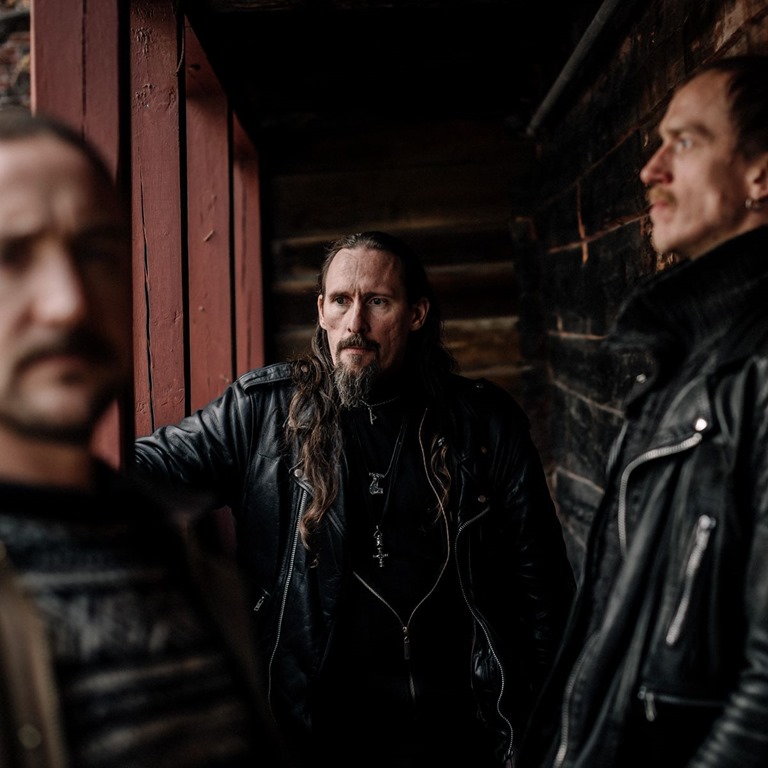
When iconic Norwegian vocalist Gaahl, revived TRELLDOM he did the only thing that could ever be expected from this exceptional artist: the unexpected. Hardly anybody could have predicted the stylistic shifts and the twists and turns of the forthcoming new full-length: …by the shadows…
A few weeks back, TRELLDOM opened their set at this year’s edition of Bergen’s Beyond the Gates festival followed the introduction via By the Shadows with the new opening track ‘The Voice of What Whispers’. This avant-garde jazzy yet relentlessly driving song conjured looks of confusion, fascination, and even rapture onto many faces in the crowd. Now the band releases ‘The Voice of What Whispers’ as the third single in the shape of an equally unexpected yet fascinating video. Who would have thought to see a Japanese horror style clip from a Norwegian band with deep roots in the black metal scene?
Neil Mackay is perhaps best known for contributing to Loop: having joined after the recording – but before the release – of their 1987 debut, Heaven’s End, he provided the big, solid bass grooves to Fade Out and A Gilded Eternity before they split in 1991. Loop all too often get lumped in alongside Spacemen 3, or otherwise as progenitors of shoegaze, both of which do them an injustice and ‘underrated’ would perhaps be the most appropriate descriptor for their legacy.
Mackay went on to form The Hair and Skin Trading Company, which, too, incorporates elements of drone and psychedelic rock. As Trouser Press outline it, following Loop’s demise, ‘Neil Mackay and drummer John Wills (augmented by ex-Savage Opera guitarist Nigel Webb) cribbed this unsavory moniker from an old warehouse in London and persisted in their efforts to rephrase Metal Machine Music as power-rock.
Having released four albums since their formation in 1991, the most recent being I Don’t Know Where You Get Those Funny Ideas From (2019), as well as a bunch of singles, EPs, and compilations, The Hair and Skin Trading Company continue as a going concern.
John Wisniewski caught up with Neil to find out about what he’s been up to lately, and reflect on a few moments from his lengthy career.
Editor’s note: some interviews, it’s appropriate to proof and tweak interviews conducted by email for spelling and punctuation, as much for readability as what one might sell as ‘professional standards’. But for this one, any substantive ‘tidying’ would feel invasive, and to strip out so much of the essence of the replies. It’s important that artists are presented ‘in their own words’, without being subject to any mangled paraphrases. When an interview reads like jazz, you let it play like jazz. And so this interview is presented more or less unedited, immediate, warts ‘n’ all, as they say.
JW: What are you doing now, Neil?
NM: Silent Invisible Radiation (SIR)
The Hair and Skin Trading Company (HASTCO)
Solo project
I have new album projects on the boil with all of them….
I am jamming regularly with Damon from SIR
And hopefully receiving and swapping more files from John and Nigel from HASTCO
HASTCO last album: I don’t know where you get those funny ideas from: released Sept 2019
SIR last album: Ventifacts : released July 2023 ….check that one out …2.5 hours long !!!
Occasionally I jam at the Vitaim S night at the Wine Cellar in Auckland central Monday nights ….( haven’t been for a while though ) ….Check that night out for some awesome improv / jazz / avant noodlings …. I want to and are planning to do much more live work …gigs etc ……
When and how did you join Loop?
I joined Loop in 1987 just before the release of their 1st album:Heavens End …For some reason the Bass player who played on that 1st album couldn’t be in the band anymore so I was one of only to people to apply for the job from an advertisement in Melody Maker …. The other guy apparently got really drunk when they met at the pub and threw up everywhere …..so I got the job lol….
Do you have any favourite bands?
too long a list
Can Stooges MC5, Moondog Sun Ra Peter Brotzmann , Faust , Einsturzende Neubaten, THe Pretty Things (UK ) , Steve Reich , Alice Coltrane , Arvo Part , Manuel Gottsching , Xenakis , Lee Perry , Dub Syndicate ,The Scientst ,Mad Proffesor, Wire , Sex Pistols, Joy Division , New Order, Aphex twin , Velvet UNderground , THe Doors , THe stranglers , the pop group, The Raincoats , Daniel Johnston , Butthole Surfers , The Clash , Dead Kennedys , Black Flag , Hunters and Collectors , Dplit Enz , Ths Stones (NZ) , The Rolling Stones ( US ) , THe Clean , The Chills , Talking Heads , Favid Bowie , Bjork , Captain Beefheart, The Residents , Sonic Youth, Brian Eno , Roxy Music , John Coltrane , Neil Young , Laurie Anderson , The Pixies , Public Image Limited , Devo , Pere ubu , Luigi Russolo , Boredoms , THe Beatles , Psychic TV , Throbbing Gristle , My Bloody Valentine , Nick Drake ,William Basinski, Beach boys , Elvis , Kraftwek , Swans , Neu ! Massive Attack , King Tubby , Mikey Dread ,Suicide , Alpha and Omega , John Zorn ,,,,,
I like any music really as long as its good !
It’s up to you what defines good
What was the concept for how Loop should sound?
Robert’s baby you should ask him …
Personally – live anyways I was trying to blast people through the back door …
Ridiculous we were too loud (sometimes )
I have really bad tinnitus now ha whatever ….
Why did Loop break up?
Burnt out I reckon …. I have read other band members give their reasons ….all good
i was gutted when we split ….but relieved in a way as well because it wasnt fun on tour at all any more ….
I remember when Loop came back from touring for 9 or so months …. I just wanted to chill out and reax at home …. But 9 o’clock came along and I got a huge energy rush of adrenalin and HAD to go out to a gig ……
When and how did you join up with The Hair and Skin Trading Company?
John the drummer from Loop and I wanted to keep doing music together I immediately contacted my old mate Nigel Webb ,,,, I had been in a band with him called Savage Opera …. We could never get a drummer to stay in the band ….. anyways Nigel is an awesome guitar player …. so walking down turnpike land one Saturday afternoon we saw a decrepid old factory that had a sign that said : The Hair and Skin Trading Company : so we thought that would be a great name for a band … that was it
Do you like jazz and avant-garde music?
Yes big fan ….. I worked at The Rough Trade shops in London for 17 years and used to hang out and buy records from Rays Jazz shop …..European and US jazz/ experimental music … I also love :world : music and have a large collection of Gamelan and African vinyl from labels such as Occora …Also like Dada (1920;s) environmental ,,,I was collecting Peter Brotzmanns label FMP …. Jazz wise IM more into the avant garde type weirdo jazz …..
Any future plans and projects, Neil?
I answered that in Question 1 ….
yes …..maybe thinking about coming to the UK for one more music blast ….
Getting older now at 60 ….
The tour with the loop re union was kinda fun great to see old fans / friends….
….
Could you tell us Neil, about your collaboration with Godflesh called Loopflesh?
And the double header tour in 2014 with Godflesh?
super cool tour ,,, we went into house in the woods and did the cover for the excellent label clawfist ……We were all freinds it was a great time ,,,,, that was a great tour apart from that ….thats it ……
The Shoegaze and psychedelia movement was much maligned, but seems to be experiencing a Renaissance. How do you feel about this?
At the time shoegaze wasn’t a expression we used ….. it was used by the press to get >something? going ….Psychedelia is a better expression ….but yeah all good ….. Im not up on new bands but Im up for new bands / music …always ….who are good in this field now ,,,( answering a question with a question )
Gintas K is possibly one of the most-featured artists here at Aural Aggravation, and I’ve written about his work elsewhere, prior to establishing this site. I’ve often commented – sometimes flippantly, sometimes in sheer awe – at his rate of output, but it seems appropriate to make the observation once again, since a little while ago I found myself simply swamped and a shade overwhelmed by the volume of submissions I was receiving. Electroacoustic Space Drumming landed in my inbox and I failed to so much as open it, let alone download it. Then, Outsider’s appeared, reminding me I was behind on things, only to discover that a split tape release with Jacob Audrey Taves had come out in between the two.
The first of the releases, Electroacoustic Space Drumming, comes courtesy of London label Anticipating Nowhere Records, as a download and limited cassette (in an edition of 20, more than half of which have gone already).
The titles are incomprehensible to me, but I very much doubt this will make any difference to my appreciation of this jangling, bleeping glitchfest. The six tracks do very much sound like a circuit meltdown, the digital xylophonic cadences interrupted by sudden jolts or sound and stuttering microbeats like an Action Man marching band trapped inside a jam jar half-full of water. Creaks, groans, and splashes abound and contrive to create a complex and layered work.
It’s difficult – if not impossible – to unpick everything that’s going on, and consequently, you simply sit back and let it wash over you. But that doesn’t mean it’s comfortable, or easy to do so.
And then there is Outsider’s, with its questionably-placed apostrophe in the title. Outsider’s what, precisely? And with twenty-three tracks, released digitally and as a colossal five disc CD work, it’s an absolute beast.
The five CDs make sense in a way which is less apparent on the digital release, as there are essentially five segments or suites, with the tracks belonging to each names with a suitable prefix: jazz, crunchy, noise, drones, and piano stuff. Each contains between three and six pieces, effectively an EP’s worth apiece.
In truth, the track titling isn’t especially helpful: the six tracks of the first set, ‘jazz’, and entitled ‘jazz good’, ‘jazz also good, jazz prolongation’, ‘jazz’, ‘jazz’, and ‘jazz.’ Spoiler alert: there’s nothing especially jazzy about the ‘jazz’ cuts, but there’s electronic percussion that cuts through foamy bubbling washes and a disarray of oddness that sounds like machine gun fire, and glitches aside, it almost feels co-ordinated. And no-one needs a jazz prolongation, although this decidedly unjazz cut, we can forgive.
The four ‘crunchy’ cuts are riots of bleeps and squips, a riot of sound that’s no more vigorous than on the first, ‘crunchy.geras greit.’ The two pieces simply entitled ‘crunchy’ combine haunting, hovering tones, and collapsing circuits and lurching synaptic stutters, like exposed wires sparking as they swing, and things become increasingly scratchy, scrapy, a frenzied buzz of fractured, fizzing, fucked electronics.
The three ‘noise’ pieces build in their noisiness, but at heart aren’t all that dissimilar from the ‘crunchy’ pieces, although perhaps quieter and less overwhelming, and overwhelming it is. Then again, the ‘drone’ pieces aren’t especially droney, and more represent explosions of frothing discord, and the final suite, ‘piano stuff’ is a cacophonous conglomeration of bubbling noise down a drain.
These recordings remind me of my early days of reviewing, back in 2018 or so as my introduction to truly avant-garde, experimental electronic works, and Gintas K – perhaps one of the first acts I discovered as an exponent of dripping, bleeping, weppling, weirdness. All this time later. he’s still proving to be a rare master of electronica. Come 2024, and Gintas K is still right there at the forefront.
When it comes to being a music writer, for me, at least, perhaps even more of a buzz than getting advance listens of the most eagerly-anticipated releases is being exposed to music I otherwise wouldn’t have. And the nature of the avant-garde means that you have to be in the know to know. Being introduced to the Unsounds label and the work of Yannis Kyriakides certainly opened my eyes – and more so my ears – to a whole expanse of music I assumed must exist, but would have had no obvious means of locating or accessing while going about my ordinary life before.
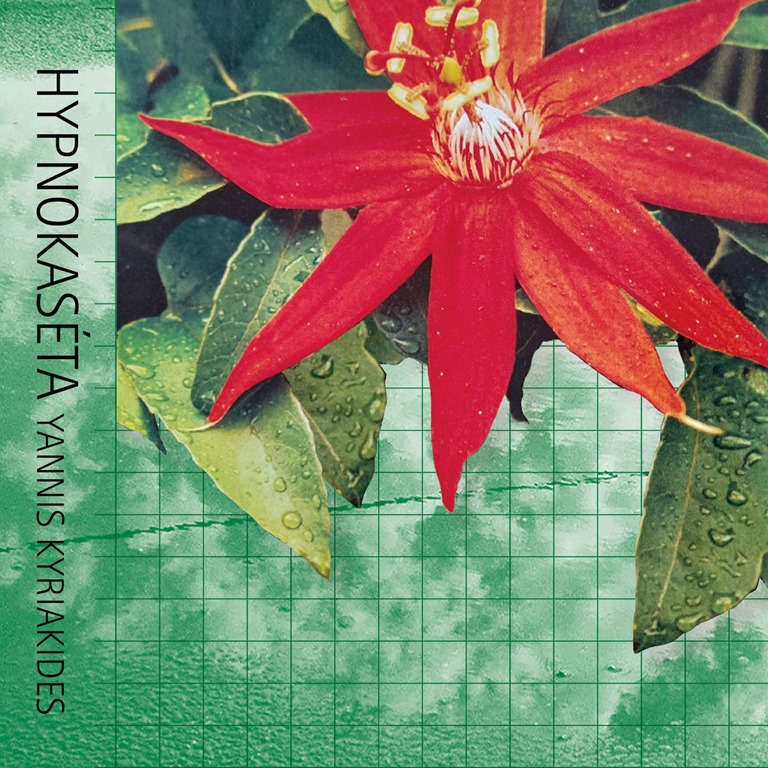
Although I’ve only dipped in and out of Yannis Kyriakides’ output, more as one with a casual interest than a fan per se, his work has never ceased to impress with its range and constant questing for something different, something new, both sonically and methodologically and “Hypnokaséta (2020-2021) is no exception.
Kyriakides’ introductory notes explain both the concept and the practice behind the recording of the album: “Hypnokaséta (2020-2021) is a continuous set of 16 pieces for string quartet, improviser (playing cassettes and any instrument) and live electronics. The source material is based on dreams that I had during the first few months of lockdown, April-June 2020. Accounts of these dreams are encoded in the music that is played by the quartet and also encrypted in the sound textures that surround this.
“The pieces alternate between quartet as the foreground and electronic interludes, where solos or duos underpin the soundscape. The title of the piece (Greek for ‘sleep-cassette’) refers to a theory of dreams proposed by Daniel Dennett, that says that dreams are loaded into consciousness like a cassette tape during the night and played just before waking.”
It’s longtime collaborator Andy Moor who provides the guitar and tape work on these recordings, and together with Kyriakides’ electronics, which move between shuddering skitters and unsettling scratchiness and quite abstract sounds, when juxtaposed with the strings – which span playful to mournful to droning discord.
The sixteen pieces have been mastered as six separate tracks, but they flow as one immense composition in a continuous state of transition. Within each of the six numbered tracks, the individual segued pieces bear titles, with their time markers also noted. The titles present, if not strictly a narrative, then a guide to the theme, the idea, the inspiration.
‘Hypnokaséta I’ comprises ‘The government’s new cultural scheme’, ‘All roads to the airport are blocked’, and ‘Everyone is nervous, everyone is lost’, titles which serve to encapsulate the events and the sensations they engendered within the populace at the strangeness and uncertainty of lockdown.
‘Hypnokaséta III’ is a stunning work of contrasts, containing as it does the gentle, almost light-spirited string-led ‘The reluctant hotel manager’ and the dramatic, jarring ‘She lifts the mountain’, a dark, alien drone brimming with electronic tension that crackles and tweets. The rapid switches in mood and form recall the sudden and wild extremes I experienced myself during this time: it was impossible to keep up with the constant stream of developments in the news, while at the same time entrapped within the confines of the house, where the world outside felt so very far away, while also having to accommodate the changeable and diverse headspaces of friends, family, and colleagues. No-one knew what the fuck was going on, or how to cope.
There was an air of unreality about it all, and at times it became difficult to distinguish between the bewildering nightmarish reality of the wakeful hours and bewildering nightmarish sleep, and in drawing on dreams in the creation of Hypnokaséta (2020-2021), Kyriakides captures the essence of that abstract space forged in the mind where everything blurs. This blurring and abstraction is also reflected in the titles: ‘The concert promoter complains that not much happens in the piece’ sounds like something that could happen in one of those self-reflective semi-anxiety dreams, and ‘Bridges are being dismantled
across the city’ has an apocalyptic sense of separation, while ‘Body swap opera’, ‘Swimming pool synthesis’, and ‘Mutations on an empty grid’ are altogether more surreal in their connotations.
Throughout the album, the lister is jolted from a moment of tranquil reverie by some abrasive thud or rasp, an unexpected spike in volume, and a turn towards an altogether more disquieting atmosphere.
The composition is nuanced, the placing of the switches and transitions perfectly timed to achieve optimal impact, never allowing the listener to truly settle, to relax, to sit back and enjoy, and the moments of tension are indeed tense; but credit must also go to the performers: the strings are played with a keen awareness of the importance of both dynamics and detail, and Moor, in his capacity of ‘improviser’ brings texture and tone delivered with an infallible intuition. The album’s structures may be subtle, almost invisible, but they’re affecting, and as a whole, Hypnokaséta (2020-2021) is an experience which permeates the psyche in unexpected ways.
Ordinarily, interviews on Aural Aggravation are run with titles which serve to encapsulate the contents in half a dozen words. This is an interview where that simply isn’t possible.
Since Nocturnal Emissions came into being in the late 70s, emerging from the experimental / industrial scene which evolved after Throbbing Gristle broke ground first tested by William Burroughs and Brion Gysin, they’ve existed in various forms, often as much known by reputation as by their actual work, which is nigh on impossible to pin down or pigeonhole. For most of their career, Nocturnal Emissions has been the solo vehicle of founder Nigel Ayers, who has come be a pivotal figure in the field of underground and experimental music – and beyond, working in a host of media including film and text, with a number of books since the turn of the millennium: The Bodmin Moor Zodiac (2007) is a characteristically quirky example of his wide-ranging interests which include psychogeography and occultism. Then again, any summary would be to omit so much as to misrepresent his divergent eclecticism. And then there are the countless collaborations… John Wisniewski was fortunate to pitch some questions to Nigel about his lengthy career, his influences, and current and future projects…
When did you start experimenting with sounds, Nigel?
I must have been aged 13 or so. Actually, I was experimenting with sounds in the form of soundtracks because had happened is my dad had this very old-fashioned format camera, it was called a Standard 8 camera, which was a kind of silent home movie film that preceded Super 8.
So, it was this kind of film that you could run twice through the camera, and it had large sprocket holes like 16mm, that was the difference between Standard 8 and Super 8 film. So, he’d bought this camera and he’d been using it to film his work in schools and as a youth club leader, but this camera was lying around. And when I was 13 or so, I was watching these experimental films on TV, and I’d been watching them in black and white, but there was things like the Magical Mystery Tour by The Beatles and then there’d be segments like “I am the Walrus”. These very early rock videos, were extremely surreal. And then there was a TV programme for kids called Vision On, there was sort of experimental animation on there. And then also there was Monty Python, where there was Terry Gilliam’s cut-out animation going on. There wasn’t the easy access to visual culture you get these days, but I had been exposed to and absorbed this kind of aesthetic and I was just looking at these ways of manipulating film. And I realised this camera, you could do stop-frame animation, you could also run multi-layers of film together.
Now, these techniques of layering and stop-framing and getting into individual segments of imagery are really what I used later when working with sound, because I was aware of how the context and meanings of images and sounds change through overlay, almost randomised factors, which could lead to an exploration of something which was intrinsic to the medium. Or intrinsic to memory, a memory of imagery and how imagery is imagined and restructured within our minds and within our culture. So these ideas, I was exploring film at a very early age, I mean, I’m talking like age 13 to 16. Meanwhile I was having a very conventional school education, really. This was not the sort of thing I could do at school.
I also acquired this reel-to-reel tape recorder, which was like another sort of cast-off that had been bought for some purpose, and it was an old-fashioned technology by then. Of course, it was this very solid mechanical thing with a manual sort of gear, that you could change to make the tape go backwards or forwards or rewind.
I think it had different speeds on it, I used this later on the raw material that went into the first Nocturnal Emissions records.
So yeah, I was exploring these sort of overlays of memory, I suppose. And I wasn’t really able to articulate that in words. Now as an adult, as an elderly adult, I can articulate this in a way I couldn’t do as a teenager.
But then I got onto a foundation course in art school after being thrown out of school, really. Excluded from school, really, it wasn’t an environment I fit in with very well.
So I went to do a foundation course in art and design, and the thing that I really warmed to was, they had this studio set up to do “light and sound”.
And in there they’d got, oh, I don’t know if modern people will understand this technology, but they had slide projectors, which could be synchronised to a reel-to-reel tape. And this reel-to-reel tape was a four-track TEAC tape recorder, routed to four speakers in this darkened room for a quadraphonic surround sound experience.
And they had a Revox in there, which is a two-track tape recorder. That’s something which you can, when you know the technique, do tape echo on. Wonderful machines.
And also I think I had the loan of a cassette recorder, I was recording incidental sound from the TV. I was recording children playing. I was recording dogs barking, and constructing this into sound collage.
We were making handmade slides, it was a sort of technique that was probably used by the Victorians in magic lantern shows. These are very high contrast slides, that I made anyway, and hand-coloured them with overhead projector markers and with coloured acetate. And I sort of made this scenario of, a sort of an alien civilisation, but it was really close-ups of the insides of a vintage and broken radio, with these parts of toys inside it. It was Bela Lugosi as Dracula and Boris Karloff as Frankenstein. These heads from Revel plastic kits that my brother had made years ago and then lost interest in, these parts of plastic toys. And I was constructing this sort of miniature city and then sort of overlaid in that city.
I had made these sort of, these non-functioning machines, but like science fiction devices,
A projection from the wartime era, rather than steampunk. Yes, that’s what it was. From the era of electronics, not the era of steam.
And I made this elaborate sort of titillation machine, which a friend of mine, she posed on it and as if she was pleasuring herself on this very strange sort of dynamo construction with loops of wires and coils and high voltage fuse boxes and transformers. And this was superimposed against these miniature sets.
I suppose it was like probably a DIY version of Fritz Lang’s Metropolis, but with this sort of different surreal sexual-mechanical angle that I gave it. So that was actually a quadraphonic sound installation that I did when I was 16, 17. So I sort of continued experimentally making films.
And so the sound that I worked on were to do with film installations and to do with, I suppose, visual art more than anything else. But all the time, I was DJing as well though, as at school, you know, I ran the school record club and I was at art school, I was DJing at events for the student union. I had very strong likes and dislikes in the way of music.
And also I knew some songs, which are dance songs, which would work. And I think very early on, I developed a very deep affection for reggae music. And that was going back to late sixties, early seventies anyway.
So yeah, so I was experimenting with sound ages 17 in art school anyway. So, but I didn’t have any equipment of my own, so to speak.
And so when I graduated and was out of that context, I started acquiring instruments. d I think the first thing I got was a cast off electric guitar and, a Watkins copycat echo, which I messed around with.
I found I used to cover up the erase head so you could get these endless loops building up on it and just gradually kept acquiring sort of sound manipulating equipment. And I bought a synthesizer in 1978. I bought the Korg MS-10 in Sheffield, you know, from the same shop that the Human League probably shopped in and ABC and Cabaret Voltaire shopped in.
And quite soon after buying this synthesizer, I was talking to Mal out of Cabaret Voltaire. I think it was at a Pop Group gig in Sheffield. And he invited me to use his studio, which was very good because I didn’t have access to that sort of thing, but I had some ideas that I was working on and not quite sure where to take them.
But then I got invited to London to stay with Caroline K. She was finishing a degree course and I’d met up with her and she’d seen that I got this synthesiser. And she wanted to install this sine wave, this sort of constant hum to be playing in this exhibition she’d done with some very austere black and white photographs of this house she was living in.
And the photographs all had different captions on which made you think different things about this location, was making it into the site of murders and various other fictional things for this exhibition. And with the sound, I think she was trying to give it a disturbing edge to it.
The place that she had photographed was actually quite a disturbing place and quite disturbing events happened there, but this was unrelated. This was probably what was at the back of her mind when she was thinking about this installation.
What did you hope to accomplish through your work with Nocturnal Emissions?
Well, what I wanted to accomplish was to get my inner visions out into the world somehow.
And at the time, it seemed the easiest way to do this was through the format of an experimental music group. Because I couldn’t see the experimental films I was doing being screened at any cinema, because they were too abstract, to fit in that context. And what was trying to do was like a live improvisation between multiple layers of projection, and multiple layers of sound.
That’s what Caroline and myself were aiming for, really. Caroline was always focused on soundtracks, and that’s reflected in her solo album, Now Wait for Last Year”, the track titles are named after Tarkovsky films, and it’s got a very strong John Carpenter influence going on there, as well as an Ennio Morricone influence, and as well as the radiophonic workshop influences that were going on.
What I want to accomplish through my work, though, was to get these inner visions, these inner sounds and visions out in the world, and to share them with the world, really. I just want to sort of bring things out, because I thought what was happening in the world of music in the early 80s didn’t exactly reflect my preoccupations.
I did want to get a political idea over, and a sort of an altered reality over, as well, because I think by deconstructing and restructuring reality, we get a better perspective of what’s going on, and we can see that other worlds are possible, and it’s possible to make the world into a kinder place, and a more compassionate place, and a friendlier place, and a more beautiful place than it is at the moment> That’s really what I wanted to get over in the music. I know the very early music was quite harsh. It continues to be quite harsh and abrasive occasionally, but I think that’s a way forming focus and dramatic tension within the work.
Tell us about forming the label “Sterile Records”. Who are some of the artists that you collaborated with?
I get the impression that when [people] form record labels, they have some sort of financial backing and they might also have some kind of business sense. That certainly wasn’t the case with me.
When we put our first Nocturnal Emissions records out, I was living rent-free because we were squatting. I had to do a lot of house maintenance to keep the place a bit habitable, but the housing and space costs were near zero, and I was in the middle of London, and so it was quite good for venues and things like that. I didn’t have transport.
I was working as a cleaner. Caroline was working as a library assistant, and we scraped together… What was it? Maybe it cost £1,000 to put out 500 records back then.
Whatever it was, we scraped it together, and I think we went into an overdraft to put together this first record. We didn’t have the equipment to do it on, really… We went to evening classes and used their equipment and borrowed instruments from friends and neighbours.
Vicki Aspinall out of the Raincoats was a neighbour, and I borrowed her electric violin. I don’t play it. I created sounds with it, on Tissue of Lies.
We hired a four-track and a two-track reel-to-reel to mix down onto for one weekend, we initially intended to make a single, but it worked out we could do an LP and give better value, and probably get more money back from doing an LP than we would do from doing a single. So that’s why our first record was an LP, Tissue of Lies.
Within months from doing Tissue of Lies, we’d actually made some money on it, and so we thought we’d do another record. The plan was just to carry on with what we were doing… after we’d done Tissue of Lies, our technical skills had improved, and we were able to do more, and we were getting. it to sound more like we wanted things to sound Our craft skills improved, so we wanted to do another record.
And then Maurizio Bianchi (M.B.) got in touch with me from Italy, and he wanted to pay me to put out a record on my label, but I didn’t have a label. I had just done one record, and I’d done a compilation cassette, which Maurizio had been on, about a year previously. I’d been in contact with Maurizio when we put out cassettes before Nocturnal Emissions, before we did any vinyl.
Maurizio wanted to put out 100 records, I was going to the pressing plant anyway, and it looked like I got enough money to add to make an edition of 250.
We could call this the start of a record label, I suppose, that with Fruiting Body, the second Nocturnal Emissions record. That’s how Sterile Records actually happened, really, what sort of started me made me open to the idea of it being a label.
But I mean, as a label, you know, people assume you’ve got money behind your venture, and you’ve got an office. But we didn’t even have any transport. A few hundred records would arrive at our house from a van.
But then getting them to the numerous record shops that we sold through in London, … I had this sort of shopping cart like old ladies have, you know, with wheels on it. And I’d go on the tube or on a bus and deliver boxes of records that way…. it was the most basic, crudest, cheapest DIY-est way you could operate a record label.
It was operating an absolute shoestring budget. but, you know, we sold a few thousand records this way, and it created quite a lot of interest and influence, I suppose, within that sort of very small, tight, obsessive community, which was the early industrial music world.
So we were gigging around London, and I think our first gig we actually played with anybody who was doing anything in a similar vein was with SPK. SPK asked us to play with them, and Brian Williams came along to it. He was a big fan of SPK’s and later joined SPK.
He was making his own experimental noises up in Wales, quite different to what he’s doing nowadays (nowadays he’s a Hollywood sound designer). His very early music sounded like train sound effects records, really, with this sort of ring-modulated vocal shouting over the top of them. But he sent me this demo cassette, so I said, ‘oh, let’s put this out’.
Let’s do a Lustmord cassette. And that did okay, I suppose. So then we did a Lustmord vinyl album, and I actually hired a studio for him to come down and record that.
And he invited… his friend from Wales who was called Nigel Dunster, and he also invited this other guy who was like a mutual friend correspondent, who was Geoff Rushton, who later changed his name to John Balance of Coil. He was involved in this first Lustmord album that we made, around the time he was involved in the preparations for Psychic TV.
And, yeah, I suppose…
Yeah, who’d we collaborate with? Well, quite a lot of people… you have to go and look at Discogs, and you’ll see who we put out on Sterile Records.
Yeah, we’re trying to develop something. I was going to do one of the first Portion Control records I was going to put out, but then they got a better deal with somebody else, and they got to do a tour with Depeche Mode.
So I didn’t do that one. And a band of Holy Joy was going to do a record with. I had that on a compilation.
Who else? Lustmord. Control Bleeding. And Nurse With Wound, but I rejected what they gave me. We were friendly with Bourbonese Qualk and collaborated with them on a few things. And helped one another out…… these were our friends who we hung out with, these old-school industrial people.
Who are the composers and recording artists who have influenced your work?
The big one would be, way, way back, the big one would be Captain Beefheart, and especially Trout Mask Replica.
That sort of field recording like a reconstruction of music. By this possibly crazy outsider artist, an incredible piece of post-blues music/ come field recording and it just conjured up a different, expressionistic, freeform natural world.
That was a big influence. Another big influence was the work of the BBC Radiophonic Workshop. I’m talking Delia Derbyshire and Daphne Oram.
There were quite a lot of women involved in this early electronic scene, and it seems they weren’t really credited at the time. They were quite important. The way they talked about putting sound together.
From loops and from music concrete. That’s the way it went in radio plays. Which they were doing soundtracks for.
And for TV work with things like Doctor Who. Some very strange children’s TV that was being made in the early 70s.
Ennio Morricone.
Just the beauty of those westerns. Those really operatic works. The good, the bad and the ugly. Beautiful, beautiful, beautiful.
I’ve got to say that almost all the music I’ve been exposed to has influenced the work. But I have to say very early on I was very black and white in my likes and dislikes. It was intense love or hatred, not by genre, but by individual pieces, I think that might have got in the way of some enjoyment sometimes.
Tell me about your work with digital sound assemblage.
I was talking about the way I constructed the films. In terms of overlay which changes the context of what lies beneath. The altering of speed and pitch and timbre. And time and space manipulation. Looping. And getting into the basic building blocks of sound. And. messing with it, Improvising with it. And editing it in such a way that it becomes something new that feels beneficial and healing.
And interesting and stimulating. That’s what I’ve done over the years. And nowadays I’m working digitally – largely. I’m out doing field recordings all the time. I use real instruments some of the time… I think with Digital sound you can do so much. And so.
I just like the way it’s gone actually. Because the way it’s been.
The access to. I’m not precious about technology, I’ve grown up. In an analogue world.
Of analogue tape. And analogue film. And analogue loops.
And I continue. To use some of that technology. Certainly the things you can do with analogue film which are impossible to do digitally.
Do you listen to genres such as rock or jazz music?
I don’t really listen to radio or streaming services, I tend to go to live music events as much as I can, and play CDs I’ve bought, rather than other people’s selections.
So these are some titles in a rack on my wall…
Bo Diddley. Donovan. Captain Beefheart.
Gavin Bryars. James Brown. David Bowie.
The Blind Boys of Alabama. Black Grape. Count Basie.
Asian Dub Foundation.
Johnny Cash.
The Bollywood Brass Band.
Sinead O’Connor.
Brian Eno Michael Nyman. Moondog. Thelonious Monk.
Andrew Lyles. Lead Belly. La Düsseldorf. The Unthanks
The Kinks. Daniel Johnston. The Human League.
Gil Scott Heron. Richie Havens. The Beatles.
The Fall. The Velvet Underground. Penguin Café Orchestra.
Nico. Lou Reed. Lou Reed’s solo work.
Lou Reed’s ambient work. Miles Davis. Bob Dylan.
Everything by Dylan. Wreckless Eric.
High Voltage. Flashpoint. 20th Century Experimental Electronic Sound.
The Bundu Boys. Gregorian Chants.
George Formby. The British Sixties. These kind of things.
Any future plans and projects, Nigel?
I’m preparing to do more live performances because involving more of a physical presence and more spoken word. I don’t want it to be an anonymous figure hiding behind a table while a film goes on in the background. It’s to do with spoken word and it’s to do with interaction and it’s quite pleasurable, dance orientated and dare we say quite funny what I do, I suppose.
And also, I’m trying to bring a bit of joy into this world. A joyful foundational industrial practice. And I’m also producing paintings.
I’m painting a lot on canvas and I’m writing and I’m keeping very creatively busy in these elder years. I hope to be performing all over the place, really. I’m putting out the vibe that I’m available for gigs anyway.
I’m available for live performances and I’m saying yes to a lot of things I probably wouldn’t do before. I’ve been performing in the UK which is very different to me because I very rarely played in the UK. So, yeah, I’m just making myself available and I’m saying yes to things, I’m writing, I’m doing spoken word performances and things like that if anybody’s interested in booking me for spoken word performances.
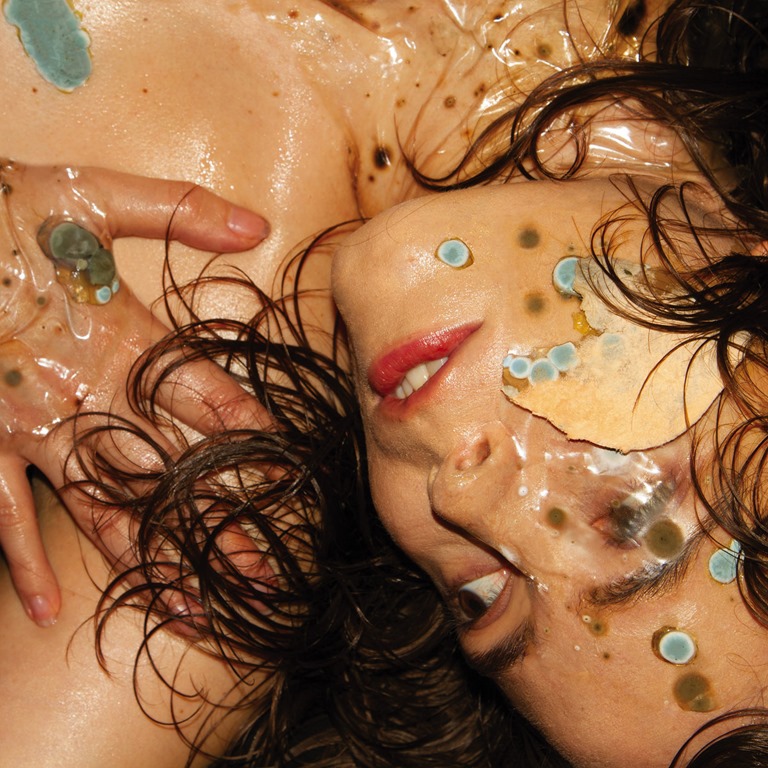
Ah, that difficult second album. Kee Avil set the bar high for herself with her debut, Crease, two years ago.Crease was a highly experimental, boundary-pushing collection of compositions, which was as challenging as it was entertaining. But the trouble with setting out one’s stall in such a fashion is that you can’t retread the same ground, you can’t do the same thing twice, you can’t repeat the same experiments and expect different results. Not to suggest that Crease was in any way a ‘novelty’ record, but experimentation and avant-gardism has to be ever new, fresh, and novel. Pushing the boundaries requires an artist to continue to push them further, to expand the parameters, or otherwise risk being confined withing the limits set initially, at which point, it becomes prescriptive, a template. Small wonder, then, that Avil found the process for Spine to be quite different from Crease. But, unlike many artists who struggle to regain the creative spark in the wake of their debut, whereby some languish for years in a creative trough only to return with some second-rate slop (there are many articles devoted to examples of the ‘sophomore slump’, and I feel neither need nor inclination to recap on them here), Kee Avil seemingly found herself fizzing with ideas, as her bio details:
‘Spine was written in Kee Avil’s home studio after a lapse in writing while touring Crease and working on other projects. She is a well-known and respected member of the Montréal experimental scene, and formerly ran Concrete Sound Studio with Zach Scholes, who continues to work with her as a producer on Spine. Compared to the three years that went into making her debut, Spine emerged in a matter of months—a process that may also be a factor in its intensity and sharpness: “This record was much harder, like it was really discovering everything from scratch.” In her desire to not simply replicate or extend the sound of Crease, she felt she had to rip up the rule book, write in a different way, and pare back songs against her usual instincts.’
Touring does seem to have a habit of affecting the creative flow. It seems almost as if the industry model with its cycle of release – tour – write – repeat – serves to doom artists to dealing with unnecessary pressure to deliver, and it’s entirely self-defeating since inspiration simply cannot be forced – it’s something that happens. And it happened for Kee Avil, for sure.
Spine is brimming with discord and dissonance, angularity and oddness. ‘Felt’ fucks things up from the very off with warped, wrangling, jangling guitar that twists and mangles across flickering, stammering beats and extraneous noise that gets in your ears like a hatched moth fluttering against your eardrum. It’s a cringy, unsettling sensation, and it’s not really all that pleasant, and Avil breathes and croaks her way over it.
‘the iris is dry’ is magnificently weird, a close, breathy semi-spoken word muttering about lamps and eyes and angels, and it’s tense and claustrophobic and claws its way into your cranium. ‘It makes no sense,’ she croaks by way of a closing refrain, and it’s hard not to agree.
‘remember me’ continues the form of minimally-arranged alternative / eerie indie with a dark folk vibe crossed with a vocal style that sits in the realm of spoken word with a performance art delivery: Avil doesn’t sing, but whispers and breaths the words in a fashion that creates a palpable tension.
The only real difficulty in Kee Avil’s second album is for the listener: with its shuddering percussion and harsh frequencies, as well as the up-front vocals, this is a challenging work. And this is a good thing: art should be challenging, and the quality is outstanding.
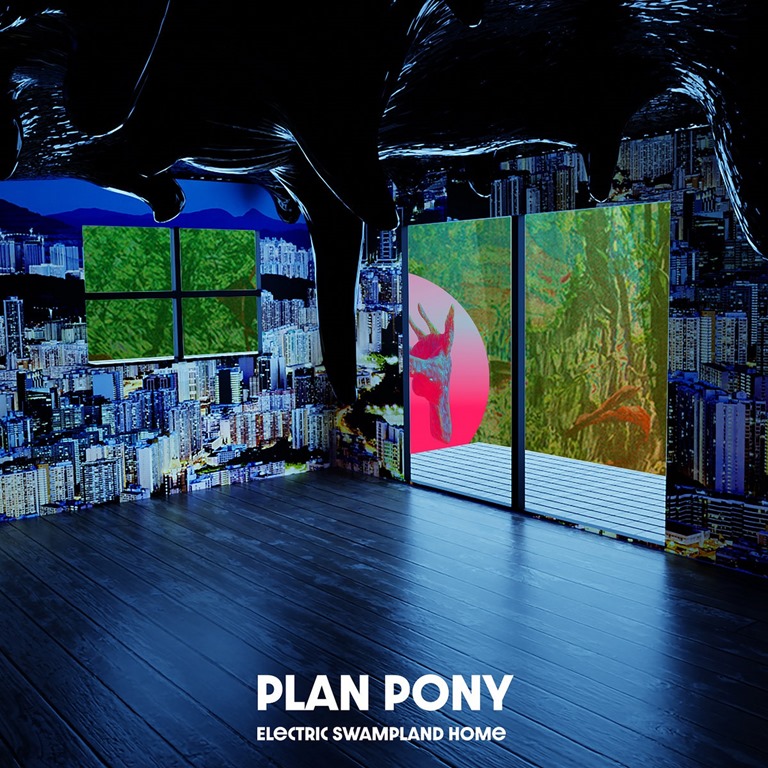
Plan Pony – the solo project of Jase Jester, one half of Ombibael / Ombibadger – has been simmering for a while, and we’ve been following his output since the release of the ‘Martyr’ single back in 2020. So I was naturally excited to hear his latest offering.
I felt suddenly uncomfortable, concerned, even, on seeing the accompanying blurbage, which leads with ‘RIYL: Animal Collective, Madlib, Nurse With Wound, Hype Williams, Black Dice’. I mean, I do like a bit of NWW, and don’t mind some Black Dice, but I absolutely abhor Animal Collective. So, so much. Something about Animal Collective radiates muso smugness – something it would be hard to accuse Jase of.
Electric Swampland Home is the first Plan Ponyalbum, and as with previous outings, finds Kester grappling with vintage gear to conjure authentic vintage noise inspired by those early adopters. He’s right when he tells me that emulators simply aren’t the same, and that when technologies were emerging, the sound of the resulting recordings was born of necessity – like when you bounce tracks on a cassette four-track and lose some quality and definition in the process, and the presence of amp hum and tape hiss because amps hum and tape hisses. Adding tape hiss or vinyl crackle digitally is an affectation, and while some may be sold on this kind of nostalgic artifice, it lacks that certain something.
While questions of authenticity provoke heated debate in circles around some genres – punk, obviously, grunge, perhaps to a lesser extent, and right now, indie and alternative as new acts track stellar trajectories seemingly from nowhere while claiming modest grass-roots credentials while obfuscating middle class and public school backgrounds and major label backing, Electric Swampland Home is a truly authentic work. Kester hasn’t amassed a pile of highly-sought-after vintage kit in the way people with hods of cash buy up 808s and Moogs to try to be cool. Electric Swampland Home is the sound of a Boss sampler and an old Tascam digital studio he’s had for yonks, and which by today’s standards are pretty primitive.
From the very start, Electric Swampland Home creates discord and chaos with the woozy, bent, and frankly fucked-up ‘Travelling There’, a loop of atonality that gives way to a rolling rhythm and feedback-squalling bass crunch… and from thereon in, everything goes.
‘The Village’ tosses a salad of tribal beats, twisted Kyoto and a dash of Joujouka. While I’ve never been comfortable with the kind of cultural appropriation that the likes of Paul Simon’s takes on ‘world music’ present, this is something entirely different – a full global exploration which occurs simultaneously. This owes more to the tape experiments of Burroughs and Gysin, Throbbing Gristle and Cabaret Voltaire than anything else, conveying a sense of the way in which everything happens all at once, and linearity is a construct.
Across the album’s eight tracks, Plan Pony meshes some dense sonic textures and layers of difficult dissonance. Notes and tones bend and warp, things twist and melt and bleed into one another: edges blur and fade. The way the juxtaposing and often incongruous elements are brought together isn’t explicitly jarring, it’s not a bewildering collision of noise, but something rather more subtle – although no less impactful and no less disorienting. As with Burroughs’ cut-ups, Electric Swampland Home captures – recreates, distils – the overwhelming experience of modern life, the blizzard of information, the endless intertext, the diminished attention span, the globalisation and the egalitarianism of everything. That isn’t to say we live in an egalitarian world – but that everything equally demands our attention from every corner of everything, to the point that it’s impossible to prioritise or even reasonably assess what’s of more importance than anything else. And so we quiver, frozen in stasis, poised between myriad options and so often spend hours selecting none of them.
This is nowhere more clearly conveyed on the warped, glitchy layerings of ‘Same Cloud’, which brings everything all at once. On the one hand, it’s the most overtly ‘song’ like piece on the album. On the other, it’s like listening to the radio from the next room while reading a book with the TV on in the background, and your phone’s ringing and next door are doing DIY and your mind’s wondering about what’s for dinner – and this continues into the sample-soaked looping stuttering jangle of ‘Amphibian’.
‘8pm Local Time’ combined field recordings, a low-level quivering bass and squelchy laser-blasting electronics together, and not necessarily in the most comfortable of fashions.
Electric Swampland Home revels in incongruity, in awkwardness, in otherness, and in many ways, it’s a magnificent representation of life in all its colours and chaos, its business and unpredictability. It’s not an easy or immediate album, and it’s not for a second intended to be. It is an unashamedly experimental work, and one which succeeds in its explorations.
Mortality Tables once again bring us a release that’s deeply immersed in the spirit of the avant-garde, and about setting defined parameters within which a project must function. When it comes to such things, it’s not about dictating restrictions, but about providing focus. Not all artists like to work to guidelines, although a prompt can open infinite possibilities for interpretation, and as such, there’s creative potential in working in such a way. And so it is that, as the accompanying notes explain, ‘Central Park: A Picture-In-Sounds is a site-specific performance piece, for one or more performers aged between ten and 95 years old. It is a tribute to the multi-disciplinary work of Charles Ives that will be published in 2024.’ We go on to learn that ‘To execute the piece, each performer will refer to a map of Central Park divided into areas representing the life expectancies listed in an 1874 US insurance industry mortality table. Each performer will identify an area of the Park corresponding to their life expectancy in 1874 and make a field recording lasting precisely eight minutes and thirty seconds.’
These are some highly specific instructions, but, once there, what performers are essentially looking at is eight and a half minutes to express as they feel appropriate, and of course, here, the possibilities are near-limitless. How one responds to a setting, a time, a space is, after all, a purely personal thing. Just as no two people’s lived experiences are the same, so no two responses will be identical.
This is a document of Mat Smith’s second performance, recorded on. 9 February 2024, at 16:13.
His own commentary is illuminating, and merits citation here, for context:
‘I was 47 years old when I performed ‘Central Park: A Picture-In-Sounds’ for the second time. Although I was a year older, when I looked at the life expectancies table and cross-referenced that with my divided Central Park map, it indicated that I should once again perform the piece near Strawberry Fields… The character of a place is in a continual state of mutability, and that was evident when I began the piece. It was a different season, the trees were barren and sleeping, snowdrops were springing up everywhere, and there were significantly more people in the park than the day I performed the piece in June the previous year. A carpet of dry leaves covered the area I set myself up in, crispy underfoot, waiting to crumble into dust.’
He recounts how ‘Someone at the John Lennon memorial began singing. Somewhere near the path, a street musician with what sounded like an amplified violin began playing a rendition of ‘Jingle Bells’, even though Christmas was retreating rapidly into the past. In between, he would play a plaintive wistful little coda that seemed so at odds with the relatively gleeful ‘Jingle Bells’. Often, his playing is accompanied by the harsh ringing bells of bikes as they whizz along the bike paths…’
His narrative creates a vivid – and moving – picture of the scene. It’s easy to think of these kind of performances taking place either with some sort of ‘arrangement’ and a cluster of observers who are ‘in the know’ gathered as witnesses, or in seclusion; it’s not so obvious to consider the actuality of creating sonic art in a public space, and all of the randomness and happenstance which that entails.
However, Central Park: A Picture In Sounds (Performance #2) captures this perfectly. The combination of the breeze and traffic creates a constant roar in the background. Birds chirp in abundance – far more than one might associate with February, at least here in England – and dogs yap and bark constantly. You can’t move for bloody dogs anywhere, in parks in fields, post-pandemic, it seems as if there are more dogs than people. But for all the ambience, all the thronging noise – and this really does remind that even quiet spaces really aren’t in large cities, with blaring radios and chatter and that constant roar – this is mostly eight and a half minutes of ‘Jingle Bells’ being played on a fiddle. In February. Bloody buskers.
But, as a snapshot field recording, Central Park: A Picture In Sounds (Performance #2), is absolutely alive, buzzing, bustling, busy – a slice of life.
For myriad reasons, my head’s a shed of late, and I’ve been doing this for coming up for sixteen years now, cranking out reviews on a more or less daily basis, sometimes during certain spells up to five or six in a day and taking in three or four live shows in a week, on top of dayjob and, since 2011, parenting. So I can be forgiven for not remembering every artist I’ve covered, let alone the details. But somewhere along the way, on seeing this arrive in my inbox, I recall that I have written about Ergo Phizmiz. I have no idea what I wrote, or when, whether I dug it or not, what kind of music it was, but I did write. Ergo Phizmiz isn’t a name one forgets easily, after all.
And so it is that ‘The Tin Drummer has Collapsed’ is the sixth release in the second season of Mortality Tables’ ‘LIFEFILES’ series, a series of singles whereby ‘Recordings of places, people, objects, moments in time, environments and quotidian events are shared with a range of artists working with sound. Those artists are then free to respond to the recordings in any way they like, either through manipulation or composition.’
Seems I’ve got some catching up to so, since, ‘Season 01 of the LIFEFILES series commenced in March 2023 with contributions from Simon Fisher Turner, Veryan, Xqui, Rupert Lally, Andrew Spackman and Dave Clarkson,’ and ‘Season 02 commenced in September 2023 with contributions so far from Audio Obscura, Todeskino, boycalledcrow, Simon Fisher Turner, Maps and Ergo Phizmiz.’
The one thing about arriving at a late point in a series and not even in the first season of singles, over a TV series is that there’s no cause for consternation over the plot arc or who the characters are or their back-stories. A single is a single, and it should, by its nature, stand alone, free of the context of series or album, and ‘The Tin Drummer has Collapsed’ does.
As the accompanying notes inform us, ‘The following three source sounds were chosen at random:
1. Loud bass music played from a car at the Akeman Inn, Bucks (21.06.2021)
2. A rubber lid stretched across a ramekin (07.07.2022)
3. Seren playing an old acoustic guitar (01.11.2023)’
Phizmiz’s response is to hurl them all together at random, too. ‘The Tin Drummer has Collapsed’ begins with a roaring barrage of noise, the roaring thrum of an engine and what I understand to be ‘loud bass music’. On ‘The Tin Drummer has Collapsed’, Phizmiz doesn’t collage or overlap the source materials – which would likely have produced an utterly head-smashing cacophony – instead favouring a different kind of cut-up method, akin to the ‘drop-in’ method devised by Burroughs and Gysin, whereby the different segments are dropped in, ‘randomly’. The sources follow one another, and it’s a haphazard-sounding patchwork of unrelated sounds, although the rubber lid and acoustic guitar aren’t as different as one might anticipate.
‘The Tin Drummer has Collapsed’ is strange, and interesting, and as an experimental assemblage, it isn’t designed to be accessible or musical, or conform to any conventional expectations of a ‘single’. This is nothing more and nothing less than an artistic response to a set of parameters set as part of an experiment – and one that’s novel in its directness and simplicity.


 Aural Aggravation