Posts Tagged ‘Ambient’

Front & Follow / gated canal Community – 6th October 2023

Christopher Nosnibor

When Front & Follow called it a day as a label, it was a sad day, and their subsequent emergence from the mothballs for the Rental Yields series was extremely welcome. This was a project that came from the heart and really showed what F&F was all about – yes, music first and foremost, but also community. By working with a certain network of artists, the label built a community of its own, but there was always a sense of locale which was integral to this, and this is what compelled label-leader Justin Watson to resurrect the label to release a series of fundraisers to help raise money to tackle homelessness in Manchester.

This is a project which has clearly taken on a life of its own, and it seems unlikely that when first touting the idea, Justin could have ever seen the deluge of contributions which would pour in over the coming months. He writes, ‘Over 100 artists are involved (the spreadsheet is fun), each one tasked with creating a new track from the sounds created by someone else –we are then collating the tracks and releasing them over 2022 and 2023… This is VOLUME FIVE –THE FINAL VOLUME. 19 tracks, 38 wonderful artists. All money raised will go to SPIN (Supporting People in Need), whose purpose is to feed, shelter, clothe and generally support the homeless and people in need of Greater Manchester.’

This release simply shouldn’t exist. Homelessness shouldn’t exist, either. Levelling up my fucking arse. This government can’t even manage the basics, and while the imminent cancellation of the stretch of HS2 between Birmingham and Manchester is making all of the headlines and the government are refusing to comment on the ‘speculation’ about the inevitable, insisting that there are many other projects which are equally essential to the plan to provide the north with the same quality of life available to those in the capital, the fact that homelessness remains such a huge issue in Manchester is evidence that they’re not receiving the finding they need either. It’s not just Manchester, but charity begins at home and people can only do so much, so it stands to reason that F&F should donate to a local charity.

The one positive outcome of a truly depressing situation is that all five of the Rental Yields compilations is absolutely superb, and this fifth and final one is a glorious showcase of predominantly regional talent from a city with a long history of producing outstanding music, alongside Leeds. While it’s fair to say that much of this musical output has been born from frustration, it only serves to demonstrate just how much the north has contributed, and continues to contribute, to the nation’s creative output. And a nation without art… is simply dead. Over the last nineteen years, which I’ve spent living in York, I’ve often said that the best thing about living here is its proximity to Leeds. The city’s music scene is phenomenal, and where in London could you watch local / national / international touring bands while supping local ales for four quid a pint?

So, while the fact of the matter is that there should be no need for this album in terms of its social motivation, Rental Yields Volume Five is ultimately yet another essential release in terms of the fantastic music it showcases. More than any of the preceding editions, it’s a murky, atmospheric collection.

I’d been bobbing along nicely to the mellow drift before the penetrating feedback blast that heralds the arrival of ‘Rental Yields Weekend in Manchester Mix’ by Dan Gusset vs Omnibadger. Had to be these buggers, of course. Regular contributors / usual culprits, they bring another layer of discomfort to the party. It’s like Test Dept’s ‘Unacceptable Face of Freedom’ for 2023, a punishing, sample-filled industrial racket that tells it like it is, and without compromise. We live in harsh times, dominated by harsh language from government, and if ‘and then it was gone’ by gormless vs Distant Animals is superficially buoyant, the underlying stains of noise are dark and turbulent and this is the noise that fills our heads day in, day out, as we walk down the street. There is no escape, only the delusion. There is plenty oof harsh reality to be found on here, with thick bass blasts dominating Repeated Viewing vs Four Italian Pep Pils’

Most of the contributors on here are new to me, but as has been the case with all of the previous instalments, the quality of consistency is remarkable, and it’s incredible to think that this is a compilation assembled from open submissions. Rental Yields Volume 5 feels more like a film score than anything else, the tracks showcasing a cohesion and unity our government could only dream of. But then, this what happens when artists come together for a cause. And coming together is the crux here. The entire Rental Yields series is essentially about unity, and also about compassion. The government, and the capitalist world at large needs to learn from this. In the meantime, this glorious compilation provides a much-needed salve to the muscle-twitching rage the societal situation elicits. It’s yet another great album from Front & Follow, who deserve to hang up their virtual boots after this.

AA

dQGDqHAA

Venera, the hypnotic, ambient duo featuring Atlanta-based composer/filmmaker Chris Hunt and James Shaffer (Korn), have shared a third, and final preview of the pair’s forthcoming album, Venera (Oct. 13, Ipecac Recordings), with today’s release of ‘Disintegration’.

“We hoped to explore drifting, gridless timelines of drums and guitars, which converge midway in a wall of harmony and chorale,” explains Hunt of the five-minute song that features drummer Deantoni Parks (Mars Volta, John Cale). He continues, speaking directly to the video, which also features words by author Blake Butler: “Blake’s text sees and explodes light and experience in a way that is deeply committed to density and emotion – an honest voice in ‘Disintegration.’”

Watch the video here:

AA

Several guests join Hunt and Shaffer on the self-produced Venera. Parks (Mars Volta, John Cale) also contributes to ‘Erosion’ and HEALTH’s Jacob Duzsik contributes vocals on ‘Ochre,’ and Alain Johannes lends his voice to ‘Triangle.’

AA

YzjMCrr8

Photo credit: Rizz

Felte FLT-089 – 14th July 2023

Christopher Nosnibor

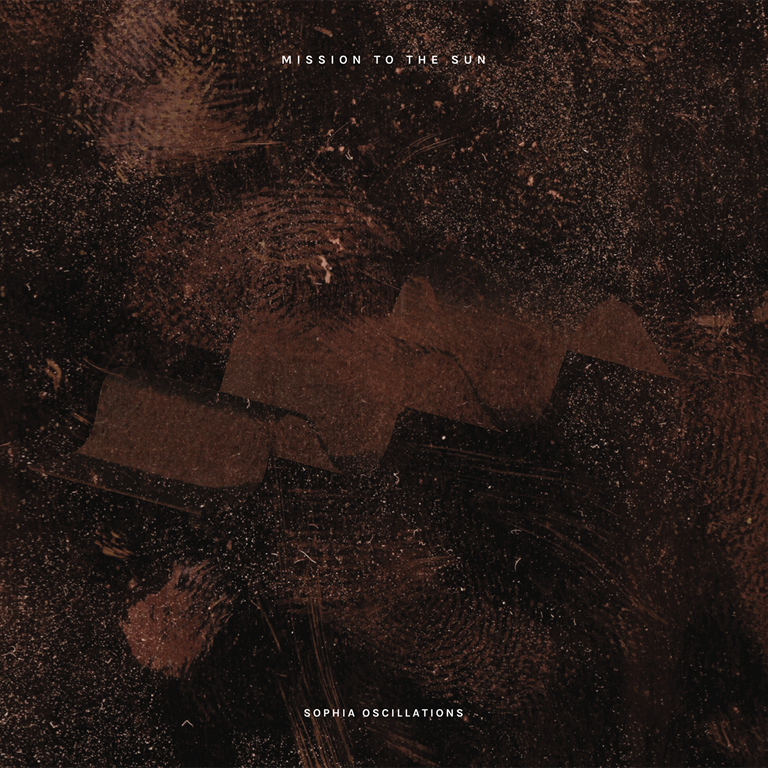
Mission to the Sun is Chris Samuels of Ritual Howls fame (synths, samples, programming) and Kirill Slavin (vocals/lyrics), and comes recommended for fans of Wolf Eyes, Moin, Throbbing Gristle, Coil, The Legendary Pink Dots, Drew McDowall, Suicide, Cabaret Voltaire, etc.

Sophia Oscillations is their second album, and it pitched as ‘an immersive journey through the dark corners of post-industrial music’, whereby ‘The Detroit based duo continues the sonic exploration started on their debut album Cleansed by Fire, while delving deeper into themes of isolation and lost communication. Christopher Samuels’ synths, samples and rhythmic programming is accented by Kirill Slavin’s haunting vocal delivery as the listener receives intersperse audio recordings from the outer reaches of inner space.’ This may seem an unusual angle of approach given their chosen moniker, but the one place hotter than the sun or the earth’s core is the core of what it is to be human. We still understand space better than we understand the deep sea, and the deep sea better than we understand the human mind. There is much scope for exploration in every sphere.

William Burroughs famously described ‘Scottish Beat’ writer Alexander Trocchi as a ‘cosmonaut of inner space’, although he also applied the label to himself, stating ‘In my writing I am acting as a map maker, an explorer of psychic areas, a cosmonaut of inner space, and I see no point in exploring areas that have already been thoroughly surveyed.’

This is an appropriate context for the eight compositions which make up Sophia Oscillations, which are essentislly beatless but strongly rhythmic in form. If they belong to the lineage of the avant-garde and the industrial music of the late 70s, it equally draws on a host of other, more contemporary threads in order to forge something quite different and ultimately new.

‘Drowning’ surges and pulses, rippling waves washing over a slow-treading bassline which wanders up and down, stepping somewhere between DAF and The Cure’s Carnage Visors while the vocals whisper and wheeze low in the mix, a stealthy monotone that’s both tense and detached. Whistles of feedback strain from the speakers and wrap themselves around the whole drifting expanse. Things take a turn for the abrasive on the title track, with machine-gun blasts of noise cutting through grainy swathes of bleak ambience, gradually fracturing and fragmenting quite uncomfortably.

There are hints of medievalism and classical on ‘Censor Sickness’, but they’re melted into a dark murk of muttered voices and unsettling atmospherics, and the combination is quite unsettling and far from comfortable: if anything, it’s queasy, and the minimal yet noisy ‘Unborn’ pushes this to another level: stark, metallic, robotic electronica, it has an 80s dystopian feel which again calls to mind DAF and Cabaret Voltaire. The late 70s and early 80s were exciting because musicians with limited means – and ability – were finding ways of using emerging, and increasingly affordable – technology to make music which represented the world in which they found themselves. As such, the emergence of experimental electronic music and industrial music was born out of a collision of multiple factors, none of which will ever recur, and for this reason can never be recreated.

Mission to the Sun aren’t attempting to recreate history here, but instead, Sophia Oscillations finds them processing history through their own filters. ‘Attrition’ brings together post-rock and crunching industrial electronica with a dash of Gary Numan and more detached spoken-word vocals, and it’s a hybrid that isn’t easy to process, because it all feels so alienating. But then, articulating alienation always does.

The churning grind of ‘Cornerstone’ sounds like the intro to something by Big Black, but instead of Roland kicking in, alongside a relentless bass, it just grinds on and on, and it’s dark and messy. Once again, Slavin’s voice is half-buried in the mix: it’s difficult to decipher the words, and his voice hovers, blank, flat, vaguely Dalek-like, in the vein of Dr Mix, but less harsh.

Sophia Oscillations is a challenging album. Yes, it’s unsettling, bleak, stark sparse, but the hardest part is the fact it doesn’t confirm to any one genre, it doesn’t follow any obvious or specific form, and it’s not the fact that it’s unsettling and difficult to find a place for it that’s the issue, but the fact it keeps you tense and on edge for its duration. But, perhaps even more than that is the fact it feels removed from anything human. But it’s not so far removed as to be alien. The brain simply isn’t equipped to process the inhuman– or the near-human-but-not-quite, the uncanny, the unheimlich. Because we recognise it, and yet we don’t. Sophia Oscillations brings the challenge right in front of your face. Sit back, draw breath, process. This isn’t an easy ride.

AA

FLT089_front

nynode intermedia – 7th July 2023

Christopher Nosnibor

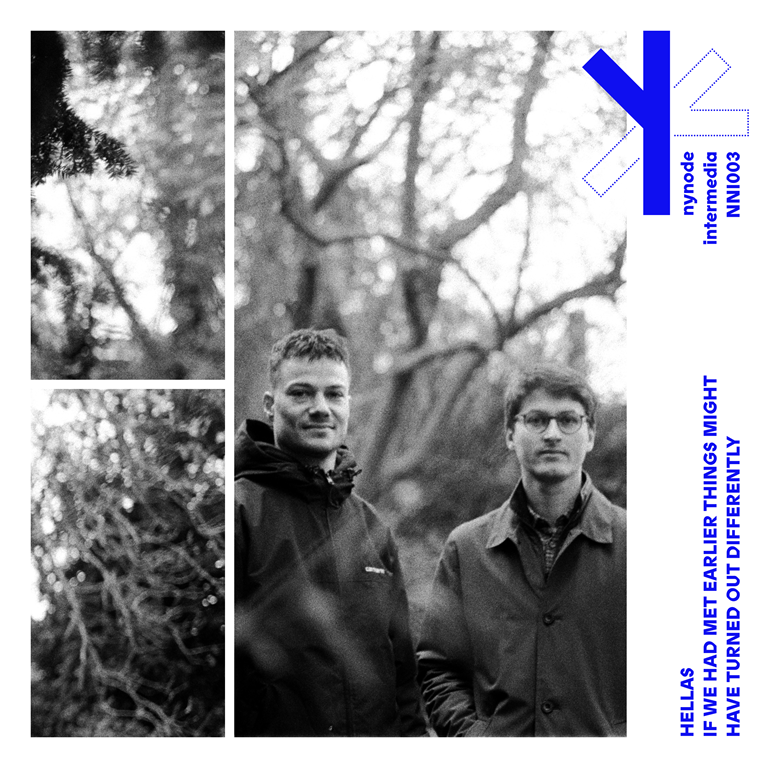
Sometimes, a title just captures the imagination. And in some respects, art – be it a book, an album, or a movie, will take one unawares in the same way as a new person. Sometimes, it’s something unexpected at precisely the right time, discovering something you don’t even know you need until it’s there. To select a quote from what may appear to be an unlikely source, ‘just when you least expect it, just what you least expect’, sang The Pet Shop Boys on ‘Love Comes Quickly’. It’s a great line because it so succinctly summarises the unpredictable nature of life, and this wordy title tripped a similar trigger, which, I accept is uniquely personal…. But then, in the personal lies the universal. It must be so true for many that we’ve met the right person, but at the wrong time, for whatever reason.

And so it is that I’m spiralling on a chute of reflection, a wall of mirrors inset with faded and distorted memories of people I’ve met and lost along the way as I begin to ease myself into what ultimately proves to be a remarkably diverse album, with deft compositions flitting between retro electronica, sparse techno, trance and shoegazy electrombience – and a lot more besides. Other times, mood-dependent, I may find the perceived lack of identity frustrating, the gentle mellifluousness without any obvious focus nigglesome, but right here, right now, I’m ready to experience transportation. And having emerged from a journey for the artists, If We Had Met Earlier Things Might Have Turned Out Differently feels like a suitable soundtrack.

As the accompanying notes recount, ‘Hours of recorded improvisations were arranged afterwards to slowly shape what would be the new sound of the duo. After three years of experimenting and writing various compositions the album slowly began to unravel itself and took its final form. Eleven unique pieces — deep explorations of sound — that all have their own story to tell are assembled in this collection of snapshots from the past years.’

In some ways, then, If We Had Met Earlier Things Might Have Turned Out Differently is more of a work of sculpture than composition, moulding and shaping the recordings into pieces with form and structure. Rising from a mist of gentle ambience, ‘Arbour’ soars, but is pinned down by a solid martial drum and ambulant, bulbous bass.

Listening to the ominous discordant experimentalism of ‘X’, I reflect on the fact that there was a time I’d have found this boring, just as I’d have cringed at anything remotely jazz-flavoured and sneered at anything overtly dance, before the clattering mess of ‘Techno | Hovestaden’ arrives, chanking and chiming over some ponderous keys, rippling piano, and evolving drones. In the background, as the piano plays mellow chords, there’s a banging tune giving it large way off in the distance, and it’s like hearing a neighbour’s music through your own. It’s irritating, but it’s real: as William Burroughs wrote, ‘life is a cut up’.

‘Ghost’ is suitably eerie, and ‘Shinjuku’ goes all-out tweaking electro, straddling late 90s dance and new age which just shouldn’t work and I should detest, but having lived through this and experienced a somewhat fractious relationship with tunes like ‘The Sun Rising’ and ‘Sadeness Part 1’, I’m rather more at peace with the incorporation of diverse elements to conjure sensations of spaciousness and spirituality, as long as they don’t involve pan pipes. Gotta have limits, y’know. This doesn’t actually sound like these musical forebears, but it feels as if there’s a certain context and progression at play here. The present only exists because of the past.

We’re plunged back into ominous drone territory with ‘Odessa’, and its warping grind which quavers up and down is most unsettling, building to a droning roar that’s hard not to equate to missiles and jets as the oppressive buzz grows louder.

The looming brass and slow, deliberate percussion of the spacious ‘Noon’, as it trickles slowly toward the album’s soft ending, with clattering percussion slowly marking a long wind-down before ‘Tide’ smoothy washes everything away to a smooth, blank state once more.

So what does this say? It says Hellas have conjured a majestic work from – well, who knows what source material? How much of this album came to fruition in the wake of its recording? And how much does it matter? It’s not as it’s an AI work, contentiously bypassing human input: pianist Peter Sabroe and drummer Jeppe Høi Justesen, with the assistance of producer Brian Batz have created something with personality, intricacy, depth. If I’d have heard it ten years ago, I’d have hated it: now… it reaches me. It’s an accomplished work, subtly complex and possessing significant depth. It’s amazing how things can turn out.

AA

NNI003_art

26th June 2023

Christopher Nosnibor

‘Industrial’ is a definition that’s shifted significantly over the years. The shift seems to have come some time in the late eighties or early nineties, when the likes of Ministry and Pitch Shifter were breaking into a much more mass-market audience: the former smashed MTV with the singles from Psalm 69, with even Beavis and Butthead getting down to ‘NWO’ and proclaiming ‘even the old dude is cool’ in reference to William Burroughs’ appearance in the video to ‘Just One Fix’. It seems hard to reconcile the enormity of that album with the face of music in the media now, but the early 90s really were something. You’ll read endlessly about how Nirvana smashed open the doors and so on, and perhaps to an extent that’s true, but they were simply a part of the zeitgeist in an era when MTV focused on ‘M’, and you would find bands like Soundgarden and Butthole Surfers and Rage Against the Machine being played alongside ‘Sabotage’ by The Beastie Boys, and it didn’t seem incongruous with all the mediocre pap because, well, that was what people were listening to. I even picked up a Therapy? live bootleg CD in a record shop while on holiday in Venice in the summer of ’94. I was excited, but it didn’t seem particularly strange at the time. Pitchshifter, meanwhile, had named their debut album Industrial, and it was fucking heavy, but it wasn’t until they changed their sound and rode the wave of sports metal around the turn of the millennium that they got popular, doubtless aided by their intersection with The Prodigy.

But because of the bracketing of these bands as ‘industrial’ in the 90s, the original characteristics of what had previously been deemed ‘industrial’ became buried, and forgotten. It’s hard to really find a connection between Ministry and the likes of Throbbing Gristle and Cabaret Voltaire (at least musically: they all loved Burroughs, but Jourgensen’s fascination was more about the junkie guru legend, whereas TG and The Cabs were into exploring ways of applying the cut-ups and Burroughs’ tape experiments of the late 50s and early 60s to music.

Binary Order sit firmly in the bracket of contemporary industrial, or what many refer to as Industrial Metal, and with this release they really show their influences and wear them with pride.

Now, I do get somewhat twitchy when the running order of a review stream or download differs from the Bandcamp stream or whatever, because the flow of a release is important – at least to me, and I tend to consider the overall flow of a release in my appraisal of its success.

So we’re going with the Bandcamp sequence here, which kicks off with lead single and title track, ‘Thrown Away’, a cover of the song by the oft-maligned nineties nu-metal act Papa Roach, who, remarkably, are still going and releasing albums at a steady rate. Are people really still buying this shit? Rap Metal was surely one of the worst things to have happened to music… but here it is. They blast off the four-track EP with a chunky riff-dense rendition of ‘Thrown Away’, and with that out the way, be can finally turn to the rest of the EP.

The remaining three tracks are remixes of songs from their debut album, Songs from the Deep, released in November of last year. The ‘Bleeding Mix’ of ‘Parasite’ is a gut-churning gurgle of stuttering electronica, that starts with a pumping, shuddering beat and a quivering synth groove which provides a stark backdrop to the raw vocals… but then it gets a bit ravey and autotune and straddles the uncomfortable intersection between dancefloor and sonic assault.

The Arcadmix Remix of ‘A Good Death’ is altogether more atmospheric and moody, and works well, largely because it’s neither overtly dancey nor Industrial / Nu-Metal. The six-and-a-half-minute ‘Irreversible Mix’ of ‘Hands of Time’ manifests as a long, oppressive, darkly ambient drone that’s a real departure from the rest of the EP.

The diversity is the key strength of this release, paired with the fact that it shows a band wanting to push their limits and aren’t especially precious about how their material is reshaped or adhering rigidly too their chosen genre.

AA

812429

Waxing Crescent Records – 7th July 2023

Christopher Nosnibor

Since parting ways with Gavin Millar and worriedaboutsatan, Thomas Ragsdale has been incredibly busy recording both as Ffion and Sulk Rooms, as well as playing synths with Mancunian post-rock act Pijn. Looking at his bandcamp, you wonder how he has time to piss, let alone sleep.

The Incidental Crack, meanwhile, are no strangers to these pages either, and Simon Proffitt, Rob Spencer and Justin Watson are hardly idlers when it comes to creativity, with The Incidental Crack Does Nothing, released almost a year ago to the day from this release, following two albums in 2021.

And as the accompanying notes explain, it’s this shared love of the act of creating that brought the two together: ‘Split was created through the desire to collaborate. Thomas Ragsdale and The Incidental Crack spoke about the idea of working on a split release and then all hurried away into their studios to get to work. The split idea soon become a reality as music was exchanged ready to share.’

The title is factual, and gives nothing away, but it’s also descriptive in a way, in that it’s distinctly an album of two halves, complimentary and contrasting.

Sulk Rooms present a single longform composition of some twenty-one-and-a-half minutes in duration: The Incidental Crack’s contribution is of more or less equal length, but spread across three pieces.

Sulk Rooms’ ‘Objects In The Mirror Are Closer Than They Appear’ has no connection to Meat Loaf and his bombastic rock, and is instead a big, slow-moving mass of ambience, which has a density and shade as well as a certain lightness. ‘Vaporous’ and ‘cloud-like’ are terms I often reach for in the face of such works, but this feels more like standing atop a mountain while the cloud thickens to the point that there is no visibility, to the point that you’re unable to even discern the presence of your own body, and so dense as to be suffocating – perhaps more like a smog or smoke. Tim Hecker managed to create such a sensation the time I saw – or, more accurately, was present, when he played in Leeds a few years back. The smoke was so dense and the lighting so minimal as to induce a kind of sensory deprivation. But with the swirling sounds all around, there was, simultaneously, sensory overload. You need balance: many of us are reliant on multiple senses, and those who lack sight, hearing, often experiencing a sharpening of the senses which do function. But his is not an immediate thing, and to suddenly find oneself with restrictions, it’s a shock of sorts. And so while ‘Objects In The Mirror Are Closer Than They Appear’ is soft and tranquil, the experience isn’t entirely soothing as I feel an inner tension grow as the time drifts and dissolves, diffusing in reverberating waves of vocal samples.

The Incidental Crack’s three cuts are descriptively titled and combine elements of the dramatic and the mundane to intercut aspects of pathos with bathos to somewhat comic effect.

‘Rob To Holland Via Köln And Back Again’ sounds like is should have something of a travelogue feel, but is, in fact, a work of dark ambience with deep tensions evoking the chilling fear of The Cold War, while ‘Lawnmower Death And Subsequent Resurrection’ isn’t an homage to the parodic thrash band Lawnmower Deth, but a soundtrack to the trauma of dealing with tools and appliances when they don’t function as intended. Yes, most of us have been there, but to feel it so bluntly and boldly is impactful. This – if I’m not mistaken – the sound of a guy recording his DIY and the like before seeking a narrator. Yet, there are some dark atmospherics too, and thee overall sensation is ominous rather than uplifting. And by that measure, the ‘Bus Stops In Wigan’ must be pretty fucking terrifying: places to avoid in bleak territories.

As split albums go, it’s absolute perfection in that it gives you everything you want. If the two acts operate very differently in formal terms, both have created deep, dark works here that make for a release that’s wide-ranging, interesting, and just a little scary.

AA

a0921513698_10

Kranky – 7th July 2023

Christopher Nosnibor

If the prospect of an album from a solo pianist whose recording moniker is the Cherokee word for ‘squirrel’, and which is intended to evoke ‘a day in the life of a bear in a canyon in the Smoky Mountains,’ with each track channeling a different emotion or experience in its daily explorations, sounds as if it may be soft, neoclassical tinkling, Canyon will come as rather a surprise.

As the accompanying notes explain, ‘Canyon was composed and performed live on a Sequential Circuits MultiTrak synthesizer…routed through a delay pedal. This refraction adds a lyrical spatial quality, as though “echoing off canyon walls.” It’s music both gentle and adventurous, curiously rooting through soils and streams, in a sustained state of discovery’.

It’s a proper vintage piece of kit, an analogue synthesizer only produced for a couple of years in the mid-1980s. Described by Vintage Synth Explorer as ‘a six voice analog synth with sophisticated filters, envelopes, modulation capabilities and built-in sequencing’, it’s clearly got versatility in its favour – which means Saloli has a broad range of sounds and effects at her disposal to articulate the range of moods and emotions of her subject. But above all, it has that classic analogue warmth of tone, the rich, organic texture that resonates in a way that’s almost biological. It’s something that’s both affecting and in some way comforting, the fuzzy edges conjuring a sonic blanket, and even when venturing into more abrasive territories, analogue synths very much have the capacity to reach the parts their digital successors somehow can’t.

The album starts strong: ‘Waterfall’ spirals and cascades in a swirl of synth that doesn’t necessarily evoke – at least to me – anything bear-like, but the more ambient end of Krautrock ‘Lillypad’ drifts soft-edged semi-ambience strolling and ‘Snake’ is unexpectedly graceful. But then, if you’ve ever watched a snake move, it is a graceful, supple movement, and snakes have an undeservedly bad reputation among humans. Very few of them are dangerous, and they’re certainly not the only creature to shed its skin. Again, the notes provide an insight which perhaps has a bearing on the tone here, explaining that ‘In Cherokee teachings, humans and animals are considered to have no essential difference – originally, all the creatures of the earth lived together in harmony’, and as such, ‘Canyon captures shades of this Edenic notion across eight elegant pieces, alternately meandering, pensive, playful, and pure. Sutton’s playing, as always, is dexterous and dimensional, mirroring the dazzled senses of its muse. If then, the compositions don’t quite confirm to our expectations, based on our perceptions of the various inspirations, it could well be on account of Saloli approaching them from a very different perspective. Why are we scared of snakes? Some of it is likely biblical in origin, some to popular portrayals in movies and media. But one is not afraid of one’s equal, and living together in harmony means there is no reason for distrust.

Such belief systems may be difficult to comprehend, but how much better, more pleasant, more bearable, would life the world over be if everyone held these views? There would be no social hierarchy, there would be no capitalism, there would be no war. Consider that for a moment.

The beauty of Canyon is that it’s a work which encourages and inspires contemplation.

It’s the playful side of Saloli’s songwriting that comes to the fore on the slowly bouncing ‘Yona’. It’s mellow, light, uplifting, and contrasts significantly with the introspective ‘Silhouette’ which follows, a reflective, melancholy pie, which makes you ache ever so slightly inside: you can’t quite pinpoint the reason, but that’s the power of music. Moreover, it’s the power of Saloli’s music, as the forms shift from string-like elongated notes to shorter, more piano-like sounds, with all of the variables in between.

‘Full Moon’ is positively bloopy and gloopy, trilling tones like synthesized pan pipes echoing out over a bubbling, bass, and it works nicely: there is contrast, there is movement. And in an abstract way, it captures the energy that seems to emanate from a full moon. And there is an energy which affects creatures and humans alike: some if it’s mystical and mythical, but I’ve often felt hyper without even realising it’s a full moon.

There’s something buoyant but also stealthy and predatory and then again, at the same time, increasingly discordant and with shades of darkness, about ‘Nighthawk’, a seven-and-a-quarter-minute monster with transportative qualities, before the true closer, the eight-minute ‘Sunrise’ heralds the arrival of the new. A new dawn, a new hope. Breathe deep. This could be our reality too.

AA

604344

Gizeh Records – 30th June 2023

Christopher Nosnibor

In this sense, Bleaklow is a rather different proposition, and in some respects, the instrumentation is a significant factor in the shape of the sound, with Claire contributing ‘Voice, Nord Electro, Yamaha PSS-170, field recordings, Moog Taurus’, and Richard contributing ‘Electric gtr, drones, field recordings, Yahama PSS-170, Moog Taurus’. But by the same token, there is something about anything Richard Knox does which has something of a signature – not a signature sound as such, more of a signature feel, which comes from the kind of wispy ambience and dense atmospherics.

The overall effect of Bleaklow’s debut, Glume, is mellow, amorphous washes of cloud-like sounds drifting softly on invisible air currents, but there are moments where the textures are coarser, more abrasive, and these provide vital contrast. ‘Husk’ scrapes in with a wash of distorted guitar before tapering tones supple piano and vocals, layered to a choral effect surge and swell.

Claire’s voice by turns evokes Kate Bush and Cranes, haunting, ethereal, and as much as this sits in the post-rock bracket from which Richard and Gizeh emerged back in the early 00s (the label put out not only the The Heritage, the debut mini album by Her Name is Calla, but Knox also put out a super-limited CD of ‘Condor and River’ in a crazy corrugated card sleeve, as well as Arrivals, the debut album by worriedaboutsatan, wrapped in a chunk of blown vinyl wallpaper, which looks and feels amazing but is a real bugger to store… but I digress) it also very much harks back to 90s shoegaze, with a heavy debt to Slowdive and My Bloody Valentine, but then again, it’s impossible to listen to this without recourse to The Cocteau Twins. If this sounds like a catalogue of touchstones, it’s testament to how deftly they draw on myriad elements and whip them into a sonic souffle with the texture of candyfloss – not that this is particularly sweet, but it is lighter than a feather, lighter than air. And nowadays, the packaging is a little less DIY, but still very much focused on sustainability: the packaging for Glume is a recycled cocoa-card sleeve, whereby the ‘recycled card is made from 40% Post Consumer Waste and 15% natural fibres (by-products derived from the food processing industry which would otherwise go to landfill.) Turning a waste product into a natural, GMO free, raw material derived from nuts, fruits etc, resulting in distinctive colour shades’. It’s not just commendable, environmentally: it taps into the physicality of a releasing music and rendering the physical release a work of art rather than a commodity of plastic in plastic.

Everything on Glume happens at a sedate pace, and everything melts slowly together. The chances are that at some point, you’ve sat, stood, or even laid on the grass and simply looked at the sky and watched the clouds slowly shifting shape, rabbits and elephants becoming elongated and increasingly deformed, until they’re no longer rabbits or elephants, but abstract shapes stretching and fading to formlessness. The songs on Glume are by absolutely no means formless, but the sounds are like mist and the structures are supple. It’s a magnificently realised work: textured, detailed, nuanced.

It may not be bleak, but it’s dark, and it’s got detail. Bask in it.

AA

a0373089653_10

Suburban Spell Records – 23rd June 2023

Christopher Nosnibor

The pitch, which recommends Suburban Spell as being for fans of OMD, Boy Harsher, The KVB, Kraftwerk, Gary Numan, The Cars, Rational Youth, piqued my curiosity, rather more than it did my interest. We’re clearly in retro synth territory here, but then there seems to be something of a glut of artists falling into this bracket right now. It can’t all be nostalgia: most of the current crop of artists emulating the late 70s and early 80s weren’t even born before the 90s or even the turn of the millennium. Some of it I suspect is kids discovering their parents’ music collections, while equally, per perhaps more so, it’s a sign of the times we live in. It’s hard to really explain in depth or detail precisely why nostalgia depresses me, but it does, and ersatz nostalgia several fold.

Suburban Spell, however, require less exploration or explanation: this is the solo project of Peter Endall, who was a member of Schizo Scherzo, who were, according to his bio, active in ‘the heady days of Melbourne’s 80’s music scene, playing alongside the likes of The Eurythmics, Pseudo Echo, Real Life and Fergal Sharky.’ These are names to conjure with, names to reflect on.

So when I read that Suburban Spell ‘combines the austere beauty of Kraftwerk, 80’s melodic sensibilities, driving rhythms and some noisy grind thrown in for good measure. Influenced by the heyday of new wave and 70’s-80’s electronica, this music carries the beautiful imprints of such artists as Ultravox, OMD, Visage, Jean-Michel Jarre, The Cars, Gary Numan and New Order’, it makes sense. This is the music of the era which is coded into his generational DNA. Not that I really get much sense of Ultravox, OMD, or Visage from the five tracks on offer here. But… they’re good.

The songs on the Falling Down EP are both much darker and much more sophisticated than those on Schizo Scherzo’s Back to Back EP – but then, that was 1985, and technology has evolved and people mature and evolve also.

The title track is the opener, and while it’s very much 80s in its stylings, it’s contemporary in its production. It’s driven by a pulsating synth and beat dominated by a whip-cracking Akai snare, while Endall delivers a vocal smoothed by reverb and EQ balancing. But it’s the echoey bass break, that evokes the spirit of New Order and Disintegration-era Cure that really makes this a winning groove.

‘Salvation Army’ explores deeper atmospherics through a starker musical backdrop before ’12 Causes of Pain’ thuds in with some hard dancefloor-friendly trance-pop. The looping pulsations cast a nod to Dionna Summer’s classic ‘I Feel Love’ – a song that feels like it belongs to the 80s, but was actually released in 1977 – and the vocals and rippling synth overlays are pure Kratwerk. It’s easy to forget that the sounds so commonly associated with the 80s actually came from the late 70s, but there’s always a lag between decades: s, too. songs from the early 90s can so easily be mistaken from the late 80s, too.

I’ve spent a huge chunk of my evening trying to figure out which 80s track ‘Natural Science’ reminds me of, and while I can’t quite pinpoint it, Depeche Mode’s ‘Enjoy the Silence’ is as closed as I can get, although it equally brings strong vibes of Howard Jones and the like.

The six-minute closer, ‘Side Car’ goes all out for spacious, atmospheric, and ambient, twisting into post-rock territory with the breaking out of a reverby guitar. Against a swirling synth backdrop with a slow, ponderous bass and shimmering textures, before fading to quiet in a wonderful fuzz of ambience.

Falling Down has much going for it: so much so, that by the end of the set, it’s more pick-me-up than falling down.

AA

a4010990686_10AA

Cruel Nature Records – 26th May 2023

Christopher Nosnibor

Having recently celebrated a decade of diversity, Cruel Nature Records continue to release a broad range of non-mainstream music – and the range couldn’t be more pronounced than placing two of May’s releases side-by-side: Gvantsa Narim’s latest offering, Apotheosis Animæ exists on another sonic plane form the grating industrial noise of Omnibadger’s Famous Guitar Licks Vol. III. They’re a sort of Yin and Yang: the world definitely needs both, and I personally need both, too, and it’s testament to Steve Strode’s singular commitment to releasing music of quality regardless of style or genre that they can both find a home on the same label.

Apotheosis Animæ, we learn, takes ‘inspiration from religion, esotericism and Georgian polyphonic music’, and that ‘her latest work was written in late 2022 / early 2023 and tells the dark and cold story of winter’.

It seems very much that winter now is not like the winters of twenty or thirty years ago: instead of two feet of snow, we get seven feet of flash flooding here in the UK. And now, despite it being the middle of May, it’s impossible to predict from one hour to the next, let alone from one day to the next if it will feel more like October or February. But despite this, winter not only has timeless connotations, but also, whether it’s sub-zero or only just a bit chilly, the cold winds and long dark nights do have a profound effect on human activity and our lives as individuals. It’s not only psychological; it’s biological and metabolic, and some of this is genetically coded into us from our prehistoric existence all the way through to as recently as just before electric lighting and mains power. There’s a case that says this is where we went wrong, as a species, and for the planet, in evolving beyond lives in tune with nature.

We each have our own unique relationship with winter, and our own associations and reminiscence. While I’m prone to Seasonal Affective Disorder, presenting as low mood and low energy, my wife would invariably suffer a low ebb in health from late October through the February, often suffering back-to-back colds that would drag on for weeks, the lack of daylight dragging down her levels of vitamin D and her immune system struggling to fend off the endless barrage of bugs and viruses that thrive in the cold months, especially when being breathed around in close-packed environments like offices. I fully acknowledge, then, and actually embrace, the fact that I am coming to this album fully loaded with my own baggage which will colour my experience and interpretation. This is a healthy, a function of music, something which can exist as a vessel for us to pour our thoughts, feelings, memories, and traumas into.

The compositions ‘Apotheosis’ and ‘Animæ’ bookend the album, and as the former lifts the curtain, it’s a slow, simple piano that evokes a slowing, a darkening which paves the way for mournful strings and distant echoes of bass and percussion on ‘Sicut Mortuss’ (which I believe translates as ‘like death’ or similar) conveys that paralysing sensation which descends with the darkness; while on the woozy, disorientating ‘Amnesia’, snippets of speech drift in and out, but instead of giving a sense of human connection, as they echo into the droning hum, there is only distance and detachment. Stretching out past the tend-and-a-half-minute mark, it’s hypnotic and unsettling, a little like the point at which you realise you’ve gone a little too far into your own head and need to drag yourself back to life, if only because it’s scary in there and you’ve got to work and at least appear normal.

There are moments of grand, sweeping ambience, soft and gentle, which convey the comforting experience of watching large flakes fall, heavy and silent, settling thick and deep in a silent white blanket; there are also moments of gritty disturbance, swirling glacial winds and shards of ice. ‘Born in the Mist’ is dark and brooding, shapeless, formless, ominous, impenetrable, the howling scrapes that ebb and flow are unsettling and uncomfortable, and it’s evocative; personally, I’m reminded of slogging across mountain tops in the Lake Diastrict in dense cloud and storm-force wind, and no doubt anyone else would being different mental visuals along.

This is where instrumental, abstract music really does come into its own: listener response simply cannot be prescribed, and has to come from within, and for this reason, we will all hear and experience something different. Following on, ‘Stopwatch’ sounds like the clouds lifting and waking up from a daze to remember that you do know how to live, that sense that perhaps hibernation is over and there’s a world outside, and this applies not only to the winter which is determined by the meteorological and astronomical seasonal changes, but the winter of the soul which can chill even deeper.

It’s soft and soporific: ‘Train’ glances and glides with crisp, crystalline tones into the – sadly missed, proverbial – sunset. The fifteen-minute ‘Codex’ is a big, brooding, bruising storm building in the form of a rumbling drone that’s dark as oppressive. Crackles, bleeps and bubbles rise cautiously on the edges of this mass of dense, dark atmosphere. Over time, it throbs lower and slower, and rippling details emerge and float along on the surface – but that darkness, that threat, is always present. At some point, you find yourself lost in the drift, and a slow thumping beat emerges behind a locked loop of synthesised notes… and then it shifts again, reminding us that nothing is ever static, however much it may seem that nothing changes, however much we may yearn to remain in a moment forever.

There are some truly beautiful passages; but they’re tempered by sadness and tension, which conveys the sense of coldness, darkness, isolation, longing that the long dark nights bring – a yearning for warmth, for comfort, for hot, hearty food, the primitive craving to sit beside a roaring fire.

AA

cover