Posts Tagged ‘Ambient’

11th March 2021

Christopher Nosnibor

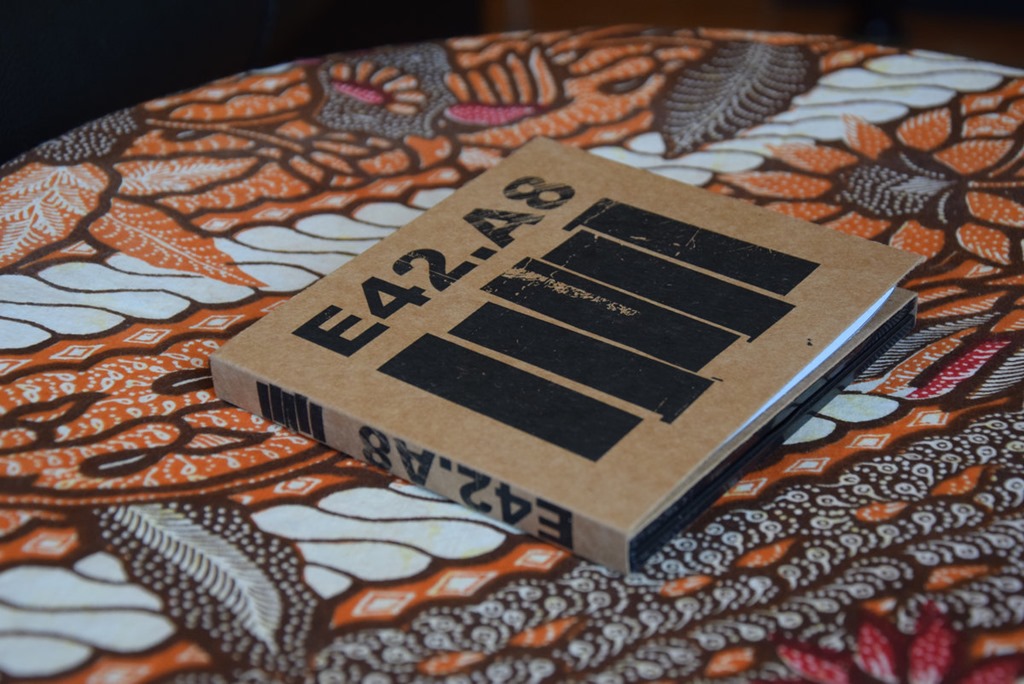
Sometimes I find myself in a state of confusion. Sometimes / often. Admittedly, work fatigue, lockdown fatigue, parenting, and beer on an evening are all likely contributors on many an occasion, but sometimes, I’m almost certain that life and situations are simply addling and that’s all there is to it. E42.A8’s press release is a source of a degree of bewilderment for me, as they outline their latest release thus:

‘E42.A8 lies between a place, a process, a group or several, or maybe as we were introduced in Frankfurt once: a Musikkapelle. We like to think that what matters are the following guiding notions: freedom, play with opening(s) & interaction, resulting in music marked by textures, variations between pulse & stretch, moments of varying intensities, détournements (Verwandlung?), oscillations in saturation and silence.’

IIIII is in fact a compilation, a double CD, which draws on a morass of releases spread across downloads, CDr and one tape, and features 21 musicians, in varying ensembles, from 2 to 9 people, recorded during the first five years of the collective’s existence. Said collective, which operates around a ‘disused farm/barn in the countryside in Picardie ( a region spread over the north of France +southern Belgium’ is centred around improvisational works, and as the fifteen pieces, which span a whopping 141 minutes – which isn’t far short of two and a half hours – and which makes listening to this in full a serious time commitment. The chances are that few listeners are likely to repeat it more than once or twice.

And while most of the compositions are under the eight or nine-minute mark, there are are handful of absolutely epic works that sit in the twelve to twenty-one minute mark that really illustrate the expansive plains E42.A8 ere capable of exploring when given the time and the space, and of course, the right atmospherics.

As one might expect from such a loose framework of musicians improvising over such a time-span, this is a pretty mixed bag, centred around immense drones, grinding organs and elongated oscillations. At its best, it’s haunting, evocative, unsettling, while at its worst its clunky, uncoordinated, experimental but without focus. And that isn’t a problem: the avant-garde and the postmodern so often delights in revealing its workings, demystifying the creative process, pulling apart the myth of the ‘creative genius’. IIIII reveals E42.A8 to be multi-faceted and willing to take risks in the interest of progression, of artistic evolution.

Insectoid skitters and creeping drones, scrapes, and all kinds of bleeps and twitters and stream-like trickles combine to forge the peaks and troughs, gulfs and chasms which make up this immense work. Heavy clanks like the sound if a blacksmith mishitting his equipment as shards shower everywhere in such an enclosed space. Chinks and stammers and fractured tonal cracks break the surface, and disruptions and discord and discombobulations abound.

A track-by-track analysis would be even more pointless than Brexit or an episode of Pointless, because this isn’t a work that has standout tracks: compilation it may be, but ultimately it’s an immense document which collates a vast library of experimental ambient electronic works which will shred your brain, make your eyes pop leave you feeling bewildered overwhelmed, which is, in context, a measure of artistic success.

AA

a3729120449_10

Hallow Ground – HG2101 – 12th March 2021

Christopher Nosnibor

Norman Westberg, of Swans legend, has a long association with the cranking out of heavy noise. For over three decades, his style was a defining feature of one of the most singular bands, and a rare entity, namely a guitarist who was more than happy to bludgeon away at the same two or three chords for anything up to a quarter of an hour. I would even venture so far as to say that Westberg is a truly unique guitarist, and his appreciation and understanding of space is unparalleled – a player who isn’t only comfortable, but whose signature is a seemingly infinite pause between chords.

In more recent years, Westberg’s output has shifted towards a less abrasive angle, with a succession of solo releases from 2016 onwards exploring overtly ambient territory, through MRI¸ The All Most Quiet, (both 2016) and After Vacation (2019).

First Man in the Moon sees Westberg connect with double bass player Jacek Mazurkiewicz, who supported Swans on tour in Europe in 2014 under the moniker of his solo project 3FoNIA,.The result of their collaboration, recorded during some downtime ahead of Michael Gira’s two Warsaw shows toward the end of 2019, is five improvised tracks of richly resonant evocation. The pitch promises a work ‘beyond the boundaries of atmospheric drone, abstract jazz and experimental music [which] blurs the lines between the acoustic and the electronic.’

It’s all a blur: supple washes of sound painted in broad strokes provide the cloud-like ambient backdrop to clatters and creaks, and the occasional bleep and whirr. It’s very much about the contrast: Mazurkiewicz’s playing is versatile, with his double bass work ranging from deep, brooding sounds that are very much of the instrument, to sonorous booms, to the sound of a tree groaning and about to topple.

How deep do you delve into a work so overly ambient and abstract? At what point does dissection become futile? First Man in the Moon is an album that warrants space, and reflection, to breathe and to simply run its course – an album to bask in, rather than to pick apart. It creates a supple, evolving atmosphere of soft drone and a soporific soundscape in which to cut loose.

A hesitant bass emerges from the misty contrails of ‘That was Then’, and it’s ‘Falsely Accused’ is a slow, tidal throb that ebbs and flows… and not a lot else. First Man in the Moon is an album that drifts on, remaining in the background: it does not demand attention of focus. Attention and focus bring different rewards, but there is a lot to be said for simply sitting back, dimming the lights and sipping a whisky while the sounds of this subtle, nuanced work immerse you.

As collaborations go, Westberg and Mazurkiewicz make for a magnificent pairing, creating an album that shows a touching musical intuition: everything about First Man in the Moon simply flows, effortlessly, naturally, and creates a space in space – that is to say, a mental space in which to empty oneself. It’s rare, and it’s special.

AA

HG2101_front

15th March 2021

Christopher Nosnibor

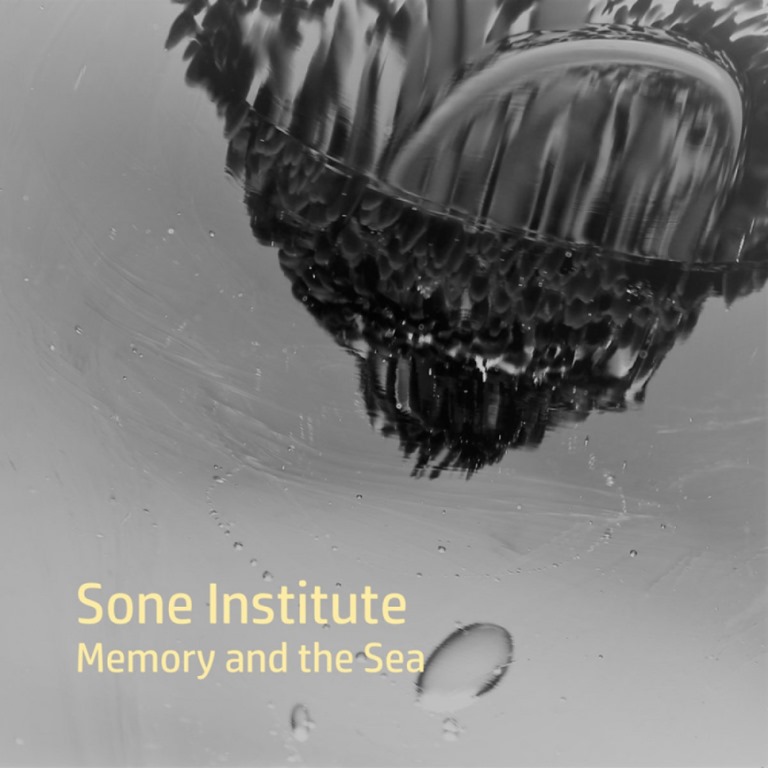
It’s been a full decade since I first encountered the surreal & fantastical world of Sone Institute, the vehicle for electronic artist Roman Bezdyk, and I’ve followed his work up to 2018’s Where Moth and Rust Consume, which was championed by 6Music’s Gideon Coe.

Bezdyk’s output has always been interesting, and always evolving, and this standalone single release, which spans a full ten minutes, is an evocative work which draws together, as the title suggests, the sea and the echoes of memory.

There is something unique about the sea and its pull, and I suspect many of us have some memory connected to the sea, be it a family holiday or a journey by boat or ferry. And because the sea is capable of such very different states or moods, from the tranquil lapping of a low ebb to the raging torment of a storm or even a tsunami, so our relationships with the sea are likely to be wide and varied, and a love of the ocean must necessarily be tempered by a certain caution.

Chiming bells ring out against a sloughing wash of waves on a beach, and ‘Memory and the Sea’ brings the more tranquil aspect of the tides to the fore instead of elevating the tempests that can destroy lives and landscapes, through a combination of field recordings and abstract wavering drones. Amidst woozy, warping electronic tones the listener is pulled back to some kind of reimagining of the sea in some almost generic form: every moment spent either building sandcastles or otherwise simple staring out across the rolling waves merge together to forge a new consciousness which may or may not be real. The colour fades and takes on a Polaroid filter, or the soft hue of a dream. Wish you were here?

AA

a4243834059_10

Cruel Nature Records – 5th March 2021

Christopher Nosnibor

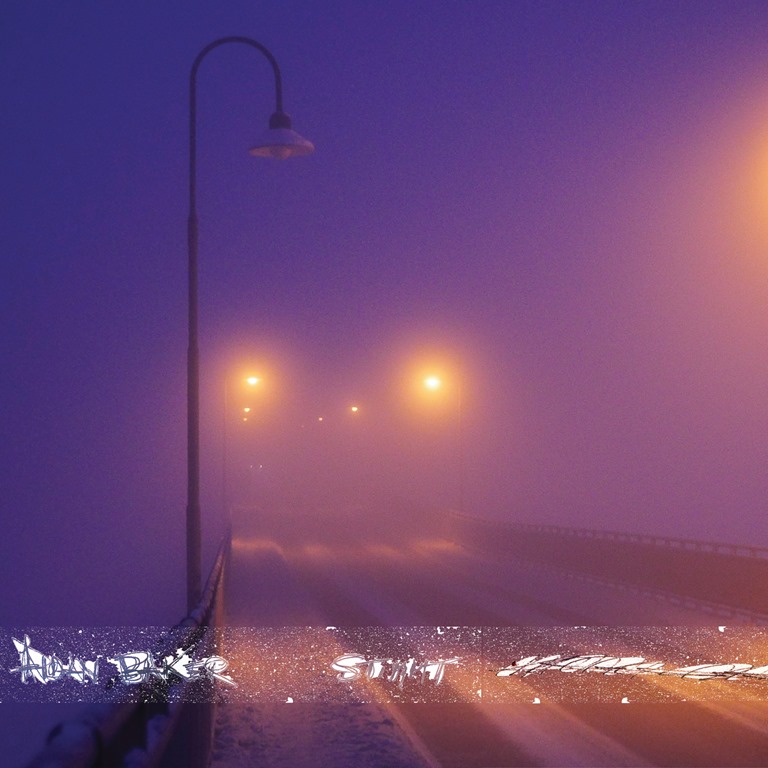
Aiden Baker’s releases have become a regular feature here at Aural Aggravation. His prodigious output, not only as a solo artist, but through innumerable collaborations, often released through Gizeh Records, have given us no shortage of material to contemplate and ruminate over. It’s often hard to keep up with his output,

Stimmt was first released digitally back in 2015 on Broken Spine Productions, and has been was remixed and remastered for its first physical format outing via Cruel Nature in a limited edition of 60 cassettes (as well as digitally again).

Baker is to guitar what John Cage and Reinhold Friedl were / are to piano, with the ‘prepared’ guitar being a prominent feature of his musical arsenal, along with an array of other ‘alternative’ methods of playing, across a genre span that incorporates elements of rock, electronic, classical, and jazz, within his broadly ambient / experimental works

Stimmt sits at the more overtly ‘rock’ end of Baker’s stylistic spectrum, launching with the heavy riffology of ‘Dance of the Entartet’ that’s got a prog vibe but comes on with a heavily repetitious throb that owes more to Swans than Pink Floyd or Yes. The percussion crashes away hard but it’s almost buried in the overloading guitar assault that’s cranked up to the max and is straining to feed back constantly throughout, before it wanders off into ‘Atemlos’, where it’s the strolling bass that dominates as the guitars retreat to the background and sampled dialogue echoes through the slightly jazz-flavoured ripples. It’s here that things begin to feel less linear, more meandering, and the chiming post-rock sections feel less like an integral part of a journey and more like detours – pleasant, appropriate detours, but detours nevertheless – and it culminates in a climactic violin-soaked crescendo.

Veering between hazy shoegazey ambience that borders on abstraction, and mellifluous post-rock drifts, Stimmt is varied, and, oftentimes, rich in atmosphere. ‘Mir’ is very much a soporific slow-turner that casts a nod to Slowdive, but with everything slowed and sedated, wafting to an inconclusive finish.

The lumbering ‘Staerken’ stands out as another heavy-duty riffcentric behemoth: it’s low, it’s heavy, and finds Baker exploring the range of distortion effects on his pedal board, stepping from doom sludge to bolstering shred and back, and there’s a deep, crunchy bass that grinds away hard, boring at the bowels and hangs, resonating at the end.

After the full-on overloading ballast of ‘Quer’ that really does go all out on the abrasion, with squalling guitar paired with a nagging bass loop that’s reminiscent of The God Machine (the track as a while, calls to mind ‘Ego’ from their debut Songs From the Second Story), closer ‘Resolut’ is eight minutes of semi-ambient prog.

It’s a lot to digest, and it’s certainly not an easy pigeonhole, but it’s an intriguing album that stands out as being quite different both musically, and in the context of Baker’s output. Unusual but good, and offering much to explore.

AA

cover

Cruel Nature Recordings – 5th March 2021

Christopher Nosnibor

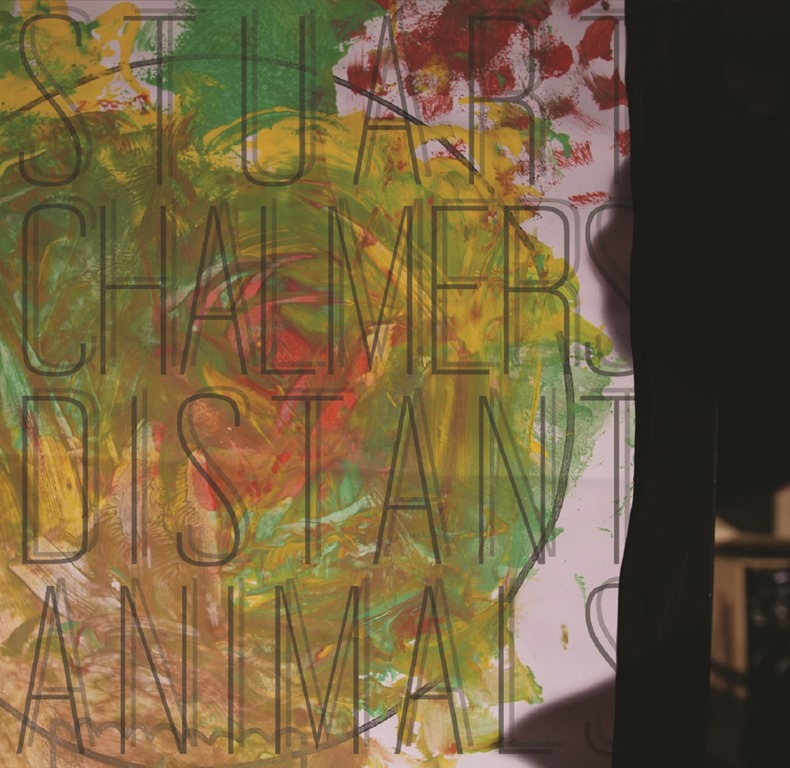
Live performances of experimental electronic work, particularly when involving an element of improvisation, can be somewhat hit and miss, and what’s more, sometimes, much of the wonder and appreciation is derived from witnessing the performance itself, as much as the sound.

This album was recorded live at Cave 12 in Geneva in 2019, when Stuart Chalmers and Distant Animals shared a stage is a document of a moment in time, and is one that explores differences and similarities. Each act occupies one side of the limited-edition cassette (of which there are just 45 copies) and naturally, a track each on the digital version, and each track contains a full performance from each artist.

Chalmers’ set is a sparse, minimalist affair. Clanking chiming notes – partially atonal, and entirely arrhythmic plink, plonk, clatter and clink every which way. It is detuned strings? Is it a glockenspiel, xylophone, or similar? Whatever the sonic source, it increases in speed and urgency, but not in musicality, and a flat chord shreds and mangles as though strumming a washboard with relentless frustration. While the performance is brimming with energy, there’s a purposeful tonal flatness to this.

At times a clattering clang, a monotonous chang of deadened notes, and a tension-building thrum that grates away relentlessly, Chalmers’ set is never comfortable, never easy, never really breaking into the realms of melodic. The relentless scrapes and scuffles scratch away for twenty-three troublesome minutes. It’s rhythmic and does build in a certain way, but it’s slow progress that’s uncomfortable. One suspects that this uneasy sensation would only be heightened during the actual performance.

Distant Animals’ set is more overtly ambient, a twenty-minute piece that centres around twisting dronescapes and elongated crawls. The layers ripple and rub against one another to create not a dissonance as such, but a vibration of frequencies.. but suddenly, around the mi-section, the storm breaks and dissipates… there is a calm. Soothing synth waves of something that borders on electroprog crossed with chilled-out electroambient. Its trajectory is very different from Chalmers’ – instead of a single, linear trajectory that works its way to a specific end point, they navigate a series of passages and movements that segue into one another to form a meandering journey, which eventually tapers to a fade that leaves you wondering if it was all a dream, and wishing you had been there.

AA

COVER1

Panurus Productions – 5th March 2021

Christopher Nosnibor

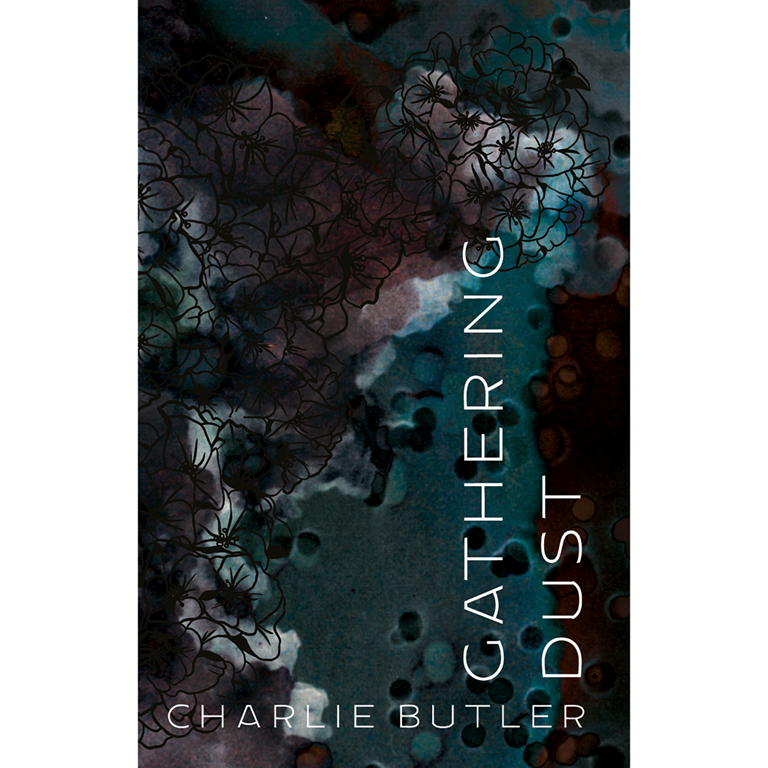
Charlie Butler’s Gathering Dust is something of a departure for Newcastle tape label, PANURUS Productions, in that it’s incredibly mellow. It’s not a complete departure, through: designed as a cassette release, it features two longform tracks, each fitting neatly onto one side of a good old C30 (the likes of which I used to get from Maplins back in the early 90s) – or, in an ideal world, perhaps one side of a 12” or 10” vinyl release. But we know that for a niche label like this, the cost of a vinyl run is prohibitive, and while their print runs are extremely limited, they do sell out – which is the perfect operating model: knowing the scale of their audience and sales reach, and catering to demand without massively overreaching, means costs are covered, and everyone wins. There’s a stream and digital download for anyone who wants it, after all. Everyone’s a winner.

The album title is in fact an amalgamation of the individual titles of the two tracks, and separated, the context shifts a little. Gathering dust connotes a lack of movement, a stasis, something that’s essentially furniture, something neglected, unused. This places the power of word association in sharp relief: together, the words suggest something very different in contrast to when they’re independent of one another.

And so ‘gathering’ brings connotations of collecting, bringing together, of hunter—gathering. And from the dense, swirling drone of a trilling keyboard on the fifteen-and-a-half-minute track that is ‘Gathering’ emerges a slow-picked guitar. The drone und strang approach, whereby echo and tube crunch coalesce to envelop the guitar in a soft sonic bubble is highly reminiscent of latter-day Earth and Dylan Carlson’s solo releases. It doesn’t ‘do’ much, and doesn’t need to: ‘Gathering’ is a long, slow, and expansive work that explores atmosphere.

‘Dust’ is a deep, sense drone that billows and booms, and is indeed reminiscent of the heavy drone of Sunn O))). Its effects are soporific, and for a time my notes are sparse as I drift and move beyond the immediate environs of my workspace to immerse myself in this thick fog of a composition as it slowly unfurls with its post-rock leanings and immersive atmosphere. There’s a tonal warmth that surrounds this, and it borders on ambience at times, and dust washes and drifts like particles descending. And over time, it builds… and builds, swirling into a dense, billowing sonic cloud. The final minutes are reminiscent of the eternal drone of Earth 2 – and being one of my all-time favourites, that’s very much a compliment and an indication of just how textured and enthralling Charlie Butler’s brand of drone is.

Gathering Dust is remarkably dense, but it’s not heavy per se. It’s one of those releases you can simply surrender to, and lose yourself in the enormity of the sound.

AA

cover

Houndstooth Records – 22nd January 2021

Christopher Nosnibor

‘Transmogrifications’ features a brace of compositions by Guy Andrews reworked, reimagined, decomposed – spin it whichever way – by seminal experimental musician Kevin Drumm, with one from Permanence (which was released in September) and another from his latest, [MT][NT][ET]. Back in the day, this would have been a 12” single, or a CD single / EP. Now, it’s simply a release. Part of me feels that the devolvement – and dissolvement – of the physical format is sad not because of plain nostalgia, but because of the way it’s altered our relationship with music. The release of new music, when it required actually going into town to purchase it, arriving home with a sense of excitement and anticipation to hear something that had required not only the effort of the journey, but the outlay of actual cash, meant that there was an element of deliberation involved in each purchase: you’ve got a tenner (and there was a time not SO long ago when that would likely get you three new 12” singles at £2.99 – £3.50 apiece), and dropping the needle on each was an actual event. The loss of that sense of occasion, that event, is significant, and one that struck me unexpectedly on hearing this. As excited as I was to hear it, the joy was tempered by a certain pang of loss.

Drumm explains the remit he was given, which directed his approach to the project, recounting that “Guy essentially said that he’d rather not hear his own music played back to him…So with that in mind, it freed me up to drastically transform his material…it was a good experience taking something that is quite different than what I usually get up to and turn it into something different than what it is in its original form.” And the title says it all, really: ‘transmogrification’ is defined as the process of complete and usually extreme or grotesque change from one state or form to another.

Each track is an entire album, compressed, condensed, and generally reworked and altered beyond recognition.

And so it is that ‘[MT][NT][ET]’ is seven-and-three-quarter minutes of deep, swirling ambience, a deep mass of sound that eddies and drifts with a drilling metallic edge giving it a slightly uncomfortable sharpness. While it’s a more or less even drone, there are occasional – subtle – dips and twists that add to the understated but quite definite tension. And yet for all that, there is an overall sense of calm, a smoothness, until near the end, when its rich, space-like tranquillity is devasted by a rising blast of extraneous noise.

‘Permanence’ offers a different kind of experience, it’s more deeply textured, and a slower, lower simmering fermentation of sound. It also boils the thirty-two minute album down to eight minutes of overlapping sonic layers. Glistering shards of feedback are worn smooth in a soft wash of pink noise and an undulating amorphous cloud of noise, beneath which a grating sonic wreckage churns at such distance as to be almost subliminal.

And then it stops. Just like that. The abrupt nature of the ending is of note, accentuating the silence that follows immediately, and giving a tangible pause for thought on a release that has a lot more depth than the surface first suggests.

AA

a0405015056_10

When an album contains just three tracks, you know before you even hear a note that it’s going to be possessed of epic qualities. Similarly, when a band’s pitch includes ‘RIYL bands like Swans, MONO, lots of layered drums and percussion, ambient soundscapes, and wall of sound guitar and big strings’, (and I think it’s pretty much public knowledge by now that I do), then the same applies, and so needless to say I was all over this in an instant.

The first track, ‘The Gift’, is a twenty-minute behemoth, a sweeping exploration that builds from tense strings of the kind that would likely be at home on a Netflix period drama into something altogether more awe-inspiring, as the drums rumble like distant thunder at a gathering pace and intensity. Over its immense span, it leads the listener on a journey through an array of soundscapes, and there’s not only considerable atmosphere being conjured here, but the music also has a very visual aspect. You feel as if you’re being transported through different scenes, and at times, are creeping cautiously and peering around corners, while at others, staring out from a high plateau overlooking immense vistas that stretch further than the eye can see.

This is very much latterday Swans providing the inspiration here, with the expansive instrumental passages and near-ambient stretches that came to define releases from The Seer to The Glowing Man via To Be Kind, each of which stretched over a full two hours apiece. However, solarminds’ compositional approach and overall sound is quite different, leaning very much toward more conventional post-rock tropes (but without the contrivances of, say, Sigur Rós) and while there are some immense percussion-driven crescendos, with the strong-centric instrumentation, they don’t hit the explosive peaks of, say, Explosions in the Sky or Her Name is Calla. None of these are bad things, and while the sheer scale of their music does definitely sit within the domain occupied by MONO.

‘The Visit’ begins with an amorphous mass of dank, dark ambience, and is thirteen minutes of elongated, undulating drones that twist, turn, scrape and screed against a tumultuous barrage of percussion.

Closer ‘The Lie’ marks a significant departure, as the sound of heavy rain and extraneous noise gives way to a near -acappela vocal, an acoustic guitar, muffled and distant, providing the sparsest of accompaniment. It’s here they’re most reminiscent of Her Name is Calla at their most minimal, stripped-back, and folky, and it’s a delicate, tender experience that grows in emotional intensity and pulls at the gut with its starkness, its rawness.

Dissolving in a rumble of thunder, it’s a fitting conclusion to an album that, beneath some smooth surfaces, presents some quite troubled currents in the depths.

AA

sddefault

Gizeh Records – GZH101 – 22nd January 2021

Christopher Nosnibor

Gizeh label founder Richard Knox already has a quite remarkable resume of musical projects, often running simultaneously or overlapping. With Shield Patterns currently quiet and A-Sun Amissa standing as his primary collective vehicle, Knox’s contributions to collaborative works over recent years have been numerous, but to fill a gap – or more likely scratch another itch – he’s stepped into the (half) light with a new solo project, Of Thread & Mist. A fair summary is that the project sounds exactly as the name suggests, and one might say representative of the Gizeh ‘house’ style’ – evocative, haunting, juxtapositional, but also evasive, intangible, ephemeral.

Static Hymns contains two longform tracks: the first, ‘Grace and Truth Perish’ has a running time of eighteen and a half minutes, while ‘A Face Full of Drunken Ticks’ is a colossally sprawling thirty-two-minute epic.

The formulation of the album centres around music ‘composed by Knox then deconstructed and manipulated via hand-made tape loops, beaten-up 4-Tracks and modified cassette players’. There’s very much a sense of artistry around the manipulation of the material, an almost avant-garde collaging, repurposing, reconfiguration, destroying – or at least disfiguring – in order to build anew.

There is something old, faded, slightly damaged about the warped, wavering tape drones that seep tentatively from the speakers to begin with, creating a sense of unease, a certain degree of disorientation, a feeling that something isn’t quite right about the way the different layers of sound rub against one another without quite connecting. It’s a slow, trickling turn as gradients of sweeping waves of sound, broad in spectra and subtly textured like pale watercolours spreading into one another, and the edges blur into indistinction.

This type of cinematic, atmospheric ambient drone is very much Knox’s signature, and he’s long demonstrated a knack for slowly shifting from light to shade and back through almost granular gradation, but where Static Hymns stands out is its almost collage-like approach in places. The different elements overlap, and not always comfortably – and this is very much in their favour in the way in which they challenge the recipient: this is no simple drone-over-and-out, but an album that proffers a sensory challenge, and as such, demands more attention than so many exercises in background drift that occupy the ambient sphere.

Toward the end, the sound again begins to waver, waxing and waning, tapering and yawning, stretching and fading in and out unpredictably, as if slowly degenerating, degrading. There are a number of abrupt false endings as the sound fragments into evermore brief flickers. It stutters, it yawns, and finally, it is done – gone, ended.

But when the sound ends, the reflection begins. Static Hymns is an album that invites reflection in the silence which follows the final notes.

AA

GZH101_Digital_Sleeve

Ojud Records – 1st January 2021

Christopher Nosnibor

It may only be January 1st, but 2021 already feels very much – as expected – like a continuation of 2020. As a friend pointed out to me only this morning, in summarising the fact that the pandemic position remained unchanged and now we had the added shit bonus of having fully left the EU, ‘shit never sleeps’. Seeing so many post on social media about being glad to see the back of 2020 was somewhat depressing: I get the sentiment, and very much am on board with the significance and psychology of book-ending a period of time with the striking of midnight marking the start of a new calendar, but really, what changes? This year or ever?

One positive of this continuity is that Dave Procter is kicking off the new year where he left off the old one, namely by making and releasing more noise, and its timing is noteworthy, as a common theme within Procter’s work is some form of commemoration or ritual, with events like midsummer drone walks

This time, it’s with an alliteratively-titled work with occasional collaborator Claus Poulsen, with whom he plays one concert and makes one release every year. Parallel Perspectives is very much from the dronier end of his working spectrum, and follows Solaris (2019) and Minimum / Maximum (2018) in a continuum stretching back to 2015 and the release of his first work with Poulsen, PP. The release of Parallel Perspectives being a day late for 2020, despite having been recorded almost a year ago on 20th January 2020 also seems somehow, if accidentally appropriate, and something that won’t be lost on the artists, not least of all with Procter having relocated to Sweden ahead of the finalisation of Brexit. And works like Parallel Perspectives illustrate why: when creativity is so reliant on collaboration, free movement is essential, and this is a perfect advertisement for everything the un-UK has just thrown away in the name of ‘sovereignty’.

Not that there is anything remotely political about the album itself: this is purely a coming together of musical minds, and a celebration of their commonalities and differences – and it’s that mutual understanding, paired with an awareness of the power of contrast that make this.

As the liner notes detail, Parallel Perspectives was recorded in Copenhagen. The single track on the album is an extension of Procter’s Fibonacci Drone Organ minimalistic project, but with Poulsen adding overdubs. With his different perspective, he quickly forgets the minimalistic nature of the piece and details it with waves of half speed vinyl and samples.

An elongated organ drone hums, hovering and wavering gently in semi-stasis. Ruptures and incidentals abound, from seemingly random discordant cascades of sound and piano interjections to slow-whispering thermal winds and desolately chill nuclear gusts, and I’s remarkable just how much those details prove to dramatically colour the mood. Perhaps it’s the – for a better term – blankness of the flat organ drone that is as much key here, in that as of and in itself, it has no particular ‘mood’; it’s a neutral sound, imbued with precisely nothing. It’s only when rubbing against or along with another sound that it slides upwards or downwards, into light or darkness. There is no shortage of either over the course of the album’s fifty-three minutes, but there are many protracted passages which explore the realms of the ominous and eerie, the uncomfortable and the suspenseful, as fear chords creep like drifting mist in a dark city alley.

At times, it chimes, and at others, it grates. Sometimes it rings, and at others it drifts. At times, it swells, at others it tapers to nearly nothing. Its pace is barely perceptible, a continuously creeping shift, not so much a slow-burn as a smoulder of smoke tricking from a peat burner, and the layers added by Poulson only serve to protract the transitions, grinding a slow-motion audio that has a cognitive effect as you feel yourself slowing in line with its interminable aural crawl. And for all the moments that sounds like there is a heavy craft looming on the horizon, for all the protracted ponderous spells, there are moments that sound very like the soundtrack to breaking dawn, the soundtrack to redemption on the horizon.

Parallel Perspectives is subtle, but the devil is very much in the detail here.

AA

a1597962294_10