Posts Tagged ‘Album Review’

Everyday Life Recordings – 30th November 2018

Christopher Nosnibor

“We went into the studio with a couple of songs to record an EP, and we ended up with an album-length EP. We like to just let things happen and for songs to mostly write themselves. It’s a case of mucking around and seeing what feels right and what doesn’t. We say it all the time, but it’s important to note – we don’t intend anything. We don’t feel like ‘artists’ with grand statements to make.” So London-based ‘anti-music’ collective Moderate Rebels say of their second album, Shared Values – proving they’re fairly strongly anti-promotion, too.

Perhaps their lack of giving a shit, their lack of pretence, their self-effacing rejection of artistry is key to what makes Moderate Rebels true artists. It’s in this self-imposed distancing, even more than in their pursuit of repetitious, off-kilter kraut-influenced indie that Moderate Rebels really betray the influence of The Fall. You very much get the impression that if they had a hit they’d immediately bury further underground just to be bloody-minded.

‘The Value of Shares’ kicks it all off with a motoric drum machine – vintage, primitive, muddy and half-buried in the mix – and a chugging, wonky guitar that becomes increasingly swathed in flange and as they plug away at one chord and one line on and on and on, it gets more messy.

‘Stranded in Brazil’ is languid and magnificently sloppy in that early Pavement way, while ‘Eye in the Sky’ pitches a damning picture of austerity, privatisation and the whole morass of economic shit of 2018 against a ramshackle three-chord groove. There’s no shortage of those, with singe cuts ‘I Love Today’ and ‘Faith & Science’ being not so much standout tracks as prime examples of Moderate Rebels’ capacity to push a template to the max and achieve optimum effect.

‘Who will save me from my government?’ they ask – repeatedly – on closer ‘Have to Save Myself’, before answering with the song’s title. Repeatedly. It might not be a grand statement, but in a simple couplet they’ve captured a certain vital essence of the now. The answer encapsulates the culture of privatisation and absolute neoliberalist capitalism. Fuck you: save yourself or die. And in its absolute reduction to the repetition of just two lines, it also reminds us of May’s empty mantras and the soundbite media that dominates every aspect of our lives.

The structure of the album – essentially alternating spaced-out, meandering psychey efforts with straight-ahead, thumping Krauty rockers – swiftly emerges, and if, as a formula, it’s far from subtle, it’s no detraction, just as the fact that Shared Values sounds very like its predecessor, 2017’s The Sound Of Security, with its atonal multi-vocal disharmonies and sparse, repetitive song structures and lyrics, whereby two lines and three chords are stretched past the four-minute mark. And yet it’s not for a single second remotely tedious – and I say that completely without sarcasm, because they’ve totally nailed the trick whereby an infinite sonic loop feels like a kaleidoscopic tunnel that pulls the listener ever forwards despite being rooted to the spot. All of which is to say, it may not be a huge leap but then, if didn’t need to be. In the canon of wonky Kraut-rock, Shared Values is every bit as welcome and necessary as The Sound Of Security. Here’s hoping they continue to release an album a year for the next 40 years, and that they all sound like this. Meanwhile, it’s enough to play the two albums they’ve got out back-to-back and on a constant loop.

AA

Moderate Rebels - Shared

Cave – Allways

Posted: 5 December 2018 in Albums
Tags: , , , , ,

Drag City

Christopher Nosnibor

Allways represents an evolution for Chicago-based psychedelic droners Cave. Perhaps not an evolution in spelling, having delivered an album I can’t help but squirm at whenever I see its title, but that’s not the point when assessing its artistic merits. But nevertheless, Allways is very much a different work from its predecessor, Threace

As the press blurb explains, ‘during the making of the last album, Threace, CAVE was in the process of becoming a quintet. They toured the world afterwards, playing on four continents and eighteen countries – as close to everywhere as they could get. Then they took a minute. They recorded it over time, in Chile and then Chicago. You can hear all of this, the energy of liveness, the reps, and consolidating expanded possibilities within their new alignment, the time away, the distance, and the freshness of returning to recorded sounds, everywhere on Allways.’

And here I find I’m torn. The skewed angles of the previous efforts – which admittedly always alluded as much to jazz as math-rock – have been sanded down a bit, so while there’s still a heavily psychedelic aspect to the album’s compositions, they’re very much predominantly of the jazz persuasion. And this is where I get twitchy. Sure, the nine-minute ‘Beaux’ pushes the space-ruck groove, but there’s some ultra-anal wah-wah action that’s pitched at precisely the level marked ‘irritation’.

There’s nothing to match the epic build and driving sustained crescendo of ‘Sweaty Fingers’, for example. And while they pitch Allways with the enthusiastic babble that ‘their inspiration comes from everywhere – Miles, psych, beats, exotica, library music, rock, punk, the Germans, the New York guys too, minimalists, the Dead, music from India, everywhere!’ I mostly get a lot of jazz here. And you know how I feel about jazz, man. Or if not, then maybe you ought to dig that while I don’t hate jazz per se, I’m on the top flight of picky when it comes to how I like it.

Allways kinda slips to the wrong side, the muso side. It gets mellow, and it gets introspective – not in the analytical, self-aware sense, but in the looping grooves with funk-tinged licks that nag and gnaw beyond insistence to irritation. ‘The Juan’ starts off promisingly enough, a bit of a prog riffing and a bold, strolling bassline that then meanders into more math-orientated territory, and then… well, some intriguingly expansive passages are marred by just too much jazz vibing that makes it an album that requires a beard to stroke to be eligible to listen to.

AA

Cave – Allways

Elli Records – EL07 – 13th November 2018

Christopher Nosnibor

Silence has long intrigued us. Variations of the philosophical question, ‘if a tree falls in a forest and no one is around to hear it, does it make a sound?’ have been a subject of contemplation since the 18th Century. As much as this ponderance is concerned with perception rather than the existence of silence, it does also hint at the idea that sounds are only what we hear. Does silence actually exist? In an evermore noisy world, the possibility of silence seems to have diminished beyond the vanishing point. And the more impossible its attainment becomes, the more we seek and desire it. And yet, at the same time, some people fear silence, even if only subconsciously.

In my own experience, even a moment of peace is conspicuous by its mere existence. My attempts to escape the noise of the world invariably prove futile; the babble of the office, the endless throng and thrum of traffic and people on the journeys there and back; a wife and child and general domestic noise on either side of those. Taking refuge in my office, I spend my evenings listening to music, the whirr of my laptop’s fan and the click of the hard drive a constant even when the music stops, while dogs bark outside and neighbours clatter around in their kitchens on either side. The lived experience is one of no escape, and no respite, and one which confirms the myth of silence.

Much meditation and mindfulness is concerned with seeking silence, if only internally, and musical experiments with silence have been manifold, although perhaps most famously by John Cage. It was on visiting an anechoic chamber – a room designed in such a way that the walls, ceiling and floor absorb all sounds made in the room, rather than reflecting them as echoes, and also externally sound-proofed – at Harvard University and Cage’s realisation of the impossibility of silence that prompted the composition of ‘4’33”’.

It was a similar room – this time at the Mechanical & Acoustic Research Lab LMA-CNRD in France – which not only inspired Julien Bayle to explore silence, but provided the source material for the album, captured during two hours of silence in the room. The results – as the title hints – are anything but silent.

As the text which accompanies the release explains, ‘Tiny random variations of physical electronic noises coming from the recording system itself, as uncontrolled spectres haunting the wires, have been captured and amplified, cut into tiny slices and grains, and used, both as basic sound sources feeding the Bayle’s machinery, and as modulation sources influencing pre-existing sound textures and continua performed live by the artist.’ Evoking Cage, it suggests ‘Violent Grains of Silence is the interpretation of the impossibility of silence by Julien Bayle’.

From what appears as nothing on the surface, Bayle has not only created something, but something immense. Violent Grains of Silence is not a hushed, tranquil work, but one of volume and great sonic turbulence. Violent is indeed an appropriate descriptor. Violent Grains comprises a series pieces through which whispering, grumbling, crackling, groaning, droning sounds swirl and eddy. There are crackling blasts of explosive static, grinding, electric, metal-edged abrasions – ‘Distr’ is a particularly blistering burst of coruscating noise. ‘Unpr’ buzzes and fizzes and thunders, a heavy barrage of low-end sounds creating the effect of an arrhythmic percussion.

Amplification counts for a lot, but it’s only possibly to amplify something which already exists. And so it is that Bayle has created a work which is rich in texture and tone, dynamic and at times disturbing.

This is truly the sound of silence. And the silence is at times deafening.

AA

Julien Bayle - Violent Grains

10th September 2018

James Wells

Sweden’s Noemie Nours promises ‘All-ages slo-fi lullabies, supporting a non ideological, vegan and drug-free lifestyle,’ and all of the proceeds from digital sales this, her third LP, will be donated to the charity Orphaned Wildlife. Such selfless acts are increasingly rare in a (rapidly changing) climate dominated by Brexit and right-wing, hardline capitalist ideology, while we still feel the repercussions of the last economic downturn which followed the sub-prime housing crisis of 2008-2009. For an artist to make art for the greater good rather than for gain is admirable, and Noemie Nours has made it her mission to do whatever she can to save the bears. Bears are her thing. As is slightly off-kilter folk music. And I’m not going to mock.

Following on from debut single ‘The Life of Bears’ and album Bear Meditations, her love of bears remains undiminished with As a Beare Doth Her Whelps.

The album’s seven songs are primarily constructed around picked acoustic guitar and vocals, and if the titles betray the thematic leanings of the lyrics or musical intent (‘Bearsplaining’, ‘Den’, ‘Brought into a Wilderness’, ‘Ursa Minor Forest’), there’s also something of a sparse primitivism about the songs, too. There’s an innocence and openness about Noemie Nours’ music that’s refreshing and utterly charming, while occasional passages of jagged fretwork and melodies which wander off the path of conventional key and notation are very much part of the appeal.

With its sparse arrangements, slow tempos, and overt lack of complication, you might say that it’s an album that’s very much about the ‘bear’ necessities.

AA

Noemie Nours – As a Bear Doth Her Whelps

Panurus Productions – 19th November 2018

Christopher Nosnibor

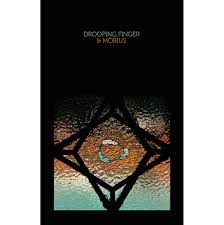
What have we got there, then? It would appear to be a collaborative release from Drooping Finger and Möbius, utilising the former’s lo-fi minimal electronic drone as a setting for the latter’s looped wordless vocal textures.

I must admit that I’m unfamiliar with ‘Newcastle gloomlord’ Drooping Finger, but ‘melancholic vocal duo’ Möbius I am aware of. Their first collaborative work, imaginatively titled Drooping Finger & Möbius is pitched as combining their talents, and consists of their set at The Gosforth Hotel’s Sumner Suite and material recorded during a session at First Avenue Studios in Heaton.

And what does is give us? The BandCamp write-up tells us that ‘Guttural gurgles are embedded in glacial electronics whilst siren songs tumble overhead. The tones hover above the murk at times whilst disappearing into its eddies at others as the collaborative trio draw you into their bleak atmospherics’. And all of it’s true. Although mostly it’s the murk that dominates, with sounds and tonal ranges all but buried beneath a sonic smog.

The live side, (at least corresponding with the cassette release) containing one track simply entitled ‘Sumer Suite’ is first, and is 26 minutes of dark ambient rumblings and janglings and mid-range drones, punctuated at first by stuttering, echoic beats, a shifting soundscape of disquiet. Ominous hums and swells of distant thunder provide the backdrop to disembodied, angelic voices low in the mix and veering between euphoric grace and the anguish of entrapment. Sonorous low-end booms out like a warning signal and cuts through the rising cacophony. But this is not a linear composition, there is no obvious trajectory: instead, the objective is the creation of atmosphere, and while it does naturally ebb and flow, peak and trough, the sustenance of tension is the priority here. Amidst slow crashes and waves of darkness emerge… nothing but nerve-tingling tensions, and even as the piece faded to silence, its hard to settle completely.

The studio side – again, consisting of a single track called ‘Stung’ which spans a full half an hour – provides more of the same, and with similar sonic fidelity at least on my speakers. Heaving drones like distant passing motorcycles drift in and out of range. Ghostly voices drift around nerve-chewing mid-range drones that shimmer and churn like foam on sand. On and on. Again, it doesn’t go anywhere, but that it’s the intention: it funnels and eddies to immersive effect. The tension builds not by any increments within the music, but by accumulation.

It’s a lights off, candle lit, eyes closed type of album, whereby there are no dominant features, and barely any features at all. In context, features are surplus to requirement: Drooping Finger & Möbius makes its presence known subtly, indirectly, creeping under the skin and weaving its dark magic subliminally.

AA

Drooping Finger   Mobius

Hallow Ground – 16th November 2018

Reinier Van Houdt’s 2016 solo album Paths of the Errant Gaze was a collage of quiet, dark ambience, and Igitur Carbon Copies continues in a similar vein. The inspiration for this work is the unfinished gothic tale Igitur, a collection of texts ultimately abandoned by the author, the French symbolist poet Stéphane Mallarmé in 1869.

Considering the fragmentary nature of the incomplete work, not to mention Mallarmé’s tendency to incorporate theoretical aspects within his practise, the appeal to an artist like Van Houdt isn’t hard to see: a classically-trained pianist who’s collaborated with artists ranging from John Cage to Charlemagne Palestine and has been a member of Current 93 since 2012, he’s long been fascinated with ‘all matters that defy notation: sound, timing, space, physicality, memory, nose, environment’. This is one of those works that could very easily inspire a full-blown essay instead of a review, and there’s a temptation to write it – but does anyone actually want that? Does anyone have the time to read it, even if I had the time to write it – and I mean properly?

To reduce the experience and reflection to something manageable, with Igitur Carbon Copies, Reinier Van Houdt presents a work of immense theoretical depth in an accessible form, although obviously these things are relative. That is to say, it’s a challenging album, but one’s appreciation doesn’t require a priori knowledge of the theoretical concepts around authorship and originality, around chance and destiny, around temporality, and the myriad contexts behind it. On the surface – a deep, dark, rippling surface as it may be – it’s a dark ambient work littered with muttered speech. Beneath that surface, there’s a lot going on. And so what Van Houdt presents is in no way a carbon copy, but a corrupted, adapted interpretation of Igitur. And so begins the journey through the stages of copying and alteration, a question which lies at the heart of postmodern textual interrogation, and William Burroughs’ novel Cities of the Red Night. Text mutates. Even a carbon copy is a copy: it is not an original and therefore different.

The eerie and the uncanny reverberate around every shadowy corner of the album’s ten compositions, some of which are but the briefest, most fleeting sonic experiences, starting with the 40-second opener, ‘Annunciation’, which begins with dank and distant rumblings which expand into turning ambient tones, before segueing into ‘An Empty Set’ in a blast of static that lasts but a fraction of a second but completely fractures the flow.

Drawing source material from Mallarmé – revised by Van Houdt, and read by David Tibet in his best monotone – there is a distinct sense of narrative about Igitur Carbon Copies, however disjointed. The vocals are treated, albeit subtly, to render them with a certain trembling reverb that adds a disquieting edge. And there are extended passages that rumble and undulate, a simmering sonic soup. It doesn’t really go anywhere, and nor does it need to: it creeps around on the peripheries of the senses and pokes at the psyche almost subliminally. The effect, then, is difficult to define, but it’s nevertheless something that happens. One traverses Igitur Carbon Copies in a certain state of somnambulance and bewilderment. But one definitely traverses it, and its effects are definite.

AA

Reinier Van Houdt – Igitur Carbon Copies

1st October 2018

Christopher Nosnibor

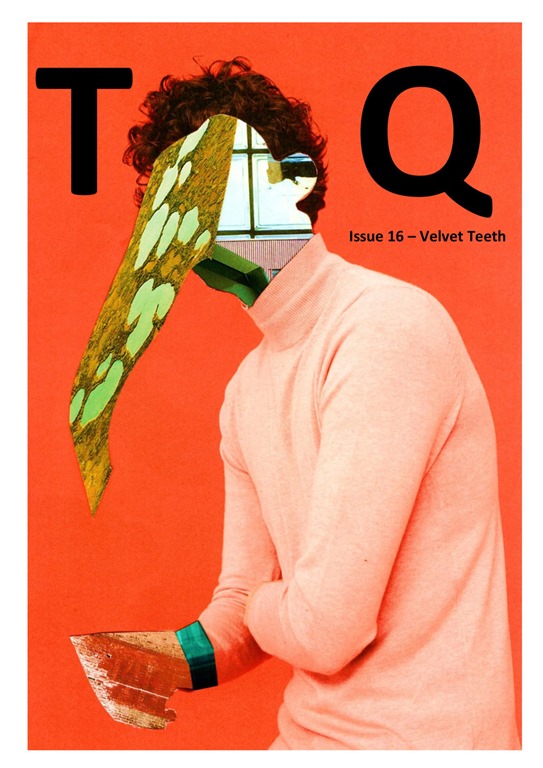
Velvet Teeth was originally released as a 200 only limited-edition CD through the October issue of TQ Magazine, which is the kind of publication that gives coverage to the likes of Ceramic Hobs and Drooping Finger – not so much competition for Aural Aggravation, but a channel with a shared goal of giving coverage to the kind of acts most won’t, assuming they’ve even heard of any of the artists. The funny thing about niche music is that it has a fairly hardcore set of devotees, and there’s a kind of disparate, disconnected community that’s less of a scene and more of a rhizome-like underground network. And while a lot of fairly niche stuff may still only have a potential market of around 200, it’s often amazing just how many oddballs there are hiding in the cracks demanding the work of some bands that on the surface seem so obscure that even their mates haven’t heard of them. Chlorine – the musical vehicle of Graeme Hopper – certainly has that wider appeal, and moreover, most certainly deserves wider exposure and the opportunity of a larger audience.

Velvet Teeth is experimental in the most explicit sense, a sequence of fragmentary sonic collages. The longer pieces roam around murky depths with ominous fear chords obscured by laced shrouds of sonic fog. ‘Manlines’, with its down-tuned, sinister vocals and groaning, droning dissonance, and ‘The Scenic Route’ exploit dimetric tonalities and the prominent separation of frequency ranges, with rumbling, almost subliminal low-end providing a base for niggling treble. The six-minute ‘Low Hauxley Tide’ pushes further on the resonant low-end pulsations, a low, tidal throb providing the main body of the piece. It’s kinda mellow, but kinda shiversome, too. There’s a creeping fog of darkness that pervades both the piece, and the work as a whole, which creates a certain sense of separation. It’s simultaneously immersive and engaging, but there’s a feeling that you’re not quite in the same room and there’s a force-field preventing entry.

‘Who Pays for This’ is a spine-tingling mess of scrapes and jangles, muffled, slowed speech that’s just on the cusp of indecipherability, and elsewhere, ‘Bubbewraps’ is woozy, wibbly, vaguely disorientating. The album as a whole is built on a loose, drifting fluidity, with compositions that aren’t so much compositions as sonic coalescences which occur as much by chance as design.

Uncomfortable, awkward, unsettling… these are the positive qualities of the oddity that is Velvet Teeth.

AA

Chlorine - Velvet

Cack Records – 7th December 2018

Christopher Nosnibor

I rarely review the same album twice. I mean, really, what’s the point? Admittedly there are occasions when I’ll revise my opinion of a record or a band – I absolutely hated The Fall the first time I heard them on Hip Priest and Kamerads, but came around a couple or three years later. And yes, it’s inevitable that people go off bands or records after a period of time: some of the stuff you listened to in your youth is just embarrassing 15, 20 years later.

But the arrival of a picture-disc vinyl pressing of Touch & Go, the last album by Mr Vast does inevitably demand a revisitation of sorts. Unlike many albums I bang reviews out for, I have actually listened to Touch & Go since, because for all its zaniness, the endless procession of quirky oddball moments, and oddly 80s electrofunk vibe, it has some undeniably great songs on it, which are more than pure novelty.

Mr Vast released Touch & Go almost exactly three years ago, to an off-tune synth-disco fanfare of parping trumpets and the pitch that ‘he’s lost the fucking plot’. And so it was that Vast’s second compendium of cack pop crash landed on the planet. And I dug it. Writing for Whisperin’ and Hollerin’ I draw comparisons to Har Mar Superstar and made some reference to 80s electroclash in an attempt to grapple with the whappy, tone-bending synths and bouncing basslines which are a dominant feature of a dizzyingly eclectic album, commenting that ‘if you think theatrical oompah and a self-help relaxation track with a twist shouldn’t feature on the same album, the perhaps this isn’t the album for you. But if you thrive on incongruity that goes far beyond postmodern hybridity, then Mr Vast is your man…Half smart-arse, half plain weird, wholly unpredictable, Touch & Go is as whappy as hell, for sure, but the execution is far from cack-handed’.

And I stand by that, although I’d certainly throw in certain similarities to the Bonzo Dog Band when considering Vast’s quirky, irreverent and exceedingly British eccentricity. Split into two halves across the ‘brekkie’ and ‘supper’ sides, the sequencing of the tracks is perhaps more noticeable in rendering an album of two distinct halves, with the second (‘supper’) side being more trippy folksy and less frenetic than the first (brekkie).

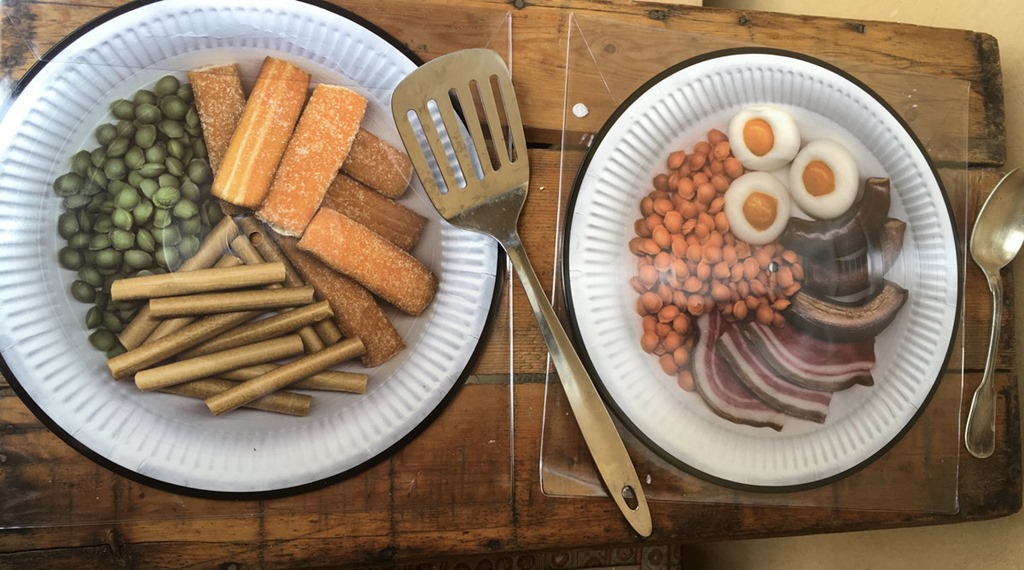
But what the vinyl release brings to the party is… groove. Naturally – it’s vinyl after all. Chances are, those who buy it will have already heard at least some of the music on-line, which again limits the need for further critical analysis of the music contained here. But as an artefact, as an experience… This brings new dimensions. Visually, it’s striking, to say the least, taking the concept of the original cover art to a new level. The rendering of something being something that it is not places it in the domain of the vaguely surreal, while the vibrancy of the shades is eye-popping. It’s a nice, thick chunk of wax and nicely mastered. And it comes with a doyley slipmat. It’s the first record I’ve ever seen with a doyley – and this one is gold and shiny! Of course, the track-listing has to go somewhere. Flippancy aside, in a world oversaturated with product and pointless tat, and a world of conformity and uniformity, Mr Vast is a glowing beacon of individuality and a maverick icon representing art, delivered with a demeanour of not giving a toss abut criticism or commerciality. This in itself makes Vast a hero; the fact the album’s a left-field corker only adds to his heroism.

AA

And there’s more here

AA

Mr Vast Vinyl

Hallow Ground – 16th November 2018

James Wells

While the majority of the releases on the Hallow Ground imprint which have come my way have been pretty noisy, the Gloryland EP by PLYXY is notable for being extremely mellow indeed. Pressed into heavyweight red vinyl (and available digitally), with three tracks on side one and two on side two, it’s something of a vintage-style EP.

Nothing really happens over its duration, and one might conclude hat while the digital version achieves optimal immersion and absolute ambience, the vinyl version gives the listener reason to move in order to flip the record, meaning they’re tugged from their soporific torpor for a moment. With a digital promo, I find myself drifting… drifting… heavy-lidded and drowsy.

In keeping with the loosely-formed Aural Aggravation project to divide ambient works into background and foreground (and whatever shade in between seems appropriate), Gloryland is for me the apex of ambient: I enjoyed it, but was close to sleep around the mid-point. And this is no criticism: we need mellow, and Gloryland is a totally pleasurable listening experience.

AA

PLYXY – Gloryland