Posts Tagged ‘Album Review’

Ojud Records – 1st January 2021

Christopher Nosnibor

It may only be January 1st, but 2021 already feels very much – as expected – like a continuation of 2020. As a friend pointed out to me only this morning, in summarising the fact that the pandemic position remained unchanged and now we had the added shit bonus of having fully left the EU, ‘shit never sleeps’. Seeing so many post on social media about being glad to see the back of 2020 was somewhat depressing: I get the sentiment, and very much am on board with the significance and psychology of book-ending a period of time with the striking of midnight marking the start of a new calendar, but really, what changes? This year or ever?

One positive of this continuity is that Dave Procter is kicking off the new year where he left off the old one, namely by making and releasing more noise, and its timing is noteworthy, as a common theme within Procter’s work is some form of commemoration or ritual, with events like midsummer drone walks

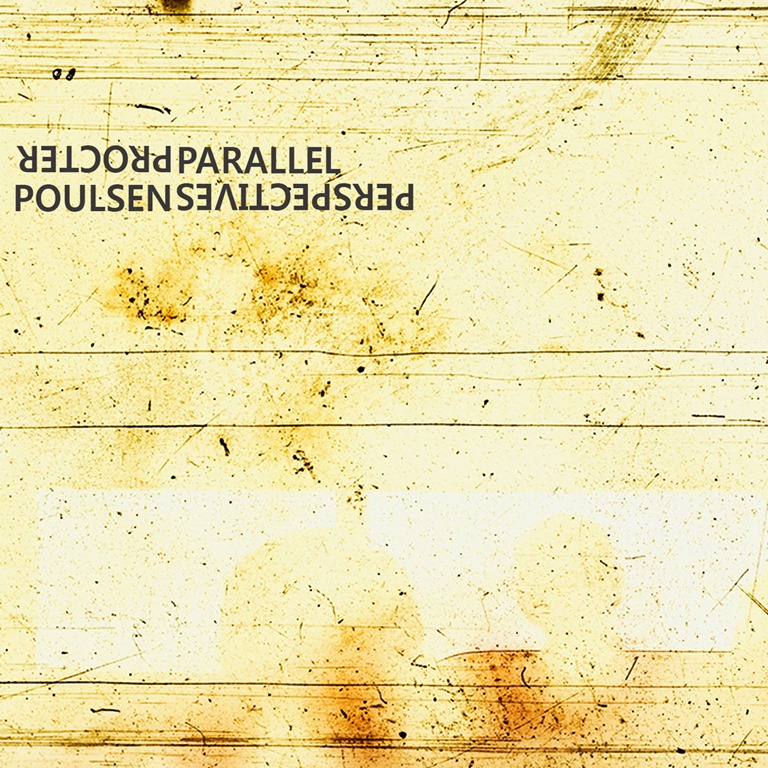
This time, it’s with an alliteratively-titled work with occasional collaborator Claus Poulsen, with whom he plays one concert and makes one release every year. Parallel Perspectives is very much from the dronier end of his working spectrum, and follows Solaris (2019) and Minimum / Maximum (2018) in a continuum stretching back to 2015 and the release of his first work with Poulsen, PP. The release of Parallel Perspectives being a day late for 2020, despite having been recorded almost a year ago on 20th January 2020 also seems somehow, if accidentally appropriate, and something that won’t be lost on the artists, not least of all with Procter having relocated to Sweden ahead of the finalisation of Brexit. And works like Parallel Perspectives illustrate why: when creativity is so reliant on collaboration, free movement is essential, and this is a perfect advertisement for everything the un-UK has just thrown away in the name of ‘sovereignty’.

Not that there is anything remotely political about the album itself: this is purely a coming together of musical minds, and a celebration of their commonalities and differences – and it’s that mutual understanding, paired with an awareness of the power of contrast that make this.

As the liner notes detail, Parallel Perspectives was recorded in Copenhagen. The single track on the album is an extension of Procter’s Fibonacci Drone Organ minimalistic project, but with Poulsen adding overdubs. With his different perspective, he quickly forgets the minimalistic nature of the piece and details it with waves of half speed vinyl and samples.

An elongated organ drone hums, hovering and wavering gently in semi-stasis. Ruptures and incidentals abound, from seemingly random discordant cascades of sound and piano interjections to slow-whispering thermal winds and desolately chill nuclear gusts, and I’s remarkable just how much those details prove to dramatically colour the mood. Perhaps it’s the – for a better term – blankness of the flat organ drone that is as much key here, in that as of and in itself, it has no particular ‘mood’; it’s a neutral sound, imbued with precisely nothing. It’s only when rubbing against or along with another sound that it slides upwards or downwards, into light or darkness. There is no shortage of either over the course of the album’s fifty-three minutes, but there are many protracted passages which explore the realms of the ominous and eerie, the uncomfortable and the suspenseful, as fear chords creep like drifting mist in a dark city alley.

At times, it chimes, and at others, it grates. Sometimes it rings, and at others it drifts. At times, it swells, at others it tapers to nearly nothing. Its pace is barely perceptible, a continuously creeping shift, not so much a slow-burn as a smoulder of smoke tricking from a peat burner, and the layers added by Poulson only serve to protract the transitions, grinding a slow-motion audio that has a cognitive effect as you feel yourself slowing in line with its interminable aural crawl. And for all the moments that sounds like there is a heavy craft looming on the horizon, for all the protracted ponderous spells, there are moments that sound very like the soundtrack to breaking dawn, the soundtrack to redemption on the horizon.

Parallel Perspectives is subtle, but the devil is very much in the detail here.

AA
a1597962294_10

Magnetic Eye Records – 11th December 2020

Christopher Nosnibor

Often, the measure of a band’s quality is in their live performance, especially in the domain of metal when you’re up close and can feel the force, the viscerality and the volume – although these things don’t always necessarily translate to the live recording.

Magnetic Eye Records’ document of flagship band Horsehunter ‘destroying onstage at the “Day of Doom” label showcase at Brooklyn’s Saint Vitus Bar’ in November 2019 at the event held to commemorate the label’s 10th anniversary definitely does translate and makes for an absolute monster of a life album.

The four tracks are almost a quarter of an hour apiece, and the audio quality is exceptional – that is to say, studio sound with the added bonus of live volume. Yes, this SOUNDS loud. Played through speakers and given room to breathe, the sense of volume is suffocating and exactly the way it should be – like you’re in the room as the band lay down monstrous riffs.

For the most part, the pace is a crawl, the chords grinding out slow and sludgy, with throat-ripping vocals in the middle of the mix. Around five minutes into ‘Nuclear Rupture’ things slow to the point of almost stopping, and time stalls, and in this hanging moment we find the absolute essence of Horsehunter: that moment of perfect tension that hangs before the next chord crashes in like a landslide with a power that is utterly decimating in its destruction.

There is beauty to behold, but it’s the kind of beauty elicited in the watching of the bombing of Hiroshima in slow-motion. And with its frenetic guitar solo work and gut-churning bass that thunders across the abyss with earthquake-inducing force, this live recording is little short of devastating.

AA

a0106130191_10

Klanggalerie – 18th December 2020

Christopher Nosnibor

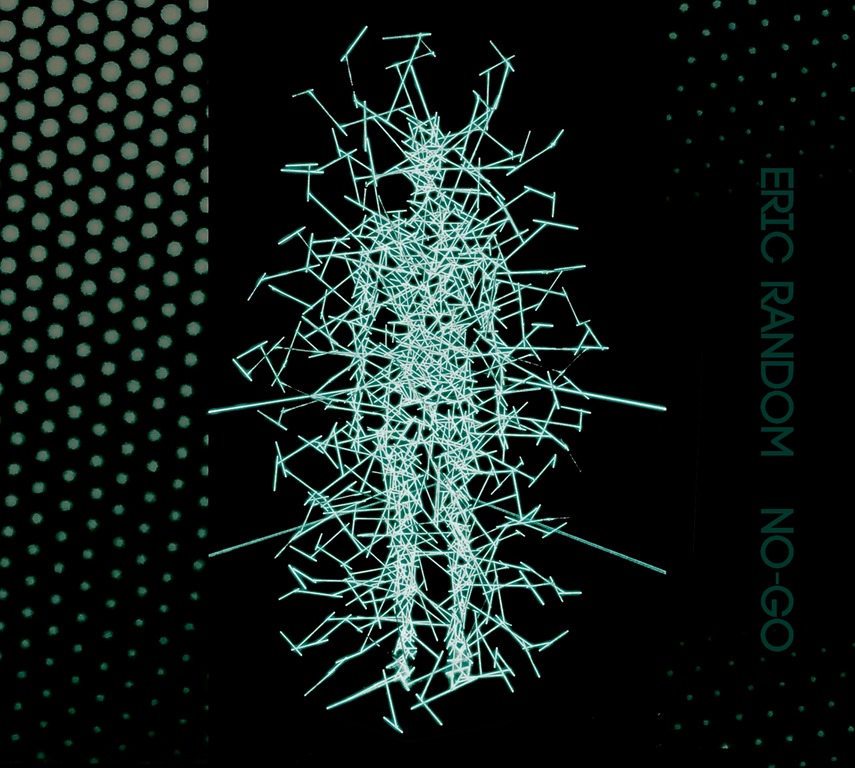
There’s no questioning Eric Random’s pedigree, having begun his musical career with The Tiller Boys with Pete Shelley and Francis Cookso before becoming part of the post-punk and experimental milieus of both Manchester and Sheffield, recording his first solo works at Cabaret Voltaire’s studio, and later fronting Nico’s band until her death in 1988. But while many artists dine out on their former glories – and it’s true that since the majority fail to scale to any great heights, a brimming resumé is something to celebrate, there’s equally a certain truth in the belief you’re only as good as your latest work.

No-Go is his fourth album since his return in 2014 following a lengthy time out. Pitched as a step further into an electronic dance direction, and inviting comparisons to Wrangler and Kraftwerk, No-Go is brimming with 80s stylisations, and all the 808 and Akai snare cracks and robotix vocals you could imagine are crammed into these eleven tracks.

A jittery stammer runs through the entirety of the opener, ‘Synergy’, while all over, multiple other synth sounds swipe and bleep over the ultra-retro groove, and all over, Random recaptures not just the sound of the late 70s and early 80s scene in which he was so deeply immersed in, but also the feel of the period. It’s easy to forget just how vibrant the energised spirit of newness was around that time, with the rapidly evolving – and ever-cheaper – technology opening new doors to seemingly infinite possibilities. This was music that sounded like the future in every sense, and while a lot of it may sound dated now, the fact there appears to have been some kind of revival or renaissance under way for the best part of the last 30 years speaks volumes. Of course, where Random differs from the oceans of retro revivalists is that he’s not attempting to reconstruct a fantasy version of a bygone era: he was there, at the cutting edge, doing precisely this.

‘Compulsion’ is a bleak wheezy cut with tinny marching drums and vocal that are oddly reminiscent of early New Order in their flat, distanced delivery. It’d Depeche Mode that spring to mind in the opening bars of the buoyant yet bleak ‘Is the Sun Up’, but then

‘Sinuous Seduction’ leaps out on account of the sample of William S. Burroughs narrating a segment of Naked Lunch, and while one of the numerous passages about giant black centipedes may not be revelatory or even particularly inventive, it does serve as a reminder of Burroughs’ vast influence on music, in particular acts like Throbbing Gristle and Cabaret Voltaire, who swiftly recognised the analogy between the cut-up and the sample, something Burroughs himself had initiated with the experiments he conducted with tape in the late 1950s and early 1960s with Ian Sommerville. But then, equally, there’s just something about Burroughs’ creaking, dry-as-sticks monotone that is just unbelievably cool, and also sends a unique shover down the spine, distinctive to the point of being immediately recognisable, and also really not of this world, that detached, flat intonation about stuff that’s plain weird is perfectly suited to the music of the early years of the electronic age. The track itself is sparse, monotonous, robotic, and while it’s as much an example of doomy Eurodisco in the vein of The Sisterhood’s Gift, it’s not a million miles away from The Pet Shop Boys circa Disco – and that’s by no means a criticism.

Sandwiched between this and the blustery hard-edged disco of ‘No Show’, the ‘It’s come again’ offers some welcome respite with its more loungy leanings. Things get lively to the point of dizzying with the last few tracks, which are uptempo an mega-layered with bewilderingly busy arrangements, and it’s a tense climax to an album that shudders and judders, bubbles, foams, and fizzes with electronic energy.

In going back to his roots, Random has really hit the zone and delivered some old-school stompers in the process.

gg347_front

2LP Editions Mego – Digital release date: 4th December 2020 / Physical release date: early February 2021

Christopher Nosnibor

Initially – and indeed, oftentimes – On Feather and Wire sounds very like so many slightly noodly minimal electro albums, incorporating elements of pop and krautrock to forge some neat synthy moments, fairly light and accessible and propelled by soft but insistent beats and bubbling bass grooves, and it’s pleasant enough, with the darker overtones providing depth and detail. Rivet’s reverence and enthusiasm for the technology is apparent, as is his appreciation for the likes of both Chris and Cosey and Kraftwerk. The invited comparisons to COH are warranted, and if the synthy explorations of the 70s and into the early 80s with the emerging industrial scene is your bag, then the appeal here is clear: there’s plenty to like, but then again, not a lot to distinguish Rivet from myriad other artists of the era or his myriad peers operating in the same field, which seems to be increasingly populous.

‘Glietende Liebe’ has hints of DAF, but then equally of Cabaret Voltaire, and even Depeche Mode with its buoyant repetitive motif. Vocals are limited just the occasional phrase, more shouted the sung, and it seems Rivet – that’s Mika Hallbäck Vuorenpää – is more than happy for the listener to wrestle – or not – with the questions of intention and meaning, as, according to the liner notes, ‘interpretation is flung open as the audience are invited to gauge what on earth is going on here… Are these songs? Are these lyrics? Words melt as beat perpetually takes us deeper into flight. Throughout this trip sharp snares punctuate ghost melodies as vocals rise and vaporise. Shadows hover the walls leaving holographic traces of the duality between fun and fear, the unexpected drifts diagonally across the audio plane teasing and taunting the listener’.

‘Keloid’ is an out-and-out minimal dance tune, and ‘Mag Mich’ is pretty much straight-up EBM, and all of this is fine and neatly executed by largely unremarkable. ‘Sodden Healer’, on the other hand is stark, clinical, dangerous in its detachment. Fragmented vocals cut across one another against a backdrop of grating analogue bass oscillations.

But ‘Coral Spate’ comes as if from nowhere, a standout and standalone, the absolute distillation of every feature of the album culminating in five minutes of claustrophobically gripping intensity, It’s the sound of anxiety, of agoraphobic panic, in ways that are difficult to pinpoint and even more difficult to express. Whereas the dislocated retrofuturism of ‘Ordine Kadmia’ sounds like so much cyberpunk and so many 80s sci-fi movie soundtracks, and is the kind of composition that’s affecting because there’s a certain sense of the unheimlich about its stark robotic repetitions and whipcrack snare sound, it’s precisely the extreme familiarity of ‘Coral Spate’ that’s so uncomfortable – suffocatingly so. And yet the experience of discovering that physical spasm articulated, given a soundtrack, is perversely comforting. It’s a rare and dichotomous sensation that’s difficult to reconcile – but then, art is at its best when it challenges us. The more it makes us feel, however much it hurts, it’s fulfilling that function of taking us beyond the limited boundaries of whatever comfort zones we may have and challenging us to confront those innermost fears by mirroring them back at us.

For this alone, this track alone, I wholeheartedly recommend this album, but maybe should forewarn those of a weaker disposition that it isn’t all breezy grooves.

AA

EMEGO293_front

Lo Bit Landscapes – 3rd December 2020

Christopher Nosnibor

A New Kind of Weather was composed in New York City in the first months of the pandemic, against a backdrop of global panic, and with refrigerated trucks were parked at the hospital a few blocks away from the band’s residence while the city racked up in the region of 1,000 deaths in just a few weeks in March and April. Around the same time, the brother of Nihiti’s primary songwriter committed suicide. This is the bleak space in which the band found themselves – one which, to varying extents – we can all relate to.

Here, at the end of December after an interminable year, the spring of 2020 feels like another lifetime. If anyone thinks we’ve adjusted to some ‘new normal’, they’re simply thinking wishfully. Yes, we may have been ground down into trudging through the day-to-day, existing, but the separation and isolation, the ongoing restrictions and mask-wearing has a cumulative effect. Unlike the curve, our moods may have flattened out and we may well have all but erased the spasm that was late March and early April as lockdowns began to be enforced around the globe, and what had seemed like a distant issue in distant countries suddenly became the reality on our doorstep.

The title tracks sets the tone, but also represents an early album peak as a dark, blank monotone reminiscent of Michael Gira, croons against a woozy, eerie bassline – again reminiscent of Swans: ‘There are words on Christmas day, just living right in your eyes / Asking you if you will fall to the ambulance’s siren songs’. Painting a scene of tension and claustrophobia, it grows in darkness and density with rolling tom-based percussion and layered guitars. If a track ever captured the creeping paranoia that swept so much of the western world via the news media and social media in those first few months, this is it.

Slow-oscillating synths spin slow ambient mists at the start of the twelve-minute epic that is ‘Shudder into Silence’, robotix vocal snippets cutting through the cascading crystalline digital droplets that fall like dew. A heavy throb pulses low in the mix, but rises and falls again in an ever-evolving transition of sound layers. Turning, soft, smog-like, a slow-wailing siren rings out a lonely cry. The tension is palpable.

The more conventional post-rock instrumentation of ‘Into the Sands’, with it’s metronomic drums and chiming guitars marks a significant shift – if it’s gentle and vaguely shoegazey / psychedelic it’s spun through shades of Jesu, and a maudlin, almost sepulchral feel casts a long shadow over its gothic melancholy.

The percussion-free interpretation of Roy Orbison’s ‘I Drove All Night’ is different again, and perhaps the least comfortable fit on the album – if comfortable is a word that’s appropriate for describing any of the heavy atmosphere of A New Kind of Weather. Following on, ‘The Practice of Injury’ builds heavy swirls of ambience that washes and eddies in abject desolation.

Despite only containing five tracks, A New Kind of Weather clocks in at around forty-five minutes, and fill this space with a remarkably broad range of styles, while making every moment count in terms of maintaining the darkly oppressive atmosphere throughout.

AA

LBL012_front

DL Monika Entreprise monika 95-1, 95-2 (LC 01806)

20th November 2020 / 27th November 2020

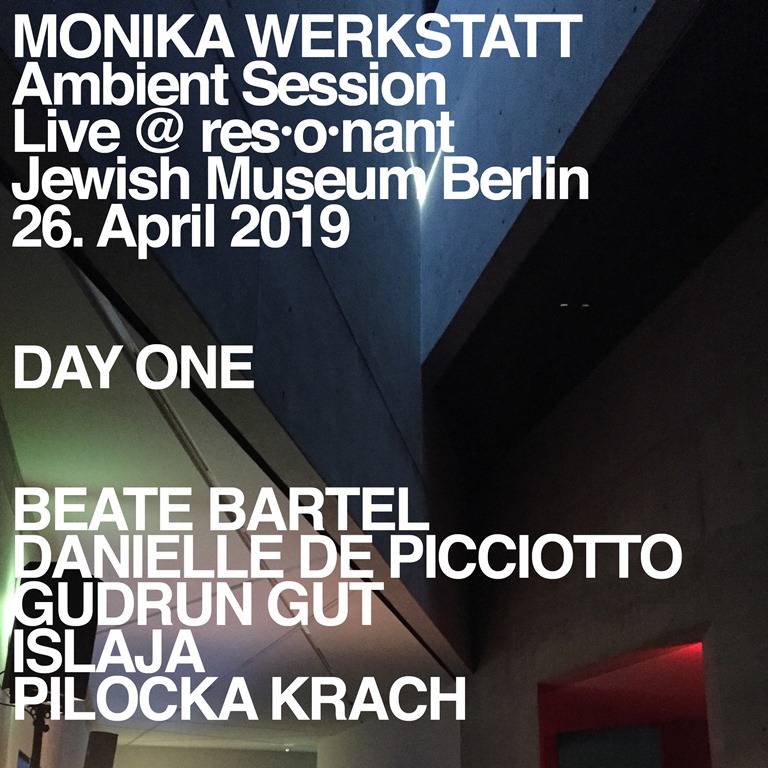
Monika Werkstatt isn’t an individual, but a collective of female musicians and producers gathered by Gudrun Gut from the circles of her label, Monika Enterprise and Moabit Music.

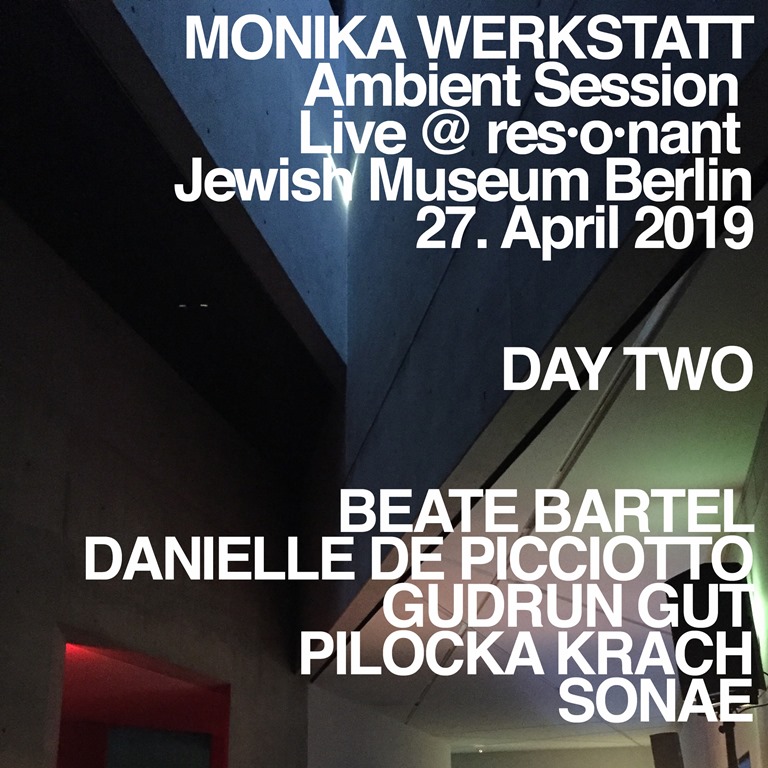
Ambient Session is a document – abridged – of a two-day live project that took place at the Jewish Museum in Berlin on 26th and 27th April 2019. The liner notes detail the event, a full multimedia – and multisensory – extravaganza combining sound and light and where nothing is fixed, with the musicians performing ‘in various constellations inside res·o·nant—a walk-through light and sound installation by the Düsseldorf conceptual artist Mischa Kuball situated in two of the famous Voids of the Libeskind building. For this specific edition Monika Werkstatt activated the joined forces of Beate Bartel, Danielle de Picciotto, Gudrun Gut, Islaja, Pilocka Krach, and Sonae. The Fab Five of Silicon-meets-Analog-Machine-Music set out to invite listeners to join them on a two-day, four hours-each expedition into the yet unknown, improvising with sounds and configurations while structuring the longue durée in sustainable packages by adding and subtracting members to the flow’.

And so the lineups for the two days differed slightly, with Islaja performing on day one only, and Pilocka Krach on day two only. Who played what and when is largely immaterial, as this s very much about the overall feel. It’s impossible to get the full measure of the experience on either day, but the beauty of digital releases is that time constraints and productions costs are much less of an issue, and as a consequence, we’re afforded a luxurious full – and precise – hour of material from each day as a separate track (and a separate release). As such, Ambient Session definitely hints at the immersive nature of the performances, even though the visual and spatial elements are absent.

In a certain sense, there isn’t much to say here: listening to ‘Day One’ there are some woozy uplifts and downtunes that lurch a little like rising steeply op or down a hill in a car on a hilly road while driving at night, but for the most part, it’s a glow, vaporous wash of sound that turns and drift slowly and gradually. Subtle beats appear and disappear, and everything is quiet and understated, even when clouds gather to cat shadows into darker domains, unsettling electronic bubbling, bleeps and whistles. But mostly it’s a steady exploration of soft-edged atmospheres: not a lot actually happens, and yet, somehow, it does. It all happens fleetingly, subtly, in the background. There are fleeting moments of dissonance, and brief passages where patterns emerge – be they niggling bass motifs, looped vocal snippets, or repetitive rhythms of a more percussive nature, but large portions of the audio is given to abstract noise that hums and drones on an almost subliminal level.

‘Day Two’ feels different. More electronic, more edgy, stammering more beeps and messages undeciphered and indecipherable stop start and shudder, juddering and halting the airwaves against gliding contrails of mellifluous drone. Sonar drones, reaching out into the darkness. Dense rumbles and fear chords creeping. This is darker, more ominous, more eerie – or at least the track is. Then again, there are rippling groves and metronomic beats that pulse amidst a swathe of reverb and murky tones. How representative of the performances as a while these segments are, we don’t know.

I am, sadly, reminded of the way recorded media fails to fully convey an experience, and how footage of live sows on YouTube compel me to append any share with the caveat that ‘you probably had to be there.’ There is never any real substitute for the three-dimensional experience: sound, light, space, the interaction of different stimuli on the senses, especially when applied simultaneously. But for all that, this is an immersive pair of longform recordings, and the journey they lead the listener on is one of sedate – and sedated – curiosity.

monika_95_day_one_jm_berlin

monika_95_day_two_jm_berlin

Christopher Nosnibor

Digital release date: 18th December 2020

Physical release date: March 2021

Released as part of a series of collaborative releases between INA GRM and Editions MEGO, this is something of an unusual package, in that it’s presented as a split LP, but is also sort of two separate LPs. – digitally, they’re being released separately, but the vinyl version is split. Given the length of each contribution – in the 20-25-minute zone that neatly corresponds with one side of a 33rpm vinyl album – it makes sense, and certainly more sense than splitting a continuous piece in two over a 45rpm 12”, or the economics of a pair of one-sided albums.

Hecker – Florian, not Tim – contributes a work of ‘computer-generated sound with resynthesized situated texture recordings’. It’s a rumbling tempest of a composition, the crashing of digital waves against a hard shore of tightly-packed circuitry that rolls and thuds. A sonar pulse is rent by tinnitus-inducing drill-like whirr, and over the course of its twenty-five-minute exploration of toes and textures, Statistique Synthétique becomes quite a challenge – one that you may find yourself drifting from and struggling to maintain focus on at times, while at other wishing you could zone out a bit more instead of having an incessant buzzing and crackling piercing your brain.

I often find that with experimental instrumental works that do place such a strong emphasis on texture and that whole ‘cerebral sonic experience’ for want of a better phrase, that my mind does tend to drift while listening. It’s a challenge as a reviewer to critique something that’s so intentionally removed from the domain of overt musicality, or using a combination of music and words (or even not) to express or article something. Because precisely how does one engage with it – or, to consider another perspective, how is one supposed to engage with it? What does the artist want to convey to the audience, what kind of dialogue are they striving to create? Works like this certainly aren’t preoccupied with emotional responses or striking that kind of resonance that’s so integral to music with even the most vaguely ‘popular’ leaning. It’s not a matter of technical competence, at least in the sense of musicianship: there’s no breathtaking virtuosity on display in the world of electronics – and when I say ‘electronics’, I mean laptop and circuitry, not electropop or whatever. And so this is almost purely cerebral, and I’m forced to reflect on the way certain sounds, pitches, frequencies, and textures make me feel, what they do to me – how much treble and fizz makes me tense, how much s just quite exciting. Here, Hecker pushes all the buttons, literally and metaphorically, and I find myself twisting and turning in varying degrees of discomfort.

The objective, apparently, is to stove got ‘a properly hallucinatory state, that is to say to a meeting point where the object and perception dissolve into each other, in a sort of transcendental field.’ I might not quite be reaching that peak, but it certainly has some kind of effect.

Okkyung Lee gives us howls and yowls and overloading circuitry that bleeps and barrels, and of the two pieces, it’s the sharper, and more abrasive, and is also perhaps less nuanced. That’s no criticism: there’s a dense roar that tears from the speakers and there’s a tangible sense of volume. Everything creaks and groans and stammers, as if the equipment is about to buckle and blow under the weight of so much noise all at once.

This fits in context: Teum is intended as ‘a truly telluric moment’, the expression of ‘where tectonic movements and shear stresses become music’. ‘If the earthquakes were, as we thought in the 18th century, due to underground thunderstorms,’ observe the liner notes, ‘there is no doubt that this piece of music, both celestial and continental, could have been their audible manifestation’.

And there is no question that this is a musical work with a strong sense of physicality. The sound veritably heaves and shudders, a gut-lurching low-end heft you feel as much as you hear.

There’s a lot going on here, and there are – so it seems – some wild brass explosions rioting in the distance at some point amidst the churning sprawl. Again, this isn’t about emotional resonance, but how it touches and effects the listener on other levels.

These two works are distinct and different, both sonically and intent and purpose – and consequently, their effects are different too. But equally, the difference can be attributed to the different forms, and textures, with Hecker’s composition being sharper, more abrasive and, I suppose, more overtly ‘computerised’ than the denser, earthier piece by Lee. But for this, the contrasts are complimentary, and the two sit side by side and back to back nicely, and make for a perfectly-pitched double dose of discomfort.

AA

a3134891178_10

Front and Follow – F&F064 – 30th October 2020

It’s taken me a while to get around to this, the fifth and final instalment of Front and Follow’s lockdown fundraising compilation series, Isolation & Rejection, as the last couple of months in particular have found many, including myself in a weird lockdown limbo: schools are back, but I’m not back at the office for the day-job, and regular social activity remains more of less off-limits, even here in tier 2 York. So, not really an excuse, so much as an explanation f how work/ life balance hasn’t been entirely conducive to devoting the time deserved by a mammoth release like this, which certainly deserves more than a cursory glance and a few lines lauding the series’ quality to date and its having raised some £2,000 for The Brick in Wigan.

When I say ‘mammoth release’, Volume 5 contains twenty-four tracks, making a total of 115 tracks released across the whole series. And these aren’t all short efforts, and nor are they of a single genre, so taking this in isn’t like a set of two-minute three-chord punk tunes where the options are ‘yeah, no, ok’.

Yet again, the stylistic breadth, paired with the depth of quality is astounding, and given the open-door policy that was the criteria for this series – namely that submissions must have been previously rejected for inclusion elsewhere – it just goes to show how many remarkable artists there are out there. While there have been some curious and oddly-matched contributions in the mix, it’s fair to say that despite the acceptance of all submission, there hasn’t actually been a duff track in the entire series.

Volume 5 maintains that record. That all important opener this time comes courtesy of Assembled Minds, whose ‘The Eerie Machine Hums a Barley Song to the Sun’ is a lo-fi retro-vibing easy listener in the vein of Stereolab, with all the analogue and some bendy discord to give its Krauty instrumental groove an additional twist. With ‘Mute’, Accidental Tones’ bring the eerie shit, with a dolorous loop of funeral bells, before A.R.C. Soundtracks introduce 80s drum machines to a deep post-punk synth drone, and what ‘Exhibit F’ lacks in duration is packs tenfold in density. It’s a pretty dark opening by any standards, but as a compilation…Not that compilations are never bleak, but there’s a certain expectation that they showcase a certain degree of accessibility: and maybe this is why so many compilations re only so-so: they’re designed with one eye on commercial appeal and drawing a broader audience. Because Front and Follow never even cast a glance at a broader audience and the premise of this series isn’t remotely populist, they’ve remained free to do what they do best.

Cahn Ingold Prelog’s ‘Dwieddon’ is a grainy mess of pink noise and static that crackles like the heavy patter of rain, disrupted by an arrhythmic beat that clunks along awkwardly at first, before a pulsating thud booms in with an incongruously dance feel, while Heat Evolution bring some glitchy, swampy pulsations and some big explosive blasts.

Detailing the entire contents of this would be a task beyond gargantuan, but for the most part this is a set comprised of glitchy oddities and grinding sonic earthworks, with dark, heavy atmospheres – das fax mattinger’s nine-and-a-half minutes of deep, shuddering drone is as much a physical experience as it is cerebral, while contributions from Isobel Ccircle and Jonathan Sharp also explore all the corners of dark ambience. There’s throbbing techno and heavy hip-hop on offer, too, but none of it’s especially gentle or kind. And in saying how dark it is, it’s worth mentioning the gloomy synthy goth of Johnny Mugwump’s ‘the mirror cracked’ and the impenetrably dense black metal murk of Petrine Cross’ ‘Absorbed in Artificial Night’.

If Isolation & Rejection Vol 5 explores a quite focused part of the sonic spectrum, it does so in the kind of detail that reveals its breadth, with all shades of electronica and all shades of darkness and shadow covered in its immense span. It’s a strong end to a strong series, and while Front and Follow aren’t giving any indications that this is more than a one-off, there’s no shortage of back catalogue to explore while we wait for the next wave and, maybe, just maybe, the next collection.

AA

a2030166761_10

Lamour Records / Purlieu Recordings

Christopher Nosnibor

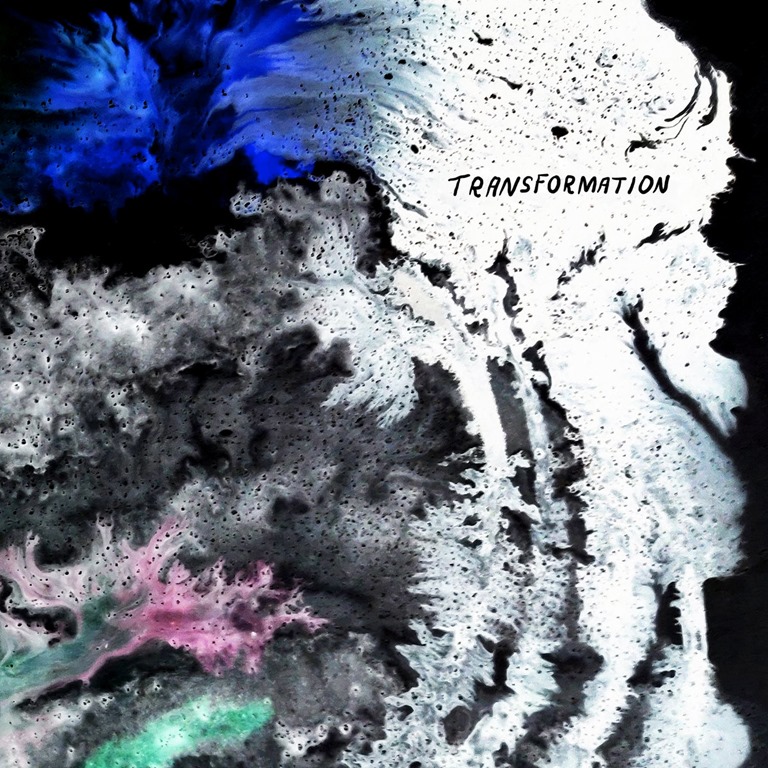
Spending most evenings immersing myself in an array of weird and wonderful and sometimes not so wonderful noise, this album came as a real surprise. The accompanying text does little to prepare the listener for such a gentle and exquisite collection of cinematic neoclassical compositions.

And yet the liner notes are precisely why Transformation is surprising, because all is not as it seems, explaining that ‘The album Transformation challenges the boundaries of human and machine, the physical and the artificial, the feasible and the impossible. The result is a thoughtful and true emotional storm where the piano forms the basis for an opposite pole between sound and playing technique. When the sound is real, it is played with inhuman technology. When played by hand, the sound moves outside the spectrum of the physical piano. What role does "lying" play for the listener?’ And what exactly are we listening to here?

It’s impossible to distinguish organs and organic sounds from synthesised or sampled approximations, and while the human / inhuman / orchestral /electronic sounds are impossible to distinguish – is that piano, performed by a musician with a real passion and a deep sense of drama, creating rippling waves of notes, or is it all so much programming? Listening to ‘Skeppsrå’, it sounds real. It feels real. I want it to be real. Can I therefore simply not believe that it’s real and accept it?

It’s not quite as straightforward as that. Once you’re aware of something, it’s impossible to erase that awareness. You want to feel as though you’re tapping into something real, otherwise it’s just muzak, film music made to fill a space and manipulate an emotional response to what may otherwise be a blandly-shot scene.

‘Tradition’ sounds like the product of synthesised sounds, while the brooding sonorous atmospherics of ‘Mekanik’ are simply other-worldly, while ‘Skogsrå’ is another magnificently supple slice of post-rock flavoured ambience that swirls and soars towards the stratosphere.

There’s no questioning that the elegiac solo piano piece, ‘Artikulation’ a beautifully poised piece, understated yet rich and immersive, and likewise ‘Klinga’ which follows. But are those ‘wrong’ notes simply artifice? Are they programmed in to create ‘imperfections’ in order to create a sense of humanity and therefore a greater ‘trust’ in the machine? Or is this an example of an openness about human error? I’m not convinced: why would any musician play to highlight their flaws? But this is the challenge and the dilemma: what and who do you trust?

Trust nothing and trust no-one: but do trust me when I say that Transformation is a fascinating and most listenable work.

AA

a2896102920_10

Panurus Productions – 25th September 2020

Christopher Nosnibor

The liner notes forewarn us of ‘a relentless free form noise rock onslaught from Dwindling’ with ‘Four tracks of wild soul purging absurdity extracted from strings, sticks and throat for your unsuspecting ears.’

But no forewarning could ever be enough to prepare even the most hardened fan of wild experimental noise shit for this frenzied sonic riot. Wretch – Memento is difficult to digest, and in the moment, it’s utterly bewildering.

Dwindling is Robert Glew (Drums), Giblet Gusset (Voice/Circuits), and Michael Waters (Guitar/Mix), and it’s a discordant cacophony from beginning to end. Mostly is a mess of feedback and clearing, clamorous arrhythmic percussion It all sounds like a drunken din, three people playing five different tunes all at once, all largely buried in feedback and reverb, at a rehearsal played in someone’s garage and recorded on a condenser mic on a 90s Walkman. The vocals are shrill, shrieking, demented banshee howls, ululations and barks, inhuman, demonic. Cathartic, and no mistake, but skin-crawlingly uncomfortable and otherly, it’s a sound that’s unsettling – that experience of unheimlich that unsettles the psyche – it’s identifiable as human, but it doesn’t feel quite human, and so instils a sense of unease that’s not readily articulable. Of course it isn’t: it’s that squirming, awkward sensation in your stomach that’s actually quite unrelated to the matter at hand. The tracks on here my well be a million miles from any sense of conventionality, but ‘Wretch – Memento’ takes discomfort to another level. Everything about it, from the impenetrable, tortured vocals to the nasty treble that never stops is uncomfortable.

‘Alphas Rind, O!’ is a mass of treble, wailing and ululating vocals pitched against a churning mess of noise, the sound of a kitchen blender and some ugly bass, and things get even more intense on the thirteen-minute ‘Axed RailKnell’, which in turn bleeds in to the seventeen-minute finale, ‘GARES’, a squall of noise that actually hurts.

It’s not hard to figure out how this found a home on Panurus: this is a label that trades in noise and has few limits, and if you’re on the market for extreme, Dwindling deliver it with Wretch – Memento. So who wants some more pain?

AA

a2577236056_16