Posts Tagged ‘Album Review’

Mongkong Music – mkng-01

Digital release date: 4th June 2021 / Physical release date: 4th July 2021

Christopher Nosnibor

Having been introduced to the world of microtonal experimentation around a decade ago, I’ve found a certain fascination in those close lenses on the most minute of details – the musical equivalent of peering through a microscope and seeing objects and life forms on a granular, even cellular level. I’ve also learned that anything that can be rendered or viewed from a micro level, it’s probably been done, or otherwise is within someone’s sites to do, or I simply haven’t found it yet. Take, for example, the ensemble Microtub – not a small bath, but a trio of microtonal tubas.

Mycrotom is not a microtonal tom drum, nor a microtonal extension of the work of the Vegetable Orchestra (a ten-piece collective based in Vienna who make music using instruments crafted from actual fresh vegetables). In fact, the moniker is somewhat misleading, for as the press release notes, ‘Tom Simonetti alias mycrotom has created rather large-format sound carpets in the Bertolt Brecht mechanical engineering city of Augsburg. He now presents the same: soundscapes on which you can go out of work and walk away.’

So, it’s actually about sound carpets. I have to confess that I chuckled a little on reading that, before reminding myself of my own habit of describing works as ‘sonic tapestries’ and going into detail about the ‘fabric’ of numerous compositions – and that was before I listened to the album.

The pieces are built on interesting juxtapositions – sparse motoric beats click metronomically through gloopy synth basslines that could have been lifted off early 80s electro cuts on Wax Trax! while xylophone-type chimes ring out lilting motifs. Extraneous sounds are looped to forge unusual rhythms, and there’s a muddy, murky aspect to the sound that makes it difficult to separate the different elements.

Many of the synth sounds are vintage in style, squelchy, thick, fuzzy-edged, and while the arrangements are sparse, the effect is far from minimalist: there’s quite some density to the sound, and what’s more, a lot of Ratoratiyo pursues quite danceable grooves, and with a hybrid of 90s minimalism and 80s robotix, it feels completely removed from anything human.

‘Logic by Machine’ contains human voices – sampled, distanced, detached – against a sparse, rhythmic loop. It’s anything but comforting, and leaves one feeling even further adrift, alienated. It’s a strange experience that twists at the cognitive filters in unexpected ways. After all, none of the elements are new or particularly unusual – but their assemblage is, and in ways that are difficult to place a finger on. And it’s that difficulty of placement that lies at the heart of the challenge for a listener. You ask yourself ‘how does this fit with my experience?’ and ‘where do I belong in all of this?’ There are no handholds or footholds in terms of emotional resonance, in terms of experience. And precisely what does this convey? The sounds may be warm, but the experience is somehow cold, with a sense of separation.

It’s from this place of distance, a position of removal, isolation, that we begin to explore the spaces of Ratoratiyo, and the exploratory adventure begins.

AA
mkng-01_front

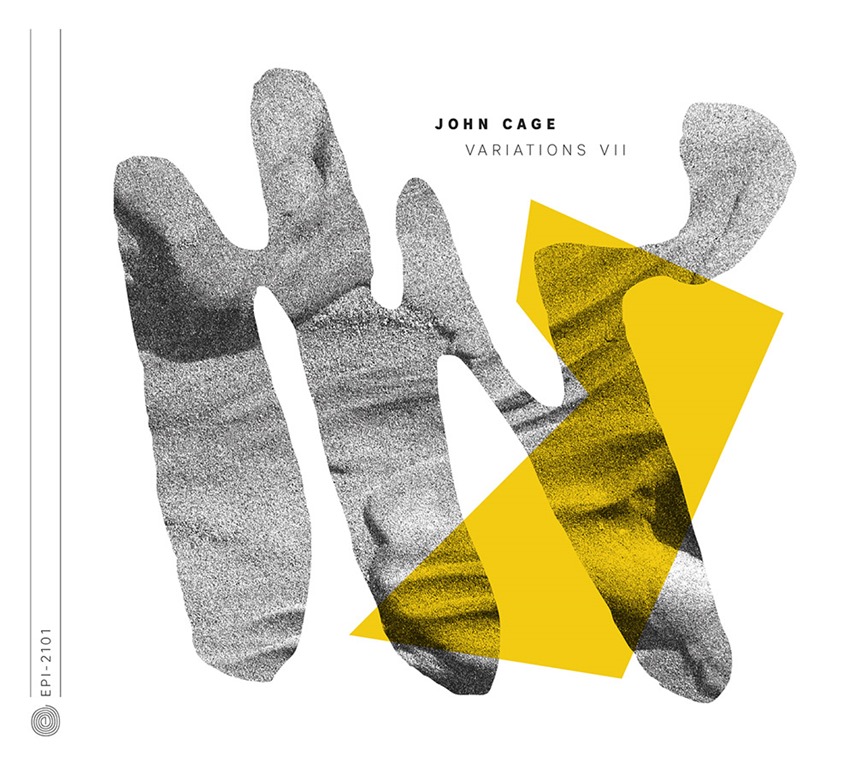
CD Epicentre Editions EPI-2101

Christopher Nosnibor

It’s testament to his degree of innovation and influence that John Cage’s works remain a source of fascination for so many almost 30 years after his death. Few composers have reached across so many fields, let alone a composer as radical and overtly experimental. But Cage singlehandedly broke all the ground, especially when it came to exploring elements of the random, of the relationship between the performance and the audience, and of incorporating strands of philosophy into the creative process.

This recording of Variations VII is very much an unadulterated document of a specific event, best detailed in the liner notes:

Variations VII was created by John Cage to be performed at a special event, 9 Evenings, Theatre & Engineering, held from 13th to 23rd October 1966 in New York and in which a team of engineers, led by Billy Klüver, worked with ten artists from the American “avant-garde”, with the aim of enabling them to extend their exploration of the possibilities of electronics in their own art. Here is how John Cage described this piece in the programme for the event:

« It is a piece of music, Variations VII, indeterminate in form and detail, making use of the sound system which has been devised collectively for this festival, further making use of modulation means organized by David Tudor, using as sound sources only those sounds which are in the air at the moment of performance, picked up via the communication bands, telephone lines, microphones together with, instead of musical instruments, a variety of household appliances, and frequency generators. »

And so ‘Intro’ is four minutes of audience chatter, a throng of conversations, all in French, over and across one another. It may feel superfluous to some, but in so many ways, it’s integral to the experience. It not only captures the moments before the performance as it happened, but also transports the listener there, and reminds us that this is not a studio work, designed to capture some kind of perfect realisation of the piece for all time. There is no trickery or manipulation after the fact: this is a live performance, in front of a live audience, something that happened in the moment, and the moment is all there is, and the life of the piece is tied to that specific moment. And then, there is the fact that Variations VII is, effectively, about chatter.

Crackles of static, whistles and whines rent the air as the performance begins; the sound of radio dials turning, tuning in, finding – or failing to find – the right wavelength. Hums, hisses, and snippets of conversations, fragments of music. Whups and whirs, shill shards of feedback and blizzards of white noise emerge from a myriad pieces of sound, booming yawns of interference all criss-crossing over one another in a disorienting real-time sonic collage. Machines grind, babies cry, there are explosive, thunderous blasts of distortion, It’s like walking down a busy street, hearing pieces of conversation, radios blaring from cars, engines revving, and the parallels with William Burroughs’ cut-up technique, for those familiar, are clear. This replicates the experience of life in real-time, and real-time experience is not linear, but simultaneous: a plane flies overhead and you catch sight of an advertisement, and a reflection of a face in a shop window while conducting a conversation, and all around, other people conduct their own conversations…

The mechanics of it are complex and ambitious, but also typical of Cage’s approach to composition:

‘Ten telephone lines connected to the sounds of ten different locations in New York City. History has taught us that one of the first uses of the telephone at the end of the 19th century was, besides transporting voices, the live re-transmission of concert performances of opera. A few privileged listeners could therefore listen to the music in their own homes. Several decades later, John Cage reversed this, so to speak, by inviting the sounds of several distant environments into the concert venue!’

And so it is that the 1966 piece was performed live once more on August 15th, 2020 at the festival Le Bruit de la Musique. The performance lasts for an hour and eight minutes, during which time we’re subjected to a bewildering array of sounds, unconnected, disparate, all completely independent of one another, uncoordinated, random, haphazard and hither and thither. It’s a bewildering experience: not a lot happens, but at the same time, everything happens, a lot of it simultaneously. For the duration of the performance, the spell remains unbroken. For some reason that I really can’t explain, I find myself sitting, ears pricked, on tenterhooks, listening out for details. Towards the end, a blitzkrieg of overlapping extranea build to a tempestuous tumult of harsh noise that sounds like Throbbing Gristle a whole decade before their conception. And as it gradually tapers down, a cough from the audience cuts through the quiet – but it’s not quite finished. We wait, on edge.

Suddenly, there is silence.

Only when the performance ends is the tension broken.

There is a pause, a few seconds of uncertainty, before the applause breaks. There are a few whoops, but mostly, it’s polite. Enthusiastic, but polite. There is no chatter now. One suspects that having witnessed this – bearing in mind that it’s 1966 – many would have been simply stunned of vocabulary. The era may have been accustomed to all kinds of newness, all kinds of shocking, taboo-breaking art, but this…?

Variations VII hasn’t dated, and not lonely does it still sound contemporary, it remains incredibly relevant: if anything, its relevance is greater in 2021 than it was in 1966, perfectly recreating the experience of total media and sensory overload. Never mind The Beatles, here’s John Cage.

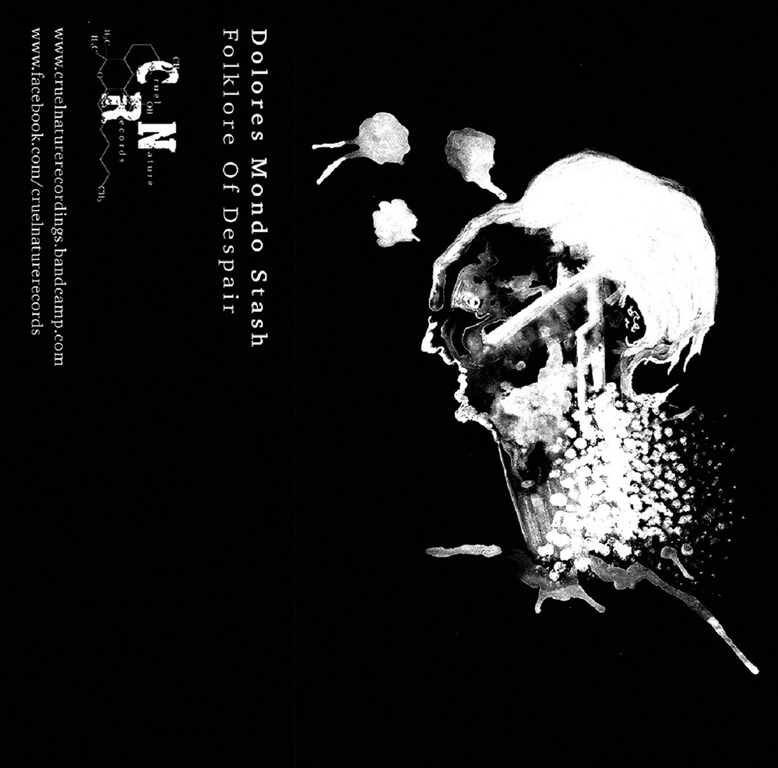
Cruel Nature Records – 11th June 2021

Christopher Nosnibor

We’re in eerie electronics territory here. Haunting, creepy. Suspenseful. There’s something of a vintage sci-fi feel to this nightmarish trip, as gurgles and scrapes bibble up through swamps of whistling organ-like drones. It’s a dark record, but not because it relies on heavy drones, low, rumbling, doomy bass, hard volume or distortion: Folklore Of Despair worms its way into the psyche, prodding and poking stealthily into the recesses of the subconscious, gently rubbing and scratching at those small, nagging uncertainties that stem from the fear of the unknown. Whistles and bleeps intermingle with tense violin-type drones and quibbling analogue sounds, spooky, spectral notes and crashing crunches which disrupt the flow and create a different kind of tension, one that feels like things are going out of control and colliding on every side, a catastrophic nightmare where carks skid into one another as every third driver find their steering no longer works or their brakes have been cut. It’s disorientating, and the effect is so strong because everything about the album is so unpredictable.

There are no conventional structures here, or even any clear structures at all. Like the best suspense movies, the unexpected always occurs unexpectedly. The tense build-ups are often false markers, but then again, there’s not much letup in the tension, which they sustain and sustain, and your nerves are jangling because your gut tells you ‘something isn’t right’.

Things get really weird really fast: second track ‘Darkness is Driving the Machine of Debauchery’ is quite headfuck, as glitches and warping sounding like a stretched and buckled tape struggling to traverse over the heads. It squeaks and squeals and sounds as if whatever was recorded on the tape before is bleeding through, like voices from the other side – I’m reminded tangentially of the 7” containing sample recordings of voices from the ether that accompany Konstantin Raudive’s 1971 book, Breakthrough: An Amazing Experiment in Electronic Communication with the Dead (something that would feed into the theories expounded by William Burroughs on the tape experiments he conducted withy Brion Gysin).

An actual voice, murky, muffled, drifts, disembodied and strange through the creeping chords on ‘If the Forest Ate the Trees’, where the notes drift like fog, but there’s more to its being unsettling than that: there’s an otherness, a strangeness you can’t quite put your finger on, as if maybe the drifting fog in the graveyard scene has been filmed in reverse. It’s the fact it’s difficult to pinpoint that heightens the effect so.

Thunderous beats – distant, as if playing in a club three blocks away – pulse, deep, and bassy, on ‘Floral Patterned Gearshift’, and the sound is all but drowned out by the shrill, clamorous shrieking synapse-shattering tweets that flurry like a swarm of bats scurrying and flurrying. You have to fight the impulse to duck to avoid the aural assailants, invisible yet somehow tangible in the mind’s eye.

At times, everything simply collapses into chaotic cacophony. It’s hard to process, and ever harder to digest. Folklore Of Despair is a complex and uncomfortable album, which is nothing the title hints it may be. I’m not even entirely certain what it is, but it leaves you feeling jittery, jumpy and on edge.

AA

a0307778435_10

Kranky Records – 28th May 2021

Christopher Nosnibor

Over the course of two decades and fourteen albums, Scott Morgan, under his Loscil moniker, has created a body of work which has probed myriad different directions within the electronic / ambient field. While his previous works have explored minimal arrangements and the application of difference source materials such as field recordings, none has been so intently focused on rendering a limited range of course materials in the most varied ways possible – which is precisely what Clara does, taking the same source material and seeing just how far it can be taken in different directions.

The accompanying text explains the process in detail, describing the album as ‘a stunning meditation on light, shade, and decay, sourced from a single three-minute composition performed by a 22-piece string orchestra in Budapest. The subsequent recording was lathe-cut on to a 7-inch, then “scratched and abused to add texture and colour,” from which the entirety of Clara was sampled, shape-shifted, and sculpted. Despite their limited palette, the compositions summon a sense of the infinite, swelling and swimming through luminous depths. Certain tracks percolate over narcoleptic metronomes while others slowdive in shimmering shadowplay, sounding at times like some noir music of the spheres’.

In some respects, then, Clara is a remix album, in the sense that some remix albums stretch and deviate so far from the original material that the song being remixes becomes unrecognisable, and one begins to question the extent to which the track is the work of the original artist and the extent to which the credit for its creation belongs more to the remixer. This may all be Morgan’s ‘own’ work but at what point does the source material become buries beneath the reworking? Perhaps what’s most remarkable about the album, considering its origins, is just how…. Normal, how smooth it sounds, as opposed to being a fucked-up mess of crackle and pop, hiss and static. I had anticipated scratches, abrasion, mangled noise, clicks, pops, something approximating the sound of a Brillo pad being applied directly to the microphone. But no.

‘Lux’ introduces the album in what feels like familiar territory: long, slow swells of strings flattened out into partial abstraction, smudging the definitions that stand between orchestral and ambience to forge sounds that have become almost the standard form in contemporary ambient. And this indeed the form for the album as a whole.

It’s no criticism to observe that Clara sounds like Loscil: Morgan is a master in the field of contemporary ambient, and has a supreme ability to sculpt slow-shifting soundscapes that are eternally intangible, unreachable, yet immersive in their soft clouds and vaporous drifts. ‘Lumina’ has some softly bouncing bubbles rising and eddying around in a soothing sonic foam that’s slow and gentle, while the ten-minute ‘Stella’ floats past almost imperceptibly.

Nothing about Clara is going to raise the blood pressure.

The track titles all refer to light and luminosity, and instead of scouring the ears and the soul, Clara recreates the warm glow of a log fire burning down to embers, or a dimmed bulb late on a summer’s evening after the sun has faded from the sky, leaving a purple-hued sky in its wake. ‘Sol’ slows and dissolves down to a low, pulped-down pulsation, from which in its mist emerges a rippling loop of rippling mellowness that hints at the abstracted ambience of Tangerine Dream.

Even in the face of the most broken, damaged of source sounds, Loscil smooths the edges and renders them something else, and something other, by a process of softening, of melting into abstraction. Clara is a magnificent work of transformation, of distancing, whereby the end product emerges in an entirely different sphere from that which begat it.

AA

457773

Demo Records / Crossness Records – 30th April 2021

Christopher Nosnibor

While I’m no fan of remix albums as a rule, the last year or so has clearly made it difficult for artists to create new material, and since touring’s been off the table, options for maintaining profiles – or making sales – have be limited to say the least. And with time to reflect and review, revisiting and revising previous output through fresh eyes seems more than reasonable.

It’s also refreshing to see ‘Could Divine, Remembered’, the release from anrimeal (the recording project of Ana Rita de Melo Alves), described not as a remix album, but a ‘meditative companion piece to her debut album ‘Could Divine’’. As the blurbage explains, ‘‘Could Divine, Remembered’ refuses the limits of the traditional ‘remix album’ – sure, there are remixes here, but amongst them you’ll find demos, reflections, confessions, rituals, and the artist’s own heartbeat. The sum of these parts is an immersive audio documentary about the making of Ana’s debut. For those familiar with ‘Could Divine’, this is a chance to look behind the scenes and magnify its meticulous detail; for those unfamiliar, it allows a first visit to an abundant internal world.’

I fall into the latter camp, although drawing lines across between the tracks on this new reworking and the original proves an informative exercise, and the reworked titles provide some insight into the inspirations or ideas behind these alternative renditions of each song (notably ‘Encaustic Witches’ returns here as ‘Encaustic Witches as an Ambient Track to Help Me Sleep’ and ‘Headrest’ appears as ‘Headrest, A Story About Feeling’. Elsewhere, explanatory or embellishing details appear, as ‘Death’ becomes ‘Death is a Burning Ritual’.

“When I think of nature, nothing happens,” she says at the very start of the album on ‘Hello and a Half’: it’s quite a contrast to the twitter of birdsong and lo-fi acoustic guitar that heralds the arrival of ‘Marching Parades’, the opener on ‘Could Divine’, and immediately we’re parachuted into the documentary aspect of this fascinatingly multi-fascinated work, which lays Ana’s workings out bare. Cars pass as the speech takes on an almost spoken word narrative form – but even that’s not straightforward as delays double-up her voice and as she explains how the album is about her ‘going into the wild’, it seems that some of that wild is more psychological than literal, an exploration of internal territories hitherto uncharted. At times, it ventures into the kind of disorientating cut-up tape works of William Burroughs and Brion Gysin in the late 50s and early 60s, and elsewhere, her monotone voice, against a sift, dappled backdrop is soporific and sedative.

This is an album of ideas and of origins, of snippets and sketches, as well as of reworkings and revisions. It’s bitty, but somehow hangs together remarkably well as an insight into Ana’s creative process. At the same time, in straddling the before and after that sit either side of Could Divine, it questions the notion of the ‘end product’, the idea that there is ever a ‘finished article’.

The demo of ‘Could Flower’ reveals the early shoots of the idea that would become the album’s title track. It’s a haunting acoustic folk piece, which would subsequently metamorphosise into a fragmentary, multi-segmented work that transitions as if through a dream sequence. There’s an ethereal, evasive quality to Could Divine, Remembered, and it places the album in a realm all of its own.

As an aside, all profits from the release will be donated to Plataforma de Apoio aos Refugiados, a Portuguese refugee support organisation. In bleak times, we once again see art being used as a conduit for good – and this, it has to be said, is good art.

AA

a3633893503_10

6th May 2021

Christopher Nosnibor

As the band’s name suggests, their roots and influences lie very much in the spirit of 1977. The year which saw ABBA, Bread, The Eagles, The Shadows, Johnny Mathis, and Fleetwood Mac dominate the album charts, and the year’s best-selling singles being by the likes of Wings’ ‘Mull of Kintyre’ and acts like Leo Sayer, Brotherhood of Man, and Hot Chocolate here in the UK, will also be forever marked in history as the year punk broke. Alongside all the anodyne MOR pap and slock disco, 1977 also saw the release of Never Mind the Bollocks, The Damned’s Damned Damned Damned , The Clash’s eponymous debut, The Buzzcocks’ Spiral Scratch EP, and The Dead Boys’ Young Loud and Snotty, as well as classic releases by The Stranglers and Richard Hell & The Voidoids.

These, of course, are the seeds these guys are referring to, although they also draw on a host of other stylistic elements, ranging from psyche to glam, and in a title that seems to echo Sham 69’s ‘Borstal Breakout’, the sextet have forged their debut long player in lockdown. As the title suggests, they’re keen to escape this interminable drag and get the fuck back out there.

There’s a choppy ska-tinged guitar that leads the high-octane opener ‘Kick it Out’, which sets out their stall nicely. It’s unaffected, and while the playing it tight, the production is direct and unfussy. The wandering bass cuts through the trebly guitars and it demonstrates all the hallmarks of authentic punk.

With the majority of the tracks clocking in at around the three-minute mark, it doesn’t take long for them to power through thirteen songs, and they’ve totally nailed that three-chord chop. But there’s also a sense of crafting behind the songs, with a solid grasp of dynamic range, and if most of the choruses are more about everyone shouting the hook than any real harmonies – it’s true to the spirit of the genre, being hooky in that most primitive of ways: keep shouting it till it sticks.

Then again they throw in some curveballs – ‘Lost_Found’ is a soulful piano-led duetting ballad augmented by aching strings, where the hell-for-leather drumming is replaced by a subdued machine. Placed mid-album, it’s a touching tune that serves as an interlude before the full-on chug of ‘Reality Bites’. The switching of lead vocals between Vince Mahon and Michi Sinn adds to the album’s range and dynamism: they’re both strong vocalists, but distinctive stylistically, beyond the obvious male / female.

Seeds of 77 have got some solid riffs and catchy choruses, but it’s the bass that really makes the sound, going far beyond the thudding four-square to-the-floor thud that’s standard, and instead showing some real flair – and when trad punk bands are two-a-penny, those distinctions count for a lot.

AA

a3694136328_10

Box Records – 7th May 2021

Christopher Nosnibor

Gavin Miller’s hardly been slacking of late: in fact, it turns out I’ve been struggling to keep pace with his output this last year or so. While for many, time seems to have stalled since the sequence of lockdowns began some fourteen months ago, Miller’s had his foot firmly on the accelerator, expanding the already extensive worriedaboutsatan catalogue with five new releases, including an archival excavation (appropriately titled The Vault) and an expanded reissue of the Europa EP, and a split release with Capac, all of which followed a brand-new LP, in the form of Time Lapse.

This latest effort, releases on Box Records, run by Matt Beatty of Pigs x7, arrives almost a year to the day after Time Lapse, and is in many respects of the period since its predecessor was recorded, a period which has been both eventful and uneventful at the same time.

The liner notes detail Miller’s objective in piecing together the album as follows: ‘Resisting the urge to simply turn in more longform experiments in expansive post-rock informed electronica, Providence seeks to capture several different elements of the ‘satan sound, whilst attempting to thread it together into one cohesive whole.’

There has been a certain sense of linearity to the majority of previous ‘satan releases, although that sense of trajectory has, for me, always been most defined in the live sets, and the challenge here is very much how does one provide a sense of flow, of linearity, or narrative, of continuity; to what is, in many ways, a drifting desert of time, punctuated by so very little?

Since the departure of Thomas Ragsdale, at which point worriedaboutsatan again became Gain solo, the beat and bass elements of the sound have much more subdued, and sonically, Providence is very much classic Miller: rich ambient tones with subtle undercurrents that allude to post-rock and glitchtronica, and on paper, it probably doesn’t sound all that remarkable – although perhaps what is remarkable is that worrriedaboutstan started carving this nice back in 2006, before it became commonplace, making was trailblazers the world has gradually caught up with.

‘Stück Für Stück’ shimmers, rippling notes cascading delicately down like droplets of spring rain while a subdued, almost subliminal beat and bassline pule in the background, and ‘Für Immer’ finds Miller return to German for the track’s title – and perhaps some clues as to the narrative lie in the titles of the tracks. ‘Für Immer’ shares no obvious connections to the 1982 DAF album of the same title, but perhaps hints at the sense of eternity that pervades Miller’s work, not least of all as reflected in the name of his label, This is it Forever. It may be creative reading, it may be the enactment of reception theory or even projection on my part, but some of the track’s resonance lies in the sense that the soft ambience, directionless, lacking overt form, encapsulates the drifting emptiness of this span of disconnection, of aimlessness, of there being no end in sight, and the weak, powerless, listless, feeling is engenders, a sense reinforced by ‘On Your Own’, and all of the connotations of isolation and loneliness it carries.

Waves washing onto the shore splash through soft chimes on the short interlude that is ‘Everything is Fine’ (which I can’t help as read by turns as sarcastic and self-affirmation, but neither of which suggest that things truly are fine), while ‘Stop Calling My Phone’ is its antithetical scenario, and it’s a jabbing, petulant synth that dominates this track All or nothing: the desolate silence, or the bombardment of contact are both equally difficult to manage, and there rarely seems to be a happy medium.

If the nine-minute trance-inducing haze of ‘Stórar Franskar’ articulates the expansive drift of time and that sea of emptiness, then closer ‘Just to Feel Something’ is perhaps the companion to ‘Everything is Fine’, in that the numbness manifests as façade. Because everything is so empty, and so numb, and so absent, it’s difficult to retain focus, a sense of space, a sense of perspective.

Providence is the perfect soundtrack to those protracted spells of ponderance, that discomfort and dissatisfaction, the introspective reflection and self-doubt. It stands as a magnificent blank canvas into which to project and reflect. It’s also another strong addition to the worriedaboutsatan catalogue.

AA

a2413327704_10

Edelfaul Recordings – 5th June 2021

Christopher Nosnibor

Just as you should – at least ideally – never judge a book – or an album – by its cover, so you should never judge a musical project by its geographical origin, or judge the population by their government. This is particularly important as a point of note right now, and especially in context of this release. At home, we’re often led to believe that arts are of a lesser importance in the face of a pandemic or any other crisis, but history – and social media – will tell you otherwise: the natural human response to any trauma or crisis is to immerse oneself in either the creation or consumption of art or music. When bombs are dropping, people write poetry. It’s both a coping mechanism and a means of documenting events, and there is a clear logic to it: for me, writing helps to order things, both events and my own thoughts. The very act of writing gives mental effluvia a sort of solidity.

Spirit Skinned, the press release informs us, is ‘a duo rooted in the musical underground of Tel Aviv and Jerusalem’ and goes on to note that ‘The area is known worldwide as a high tension zone, and the small musical scene that bred Spirit Skinned enjoys a reputation for an uncompromising and often radical sound approach, paired with a rare level of perfectionism. If anything, their music lives up to that notoriety.’

Watching the news, one would be forgiven for being shocked and amazed that there would be any kind of music scene in Tel Aviv or Jerusalem, let an underground one. But even during sporadic war, life does go on, and citizens are always desperate to maintain some sensed of normality, and this is clearly true of Ben Ronen (aka diburnagua), former vocalist in various punk and noise projects in the Tel Aviv area and Ofer Tisser, producer/instrumentalist and a central figure in Jerusalem’s underground music scene, who have come together as Spirit Skinned.

The pair’s eponymous debut is pitched as ‘spanning the gaps between grime, industrial, hardcore, musique concrete, politics and expressionism’, and across the course of the album’s seven tracks, Spirit Skinned wanders far and wide stylistically. And you can’t criticise an album for any lack of focus when its focus is set so wide.

Many of Ronan’s crazed, yelping, barking vocals are largely impenetrable, and often partially submerged beneath layers of noise, not least of all highly dominant percussion: heavy industrial clanks and cracks dominant, but then again there are swamps of alternative and buoyant indie lurking in the mix.

‘Dry Season’ introduces the album with a slice of minimal DIY that’s brittle, spiky, and more than just a bit quirky, and lands somewhere between Young Marble Giants and Einstürzende Neubauten. Reverb bounces all over the place, while a slow, lowdown bass squirms away. They conjure seme tense and atmospheric scenes, and the claustrophobic, repetitious throb of ‘Leaving Room’ evokes the impotent rage of early Swans: it’s the sound of frustration vented through shouting into the void against a backdrop of music that bludgeons. ‘The Root’ is built around a monotonous pulsation that passes a significant nod in the direction of Suicide, but then there’s braying free jazz sax all over the top of it, and in combination, they’re pretty punishing. There’s a physicality to the music that’s affecting as they lunge from doomy drone to fractured, splintering harsh noise.

The album’s final track, the eleven-minute ‘Once Was Blind’ is sprawling monstrous hybrid of dark hip-hop, jazz, and psychosis. It’s like a beat poetry night on a bad trip. It’s a suitably weird end to a weird album, and one that’s well worth hearing.

EFT003_front

11th May 2021

(kröter) don’t do things by halves. Back in 2018, the landed not just one album, but three, all culled from the same sessions, with two of those albums arriving simultaneously. Fifteen minutes of (kröter) can be quite the headfuck, but three hours? (kröter) are a melting-pot of madness, and how much of their derangement does anyone need?

Well, from seemingly out of nowhere, they’ve dropped a further two albums, *d and *e, again drawn from the epic sessions in 2017-18.

‘avantgarde’, the first piece on *d is typically whacky, and knows it. A picked guitar, hesitant, and sounding more like tuning up than an actual composition, is immediately obliterated with a squelchy squirt of digital diarrhoea. ‘How much water does an avocado need to grow?’ they ponder by way of an introduction to some abstract lyrical ponderances. ‘This is avantgarde’. And yes, it is: and this is also an exercise in avantgarde self-reflexivity, art reflecting on art reflecting on art.

‘soul monkey’ does have that cack pop vibe of associated act Wevie Stonder and Mr Vast’s solo works, white soul played limp and strange, before a really dingy bassline grinds in like a bulldozer and distorted vocals rant and yelp half-submerged in the mix. The ten-minute ‘flattening shades’ marks a distinct shift of style and pace, manifesting as a slow, ponderous, piece with chorus-heavy guitar and a sparse, strolling that combine to create some palpable atmosphere. Despite some odd vocal segments, there are some moments of both menace and beauty, which show that beneath all the zany shit, these guys have some real talent and ability.

Not that you’d know it from the discordant chaos of ‘lambs brain’, which is twelve minutes of demented racket and shouting, and a bunch of twanging and sampling and whatever else happens to be at hand that ended up bring tossed into the blender. Then there’s ‘tomatos’ and ‘omatose’, companion pieces that are daft, quirky interludes. Because.

The album really only has one song that’s recognisable as such, and that’s ‘up to chance’ which incorporates elements of country and prog and autotuned Radio 1 chart pop, and of course, it gets pretty weird pretty quickly.

*e, described as ‘another bucket full of toad spawn fished out of the kröters sessions’ is more of the same, only more, containing four longform tracks that showcase leanings towards more spacey-electro and jazz. Tinkling synths and a wandering horn amble all over an insistent beat that in combination provide the disjointed backdrop to monotone chanting vocals on borehole (prelude), which provides an extended introduction to another aspect of their oddball stylings. It paves the way for the twenty-minute ‘borehole (suite)’, which is both more and the same, an extended drone of froth and foam and bubbling electronics, propelled by a swampy, looping, pulsating bass. It’s certainly darker in hue, and the expansive forms only add to the bewilderment.

The hypnotic weirdness continues through the snickeringly-titled ‘glandfather’, culminating in the eighteen-minute ‘coloumns’, another off-kilter spoken word piece accompanied by minimalist instrumentation that scratches and scrapes

If some of this feels like the whacky weirdness is something they’ve worked on, it’s equally something that they feel comfortable with, as if they derive pleasure from making you feel uncomfortable. As such, while there’s a certain self-awareness about all of this, it doesn’t feel particularly contrived or forced, and we leave this duo of albums with the conclusion that this isn’t a gimmick and that these guys are genuinely fucking barmy. And we should embrace that: while people all around us are losing the plot, (kröter) celebrate the idea that plot is overrated and they never had any grasp on it to lose in the first place. At their best, (kröter) evoke some of Bauhaus’ more experimental moments,, but mostly, (kröter) just sound like (kröter), and utterly deranged. Which is all the reason to like them, even if their music isn’t for everyone.

a1761606725_10

a4069748634_10

Not Applicable – 25th June 2021

Christopher Nosnibor

Chris Sharkey’s first album released under his own name is what I suppose one might call an ‘environmental’ album. Not an album about the environment in the broader sense, or the ecological sense, but in the sense of having been inspired by the artist’s surroundings, and the music herein is a direct response to that in many ways. While so many releases from the last year have been environmental in the context of creative responses to lockdown and a shrunken vista consisting of four walls and the view from the window, paired with a pervading anxiety on account of the 24/7 news media and social media doomscrolling, Presets comes from a very different perspective. First and foremost, its inspiration is travel.

“I had been touring and travelling a lot. Lots of long car journeys, the M1, driving between shows in Europe. Long waits in airports. The occasional long-haul flight to play farther field. Throughout this period my relationship to music changed. I found that listening to songs or short pieces would leave me agitated and frustrated. I’d been listening a lot to Actress, particularly ‘Ghettoville’ and ‘Hazyville’ which really worked for me on the road. I wanted a music that develops slowly over time, drawing you in, making you forget about the clock. Music that has so much grain and texture that you could almost pick it up and turn it around in your hands, examining from all sides. Like a physical object. Music that resembles something you might see out of the window of a plane, high above the clouds, a meteorological event or a storm on distant mountains from the back seat of a car.”

I can certainly relate to the agitational effects of listening to certain musical forms while in transit: I always had to stop music and be on full sensory alert on arriving at a train station and walking through an unfamiliar city, for example, and since lockdown, I’ve not been able to listen to my MP3 player at all while walking around anywhere.

The physical setup for the album’s production was minimal, and Presets is the product of two months’ intensive recording, producing hours of material. But this was only the start of a protracted second stage, which Sharkey details as follows: “As the process continued, I would select my favourite parts and create playlists just for myself. By the end I had over 4 hours of music that lived on my phone and whenever I would travel, I’d listen. Over the course of the next 5 years: touring, travelling, listening, I slowly whittled it down to what you hear on Presets.”

In short, Presets is the product of many years’ work – not just the five years in post-recording evolution, but the years of experience and observation that preceded its creation also. It was, unquestionably, time well spent: while many of the individual segments are quite short – mere fragments – the album as a whole sees them sequenced and segued so as to feel like one continuous piece that gradually transitions between tones and shades. It’s also an immense work, clocking in around the eighty-five minute mark. It’s very much a good thing that it’s intended as a background work, because it’s practically impossible to sustain focus for that kind of time. But Presets is about not focusing, about disruptions and interruptions, about life.

It begins with quavering, key-ranging notes that do, at least vaguely, sound like guitar, before layers of processing build, before the source instrument becomes lost, evolving to conjure organ -like drones and entirely abstract washes. Before long, particularly over the course of the eighteen-minute second track, ‘the sharecropper’s daughter’, you find yourself not so much listening as floating along with the sounds as they slowly creep and shift.

The titles are sparsely descriptive and evocative at the same time: from ‘blue cloud, red fog’, to ‘scorpion bowl’ via ‘detained at the border’, there are hints of mini-narratives attached to each piece, and the sense of travel and movement does come across through the difficult drones and scrapes of feedback that build and buzz through the foggy murk.

It’s an epic work, and a major achievement.

Chris Sharkey Presets cover 3000px