Posts Tagged ‘Album Review’

25th November 2022

Christopher Nosnibor

If you’re after something subtle, melodic, and imbued with rich emotional depth, stop here. Because with song titles like ‘Aborted Eggs Benedict’, ‘Hymen Drizzled Hotcakes’, Rancid Risotto’, and ‘Fetal Fajitas’ the food-themed debut album from this ‘tech/brutal death’ act from Ohio is none of these things.

They’re keen to stress that while not entirely bereft of humour, they’re by no means a parody or novelty act, pointing out that the album ‘serves enough morbid and bizarre courses to fulfill the craving for extreme and wild. On top of that, the Northwestern Ohio group is serious about their music and does not deem their band as a fun or side project. To make their live shows more vivid, A La Carte members perform with the same characters displayed thematically and dress in maître d’ outfits’. Not that the lineup of Chef Cuck, Chef Highman, and The Maitre d’ remotely hints at anything even vaguely comedic.

The tile track, which lifts the lid on this crazy concoction of an album, is a whirl of psychedelic and theatrical flamenco-flavoured strangeness, before the heaving and churning begins with the sample-soaked intro to the technical thrash of ‘Aborted Eggs Benedict’, thrashing its way hard into a frenzy of guttural vocals and squealy notes emerging from the gnarly grind like flames spurting from a molten volcano. The lyrics are indecipherable, but thankfully, they’ve shared them, so it’s possible to grunt along with corking couplets like ‘When Boiling The Fetus Adjust The Oven Rack / With out Consent I Poach Your Tusks From A Elephant Add A Dash Of Vinegar Hatch A Meal So Sinister / Lower Fetus Boiling Immolate Carefully So It Dosent Seperate Make Sure You Only Cook A Little Skin Is Tough Gooey In The Middle / Breakfast Is Served All Atop A Carved Out Toasted Flaky Womans English Muffin’.

If only the instructions were so clear and straightforward for the majority of recipes I find online! And not that any of this translates in the listening, where the vocals mostly sound like phlegm-thick garglings of ‘Gurrrhgggghhhhh!’.

It would be ridiculous to criticise Soup Dejour for being puerile, and while it is largely cliché, it also shows some real creative flair. Not because it’s bombastic or theatrical, but because of how it pulls in a range or elements and presents some quite distinctive bass runs that aren’t genre-typical.

The twiddly guitar does get a bit much, and the crisp production only highlights the dominance of the fretwanking, and at times it works, and at others, it just feels excessive – and it’s by n o means the kind of excess that points towards the palace of wisdom, and, to turn to Blake’s proverb, ‘you never know what is enough until you know what is more than enough’.

Listening to Soup Dejour, I believe I may have made that vital discovery. That is, it’s solid and consistent as an album, the musicianship is absolutely faultless, but small servings are recommended.

AA

Cover Art_A La Carte_Soup Dejour

A La Carte_ band photo

Venerate Industries – 4th November 2022

Christopher Nosnibor

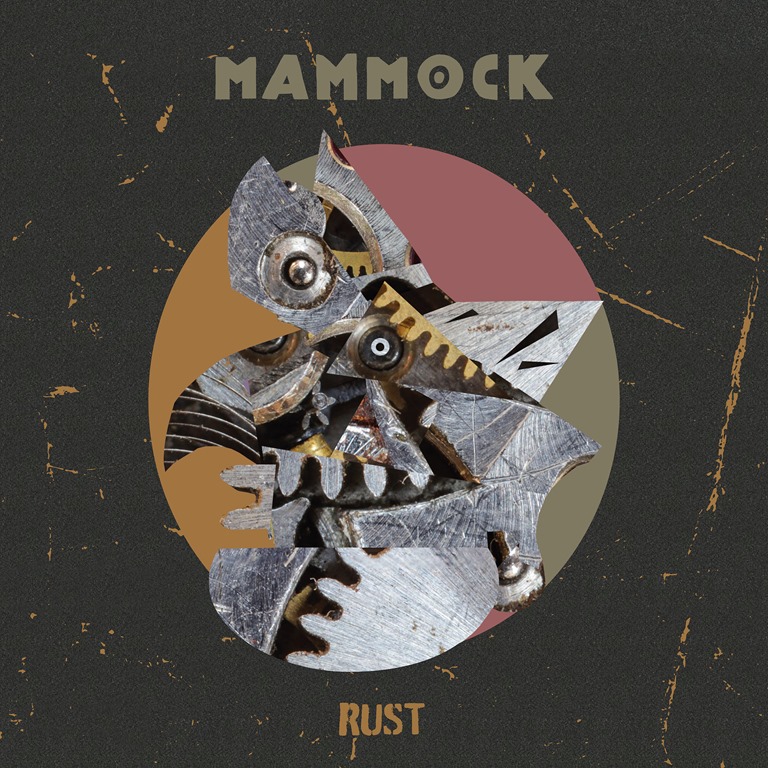
Now this is a fine justification of why I don’t do end of year lists. This may or may not have made mi ne, because I simply haven’t had time to process or digest it, but it’s been out a month and a half and I’ve only just got my lugs around it, with only a week or so left of 2022 – and it’s one of those albums that slaps you around the skull and has that instant impact by virtue of its sheer force.

Their bio tells us that Athens-based ‘Mammock’s compositions stray from the typical rock forms, incorporating various elements from punk to jazz, post-hardcore and the nineties’ US noise rock scene. The quartet possesses the self-awareness and technical capabilities to carve their own sound and explore their character into finely tuned songs, which grab the listener from beginning to end.’

What it means is that they make a serious fucking racket and sound a lot like The Jesus Lizard, from the rib-rattling bass to the off-kilter, jarring guitars, and the crazed vocals. Some of the songs sound like they have some synths swirling around in the mix, but one suspects it’s just more guitar, run through a monster bank of effects. Overall, though, they seem to be more reliant on technique than trickery.

They formed in early 2018 by Giannis (guitar) and Klearhos (bass) with the addition of Vangelis (drums), they started out as an instrumental trio, before the addition of Andreas (vocals), and if it seems like a contradiction to remark that they feel like a coherent unit when cranking out so much jolting, angular discord, but that’s one of the key tricks or deceptions of music like this: it isn’t mere racket, and in fact requires real technical precision: those stuttering stops and starts, judders, jolts, changes of key and tempo require a great deal of skill, intuition, and of course, rehearsal.

They take many cues from Shelllac, too: the drums are way up in the mix – to the extent that they’re front and centre, something Shellac make a point of literally on stage, and replicate the sound on record, with the guitar providing more texture than tune, and the vocals half-buried beneath the cacophonic blur.

The last minute or so of ‘Dancing Song’ blasts away at a single chord that calls to mind Shellac’s ‘My Black Ass’ and ‘The Admiral’. The lumbering monster that is ‘Bats’ is a bit more metal, in the sludgy, stoner doom Melvins sense.

Stretching out to almost seven minutes, ‘Jasmine Skies’ blasts its way to the album’s mid-point, a wild, grunged-up metal beast with an extended atmospheric spoken-word mid-section which gives the lumbering black metal assault that emerges in the finale even greater impact.

If the semi-ambient ‘Interludio’ offers some brief respite, the ‘Boiling Frog’ brings choppy, driving grunge riffage and a real sense of agitation and anguish, and the album’s trajectory overall paves the way for an immense finish in the form of the seven-minute ‘Away from Them’ that roars away as it twists and turns at a hundred miles an hour.

Yes, Rust packs in a lot, and it packs it in tight and it packs it in hard.

AA

AA

259722

PNL Records – 16th December 2022

Christopher Nosnibor

Nice… as you’d probably expect from this three-way collaboration, Time Sound Shape is a work of atmospheric instrumental experimentalism with some strong jazz leanings. That’s not smooth or mellow jazz, of course: more the weirdy, spaced-out non-musical kind of jazz. So not so much nice, as awkward, uncomfortable, challenging. This is not jazz of the cardigan and slippers variety, and you certainly wouldn’t play it at a dinner party, apart from perhaps at thee point when your remaining guests have overstayed their welcome and you want them to fuck off home.

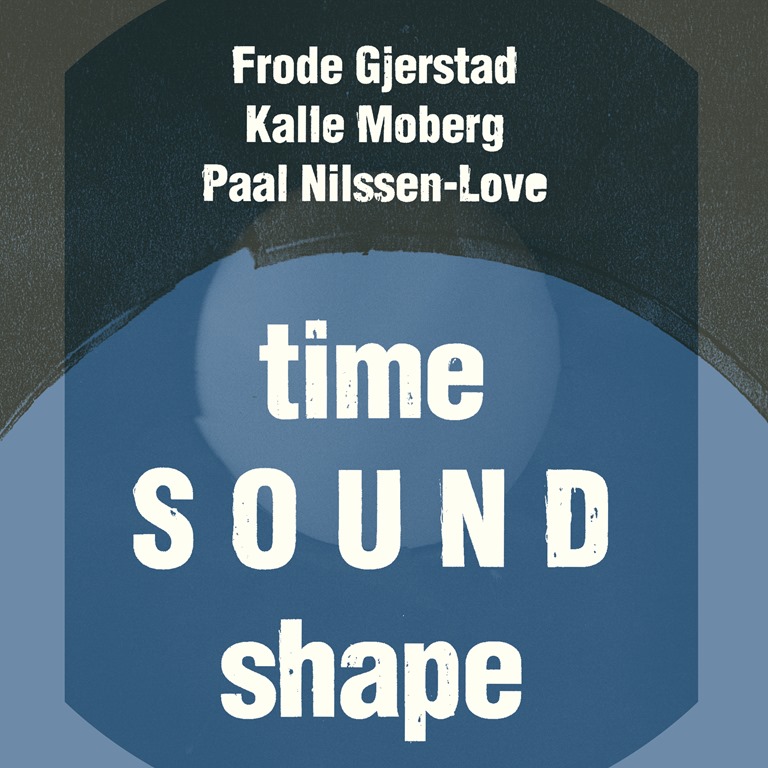
Time Sound Shape is a single continuous piece with a running time of a full-length album, clocking in at precisely forty-nine minutes, and it’s a great example of intuitive improvisational collaborative work, and it sounds far better than the clunky text-based cover art suggests.

There are some dissonant, discordant, even outright difficult to digest crescendos, and moments of queasy chamber orchestral meanderings, as they tweet and toot together in a sort of droning solidarity. It begins gently enough, with some trilling woodwind courtesy of Frode Gjerstad who brings flute, and clarinet to the party as well as sax, but it doesn’t take long before things shift in numerous different directions.

There are moments that almost feel ‘continental’ in vibe, perhaps not least of all on account of Kalle Moberg’s accordion work. And all the while, Paal Nilssen-Love brings texture and atmosphere with his application of a wide selection of Paiste gongs, bringing doomy dolorous chimes and rolling thunder. At times, the crashing gongs are strong enough to vibrate the internal organs within the ribcage.

In many respects, Time Sound Shape delivers precisely what you would expect from these three musicians coming together, and yet at the same time, it brings more. It’s a richly textured work, that evolves as it progresses, and it never stays stull, and yet the changes are often subtle. Time drifts and bends as the sounds transition, changing shape. Let yourself be carried.

AA

PNL052_front

Midira Records – 25th November 2022

Christopher Nosnibor

This album is, as the title suggests, a soundtrack work. Although released under the moniker Houses of Worship, it’s essentially the second album by Thisquietarmy x Hellenica.

The summer of 2020 saw Eric Quach (thisquietarmy) and Jim Demos (Hellenica) come together to record a collaborative album, which emerged as Houses of Worship, described as ‘an epic work of experimental industrial ambient, is an ode to dying buildings and the unwelcome gentrification of neighborhoods’.

This, the follow-up, came about after they ‘played their first concerts in the streets of Montreal from inside of a cube truck. These performances were filmed and recorded to produce "TQAXHLNKA: MIGRATION,” a twenty-two-minute experimental art documentary and an accompanying soundtrack. The film simulated the cautionary tale of what the Montreal arts and music scene could look like in a post-pandemic world. As the title suggests, it reflects the highly concerning exodus of artists constantly being divided and pushed out further from their community.’

At twenty-two minutes in duration, it’s a minute short of the magic spot, but this is a magnificently atmospheric work that goes beyond dark ambience and ventures into the vastly cinematic, space-drifting expansiveness that transports the listener beyond the terrestrial domain.

The album contains more audio than the film’s running time, and drags the listener through a bleak journey which articulates via the medium of sound the themes and scenes which preoccupy the duo, who explain, ‘With the current struggles linked to the pandemic restrictions, we have seen the acceleration of the gentrification process in neighborhoods where the heart of these activities takes place. As a result, a multitude of venues, studios and artistic spaces – places used for exchanging ideas with our peers and building communities meant to inspire and nurture our souls had to shut down.’

The tone is dark, the textures industrial, yet tinged with echo-heavy melancholy, a combination of anger, emptiness, and sadness. The soaring drones inspire a certain elevation, while the gritty grind is the sound of construction, regeneration. Gentrification is the face of capitalism eating itself; having run out of new ideas, it’s simply fallen into a cycle of recreation and rehashing. Upscaling, upwhatevering, it’s all about selling the new version of the same od shit at a higher price to the same saturated market. When will enough ever be enough?

Meanwhile, capitalism follows the former tropes of the avant-garde, destroying to rebuild, and Migration is the soundtrack to that.

There are lots of drones, lots of dolorous tones, lots of scraping, sinewy mid-range and gravel-grabbing, churning lower spectrum sounds, as well a haunting piano and infinite empty space. The titles paint the picture in themselves, and it’s dark, smoggy, sulphurous. ‘Total Waste Management’; ‘Polytethylene Terephthalate’; ‘Oil Terminal Tank Farm’ are all evocative of stark industrial scenes.

‘Industrial Estate Bird’s-Eye’ is a haunting wail, presumably of a theremin – over a low, throbbing drone that’s reminiscent of Suicide, and elsewhere, the duo conjure thick, billowing clouds of doom that sound like Sunn O))) behind a power station, as dense rumbles ripple forth. The twelve-and-a-half-minute finale, ‘Throbbing Magnetics’ fulfils the promise of its title, a bucking beast of claustrophobic, crushing gloom, and you feel yourself dragged into the sludge of that relentless, interminable cycle of collapse and construct.

It’s an accomplished work, but a depressing one, and listening places to the fore the abject nature of late capitalism, and the fact that any attempt to save the planet is futile in the face of the onslaught of bulldozers. Redevelopment has nothing to do with environment, only profit, and hard as you might rebel, as strongly as you may protest, you’re powerless against the big money. It’s not a conspiracy, it’s the sad truth. Houses of Worship recognise this. They may hope for better, but Migration is not a protest record, but the sound of grim acceptance.

AA

a3486628679_10

Cruel Nature Records – 2nd December 2022

Christopher Nosnibor

Many of us were waiting for the snow. And then, it arrived. And then everything ground to a halt. Welcome to the world now. What happened? It wasn’t always this way.

It’s all in a single word: ‘remember’ immediately imbues the album’s title with a sense of nostalgia. It isn’t explicit, of course, but it’s so, so evocative. Because, so caught up in life and the way everything blurs as time races past, we forget so much. The things we remember, then, hold a special place in our crowded minds. Reminiscences between friends, where moments, events, occurrences, people and places are conjured in those moments of reflection whereby we ‘remember when…’

Winters now are simply not the same as they were. I remember, in the early 80s, a full foot of snow on my parents’ back lawn, from which I would build a six-foot snowman and an igloo. We’d even build igloos on the school field during breaks. Snow didn’t stop school busses from running then. Perhaps it’s because of climate change, perhaps it’s because of the sheer volume of films, art, and literature, that depict idyllic, snowy winters, that show is so evocative. Most of can only dream of a white Christmas, but then, even Irving Berlin’s 1942 song was in itself a slice off nostalgia: ‘just like the ones we used to know’ is perhaps more accurately summarised as ‘just like the ones we see in fiction dating back to Dickens’ but obviously, it doesn’t have the same chime. Ultimately, the world is changing, and

The text which accompanies the album’s release serves almost as an affirmation of my line of contemplation, with the explanation that Remember We Were Waiting For The Snow is about what is called ‘solastalgia’: our anxiety, our concern, our sadness to see some natural phenomenon disappear. Written 5 years ago, after Žils [Deless-Vēliņš – aka (Lunt)] relocated to Latvia, it is a collection of exquisite reflective moving guitar-driven ambience drawing from same the sonic well as soundscapers like Jim O’Rouke’.

The nine tracks of Remember We Were Waiting For The Snow range from the expansive – the eight-minute opener, ‘Flakes and Feathers’ and the nine-minute closer, ‘Auseklis’ – to the fragmentary – the sub-two-minute ‘Dead Man in the Sand’ and ‘Dead Man in the Snow’.

Between the bodies, there is atmosphere. There is tension, but it’s contained by the soft curtains of sound. ‘Plasma (Under the Ice)’ is stark, scraping, brooding, dark, and difficult, uncomfortable, uneasy on the ear.

The instrumentation is varied, from screeding synths to picked guitar and mellow woodwind that falls between jazz and post-rock. But genres matter not and dissolve in the face of such magnificence. Remember We Were Waiting For The Snow drags hard on melancholic reflections. It’s also melodic and intimate, and ultimately, quite magical.

AA

cover

Front & Follow – 25th November 2022

Christopher Nosnibor

Longtime Aural Aggro faves Front & Follow have delivered the third in their series of truly immense Rental Yields compilations, with another twenty-five tracks of remixed works which showcase the community spirit they espouse as a label and among those in its orbit.

They describe it as ‘a multi-release collaboration project raising money to tackle homelessness in Manchester… Inspired (if that’s the right word – perhaps ‘motivated’…) by our current housing system, the project encourages artists to steal (or borrow, nicely) from another artist to create their own new track – in the process producing HIGH RENTAL YIELDS. Over 100 artists are now involved (the spreadsheet is fun), each one tasked with creating a new track from the sounds created by someone else – we are then collating the tracks and releasing them over the course of the next year.’

Some would describe the project as ambitious, others as simply crackers, and it’s likely both in equal measure, but this is why we love F&F. That, and the fact that they seem of have a knack for attracting and releasing interesting artists who exist far beyond the peripheries of any kid of commercial radar (or even most alternative radars).

This compilation really does make the most of the medium: unrestrained by the limits of vinyl, cassette or CD, and has a playing time of about a week. Yes, I exaggerate, but the point is, each contribution is the length it needs to be, or the artist feels it ought to be, rather than cut or constrained, meaning that while a fair few pieces sit around the five minute mark, the Decommissioned Forests vs Pulselovers rendition of ‘Rental Yields’ runs for nine minutes and forty-four seconds, ahead of the ten-minute workout that is IVY NOSTRUM vs The Snaps Jar’s ‘AND MONEY LESS’ and a few other six- and seven-minute monsters.

But what is time, anyway, and what’s it for? As much as it’s a measure of time, it’s a tool by which lives are ordered, limited, constrained, controlled. The vast majority are paid work by the hour, not by output, and time on the clock is not your time, but your employer’s. You don’t own your time, and you don’t own your space, and you give your time to some company who profit from your time and output in order to pay for a roof over your head, a space to eat and sleep, for the profit of a landlord or a bank you owe tens, even hundreds of thousands.

How often do you hear people shrug about their shit jobs saying ‘well, it pays the rent’. Imagine lying on your deathbed, reflecting on a lifetime of drudgery to say ‘I paid the rent’, while your landlord’s spent their life living it up in restaurants and on overseas holidays and celebrating their success because you’ve paid their rent too.

Audio Obscura VS Secret Nuclear’s ‘Vacant Period’ opens the album with an apposite sample from a TV show discussing gross and net yield before embarking on a glitchy, flickering journey of droning industrial Krautrock, and paves the way for an extensive and magnificent-curated collection of variant forms of ambience. Pettaluck Vs Giant Head’s ‘Dot to Dot’ is disorientation yet soothing and hypnotic – and fucking strange. But we like strange, and Front & Follow provide plenty.

If it’s a long, long listening journey of crackling stating, looming darkness, bleeps, bloops, and extraneous noise intercut with snippets of radio, film, and TV, and ultimately forges an immense intertext of sources.

Sometimes it’s swampy, eerie, tense, others it’s quite mellow and finds a subtle groove, but Rental Yields is unyieldingly brilliant, both in terms of range and quality. And you really can’t go wrong for a fiver – the worthy cause is simply a bonus.

a2023857748_10

Cruel Nature Records – 2nd December 2022

Christopher Nosnibor

Having raved about Pound Land’s second album, Can’t Be Arsed back in March, I was pretty thrilled to find the follow-up landing so swiftly. What with the exponential rise of Benefits, and acts like Polevaulter emerging, it seems that now is a good time for angsty, angry music with noisy tendencies and gritty sociopolitical leanings. Of course it is: it’s a sign of the times, and besides, it’s not a good time for anything else, unless you happen to be a non-dom billionaire or a CEO at an oil company.

If Sleaford Mods set a new template for the paired-back duo setup as being in vogue before the pandemic, the combination of lockdowns and crippling economic circumstance has rendered this an operational necessity for many musicians.

Pound Land may be up to their elbows in grimy dishwater and wading through excrement in streets where the drains and sewers are backed up due to torrential downpours and a lack of council funding, but they share little common ground with Sleaford Mods, and that’s despite favouring repetitive monotonous Krautrock-inspired grooves over dynamic structures: Pound Land are far doomier, dingier, lugging their way closer to sludge metal than anything you could possibly dance to.

The Stockport duo’s third album is a monster slab of punishing, gut-dragging, bass-heavy grimness, and one has to wonder how much to read into the title. The people are weary, ground down: will they rise up, or curl up and give up?

The blurb points out that the album finds the Stockport band pushing their ‘post-industrial kitchen-sink drama preoccupations even further on Defeated, exploring the dark comedy of everyday life in the dismal land of eternal recession. Sometimes the vision expands out of shitty Britain too, ‘Drone’ recounting the wearied observations of an electronic device as it traverses the globe… You’ve got to laugh, because if you don’t you’ll kill yourself. Or somebody else.’

The laughter is pretty dark and pretty hollow, though, and derives as much from the keen observations as any particular knack for a punchline (a line about mobility scooters with Northern soul stickers on stands out as particularly pithy) and the stark musical backing isn’t especially musical, more of a pounding trudge that provides a backdrop to an endless stream of vitriol and bleak depictions of the everyday, from pavements caked with dogshit and news items about rising fuel prices and their effect in the average household. If it sounds mundane, it is, but then we need art that speaks to us about life as we experience it, and the majority know far more about scrabbling for change to buy a loaf of bread than luxury cars, watches, and clothes.

‘Violence’ is their equivalent of Public Image Ltd’s ‘Theme’, a brutal, sprawling, brawling, squalling monster that opens the album with a relentlessly heavy battering ram of a racket, like Sunn O))) with a howling harmonica and sneering Lydonesque vocal. It crushes your skull, before it fades out swiftly and unexpectedly, which somehow works. But maintaining the PiL comparison, it’s Metal Box that is perhaps the closest similarity, in that the album as a whole is diverse, fractured, unpredictable.

‘Carry On Screaming’ sounds like The Fall in a three-way collision with Yard Act and Melvins. It’s a mangled mess of drum machine beats and psychedelia and noise with a monotone vocal drawl.

Against a thumping dirge of a noise, a grating mesh of distortion and dolorous drum, the title track is a gnarly hybrid of early Swans, and elsewhere, as on ‘Sick Day’, it becomes less about songs and more about spoken word narrative delivered against a backdrop of mangled noise, and at times, it’s pretty harrowing. Lyrically, Pound Land don’t pretty things up. Sonically, they don’t either. It’s magnificently raw and un-produced, and this is no more true than on penultimate song ‘Pathogen’, a dirty slow stomp that’s pure rage and invites comparisons to Uniform. And it sounds like it was recorded on a phone from the next room.

‘Drone’ sneers and snarls like Lydon at his best, closing with a venomous refrain of ‘fucking twat’ delivered in a thick, spitting Manchester accent.

Defeated may only contain eight songs, and only a couple of them extend beyond the five-minute mark, but it’s feels immense, and experience that’s exhausting both physically and mentally. Listening, you feel the weight of the world condense and compress as the angst and anguish press down ever darker, ever denser. It’s a bleak, suffocating document of everything that’s wrong right now. This is the sound of broken Britain, and it’s a harrowing insight into just how fucked everything is. But in this channelling of nihilistic anguish, you realise you’re not alone. It doesn’t change anything, but it’s something to cling to.

AA

cover

Cruel Nature Records – 2nd December 2022

Christopher Nosnibor

Seems I’ve blinked and missed a while slew of releases from Ontario experimentalist Clara Engel since writing about Hatching Under the Stars in the spring of 2020. Then again, the spring of 2020 doesn’t so much feel like a lifetime ago, as much as it does another life. Released on 5th April 2020, we were only just over a week into the first lockdown here in England, and we had no sense of what was to come.

As the blurb outlines, the album was ‘recorded entirely at home / solo’ and ‘Their Invisible Hands presents 13 tracks of subtle dream-like beauty… A mystical work, mixing classical and dark folk wanderings with misty soundscapes, which creates an abstract, new world atmosphere.’ Self-released in April digitally and on CD, Cruel Nature are giving it a cassette release.

In a way, returning to Clara’s work now is a powerful, and grounding experience. What has happened in the space between? Everything…and nothing. As they explain in the accompanying text, replicated on their Bandcamp, “I’m not writing the same song over and over so much as writing one long continuous song that will end when I die.”

If the last couple of years or so have reminded us of anything, it’s our mortality. And the sound of Their Invisible Hands is both spiritual and earthy. To unpack that, the sparse instrumentation, which consists predominantly of creening woodwind, chiming, picked strings, and hand percussion, has a simple, primitive aspect to it, and the slow, rhythmic undulations are attuned to elements of nature, as grounded as the act of breathing. ‘Dead Tree March’ is exemplary, a long, expansive drone that pulses in and out, repetitively, hypnotically, a sparse guide to a meditation.

Engel’s vocals, meanwhile, are ethereal and other-worldly, with a primal folk leaning that moves effortlessly between narrative and incantation, both of which tap into that subconscious part of the mind that it seems only music and nature can reach.

These themes of nature and of the ancient, of thoughts and tales lost in time, are constants in Engel’s work, giving credence to their comment about writing one long continuous song. In this context, it’s easy to see their entire catalogue as an interrogation and exploration of a quite specific field. Engel’s world is one full of magic and mystery, cryptids and magic beans and magnificent birds which sing. These songs are steeped in atmosphere and wonderment.

‘Ginko’s Blues’ is perhaps the most overtly classical piece on the album, a sparse composition led by picked acoustic guitar that calls to mind a stretched, dispersed rendition of Beethoven’s ‘Ode to Joy’, as it’s slowly dragged into a sea of scratched strings and gauze-like reverb.

Dissecting Their Invisible Hands too hard is to misunderstand its nature. It’s not an album to pick apart for the various elements, or even to comprehend its structures, origins, or meanings: any attempt to do so is to demystify its resonance. ‘It’s all fun and games ‘till somebody shows you their heart.. on a platter on a stake on a riverbed rusted…’ they sing on ‘High Alien Priest’. The metaphorical and the literal blur unsettlingly.

You shiver and find yourself mute as Engel leads you through an array of evocative soundscapes. All you can do is let go, and to explore them.

AA

a0799919546_10

2182 Recording Company – 2nd December 2022

Christopher Nosnibor

While books have blurbs that likely indicate whether or not you want to read them, records are altogether less pitch-orientated in their physicality, which, back in the day, used to make sifting through vinyl in shops and at record fairs an exercise which was a measure of one’s attitude to risk. Sometimes you’d take a punt on a record because you’d heard of the band and they sounded interesting, others, you’d go by the label or the cover or something.

Some traders – and this is something Jumbo records in Leeds still do – is put a short summary on a sticker on the PVC sleeve the record is stored in.

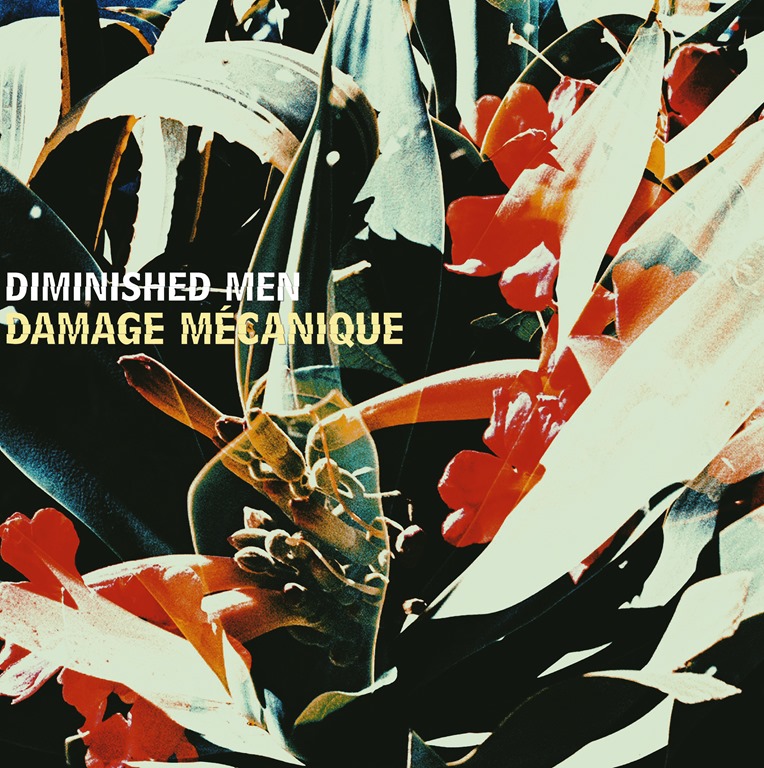
The virtual equivalent, for me, is scanning press releases. No way can I listen to everything I receive, let alone write about it, and some nights my inbox feels like flicking through boxes of records, unsure of what I actually want to hear until I find it. And lo, as I wander, aimless and befuddled, fatigued from another day of corporate chairpounding to keep the roof over my head and the bills paid, I stumble upon Damage Mécanique by Diminished Men. I’ve never heard of them, but on reading the pitch, I felt as if this was the thing I needed but didn’t know I needed until I found it.

Drawing from elements of film noir, psychedelic exotica, experimental rock, deviant surf and musique concrète, Diminished Men refocus their influences into something entirely unique. Collaged with menacing electricity, the raw materials are broken up and reassembled in their crude private facility. The group has spent more than a decade crafting their style and have established themselves as an integral part of Seattle’s underground music scene.

Their latest record, Damage Mécanique, thrusts the listener into a malfunctioning industrial sci-fi soundscape. Trance inducing guitars beckon with haunting wails, high-tension wires spin and spit with a crackling hiss. Circular kosmische rhythms and anxiety-drenched beats destroy and rebuild around fractured melodies and noise. The band oxidizes and melts into experimental post-punk and acousmatic environments as hypnotic groove and vertigo copulate in cinematic assemblage.

And there’s no question that they’ve got pedigree: drummer Dave Abramson is also a member of Master Musicians of Bukkake, Spider Trio, and has collaborated with Eyvind Kang and Secret Chiefs 3 among many others.

As ‘Double Vision’ crashes in amidst clattering, explosive percussion and dingy bass, I’m hauled by the collar into the realms of early industrial in the vein of Test Dept and Perennial Divide, and instantly, I’m home, knowing that this was indeed what I needed. It’s sparse in terms of arrangement, but dense in terms of sound, and it’s abrasive, rhythm-orientated, loud, heavy, and batters away at the brain.

It may seem counterintuitive to suggest that when your thoughts are in a mangled disarray and your focus is no-existent that the answer lies in music that bashes you round the bonce from all directions at once, but for me, at least, it’s infinitely more beneficial than any kind of chillout shit or ambient – although amidst loping, rolling rhythms, ‘Wet Moon’ conjures a shimmering ambience of sorts, while pointing towards esoteric oddity.

‘The Maze’ confuses and confounds with its daze-inducing cyclical riff and motoric beats which are pure Krautrock, evaporating into a mist around the mid-section of its six-and-a-half minute duration that sees it build through a jazzy post-rock segment before tumbling back into that nagging, dislocated groove – and it’s a nagging dislocated groove that dominates the wig-out weirdness of ‘Panopticon’. It’s likely of help to no-one to comment that it sounds like Murder the Disturbed but with the wild sax of These Monsters, but there it is: obscure post-punk collides with obscure jazz-infused noise rock, and it’s a corking way to end the first side of the album.

If ‘Axiel Tremors’ suggests rock excess played at a crawl, then it’s equally dragged out via some expansive jazz expressions into the realms of darkness. ‘Silver Halides’ brings a bold, brawling swagger to a cautious and subdued party of picked guitar introversion, and the final piece in this mismatched musical jigsaw, the six-minute ‘Spy’ hits the groove and drives it out of the door – while the door is still closed. Just as they clearly know how to make an entrance, they obviously understand the importance of a memorable exit.

There’s no particular or overt theme which unifies Damage Mécanique, and nor is there really anything that’s obvious stylistically speaking, as the album tosses a whole load into the mix and feels, in many respects, quite introspective in its influences and inspirations. There are, however, strong and unusual contrasts in evidence, with doomy bass and twanging desert rock working in tandem to forge a unique sonic experience., alongside, well, you name it. Quirky, atmospheric, Damage Mécanique is odd, but also compelling. It could be just the album you need, too.

kHz-1009_front

Birdfriend – 2nd September 2022

Christopher Nosnibor

Gintas K is at it again! Last year I was compelled to break my vow not to listen to, or write a word about any Christmas-themed releases on account of his album, Christmas Till the End, released on December 25th, and now, just when I’m getting into full foaming at the mouth mode over how there’s Christmas stuff everywhere since the week before Halloween, I discover he dropped an album bearing a title with overly festive connotations, which was, in fact, released at the start of September – and which was recorded in July!

Jingles With Bells was, like a number of other works, recorded live, using computer, midi keyboard, and controller.

Despite the album title being in English, and offering something of a play on words with jingles suggesting advertisements as well as festive chimes, the track titles are in K’s native Lithianian, and I’m not entirely sure I trust Google translate when it tells me that ‘irgi dugnai auksti ir aopacia garsai gerai visai’ is ‘the bottoms are also high and the background sounds are quite good’ – although it is a fair description of the six-and-a-half-minute opener. It begins with sparse drips and drops echoing as if in a giant cave, before Kraptavičius introduces his trademark flickering electrostatic glitches and whirs. The layers build as crunches and crackles clamour into a frenzy of fucked-up robotics.

Stammering, fractured beats collide and disperse in all directions, a wheezing, groaning, creaking array of electronic simulations and rapidfire thumps like hammers and nail guns, jazz percussion and despite the complete absence of any actual percussion, Jingles With Bells is marked by a complete absence of any actual beats, instead being driven by clattering short sounds that resemble beats and even trick the ear and mind with their (ar)rhythmic explosions. The last thirty seconds of the seven-minute ‘is to pacio tesinys geras’ (which may or may not translate as therefore the continuation is good’ is marked by silence, and it’s a welcome reprieve from the blindingly busy blitzkrieg blast.

‘istisinis is to pacio’ is a snarling drilling grind of bass, but also introduces the first jangling treble that might pass at a distance as a jingle, but it more resembles a dentist’s drill than sleigh, and the whole experience is less jingle and more nerve-jangling and uncomfortable.

Echoic droplets and sounds reminiscent of jangling jamjars trickle through the album, and the ten-minute monster that is ‘varpeliai noiz bugn bosas neblogai’ (‘bells noiz bugn boss not bad’ – yeah… nah) begins with what sounds like a bath being run down the plug and a crackling blast of blocks of distortion against – finally – chimes. But against a creaking croaking, cracking low end like the bow of a wooden ship breaking against rocks in a storm, those melodic tinkles soon build to forge an oppressive, head-compressing sonic torture; it’s simply all too much. But too much is never enough, and as such, it all adds up to another album that bears all of Gintas K’s quite unique hallmarks forged from some mangled laptop machinations, manipulated in real time.

AA

cover