Posts Tagged ‘Album Review’

Panurus Productions – 5th May 2023

Christopher Nosnibor

What is this? Sludge-jazz? Avant-doom? It’s certainly not quite like anything else you’ve ever heard.

The Leeds act – who despite several years of hard-gigging to refine and hone their sound, I’ve not previously encountered – describe their debit long-player as ‘a modern doom tome in which thrashings of drums, bass and guitar find kindred spirits in larynx-shredding vocals and lamenting horn arrangements, delivered on trombone and saxophone.’

It’s the lamenting horn (I often find myself lamenting my horn, too) and grainy guitars that greet the listener at the opening of the album, the first crushing bars of ‘Accursed Land’ offering a strange sonic experience – strange because it’s neither one thing nor the other. And when it drops down to just bass, the rasping vocals are the sound of purgatorial torture. The bone-dry vocal chords sound like sandpaper in a desert, before the instruments return to conjure some sort of doom rendition of a Hovis advertisement. It’s circa 2004 post-rock with the most pungent metal overdrive, the track’s explosive finale a punishing experience, like a Satanic I Like Trains or Her Name is Calla as dragged through the flaming bowels of hell.

The riffery steps up several notches on the heavy grind of ‘Arise’, but it’s the manic brass that really messes with your ears and your head. Brass isn’t a new feature in metal: These Monsters, another Leeds act from back in the day who pitched noise and psychedelia with mental sax are obvious precursors and possible influences, but Lo Egin scribble all over the template and make everything louder, gnarlier, messier. And yes, Volumancer is seriously fucking messy, mangling everything together all at once ins a genre-crunching morass of disparate elements which coalesce to create something utterly mind-warping.

Half the time, you find you’re utterly revved and raving, marvelling at the ingenuity and the enormous weight of Volumancer; the other half you’re baffled and bewildered , wondering how much you’re actually enjoying this while feeling dazed after the relentless punches the album lands. The album’s centrepiece is the ten-minute ‘The Things His Highness Overlooked’ and it’s a magnificently mellow slow-drone jazz piece which borders on a chamber-orchestra arrangement, where layers of brass overlap one another, until about three minutes in when the guitars and drums crash in and it scales the heights of epic while bringing crushing weight.

This album may only contain five tracks (six if you get the cassette version with a bonus cut), but it has a running time of nearly forty minutes, and it’s a beast.

Brutal, ugly, yet beautiful and glorious, Volumancer is something else. What that something is, I have no idea.

AA

cover

Front & Follow – 14th April 2023

Christopher Nosnibor

These are shit times to be alive in Shit Britain, UK Grim: having taken back our borders, this green and pleasant isle is floating in a sea of shit – literal shit – that we’ve pumped out onto our beaches for our domestic holidaymakers to swim in, and we have 16-hour quest to leave the country to go on holiday for those who want to escape for a bit – damn those French bastards for checking the passports off non-EU visitors. But hey, at least we got rid of all of those foreigners working on coffee shops and bars for minimum wage and those doctors from overseas, right?

And yet, while the cost of living is spiralling, major corporations – and not just energy providers – continue to push up prices, not to cover the cost of paying their workers, but to preserve profit margins. It’s not that they can’t afford to increase wages, they simply won’t because capitalism is built on maximising profit. Fuck the staff, look after the shareholders. And of course, rent continues to rocket: landlords, too, need to protect their rental yields

An investigation undertaken in behalf of The Guardian late in 2022 found that ‘asking rents on new listings are up by almost a third since 2019, and some people are facing increases of up to 60%. Prices in 48 council areas are now classed by the Office for National Statistics as unaffordable when compared with average wages’.

The trouble is, capitalism is based on exploitation, and invariably, the wealthy become wealthy and grow their wealth through the exploitation of the less wealthy.

There is an irony here: in nature, the most successful parasites achieve a symbiotic relationship with their host. Under capitalism, the parasites seem determined to kill the host (the poor) on the premise that there will always be more. But then, the same is true of the human relationship with the planet: only, the resources are finite and there isn’t another planet, so we’re fucked.

The accompanying text pulls no punches in explaining the context:

“As we travel further into the year of our overlord 2023, the cold snap that had enveloped the country no longer seems to mock us as we struggle to complete the simplest of daily tasks. With public services at a standstill as the people actually doing the jobs fight tooth and nail for honest payment and work prospects, the rest of us eke out a little more of the heat reserve to keep us going as the ice finally begins to thaw. But the Rental Yields do not stop. The opportunity to make hay while the sun refuses to shine carries on as if no one was suffering. The money continues to be made and the towers in space continue to be built. Dark shadows now dominate the skyline of a city that has been forgotten to the wishes and demands of the few. Some will say this is the progress promised by those in charge of levelling up. But many others will suffer as the bankrolls of the rental yielders grow ever fatter. Still, the spring brings promises of its own.”

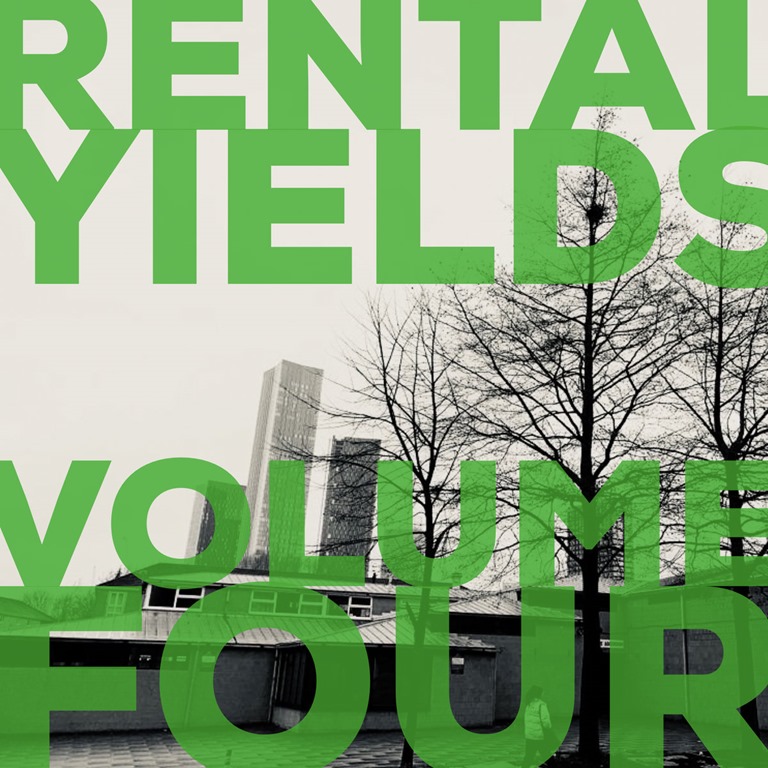
What makes life in this endless torrent of shit in which we’re all sinking is that there are some people who aren’t cunts, and who go out of their way to make the quality of life better for others, as well as themselves. The guys who run Front & Follow are among them, as are the many, many artists who have contributed to the Rental Yields compilation series, of which this is the fourth, showcasing tracks by myriad underground acts, remixed by myriads more in an exercise in infinite cross-pollination.

Featuring 26 new tracks and 52 artists, all money raised from this release will go to SPIN (Supporting People in Need), whose purpose is to feed, shelter, clothe and generally support the homeless and people in need of Greater Manchester.

As with the previous instalments, Volume 4, is very much geared towards ambient and more sedate electronica. With so many tracks and such an epic duration, and given the nature of the material, Volume 4 is a wonderfully immersive experience.

The overall quality is, again, excellent – meaning it’s consistently great across the duration and there’s nothing that makes you feel inclined to hit skip. There are, as always some names that leap out for a range of reasons: Kemper Norton. Yol, Omnibadger, The Incidental Crack, Field Lines Cartographer, Sone Institute – but the main point of this is not the names, but the merits of collaboration and collectivism.

Some tracks do stand out, notably ‘Acid Bath’ by BMH vs Lenina for it’s pumping beat, and CuSi Sound vs Robbie Elizee’s ‘I’m Not A Tourist, I Live Here’ for its overt wibbly synth weirdness, for starters. ‘The Enamel Hamper’ by Cahn Ingold Prelog vs The Ephemeral Man is a nine-and-a-half-minute dark psychological drift, while Omnibadger vs Grey Frequency’s ‘Speeding Ground (Part iii)’ is a glitchy, collaged morass of disorientation, with layers of noise, tribal drumming, and disembodied vocals, and ‘Home on the Whalley Range’ by Opium Harlots vs Yellow6 combines dark ambient, murky noise, and a hint of The Cure’s ‘Pornography’ to forge something intensely claustrophobic.

Solo1 vs yol’s ‘Black Spoons And Crosses’ is a collision of ambience and noise that will twist your brain, and the sonorous drones of Laica vs Learn to Swim’s ‘High Yields, Low Prospects’ is a doomy post-punk affair with an agitated drum machine hammering away amidst a sea of murk, and both the title and sound encapsulate the sentiment and the message of the album as a whole.

It is, once again, a triumph, not only artistically, but socially: the Rental Yields series is the epitome of community. And while our government speaks of community while acting in every way to destroy it, promoting division by every means, and social media has become a warzone whereby the goal is achieved, musicians are showing the way. This, this is how we will survive the shit and create a better future.

AA
a0601616053_10

21st April 2023

Christopher Nosnibor

I’ve been trying to wrap both my tongue and my brain around the title of this album for what feels like an age: it’s something of a linguistic conundrum. Depending on your interpretation, ‘preter’ is either ‘more than’ or ‘past’ (which becomes a tautology when paired with the ‘retro’ of ‘retrospective’. Not that this is a retrospective in any conventional sense, being a collection of new material from The Noise Who Runs, a duo based in France, consisting of Ian Pickering, perhaps best known as one of the Sneaker Pimps.

It’s perhaps not entirely surprising that there’s a vaguely trip-hop feel to some of the songs on this varied and sprawling album which equally carries a dark 80s vibe – meaning that there are some really deftly layered arrangements and a lot of space in which to wander and explore the sounds and your own internal monologue while listening to Preteretrospective.

We’re steered into the album via the singles released in advance of the release, most recently ‘2poor2die’, which places the socio-political leanings of the pair to the fore and lands slap in the middle of the album as a towering centrepiece.

But it starts with another single, and the first song, ‘Beautiful Perhaps’ owes much to Disintegration-era Cure, but through a filter of She Wants Revenge: that is to say, it’s a contemporary take on a retro style, and it’s well done. This is true of the album as a whole. Perhaps my appreciation of trip-hop has always been because it has a certain hazy darkness about it, which to my ear renders it a cousin to goth and shoegaze.

‘Off the Rails’ incorporates elements of Dub and reggae, with an insistent marching beat and nagging bass groove dominating an otherwise sparse arrangement reminiscent of a more electronic reimagining of The Specials – with social commentary to match.

‘Somewhere Between Dogs and Wolves’ is a slow, atmospheric groover that really draws you in slowly: it’s pop, but it’s dark, minimal, with some pretty harrowingly visual lyrics. It’s compelling listening, and resonates in a way that nothing that qualifies as pop now can touch. ‘So Good it’s Free’ owes aspects of its melody to ‘Boorn Slippy’, but is a mellow shoegaze / acoustic song that sits apart from most protest songs – and make no mistake, this is a protest song. For all the mellow tones – look no further than the shuffling, jangling indie of ‘Zoe’s Edible Garden’ for evidence of the rather twee 90s indie that would be a prominent feature of John Peel’s show circa ‘93 – Preteretrospective has much depth alongside its range. This brings us to ‘2poor2die’, which is pretty bleak and brimming with frustrated energy.

As the press for the single points out, ‘the spiritual centrepiece of this 14-track offering, ‘2poor2die’ addresses the growing inequality in society and the struggle of the unheard / unseen decent people without voices and increasingly without hope. It is, at once, a celebration of ordinary bravery in the face of the daily grind of routine and a condemnation of the eternal ideology that sees working people as cannon fodder, only to be told “Shut up and get on with it, nothing’s gonna change”. Call it a tribute to the folks who are barely considered worth considering by the powers that be.’

With the chasm between the haves and have-nots yawning ever wider, this is punchy and on-point, sadly. But hearing such politics without the hectoring delivery of Sleaford Mods is welcome, not least of all because it really does represent the groundswell of opposition to oppression. There’s a reason why pretty much every profession is striking right now. Yes, we’re all being shafted, and we all need to take a stand.

Preteretrospective is a complex beast: a strongly contemporary album with retro stylings which confronts contemporary issues. At times it’s quite dancey, but whereas so often in the past dance equated to the escapism of clubtastic euphoria, with or without chemical enhancement, Preteretrospective is clear-eyed, clear-headed and irritated.

AA

The Noise Who Runs 3 - photo by Théo Valenduc

Photo by Théo Valenduc

Room40 – 14th March 2023

Christopher Nosnibor

You might describe this as a ‘technical’ album. I certainly would. Because much as it’s constructed using field records, the methodology behind it is, quite simply, not that straightforward straightforward. It’s not a guy with a mic wandering around capturing sounds from spaces, that’s for certain.

The accompanying notes explain that ‘Atmospheres and Disturbances registers the changes in high altitude ecologies caused by increasing global temperatures. The composition is based on field work undertaken at the High-Altitude Research Station at Jungfraujoch, Switzerland where for four weeks I deployed various recording devices around the station, and in the surrounding alpine environment to register natural, anthropogenic and geophysical forces. The project provides new encounters of an endangered alpine environment to enhance the way we perceive and engage with notions of place, community, and environmental dissonance.’

This, then, isn’t simple field recording, but environmental work, and the five pieces capture different aspects of environmental and ecological conditions. You may shrug and say ‘meh, weather’, but Atmospheres and Disturbances really captures just how affecting these are on our everyday existence.

It’s a perpetual joke that it’s the favourite topic of conversation for the British, but the fact is, meteorological conditions rule human lives; all agriculture is centred around the weather, our ability to travel is dictated by it. Tell me your mood isn’t affected by it.

Atmospheres and Disturbances is, then, very much a mood album, among other things.

For the most part, the fifteen minute ‘Wind’ which opens the album is subtle and simple, a recording of gusts as they rustle and buffet. It’s a relentless turbulence, a roar like a rough ocean, and it fills your ears and crowds your mind. While a windy day can be an annoyance or a source of irritation, there is always an element – no pun intended – of threat when it comes to winds, of damage even devastation. Around nine minutes in, things are building in volume and force, and it sounds like a barrelling blast hammering at a corrugated iron roof, rain, snapping twigs, and the tension is high as a storm rages. There’s something – not unreasonably – rooted deep in our psyche that finds storms a source of fear or excitement, or a combination of thew two, like a horror movie. Listening to this track, it’s all in there.

‘Stations’ begins with a gurgling trickle of water before a low00flying plane engine sound obliterates it, and cracks and thuds and slams coalesce to create a percussive force amidst fizzing electronic crackles and pops. Metallic crashes call to mind Einstürzende Neubauten, before more dense noise begins to blast and we’re dragged into a mechanical drone, the throbbing heart of the generators and mechanics of the station itself.

The remaining tracks are shorter – less than eight minutes apiece – but are darkly dense, blurring nature and machinery into a droning discomfiture. ‘Melt’ sounds very like the beginning of ‘Stations; but with additional disruptions and disturbances, thunderous roars and torrential rain. And, of course, one can’t help but feel that this is the literal soundtrack to global climate change, and with this comes a further reminder that we are, indeed, doomed.

I don’t say this for drama or hyperbole. It does seem to be pretty much established now: it’s simply a question of how quickly Venice will be sunk and the sea will swallow half of Britain.

It’s likely not Philip Samartzis’ intention that my mood should plummet as the album progresses. There is a sense that for all of its industrial bleakness and whirring machines and roaring engines and howling precipitation, Atmospheres and Disturbances is designed primarily as a documentary work, but, in context, it’s a documentary with a message.

As gusts roar through ‘valley’ in the wake of cracking thunder and drag chanking notes in its wake, the lingering experience is one of disquiet and discomfort.

AA

RM4202_front

Kranky – 7th April 2023

Christopher Nosnibor

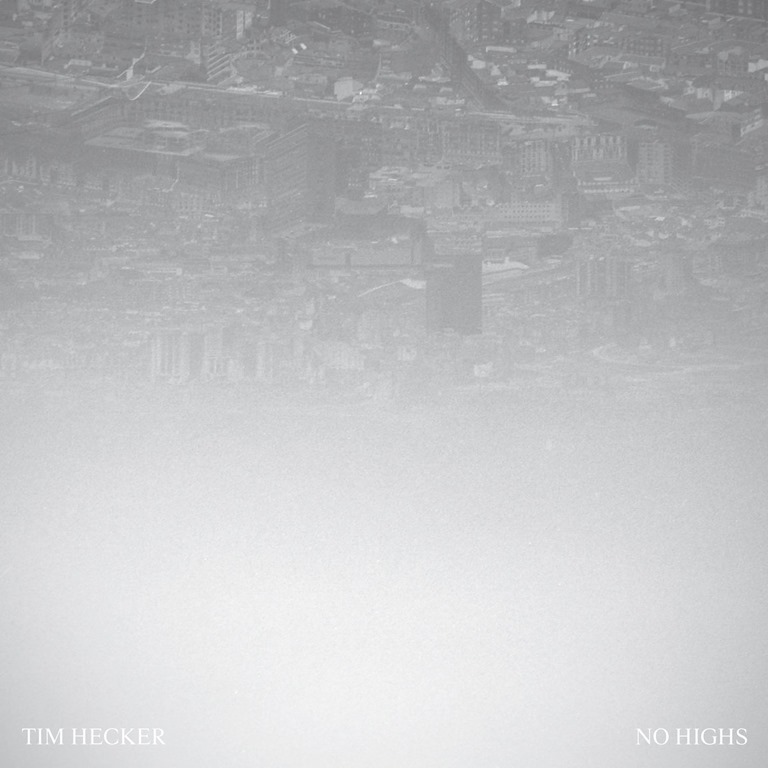
I had been warned. A fellow reviewer who received this before me had said that this album had made him feel ‘unwell’. It was a compliment, of course. This comes as little surprise: Tim Hecker is an artist capable of creating the most intense and all-encompassing experiences, and while the live performance I attended in 2014 may not have made me feel ill, it did make me feel pretty weird, detached, disorientated. As the only artist I have ever known to use more smoke than The Sisters of Mercy and Sunn O))) combined, filling the room to the extent that it was impossible see your own hand in front of your face, let alone the person next to you, Hecker made me feel uncomfortable, and in some way a little scared in a claustrophobic way.

I’ve had a few records which have had a physical effect on me: listening to PJ Harvey’s Rid of Me for the first time with a brutal hangover is one standout experience, its raw and up-front lurching guitars punching my head and stomach simultaneously with puke-inducing results which went far beyond the post-booze discomfort. Because listening to music is not a passive activity, and as well as requiring focus, it would seem also degree of compassion – you feel its force physically as well as psychologically.

The notes which accompany Tim Hecker’s latest album are bold, to say the least, describing the Canadian composer as ‘a beacon of unease against the deluge of false positive capitalist ambient currently in vogue’ and continues, ‘Whether taken as warning or promise, No Highs delivers – this is music of austerity and ambiguity, purgatorial and seasick. A jagged anti-relaxant for our medicated age, rough-hewn and undefined.’

Clearly, this is exactly what I need, having felt tense and on edge, unable to catch my breath properly for several days now. If the album’s title sets the initial expectation, the track titles reinforce the album’s mood: ‘Monotony’; Pulse Depression’; ‘Anxiety’; ‘In Your Mind’; ‘Total Garbage’ – all the shades of dark, of bleak, of miserable, of self-questioning, panic.

The aforementioned ‘Monotony’ pings a single note back and forth for almost eight and a half minutes. Drones build sonorously behind it and swarm the mind as the volume grows and then shrinks again, and the buzzing and extranea become siren-like. And so, there is movement behind the tedious repetition, but it’s tense and unsettling. Moments of levity which appear to suggest tranquillity is within reach prove to offer nothing but false hope as we’re soon plunged into the gloaming, or otherwise into glitchy, lurching passages of unease. Soft sounds which ought to be mellow and soothing are rendered uncomfortable, or mournful, or both.

‘Lotus Light’ initially intimates a Krautrock pulsation, but some bending frequencies and melting notes swiftly take this trip on a rapid descent. If the lotus flower is supposed to signify rebirth and enlightenment, then this is one which is wilting, poisoned, and if eating the lotus is supposed to provide a conduit to pleasure, this is the soundtrack to picking the wrong plant, as everything rushes forward too fast and you’re not in control. You don’t feel right: you feel drugged, delirious.

‘In Your Mind’ picks and stabs away with tempo changes galore, surging and sweeping this way and that, echoing reverberations around the cranial cavities before booming stabs of synth blast through the drifting haze, before ‘Monotony II’ returns like a waking memory of a traumatic dream from the night before. The trilling saxophone does nothing to calm the mind or the mood. And over the course of more than eight minutes, ‘Anxiety’ recreates the experience if that increasing heartrate and the clenching of every muscle perfectly. That is to say, it’s brilliant, and also brilliantly difficult, and potentially triggering to some. The flickering, fluttering electronic throbs are practically Jean Michelle Jarre reimagined as a fibrillation.

No Highs is a difficult album, but how difficult depends on our headspace: from a certain perspective, it’s a cinematic electronic set, but from various others it’s the soundtrack to being unable to settle, to relentless tension, to jitters and fretting, and worse. The notes oscillate and you clench; sudden spurts of sound burst and you jump momentarily., before ‘Sense Suppression’ pulls you down, slowly, into a sea of sound, before the album drifts away to nothing on the drifting tides of ‘Living Spa Water’.

No Highs is sad and dark and deeply affecting, and not necessarily in the ways you’d expect. Listen and share the suffering.

AA

a2157297652_10

Christopher Nosnibor

I get a lot of weird shit come my way. I guess it’s to be expected: I review a fair amount of weird shit and it just snowballs: weird shit finds me. And this is very much weird shit. Despite some serious deliberation, I can’t decide where the emphasis lies in that statement.

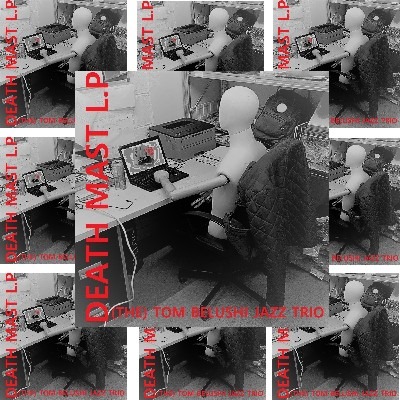
Details about the artist or the release are practically non-existent, but it doesn’t take too much digging to establish that the Tom Belushi Jazz Trio aren’t a trio and they don’t play jazz.

Having released an EP (also entitled Death Mast) and deleted it almost instantaneously, Tom Belushi Jazz Trio seem determined to render themselves as evasive frustratingly obscure as is conceivably possible. But this is clearly not simply a musical project, so much as an exercise in postmodernism that revels in ephemerality. With CD copies of this release being limited to single figures, I’m reminded of various crackers projects by Bill Drummond and The KLF, among others, whereby the objective seems to be to create an objet d’art that’s so scarce it’s beyond reach even before it’s released, essentially only existing in legend.

Slapping synths, gloopy stuttering beats, warping irregularities and groaning keys redefine the sound, along with snippets of robotic, autotuned vocals. Oriental motifs are dominant in this instrumental album’s ten exploratory tracks, which appear to be largely AI in origin. Because yes, it’s taking over the world. Think you can hide or linger on the peripheries now? You’re simply deluding yourself.

There are some nice sounds – and some naff ones – all balled together in an eclectic hotchpotch of ersatz electronic collaging. ‘Traitor’s Gate’ is a droning shanty that’s actually got human vocals; it’s woozy, disorientating in an uncanny sort of a way.

The titles are daft, absurdist, Dadaist or abstract, and littered with references, many of which are obscure – ‘Luke Haines. I Have Your Hat’; ‘No Mark Wynn’;(a particularly cheesy and overly synthetic slice of r ‘n’ b); ‘Stairwell Crooks Shutterstock Dust Jacket’ but ultimately seem to present as little true meaning as the music itself (and I can’t ever recall having experienced any dilemmas over purchasing avocados).

Death Mast is one of those albums that was probably more fun to produce thana it is to listen to. It does have considerable novelty value, and it does have lots of ideas, but few seem to be explored in any real depth or fully realised, and as such, the main idea seems to be the concept for the creative process – or should that be ‘creative’ process?- rather than the end product. But with the ideas and even the passages within the tracks being as fleeting and as ephemeral and impossible to locate as copies of the album itself, what are we really left with? Ultimately, Death Mast presents more questions than answers, a point of discussion more than a musical project. But, if there is one conclusion we can draw from this it’s that there is no need to worry that AI will bring about the end of music as we know it. At least, not this week. Welcome to the post-postmodern age.

AA

54d90880-c561-48af-aa9e-fda70c47391e_thumb_400

Avalanche Recordings – 24th March 2023

Christopher Nosnibor

believe anything, believe everything, the follow-up to LEARN THE HARD WAY, released in August 2022, is the second album from the eternally-prolific Godflesh founder Justin Broadrick aka JK Flesh under EXIT ELECTRONICS, and it is a monster. Predominantly percussion and otherwise beat-free, it’s an example of the most primitive electronic industrial noise and pounds hard at every part of your being in the most punishing and relentless of fashions. That isn’t to say it’s arrhythmic: the tracks are built around the rhythms that emerge from repetition and the way noise surges together to create form.

The capitalisation of the titles is jarring enough for a sensitive pedant like me, but the presentation is perfect for the content. believe anything, believe everything is very much an album that SHOUTS IN YOUR FACE in all capitals, with everything cranked up to overload. It’s described as ‘INDUSTRIAL MUSIC’ and it seriously is.

There’s nothing about believe anything, believe everything that’s overtly or specifically political – there are not words, and the titles, capitalised as they are, are suitably abstract in their intent. And yet believe anything, believe everything does feel political, and it feels like a discourse about being hoodwinked, about being controlled, manipulated. About differences of opinion, about division, and about everything being fucked up. Sure, I may be projecting and seeing solace in that projection, but as of an in itself, the mangled racket of believe anything, believe everything offers no solace superficially, because, quite frankly, it hurts. And this is why believe anything, believe everything feels like the soundtrack to the soundtrack to the now: we’re persistently lied to, taken for fools, subject to increasingly draconian laws and heightened surveillance while living standards drop by the day and inflation soars exponentially.

believe anything, believe everything articulates something beyond words about the bleak times we find ourselves in And still, STILL, while the fucking cunts still treat us like pricks, and rob us blind while milking the taxpayers (not the millionaire tax avoiders) to fund private interests), people back these fuckers, the Tories here in the UK and fucking Trump in the US.

Christ: we need music like this to fill our heads and wipe away the pain, albeit briefly.

Each track locks into a groove and gouges away at it with minimal variation for a relentless four or five minutes. Its power lies in its focus on force, and the impact isn’t due to dynamic range or structure, but nonstop bludgeoning.

Grinding out a repetitive pulsation, ‘YOUR LOT’ is so dense and distorted it’s both nausea and headache-inducing. The sound gets murkier and nastier and more degraded as the track’s five and a half minutes progresses. The bass blasts hard as deep on ‘HOW YOU SEE IT, IS NOT HOW I SEE IT’, before the speaker-tearing boom of ‘PISSTAKE’. It may be an illusion, but the experience is that it simply gets darker, denser, nastier and more overloafing as it progresses.

‘ACT FIRST, THINK LAST’ offers some slight variety, with a crashing, crushing rhythm and gouging synth sounds that sound like your soul being sicked down a sinkhole the size of a continent. ‘KNEE JERKS’ does go big on the beats, and they kick you in the midriff and knock the air from your body, leaving you gasping and weak. It’s a mangled churn, a thudding chud like when a laundry load had lumped together and is banging from side to side in the spin cycle, only if you’ve hearing it with your ear pressed to the washing machine door and it’s vibrating a clog of earwax you just can’t shift.

‘WHO’S YOUR GOD’ is a massive ear-blasting burst of pulsating distortion, and things really do get nasty and gnarly again, and at the abrupt halt of the last track, ‘HOW WE LOVE TO MOCK’, you’re left feeling drained, battered.

There is no response to an album like this: you just feel fortunate to have made it to the end. You’re left feeling drained and exhausted as you stare at the ceiling.

Thrill Jockey – 24th March 2023

Christopher Nosnibor

Wikipedia, and most other sources for that matter, will tell you that ‘Liturgy is an American black metal band from Brooklyn, New York’. The band’s own bio, which explains how their brand of ‘“transcendental black metal” exists in the space between metal, experimental, classical music and sacred ritual’ and that ‘The band is simultaneously a platform for fine art and theology’ is rather more illuminating in explaining how they have vastly expanded their horizons and those of the genre to create a form which is truly unique.

93696 is very much a concept-based work, which is best explained by quoting: ‘93696 is a number derived from the religions of Christianity and Thelema, a numerological representation of heaven, or a new eon for civilization. Hunt-Hendrix composed the album as an exploration of eschatological possibility divided by the four “laws” that govern her own interpretation of heaven, “Haelegen”: Sovereignty, Hierarchy, Emancipation, and Individuation. These laws constitute the four movements of 93696 which act as dramas all their own within the framework of the record.’

And what a record. ‘Epic’ barely touches it. It’s immense in every way, not least of all duration, with fifteen tracks spanning the best part of an hour and a half, this is expansive on a scale akin to SWANS (who they’ve previously supported). It’s also every bit as dynamically charged as latter-day SWANS albums, with tracks anything up to a quarter of an hour in length powering though a succession of crescendos, via sweeping choral soundscapes.

‘Djeennaration’ packs everything in early, presenting eight-and-a-half minutes of frenetic fretwork and thunderous percussion, over which vocals switch from angelic to demonic and back in the blast of a beat. It’s powerful, and quite bewildering in both its force and cinematic scope.

Done differently, this could feel overlong and pretentious, but the execution is so precise and the great ambition so focused on realisation that everything feels remarkably organic and despite making gigantic leaps between passages, changing tempo and tone here, there, an everywhere, it flows. Shuddering slabs of power chords that crunch like quartz while blasts off pure noise tear the air, but as ‘Haelegen II’ shows, with the incorporation of piano, there’s so much more texture and detail than plan fast-as-fuck fret attacks – then, from out of nowhere, things take a turn into folksy post-rock.

The savage squall of ‘Before I Knew the Truth’, released as a single a few weeks ago distils the potent force of the entire album into four and a half flooring minutes. There are some brief – and strange – moments of respite, such as the quavering woodwind tones of the brief interlude that is ‘Red Crown II’ and the delicate keys of ‘Angel of Emancipation’, and they’re most necessary, as the majority of 93696 is a force beyond nature.

The fifteen-minute title track is nothing short of an absolute monster, and as much as it’s n obliterative squally, it’s also a dynamic and wide-ranging sonic and cerebral experience, culminating in a vast orchestral sweep that’s nothing short of stunning.

This does feel very much like an absolute pinnacle and a definitive and exhaustive – and, it has to be said, exhausting – statement. Transcendental indeed.

AA

146782

Ici d’ailleurs – 31st March 2023

Christopher Nosnibor

Matt Elliott, since breaking out from the Third Eye Blind moniker, has maintained a fairly steady flow of output, with an album every three years or so, with this being his ninth.

Farewell To All We Know (2020) and The Calm Before (2016) were just the most recent, with the former bring a dark, lugubrious affair: the title carried connotations of facing finality, something that doesn’t really sit comfortably in Western culture outside of the realms of art – and it seems that death has become an even greater taboo in recent years, with anything which references death, and particularly suicide – requiring a trigger warning.

Given that suicide is the single most common cause of death in males under the age of forty-five in the UK and a high on the tables in the US and many other countries, and that death is the sole inevitability in life, I feel it’s something to be faced up to, not shied away from. It may be a contentious view, but we don’t get to choose whether to leave the room in real life, so why in art? Perhaps bringing these subjects out into the open – in the same way as mental health has finally become accepted as being something we can discuss – would render them less triggering. Herein lies something of a contradiction, in that we now discuss mental health, but not the effects or consequences. And have we really broken the barrier on mental heath? I often hear or see people saying they’re not having a good day or week because ‘mental health’. It’s progress, in that historically people would have rather said they had the shits than were struggling – but there’s further to go, especially if we’re to be sure that ‘mental health’ doesn’t become the new ‘upset stomach’ that gets a pass from disclosing what’s really wrong. Not because prying is to be encouraged, but there’s talking and there’s talking, and if we’re really going to talk about mental health, then shutting a conversation down by using the phrase isn’t going to make that happen.

The press release suggests that Farewell To All We Know was ‘a harbinger of the collapsological crisis that was COVID 19. What can be built when everything is down, when everything has crumbled, ideals and beliefs, a sense of commonality and community?’ Of the new album, it poses further questions: ‘What is left when you are without words? What is left? Death, perhaps, but also life… What is left? A form of awe that dulls? An enthusiasm that dries up? A curiosity that no longer makes sense?’

As the title suggests, with The End Of Days, Elliott once again has his focus placed firmly on finality. And just fifteen minutes surveying the news suggests that we really are living at the end of days: plague, natural disasters… it’s not a question of if, but when, and how? Will climate change bring about the end of days for humanity, or will we wipe ourselves out with nuclear apocalypse before we reach that point?

‘All life’s wasted time’, he intimates on the title track which opens this delicate six-song suite – a sparse acoustic folk tune that has a lilting quality that’s easy on the ear. It sounds like he could be singing this sitting in a rocking chair by the fire, but brings a tear to the eye as he articulates the parental worries many of us – myself most acutely – feel.

And even all the smiles on children’s faces bring you pain

When you think of what they’ll face

And if they’ll even come of age

A world resigned to flame

Because we’ve burned it all away

You – I – feel so helpless. Turning down the heating, turning off the lights – you tell yourself you’re saving the environment, but you’re only making your life more difficult while industrial complexes around the globe churn out more pollution in a minute than any household will in a lifetime.

‘We need to wind time back to the eighteenth century before the industrial revolution and show them now’, my daughter told me over dinner this evening. She’s eleven, and she’s right, and I feel the anguish flow through me as the horns swell in a rising tide of warped brass atop the flamenco guitar in the closing minutes of this ten-minute epic.

It’s not the last, either. ‘Healing A Wound Will Often Begin with a Bruise’ is over eight minutes in length, and ‘Flowers for Bea’ is an immense twelve and a half. ‘Song of Consolation’ sits between folk and neoclassical and is achingly beautiful, but offers little consolation. Because what consolation is there?

Incorporating jazz and baroque, The End Of Days feels less darkly oppressive than its predecessor, sliding perhaps into bleak resignation to provide the soundtrack to the drinks in the basement bar on the last night on earth. Yes, tonight we’re going to party like it’s goodbye forever. This is the album to which to clink glasses and hug and cry and share final gratitude for those who have been there for us, made our lives worth living as we swallow hard and brace ourselves for the inevitable.

AA

IDA158_front

Mille Plateaux – 14th April 2023

Christopher Nosnibor

ID[entità] is a collaborative work between composer, performer, sound and multimedia artist Gianluca Iadema and Swiss vocalist, improviser-composer Franziska Baumann, which developed over the span of 2017 to 2021, and is as much a work of decomposition and deconstruction and reassamblage as anything.

We’re deep into the territory of artistic concept and execution here, as the accompanying notes detail how ‘the Italian artist composes for the electronic and the acoustic voice, searching for similarities and contrasts that take styles of glitch, techno, and pop music to the extreme. Far from melody and accompaniment, he composes an oscillating interplay of the acoustic and the electronic environment, morphing and sculpting the two realms as equal sound materials. Rarefied moments, melodic outbursts reminiscent of Renaissance vocal music, and rave rhythms give rise to sonic textures embedded in a minimalist framework. The compositions are conceived in “spaces” rather than linear development, although an “ergodic” narrative is present. With a cubist approach, the spatially sculpted sounds transform into intimate moments and vice versa, thus allowing atmospheres to separate identity and non-identity. Born as a cycle of compositions for electronic voice.’

Cubism in music is something I have never considered, let alone encountered, and so I am – naturally – curious to discover what the album’s ten pieces would contain.

Strange, strange sound it what they contain. This is perhaps one of the oddest voice-orientated works I’ve heard since Mike Patton’s Adult Themes for Voice. Like Patton, Iadema showcases just how strange, unsettling, and unnatural the human voice can sound. That most familiar of things can also prove to be the most uncanny when its familiarity is twisted out of shape in any way. Against straggling strains of digital glitchery and fear-chord drones, we gets breathless utterances, muttering mumbles and off-key scales.

I hear eerie discord and dissonance; I hear voices bent out of shape to create forms that aren’t natural or humanly achievable without manipulation – but being human voices, they resonate subconsciously as belonging within the psyche. I hear stuttering glitches looped into helicopter rotors and panic attacks and sultry, soporific drones. I feel choral exultations and moments of contemplative spirituality. I hear uncertainty and a sense of unease. I hear scrambled bleeps and fluttering microtones, snippets in foreign tongues, a sensation akin to Wiilliam Burroughs’ cut-ups whereby words, sounds and images collage together to portray the world as we experience it, consciously and subconsciously, and simultaneously rather than via chronologically-sequenced narrative. There’s trilling and milling, humming and murmuring, and a sense of something just beyond reach, beyond knowledge, beyond perception, and a sense that something is somehow wrong. I may not hear Cubism, but then perhaps I’m not sure what I’m listening for, but I do hear fragmentation, sonic manipulation and all kinds of jarring effects.

With the majority of the tracks stretching beyond the five-minute mark, ID[entità] is a long album, and one which despite being quite calm and gentle in tone, with protracted ambient stretches hovering in an unsettling mist.

It’s a unique and visionary work which pushes multiple boundaries at the same time. ID[entità] is not always an easy listen and it’s by no means immediate, but it is accomplished and utterly compelling.

MP59_art