Posts Tagged ‘Album Review’

InsideOut Music – 11th May 2024

Christopher Nosnibor

Maybeshewill rose to prominence on the crest of the instrumental post-rock wave swiftly on their arrival in 2005, and while many of their titles and song structures, with brooding passages splintered by bold crescendos, were quintessentially of the time, what set them apart from their peers was the electronic element of their sound. Between 2008 and 2014, they released four albums, with Fair Youth being the final one. And then they called it a day the following year.

Something happened in the years which followed. Not to the band themselves, but in the culture. As so often happens, their reputation and the appreciation for the band seemed to grow in their absence. There’s inevitably an element of nostalgia involved, but with fashions being ever cyclical, post-rock’s popularity was somewhat diminished by 2014, largely due to oversaturation, no doubt – how many instrumental bands playing seven-minute songs with chiming guitars and crashing crescendos all wanting to be Explosions in the Sky do you need to see on a single evening, and how many such lineups do you need in a week, month, year, lifetime? But as time passed, there emerged a new generation who hadn’t been going to gigs in the mid-noughties, who’d missed out, and thus grew a renewed interest.

Maybeshewill reconvened in 2020, releasing No Feeling Is Final in 2021, an album which, seven years after Fair Youth, further cemented their style and certainly didn’t disappoint.

As 2024 marks the ten-year anniversary of Fair Youth, it seems an appropriate time to review the merits of a definitive album – here, reassessed, remixed, and remastered. Jamie Ward comments of the new mix and master: “With 10 years more mixing experience under my belt I feel a bit better placed to conquer the wall of sound and get a little more separation between the instruments to really bring out the details of those arrangements. In general I’ve tried to make things hit a little harder and be bit a more vibrant and technicolour.”

I haven’t been anal enough to play the two versions side by side or to really focus on those minute details which some fans will likely revel in for hours, and I sincerely hope they do. There is a certain and quite specific pleasure in rediscovering an album you know intimately, finding fresh details and dynamics along thee way, but this is perhaps more the material for fan forums and individuals to immerse themselves in.

For me, it’s been a long time since I’ve listened to this album – not because I don’t rate it, but because of the sheer volume of music in the world vying for my attention.

From the very start, rolling piano and brooding strings pair with chiming guitars, strolling bass, and solid percussion to make mood music that’s not meek or fay, but driven and dynamic, with remarkable texture and depth, and it draws you in instantly. There’s a magical musicality to ‘In Amber’, largely derived from the piano which ripples and rolls its way through the surging guitar.

The title track is one of many which, with vocals, would likely have made an epic academy-size venue-filling anthem, and ‘All Things Transient’ has soundtrack written all over it. The quality of the compositions – and their execution is impossible to fault, as they present back-to-back tunes which are solid, energetic, expansive, imaginative. ‘Sanctuary’ is mellow but at thew same time has drive and energy, pulsating shoegaze with a solid rock spine in its tight rhythm section, which stands in contrast to the rather more mathy, jazzy, folksy ‘Asiatic’.

The album’s eleven songs showcase a real range, and Fair Youth represents not only a high point in the band’s career, but also in the post-rock oeuvre. It’s an album of a rare consistent quality, and holds up as well ten years on as it did at the time – if not, perhaps, better.

AA

a2908336688_10

12th April 2024

Christopher Nosnibor

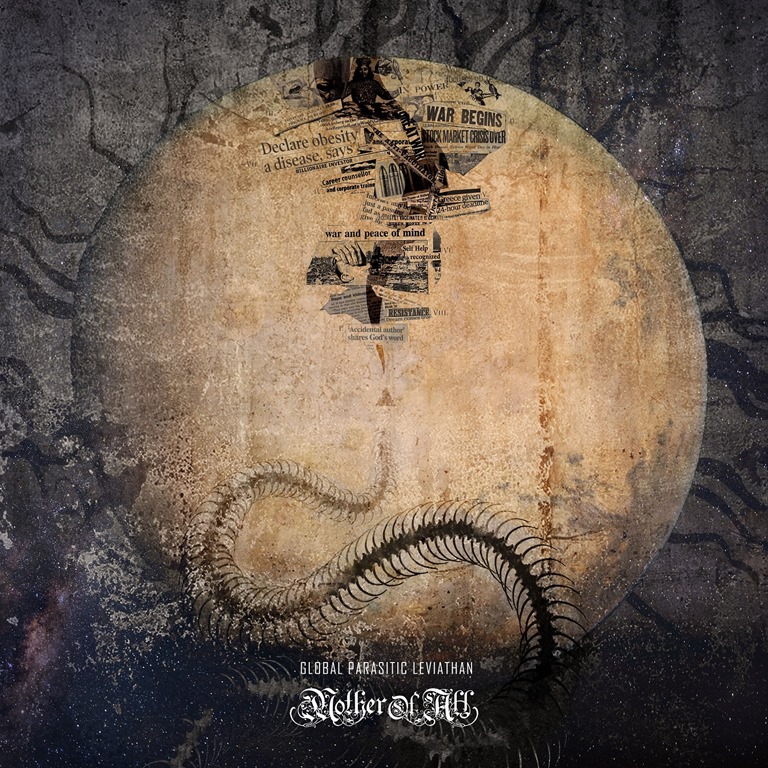
Having showcased single cut ‘Hypocrisy – Weaponised’, released ahead of the second album by progressive/melodeath act Mother of All, I was keen to get my lugs around the album in full, not least of all to see if I could get a handle on what ‘melodeath’ is. There doesn’t seem to be a week where I don’t stumble on another microgenre. This isn’t something exclusive to metal, although it certainly seems to be the strain which contains the most minutely fragmented forms.

While now a full and proper band, Mother of All is Martin Haumann’s concept. As the bio informs us, ‘With a background in The Royal Danish Conservatory and extensive training in different musical disciplines, Martin draws on varied and unusual influences to create a unique vision for Mother of All, but his prime inspiration comes from the deep cauldron of metal. Continuing to explore the art form with Mother of All, Martin creates songs that are diverse and eclectic in nature by incorporating melodic and progressive elements into death metal.’

On the evidence of Global Parasitic Leviathan, that means some crunching riffs played fast and furious and driven by rapidfire drumming, but with a lot of fast, flamboyant licks which are big on harmonics and fretwork tapestry. While the contrast is nicely separated and the detail adds layers to the thunderous assault, I can’t help but feel it falls into that self-made trap of showcasing technical skills to the extent that it undermines the overall power of a song at times.

Again, it’s a trait common across the board, but particularly in metal that there seems to be a compulsion to overcompensate, but overshowing the technical competence. It happens a lot in writing, too, though, particularly among newer writers who feel the need to demonstrate their writing skills by overwriting, packing in superfluous adjectives and paragraph upon paragraph of detail because look! I can do this! Well done. But how about you actually tell us a story? Or, in this context, play us a song?

Mother of All have some songs, and they’re burning with incendiary rage, and when they knuckle down and let the fury flow, they absolutely kill it.

The sentiments are solid, and the song titles speak for themselves: ‘Corporate Warfare Leviathan’, ‘Debt Crush’, ‘Merchants of Self-Loathing’ all rage antagonistically against the machines of capitalism and corporate domination, and when they trim the flamboyant fretwork and focus on delivering brute force, as on ‘The Stars Already Faded’, they really hit hard, Haumann’s raw, raging vocal a magnificent articulation of tortured anguish. ‘Debt Crush’, too, is five minutes of full-throttle fury, and although ‘Merchants of Self-Loathing’ gets a bit rap-metal, it’s in the Judgment Night vein and so deserves a pass. ‘Pillars’ seems to lean on Neil Young during the intro, before going all-out raging metal. Keep on rockin’ in the free world, indeed. The sentiment extends beyond genre, of course.

Global Parasitic Leviathan isn’t short on ideas and positively froths and overspills with technical ability, as they’re keen to show us, over and over. But, and this a lesson that takes time – less is more. Global Parasitic Leviathan is good, and it’s consistent in style and tone, but I can’t help but feel that tempering the fretwork would hit harder, because when they really riff out they’re utterly pulverising.

AA

064385

Mortality Tables – 3rd May 2024

Christopher Nosnibor

As much as this is an album it’s an historical document, and one they’ve had to blow the dust off ahead of its release. Kullu was recorded by Carl M Knott, aka Boycalledcrow, as a series of field recordings as he traversed India in 2005 and 2006.

As the accompanying notes explain, ‘The album is an audio travelogue of Knott’s travels through India in 2005 and 2006, just after he’d graduated. That journey was part of Knott’s concerted efforts to overcome the intense feelings of stress and anxiety that had gnawed away at him throughout his adolescence. Along the way, he documented his travels in a blog and accumulated countless memory cards of photos and videos.’

Life has a habit of delaying projects, of getting in the way (I have a number of book-length projects which I embarked upon circa 2010 which are languishing, incomplete, on my hard drive, and have every sympathy). When a project has lain so long, has been placed on a backburner, or whatever else, how viable is it after eighteen years? Is it really worth resurrecting? Yes. Always, and especially if / when it’s personal.

You read and hear often talk of ‘closure’, and usually it’s in relation to a bereavement or a specific trauma. But life is trauma: a path strewn with rocks of trauma to trip you unexpectedly.

Kullu is a road trip, a narrative, and also an exorcism, a sequence of processing, a coming to terms.

More than anything – and any critic’s outlook is limited to their experience – I’m struck by the range of sounds and the way in which Kullu is an album that expands over so much ground. At the outset, the beats are to the fore and Joujouka come to mind initially, as percussion thunders loud and hard, but before long, things start to melt and dissolve into entirely less form-shaped compositions. Twisting between ambience and various shades of dissonance and slow-shifting pulsations, Kullu grates and scrapes its way through a twisted journey of difference, of fresh terrains, ranging from ominous vocal and semi-orchestral compositions like ‘Kanashi’, to clanging, clattering, altered and warping. There’s a lot going on and I sometimes wonder if I’m equipped to cover this. But ultimately there is always room

Kullu presents all the moods, all the vibes, all the breadth of experience. It’s often discordant and difficult, and that’s as it should be.

AA

a2597800960_10

Dret Skivor – 3rd May 2024

Christopher Nosnibor

Dret Skivor seem to have managed to sync their release schedule to Bandcamp Fridays pretty neatly. Meanwhile, the man behind the label, Dave Procter, has enough different musical projects to fill the entire label’s roster single-handedly.

Not content with pumping out harsh noise as Legion of Swine and ambient drone with mathematical divination as Fibonacci Drone Organ, and spoken word ramblings backed with dark noise as Trowser Carrier, or collaborating with countless other artists, notably Claus Poulsen with whom he (ir)regularly convenes for a release, and a brief excursion as twAt clAxon, Procter has also been operating as Klôvhôvve, a vehicle for ambient / glitch weirdness.

Following on from Is it? It is, an album containing two longform tracks which offered their own call and response, released in March, Live at JT Soar feels on one hand like a bit of a stop-gap, but on the other, a reasonable consolidation. More than reasonable, in fact, considering that Procter devotes a considerable amount of time to performing live – and is perhaps the only artist I can think of who will book a tour and not play under the same guise more than a couple of times, or for two consecutive shows. It is, undoubtedly, easier to get bookings if you have a broad range of styles to offer promoters, even if that range does sit under the wider umbrella of obscure electronic weirdy shit.

Before we ger to the obscure electronic weirdy shit of the recording, it’s worth a brief acknowledgement of the cover art, which is truly classic Procter (the photographs which grace the covers of his two collections of poetry / rants as Dale Prudent are strong cases in point). Gritty, unpretty, urban, and a bit off kilter, snapshots of the everyday strange. Here was have a shot of the outside of the venue, still with its signage for JT Soar, Wholesale Fruit and Potato Merchants, from which it takes its name. Unassuming is an understatement for this building, with graffiti on one door, and a piece of street art depicting Nottingham’s best-known polemicists, Sleaford Mods, replicating the artwork for their most recent and widely-acclaimed album, UK Grim on the garage door. The shot is some real-life documentary, its relevance heightened because the vocally socialist Procter departed the UK for Sweden post-Brexit because… well, Brexit.

Klôvhôvve’s set, which lasts twenty-four minutes, is mellow and mellifluous to begin with, but soon swerves into a melting together of soft tones with scratched, warping drones, the glitching eating into the surface of the looping tapes affected at first. Vocal snippets, fractured, fragmented, distorted, cut in and out, as the music ebbs in and out unpredictably.

There is a sense of nostalgia about this, but the overarching sensation is more that of a post-apocalyptic narrative, a bleak dystopia of degradation, of societal collapse whereby only damaged recordings and fragments of past technologies remain, twisted, rusted, malfunctioning. The set does have distinct segments, although they do flow together to form a continuous set, and as such, it makes sense that it’s released here as one single track. It’s not as if anyone is going to be skipping to hear the hit or their favourite song of the set, and it’s structured around transitions between evermore haunting atmospheres. It’s pretty unsettling stuff, dank and grumbling with thunderous rumblings away off in the background while a continuous slow of babbling and sharp scrapes cut into the foreground. But then there’s something resembling a trilling, twisted rendition of ‘Silent Night’ which crackles and stutters through static, and it warps and crackles its way to a slow fade.

There is some strong tonal separation here, and the interjections which appear unexpectedly are almost enough to make you jump But for the most part, it makes your skin crawl – slowly, in a state of curiosity and ponderous hesitation – as you winder where it may be heading.

Procter understands the importance of music which makes you feel uncomfortable, which tests your limits, and this release captures a live set which really teases at the tenterhooks.

AA

a3905712960_10

Constellation – 3rd May 2024

Christopher Nosnibor

Ah, that difficult second album. Kee Avil set the bar high for herself with her debut, Crease, two years ago. Crease was a highly experimental, boundary-pushing collection of compositions, which was as challenging as it was entertaining. But the trouble with setting out one’s stall in such a fashion is that you can’t retread the same ground, you can’t do the same thing twice, you can’t repeat the same experiments and expect different results. Not to suggest that Crease was in any way a ‘novelty’ record, but experimentation and avant-gardism has to be ever new, fresh, and novel. Pushing the boundaries requires an artist to continue to push them further, to expand the parameters, or otherwise risk being confined withing the limits set initially, at which point, it becomes prescriptive, a template. Small wonder, then, that Avil found the process for Spine to be quite different from Crease. But, unlike many artists who struggle to regain the creative spark in the wake of their debut, whereby some languish for years in a creative trough only to return with some second-rate slop (there are many articles devoted to examples of the ‘sophomore slump’, and I feel neither need nor inclination to recap on them here), Kee Avil seemingly found herself fizzing with ideas, as her bio details:

Spine was written in Kee Avil’s home studio after a lapse in writing while touring Crease and working on other projects. She is a well-known and respected member of the Montréal experimental scene, and formerly ran Concrete Sound Studio with Zach Scholes, who continues to work with her as a producer on Spine. Compared to the three years that went into making her debut, Spine emerged in a matter of months—a process that may also be a factor in its intensity and sharpness: “This record was much harder, like it was really discovering everything from scratch.” In her desire to not simply replicate or extend the sound of Crease, she felt she had to rip up the rule book, write in a different way, and pare back songs against her usual instincts.’

Touring does seem to have a habit of affecting the creative flow. It seems almost as if the industry model with its cycle of release – tour – write – repeat – serves to doom artists to dealing with unnecessary pressure to deliver, and it’s entirely self-defeating since inspiration simply cannot be forced – it’s something that happens. And it happened for Kee Avil, for sure.

Spine is brimming with discord and dissonance, angularity and oddness. ‘Felt’ fucks things up from the very off with warped, wrangling, jangling guitar that twists and mangles across flickering, stammering beats and extraneous noise that gets in your ears like a hatched moth fluttering against your eardrum. It’s a cringy, unsettling sensation, and it’s not really all that pleasant, and Avil breathes and croaks her way over it.

‘the iris is dry’ is magnificently weird, a close, breathy semi-spoken word muttering about lamps and eyes and angels, and it’s tense and claustrophobic and claws its way into your cranium. ‘It makes no sense,’ she croaks by way of a closing refrain, and it’s hard not to agree.

‘remember me’ continues the form of minimally-arranged alternative / eerie indie with a dark folk vibe crossed with a vocal style that sits in the realm of spoken word with a performance art delivery: Avil doesn’t sing, but whispers and breaths the words in a fashion that creates a palpable tension.

Gelatin’, released ahead of the album is entirely representative: taut, glitchy, the vocals mixed in a way as to be in your ear and at the same time detached: it’s awkward, uncomfortable. This is true of Spine as a whole.

The only real difficulty in Kee Avil’s second album is for the listener: with its shuddering percussion and harsh frequencies, as well as the up-front vocals, this is a challenging work. And this is a good thing: art should be challenging, and the quality is outstanding.

AA

A

a3581782210_10

Klonosphere Records – 3rd May 2024

Christopher Nosnibor

If there’s one thing you need to learn about Djiin, it’s that they don’t bend or bow to conformity, and they come from a quite different angle in comparison to the majority of bands pedalling riffs and noise.

Their bio describes them as ‘a psychedelic stoner-rock band whose name is inspired by a psychedelic stoner-rock band whose name is inspired by spirits and other beasts of the Semitic beliefs and traditions. Influenced by 70’s progressive rock and krautrock bands, doom scene and heavy rock from the glory days of the early Sabbath era, as well as other modern references based on the diversity between western and traditional eastern sounds, Djiin develops a personal, atypical and captivating universe. Spirits and other beasts of the Semitic beliefs and traditions. Influenced by 70’s progressive rock and krautrock bands, doom scene and heavy rock from the glory days of the early Sabbath era, as well as other modern references based on the diversity between western and traditional eastern sounds, Djiin develops a personal, atypical and captivating universe.’

You may need a moment to step back and digest the depth of this. Djiin are not your average metal act.

‘Blind’ blew us away as a single cut ahead off the album’s release, and while it’s in some ways representative, it’s also the soft end of the band’s sharp wedge.

The title track twiddles and widdles in a way that Bill and Ted would probably flail over, and it’s a textured, detailed post-rock epic reminiscent of the hectic fretwork that dominated the sound of 2004-2006, but doesn’t sound in any way dated – not least of all because this is a pummelling blast of noodlesome guitar noise which transcends the confines of time or genre, lunging and lurching against a host off walls which confine genres within narrow, predetermined confined.

‘In the Aura of My Own Sadness’ is a glorious sprawl of post-rock exploration which ventures into a host of territories which are hard to unpack, not least of all because of some of the way if delves into detailed noodly territory, breaking into hefty tribal tones of the pulverising slow doom of the closer, ‘Iron Monsters’.

Mirrors may only contain five tracks, but in terms of depth and quality of content it offers a considerable amount more via its layered, if brutal, soundscape, which carves deep. It’s heavy album, and that’s for sure, and one which doesn’t conform to the distinctions of genre. But genre distinctions count for nothing: what counts is a that his is a raging apocalyptic blast – and it’s good.

AA

a1658479541_10

Tartarus Records – 26th April 2026

Christopher Nosnibor

The mood which pervades all life right now, feels pretty bleak. It’s not only that turning on the news brings endless darkness, with endless reports of multiple wars and families around the globe, but it feels as if a cloud has descended over all existence for all but the mega-wealthy who are living it large, laughing their way around the globe on cruises and in private jets in the knowledge that they’ll be gone and interred in spectacular mausoleums or at least having secured their notes in history and with extensive entries on Wikipedia. My daughter, who’s twelve, and loves retailing me with facts, told me just last night that based on current consumption, oil supplies will be exhausted when she reaches the age of fifty-six. “I don’t want to live til I’m fifty-six,” she said. It wasn’t spoken with an air of pessimism of gloom, but a statement grounded in an acceptance of the hell that the future holds.

It’s in this context that we arrive at III, by extreme experimental duo All Are to Return, who preface their new album with the commentary that ‘We have entered a new age of extinction – of poisoned lands, habitat destruction and encompassing climate catastrophe. AATR III reflects the harshness of life laid bare to the vagaries of capital, of uncaring generations heaping misery on their successors and the life-forms with which they share a fragile biosphere.’

Something I find bewildering is that in the nineties, environmental issues were pretty niche, as was being vegetarian – you’d be hard-pressed to find vegetarian cheese or yucky TVP on the high street, and would only be able to score some half-edible veggie sausages in Holland and Barrett or some crustie hippie shop down some side-street. Now, this is mainstream, and yet still politicians back big businesses who push fracking and deforestation and place profits ahead of what most refer to as ‘sustainability’, but is, ultimately, in reality, ‘survival’.

Perhaps I digress a little, but feel it’s relevant before returning to the pitch which explains how ‘The album’s unmitigated brutality of sound and expression are mediation of these concurrent events. Colossal noise-scapes are shaped with pulsing synth patterns, shredding percussion and vocals that are screams from the void. As a whole, the many-layered compositions carry massive assaults on the senses and a rage unhuman.’

The first few seconds alone are an all-out sonic assault, a blast of harsh static noise, a howling white noise blizzard which hurts. And from thereon in, it only gets harsher, an obliterative wall of noise that goes full Merzbow in no time. It shivers and trembles, grates and vibrates, everything overloading, eardrum-shredding, abrasive, aggressive, snarling, gnarly.

Not everyone ‘gets’ noise: to many, it is just ‘noise’. But noise is a vehicle which provides a unique catharsis, a means of channelling rage which cannot be conveyed in words alone. There are vocals on III, but they’re the sound of demonic torture in a sea of flame.

Thunderous, speaker crackling distortion overloads, and the vocals are butt demented, demonic shrieks buried amidst a skin-stripping nuclear blast. Every track is harsher and louder and denser than the last – and it’s the perfect soundtrack to the world right now. It would equally be a perfect soundtrack to Threads, being pure white-noise, blinding apocalypse in sound.

‘Drift’ is entirely representative: a solid wall of noise, harder and heavier than a slab of concrete – and it is the perfect encapsulation of the rage of life in the now. I sat down to listen to this as Iran rained missiles down on Israel in retaliation for the bombing of their embassy in Syria… Israel immediately vowed to return fire. Gaza has been levelled. We’ve just endured the wettest – and warmest – February and March on record here in the UK and half the country is under water, and many places received the entire rainfall for April in the first week, since when we’ve had more frosts than in the previous two months. Around the globe, wars rage and famine is rife, and frankly, everything is fucked. To think otherwise is delusional. Legacy? It’s clear what the legacy of the 21st Century will be, and ‘Legacy’ encapsulates that perfectly.

All Are to Return articulate their anguish at this fucked-up state of affairs by the medium of the harshest of noise. And it makes perfect sense. III isn’t quite Harsh Noise Wall, but it is fucking brutal. ‘Archive of the Sky’ is nothing short of devastating.

III hurts. It rakes at your guts, it rains heavy blows from every angle. It rapes your ears and pounds your cranium, it thumps your ribs and slays your sense. Every second is a sonic detonation, a devastation annihilation, a squall, a wall, an explosive blast, the sound of the world caving in, the sound of the absolute end. You want to hear the sound of the apocalypse? Listen to this, and live through the end of the world. It’s coming, and sooner than you care to contemplate.

AA

AATR III Artwork

Fire Records – 26 April 2024

Christopher Nosnibor

Another day, another artist I’m discovering and wondering if I’m increasingly poor at keeping up or of there really is just more music in the world than I could ever keep abreast of even if I devoted every waking minute to trawling every corner of the Internet for news and playlists. Maybe it’s a bit of both. There is, perhaps, something of an expectation that someone who writes about music should have a deep and wide-ranging knowledge of the subject. The trouble is, the more music you’re exposed to, the more avenues it opens up, and suddenly there’s this and this and this… and how is there time for all of it?

If you’re obsessive about a given genre, you may be an expert in your field, but you’re missing out on all of the other fields. Explore the other fields far and wide, and you’re missing something elsewhere. I see people on social media who seem to spend their entire days playing – usually streaming – new albums, and they’ve heard pretty much everything on release, five, six, seven albums a day. I’m rarely able to listen to music while working my dayjob, and when reviewing, I can’t really manage more than an album a night to hear, digest, process, formulate an opinion and sentences to articulate it.

In daily life, I rarely suffer from FOMO, but when it comes to music, I feel – increasingly -that I’m unable to keep up. I’ve not listened to the latest Taylor Swift album, for example. Or any of her albums for that matter. Am I missing out? My daughter would insist that I am. But as much as I listen to music for pleasure – at least when I can – I also listen with a view to providing coverage to artists who aren’t Taylor Swift, who you won’t find covered in every other publication. And so we come to Yosa Peit, who I clearly can’t claim to have discovered at the dawn of her career, but who, while having gained a following and a contract with Fire records, clearly isn’t a household name either.

The pitch for ‘The free-ranging sound of Yosa Peit’ is that her work ‘recalls the intense arrangements of a cyber-era Prince with the surrealist tones of Arthur Russell and the vulnerability of Arca circa 2017.’

I’m a little uncomfortable with Prince. By that I mean, likely somewhat controversially, I think he’s massively overrated, and moreover, I’m not really a fan of anything funk.

Perhaps it’s my relatively superficial knowledge of Prince that’s the reason that Prince is by no means my first point of reference on hearing Gut Buster, an album which is positively brimming exploding with ideas. There are elements of crisp pop and some bust-up, fucked about bluesiness to be found in the mix in this extravaganza of inventiveness, which also sculpts dark electropop shapes with some heavy bass and ethereal synths. At times, skitters and ripples rush by faster than the mind can compute, and there are some pretty slick grooves, even hints of what one might broadly refer to as ‘urban’ shades – as exemplified on ‘Tower Shower’, which also brings some dubby bass and blasting beats.

Gut Buster has soul – bit tosses it in a liquidizer and pulses it to a pulp with skittery bits and pieces of synth and hyper-processed vocals, 80s AOR melted into soporific trip-hop and hyperactive techno tropes. The chipmunk vocals area bit irksome at times, but there’s so much else that’s good that you can forgive it. The minimal gloop of ‘Call Me’ is a slow bump and scrape, and showcases the way in which Peit’s compositions are riven with intricate and fascinating detail.

Gut Buster is odd, quirky, in places dark and in others, less so. Unashamedly other and oddball, there is much to unravel here.

AA

383430

Cruel Nature Records – 26th April 2024

Christopher Nosnibor

Plan Pony – the solo project of Jase Jester, one half of Ombibael / Ombibadger – has been simmering for a while, and we’ve been following his output since the release of the ‘Martyr’ single back in 2020. So I was naturally excited to hear his latest offering.

I felt suddenly uncomfortable, concerned, even, on seeing the accompanying blurbage, which leads with ‘RIYL: Animal Collective, Madlib, Nurse With Wound, Hype Williams, Black Dice’. I mean, I do like a bit of NWW, and don’t mind some Black Dice, but I absolutely abhor Animal Collective. So, so much. Something about Animal Collective radiates muso smugness – something it would be hard to accuse Jase of.

Electric Swampland Home is the first Plan Pony album, and as with previous outings, finds Kester grappling with vintage gear to conjure authentic vintage noise inspired by those early adopters. He’s right when he tells me that emulators simply aren’t the same, and that when technologies were emerging, the sound of the resulting recordings was born of necessity – like when you bounce tracks on a cassette four-track and lose some quality and definition in the process, and the presence of amp hum and tape hiss because amps hum and tape hisses. Adding tape hiss or vinyl crackle digitally is an affectation, and while some may be sold on this kind of nostalgic artifice, it lacks that certain something.

While questions of authenticity provoke heated debate in circles around some genres – punk, obviously, grunge, perhaps to a lesser extent, and right now, indie and alternative as new acts track stellar trajectories seemingly from nowhere while claiming modest grass-roots credentials while obfuscating middle class and public school backgrounds and major label backing, Electric Swampland Home is a truly authentic work. Kester hasn’t amassed a pile of highly-sought-after vintage kit in the way people with hods of cash buy up 808s and Moogs to try to be cool. Electric Swampland Home is the sound of a Boss sampler and an old Tascam digital studio he’s had for yonks, and which by today’s standards are pretty primitive.

From the very start, Electric Swampland Home creates discord and chaos with the woozy, bent, and frankly fucked-up ‘Travelling There’, a loop of atonality that gives way to a rolling rhythm and feedback-squalling bass crunch… and from thereon in, everything goes.

‘The Village’ tosses a salad of tribal beats, twisted Kyoto and a dash of Joujouka. While I’ve never been comfortable with the kind of cultural appropriation that the likes of Paul Simon’s takes on ‘world music’ present, this is something entirely different – a full global exploration which occurs simultaneously. This owes more to the tape experiments of Burroughs and Gysin, Throbbing Gristle and Cabaret Voltaire than anything else, conveying a sense of the way in which everything happens all at once, and linearity is a construct.

Across the album’s eight tracks, Plan Pony meshes some dense sonic textures and layers of difficult dissonance. Notes and tones bend and warp, things twist and melt and bleed into one another: edges blur and fade. The way the juxtaposing and often incongruous elements are brought together isn’t explicitly jarring, it’s not a bewildering collision of noise, but something rather more subtle – although no less impactful and no less disorienting. As with Burroughs’ cut-ups, Electric Swampland Home captures – recreates, distils – the overwhelming experience of modern life, the blizzard of information, the endless intertext, the diminished attention span, the globalisation and the egalitarianism of everything. That isn’t to say we live in an egalitarian world – but that everything equally demands our attention from every corner of everything, to the point that it’s impossible to prioritise or even reasonably assess what’s of more importance than anything else. And so we quiver, frozen in stasis, poised between myriad options and so often spend hours selecting none of them.

This is nowhere more clearly conveyed on the warped, glitchy layerings of ‘Same Cloud’, which brings everything all at once. On the one hand, it’s the most overtly ‘song’ like piece on the album. On the other, it’s like listening to the radio from the next room while reading a book with the TV on in the background, and your phone’s ringing and next door are doing DIY and your mind’s wondering about what’s for dinner – and this continues into the sample-soaked looping stuttering jangle of ‘Amphibian’.

‘8pm Local Time’ combined field recordings, a low-level quivering bass and squelchy laser-blasting electronics together, and not necessarily in the most comfortable of fashions.

Electric Swampland Home revels in incongruity, in awkwardness, in otherness, and in many ways, it’s a magnificent representation of life in all its colours and chaos, its business and unpredictability. It’s not an easy or immediate album, and it’s not for a second intended to be. It is an unashamedly experimental work, and one which succeeds in its explorations.

AA

a3913248541_10

Human Worth – 20th May 2024

Christopher Nosnibor

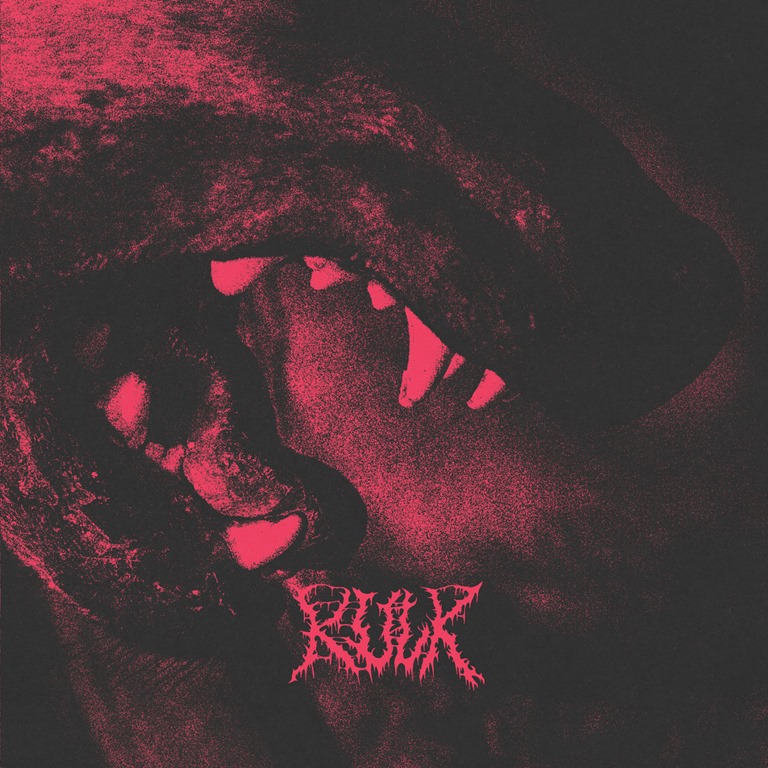
The latest album from Norwich based two-piece Kulk, It Gets Worse, arrives two and a half years after the release of We Spare Nothing, described as ‘thunderous and experimental’, and honing their ‘unique and monolithic brand of heavy doom and sludge’.

The timing – and the title – couldn’t be more apt. Just when you were probably thinking we’d endured the absolute worst of life on this planet – from Brexit and Trump via a global pandemic and insane inflation and everything money-related being utterly screwed and still getting more painful by the day after 14 years of a Conservative government – it continues to get worse – half the world is at war, the other half the world is either flooded or in flames, and there are mass killings practically every other week. It’s not, then, simply a nihilistic strapline to grab the attention, but pretty much a demonstrable fact. Things never get better – only worse.

The band articulate both the circumstances and the mood when they frame the album thus: “This album is about the universal suffocating weight of hoping for more while navigating a climate where the apparatus for seeking it is being consistently undermined. What it feels like to not only struggle keeping your head above water but to try jumping out from the deep end without losing your trunks. It is selfish guilt and misplaced woe, desire is a distraction from the world at our feet”.

Bookended by short instrumental intro and outro tracks, ‘More’ and ‘Less’, It Gets Worse packs back-to-back balls-out riff-fests, where the bottom end sounds like a bulldozer and the beats sound like bombs. Whereas a lot of stuff on the doom and sludge spectrum is simply plain slow, Kulk are masters of the tempo shift. ‘A Heavy Sigh’ comes on at pace and builds a real groove, before hitting the breaks around two thirds in, at which point it becomes reminiscent of Melvins. The reason Melvins have endured is that – perhaps despite the popular perception – they’ve showcased a remarkable versatility and an urge to experiment, and it’s here that the comparison stands strongest with Kulk: they’re not just big, dirty riffs and shouting, although they do a first-class job of putting those things up front and centre. ‘Out of Reach’ is a pounding, raging roar of frustration amped up and overdriven to the max, hitting that perfect pitch at which blasting out a repetitive riff at skull-splitting decibels is the ultimate catharsis and the only practical and sane response to the world in which we find ourselves.

Things take a turn with ‘Mammoth’ showcasing a more hardcore bent initially, before descending into a howl of feedback, a noise-rock quasar delivered with the most brutal force. The vocals are barely audible, and then things get ever harder and harsher on ‘Beyond Gone’ which goes full industrial, hammering away at a simple, repetitive chord sequence with murderous fury. You feel your adrenaline pumping as they thunder away, combining pure precision with absolute chaos as feedback swirls and squalls all around like an ear-shattering cyclone.

The slower ‘Fountain’ shows considerable restraint and makes for an oppressive four minutes: it brings a bleak mood, and the hit lands late but hard when the distortion slams in. Getting Adam Sykes of Pigsx7 to play on ‘Life Will Wait’ is a major coup, and the track is a belter, built around a hypnotic three-chord riff – because all the best riffs have three chords – and really works the quiet/loud dynamic to the max.

Often, when people – particularly people in my demographic – write of the music of the 90s, it’s with a dewy-eyed nostalgia for their lost youth. Sure, I have my moments, but when I say that It Gets Worse takes me back to the 90s, I’m recalling the excitement of discovering endless obscure little bands cranking out major racket in pubs and tiny venues, some of whom managed to either get records or CDs released by shoestring labels, or otherwise scrape together funds to record and release a 7” or CD – and many of whom didn’t, and only exist in hazy recollections. The point is that these were exciting times. The only positive about living in shit times is that shit times make for good music, as people need an outlet to channel their pain, anguish, frustration, and rage. It Gets Worse is saturated with pain, anguish, frustration, and rage. And because of that, it’s very much a product of our times, and it’s absolutely essential.

AA

AA

a2498304630_10