Posts Tagged ‘Album Review’

Someone Good – RMSG – 18th March 2016

Christopher Nosnibor

Reading the info accompanying the album, I was relieved to learn that it has nothing to do with football. Granted, it says more about me than it does anything or anyone else, but I’ve never been a huge fan of sport. It probably never helped that apart from being quite a handy medium-pace bowler with a nifty Yorker, and a decent cross-country runner (I discovered early on that by getting a move on, I could be back in the changing rooms, showered and reading a book before anyone else got halfway round the course. I loved reading, and hated communal showers), I was shit at sport. It also happens that many of the kind of people who are big sports enthusiasts simply aren’t my kind of people, and I consider fantasy football leagues the biggest, stupidest waste of time going. But let’s not focus too much on the cover art (I’m thinking that despite Tuttle’s Australian background that it’s baseball rather than Aussie rules, but what do I know? And what do I want to know? It could be squash or lacrosse for I care. What matters is that Andrew Tuttle’s fantasy league is about a utopian environment. Said environment sets social interaction against total isolation, self-reflexivity against self-confidence.

It’s an interesting proposition, and Tuttle plays an interesting and rather unusual array of instruments in order to create the sonic structures by which to explore this concept: computer, synthesiser, banjo, and acoustic guitar. Hardly your average configuration for music making. But then, Fantasy League is not an average album, in any respect.

Broadly speaking, it’s an ambient work. Banjo and guitar are present, but woven subtly into shifting, drifting soundscapes of drones and undulating widescreen sounds. Bubbling, bleeping electronics, ripples and swishes are all fundamental parts of the album’s sonic fabric. The strummed and picked strings add a unique slant amidst the burrs of fizzing treble bursts which erupt, wibbling every which way: with hints of hillbilly blues over a static hiss on ‘Forgtten Username?’ and gentle folk motifs informing ‘Forgotten Password? before insect scutters scrabble all over and devour them, the resultant output sounds like country music from another dimension. Elsewhere, there are Tangerine Dream-like moments, notably on ‘Public League’, where multiple time signatures pulse and interweave to form a sonic latticework.

What renders Fantasy League so intriguing and compelling is the way in which Tuttle distorts the familiar: the sounds themselves are no challenge to compute or comprehend, but the way in which they’re juxtaposed and twisted together is uncanny, as if Fantasy League is a soundtrack from a parallel universe. And it sounds like a place well worth visiting.


Andrew-Tuttle_thumb.jpg

Gizeh Records -GZH66 – 20th May 2016

Christopher Nosnbor

On her first album since 2009, Christine Ott presents eight pieces which touch on a range of moods and emotional states. While the piano is the central instrument, the multi-instrumentalist calls on a host of additional players to incorporate strings, drums and harpsichord to create a suite of music that’s beautifully detailed. In some respects, Only Silence Remains resides in the neoclassical bracket, but equally, there are elements of post-rock and avant-garde here, and ultimately, it boils down to being music. Exquisite music, at that.

Indeed, what’s perhaps most striking about Only Silence Remains is just how subtle yet simultaneously deep it is. That most probably sounds like a contradiction, but in a time when so much music is very much geared toward instant gratification, the hook, the immediate grab, and even orchestral works are so often centred around a certain hook, whether or not associated with a major film – and more often than not, they are associated with a major film, earning endless airplay on Classic FM – Only Silence Remains is an album which requires time and contemplation.

Only Silence Remains is certainly of a standard that would sit comfortably on any film soundtrack, but in many ways, it’s above that kind of mass-market reduction of anything that’s vaguely classical in its form to ‘soundtrack’. Only Silence Remains is a magnificently singular work, and is also, in its own right, simply a magnificent work.

‘Raintrain’ moves from a sad, lone accordion to a woozy, strolling jazz-informed double bass via a delicately dropping piano. From mournful shanties to pastoral hues, Ott evokes life, in all of its colours, expressing ups and downs and myriad in-betweens.

The nine-minute ‘Tempête’ begins dark and haunting, before a chorus of, inhuman strings rise, shrieking against scribbling insect walls of sound, plunging into unseen depths down, down, into the bleak ‘Disaster’. Featuring a narration performed by Casey Brown in a cracked monotone, until finally, a lone piano drifts into silence.

Skipping lightly from twinkling wonderment to brooding drama, she demonstrates a musical intuition that’s truly exceptional. To describe or define the ways in which the music reaches in and touch the listener’s soul is nigh on impossible: it simply does.


Christine Ott

Only Silence Remains at Gizeh Records Online

Verlag System – VS011 – 29th April 2016

Christopher Nosnibor

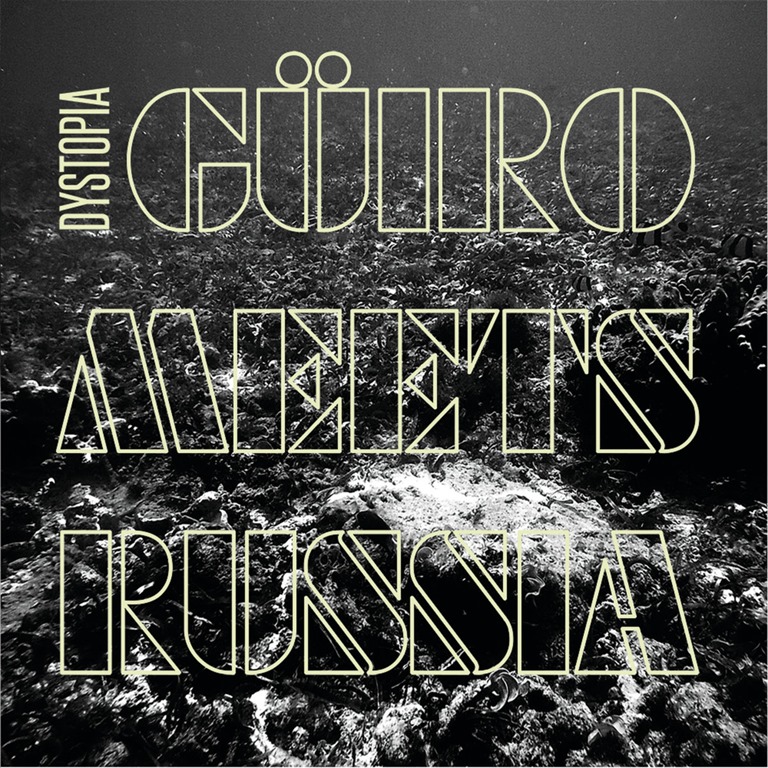
As the title reasonably implies, this is a soundtrack to a bleak landscape. The expansive instrumentals may hint at the potential for travel and movement, but they’re pinned to insistent motoric rhythms. The effect is at once spacious and claustrophobic. The stark synths call to mind New Order’s Movement, but they’re balanced by warmer, fuzzy-edged analogue sounds, which creates a different kind of feel, less morosely bereft and more abstract than figurative in form. Building some dense thrumming throbs and deep grooves, it’s eminently danceable for the most part. That said, there are some deep, sombre pieces which are less percussive: instead, the rhythms emerge from the regular pulsations which form a nebulous sonic body.

Single ‘The Possibility of an Island’, here remixed by GMR and Montxo Burgess is a sedate and rather grand piece, with hints of Visage’s ‘Fade to Grey’. Built around a simple chord sequence and heartbeat bass rhythm, it carries intimations both of 80s vintage and a certain sense futurism. Taking its title (presumably) from Michel Houellebecq’s 2005 science-fiction novel set in a dystopian future bereft of emotion and human contact, it echoes with isolation.

‘Ziggurat’ creates a vast, rippling desert of sound that undulates and pulses toward the whooshing gusts of air that encircle ‘Saturn Radio Waves,’ with fragmentary sounds of human voices drifting in and out.

Thrumming, looping motifs evoke a robotic, dehumanised world of synthesis and desolation. And yet through it all shine bright shafts of light, brave and optimistic, like the rising of a sun over a newly discovered world.

Dystopia

Staubgold – 3rd June 2016

Christopher Nosnibor

It’s an immense claim that heralds the arrival of Telebossa’s second album, namely that they’ve achieved what many artists have failed to achieve during an entire lifetime of work in creating their own musical language. It’s a claim which almost inevitably colours my first hearings of the album. However, putting this line of discussion aside momentarily, it’s clear that the duo, consisting of Chico Mello and Nicholas Bussmann have evolved beyond the Brazilian Bossa Nova tradition, earning the support of Van Dyke Parks in the process. Parks’ previous collaborations are wide-ranging, and include Randy Newman, Brian Wilson, Joanna Newsom and Skrillex. It’s in this context that it’s perhaps easier to get a handle on the kind of musical progression that Garagen Aurora represents, drawing as it does on a vast range of different inspirations, while retaining links to tradition, and Parks’ woodwind contributions on ‘Nao So’ add depth.

The album begins with some vaguely jazzy scrapes, but the tone and mood soon alters on ‘Basta’ as a lone piano forms a delicate backdrop to Chico Mello’s haunting vocals. Whereas cello and guitar formerly defined the Telebossa sound, vocals and (‘robot’) piano are now the core features. The tension builds as woodwind discreetly enters the field.

The rhythms which pulse and thrum on ‘Funeral De Um Lavrador’ provide an unusual and unexpectedly contemporary feel to a more traditional sounding composition.

The interludes – there are four short instrumental fragments in all, which punctuate the album to good effect – are radically different in style from one another and from the songs themselves.

The chamber-jazz instrumentation in the first half of ‘O Luar’ has a certain swing to it which again contrasts with Mello’s affecting voice, which takes the lead as the tracks drifts into a hazy, woozy, sedated state. ‘Chevrolet’ shimmers and shudders, rippling oscillations build a languid, shady atmosphere, and hints of Scott Walker permeate the production.

The words are taken from the texts of ‘metaphysical engineer’ Fernando Pessoa, and appear in the booklet that accompanies the disc in English translation, and are worth engaging with, as they do add further dimensions to the work.

If the notion of a new musical language seems to suggest something unfamiliar and inaccessible, then on the surface, Garagem Aurora appears not to fulfil this: the sounds are familiar, the forms are immediately recognisable not only as music, with melodic motifs, rhythmic order and a certain sense of dynamic flow all inbuilt, but as songs, with structure, form, melodic and rich in emotion, steeped in longing. But in its carefully-composed and intuitively balanced approach to the incorporation of so many disparate elements, Telebossa really do offer something new.


Telebossa


Telebossa – Garagen Aurora at Staubgold Online

Folk Wisdom / SObject – March 2016

Christopher Nosnibor

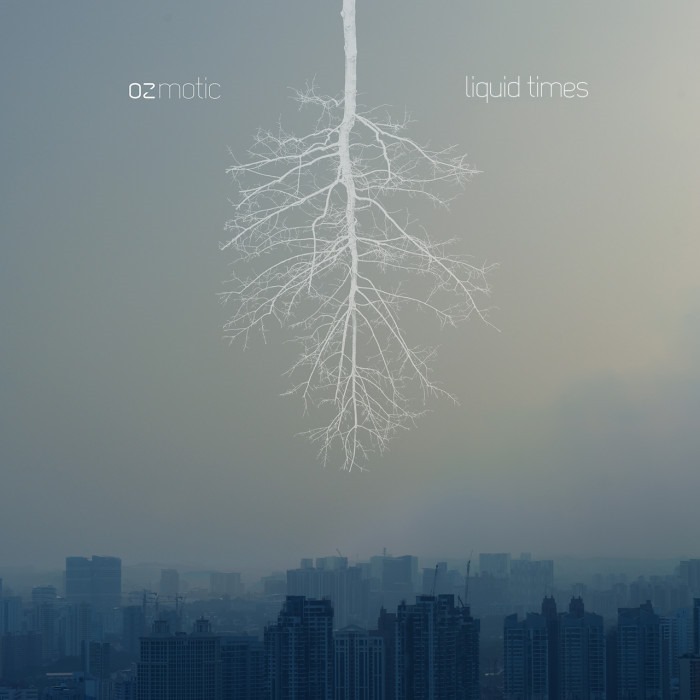
IDM is one of those terms that sits a little uncomfortably. Not as uncomfortably as EDM, which is something of a tautology (granted, salsa, swing, and Ceroc is dance music, but in contemporary music circles, dance music is electronic by nature), but even so. The ‘I’ implies a certain snobbery over other forms of dance music, as if they must collectively be UDM (Unintelligent Dance Music) or DMM (Dance Music for Morons). Even if that is the case, isn’t it for the listener to decide whether the music is ‘intelligent’ or ‘dumb’? No matter: following on from Air Effect with Christian Fennesz, instrumental electronic duo OZmotic return with Liquid Times, an eclectic blend of forms which, as the blurb notes, embraces ‘IDM, ambient, nuances from techno, noise and glitch music.’ Nuance is indeed the operative word here, and precisely the key to the album’s success.

Fennesz, who also serves as a member of the live lineup, again features on two of the tracks here. Elsewhere, the duo have enlisted German producer Senking to remix two of the album’s tracks, as well as Frank Breitschneider: both are affiliated with Raster Noton, which more or less speaks for itself, being the label at the forefront of all things experimental.

So, that’s the form and the roll-call. As for the actual music… There’s a lot going on, in that nuance-heavy world they inhabit, with slow drips and creeping ambience, hums and drones which expand, rumble and eddy amidst jittery electronic buzzes. Low rhythms build murkily and the pieces unfold and evolve subtly. Extraneous sings – hooting owls, insectoid scuttles, scratches and clicks, and light veils of static all contribute to providing a layered sound. At times expansive and cosmic, at others more microcosmic, there’s always something going on, not only on the surface, but beneath.

Rising tides of distortion rupture smooth soundscapes, creating waves of tension which gnaw at the nerves. ‘Rhyzome’ operates within different parameters, exploiting the tropes of classical music and film soundtrack, paired with drum ‘n’ bass, hefty beats and resonant bass sounds booming dramatically before tapering down to a hushed discomfort, while ‘Diaspora’ (one of the Fennesz tracks) introduces abstract guitar drones which evoke Sunn O))) and Earth as they simmer in a squall of needling synths and mutant saxophone, rising into something resembling a conventional progressive riff that’s finally swallowed by a black hole of noise. There are some dark, heavy passages here, which throb and pulse. Flickers of the metallic and robotic bleep and scrape against thick curtains of sound to forge a dark cybersonic sonic vista. The Kraftwerkian closer, the Breitschneider remix of ‘Sliced Reality (and a world apart from the original version which also appears here), evokes sparse, dystopian sensations.

All of the different facets of the sound are drawn together seamlessly, coalescing into something unique and engaging. And while you can’t actually dance to it, it is, without doubt, intelligent music.


LiquidTimes_Cover-e1454145185116

OZmotic Online

Music Information Centre Lithuania – MICL CD 089

Christopher Nosnibor

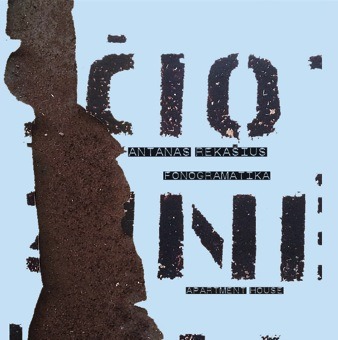
A retrospective collection is perhaps the most instructive place to begin when being introduced to the work of a late artist with a substantial body of work to their name. And so it was that Fonogramatika, 26-track collection culled from seven projects from between 1970 and 1981 featuring the work of Lithuanian composer Antanas Rekašius (1928-2003), as performed by the six-piece Apartment House ensemble came into my possession for review. My first contact with a composer clearly of some renown, but of whom I had absolutely no prior knowledge. A small amount of research revealed the composer is believed to have committed suicide, aged 75, after suffering poverty and depression.

There’s nothing depressive about the quirky music on offer here: indeed, there are humourous touches at every turn in Rekašius’ lively, unconventional and often quite audacious musical works.

Anton Lukoszevieze’s substantial liner notes (subtitled ‘Unsettling Scores and Unstable Tendencies’) are informative, and help to provide some kind of handle on Rekašius’ work, but needless to say it was extracting the disc from the incredibly heavy-duty and immaculately-presented four-way gatefold sleeve (really, the packaging super, and you really can feel the quality) and actually hearing the music therein which proved more instructive.

Rekašius’ style is often informed by jazz, but with a keen ear for atmosphere and experimentation, using the instrumentation of a chamber orchestra to create a range of effects. There’s a fluidity to the compositions, and a certain deftness which makes for rapid and often unexpected transitions from sparse, stark atmospherics to wild brass. The strings howl and mew, bend and bow, and Rekašius makes a trademark of combining dissonance and subtle melody. In fact, it’s the fact that there are strong, albeit brief, passages of melody, and a ken for swinging rhythms and off-kilter repetitions that render the works so beguiling: the listener can marvel at the scope and style of the compositions, the apparent randomness and the dynamics which are worked into the pieces, because yes, it is all very clever. But equally, it’s possible to simply enjoy the music.

Often, the music is jarring, but Rekašius invariably pulls back from the brink of spine-jangling awkwardness with cadent musical flourishes which are pure joy. Wild cacophonies, lumbering menace, twisted folk fiddle and notes that simply sound ‘wrong’ all contrive to keep the listener alert and entertained. ‘Atonic I’ (the individual tracks on each album are known by number only, with the exception of those from Phonogram) evokes the soundtracks of old, silent movies. If anything, Fonogramatika demonstrates just how able Rekašius was at turning his hand to different styles and making them work, while at the same time adding his own idiosyncratic stamps to them. The musicianship of the Apartment House players shouldn’t be underestimated, by any means: they play with nuance, intuition, and passion.

It’s now 13 years since Rekašius’ death. While his work has been performed in the United States, Italy, France, Finland, Sweden, Germany and Hungary, as well as Lithuania and Russia during his lifetime, his substantial output, which includes nine symphonies, 12 ballets, seven concertos and an opera-oratorio, Rekašius’ legacy seems rather limited in most territories. Perhaps the release of Fonogramatika will go some way toward addressing this, and earning Antanas Rekašius wider posthumous recognition.


Rekasius


Apartment House Online

1empreintes DIGITALes – IMED 16137 – 5th May 2016

Christopher Nosnibor

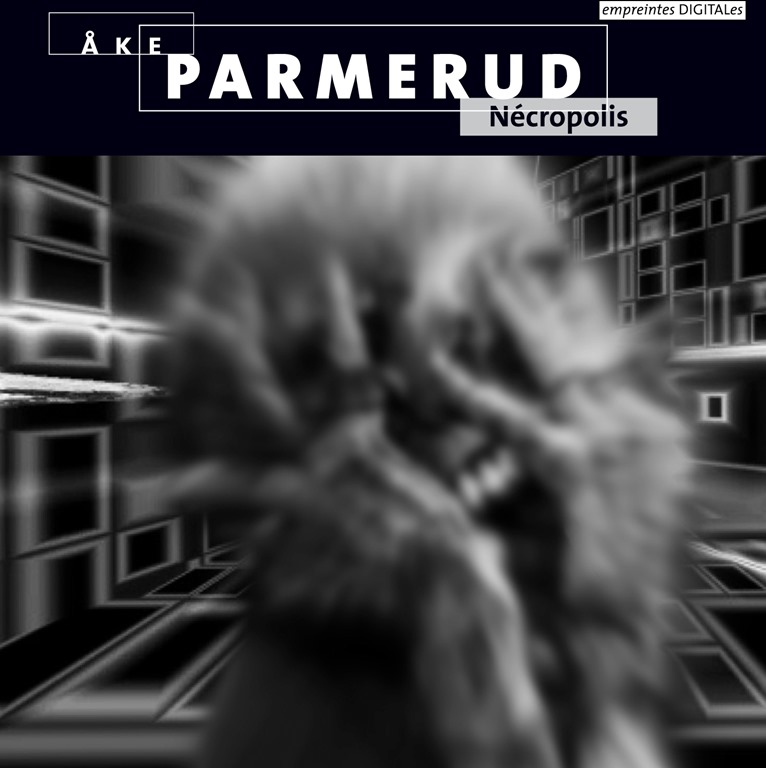
It looks like a box set. But it is, in fact, simply a CD in a box. A very elaborate box at that. It works a little like a matchbox, the interior of which folds out to reveal extensive liner notes in French and English, written by Parmerud himself, and which provide interesting and instructive insight into the four compositions. Created between 2005 and 2011, the extended pieces are united not so much thematically as compositionally, the sounds collected and collaged rather than being shaped into conventional musical frameworks.

‘Dreaming in Darkness’ is forged primarily from small sounds, spaced apart from one another. A chime, a chink or a clunk, and then silence before a scrape or a click or a bump. It’s fragmentary, the origins of the sounds unclear. Taking the question of what a person who cannot see dreams about, Parmerud explains that the piece is an attempt to create surrealistic fragments of a blind person’s dreams. As the piece progresses, the sounds become increasingly densely packed, and with longer durations and overlaid, building sinister abstract scenes: in fact, not so much scenes as shifting shadows and variations in light.

The bubble of conversation marks the opening moments of ‘Crystal Counterpoint’: a recording which sounds like a restaurant or party, the chinking of classes and general hubbub of people grows and stops abruptly with the chime of a glass. Inspired by the sounds of the parties Åke’s parents used to host, and which he would hear from upstairs, the piece uses the very same glasses to create a wealth of sounds, from long, low drones to higher hums, elongated undulations and quick, bright glissandos. Grand swells of sound rise and cease suddenly, replaced by strange, quiet drifts of sound: it’s very easy to forget exactly what you’re listening to. But if anything, awareness of the origin of the sounds only heightens the experience, as you’re likely to marvel and wonder just how glasses could sound like an oboe or high winds across mountain tops. In his notes, Parmerud notes that there already exist a large number of recordings which explore glass sounds, and it is, indeed, an interesting piece to place alongside Miguel Frasconi’s ‘Standing Breakage (for Stan Brakhage)’ (clang records, 2016).

‘ReVoiced’ moves away from musical abstraction and instead uses the voice as its instrument. A single voice is layered up on top of itself exponentially until a whole crowd of one voice is speaking. It’s actually quite a disconcerting experience. Voices are subject to all kinds of manipulation: sped up, slowed down, pitch adjusted, stretched, overlaid, echoed and delayed, in myriad permutations. Chants and dialogue and ululations, crowds and multiple languages meld together, and gradually, extraneous sounds – hard, heavy slabs of sound – crash in, while sharp-edged sounds slash for create a dull, percussive element to the slow-building torture of the familiar becoming twisted, distorted, abstracted and unfamiliar.

The final track, ‘Necropolis – City of the Dead’, is a musical tour through the catacombs of an imaginary city which contain the remains of some of the greatest music of all time. ‘But the condition of the musical bodies that rest in the crypts is unfortunately in various states of decomposition’. As such, in combining a well-worn joke (which is usually about Mozart when I’ve heard it) with a project to assimilate and deconstruct fragments of existing works, ‘Necropolis’ is a sort of a collage. Classical, jazz, film soundtracks, many renowned and bordering on recognisable, at least in essence, all fade in and out and collide against one another.

While the title track may pick over the bones of musical history, it equally breathes new life, and the same is very much true of the work as a whole: the parts are disparate, fragmentary, scattered in origin from around the globe and individually amount to not very much at all. But the sum is spectacular, an experience which is thought-provoking and which has the capacity to be quite unexpectedly affecting.

Ake Parmerud

Åke Parmerud  Online

Neurot Records – 6th May 2016

Christopher Nosnibor

The story goes that Alaric (featuring within its ranks current and former members Of Dead And Gone, Pins Of Light, Noothgrush, Hedersleben and UK Subs) began their journey in 2008 with an eye toward creating a moody and compelling music of a sort not often performed in this time and space. A different concept of doom, beginning with influences from such progenitors as Killing Joke and Christian Death to the darkest, heaviest punk bands and the most epic psychedelia. A good-time, feel-good party band they are not.

“I am going for a ‘sheets of electric rain’ guitar sound”, says guitarist Russ Kent. This should perhaps give an indication of the fact that End of Mirrors finds Alaric exploring some bleak territory, in which guitar riffs are not the driving aspect of the sound, and whereby the guitars provide texture and density instead of shape or form. Using the guitar in this way is by no means new: from the late 70s and early 80s, bands like Sonic Youth, Swans and Bauhaus shifted the emphasis toward the rhythm section, with the guitar serving not a secondary, but alternative musical function. It’s from this background that Alaric’s sound can be found emerging, and End of Mirrors betrays heavy influence from the no-wave and early goth (before it was called goth and was simply a dark strain of post-punk) scenes, infused with a very metal edge. As such, while it’s very much steeped in a number of 80s styles, it’s an album which incorporates them in unusual and innovative ways.

Eight-minute opener ‘Demon’ sets the tone. A lengthy, atmospheric introduction of trudging percussion and simmering feedback gives way to a crushing riff, from which emerges a big, meandering bass-led groove, part Sabbath, part Neurosis. ‘Wreckage’ builds a bleak scene with squalling, spindly guitars layered over a thunderous drum and heavily flanged bassline reminiscent of Pornography-era Cure. But the throaty vocals are more Al Jurgensen circa The Land of Rape and Honey. Moody and intense, the dark despondency carries through into ‘Mirror’. ‘Don’t look in the mirror,’ Shane Baker growls in a deceptively catchy chorus before the song suddenly explodes into grinding thrash riff that piledrives it to another plane.

It’s unexpected twists like this which break the barren expanses of claustrophobic doubt. And do be clear, it’s very much the Rozz Williams incarnation of Christian Death that manifests in the interloping guitar lines of ‘Adore’, and if ‘The Shrinking World’ sounds like an early JG Ballard novel, the metallic scrape encapsulates a near-future dystopia worthy of the great author. The title track is a Melvins-like blast of grinding thrash, a thunderous tempest of a track that sears in at under three explosive minutes, and marks quite a contrast from the longer goth-orientated pieces which dominate the album.

As a whole, it’s a dark, almost apocalyptic sweep of sound. Sitting alongside the recent releases by Se Delan and Madame Mayflower, 2016 is starting to look like the year goth is reborn. Forget darkwave and all that cal: emerging from a protracted period of social and economic turmoil, uncertainty, unrest, fear and an all-pervading sense of existential trauma, we’re back in the late 70s and early 80s, and this is the real deal.


Alaric_EOM_cover copy 72 pixels


Alaric Online

OKTAF – OKTAF #12 – 27th May 2016

Christopher Nosnibor

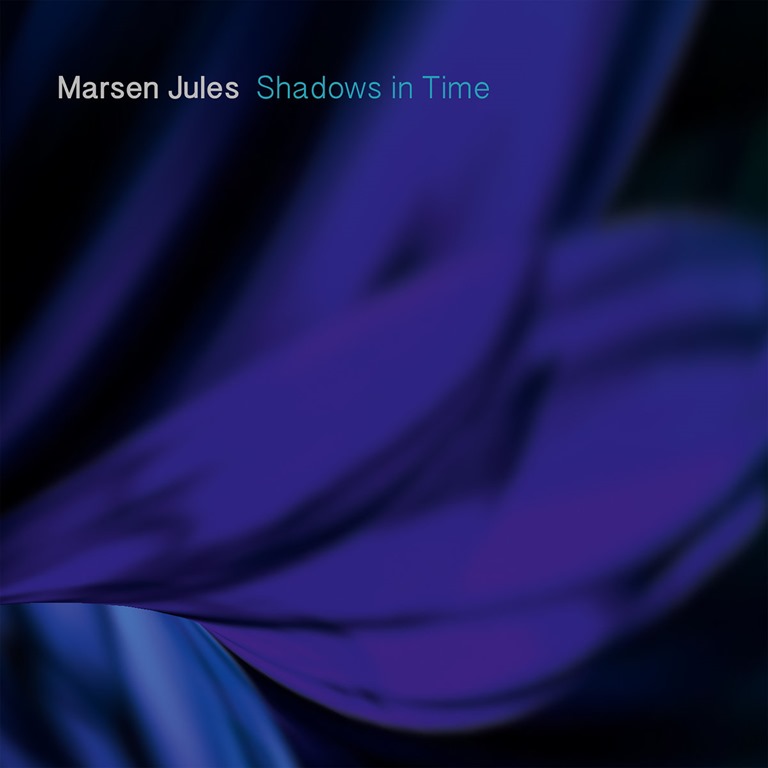
Marsen Jules has long been established as a unique sculptor of sound, redefining ‘sound poetry’ while working within the territory foreshadowed by the likes of Brian Eno and Steve Reich. Shadows in Time marks a huge leap, not so much sonically, but conceptually, as a project, which touches on matters of marketing, consumerism, issues of art and artefact, and the role of the recipient in the artist/audience equation. Shadows in Time is, ostensibly, an ambient work. But ambient carries connotations of background sound, of a given environment. It suggests mood music, but also something that isn’t a focal point as of and in itself.

The soft, supple sounds of Shadows in Time are mood music, in that to immerse yourself in the recording is to create an environment which slows the heart rate and unwinds the mind. But Shadows in Time is more than a mere ambient work. It’s a concept album, the concept of which is only partly about the audio you will hear.

If every individual hears music slightly differently, experiences music on a personal level, coloured by their own senses and experiences, then the fact Shadows in Time exists in some 300 different forms effectively means the already infinite listening experiences are increased to an absolute point.

This review is based on the experience of just one person – me – listening to the CD version. A single track, 49:29 in duration. It begins cinematically, a shimmering expanse of organ-like tones gently sweeping and gliding. The long notes ripple and roll, emanating tranquillity and calm. It also exudes a sense of scale, in a galactic sense. Or perhaps that’s just my mind uncoiling, my tension dissipating. I find myself wondering about the infinite potentials, and what the other versions may sound like. What multiple versions may sound like played simultaneously. Or all of the versions. The vastness is almost beyond comprehension. And from thee calm emerges a sense of infinity. It feels good.

Sit back and enjoy the experience – in whatever form it takes.

Marsen Jules - Shadows

Marsen Jules Online

Sub Rosa – SR406 – 5th May 2016

Christopher Nosnibor

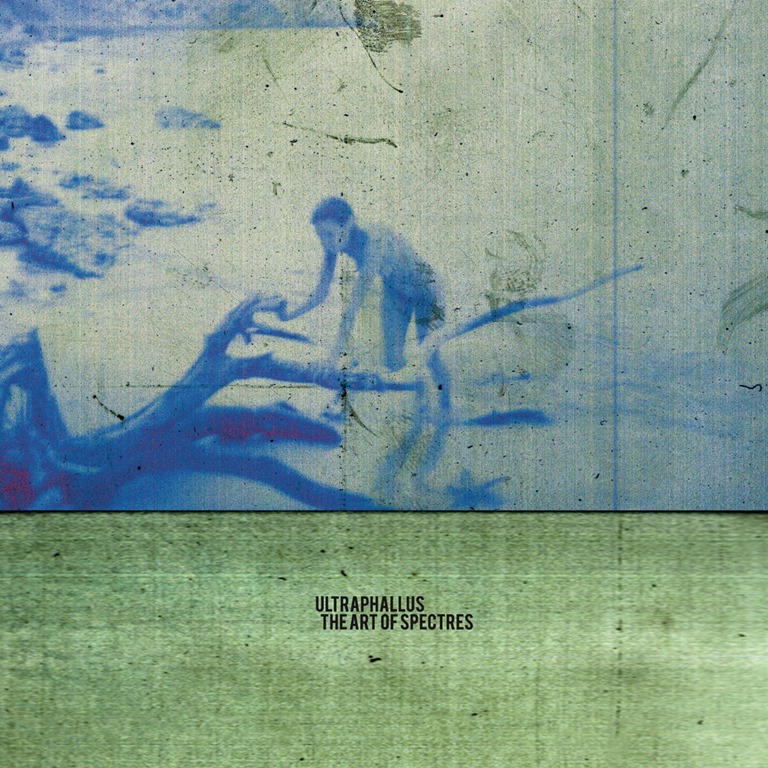
There’s no escaping the band’s name. It’s striking, to say the least. Simply calling a band ‘phallus’ would be something, the connotations numerous and not all positive. Putting it out there is a strong challenge to the (potential) audience’s sensibilities, and is as likely to deter many listeners in itself. There may be puerile implications, and an element of silly shock, but what does this say about culture and society? Human history, even prehistory, is in many respects, the history of the phallus: the Romans were obsessed by the power of the phallus, rendering it a totem. Freud was famously fixated, and 60s and 70s feminism marked the opening of a discourse concerning phallocentric society, as they strove to rebalance things. While the phallus in this context is more metaphorical than literal, what matter is the fact that discourse is far from over.

While ‘cunt’ may represent the last bastion of hardcore swearing, and carries the most weight in terms of the offense it can impart, ‘it’s the hard dick that offends most’, as Philip Best spits on the Whitehouse track ‘Language Recovery’. Why is that? What is our society so hung up on the erection? Despite the enduring power of the phallus in society through the ages, art and popular culture is more given to celebrating the female form. And from classical antiquity (I’m thinking Michelangelo’s ‘David’, for example) to modern art (take Lucien Freud’s nude male portraits by way of an example here), male genitalia is understated if it’s to be accepted. It’s simply unimaginable that David, an image of the ‘perfect’ male form, could brandish a raging horn. Soft is art: hard is porn. The phallus may be all-powerful but it’s not acceptable on display, it’s ugly, repulsive, threatening, frightening, says society.

So what does this say about Ultraphallus? To take a blunt and literal view, individually and collectively, the band is cock. But not just any old cock. It’s more cock than that. It’s not only a throbbing erection, a pulsating meat truncheon, but amplified to the power of ten. Ultra… it has such a powerfully maximalist suggestion. This band isn’t just the simple encapsulation of the phallus, but thrusts into the public domain the phallus on a scale comparable to the Cerne Abas giant. Is it more confrontational and in your face than Throbbing Gristle? It’s a close call.

Appropriately, the music on The Art Of Spectres is overtly masculine: hard, heavy, rhythmic. It’s hard, uncompromising.

Ultraphallus are Phil Maggi (vocals, samples, electronics, trumpet, percussion); Xavier Dubois (guitars); Ivan Del Castillo (bass); Julien Bockiau (drums). A bunch of giant cocks. And they make challenging music, which pulls an eclectic range of styles together to forge something immense, dark and compelling. The press release notes that Ultraphallus defines their sound with some accents from styles including Western Music, Death metal, Doom-Rock, Avantgarde Psychedelia and Electronic Soundtracks, as a tribute to Rock Culture. But there’s a whole lot more besides lurking in the murky sonic depths of the seven tracks here.

Seven tracks were recorded in four days at Drop Out Studios, South London, with Tim Cedar (Part Chimp leader, Hey Colossus, ex-Penthouse…). The band say that the tracks are inspired by The Residents, Marc Bolan, Mark Frechette and Zabriskie Point, Swans, Autechre, David Bowie, Eva Ionesco, Polanski’s movie The Tenant and Death-Metal. In this respect, the title is germane, as the album finds the band exploring the spectres of their precursors and their peers. They loom large.

Opening track, ‘The Blood Sequence’ combines the grit of black metal with the squalling white noise of power electronics, delivered with the panache of Bauhaus and the theatrical gothic detail of Roz Williams era Christian Death. They really hit their stride with the second track, the seven-minute ‘’Madrigal Lane’ at the heart of which lies a throbbing bass and relentless beat.it builds hypnotically, reaching a frenzied climax of crashing cymbals while Maggi Hollers maniacally in a tsunami of reverb.

‘Let Him be Alistair’ finds Maggi hollering like a drunk impersonating Tom Waits over the skittering sonic backdrop, a slow grinding rhythm section churning out a grainy, Neurosis-like dirge. ‘Whitewasher’ is even slower and heavier: again, the percussion dominates, the lyrics are coarsely shouted, thick, and burning with anguish, evoking the spirit of Godflesh and ‘Greed’ era Swans to punishing and painful effect as the song batters the listener into submission over the course of seven-plus crushing, doom-laden minutes. If the tone mellows and the oppression lifts during the last two tracks, the hypnotic percussion and repetitive nature of the riffs prove every bit as powerful as the final track, ‘Sinister Exaggerator’ builds to a spiralling psychedelic shoegaze swirl.

Despite all of the myriad comparisons and parallels, The Art Of Spectres goes a long way from being any simple homage to the annals of rock and metal, because for all of the references, Ultraphallus don’t really sound like anything or anyone else.


SR406_front

Ultraphallus Online