We’re a little late to the party with this one, but we’re glad to be here now. Well, I say ‘glad’… This is like arriving late to the party and everyone is already half cut and you wonder if you should have actually come at all. Something feels dark, it feels as if something’s brewing, something menacing. If you ever feel on edge and like you’re often casting a glance over your shoulder for reasons unknown, this is not going to help.
Unfamiliar as I am with Tigercide – which probably something I need to address, and as swiftly as possible, this immediately feels familiar, and also uncanny – that is to say, familiar but not quite. Tigercide trade in dark electro, with subtle trip-hop infusions interwoven through their atmospheric tunes.
Having released their ‘Remedy’ EP in 2019, the remix EP is set for release this autumn. Following a couple of standalone singles, they’ve started sliding out tasters for the new EP, and John Bechdel’s take on ‘Remedy’ is magnificent.
It’s not overtly witchy or creepy, but has a real skin-crawling ominousness that sets you on edge, and if Shexist’s vocals on the original were haunting atop the low-end throb and reverb-soaked snare clatter, Bechdel has spun everything onto a dark, misty industrial-tinged anxiety dream. It sets you on edge, it’s tense, and it’s special.
These are certainly three names to conjure with as prominent features of the experimental scene. Anne-James Chaton and Andy Moor have collaborated on numerous albums, and I personally discovered them via the Transfer series in 2011, around the same time as Chaton’s Evenements 09, which I found fascinating in its contemporary application of loops and with its parallels to the cut-up technique and Burroughs’ and Gysin’s tape experiments of the late 50s and early 90s.
As the biography which accompanies the release of this lates outing explains, ‘the duo Andy Moor and Anne-James Chaton continue their conversation with a new set of digital singles, diving this time into the rich language of the traditional metiers. The Handmade series is an homage to crahftsmanship through an exploration of the lexicons specific to bakery and pastry making, jewellery, joinery and wrought iron making, that will unfold over the course of 4 thematic volumes. With guest Yannis Kyriakides on electronics they create works where abstract notions mix with tangible ones by linking the arts of the hand with sound and poetry.’
The Moor / Kyriakides collaboration A Life is a Billion Heartbeats proved to be a gripping work for quite different reasons, and one thing that’s always a feature of any work featuring Moor is his versatility, as well as the fact that he doesn’t use the guitar in a remotely conventional fashion.
The two tracks on this single really do showcase the strengths of all three artists, and shows just how collaboration and collectivism can amplify individual powers.
But never mistake ‘art’, however obscure or experimental, for something which is always entirely serious: This, the first of the ‘Handmade’ series – projected to comprise four digital singles, to subsequently be released as a CD album and download, akin to the Transfer series, sees them taking on ‘the vocabulary of pastry making… Side A «Garniture» offers a curious anthology of poetry written by mixing the actions of the pastry chef, units of measurement and figures of speech. On Side B, «Sur Mesure» deploys all the richness of the culinary language when it comes to expressing the scarse [sic] or the plentiful’.
Truth be told, for a non-French speaker, the linguistic twists and any humour associated with the juxtaposition of subject matter and context with delivery are lost beyond the cover art, leaving simply the sonic experience – but this alone is more than enough. Chaton’s monotone spoken word is nonchalant and gives nothing away, while Moor peels off shards of dissonance from his guitar amidst drones and hums and clanks and a distant but insistent clattering percussion. Feedback and irregular discordant chanks and un-chords all crash and slide across one another in an irregular latticework of noise.
‘Sur Mesure’ is less challenging, less overtly difficult and dissonant, and sees the three employ the same elements but to an altogether more subdued and atmospheric effect, making for a good contrast against ‘Garniture’.
There’s no doubt that most would simply file this under ‘weird shit’, but it’s a strong experimental work which delves deep into dynamics, tones, and unusual juxtapositions, and really prods at the neural pathways in the most unexpected ways.
Sometimes, things don’t work out. It’s sad, but it’s life. But it’s how you deal with these setbacks that counts. Just over a year ago, I was getting enthusiastic about Warning Signal, a band who looked set to be ones to watch with their full-throttle gritty-industrial pop that was a head-on collision between Nine Inch Nails and Garbage. But, it was not to be.
But Eva Sheldrake is back and kicking it hard fronting new power trio Eville, and while there’s a clearly a shift from her previous project, the key ingredients remain in place, namely hard-edged metallic guitars and a crackling dark energy. ‘Messy’ melds goth and industrial and stitches them together with a pop sensibility, making for a high-impact tune – and again, clocking in at just over two and a half minutes, it’s succinct, and all the better for it, with there being no room for any tracer of flab or indulgent wankery.
‘Messy’, in songwriting terms, is anything but: they’re straight in, a back and forth slap round the chops, and out again before you know what’s hit you. It’s heavy but melodic and catchy, and if there are hints of nu-metal in the mix, there’s a lot more besides.
Jamie Sellers’ production nails it, balancing fizzy distortion with crisp, digital cropping and sharp edges, making it radio-friendly without dulling the serrated edges. Here’s hoping the second bite of the cherry is the one that delivers the pie – or some other failed extended metaphor relating to attaining well-deserved success, because they absolutely deserve it on the strength of this release.
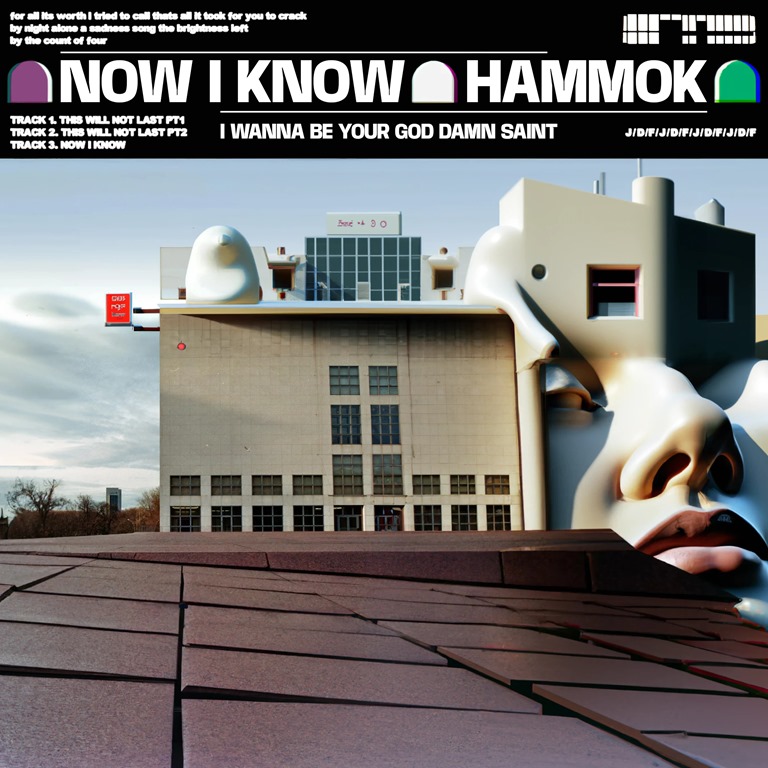
And so it goes that ‘In 2022, Norway’s Hammok released their first EP ‘Jumping/Dancing/Fighting’ and received very good reviews in publications such as Distorted Mag and Pitchfork – and we fucking loved it, too.
The press pitch for the Oslo-based trio’s follow-up, Now I Know, promises ‘a new chapter for the band [which] takes listeners on a vast and powerful journey, beginning on a more bright tone with the band exploring their more introspective and emotionally intense side and gradually drifting towards a more heavier and ferocious approach, reaching levels of fury and intensity never explored before.’
Predictably, perhaps, then, we fucking love this, too.
The EP comprises three tracks: ‘This Will Not Last’ parts one and two, and the title tune, and immediately, with ‘This Will Not Last PT 1’, the shift from the previous release is apparent. The vocals are still trained and straining, angry, aggressive, but they’re swamped in reverb as the instrumentation forges an almost shoegazey, dream pop curtain of sound. The thick, blooping, glooping bass and other key elements are still present but they’re all softer, meaning there’s no gut-punching blasts like ‘Contrapoint’ here. That isn’t to say it’s entirely mellow: it does break into a driving riff propelled by pounding drums and a blizzard of guitar around the mid-section, then takes a turn for the darker in the final minute. Perversely, as much as it’s a pristine slice of post-punk / noise rock crossover, it equally makes me think of a hardcore version of The Twilight Sad and I Like Trains.
‘This Will Not Last PT 2’, released as a preview, is the most accessible and melodic song on the EP, and is their most commercial cut to date by a mile, presenting a melodic, post-hardcore face. Melody is relative, mind you. It’s hardly The Coors. It sits strangely ahead of ‘Now I Know’ which is dense and dark and abrasive in its roaring rage and frantic pace. The guitars chop and churn, and by the close, Tobias Osland is practically spraying his flayed larynx in spatters on the floor as he purges his final howls of obliterative fury.
Hammok have expanded both their sound and range, but while there are softer moments, it would be a mistake to say that they’ve softened overall – and the softer moments only serve to give the hard blasts even greater impact, making for a second killer EP.
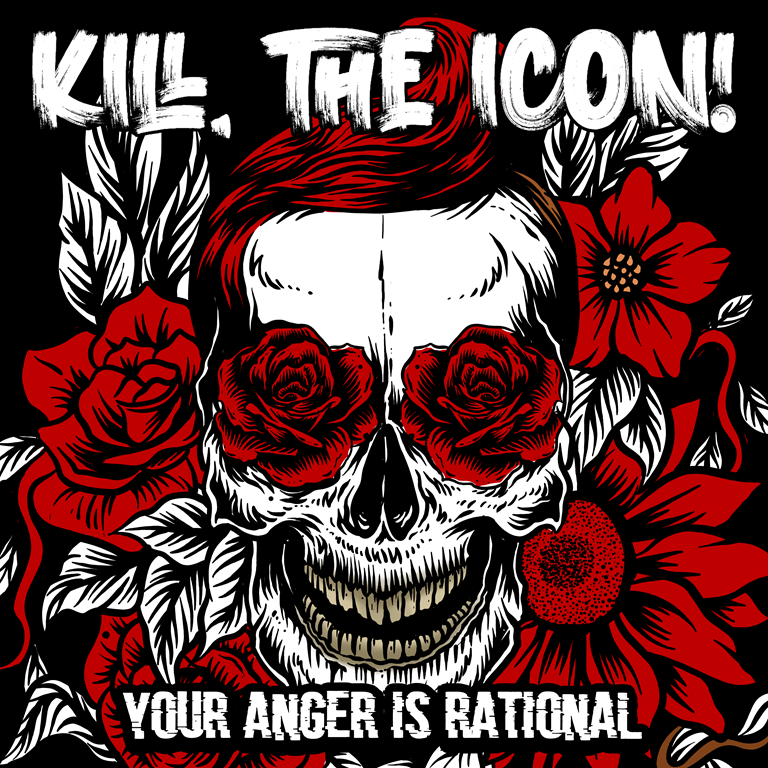
London ‘synth-punk passion project’ Kill, The Icon, fronted by NHS Dr Nishant Joshi have been building their presence nicely in recent with a series of strong singles, kicking off with ‘Buddhist Monk’ in late 2021, and the trio have been kicking ass with pissed-off, politically-charged sonic blasts ever since, and gaining significant airplay and critical acclaim in the process.
The bio and background, for those unfamiliar with the band, is worth visiting, as the context of the music is important. As much as Kill, The Icon are a part of a growing swell of artists who are using their music to not only channel their frustration and to voice their dissent – in a way which can’t get them arrested, at least not at the moment, no doubt to Suella Braverman’s irritation – Joshi is also very much an activist.
Joshi made national headlines during the pandemic, being the first frontline NHS doctor to go public with concerns that staff were not being protected. In true punk rock style Joshi and his wife then launched a legal challenge against the government. They won the case, making huge change and were recognised by The FA and England’s football team. Fueled with frustration, in the summer of 2020 KILL, THE ICON! was born as an extension of Joshi’s activism.
You certainly couldn’t accuse these guys of being all mouth and no action, but of course, the power of music as a unifying force should never be underestimated, particularly when our government’s modus operandi is to divide enfeeble the populace. It wasn’t just Brexit, which say the country not so much split and cleaved in twain: now there is a war being waged on benefit claimants (or scroungers and fraudsters, as they’re portrayed, dehumanising society’s most vulnerable in the process); a war on woke (anyone who is opposed to racism, misogyny, homophobia is the enemy); a war on migration… everything is cut between ‘us’ and ‘them’, and the smaller the splinters, the less the likelihood of meaningful, coherent opposition, especially when even so much as having a placard in your car boot is likely to lead to a pre-emptive arrest.
While the four tracks on Your Anger is Rational have been released as singles in the run-up to its release, with ‘Danny Is A Hate Preacher’ landing just ahead of the release date, packaging them together as an EP presents a precise statement of what they’re about.
It’s ‘Heavy Heart’ that’s up first, a no-messing ballsy banger that calls out the racism that’s not only rife but seemingly accepted post-Brexit, and the second track, the gothy ‘Deathwish’ (accompanied by the first AI promo video) steps up on this, with its refrain of ‘No blacks! No dogs! No Irish!’. ‘They used to whisper / And now they shout’, Joshi observes, and sadly it’s true. For a time, it felt like we had progressed from the casual racism of our grandparents – I remember feeling uncomfortable hearing my late grandmother talk – without malice – about ‘darkies’ and ‘coloureds’, and feeling a certain lightness of being at the sense we had moved on, stamping out the BNP and becoming more inclusive… but then the right has risen again with Farage and UKIP and Britain First and Stephen Yaxley-Lennon and in the blink of an eye there are flag-waving racist cunts everywhere and Christ it’s fucking ugly.
And as much as Your Anger is Rational is a unified work musically, it’s lyrically and thematically that it really comes together. With a hard, driving bass to the fore, ‘Danny Is A Hate Preacher’ explores how indoctrination from an early age spawns the next generation of wrongheadedness, how violence begets violence, and I’m reminded of Larkin’s ‘This Be the Verse’. Your parents really do fuck you up. And now it’s not just parents taking kids to racist rallies, kids are being moulded by ‘influencers’ like Andrew Tate, and again, adults are buying into and propagating this obnoxious shit too: I’ve had to defriend a number of people on Facebook for sharing his content. My anger is, indeed, rational: we’re surrounded by cunts.
The last track, ‘Protect the Band’ is slower, more measured, but again, it’s a bass-dominated grinder with a monster groove, and it’s all pinned tightly together with some sturdy drumming and it’s a magnificent dismantlement of corporate hierarchies and the way they oppress workers into subservience. Protect the brand! But will the brand protect its staff? Will it fuck.
As much as Kill, the Icon are punk in aesthetic and sentiment, they’re very much new wave in their sound and approach. And while they’re strong on the punchy slogans and lyrical repetitions, KTI are more articulate and more nuanced than your average rabble-rousing punkers.
There isn’t a weak track in here. Musically, sonically, lyrically, they’ve got everything nailed and it’s tight: there’s no waste, everything is measured and weighed for maximum impact, but it’s still delivered with a coolness and a real groove, which makes this absolutely killer work.
They may have only formed in 2020 during lockdown, but Brighton’s heavy post-punk noisemakers Mules (not to be confused with 90s US punk blues band, Mule) have already racked up three digital single releases before this six-track cassette EP. And while three of the tracks here are the preceding singles (with a studio recording of the live debut, ‘I Think We Need to Talk’, Illusions of Joy stands as a taut, cohesive document.
Their bio pitches their sound as being ‘equal parts dissonant and melodic, with a tight rhythm section providing insistent motorik grooves and angular rhythms’, adding that ‘In the tradition of Mark E Smith, the vocals are generally spoken, with very little concession to melody. Occasionally they escalate into a desperate and emotional yelp. With roots in the punk scene, Mules take influence from the first wave of post-punk, indie-rock, 90s noise-rock, and various more contemporary bands such as Parquet Courts, Metz, and Gilla Band.’
At the risk of repeating myself, shit times do at least make for decent music, and it’s no coincidence that the social and political landscape in which we find ourselves, which bears remarkable parallels to Thatcher’s Britain, is spawning a wave of disaffected musical voices. It’s not simply that the contemporary crop are aping the sound and feel of the first generation of punk and new wave acts because it feels fitting: the music itself is a means of articulating those knotty emotions that are a conglomeration of anger and frustration and the sense of powerlessness in the face of a need for change. Angularity, discord, dissonance, noise; these are the sonic vehicles which carry the sentiments sonically.
And so it is that while the primary grist to Mules’ mill is ‘everyday life in Tory austerity Britain’, they also pull on ‘broader themes, which draw on Tommy’s MA thesis, such as cultural hegemony, global political economy, and systems of control.’
There’s something particularly pleasing about hearing the words ‘cultural hegemony’ in the first verse of the first song on a record. Because as much as we live in shit times on so many levels, a real bugbear – and a genuine issue – is the dumbing down of culture; we have a government who openly attack intellectualism and deride ‘experts’, who refuse to engage in debate and view critical thinking as unhealthy – and in their tenuous position of power which serves only to protect their own interests – and, specifically, wealth – it is. And so it is that ‘Ergonomic Living’ takes its lead from Marxist social critique, and while the verses are defined by an insistent beat and wandering guitar, it all explodes into a roaring chorus. I’m reminded rather of Bilge Pump, and this is very much a good thing.
‘The Things We Learn in Books’ spews lists of theory against some driving guitars, and the urgency of the delivery is gripping and exhilarating. ‘Lonely Bored and High’ is the most Fall-like of the songs, but there’s a dubby element to it as well as spacious atmosphere, rendering it as much Bauhaus as The Specials, and again, it rips into a raging chorus. Fuck, these guys have such a knack for dynamics and tempo changes, it’s hard to respond in any way other than pumping your fists, because YEAHHHHH!!! FUCK, YEAHHHH!
‘I Think We Need to Talk’ is mathy, messy, disorientating, hypnotic, and ‘Clapping for Carers’ largely speaks for itself. Claps don’t pay bills, motherfuckers, and it shouldn’t be volunteers distributing limp packaged sandwiches and bags if crisps to the people sitting for ten hours or more in A&E units up and down the country (this one’s particularly sore for me, but we’ll save that for another time and just leave it that hearing a song like this really revs me).
Feeling angry and frustrated but disenfranchised and disempowered? Mules speak to, and for, you.
A couple of months after the epic grind-influenced outing that was ‘I Am Weak’, Bournemouth-based quartet Solcura return with their fourth single since their debut album, Serotonin, released in 2021, ‘Imposter Syndrome’. They describe it as an ‘absolute rager’ and ‘a result of the miasma of deceit and media tyranny we are all forced to swallow every single day of our lives.’
Music that was so angry and overtly political was rare only a year or so back. Practically every other release was a lockdown project, or addressed the challenges and traumas of lockdown; the isolation, the depression, and it was only natural that that would be the case. Not everyone is over lockdown or has recovered from the impacts of the pandemic and its handling, not by a long shot. Many suffer from levels of anxiety – particularly social anxiety – not experienced before, and many still haven’t got back on track financially, either. So many people got fucked in so many ways, and the likelihood is that it will take years – and years – before people are back to themselves again.
But the mood has definitely shifted, at least here in the UK, and particularly in England. The zeitgeist is no longer one of reflection, and if the mood remains on the downside, it’s no longer directed inward, as the fallout of the Johnson administration has ignited an incendiary rage that eclipses any inward-looking darkness. As the corruption of our government becomes exposed with new revelations practically by the day, from the billions tossed to mega-rich buddies for PPE that either never materialised or was otherwise unfit for purpose, to the crumbling NHS and public network system, while top execs and shareholders gouge immense profits while workers – now striking en mass – are being told there’s no spare cash for wages because of inflation, the swell of anger at the sense not only have we all been had, but that we’re being utterly screwed and lied to, brazenly, has built from a mutter of dissent to a scream of rage.
For a time, Sleaford Mods and Killing Joke were pretty much the only acts telling it like it is, but the explosive rise of Benefits, on paper the band least likely to go massive and hit the festival circuit of all time tells you precisely where we’re at now as a nation. And this is where Solcura are at: they’re pissed off and are going to shout about it.
‘Imposter Syndrome’ finds Solcura exploring some richly atmospheric vibes at the start, with spaced-out, slightly trippy, stumbling guitar and mystical wordless vocals that radiate spiritualism. Then, thirty-odd seconds in, the guitar slams in on hard overdrive and bangs into Soundgarden territory, with a beefy riff. The drums really stand out among it all, the snare a sharp crack that cuts through the thick distortion, with a hint of Therapy? pulling through it all.
The commination of melodic, reverby vocals and chunky riffage also reminds me of early Amplifier, but then there are some dark overtones and screamy backing vocals that are more nu-metal than neo-prog, and the two elements combine to optimal effect. This is some savvy musical alchemy here, and ‘Imposter Syndrome’ is a dense work with depth and dynamics. Yes, it harks back to the early 90s, but that’s another reflection of the time we live in. Recycling is good, especially when it’s done this well. Believe the hype. Believe in Solcura.
It’s been a few months since we last heard from London based industrial/alternative rock duo GLYTSH, who made some waves with their first single releases – and rightly so, because they were absolute bangers: their cover on Nine Inch Nails’ ‘Closer’ on hinted at the original material that was to follow, with both ‘(Hard)core memory’ and ‘SAV@Ge’ kicking serious arse. They’ve been busy in the meantime, landing a live slot supporting Tom Saint in June as part of the publicity for their upcoming debut EP, which ‘V.H.S.’ gives us a flavour of.
‘V.H.S.’ – that’s ‘Vulgar Holy Spirit’ – is pitched as ‘loud, proud and kind of a sombre love song’, which Jennifer Diehl – who now goes by the pseudonym of Luna Blake when she’s in Glytsch mode – expands on as being “about a lost relationship trying to be resurrected… It’s a dark romantic tale 2.0 with a Frankenstein flavour and could be seen as the sequel to our second single – ‘Hard(core) Memory’”.
It’s another slice of savvy songwriting that does so much all at once, starting out like some clean, crisp ‘alternative’ pop – the kind of electro-goth that pretends to be menacing but really isn’t – before going absolutely raging wild, demonic screaming with a barrage of noise exploding white hot and devastating. There’s a really thick swampy low-end and the production is dense and dirty – and it’s a real asset in realising the song’s full impact potential, because it very much accentuates the sense of volume, with the drums being pushed down beneath the speaker shredding guitar… and the guitar is a wall of sheet metal and it’s a riffy as fuck and properly heavy…and yet, somehow, there are glimpses of melody, a keen chorus that breaks out from the demonic rage of the verses, which returns us to the point where we’re forced to consider that there is a keen pop element to their songs. How can it be? And how can it all happen in two and a half minutes?
There’s no time to think or dissect it: it’s hard to take in what’s going on. It’s a blur, a blitzkrieg, an in-out smash-and-grab, fast, furious, violent and so well executed.
In the wake of Nu Metal and Marilyn Manson – who rose in on the tattered mesh coattails of Trent Reznor who brought the kind of niche noisy shit that was the domain of Wax Trax! and strictly underground to a huge global audience and then took it up several notches, aggro stuff has become quite normalised, not to mention predictable – but Glytsch bring something new and unique, and it’s not just that they’re female. They present a new hybrid, and a new level of ferocity that’s absolutely terrifying.
They’re racking up radio plays already, and they’ve got world class quality howling from every pore.
Back in the day – that is the 80s and 90s and the time before YouTube and pretty much all things Internet – bands of a certain status would find their live shows being released first as crappy tapes on market stalls with even crappier photocopied sleeves for £3.50 a pop, and later, on CDs which flooded record fares at £12 a go (and for the bands with a real cult following, the late 880s and early 90s there were heaps of vinyl pressings, too). Most of them sounded terrible, but fans lapped them up because they’d buy anything, especially from a show or tour they’d attended. And it wasn’t always the biggest artists who were the most heavily bootlegged: it tended to be the bands with the most hardcore cult followings, which explains why The Sisters of Mercy were more bootlegged than Prince.
The Internet and YouTube and technology in general has changed things rather, in that anyone with a smartphone can upload footage of a show within seconds of the event, even sharing, say, an unreleased song in real-time. But if the quality of 80s audience recorded live bootlegs was ropey, shaky footage of an artist shot on a mobile phone from the third row while the individual dances, slightly drunk, while being jostled about is infinitely worse.
This is where the self-documenting methodology of acts like Throbbing Gristle are the answer. ‘Beat the bootleggers’ was a slogan I heard in the 90s. I always thought it was fair in principle, but the kind of people who bought the shitty tapes at the market already owned everything on every format, so the idea that they were stealing from the artist seemed questionable. Anyway, some acts made it work for them, with Throbbing Gristle’s 24 Hours box set, which contained tapes of their last twenty-four live shows, making most of the boxes different from one another, being an obvious example.
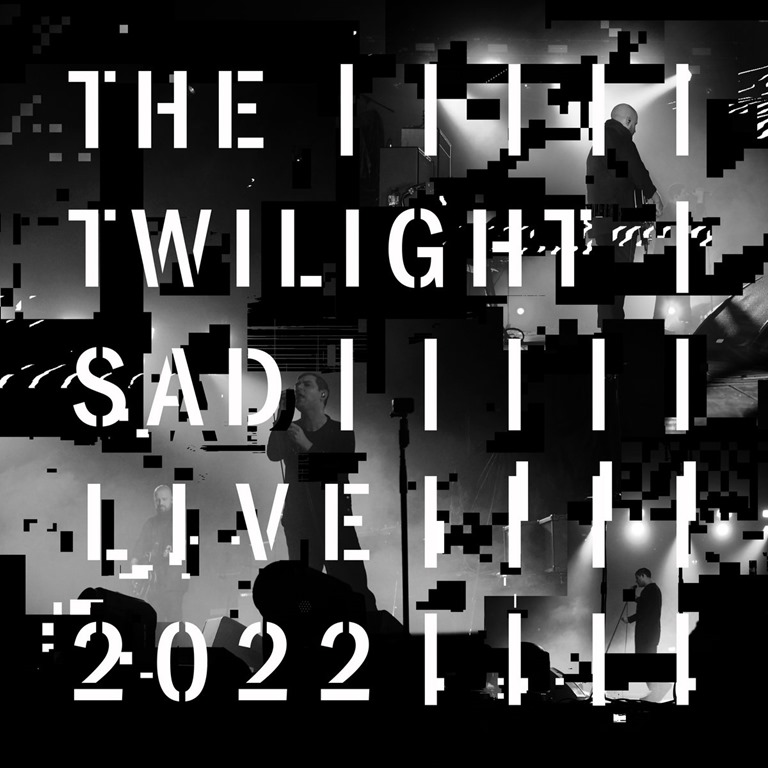
Live 2022 EP 4 shares two tracks with its recent predecessor, EP 3, namely ‘And She Would Darken the Memory’ and ‘That Summer, At Home I Had Become the Invisible Boy’, both from their debut album and both set staples to this day. There’d be riots if they weren’t. And the point of these EP releases is really for the fans – the hardcore devotees who want to hear the details of the differences of the performances from every show, and I get it: consecutive nights on a tour can sound and feel so different, dependent on so many variables, not least of all venue, location, audience, band. If you’re not convinced, go and watch and compare a band playing Glasgow and Nottingham on consecutive nights.
This EP, recorded in Belfast, is certainly different from its predecessor, recorded in London, not least of all because this is an acoustic set performed by James and Andy alone, and it contains six songs against the four off the last one. Personally, a large part of the appeal of The Twilight Sad is the ear-splitting volume and intensity, but as these versions highlight, they’re a consummate live act.
‘VTR’ is a song that loses none its potency with a stripped-back arrangement, while ‘Last January’ lends itself particularly well to the acoustic treatment with its aching melancholy emanating from every note with poised perfection. Much is often made of the passion behind James Graham’s vocals, but rather less tends to be made of the fact he has a magnificent voice, and it’s never been more apparent than here.
In context, ‘And She Would Darken the Memory’ doesn’t suffer from the absence of the blasting crescendo finale, and the quality of both the songwriting and the musicianship shine through.
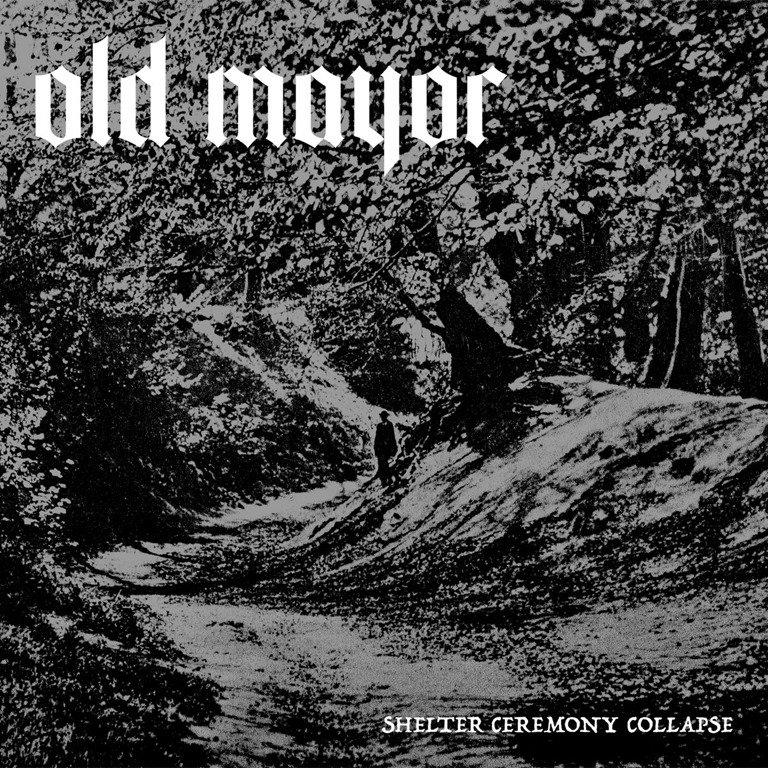
For context, I shall quote from the notes which accompany this release: ‘Old Mayor are Adam Kammerling and Owen Gildersleeve (Modern Technology / Human Worth). They were most active between 2005 – 2009 sharing bills with the likes of Boris, Russian Circles, Heirs, A Storm of Light, Orange Goblin and ASVA. ‘Shelter Ceremony Collapse’ was recorded during a stint in New York in the winter of 2008, where the duo laid down this beastly three track, recorded by Chris Pierce at Technical Ecstasy Studio in New Brunswick. But the recording never saw the light of day, with the duo parting ways soon after.
‘Fifteen years later, on hearing the news that legendary Brighton promoters Tatty Seaside Town, who’d given the band their first shows back in the early years, were calling it a day and putting on a final weekender the duo felt it was the right time to finally come back together. To celebrate they unearthed this EP.’
They certainly achieved a considerable amount during their time active, but left a scant record of it in the form of a critically-lauded eponymous five-track EP, which makes the immensely-belated arrival of this archival recording all the more welcome, and for those unfamiliar with them the first time around (myself included), Shelter Ceremony Collapse provides an outstanding introduction.
There’s an adage about how you treat people when you’re on the way up, and this release and the circumstances surrounding it are very much characteristic of Owen and Human Worth: not only reconvening Old Mayor for a farewell concert, but releasing the EP with a portion of proceeds going to charity speaks for the nature of the people and the operation.
As for the EP itself… While the title has a ring to it as a phrase, while conjuring mental images of crumbling edifices and societal disarray and something vaguely post-apocalyptic (or perhaps I simply have a vivid imagination which steers oof its own accord toward the bleaker, darker prospects), it’s also the titles of the EP’s three songs in the order they appear.
That said ‘Shelter’ is so heavy it almost brings about its own collapse inside the first two of its monstrous six minutes. It’s a slow, dirgy tune that begins delicately with clean, picked guitar, building a misty atmosphere of mist and loam, the resonant timbres of the strings rich and earthy and redolent of Neurosis – and then the distortion and drums pound in, hard and heavy and hit like a tidal wave crashing with full force against the abdomen and knocking the air from the lungs.
Kammerling’s screaming vocals are largely buried beneath the sludgy landslide; he sounds possessed, but is barely audible for the downtuned sludge, and Owen’ hard-hitting drums cut through with thunderous force.
‘Ceremony’ is but an instrumental interlude, a cacophony of shrieks and wails. It may only be a couple of minutes long, but the sounds of tortured souls leave you feeling unsettled and uncomfortable, which is either a bad state or the ideal state to receive the shuddering blast of the crushing ‘Collapse’. It’s properly heavy, snail-paced doom, and it’s potent, powerful stuff.
It would be wonderful to think that the one-off reunion wasn’t a one-off, and that it might spur more performances and perhaps even more new material – but they’ve already spoiled us, and Shelter Ceremony Collapse is the perfect release to expand and confirm their place in the annals.





 Aural Aggravation