Archive for the ‘Albums’ Category

Panurus Productions – 5th March 2021

Christopher Nosnibor

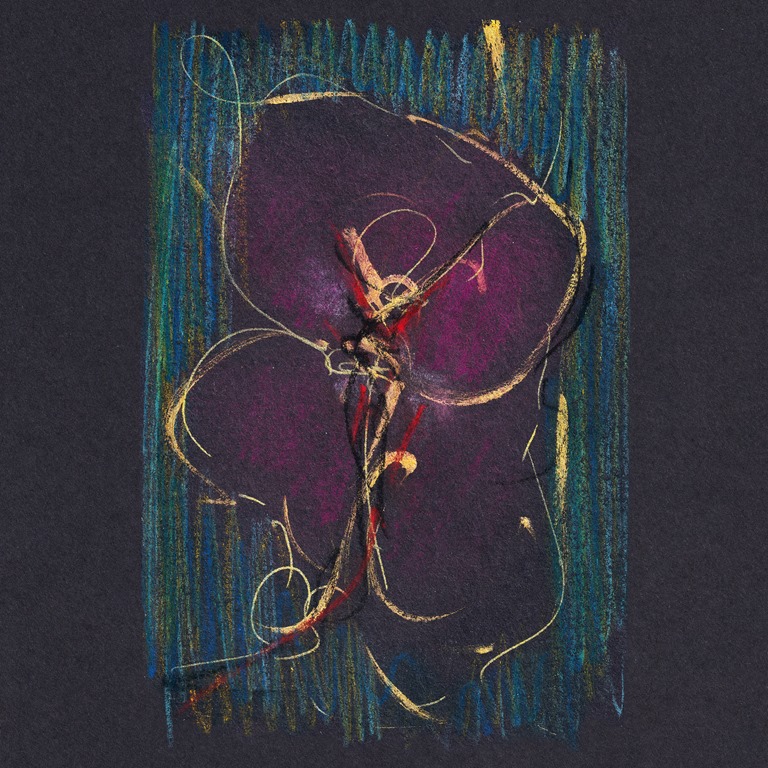
Bunker is pitched as ‘A heavy shelling from the York based two-piece’ and the drum and bass – and no, certainly not drum ‘n’ bass – duo offer up a monster that, despite having only seven tracks, runs to almost an hour in duration.

On a personal level, there’s a certain degree of pride here: for so many years, York sat under the shadow of Shed 7, as if they were the only band the city had ever produced. And while in terms of commercial success, there’s a certain truth to that, the dreary indie landfill merchants’ success eclipsed everything else – although again, for some years, everything else seemed to consist of largely acoustic blues, which is great for background on a night down the pub, but ultimately, variety is the spice of life, and the last decade has seen York’s diversity thrive – thanks in no small part to supportive venues giving truly alternative acts a platform. And the more diversity is showcased, the more breeds. And so, out of this melting pot emerged PAK40, mining a seam of stoner / doom, but with a keenly experimental edge that really set them apart.

This is all explored in full here, and it bulldozes in on a cascade of feedback that emerges into a lumbering riff on the deep psych grind of ‘Sausage Roll’, the first of three tracks which originally appeared on the ‘Crusts’ demo release a couple of years ago. When they take it down a notch, there’s a certain swagger to the strolling bassline, a subtle jazz swing to the percussion – nothing fancy, just a bit of groove. There are vocals and other details echoing away low in the mix, and it’s quite spacious and trippy. And when the distortion kicks back in, it’s fat and dirty.

‘Rain’ spreads out sedately over a whopping ten minutes, taking its time wandering an almost blues-tinged modern psychedelic territory (off the cuff references to Desert Mountain Tribe and Ghold come to mind) before bringing the weight. It’s a slow-burning, meandering effort that holds back more than it gives until the final couple of minutes.

When they do ‘proper’ vocal songs, as on ‘Hollow Man’, said vocals are all but buried by the grumbling, buzzing bass, and a shedload of reverb. And when they do shift from strolling psych to unleashing the riffs proper, they really do grind ‘em out. ‘U-96’ goers more post-punk minimal, but packs a massive kick at the end.

The heavy afterburn of ‘Pyramid’ is scorching, but it’s almost inevitable that the fourteen-minute ‘Elephant’ should be the album’s centrepiece, and it looms like a monolith in every sense, and encapsulates the entirety of PAK40’s sound and scope in one truly epic composition. It does low and slow, a crawling, stealthy intro taking its time and taking its time and taking its time, through a gradual build, with real suspense and atmosphere developing.. and when the riff crashes in – fuck yes, does it crash in, hard and heavy.

Closing off with the title track, a mere seven minute jaunt, they really step up the volume and it’s some weighty drone that drifts like a pea-souper fog from the speakers as they go full Sunn O))). And it’s absolutely glorious. These are the kind of crushing power chords you can simply bask in as they fill every inch of your being. It’s immense and borders on transcendental. You don’t just hear it, but you feel it.

Bunker feels like a full summary of the band’s range and vision, and it’s both accomplished and exciting, and creates a real anticipation of more to come.

cover

Invada Records – 29th January 2021

On the strength of a brace of tumultuous single releases, anticipation for Divide and Dissolve’s upcoming album was pretty hot. And with Gas Lit, they’re positively on fire.

With the aim ‘to undermine and destroy the white supremacist colonial framework and to fight for Indigenous Sovereignty, Black and Indigenous Liberation, Water, Earth, and Indigenous land given back’ Divide and Dissolve wear their difference from so much of the scene with pride: they certainly don’t look like your average doom duo. But then, nor do they sound like it either.

They may only be two in number, but Takiaya Reed (saxophone, guitar, live effects/ (Black & Tsalagi [Cherokee]) and Sylvie Nehill (drums, live effects/ (Māori) incorporate an array of unconventional instrumental elements into their immense sound, most notably saxophone. But it certainly doesn’t really lighten the tone with some groovy jazz notes, or even some wilder free-jazz, either.

Granted, the opening bars of the first track, ‘Oblique’ are gentle, soothing, orchestral and with hints of neoclassical or soundtrack music even, but it’s simply a lure before the barrelling drone of low, overdriven guitars so distorted as to melt into a drone, propelled by a frenzy of thunderously heavy percussion. And in the background, brass so mournful as to sound sadder and more lonely than a solitary burial in the middle of the Sahara. It’s a bleak and desolate sound, and one that’s utterly compelling.

‘Prove It’ is pure density, a heavy drone guitar with a sound that’s thick and grainy flows like a mudslide. The blank monotone spoken word vocal on ‘Did You Have Something to Do With It?’ is detached, and disconnected as it speaks of dark thoughts and actions against a sparse, minimal backdrop. It’s eerie and ominous, and sounds more like a segment lifted from a documentary about a serial killer – and in the context of the album, it serves as an unsettling interlude, which provides brief respite sonically only to exchange the aural terror with something sociopathic and equally disturbing.

Seven-and-a-half-minute single cut ‘Denial’ hammers in hard with a yawning drone of guitar that sounds more like a churning earthwork, the drum beats like detonations, before tapering away to leave a haunting scene, the serpentine scales full of an ancient ant elusive mysticism. But it becomes increasingly scratchy and more decayed… and then ‘Far From Ideal’ bulldozes in, obliterating everything in its wake, before things get even heavier, darker, and murkier with the trudging sludge of ‘It’s Really Complicated’.

‘Mental Gymnastics’ is another short piece, and another one which evokes distant lands in ancient times, unknowable wisdom lost in the sands of time, before single release ‘We Are Really Worried About You’, grinds its way to the end on a tsunami of a riff, and it leaves you breathless.

It’s clear that Divide and Dissolve really grasp the power of dynamics, but also have a unique way of rendering those dynamics, not just in terms off the all-important volume changes, but in how they explore mood. More than this, they transcend conventions and standard doom tropes and incorporate myriad stylistic and cultural elements, and so do astoundingly naturally. For all the weight, there’s a bold majesty about Gas Lit that may be difficult to pinpoint but which permeates its very fabric. And for all of these reasons, Gas Lit feels different – and hits so incredibly hard.

AA

931373

Human Worth – 26th February 2021

Christopher Nosnibor

From the first twisted, dingy powerchords that herald the arrival of Fraught in Waves with the punishing – and appropriately-titled ‘Breakage’ – it’s abundantly clear that Gaffa Bandana’s debut album is going to be an absolute fucking beast. The rest of the album only verifies this as fact: Fraught in Waves is indeed an absolute fucking beast. It may only contain six tracks and have a total running time of half an hour, but the sheer intensity is ear-bleeding, eye-popping, and gut-tearing. Yes, this is a truly physical experience, one that’s exhausting and exhilarating in equal measure.

Gaffa Bandana is Gill Dread (Bruxa Maria) and Jennie Howell (So3ek, Sleeping Creatures, Gorse, Dooman Empire), and Fraught in Waves was first released as a digital-only effort back in September of last year.

While they’re pitched as a punk duo, the pair’s noise is a full-throttle hybrid of hardcore and sludgy noise, the guitars coming on like Fudge Tunnel covering Tad. The clattering drums also call to mind the heavy noise scene of the 90s: if obscure namechecks like Oil Seed Rape and other band on the Jackass label spark a light of recognition, then we’re speaking the same language. And the vocals are just terrifying: deranged, demonic, they’re at a pitch that’s rare in the fields of either punk, metal, or doom – it’s a cracked, guttural howl, bordering on a shrieking agony.

The contrasts are a major factor in its impact: the riffs are stop / start, and for all the density, there’s a lot of space where metallic clanging chords simply hang in the air before everything piles back in, hard, and deliberate.

There are hints of The Jesus Lizard about the churning ruckus of ‘Charm Offensive’ with its choppy guitar buzz and the hollering vocals low in the mix – but if you’re looking for more contemporary touchstones, Blacklisters and (early) Hawk Eyes are fair comparisons: jolting, metallic, uncomfortable and unforgiving, everything lurches one way and then the other, from stuttering stalls to incendiary riffage that absolutely burns, there is absolutely no room to breathe, not an inch to unwind in. This shit it tense, the kind of tension you feel in your chest and your stomach, and the seven-minute behemoth that stands as the album’s centrepiece, ‘Paralysis of Will’ is all the anguish, all the torture.

Every track feels more tempestuous than the last. ‘Evil Whispers’ has its moments of stuttering Shellac-like mathy judders as it stammeringly halts and resumes, but ultimately, it’s the relentless, balls-out, stomach-churning riffing that defines the sound. There isn’t a clean note to be found in this furious mess of noise. It’s rare for an album to grab you by the throat quite so brutally, and to maintain its choking grip without a moment’s respite, but Fraught in Waves is full-throttle from beginning to end. It is harsh, it is relentless, and at times borders on the psychotic. It’s pure catharsis, and it’s perfect.

cover

Cruel Nature Records – 29th January 2021

Christopher Nosnibor

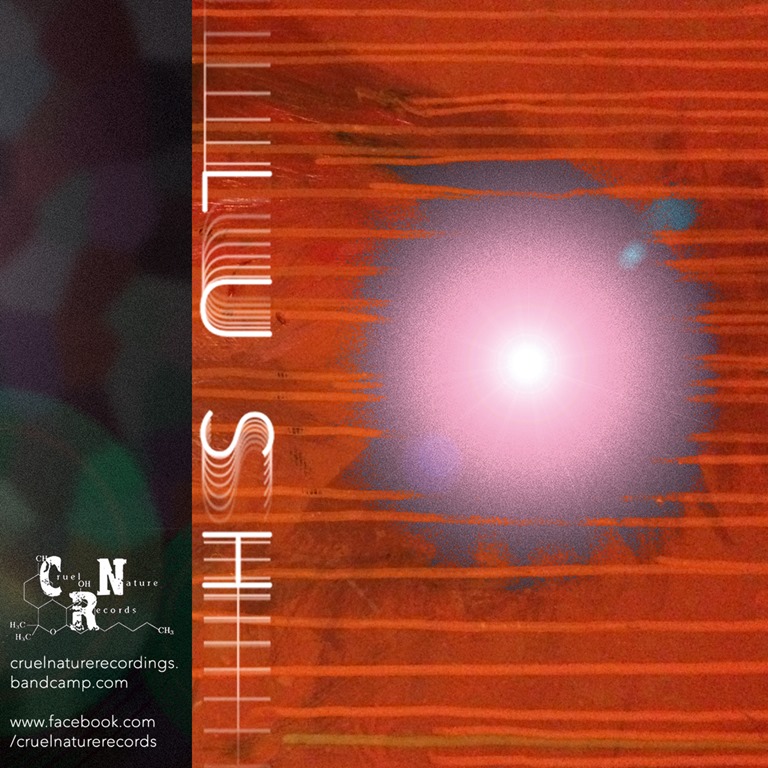
Talk about an ambitious and epic release: Cruel Nature have really gone all out on this one, packaging four – yes, FOUR!!! – Lush Worker albums ‘brought together on a chunky double cassette’. It follows last year’s packaging of three of the 2019 Lush Worker albums as a single cassette, and says ‘hey, why stop at three albums when we can bundle four?’

I mean, it takes some balls to do obscure music on cassette anyway, but this is next level. But then, Cruel Nature have a track record and a clear understanding of their audience and market, with a long line of killer releases in editions of 100 or less that have all sold out by or shortly after the release date. At the time of writing, copies of this extravaganza of solo work by the bewilderingly prodigious Mike Vest (of, among others, Bong, 11Paranoias, Drunk In Hell, Blown Out, Haikai No Ku, and Melting Hand), released as a run of 75 copies, are already running low.

The two cassettes feature an album on each side, and a total of twelve tracks in all. This compendium picks up where its predecessor left off, in filling some gaps from the creative blow-out that was 2019 with Immunosuppression, originally released online in February 2019.

The four tracks from Immunosuppression, which occupy tape one side one, are remarkably varied, despite being developed around heavily echoed guitar, with the emphasis on ambience and space. ‘Powder Relic’ marks a seismic shift from the slow-burning deserts of feedback with a murky squall noise propelled by a drum machine and welded to a throbbing bass and it’s characterised by that lo-fi compression of bedroom demos recorded on a Walkman of old-school cassette four-track and an ambient condenser mic. Then again, ‘Hb1c’ goes super-ambient, spreading formlessly over some ten and a half minutes and sounding like the universe slowly expanding in real-time.

Next, we explore Preacher originally a digital-only self-release, which appeared in November of 2019. Consisting of a brace of swampy paced-out monsters, it’s led by the twenty-minute glooping murk of ‘Zudan’, Metallic scrapes screed and cascade over ponderous bass stroll before it all goes a bit prog and a bit psych, all at the same time, with wiffling drums and rippling waves of synth coalescing with the bass, which switches from stroll-mode to dirty stun somewhere along the line to forge something vaguely motoric. The echoic guitar trip of ‘Suz’, being nine minutes in duration, feels like but an appendix in comparison.

Cygnus was originally released on 7th January 2020, just five weeks previous to Consort, and comprises a trio of longform explorations in the ten to fifteen-minute range, and the tiles alone are clue enough to their sound: ‘Planetary Transit’, ‘Simultaneous Stellar’, ‘Double Star System’ – ladies and gentlemen, we are floating in space. Although with distant cymbals crashing like gongs of violence across the galaxies and sensing rippling waves through the cosmic expanse of slow synth washes and elongated guitar drones that manage to convey the experience of surveying a slow-drifting nebula from a station floating free from orbit, the experience is more in the trippy domains of Kubrik’s 2001 than anything else. There are moments where the sound is more of a heavy, trudging drone reminiscent of Earth 2, but distant and vague, and with additional extraneous sounds ebbing and flowing.

And so arriving at side four of the cassette we’re presented with Consort, dominated by the two-part ‘Empress’: ‘Part 1’ is a twenty-minute space-age epyllia, a microcosm of all the immersivity epic ambient soundtracks imaginable. With vodka and low lighting levels after an arduous day of day-job and parenting, I begin to nod off at my keyboard, and I’m reminded, as I feel the last vestiges of alertness trickle from my body, just what an effect music can have on both mind and body. I can’t remember the last time I’ve felt this still, this serene. I know it won’t last, either but this is a rare moment, as ‘Empress Part I’ drifts into ‘Part II’, there is a confluence of calm. As the swirling vortex of a drone of a drone collides against a wash of heavily-reverbed guitar and what even sounds like some free jazz sax, but it’s hard to know what’s all in the blender on this dense, simmering sonic tapestry, it’s a different kind of vista that expands and leads the listener toward the horizon.

Dronesome as this epic four-album set is in its leanings, like its predecessor, it highlights the broad range of styles and sounds that are all part of the Lush Worker oeuvre. It’s pleasing to know there’s plenty more to go at, and likely plenty more to come.

AA

cover

Thrill Jockey – 29th January 2021

The sheer quantity of The Body’s output – often produced collaboratively – is little short of astounding, and since coming together some 20 years ago the duo comprising Lee Buford and Chip King have forged a reputation as masters of noise, and, as their biography attests, they’ve ‘consistently challenged assumptions and defied categorisation, redefining what it means to be a heavy band’.

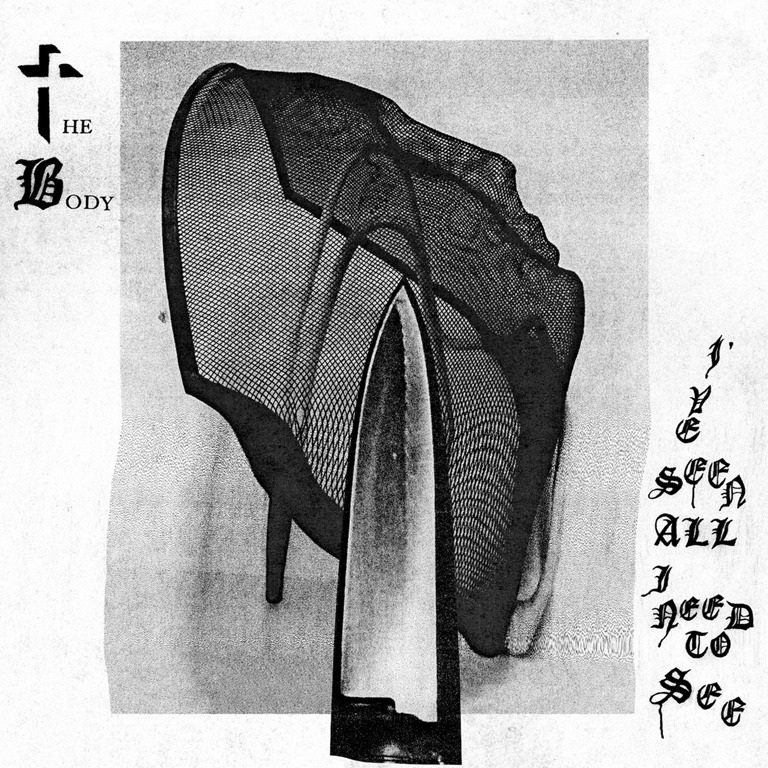
There is no question that I’ve Seen All I Need To See is heavy: listening to it from beginning to end truly hurts.

It opens with crushing slabs of overloading distortion backing a monotone spoken-word piece. The juxtaposition of the blank, the bland, and the speaker-breaking blasts of bass-orientated menace is difficult to process, and that’s before the screaming demon-howl vocal begins howling its hellish anguish into the dense, murky mix of thunderous drums and bowel-churning low-end. ‘Lament’ is six minutes of pure heavyweight abrasion that tears at the guts and the soul. Every cymbal crash is an explosion, the decay distorted by deep bass detonations as it trudges doomily onwards – or down. Down. Down.

Everything simply splinters and overloads on the punishing single release, ‘Tied Up and Locked In’, which is a whole next level of heavy shit, a churning mess of overloading noise that’s utterly brain-pulping.

If the prospect of a slower song, which arrives as the album’s third track, Eschatological Imperative’, suggests some kind of respite, you’re going to be disappointed: slower, yes, but it’s a dirgy wall of noise that’s nothing short of overloading in every sense. It’s horrible, painful, but utterly perfect in fulfilling its purpose: there is no respite here, only pain, and pain articulated through brutal sound. ‘Pain of Knowing’ is so dense and dark, you could almost cry in the hope of a return to ignorance. A low, griding bass feedback noter hangs for eternity and rings a resonating pain, and the reminder that knowledge isn’t power, it’s pain.

The pain continues with the percussion-dominated slow throb of ‘The City is Shelled’, which crawls, bloodied, into the kind of territory occupied by Swans circa 1984, with crushingly slow beats and a buzzing bass that practically swallows everything. It’s a trajectory continued by on ‘They Are Coming’, a stop/start piece that’s utterly obliterative. The stops leave you hanging: the starts make your stomach lurch. There isn’t a moment’s respite or implicit kindness here. Hearing the bass drum downtune into a morass of distorted extranea and broken bass on ‘The handle The Blade’ is a most physical experience, and one that’s only heighted by the final track, ‘The Path of Failure’ which is utterly crushing. It’s megalithically, slow, and heavy, but also dark and punishing, and when noise does erupt on ‘The Path of Failure’ it does wo with a slow, brutal violence

I’ve Seen All I Need To See is a distillation of pain, and the production and mastering takes that to the max, to the point that I repeatedly found myself checking my connections and cables and even my speakers. In short, I’ve Seen All I Need To See is as brutal as anything you’ll hear, a work of total sonic overload.

AA

a0754428179_10

Editions Mego/Cave12  – 8th January 2021

Christopher Nosnibor

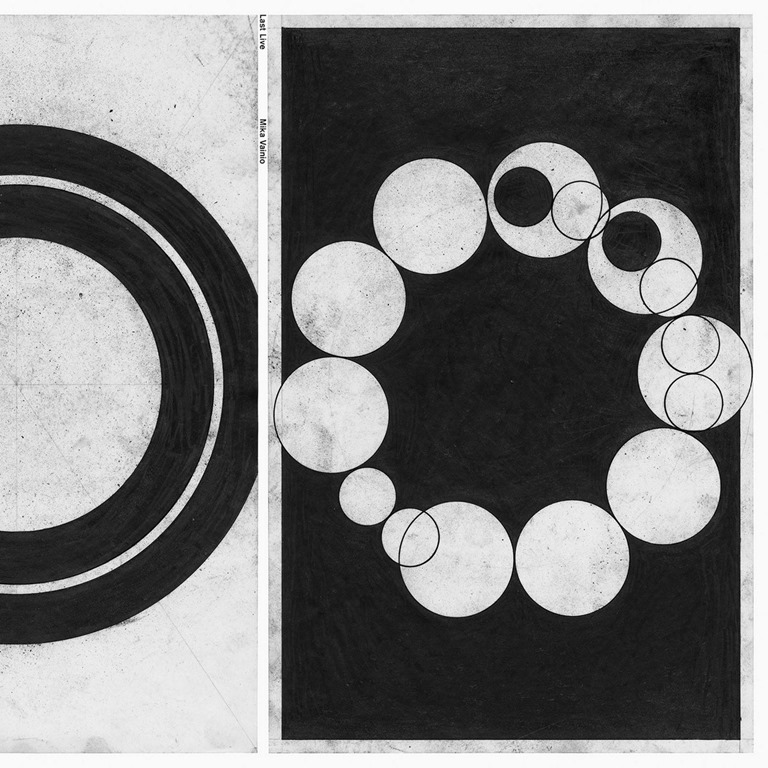
There’s a heavy air of finality about this release, encapsulated simply and plainly and unemotively in the title. Mika Vainio, best known as one half of Pan Sonic, produced a quite remarkable body of work under various guises and through numerous noteworthy collaborations, before his death, age 53, in April 2017. Last Live is a document of his final live performance, recorded on 2 February 2017 at Cave12, in Geneva. This is by no means a cash-in release or some poor-taste milking of the vaults.

As the liner notes recount, ‘we needed time to listen to this archive again, which we did in situ in June 2020 with Cindy Van Acker. After this listening, we felt invested in having to make this archive public.’ And instead of just banging it out, Editions Mego invested in making it fit the format, with Carl Michael von Hausswolff to do the mixing, and the recording was organized in 4 movements, with Stephen O’Malley involved in the pre-edit process and the legendary. Denis Blackham doing the mastering. This was, of course, necessary, in order to fit the double-LP format, and each segment spans between ten and nineteen minutes to cover the full hour-long set, which begins as a low, oscillating hum.

The drone goes on through the duration of ‘Movement 1’: indeed, it’s almost torturous after a mere five minutes, and we’re reminded early on that Vainio’s reputation was not based on his commercial appeal. Eventually, the hum halts and is replaced by a low-level throbbing, and a softer tone, before plunging into a drone of ow-level murk that one feels more than hears.

There are breaks in the ever-shifting sonic blanket pitched forth by Vainio, and the near-silent spells don’t correspond with the lulls between tracks as you might expect – but then, on the CD, the tracks beleed together anyway, giving a true sense of the set as a continuous piece, and a performance that explores tonality and texture, as well as frequency and dynamics.

There’s no question that this performance was loud: circuits creak, wail, and scream in a bulldozering barrage of grinding earthworking sound, a nuclear wind in the middle of a construction site drilling through the mantle to the earth’s core. But Vainio also ventures effortlessly into quieter, more tranquil bywaters, as well as bringing it down into semi-ambient territory.

At times, it hurts. The density is just bewildering, and twelve minutes into ‘Movement 2’ when everything starts to overload, it’s tempting just to lie down and stare at the ceiling muttering ‘holy fuck.’ When the sound really starts to crescendo, it’s a brutal, speaker shredding wall of noise, and it’s dark, and utterly obliterative. It’s also absolutely fucking punishing. So much so, any kind of analysis or critique feels almost futile.

Even without the context of death and finality, while penning this review in a place where there has been next to no live music in ten months, listening to Last Live is an intense and moving experience. It serves as a reminder of just how physical and how transportative live music can be, how songs may be important but sometimes, all you need is a sea of sound which will carry you away. There is no destination here, just an immense flow of sonic waves. And this is all you need.

It may well have been an unintentional sign-off, but as a last, and lasting, live statement turning the light off on an illustrious career, this is an appropriate curtain close.

12th February 2021

You sometimes feel like the world spins faster for some than others. That’s certainly the case for Weekend Recovery: it doesn’t feel so long ago since the emerging alt-rock act from Kent were turning up at a basement bar in Leeds to play their Paramore-influenced radio-friendly rock with fingers crossed the local support would bring some punters. They’ve toured nonstop since their inception in 2017, and it’s worked well for them in terms of amassing a fervent fanbase, and relocation to Leeds, if anything, has helped set them apart from the sameness of the scene of female-fronted alternative rock bands in and around the capital right now.

So fast forward not that very long, but add a debut album, even more extensive touring including some high-profile festival slots, as well as a change of lineup, into the busy timeline, and Weekend Recovery 2021 slams in hard with a new album. With ten tracks clocking in at twenty-nine minutes, you get the idea: this is concise, punchy, and with no fat left untrimmed. Weekend Recovery have always penned focussed songs, but they’ve really nailed it right here.

‘Radiator’ opens it up – and bleeds – with a nagging guitar motif, before the band plunge into megalithic hard rock territory, coming on more like Black Moth or Cold In Berlin than their usual selves. And it’s good: where there was a simmering tension to their songs, which cut jagged and raw on Get What You Came For, you feel like False Company is the album they always wanted to make but couldn’t, for various reasons. That, or it’s the album that shows what life experience can do: while they certainly weren’t afraid to crank it up and let rip previously, False Company is harder, heavier, and altogether darker.

That isn’t to say they’ve lost their pop edge one iota, and there’s a keen ear for melody on display throughout. And it may well be down to the melody, but ‘Can’t Let Go’ sounds like a glam/metal reworking of ‘These Boots Were Made for Walking’. It’s fitting, as it’s a proper stomper, and whereas the energy on previous releases stemmed from a combination of froth and bounce alongside the fizzing guitars and turns of pace, on False Company it’s more centres – the sound is denser and more-up front somehow.

Single cut ‘Going Nowhere’ – a reflection on stasis that’s specifically about relationships but could equally be a metaphor for the last 12 months – stands out as a furious post-punk pop banger with the spiky angst of Siouxsie and Skeletal Family, not to mention hints of X-Ray Spex melted into a song with massive accessible appeal. ‘It Doesn’t Seem Right’ is the ferociously fiery alt-rock corker they’ve always threatened.

‘Surprise’ is the quintessential album slowie, and sounds suspiciously like a power ballad to my ears. Single cut ‘There’s a Sense’ provides a dash of levity, an airy pop tune that harks back to ‘Why Don’t You Love Me?’ from the previous album and it does feel a shade throwaway in context, a tune dispensed at pace to grab the ear. Likewise, ‘You Know Why’: on its own sounds a bit like a hook with not so much meat, the ‘na-na-na’ refrain sounding like it’s leaning on My Chemical Romance just a bit too hard to be cool, but in context of the album its bubblegum buoyance feels more tempered, and in fairness, it’s a full-tilt punk blast with hints of X-Ray Spex.

Elsewhere, ‘Yeah?!’ has large elements of Nymphs in the mix, capturing that blend of grunge and classic rock and spinning it with a strong hook, and finally, in its juxtaposition of guitar lines and vocal melody, plus aaaaallll the dynamics, closer ‘Zealot’ feels like their most evolved and sophisticated song to date.

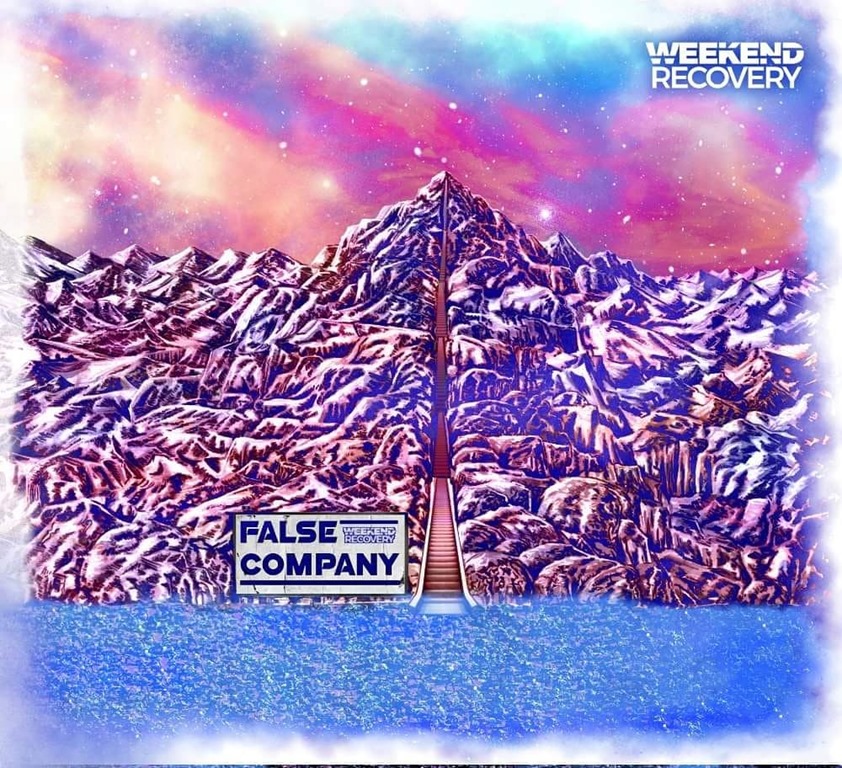
In terms of the ‘difficult second album’, the machinations behind the scenes – not to mention timing – may have made its coming together a major challenge, and the cover art speaks volumes – it was a mountain to climb, an endless staircase to where? But none of this is evident from the finished product: instead, False Company is darker, harder, stronger, denser, more assured-sounding and more evolved, and every aspect is a step up from its predecessor: Weekend Recovery have really upped their game and expanded their range, delivering an album that really is something special.

AA

139669184_484273482976162_2931459315862235505_n

When an album contains just three tracks, you know before you even hear a note that it’s going to be possessed of epic qualities. Similarly, when a band’s pitch includes ‘RIYL bands like Swans, MONO, lots of layered drums and percussion, ambient soundscapes, and wall of sound guitar and big strings’, (and I think it’s pretty much public knowledge by now that I do), then the same applies, and so needless to say I was all over this in an instant.

The first track, ‘The Gift’, is a twenty-minute behemoth, a sweeping exploration that builds from tense strings of the kind that would likely be at home on a Netflix period drama into something altogether more awe-inspiring, as the drums rumble like distant thunder at a gathering pace and intensity. Over its immense span, it leads the listener on a journey through an array of soundscapes, and there’s not only considerable atmosphere being conjured here, but the music also has a very visual aspect. You feel as if you’re being transported through different scenes, and at times, are creeping cautiously and peering around corners, while at others, staring out from a high plateau overlooking immense vistas that stretch further than the eye can see.

This is very much latterday Swans providing the inspiration here, with the expansive instrumental passages and near-ambient stretches that came to define releases from The Seer to The Glowing Man via To Be Kind, each of which stretched over a full two hours apiece. However, solarminds’ compositional approach and overall sound is quite different, leaning very much toward more conventional post-rock tropes (but without the contrivances of, say, Sigur Rós) and while there are some immense percussion-driven crescendos, with the strong-centric instrumentation, they don’t hit the explosive peaks of, say, Explosions in the Sky or Her Name is Calla. None of these are bad things, and while the sheer scale of their music does definitely sit within the domain occupied by MONO.

‘The Visit’ begins with an amorphous mass of dank, dark ambience, and is thirteen minutes of elongated, undulating drones that twist, turn, scrape and screed against a tumultuous barrage of percussion.

Closer ‘The Lie’ marks a significant departure, as the sound of heavy rain and extraneous noise gives way to a near -acappela vocal, an acoustic guitar, muffled and distant, providing the sparsest of accompaniment. It’s here they’re most reminiscent of Her Name is Calla at their most minimal, stripped-back, and folky, and it’s a delicate, tender experience that grows in emotional intensity and pulls at the gut with its starkness, its rawness.

Dissolving in a rumble of thunder, it’s a fitting conclusion to an album that, beneath some smooth surfaces, presents some quite troubled currents in the depths.

AA

sddefault

Dret Skivor – 11th January 2021

I had the pleasure – and it was a pleasure for me, if not necessarily the audience – to perform a couple of times with Legion of Swine. They were noisy, brutal affairs: while Dave Procter’s many musical guises span most shades of noise, with a particular leaning toward all things drone, his work as the lab coat wearing porcine purveyor of aural pain.

The audio on this release is taken from Legion of Swine’s set for the Chapel FM 24-hour Musicathon, which took place on 12th-13th December 2020, which featured forty-five acts in twenty-four hours. Performing at 6:15am on Sunday 13th, the chances are few caught the performance as it aired live, but here, a year on, is an opportunity to bask in the gnarly noise at leisure and a more socially amenable hour. Not that there’s much that’s socially amenable about this: the liner notes explain how ‘It’s “almost” Harsh Noise Wall, but not quite as some random parts of reverb tails interact with others at various stages to create the slight variations.’

So how does that translate as a listening experience? Well, as the title suggests, the noise never abates during this twenty-six-minute blast of electronic abrasion. There are no breaks, no vocals, and next o no sonic variety, although there is some – and it’s heavily textured. In fact, it would be most readily summarised that it sounds like the cover looks: grey, grainy, but woven so as to be not entirely monotone and uniform in shade.

When I find myself listening to HNW – which admittedly, isn’t that often, as I generally prefer the concept to the experience, despite the fact I do very much like my noise to be immersive, not to mention somewhat testing – I find myself hearing subtle shifts in tone and frequency. I suspect it’s the result of some auditory illusion, the aural equivalent of an optical illusion as my receptors strain to find some variety, some detail on which to pin a response of some sort, in the same way a freshly-painted wall will reveal patches that are not as well covered as others the longer you look at it. The beauty – and I use the term with extreme caution here – of this performance is that those patches do exist, and are purposefully brushed into the finish.

This is alternately the sound of a distant swarm of hornets and swimming underwater. The recording doesn’t convey the kind of extreme volume that is an element of a lot of harsh noise, although one suspects that a large proportion of the interplay between sounds is derived from the way that reverberate, resonate, and rub together and against one another, and any comparison to Merzbow is entirely appropriate. But the lack of overt volume only accentuates the sameness – or near-sameness – of the sound, and what’s more that sound is a continuous torrential churning noise that sits in the midrange, and hammers like metal rain, a relentless digital downpour. It’s ultimately oppressive in its relentlessness, and over time seems to fade into the background, as anything with such a lack of dynamics inevitably will. But this is not about stimulating the senses so much as numbing them and challenging the listener to endure. It’s a test alright, and a tough – but good – one.

AA

a2596588712_10

18th December 2020

Christopher Nosnibor

If you’re drawing comparisons to PJ Harvey, Anna Calvi, Tori Amos, and Kate Bush, you’re probably doing something right, even if it may be through lazy journalism. Despite female artists and female-fronted bands having made massive headway in recent years – and seriously, not before time – and frankly, it shouldn’t erven be a talking point or even a subject of reference – the pool of major-league female artists who aren’t pop or r’n’b is quite limited. Consequently, comparisons are often drawn almost out of desperation due to the lack of choice. This is unfair on both sides, and incredibly reductive. But then, comparisons are problematic anyway, and are perhaps indicative of another issue in the music industry: labels, radio stations, media outlets, even fans – most of the time, they’re not really looking for the next big thing, but the new replica of the last big thing.

It’s far easier to market ‘the new PJ Harvey’ than ‘something like nothing you’ve ever heard before.’ Amazon and most streaming sites operate on ‘recommendations’: if you like x, you’ll probably like y’. It’s likely true, but this only leads to a narrowing: where is the encouragement of broadening horizons? Strong female voices are being pigeonholed – and I don’t mean just strong in vocal terms, although Kristina Stazaker is strong on both fronts when it comes to voice, with songs that are imbued with deep emotional resonance delivered with the kind of passion that comes from the very core.

On Follow Me, Stazaker showcases a selection of songs which are stripped back and direct. Primarily centred around acoustic guitar and vocals – often layered up with backing vocals and harmonies – the style is angry folk, but the voice uniquely Stazaker’s. Follow Me is simple but effective: that is to say, it’s imperious, free of fancy production, and is absolutely about the songs. It’s fitting for an album so lyrically concerned with nature, and the lyrical preoccupations are reflected in the honest, earthy instrumentation.

‘Don’t let those bastards beat you down’ Stazaker sings with a strong hint of venom on ‘Everyday’. It’s not an oblique reference to The Handmaid’s Tale, but it should be a feminist / working class anthem in the offing.

The album’s longest song, ‘Goddess’, is a multi-layered emotional dredger that functions on multiple levels. ‘Hail Hail Rain and Sail’ is a lively, even fiery folk tune with just vocals and energetically-strummed acoustic guitar. The format is simple, but the effect is powerful, and Follow Me succeeds because of its confidence: Stazaker demonstrates perfectly that less is more when done right, and with so many strong songs, Follow Me is all the force.

AA

Image 3