Archive for the ‘Albums’ Category

Rocket Recordings – 10th June 2022

Christopher Nosnibor

International Treasure is the second album from the ‘collaborative collision’ of Steve Davis, Kavus Torabi, and Mike York. And, of course, much has – and will – be made of the Steve Davis factor: he may have kept his musical interests largely under wraps during the lengthy heyday of his snooker career, but the fact is that he’s long been a fan and supporter of ‘interesting; music, and this is a musical unit that stands on the strength of its work – and its work is (utopia) strong.

As the accompanying notes explain about the origins of International Treasure, ‘All three musicians here found themselves operating outside of their comfort zones – Torabi’s purchase of a guzheng (a Chinese plucked zither) led to Shepherdess’s lambent allure and York’s spectacular and evolving array of pipes and wind instruments contributed just as much as his ruthless editing. Davis meanwhile, whose speciality lies in rich tapestries of modular electronics, sums up their relationship in characteristically self-effacing fashion: “I see myself as a strong midfielder, or a centre back. Kavus and Mike are like the Lionel Messi or Ronaldo of the equation, and I’m setting situations up for them”.

Davis’ application of an extended football analogy is amusing in context, and one suspects it’s an intentional slice of drollery. The music itself is not amusing – as in, there are no chuckles to be found here – but instead is intensely focused, with magnificent results. There’s a tangible sense of an intuition flowing between the three of them on this album as the sounds ebb and flow and weave and quaver, the elongated drones and meandering organs melting together like a stream of butter.

There are some odd samples – probably animal, rather than vegetable or mineral – flow together into a soft mass, with no hard boundaries, no distinct edges… ‘Shepherdess’ is spacious, meditative, but shifts over time to emerge as a more pulse-based modular synth work, and ‘Disaster 2’ brings all of the various elements together perfectly, as well as bringing together ambient, post-rock, and folk. It’s a beautiful and uplifting experience, and one which acknowledges the pains, trials, and tribulations of life, how it may not be possible to function all day every day.

There’s something soothing, even soporific, about the slow, mellifluous tones that drift together smoothly, seemingly effortlessly, to coalesce into some form, however cloud-like and abstract, to create International Treasure. Even when deep, resonant notes hang like the slow decay of a chimed gong, as on the title track, the darkness is always tempered, by light.

It’s not ambient and it’s not Krautrock – but International Treasure finds the three musicians drawing on elements of both to conjure something magical, something mystical. The final track, ‘Castalia’ is a calypso party party, and if it at first feels somewhat at odds with the rest of the album, it’s worth bearing in mind that the album exists at all because the players are keen to explore different terrains and territories. And explore they do: International Treasure mines many seams, and excavates a wealth of listening pleasure.

AA
525397

3rd June 2022

Christopher Nosnibor

My partner in power electronics, the man behind the white noise aspect of the ‘white noised and shouting’ equation that is …(something) ruined, Paul Thingumy (he has more pseudonyms and variant monikers than the devil himself, or even JG Thirlwell), has gone and self-released another EP. Well, less of an EP than an LP: it may only contain four tracks, but with a duration of almost an hour, it’s a very long play.

Residing in Mirfield, Kirklees, West Yorkshire – or, objectively, the arse-end of nowhere, where trains are infrequent and tend not to visit after 9pm – is probably very like any other Little Britain backwater with a Tory MP. And it’s so often from our immediate environs we draw our inspiration, as the album’s title indicates. For reasons I can’t fathom, the title reminds me of Peter York’s strange book Dictators’ Homes and some TV show I can’t quite recall – probably because I never watched it – about celebrity pads. Or perhaps I’m confusing it with Pimp My Ride or some other wank. Because it all blurs, and fast. Mirfield Pads is blurry, but in a different way: everything melts together to create an ambient wash.

In something of a departure from much of Paul’s previous work – and there’s a lot of it – Mirfield Pads is surprisingly mellow, melodic, accessible. There’s a hypnotic Krautrock vibe about the shuffling oscillations, with sampled vocal snippets buried low in the mix in places. It’s an overtly synth work with a vintage leaning that’s strongly rooted in the late 70s and early 80s. If there’s a debt to Kraftwerk here with elements of Mike Oldfield and Harold Faltermeyer, then equally, Mirfield Pads is Paul’s nod to Tangerine Dream, perhaps in part spurred by the recent passing of Klaus Schulze. You wouldn’t necessarily call it a tribute, but an inspiration, almost certainly.

Tapering tones interweave and turn, glistening, fractal, kaleidoscopic, like beams of light dancing on an illuminated surface, dancing lightly across a millpond or flickering on a wall. Not a lot happens, and it doesn’t need to: the sounds turn slowly on an axis that exists in a space of its own.

‘Crystal Airfield’ – a title that evokes the spirit of JG Ballard – hits the numerical sweet spot of 23:23, and with additional guitar work courtesy of Neil Campbell, longtime collaborator and one half of another project, Early Hominids, it’s a richly atmospheric piece that rounds off the experience nicely in a wash of elongated droning feedback paired with bubbling analogue sounds.

It’s the attention to detail, to the vibe and sensation that really makes Mirfield Pads intriguing. It feels more like a document from a past time more than a nostalgia piece, and this is a good thing, because nostalgia has become dreary and weary very quickly indeed – probably because the smell of cash is so unappealing.

AA

a3443859683_10

Human Worth – 3rd June 2022

Christopher Nosnibor

Because being in several awesome bands simply isn’t enough for some people, various members of Lump Hammer, Lovely Wife, Penance Stare, Möbius, Plague Rider have another band, the soft-sounding Friend. They’re practically a scene unto themselves, and you can pretty much guarantee that anything noisy emerging from Newcastle will feature one or more of James Watts, Tim Croft, and Skylar Gill – to the extent that the involvement of any one of them is essentially an assurance of quality. Putting the stamp on that assurance is the fact that Friend’s debut is being released by Human Worth, the London label that has, in a very short time, racked up an outstanding roster of new and established acts, all of a noisy persuasion, without a single weak release in their rapidly-expanding catalogue. And Friend’s Champion is a worthy addition.

It’s a proper gnarly take on the classic power trio format with driving riffs dominating from the opening bars. ‘International Top Bloke’ crunches in and batters away hard with a simple, cyclical riff reminiscent of Blacklisters; Tim’s guitar is so dense and dirty it sounds like guitar and bass all in one, while Gil’s drumming is megalith-solid, pounding away, nothing fancy, just all the heavy. And there, low in the mix, Watts gargles and gurgles tormentedly, sounding as if he’s being throttled by Satan’s very own flaming hands. As guttural growlers go, he is exceptional when it comes to channelling all shades of anguish by means of throat alone. But for all that, there’s a flicker of joy – or, perhaps more accurately, a cathartic release – which emanates from Champion.

The pitch is that they’re ‘pulling from influences ranging from Soundgarden, Smashing Pumpkins and Failure to Old Man Gloom, Floor and The Abominable Iron Sloth’ and while on paper it may seem an incongruous combination, in practise, it not only makes sense, but absolutely works.

‘The Beast’ is appropriately titled, for it is, indeed, an absolute beast. It begins with unexpected delicacy, a brittle, chorus-tinged guitar picked is as much The Cure as it is ‘Black Hole Sun’, but then the drums and distortion pile in and it’s a huge, throbbing surge of overloading sound that threatens to damage the speakers.

Whatever Geoffrey’s done, it must be pretty bad, as they rear through five minutes of bludgeoning brutality. There are some gritty, cyclical riffs reminiscent of Bleach-era Nirvana beneath it all, but the production is so dark and dirty the end result is wonderfully nasty sludge metal, then there’s ‘Dungeon Master’ that sounds like… well, it sounds like downtuned grinding hell. Not so much Sunn O))) as a total eclipse. Watts’ vocals aren’t the focal point: they’re another instrument (of torture) in the band’s arsenal or aural abrasion. If ‘Wellness’ seems to offer some light, some respite, it’s a pale, sick sense of hope that glimmers as Watts sounds like he’s writing through his last moments of torturous, gut-ripping pain.

The last two tracks – the eight-minute ‘Uncle Tommy’ and ten-minute ‘A Reminder’ combine to deliver a devastating finale. They’re so much more than heavy noise, too, with texture, tone, gradual builds and even moments that feel truly uplifting – even if they are blown away by bulldozing distortion. The former is a surprising blues / glam stomp, while the latter feels like an album’s worth of riffs of heavy metal thunder packed into a single track. It’s not only intense, but finds Watt’s deliver some audible lyrics, albeit briefly.

The word ‘friend’ may connote comfort, company, companionship, even cuddliness, and while the band offer none of these things, Champion does offer a kind of awkward solace through monster riffery and outpourings of angst. An album worthy of its title: proper champion.

AA

a2621977682_10

Let Me Out Records – 20th May 2022

Christopher Nosnibor

The connotations of jazz are myriad and varied, and it’s also perhaps – not coincidentally – one of the most divisive genres, even after all this time in existence. It’s also one of the hardest to really pin down, largely because it spans such an expanse. On the topic over a pint a few nights back, a friend of mine was telling me how he had become quite partial to jazz, which he was best able to describe as (I paraphrase) ‘random notes that don’t join up… but work’. He’s right and he’s wrong, of course: there’s avant—jazz and freeform jazz that very much is in this vein, but then there’s that kind of slick, smooth jazz, and the kind of jazz you used to get either mega-late at night or on a Sunday evening in a smoky basement bar – the kind of jazz there’s likely a proper term for, but which I refer to as ‘background’ jazz, played in the kind of setting where it’s actually Ok to chat while the music’s playing.

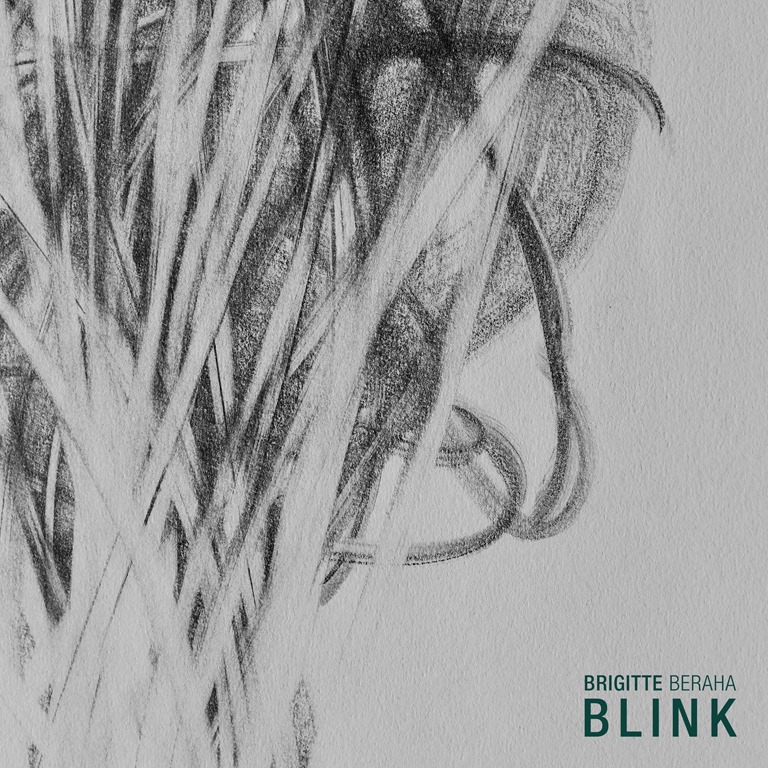
Brigitte Beraha straddles a number of these fields, and Blink is kinda smooth, kinda background, and kinda cool – not in an overtly slick, smooth, nauseatingly muso way, but very much laid back and sultry nevertheless. Her vocal is breathy and intimate at the start of the title track, which sashays between a stop start rhythm and something altogether smoother, and the sound swells and rolls through a succession of passages over its seven and a half minutes that carry you along and make you forget yourself as you’re carried beyond the confines of conventional song structures.

“I love Doors… Everything about them. Well, almost everything,” Beraha reveals on ‘Doors’, seconds before a cascade of calamitous percussion rains down onto ringing chimes. “Light… heavy… ones that resist pressure…very well-oiled ones…” Ah yes, Doors. Not The Doors. I didn’t used to like The Doors, but came to appreciate them in my mid-teens, before realising that no, they were as crap as I had originally thought. I much prefer the wooden slabs these days, particularly over veneered chipboard or MDF: they may or may not be “fascinating pieces of history,” but they tend to be functional in the main, and while they can be frustrating if they don’t close properly or keep blowing shut, they’re not self-indulgent toss.

There are other unexpected insights to be found over the course of Blink, although most are musical rather than lyrical, and tend to be fleeting flickers whereby the listener gets to peer in between the wavy lines that drift effortlessly as a piano tinkles behind quavering woodwind, and see snippets of another world.

The thirteen-minute ‘Modulo 7’ is breezy, and skips along lightly for the most part, starting sparse and strange, and through twists and turns the layers build over and across one another, a serpentine melange of parts that spread and circle in different directions, landing in precisely the terrain that people find difficult to navigate, particularly as it’s both busy and smooth at the same time – and then, abruptly, it halts, and we’re plunged into darkness, and a deep throb murmurs ominously. The pace quickens and the tension rises: the last thing you’d be expecting is pulsating dark ambience with an industrial edge in the middle of this album. The oscillating waves and echoic brass that drifts from the darkness is compelling, and in places calls to mind some of Throbbing Gristle’s exploratory works.

That it’s hard to really summarise or even reasonably convey an album that carries such contrasts with the sparse-tone challenging ‘Too Far to Hear My Singing’ skipping and swooning between moods in a moment, and it’s perhaps futile to even contemplate doing so while wrestling with the idea that some note sequences simply shouldn’t exist, while other still don’t sound like they’re possible or within the realms of music. But they do, and they are, and they’re here, woven into the complexities of an album that’s intricate yet sounds deceptively simple, leaving plenty to ponder.

AA

Blink front cover 3000 px RGB

Thanatosis – 7th May 2022

Christopher Nosnibor

Within Reach of Eventuality is the debut album by Swedish duo David Bennet & Vilhelm Bromander. Their notes on the album state that ‘Following a semi-open score, the duo is treating elements such as complex textures, non-pitched sounds, microtonality, beatings and intense pauses in an improvisatory and careful manner’.

I’m not entirely sure what that means, and I’m not certain of the meaning of the album’s title, either. It feels like it almost carries a sense of significant import, but then is equally so vague as to be almost abstract. And in a way, it’s representative of the four pieces on the album. There’s a grainy scratching flicker of extraneous noise running along in the background during ‘Part I’, like a waterfall in the distance, while in the foreground, elongated drones – atonal strings or wavering feedback – hover around the pitch of nails down a blackboard. Occasionally, more conventionally ‘orchestral’ sounds – emerge fleetingly – gentle, soberly-paced percussion, string strikes and soft woodwind, and it comes together to create a somewhat ominous atmosphere.

It’s a hushed, minimal ambience that fades out towards more sonorous drones that ebb and flow across ‘Part II’, and as the album progresses, the interplay between the tones – and indeed, atones – becomes more pronounced, and also more dissonant and consequently more challenging, as long, quivering, quavering drones rub against one another.

The structures – such as they are – become increasingly fragmented, stopping and starting, weaving and pausing. There is a sense of a certain musical intuition between the players, the rests coming at distances that have a sense of co-ordination, if only as much to confound expectation as to sit comfortably within it. In other words, Within Reach of Eventuality feels like a semi-organised chaos, and as it slowly slides towards the conclusion of the sixteen-minute fourth part, the sound thickens, the volume increases, and the atmosphere intensifies, become more uncomfortable in the process. And in this time, the meaning becomes clearer when it comes to understanding their approaching the sonic elements in a ‘careful manner’. There’s nothing remotely rushed about Within Reach of Eventuality. The notes are given space and separation, room to breathe. It all feels very considered, very restrained: it’s no improv free-for-all, there are no frenzied climaxes or blasting crescendos. Instead, they demonstrate a sharp focus on a fairly limited range of sounds and spaces, and the result is an album that has a strong cohesion.

AA

a4211091835_10

InsideOut Music – 6th May 2022

Christopher Nosnibor

There’s been a lot of beefing and bitching about ‘authentic’ indie bands and labels in circulation of late, particularly about bands who have been blasted into the collective conscious seemingly overnight and questions being asked of their ‘indie’ credibility.’ The sceptics question, ‘how can a band go from nowhere, not even a handful of local gigs, to emerging, fully-formed on a national level? Surely there must be finance and machinations behind the scenes?’ Every story is different, of course: Benefits have truly emerged – against the odds – by sheer hard work and grass-roots support via word-of-mouth promotion. The Lovely Eggs have done it 100% DIY, but it’s taken forever for them to achieve the cult status they now have that means they can sell out 50-capacity venues. Wet Leg got snapped up by a large-scale independent label early on, because it happens, just as historically bands would send a demo to a major label and get signed for big money by some A&R dude seeking to be the one who discovered the next big thing (but for every five hundred bands signed, only a handful would even release a single before being dropped). And so it was that Royal Blood weren’t quite the from-the—bottom grafters they may seem, and even Arctic Monkeys weren’t purely word of mouth viral in their ascendency, despite their legend. But is it fair to begrudge bands reaching the audience they deserve? So many great bands have failed to make an impression simply because they’ve not had the backing or exposure required to puh them up to the next echelon.

And what of labels being acquired by majors? Is that selling out? Not necessarily: it depends on the deal, and more than an independent brewery being bought up necessarily means its beer will be brewed under license elsewhere and become more supermarket piss. So InsideOut may be owned by Sony, but they’re seemingly left to do what they do as a channel for all things prog, while benefiting from major-label funding and distribution, which is a win for all concerned.

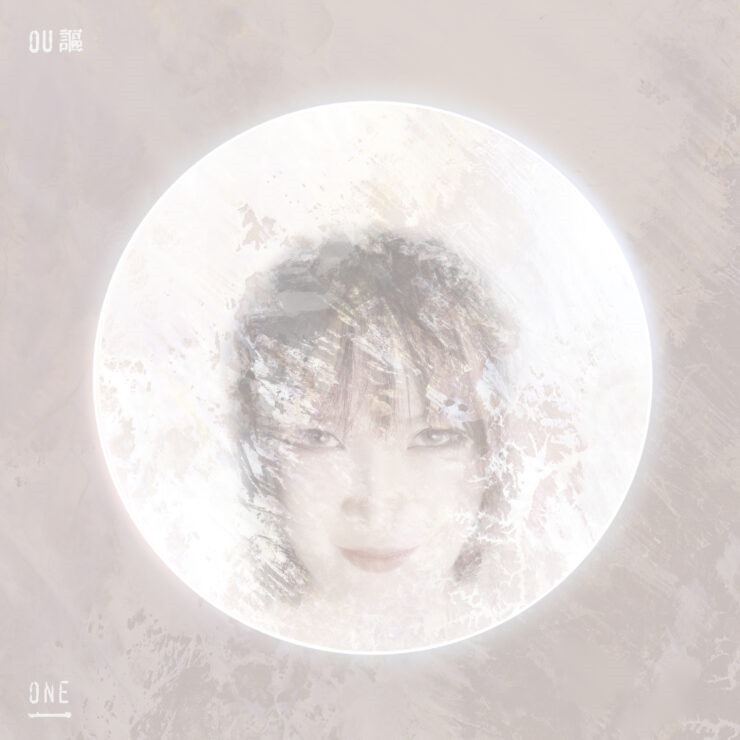
It’s highly unlikely that Sony would have picked up and given a home to the debut album from Chinese purveyors of progressive metal, OU. Not because it isn’t any good – it is – it’s just a long way from being overtly commercial, and all the better for it, of course.

One of the reasons it’s so far from having mass appeal is because it’s simply too ‘different’. ‘Travel’, the first song of the eight, has many elements of electropop and the darker side of 80s chart rock, but the vocals are bombastic, soaring, everything all at once, incorporating the quirkiness of Bjork with choral stylings and flying at times completely over the top, and the song’s unpredictable structure sees the segments shop and change in a blink. You need hooks to get on the radio, not oddball noodling shit like ‘Farewell’, where Lunn Wu sounds like she’s possessed by the spirit of Billy MacKenzie fronting Evanescence covering Captain Beefheart in a technical metal style. Or a drum ‘n’ bass take on Yes’ back catalogue. Or something. Point is, there’s a hell of a lot happening either all at once or in rapid succession, and it’s a lot to take in, and sometimes it’s too much.

It’s very much the kind of prog that blends math rock and jazz to froth up something that’s busy, to the point of being dizzying. There are some decent tunes and pleasant melodies in the mix here – but they’re in the mix with whirling chaos and some kind of cerebral explosion.

When they do slow things down and bring down the manifold layers of hyperactivity, as they do in the altogether gentler and magnificently mystical mid-album interlude, ‘Ghost’, they reveal a real knack for atmosphere and ethereality. Haunting and evocative, it’s a magnificent piece. In contrast, ‘Euphoria’ begins as a pleasant, rippling piano-led piece that quickly evolves into what sounds like about three songs all playing at once, which is difficult to assimilate.

The musicianship is outstanding, but it sometimes feels as if they’re trying too hard to showcase their technical prowess, and just because you have ideas doesn’t mean you should play them all at once. It’s good, but it’s busy, and the twangy slap bass on ‘Prejudice’ is a little flimsy in the face of the full-on crunch of ‘Light’.

One is indisputably well-realised, both in terms of composition and production. But despite it seemingly being too much in parts, some of it leaves you yearning for more.

AA

OU_One-1-740x740

Cruel Nature Records – 27th May 2022

Christopher Nosnibor

Aidan Baker – classically-trained multi-instrumentalist from Toronto (now resident in Berlin), who specialises in electric guitar works – using treated and otherwise non-conventional playing methods – is an artist who I seemingly can’t escape from. His ever-shifting styles and labels may be as difficult to keep pace with as his ever-expanding catalogue, but it seems that whoever’s releasing his work, I’m on their mailing list. This is very much a good thing, as Baker is one of those artists who, despite – or perhaps because – of being impossible to pigeonhole, never disappoints.

Baker’s second release on Cruel Nature, following 2021’s Stimmt, marks something of a shift, from what the accompanying notes ‘was big on atmospherics and abstraction’ to a sound that ‘shoots a bullet straight into the heart of the riff and explodes it, in all its scorching white-out fuzzed-up glory’.

On listening to the album’s grunt and growl guitar assault, the specific meaning of the album’s title remains unclear: ‘tenebrous’ is either obscure, or murky, or otherwise causing gloom, while ‘tenebrism’ refers to ‘a style of painting especially associated with the Italian painter Caravaggio and his followers in which most of the figures are engulfed in shadow but some are dramatically illuminated by a beam of light usually from an identifiable source’. ‘Tenebrist’ seems to lack a specific definition. So is Baker casting himself in the role of an artist whose musical compositions follow in the shadow-casting tradition of Caravaggio, or is this a nod to obscurity, darkness, gloom?

It’s perhaps an amalgamation of all of the aforementioned meanings. The title track, which comes in two parts, lifts the curtain, with a heavy overloading trudge of massive distortion, the guitar too loud of the mics recording, while the drums plod, half-buried but strangely crisp and clear, down in the mix. Unexpectedly, I’m reminded of the production and mix of Moby’s Animal Rights, although the guitar here is much less trebly, angled instead toward the mid and lower ranges, with ‘Tenebrist II’ really plunging deep into psychedelic sludge. The speakers positive crackle with the thick distortion, wrapped in swathes of feedback.

‘Turgid’ is a crackling, buzzing, math-rock explosion: it’s busy and blistering, and somewhere towards the end, the sound thickens, become denser, darker, more abrasive, culminating in a spark-flying meltdown.

The blurb describes Tenebrist as ‘low-down and heavy, and serving up ‘swathes of grunge, pummelling the senses and scattering rhythms through its maximalist energy’, but this is an understatement that only goes so far in conveying the massive sonic impact. ‘Violet Contrast’ is missing an ‘n’: driven by thumping, thunderous drums in a mist of low, slow, smoggy synth drones, it builds gradually to a monumental, percussion-driven climax over the course of a sustained crescendo of drums on drums.

‘Dramatic Illumination’ – in two parts – seems to cast a nod to Caravaggio, and this thirteen-minute suite cuts a dark sonic furrow, as clattering percussion and drones of low, low frequency feedback moan in an avant-jazz mess of calamitous noise, whereby the entire song sounds like the slow wind-down at the end of a set. You wonder when and where it will end… but it doesn’t. Finally, on ‘Dramatic Illumination II,’ the guitar glides in, but it still feels like the end.

The eight-and-a-half-minute closer ‘Chiasroscurious’ is a culmination of the album’s journey; a shuddering, juddering, wall of noise that makes you momentarily think your stereo’s fucked and your speakers are knackered with it’s massively overloading distortion that’s absolutely ruinous, swelling to a sonic tsunami that redefines devastation.

Tenebrist hurts. It’s immense and devastating on every level. The volume hurts. It’s a beast, and exactly the exercise in punishment we all need.

AA

cover

Constellation – 20th May 2022

Christopher Nosnibor

The first collaborative full-length album by Automatisme (the Canadian musician and conceptual artist William Jourdain) and Swiss field recordist, ambient musician, visual artist and writer/academic Stefan Paulus, Gap/Void is nothing if not a deep, immersive sonic experience.

While the origins of many albums are largely unremarkable and barely worthy of reading, let alone comment, Gap/Void is a strong exception, and for that reason, it feels appropriate to quote at length:

Paulus approached Jourdain with a proposal based on his field recordings made during numerous mountain expeditions in the Swiss Alps, the Caucasus, and north of the Arctic Circle—documenting stormy weather, high alpine winds, avalanches, and sounds emanating from glaciers and from the insides of crevices and caves. Paulus created ambient noisescapes from these recordings by splicing and folding them into hundreds of layers of sound: an analog to the geological strata of their geographic sources. The resulting audio mixes, compounding a multiplicity of spatio-temporal excursions, were then further encased in drones using the natural tone series (the traditional zäuerli or wordless yodels of northeastern Switzerland), the monotonic standing drone of Lamonte Young’s Dream Syndicate, and the mass chords of early 1970s Kosmische Musik as points of reference. Paulus sent these extended ambient/noise pieces to Jourdain as source material for the latter’s bespoke Automatisme techniques, where variable tempo and glitch systems forge more overt minimal techno/IDM works.

‘Hey, how about an Arctic trek?’ doesn’t really sound like a pitch for a musical collaboration, and pitched to a TV producer, it would probably have been a series with its own self-made soundtrack – although for TV they’d have probably wanted some celebrities slogging across the barren wastes lugging audio gear or something stupid.

The first of the album’s ten tracks is the twelve-minute ‘Säntis’, where an insistent and overtly synthesised loop thrums against a slow ambient swirl before an insistent uptempo kick drum beat thumps in and for a spell things go techno… before becoming derailed. The tempos are all over, the ebbs and flows run in different times and tempos and before long it becomes quite overwhelming, disorientating as the layers build… and then everything falls away and you’re left with the rumbling sound of the wind scouring the bleak, barren ground. It sounds harsh and inhospitable, it sounds dark and unsettling, and yet it feels less tense and is somehow less agitating than the preceding pulse-quickening sensory overload.

Things do settle a little as the album progresses, and by the arrival of the third track, ‘Uble Schlucht’, we’re into something of a more straightforward Krautrock style, dominated by bubbling synths and motorik grooves. But, at the same time, it’s a soundscape of shifting terrain, of snowdrifts and undulations, crags and cervices.

There’s a restlessness about Gap/Void that means it’s impossible to settle, that keeps you on edge in a way. The compositions – particularly the way the percussion is eternally evolving, in a continual flux, more a series of palpitations and panic attacks than a pulsating heartbeat – are tense, ever-moving, with a flicker-filled urgency that offers little respite.

‘Blau Schnee’ goes all out on the deep bass and low-end murkiness, the beats and bass melting into one another, while ‘Stoos’ goes ultra-sparse and is so minimal it borders on the microtonal, before an off-tempo beat bounds in and trips the wire.

The pieces on the second half of the album are rather shorter, with none over the six-minute mark, but the sound and sensation remain similar, with crackling electronics dominating and beats that poke at the innards – sometimes subtly, others less so. But it never really lets up, and while very little of Gap/Void gives even the vaguest hint of its source and origins, it does convey a certain sense off desolation, of isolation. Soon, we will all live in desert, and it will sound like this.

AA

cover Automatisme Stefan Paulus - Gap Void

Ipecac Recordings – 29th April 2022

Christopher Nosnibor

Dälek emerged in the late 90s when hip-hop was transforming in all directions. But while the Wu-Tang Clan and their offshoot projects had a level of dynamism and radicalism about them, it’s no understatement that Dälek shattered through their achievements, and if there was any debate about that, then Precipice really should settle it. It’s felt like we’ve been teetering on the edge of a precipice for a long time, and that pre-millennium tension has, over time, proven justified as the entire world careers into some kind of end-of-days chaos. If this sounds like some hysterical end-of-days paranoia panic, you’re probably not paying attention. The pandemic was just a sideshow, a distraction from global tension, climate change… Trump, Brexit, the war in Ukraine and the threat of nuclear war stepped up to levels not seen since the 80s… Are we still at the edge of the precipice, or have we just tipped – or powered, full-throttle – over it? I’m too dazed and bewildered to know, but Dälek have provided a soundtrack that conveys the sense of confusion and dislocation brought on by uncertainty and tension.

‘Lest We Forget’ is a mid-shade, mid-tempo swell of ambience that swirls around densely before ‘Boycott’ hits hard and heavy. Christ, that booming bass! That eddying noise that drones and warps! The beats! Man, the fucking beats! They’re heavy alright, and there’s no let up on ‘Decimation (Dis Nation)’.

If so much mainstream contemporary hip-hop has been overtly commercial, with Precipice, Dälek remind that hip-hop’s origins were a voice of protest, of antagonism toward the mainstream, against the government, against oppression, against suppression. N.W.A were telling it like it is with ‘Fuck Tha Police’, and fuck shit, nothing has changed thirty-four years later.

Dälek are a whole lot more subtle and less up-front and in your face in their antagonism, but they’re no less aggrieved, and no less political. This means that their impact is just as powerful, albeit in different ways, and sonically, Dälek are devastating. There’s a physicality to their music, and where the lyrics aren’t necessarily so prominent, the weight of the beats, the density of the bass and the murk of the midrange combine to create a force like colliding with a wall of breeze blocks.

‘The Harbingers’ slows things down, and it’s dark, stark, the atmosphere desperate, desolate, while ‘Devotion (when I cry the wind disappears)’ feels almost uplifting as the synths soar and their subtle, sonorous sounds swoop upwards before the seven-minute ‘A Heretic’s Inheritance’ crashes in, hard, cyclical, heavy, an urgent throbbing riff marking the intro amidst a maelstrom of scratching feedback and extraneous noise. It throbs and thrums, and this isn’t hip-hop like you get on the radio, it’s not the shit—hop of the mainstream beloved by the masses. No, this is fucking brutal, and it kicks and punches hard, repeatedly, leaving you winded, breathless, gurgling., while MC dälek repeats the mantra ‘I hold myself to high standards / I don’t give a fuck if the gods are angry’. No doubt that applies to the gods of capital. Fuck them.

The title track is weightier still, and it’s positively skull-crushing, and it goes to show that it doesn’t have to be metal to be heavy, and the final track, ‘Incite’ is stark, tense, and gloomy, rounding off an album that packs a lot of weight and tension. It’s hard to place exactly how it feels as an experience, and how it sits, musically. Precipice is the sound of dislocation, of alienation. It’s real life.

AA

12_GF_SLEEVE

Electric Valley Records – 24th June 2022

Christopher Nosnibor

In my recent review of the new album from St Michael front, I commented on German humour – in a positive way, I should add. So it was with a certain relief that I noted that BongBongBeerWizards hail from Dortmund. Don’t get me wrong, it’s a shit name for a band irrespective of where they’re from. I genuinely thought that Doom/Drone/Sludge Metal had run its course in terms of daft names and gone over the border some time ago, and that Mammoth Weed Wizard Bastard (now MWWB, presumably because they realised the name was daft rather than that they believed it was an obstacle to commercial success) had had the final word in name-generator style absurdity. And they ought to have. But then these buggers turn up with an even stupider name. But at least we can reasonably assume they know it’s a fucking stupid name and are pissing themselves over it.

BBBW may well be hampering their potential audience reach – I’ll admit, I did think twice about bothering to listen – but that would have very much been my loss, because Amprire is an instant classic as a storming example of the genre. With just three tracks and a running time of almost fifty minutes, it’s Sunn O))), it’s Earth, it’s Sleep and it’s Bong in a tectonic collision – more of a slow melt than anything likely to cause earthquakes and mudslides. That said, there are tempo changes galore on the twenty-three minute ‘Choirs & Masses’, a megalithic beast that’s got the lot: heavily reverbed vocals and choral ceremonials that echo from cavernous depths of despair while the guitars churn and growl all around, thick with dripping distortion. At times it’s a raging thrust of riffery, at others it’s a gut-churning crawl, or an ominous organ note that hovers indefinitely, and there are many changes to hold the attention over its epic duration.

‘Unison’ raises an even denser, thicker guitar-driven tempest that’s so thick and sludgy it’s suffocating, and when the vocals are absent, churns into full-on Sunn O))) territory with the gnarly guitar obliteration.

It’s hard to really say that there’s a real arc or progression on an album like this: it may be more of a case of will or projection, but I suppose whether it’s real or an illusion, the end result is the same from a listening perspective, and the perception is that things become more focused and ultimately heavier and denser over the duration of the album. And as an album, Ampire is a beast: epic, ambitious, and for the most part, the changes are well-timed if not always smooth – some of the transitions feel a little bit like stopping one riff and starting another – but it hangs together overall, and it maintains and even increases the weight right to the crushing end. Overall, it’s an admirably solid album. Still an awful band name, though.

AA

a1363458322_10