Archive for the ‘Albums’ Category

Christopher Nosnibor

I get a lot of weird shit come my way. I guess it’s to be expected: I review a fair amount of weird shit and it just snowballs: weird shit finds me. And this is very much weird shit. Despite some serious deliberation, I can’t decide where the emphasis lies in that statement.

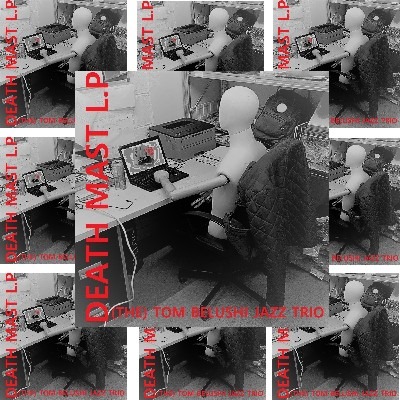
Details about the artist or the release are practically non-existent, but it doesn’t take too much digging to establish that the Tom Belushi Jazz Trio aren’t a trio and they don’t play jazz.

Having released an EP (also entitled Death Mast) and deleted it almost instantaneously, Tom Belushi Jazz Trio seem determined to render themselves as evasive frustratingly obscure as is conceivably possible. But this is clearly not simply a musical project, so much as an exercise in postmodernism that revels in ephemerality. With CD copies of this release being limited to single figures, I’m reminded of various crackers projects by Bill Drummond and The KLF, among others, whereby the objective seems to be to create an objet d’art that’s so scarce it’s beyond reach even before it’s released, essentially only existing in legend.

Slapping synths, gloopy stuttering beats, warping irregularities and groaning keys redefine the sound, along with snippets of robotic, autotuned vocals. Oriental motifs are dominant in this instrumental album’s ten exploratory tracks, which appear to be largely AI in origin. Because yes, it’s taking over the world. Think you can hide or linger on the peripheries now? You’re simply deluding yourself.

There are some nice sounds – and some naff ones – all balled together in an eclectic hotchpotch of ersatz electronic collaging. ‘Traitor’s Gate’ is a droning shanty that’s actually got human vocals; it’s woozy, disorientating in an uncanny sort of a way.

The titles are daft, absurdist, Dadaist or abstract, and littered with references, many of which are obscure – ‘Luke Haines. I Have Your Hat’; ‘No Mark Wynn’;(a particularly cheesy and overly synthetic slice of r ‘n’ b); ‘Stairwell Crooks Shutterstock Dust Jacket’ but ultimately seem to present as little true meaning as the music itself (and I can’t ever recall having experienced any dilemmas over purchasing avocados).

Death Mast is one of those albums that was probably more fun to produce thana it is to listen to. It does have considerable novelty value, and it does have lots of ideas, but few seem to be explored in any real depth or fully realised, and as such, the main idea seems to be the concept for the creative process – or should that be ‘creative’ process?- rather than the end product. But with the ideas and even the passages within the tracks being as fleeting and as ephemeral and impossible to locate as copies of the album itself, what are we really left with? Ultimately, Death Mast presents more questions than answers, a point of discussion more than a musical project. But, if there is one conclusion we can draw from this it’s that there is no need to worry that AI will bring about the end of music as we know it. At least, not this week. Welcome to the post-postmodern age.

AA
54d90880-c561-48af-aa9e-fda70c47391e_thumb_400

Avalanche Recordings – 24th March 2023

Christopher Nosnibor

believe anything, believe everything, the follow-up to LEARN THE HARD WAY, released in August 2022, is the second album from the eternally-prolific Godflesh founder Justin Broadrick aka JK Flesh under EXIT ELECTRONICS, and it is a monster. Predominantly percussion and otherwise beat-free, it’s an example of the most primitive electronic industrial noise and pounds hard at every part of your being in the most punishing and relentless of fashions. That isn’t to say it’s arrhythmic: the tracks are built around the rhythms that emerge from repetition and the way noise surges together to create form.

The capitalisation of the titles is jarring enough for a sensitive pedant like me, but the presentation is perfect for the content. believe anything, believe everything is very much an album that SHOUTS IN YOUR FACE in all capitals, with everything cranked up to overload. It’s described as ‘INDUSTRIAL MUSIC’ and it seriously is.

There’s nothing about believe anything, believe everything that’s overtly or specifically political – there are not words, and the titles, capitalised as they are, are suitably abstract in their intent. And yet believe anything, believe everything does feel political, and it feels like a discourse about being hoodwinked, about being controlled, manipulated. About differences of opinion, about division, and about everything being fucked up. Sure, I may be projecting and seeing solace in that projection, but as of an in itself, the mangled racket of believe anything, believe everything offers no solace superficially, because, quite frankly, it hurts. And this is why believe anything, believe everything feels like the soundtrack to the soundtrack to the now: we’re persistently lied to, taken for fools, subject to increasingly draconian laws and heightened surveillance while living standards drop by the day and inflation soars exponentially.

believe anything, believe everything articulates something beyond words about the bleak times we find ourselves in And still, STILL, while the fucking cunts still treat us like pricks, and rob us blind while milking the taxpayers (not the millionaire tax avoiders) to fund private interests), people back these fuckers, the Tories here in the UK and fucking Trump in the US.

Christ: we need music like this to fill our heads and wipe away the pain, albeit briefly.

Each track locks into a groove and gouges away at it with minimal variation for a relentless four or five minutes. Its power lies in its focus on force, and the impact isn’t due to dynamic range or structure, but nonstop bludgeoning.

Grinding out a repetitive pulsation, ‘YOUR LOT’ is so dense and distorted it’s both nausea and headache-inducing. The sound gets murkier and nastier and more degraded as the track’s five and a half minutes progresses. The bass blasts hard as deep on ‘HOW YOU SEE IT, IS NOT HOW I SEE IT’, before the speaker-tearing boom of ‘PISSTAKE’. It may be an illusion, but the experience is that it simply gets darker, denser, nastier and more overloafing as it progresses.

‘ACT FIRST, THINK LAST’ offers some slight variety, with a crashing, crushing rhythm and gouging synth sounds that sound like your soul being sicked down a sinkhole the size of a continent. ‘KNEE JERKS’ does go big on the beats, and they kick you in the midriff and knock the air from your body, leaving you gasping and weak. It’s a mangled churn, a thudding chud like when a laundry load had lumped together and is banging from side to side in the spin cycle, only if you’ve hearing it with your ear pressed to the washing machine door and it’s vibrating a clog of earwax you just can’t shift.

‘WHO’S YOUR GOD’ is a massive ear-blasting burst of pulsating distortion, and things really do get nasty and gnarly again, and at the abrupt halt of the last track, ‘HOW WE LOVE TO MOCK’, you’re left feeling drained, battered.

There is no response to an album like this: you just feel fortunate to have made it to the end. You’re left feeling drained and exhausted as you stare at the ceiling.

Thrill Jockey – 24th March 2023

Christopher Nosnibor

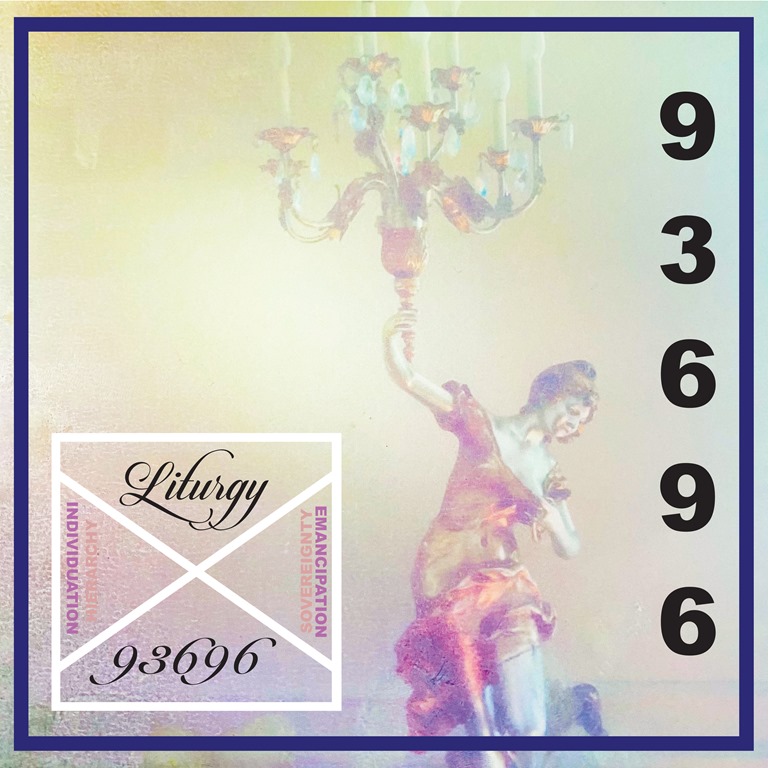
Wikipedia, and most other sources for that matter, will tell you that ‘Liturgy is an American black metal band from Brooklyn, New York’. The band’s own bio, which explains how their brand of ‘“transcendental black metal” exists in the space between metal, experimental, classical music and sacred ritual’ and that ‘The band is simultaneously a platform for fine art and theology’ is rather more illuminating in explaining how they have vastly expanded their horizons and those of the genre to create a form which is truly unique.

93696 is very much a concept-based work, which is best explained by quoting: ‘93696 is a number derived from the religions of Christianity and Thelema, a numerological representation of heaven, or a new eon for civilization. Hunt-Hendrix composed the album as an exploration of eschatological possibility divided by the four “laws” that govern her own interpretation of heaven, “Haelegen”: Sovereignty, Hierarchy, Emancipation, and Individuation. These laws constitute the four movements of 93696 which act as dramas all their own within the framework of the record.’

And what a record. ‘Epic’ barely touches it. It’s immense in every way, not least of all duration, with fifteen tracks spanning the best part of an hour and a half, this is expansive on a scale akin to SWANS (who they’ve previously supported). It’s also every bit as dynamically charged as latter-day SWANS albums, with tracks anything up to a quarter of an hour in length powering though a succession of crescendos, via sweeping choral soundscapes.

‘Djeennaration’ packs everything in early, presenting eight-and-a-half minutes of frenetic fretwork and thunderous percussion, over which vocals switch from angelic to demonic and back in the blast of a beat. It’s powerful, and quite bewildering in both its force and cinematic scope.

Done differently, this could feel overlong and pretentious, but the execution is so precise and the great ambition so focused on realisation that everything feels remarkably organic and despite making gigantic leaps between passages, changing tempo and tone here, there, an everywhere, it flows. Shuddering slabs of power chords that crunch like quartz while blasts off pure noise tear the air, but as ‘Haelegen II’ shows, with the incorporation of piano, there’s so much more texture and detail than plan fast-as-fuck fret attacks – then, from out of nowhere, things take a turn into folksy post-rock.

The savage squall of ‘Before I Knew the Truth’, released as a single a few weeks ago distils the potent force of the entire album into four and a half flooring minutes. There are some brief – and strange – moments of respite, such as the quavering woodwind tones of the brief interlude that is ‘Red Crown II’ and the delicate keys of ‘Angel of Emancipation’, and they’re most necessary, as the majority of 93696 is a force beyond nature.

The fifteen-minute title track is nothing short of an absolute monster, and as much as it’s n obliterative squally, it’s also a dynamic and wide-ranging sonic and cerebral experience, culminating in a vast orchestral sweep that’s nothing short of stunning.

This does feel very much like an absolute pinnacle and a definitive and exhaustive – and, it has to be said, exhausting – statement. Transcendental indeed.

AA

146782

Thanatosis produktion – 24th March 2023

Christopher Nosnibor

Having frothed with enthusiasm over Mammock not so long ago, I was particularly thrilled to discover Organ Donor, a Swedish/Greek outfit featuring members of Viagra Boys, Grismask, VÖ, Mammock, Angles, Fire! Orchestra, Aurora Ensemble, CBVB and the Mute. Admittedly, I’d expected something more guitar-driven and noisy in the rock sense, but expectations are best when confounded.

Malplacé evolved through improvisation, resulting in what they describe as ‘6 diverse yet coherent tracks, spanning from instrumental kraut, to mystic themes perhaps reminiscent of John Lurie or Loren Connors, to dark, minimal pulsating improv and punkish, full-on, noise outbursts.’ Diversity and coherence tend not to converge too commonly, and in truth tend to sit at opposite ends of the spectrum.

As the rippling vibes and subtly trilling horns of the abstract jazzy post-rock of the first track, ‘A Sleeping Beauty’ meander their way from the speakers, I’m struck by just how far a cry this is from Mammock and The Viagra Boys, and, on reflection, this is something to be pleased about. Why have a collaborative side project that sounds like your main project? It’s like having a hobby that’s the same as your dayjob. You can insert your own example here, because, well, I can’t help but feel that too labour  the point with explicit examples would be crass.

‘Touch’ spills jazz juices across a chiming guitar that jangles over an insistent yet mellow groove, where post-rock meets psychedelia and krautrock. Sometimes, for a moment, I find myself wishing there was slightly less sax, but then, again, the overloading nature of the jazzery is what makes this what it is, and things get really scratchy and discordant on the ten-minute ‘Stemless’. This is one of those freeform pieces that hurts the brain. Everything jars and flits, and toots and parps, squeaks and squawks and twangs and pings, like rubber bands being stretched and plucked across pans and bin lids, bowed notes bend, drone and grind, and it sounds more like a scrap than a song. It groans and wheezes and stutters and heaves, to the point that it’s enough to induce motion sickness.

‘A Sleepwalking Beauty’ provides a welcome moment of rest and tranquillity, before ‘Power Tools’ goes all out on the avant-jazz noise frenzy trip. It’s noisy, noisy, and noisy, a wild chaotic and cacophonous blast and an instant headache which feels a lot longer than a minute and a half.

In contrast, ‘Sci Fi Marmots’ is slow and smoky, an odd yet sedative piece where everything melts away into a haze. I’m tired, and need sleep. I’m all the more tired after experiencing the bind-bending chaos of Malplacé, but have to hand it to the guys in Organ Donor for creating an album that has the capacity to both exhilarate and drain the very life through aural excess. It’s a significant achievement.

AA

THTD4_art

Ici d’ailleurs – 31st March 2023

Christopher Nosnibor

Matt Elliott, since breaking out from the Third Eye Blind moniker, has maintained a fairly steady flow of output, with an album every three years or so, with this being his ninth.

Farewell To All We Know (2020) and The Calm Before (2016) were just the most recent, with the former bring a dark, lugubrious affair: the title carried connotations of facing finality, something that doesn’t really sit comfortably in Western culture outside of the realms of art – and it seems that death has become an even greater taboo in recent years, with anything which references death, and particularly suicide – requiring a trigger warning.

Given that suicide is the single most common cause of death in males under the age of forty-five in the UK and a high on the tables in the US and many other countries, and that death is the sole inevitability in life, I feel it’s something to be faced up to, not shied away from. It may be a contentious view, but we don’t get to choose whether to leave the room in real life, so why in art? Perhaps bringing these subjects out into the open – in the same way as mental health has finally become accepted as being something we can discuss – would render them less triggering. Herein lies something of a contradiction, in that we now discuss mental health, but not the effects or consequences. And have we really broken the barrier on mental heath? I often hear or see people saying they’re not having a good day or week because ‘mental health’. It’s progress, in that historically people would have rather said they had the shits than were struggling – but there’s further to go, especially if we’re to be sure that ‘mental health’ doesn’t become the new ‘upset stomach’ that gets a pass from disclosing what’s really wrong. Not because prying is to be encouraged, but there’s talking and there’s talking, and if we’re really going to talk about mental health, then shutting a conversation down by using the phrase isn’t going to make that happen.

The press release suggests that Farewell To All We Know was ‘a harbinger of the collapsological crisis that was COVID 19. What can be built when everything is down, when everything has crumbled, ideals and beliefs, a sense of commonality and community?’ Of the new album, it poses further questions: ‘What is left when you are without words? What is left? Death, perhaps, but also life… What is left? A form of awe that dulls? An enthusiasm that dries up? A curiosity that no longer makes sense?’

As the title suggests, with The End Of Days, Elliott once again has his focus placed firmly on finality. And just fifteen minutes surveying the news suggests that we really are living at the end of days: plague, natural disasters… it’s not a question of if, but when, and how? Will climate change bring about the end of days for humanity, or will we wipe ourselves out with nuclear apocalypse before we reach that point?

‘All life’s wasted time’, he intimates on the title track which opens this delicate six-song suite – a sparse acoustic folk tune that has a lilting quality that’s easy on the ear. It sounds like he could be singing this sitting in a rocking chair by the fire, but brings a tear to the eye as he articulates the parental worries many of us – myself most acutely – feel.

And even all the smiles on children’s faces bring you pain

When you think of what they’ll face

And if they’ll even come of age

A world resigned to flame

Because we’ve burned it all away

You – I – feel so helpless. Turning down the heating, turning off the lights – you tell yourself you’re saving the environment, but you’re only making your life more difficult while industrial complexes around the globe churn out more pollution in a minute than any household will in a lifetime.

‘We need to wind time back to the eighteenth century before the industrial revolution and show them now’, my daughter told me over dinner this evening. She’s eleven, and she’s right, and I feel the anguish flow through me as the horns swell in a rising tide of warped brass atop the flamenco guitar in the closing minutes of this ten-minute epic.

It’s not the last, either. ‘Healing A Wound Will Often Begin with a Bruise’ is over eight minutes in length, and ‘Flowers for Bea’ is an immense twelve and a half. ‘Song of Consolation’ sits between folk and neoclassical and is achingly beautiful, but offers little consolation. Because what consolation is there?

Incorporating jazz and baroque, The End Of Days feels less darkly oppressive than its predecessor, sliding perhaps into bleak resignation to provide the soundtrack to the drinks in the basement bar on the last night on earth. Yes, tonight we’re going to party like it’s goodbye forever. This is the album to which to clink glasses and hug and cry and share final gratitude for those who have been there for us, made our lives worth living as we swallow hard and brace ourselves for the inevitable.

AA

IDA158_front

Mille Plateaux – 14th April 2023

Christopher Nosnibor

ID[entità] is a collaborative work between composer, performer, sound and multimedia artist Gianluca Iadema and Swiss vocalist, improviser-composer Franziska Baumann, which developed over the span of 2017 to 2021, and is as much a work of decomposition and deconstruction and reassamblage as anything.

We’re deep into the territory of artistic concept and execution here, as the accompanying notes detail how ‘the Italian artist composes for the electronic and the acoustic voice, searching for similarities and contrasts that take styles of glitch, techno, and pop music to the extreme. Far from melody and accompaniment, he composes an oscillating interplay of the acoustic and the electronic environment, morphing and sculpting the two realms as equal sound materials. Rarefied moments, melodic outbursts reminiscent of Renaissance vocal music, and rave rhythms give rise to sonic textures embedded in a minimalist framework. The compositions are conceived in “spaces” rather than linear development, although an “ergodic” narrative is present. With a cubist approach, the spatially sculpted sounds transform into intimate moments and vice versa, thus allowing atmospheres to separate identity and non-identity. Born as a cycle of compositions for electronic voice.’

Cubism in music is something I have never considered, let alone encountered, and so I am – naturally – curious to discover what the album’s ten pieces would contain.

Strange, strange sound it what they contain. This is perhaps one of the oddest voice-orientated works I’ve heard since Mike Patton’s Adult Themes for Voice. Like Patton, Iadema showcases just how strange, unsettling, and unnatural the human voice can sound. That most familiar of things can also prove to be the most uncanny when its familiarity is twisted out of shape in any way. Against straggling strains of digital glitchery and fear-chord drones, we gets breathless utterances, muttering mumbles and off-key scales.

I hear eerie discord and dissonance; I hear voices bent out of shape to create forms that aren’t natural or humanly achievable without manipulation – but being human voices, they resonate subconsciously as belonging within the psyche. I hear stuttering glitches looped into helicopter rotors and panic attacks and sultry, soporific drones. I feel choral exultations and moments of contemplative spirituality. I hear uncertainty and a sense of unease. I hear scrambled bleeps and fluttering microtones, snippets in foreign tongues, a sensation akin to Wiilliam Burroughs’ cut-ups whereby words, sounds and images collage together to portray the world as we experience it, consciously and subconsciously, and simultaneously rather than via chronologically-sequenced narrative. There’s trilling and milling, humming and murmuring, and a sense of something just beyond reach, beyond knowledge, beyond perception, and a sense that something is somehow wrong. I may not hear Cubism, but then perhaps I’m not sure what I’m listening for, but I do hear fragmentation, sonic manipulation and all kinds of jarring effects.

With the majority of the tracks stretching beyond the five-minute mark, ID[entità] is a long album, and one which despite being quite calm and gentle in tone, with protracted ambient stretches hovering in an unsettling mist.

It’s a unique and visionary work which pushes multiple boundaries at the same time. ID[entità] is not always an easy listen and it’s by no means immediate, but it is accomplished and utterly compelling.

MP59_art

24th February 2023

Christopher Nosnibor

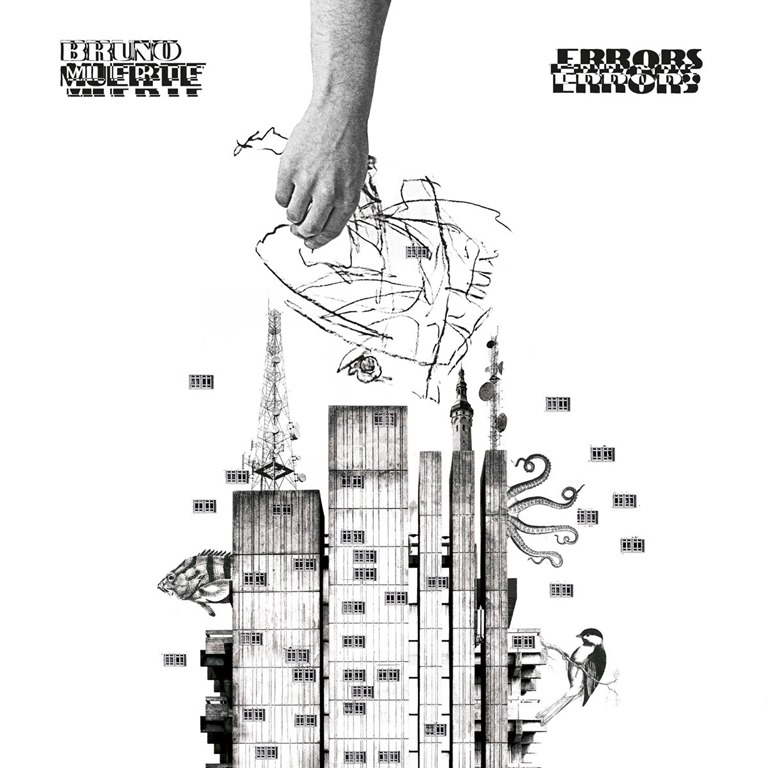
This Oxford based act describe themselves as ‘Techno Western New Wave Electroclash’ and ‘Synth lovers’. Unfortunately for me, this description conjures images of moustachioed hipsters circa 2009. The pair may well, be, choosing to keep their mugs off the record, and I’m all too aware of just how the field of instrumental electronic music is very much the domain of middle-class white guys tinkering with expensive toys. This lack of cultural diversity may be a leading factor in there being so much sameness stylistically.

Sameness isn’t really a criticism one could level at this album, for while it does assimilate many common tropes of contemporary synthesizer music – in that its inspirations are often retro in origin – stylistically, Errors offers a broad range.

‘Science of Errors’ is a punchy piece of electropop with some big, bold proggy sections that surge along in a rush, and it’s a strong start. ‘Conga Cop’ is very much a tune of 80s TV show vintage style. It’s extremely busy in terms of arrangement, stabby synths shooting over a hectic rhythm and samples flying around there and there, before going altogether more minimal on ‘Phil D’Ophear’, a much darker slice of techno where the dense bass dominates. Elsewhere, ‘Wibli Wobli’ packs a driving, energetic groove.

Errors is big on ideas: it’s positively bursting with them, and consequently, there is a lot happening, sometimes, if not all at the same time, then densely packed together, to the point that sometimes it feels as if there’s too much happening. And not all of the ideas necessarily work perfectly: the Clangers whistling over a microtonal waltz on ‘Satomi’ is novel and fun, but little more, but it’s Bruno Muerte’s willingness to experiment and the mix-and-shake approach to making music that’s a large part of the album’s appeal.

As they write in the accompanying notes, ‘One of the basic rules of the universe is that nothing is perfect. Perfection simply doesn’t exist without errors.’ It’s refreshing to hear: Errors, then, is not a quest for perfection, but a celebration of imperfection and the joy of being creative. And ultimately, it’s joy that Errors brings.

AA

a2776445249_10

17th March 2023

Christopher Nosnibor

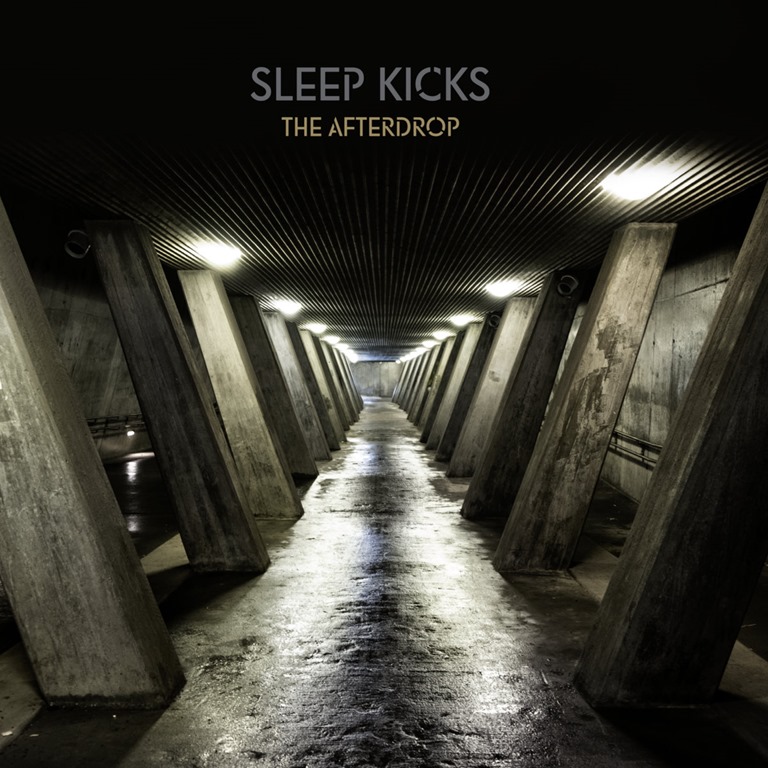
In the feast or famine equation, there’s rarely a true drought when it comes to quality new releases, but this month really does seem to be one for an eye-popping proliferation, and the arrival of Sleep Kicks’ debut album after a succession of singles and EPs is a most welcome arrival along them.

Having previously showcased – and raved about – previous releases, it’s a joy to see The Afterdrop finally land. Most of those previous singles – ‘My On Demon’, ‘No Chains’, ‘Hall of Shame’, ‘Neptune’’, and, most recently, ‘Words in Vain’ are featured here, along with a different recording of ‘Exodus’ from the one that appeared on the Summer EP back in July 2020. It’s marked as an edit, which makes me curious to hear the full-length version performed as a full band.

Having frothed and foamed exuberantly about the band’s melding of dark post-punk with soaring pop aspects with each single release, I’m running low on my reserve of superlatives. But there are four new songs here, and then there’s also the question of how it hangs as an album – whether or not if feels like a padded-out singles compilation or an album proper.

I suppose the first thing to point out is that while all of their previous releases have been digital-only, The Afterdrop is receiving a vinyl pressing, meaning the songs finally feel solid and tangible in a way they perhaps didn’t before, and with the atmospheric instrumental opener, ‘Reflections’ lifting the curtain on the ten-track set, it does very much feel like an album rather than simply a collection of songs. It’s dark and spacious, with robotic drumming driving it along.

It’s then straight into the vaguely gothy post-punk of ‘Words in Vain’, with its stonking bass and fractal guitars, a tune that on its own should have earned the band global domination on a par with Editors and Interpol. ‘Neptune’ is synthier, but its poppiness is countered by dark undercurrents, and it’s a rush, as is ‘Exodous’ – a thunderous bass and brittle guitar that’s pure Interpol circa Turn on the Bright Lights defining the side.

In previous reviews, I’ve also likened Sleep Kicks to fellow Norwegians A-Ha: some of this is down to Terje Kleven’s vocal qualities – rich, varied, and with a knack for inflection, but equally, they’re a band I’ve always returned to because there’s there’s a darkness to their pop that I feel has been largely overlooked, and it’s this amalgamation of darkness with a pop sensibility that is what I’m driving at with Sleep Kicks.

‘Silencer’ – another one of the new songs – is slower, sparser, but brims with brooding and emotional resonance, and, once again, it’s magnificently crafted. This is true of every one of this album’s ten tracks. ‘Orbiting’, another song which hasn’t been released before, is bittersweet bliss and again revises the 80s spirit with a brooding yet accessible slice of guitar-driven desolation.

Again, in a just world, ‘No Chains’ would have been their ‘Pompeii’ and would have seen Sleep Kicks on the same pegging as Bastille – again, there are similarities, but the fact is that Sleep Kicks are by far the better band. It’s an unjust world where it comes down to label backing and pluggers. But then, we know it’s an unjust world, and the music industry sucks. But there’s a world outside the industry, and ‘Hall of Shame’ with its choppy guitars and snaking bass runs is as good a song as you’ll hear all year. But then, so is ‘My Own Demon’. In fact, The Afterdrop is an album without fault, and as good an album as you’ll hear all year, or ever.

a3769329865_10

Dret Skivor – 3rd March 2023

Christopher Nosnibor

Fern’s Deformed is appropriately titled: this some mangled shit. From the slow, deliberate, rolling grooves that boom and bow through snarled up noise, while against it, crisp, crunching beats thump and stutter, Fern keeps things interesting and innovative, but more than anything, keeps it uncomfortable.

Deformed sits within that bracket of dark ambient that’s deeply dark, but not entirely ambient, and doesn’t for a second let you settle into it, instead twisting and squirming awkwardly, refusing to solidify or confirm to any one fork of style.

‘Intro’, the minute-long splurge of wibbly dissonance set the scene nicely for the following twenty-five minutes of oddball electronica. The liner notes offer ‘Respect to Portishead, aphex twin, faster katt and Mindacid for inspiration (samples)’.

The majority of the album’s ten tracks are brief sonic snippets, most being well under three minutes in duration, and in many respects, Deformed feels more like a palette sampler than a fully realised work – although that is by no means a failing, as it gives the album an immediacy that further evolution would likely dilute.

It’s four tracks in that Deformed really starts to take (strange, twisted, unexpected and indefinable) shape: ‘Greyhats’, a live recording – it’s unclear if it’s live in the studio or soundboard, but there’s no crowd noise and it fades at the end – is aggressive, dark, and difficult.

Immediately after, ‘Heaven in my hands’ is a murky mangled mess of distortion and mid-range, drums overloaded and crackling in a grey blurry sonic haze, and ‘Give Your Soul Away’ is a skull-pounding beat-driven assault, and the samples pile in thick and fast. ‘Porthole’ is dense, robotic, repetitive, and while dance elements are a defining feature of the album’s style, this is by no means a dance album: it’s stark, it’s bleak, detached, and in places, unsettling.

Deformed is many things: easy, predictable, comfortable, are not among them.

AA

a0661217700_10