Archive for the ‘Albums’ Category

6th October 2023

Christopher Nosnibor

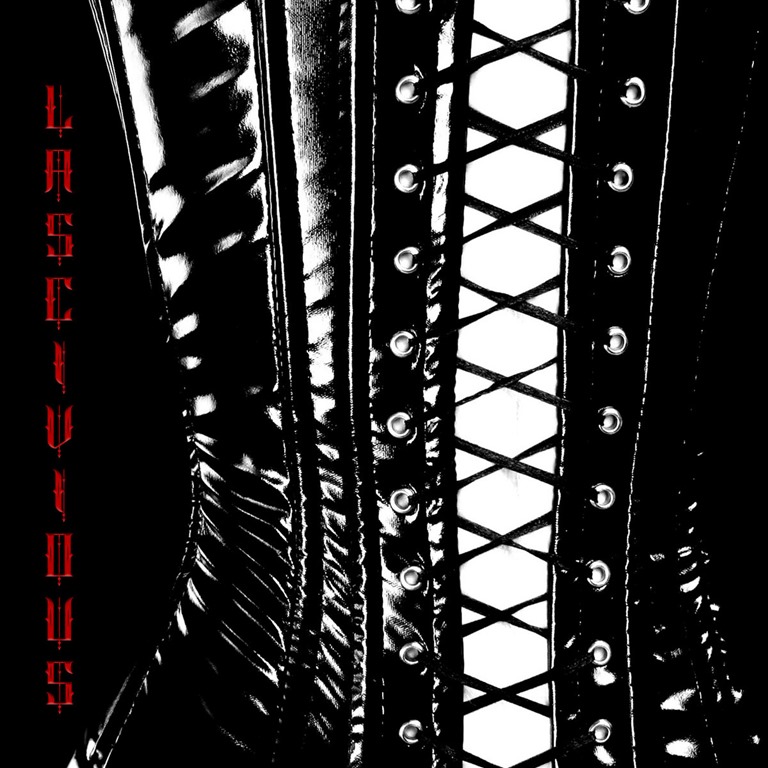
Lascivious is Black Angel’s fifth album, which promises the band’s ‘hybrid Gothic Rock sound and taking flavors from their 80’s predecessors while adding new tones… retaining the essential gothic elements that drive his inspiration as originally provided by the likes of Siouxsie and the Banshees, Bauhaus, The Cult & Sisters of Mercy.’

Certainly, Lascivious is steeped in the stylistic tropes of the 80s, not least of all the thick four-four bass grooves and smashing snare drum which both dominates and defines the sound. But the first thing that strikes me, as a longstanding fan of that golden era in the 80s (I was too young for the start of it all but when The Sisters and The Mission started breaking the Top 40 singles charts between 86 and 88, it was a revelation which set me on a lifelong journey) is that the ‘new tones’ very much involve contemporary production. That is to say, it’s just that much cleaner and fuller, more polished than the true ‘vintage’ sound.

Ah, but they know the features of yesteryear. It’s been a while since I’ve heard a fadeout, but that’s just what happens on the album’s first track, ‘Killer’ – and it’s not the last time on the album they employ it either.

The drum intro on ‘Black Velvet Amphetamine’ is an on-point lift of the snare sound of the Sisters’ cover of ‘Gimme Shelter’, and many of the sounds can be pinpointed as having a certain root or origin. In fact, five seconds into the title track, it’s clear that the drums are lifted from ‘Heartland’, although it also leans on the Sisters’ cover of ‘Emma’ by Hot Chocolate, and it’s clear they’ve been raiding the early Sisters back catalogue – and fair play. The Sisters achieved some incredible sounds with minimal means, with ‘Temple of Love’ marking their first step up from an eight-track ‘studio’ in the run-down northern seaside town of Bridlington.

But if the drums and guitar work make big nods to The Sisters, Corey Landis’ croon is closer to that of Wayne Hussey than the cavernous baritone of Andrew Eldritch. One of the divisions between fan-camps when Hussey and Adams went and formed The Mission – and a source of tension when Hussey began offering songs with lyrics. I write as a fan of the Mission when I say that while they work in the songs, Hussey’s lyrics are more cliché patchworks than literary masterpieces (Eldritch played with and perverted cliché and did so poetically), and one problem with bands who followed in the wake (excuse the pun) of both The Sisters and The Mission is that they’ve had a tendency to ape the lyrical substance without really adding anything creatively unique

‘She’s My Suicide’ slips into more generic rock with a gothy edge, and makes me think of the bands who emerged following the cult but had more of a hair rock leaning, reminding me why despite all my teen goth credentials, I was pretty picky but then, right at the end, they pull out a really gritty, spindly guitar break that’s magnificent, reminding me of The March Violets. And this is a fair summary of the album as a whole: some really good bits, some solid songs, but some rather weak and generic aspects which hold it back in the bracket of ‘decent’ rather than ‘awesome’.

‘Bite It’ bristles with spiky guitars and a low-slung groove, and is perhaps the first song that seems to really fit with the sleaze implied by the album’s title, and ‘Want’ also achieves this, but suffers from trying too hard to be ‘More’. It’s a fair stab at bombast, but it’s hard to compete with the Sisters, especially when they’ve got Jim Steinman on hand, plus a whole host of backing singers and a monster budget for state of the art studio time. I’m sorry I’m not more undemanding. Halfway through ‘Dirty Little Secret’, I realise its chords are based on Motörhead’s ‘Ace of Spades’, and afford myself a small chuckle.

The slower, ‘Ticking of the Clock’ is driven by a crunchy, flangy bass that’s pure early Cure, and is one of the album’s real standouts, by daring to deviate from any obvious formula, and in fairness, the title track is low-slung, sleazy, and grinds out a dark seduction with style.

Sonically, Lascivious is more than solid, and Black Angel clearly know what their doing: there’s no question they have their sound and style absolutely nailed – and consequently, with this set of solid songs, the album will go down well with existing fans and a huge chunk of the goth crowd, and deservedly so.

AA
a3733231510_10

Ipecac Recordings – 13 October 2023

Christopher Nosnibor

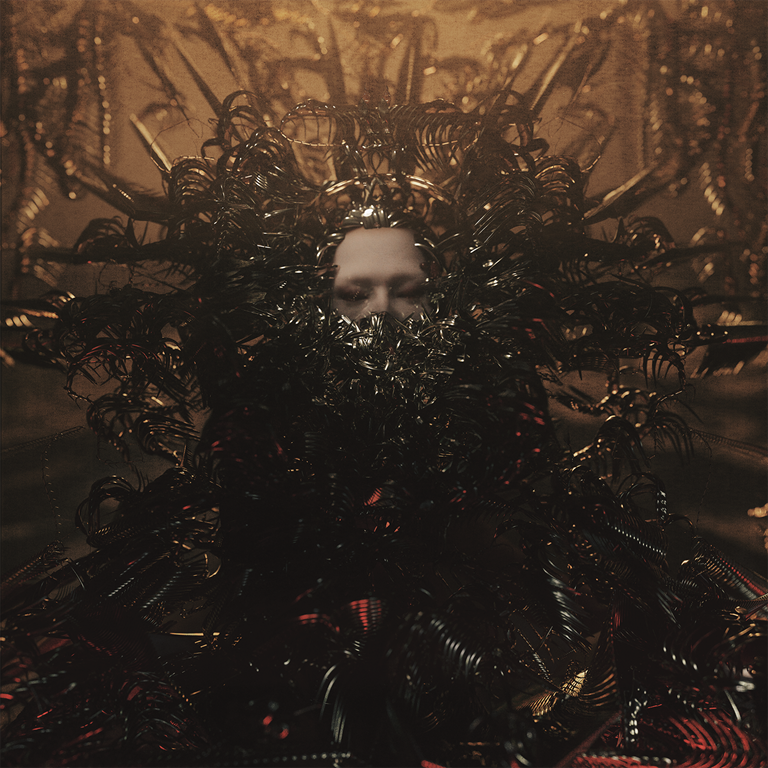
Having recently aired the video for the last single cut from Venera’s eponymous debut, in the form of ‘Ochre’ featuring HEALTH, I was feeling energised to explore their eponymous debut.

As their bio outlines, “Venera enigmatically launched their debut single ‘Swarm’ in July. No information, no pre-sale, simply the three-minute single released in tandem with a mysterious screed and a pulsating black-and-white video directed by EFFIXX.”

Some of the excitement is dulled by the unveiling which followed, as the band subsequently revealed themselves as James Shaffer (Korn) and Atlanta-based composer/filmmaker, Chris Hunt. Why? Not because I’m down on Korn: they’re an act I’ve never really felt any gravitation towards. Wrong place, wrong time. But essentially Venera are another supergroup / side project for a major act, which means they’ve already got a head start which places them head, shoulders, and torso above pretty much any other ‘new’ band. What’s more, several guests join Hunt and Shaffer on Venera. Drummer Deantoni Parks (Mars Volta, John Cale) plays on ‘Erosion’ and ‘Disintegration,’ HEALTH’s Jacob Duzsik contributes vocals on ‘Ochre’ and Alain Johannes lends his voice to ‘Triangle.’ The album was self-produced.

Should it matter? Probably not: I judge any music on its own merits, but I am aware that music doesn’t necessarily reach an audience or receive exposure based on the same criteria.

But here we are, and on merit alone, Venera is a strong album: dark, atmospheric, electronic and often beat-driven, but with layers of noise. It couldn’t be much further from Korn, stylistically. The album has range, too: ‘Erosion’ is like minimalist drum ‘n’ bass contrasts powerfully with the surging, enigmatic ethereality of ‘Ochre’. ‘Triangles’ finds Alain Johannes deliver a magnificent vocal that sits somewhere between Scott walker and David Bowie, crooning and emoting over a slow, dense backing of thick but dispassionate 80s synths reminiscent of The Sisters of Mercy’s Floodland. Clocking in at under four minutes, it feels as if it’s only just beginning to take form – not so much unfinished, but it just could do with there being… More.

‘Disintegration’ transitions between bombastic doom and frenzied blasts of noise, an enigmatic pancultural implosion that hints at Eastern influences, but also melts in droning sonorous low-end synths, and percussion that sounds like a brutal attack. In the context of this week’s world news, it simply makes me feel tense, but it’s but a brief passage before it shifts to clattering jazz-inspired energy rattling around amongst the drift. ‘Holograms’, featuring VOWWS is perhaps the album’s biggest surprise: a slow-burning ethereal and dreamy trip-hop song with a vaguely industrial / gothic edge, it’s supremely well-realised and has immense radio potential.

As a critic, declaring something to be ‘good’ or ‘not good’ feels somewhat redundant, like a teacher leaving comments on a piece of homework. Technically, this is good. Sonically, it’s good. The songs – where there are songs – are good: atmospheric, evocative, haunting – while the same is true of the instrumental passages. Venera succeeds sonically, and as a significant departure for its contributors. And perhaps, over time, I shall come to appreciate it more personally. But first impressions are conflicted: I like it, I like what it does, but I simply don’t feel an emotional connection, there’s nothing that elicits a physical pull in my chest or in my gut.

AA

746105

Kranky – 13th October 2023

Christopher Nosnibor

One thing I’ve learned as I’ve grown older (apart from the fact you never grow younger, despite the fact that I was amused to recently stumble upon the ‘people also ask’ Google question prompt ‘Is Benjamin Button a true story?’), is that a diversified appreciation of music is particularly useful as you come to recognise the diversified nuances of mood. Adherents to a single genre: how do they deal? How do they find the right soundtrack?

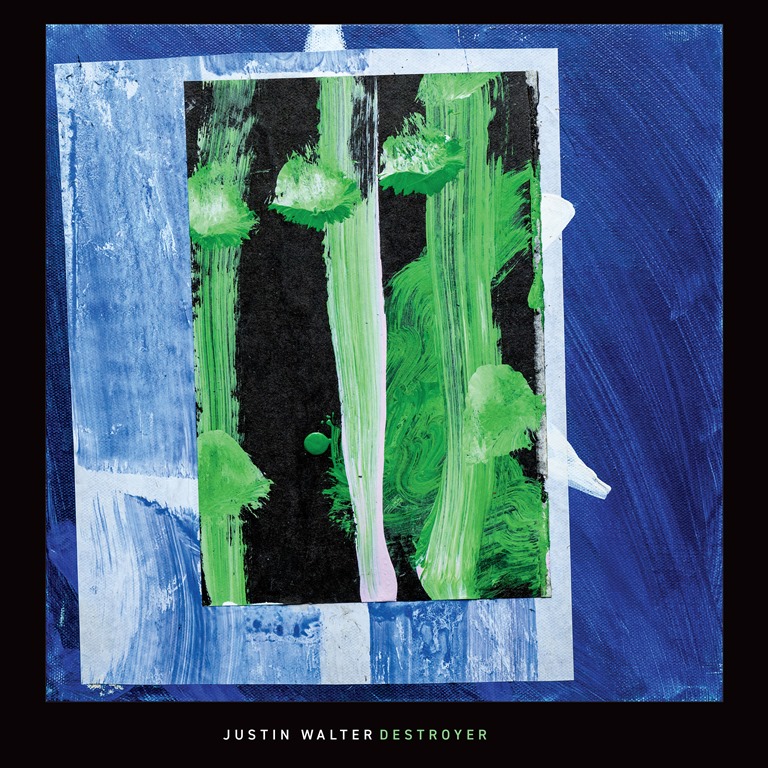
I’m not previously familiar with the music of Justin Walter, but the accompanying notes inform me that it ‘veers between nebulous and numinous, coaxed from the translucent tonalities of his signature instrument, the EVI (Electronic Valve Instrument)’ and that ‘Destroyer, his latest, and third for Kranky, marks his most multifaceted work yet. Inspired by minimalistic urges (evading grandiosity, condensing scope, embracing spatial restraint) tempered with the drama of triptychs (becoming, destruction, aftermath), the album’s 11 tracks thread.’

If the album’s title implies aggression and obliteration, it’s overtly organic analogue synth vibes are quite the opposite. That isn’t to say it’s all shades of mellowness, because Walter weaves in extraneous noise and all sorts and messes with the dials to render soft tones bent and broken, twisted and warped to create a less than silky-smooth air of tranquillity at times. But at others, there are some simply magnificent passages where you feel calm and at ease. The title track is exemplary: it’s an ambient work at heart, soft, supple, gentle, but with serrated edges and spiny burrs that occasionally break through the surface.

Walter obviously has a clear sense of flow. The eleven pieces on Destroyer flow seamlessly from one to the next, and as a consequence, Destroyer feels like an album, despite the contrasts which present themselves across the work. The flow begins with an instant attention-grab in the wibbly shape of ‘For Us’, which blasts in with a blaring drone over which phasey noodles tangle over in ever-increasing layers with adrenalizing effect. While the majority of the album is rather softer, a defining feature of the composition is the exploration of interplay between tones and timbres and the notes their timings gradually shift to create the subtlest of tensions. This is particularly noticeable duribg the second half of the album, which feels slower, softer, and more soporific than the first half. Close your eyes, exhale slowly, and you really start to absorb Destroyer. And you have every reason to do that.

‘Cliff the Cloudcatcher’ is a gentle, bubbling synth piece, while the eight-minute ‘Inner Voices’ is a mellifluous movement in many directions simultaneously, which pulls together to take form, becoming graceful, and in places the sounds mimic woodwind, but sculpted into something otherly… backwards, perhaps, and the sounds bend and push and pull – gently, but they do – before a darker turn around two minutes in brings shade, clouds thickening and becoming denser.

Destroyer distinguishes itself from so many other ambient-orientated works by virtue of its dynamics. There are some thick, tones and dense blankets of noise which present themselves, often emerging from cloud-like drifts of near-nothing. But these moments of rising tension resolve to easy washes and ripples of sound, to cloud-like softness.

And this is the album’s real accomplishment, in that is balances many shades, many tones, many textures. Those darker passages serve to remind that life isn’t all easy or plain sailing, and that plans can go wrong. You can set the controls for plain sailing, but there will always be disturbance, disruption. Whatever you plan or expect, there will always be deviation.

AA

114931

Neurot Recordings – 13 October 2023

Christopher Nosnibor

Let Them Eat Fake may be False Fed’s debut, but the members have between them a substantial catalogue of releases. The band comprises Discharge frontman Jeff Janiak, Amebix guitarist Stig C. Miller, Nausea, Ministry and Amebix drummer Roy Mayorga, and JP Parsons, and collectively, we’re told that this album sees them ‘all stepping outside their musical comfort zones to present an album of discomfort and rage in the face of reality’.

The solid, throbbing bass, glacial synth and squirming guitar that mark the album’s opening with ‘Superficial’ may come as something of a surprise given this preface: we’re deep in dark post-punk territory here, and it’s a huge shift from the hard, attacking pace of either Discharge or Ministry, as well as an immense stylistic departure. Janiak’s vocals, too, aren’t hardcore hollering, but a resonant baritone, at least unto he breaks our roaring and raging toward the end. The vibe is more UK goth circa ’86 than anything else, but this is fitting, given the many parallels between now and then. Yes, so much for progress: we’re right back to the 80s in a climate of fear and a new cold war… and not just a cold war. Instead of coming together to make some kind of effort to address the self-made catastrophe of climate crisis, we seem hell-bent on destroying one another.

‘The Tyrant Dies’ is more what you’d expect from this bunch: industrial-strength hardcore punk with a metal edge: the blasting punk fury of Discharge with the gritty heft of Ministry… but then the bridge slows things and we’re back in goth territory – well, goth as filtered through a strain of Rammstein – and the portentous refrain of ‘we will rise’ feels like a call to arms while at the same time calling on the ‘undead, undead, undead’ refrain of ‘Bela Lugosi’s Dead’: it’s time for a resurrection.

This album hits harder as it progresses: the guitars drive harder, the drums roll heavier, and goth, punk, and metal tropes melt together to forge something devastatingly intense. I haven’t heard anything that amalgamates these elements – and so successfully – since Alaric’s End of Mirrors, released in 2016 – also on Neurot.

‘The Big Sleep’ is all driving fury, hell-for-leather drums, chunky, chugging metal guitars, and high-pomp vocals echoing from the chest. Meanwhile, ‘Dreadful Necessities’ comes on like Killing Joke with its taut compressed guitar sound and driving beat. It’s dense, and probably more accurately described as steely grey than dark, since it brings a strong, melodic chorus.

The title – Let Them Eat Fake – may be light-hearted on the surface – but obviously has darker undertones in terms of its reference to class division, and that’s one of the major factors behind the album’s anger. And this is an angry album. Let Them Eat Fake is also an album that has a clear trajectory, and it builds as it progresses, becoming louder, faster, harsher, more angry with each song. By the end, it’s positively incendiary, a full-on roar of fury driven with guitars that burn. And ultimately, it makes sense as an articulation of ‘discomfort and rage in the face of reality’. We’re all feeling it. Reality is pain. Let Them Eat Fake tells is like it is.

AA

589049

Rocket Recordings – 6th October 2023

Christopher Nosnibor

Time was when I found a certain excitement and even a solace in a good dystopian novel. There’s always the question of nature vs nurture when it comes to the development of a child to adulthood, and my tendency to gravitate to the darker aspects is likely at odds with my incredibly mundane middle-class upbringing in the rural backwater of Lincolnshire. Or perhaps that was precisely its origin. What may present superficially as an idyll proves under scrutiny to be an inbred place with a smalltown mentality and has been a longstanding Tory stronghold. Being primarily agricultural, the county had the largest Polish population on account of the seasonal harvesting work. But the locals don’t like these foreigners coming over and stealing the jobs we won’t do, so… It’s probably best to start with the digression rather than veer off course later, and the purpose of the digression was to respond to the context of Teeth of the Sea’s latest effort, their sixth, and by their own claims, ‘most outlandish’ album.

To expand the detail of the context, it’s worth quoting from the accompanying blurbage rather than attempting to paraphrase it: ‘In Frank Herbert’s 1973 novel Hellstrom’s Hive, the Dune writer tells of a sinister narrative surrounding the maverick scientist Nils Hellstrom, who has created a meticulously constructed Hive underneath his Oregon farmhouse. Therein, he oversees a subterranean order of 50,000 insect-human hybrid life-forms. Ultimately his plan being for the inhabitants of the Hive to usurp humanity and take over the world. The decade thus far may not have seen anything quite so daunting, but it’s provided more than its fair share of challenges. Yet in such dystopian environments, Teeth Of The Sea flourish. This band has created a kaleidoscopic inner world all its own in Hive, their sixth and most outlandish album.

I spend the entirety of the first track, ‘Artemis’ being frustrated by my inability to place the origin of the nagging motif which is central to the tune, to the extent I stomp my feet and roar at the ceiling, neither of which helps. But things move on swiftly with the space-age stomp of ‘Get With the Program’, the vocals low in the mix beneath a conglomeration of a bubbling repetition and some gyrating dives, dominated by a sturdy four-four bass drum beat.

If ‘Butterfly House’ is overtly in the style of commercial dance circa 2005, it’s equally classic electro, reminiscent of Ladytron, but with frenzied fretwork dominating the midsection. Nevertheless, it’s dreamy, mellow – and quite the contrast from the quasi-industrial percussion-based attack of ‘Liminal Kin’.

No-one could accuse Teath of the Sea being predictable or derivate here, and the diversity of Hive spans post-rock ambience and progressive rock, and the nine-and-a-bit minute behemoth ‘Megaframa’ goes full Chris ‘n’ Cosey electro-driven dance. It’s beaty, it’s groovy, but it’s got weirdness woven through its fabric.

The final two tracks, ‘Powerhorse’ and ‘Apollo’ are both mellow, but once again couldn’t be more different, with the former bringing an ambient drift before the later fades into the sunset with melancholic picked guitar and unexpected but emotive trumpet. On paper, this probably bears the making of an incoherent mess, but nothing could be further from the truth: the contrasts are complimentary, and there’s a flow which brings the album together. It’s not mere crafting or composition, but a work of sonic alchemy.

AA

630014

Dret Skivor – 1st September 2023

Christopher Nosnibor

This twenty-two-minute continuous composition is ‘A consideration and contemplation of the stupidity of people who have more money they could ever spend and fritter it away on dick-waving projects instead of paying the tax they should be paying and contributing to society’, adding ‘Billionaires shouldn’t exist at all and we need to start having this conversation.’

Yes. Yes. And yes. It’s been something I’ve been silently raging and experiencing existential agony over in recent months. During the summer, half the planet was on fire. Meanwhile, tax-avoiding billionaires were jetting off into space and planning cage fights to settle the argument of who’s the bigger testosterone-fuelled egotistic manchild.

August saw Oregon flooded following hurricane Hillary and a billion-dollar plus restoration project in its wake: the same week, Virgin Galactic was jetting people into space for fun at a cost of around half a million dollars a ticket. If the ticket fees had been put towards the recovery operation, they’d be well on the way. But these cunts just don’t care. Fuck the plebs in their flooded homes: they’ve all got multiple penthouses well above sea level and they’ve earned their jollies – through the labour of the people who have so little, and some who have even lost everything.

I suffer corpuscle-busting rage at people who jet off on skiing holidays bemoaning the lack of snow. They’re one of the primary reasons there is no snow. How fucking hard is it to grasp? And if cars and planes are heavy polluters, launching rockets is off the scale. Not that they give a fuck. They’ll be dead before the earth becomes inhospitable to human life, and their hellspawn will have all the money and can go and live on Mars, so everything’s fine in their megarich world.

It begins with a grand organ note, as if heralding the arrival of a bride or clergy…and so it continues. On… and on. Five minutes in, and very little has changed. Perhaps some light pedal tweaks , a shift in the air as the trilling drone continues, but nothing discernible. The note hangs and hovers. It fills the air, with the graceful, grand tone that is unique to the organ, a truly magnificent instrument – and I write that with no innuendo intended, no reference to the Marquid de Sade submerged for my personal amusement here.

Admittedly, I had initially anticipated something which would more directly articulate my frothing fury at the fucked-up state of the world, but begin to breathe and relax into this rather mellow soundtrack… I start to think that this abstract backdrop is the salve I need to bring my blood pressure down, and think that perhaps this is the unexpected purpose of this release… but by the ten-minute mark, I find myself bathed in a cathedral of noise, and before long, it’s built to a cacophonous reverb-heavy blast which sounds like an entire city collapsing in slow-motion. And this builds, and builds. Fuck. I’m tense again. I feel the pressure building in my chest, the tension in my shoulders and back aches. It makes sense. This is the real point of this recording. Everything is fine until you log onto social media or read the news, and you see the state of things. Momentarily, you can forget just how fucking terrible everything is, how the world is ruined and how there is no escape from the dismalness of everything, and how capitalism has driven so much of this, creating a life stealing hell for those who aren’t in the minuscule minority.

Fact: 1.1% of the population hold almost 50% of the global wealth. A further 39% of wealth is held by just 11% of the population. 55% of the world’s population hold just 1.3% of the wealth between them. So remind me, how is capitalism working for the world? Trickle-down economics is simply a lie as the wealthy retain their wealth and simply grow it. Liz Truss may think that the UK importing cheese is ‘a disgrace’, but this statistic is mind-blowing.

Eighteen minutes in and my mind is blown, too. It feels like it could be part of the soundtrack to Threads. It’s a dense, obliterative sound, a blowtorch on a global scale, the sound not of mere destination, but ultimate annihilation. It seems fitting, given the future we likely face.

AA

a0916419313_10

Erototox Decodings

Christopher Nosnibor

Internationally, Kristof Hahn is best known as a member of Swans since their return in 2010, contributing electric guitar to My Father Will Guide Me up a Rope to the Sky and everything since (he was briefly a Swan in the late 80s and early 90s, becoming a touring member for The Burning World and appearing on White Light from the Mouth of Infinity and subsequently joining Gira’s Angels of Light. A lot has happened since then: My Father Will Guide Me was only forty-four minutes in total, whereas now they’ve evolved to have single tracks of that duration, and Hahn’s contribution on recent albums and tours has been lap steel. Witnessing his action on the last tour, while standing so close to him I could actually see the mud spattered around the ankles of his jeans, the significance of his contribution to the immense walls of noise the band create is clearly apparent. I’ve also been vaguely amuse by just how neat and dapper his presentation is, producing a comb to slick his hair back following particularly strenuous crescendos – although I also witnessed him taking said comb to the strings of his instrument in Leeds to yield some particularly unholy noise from an instrument more commonly associated with laid-back twangin’ country tunes.

What’s perhaps less widely known is that Kristof has enjoyed a lengthy career in music before joining Swans, as both a solo artist and a member of rockabilly garage acts The Legendary Golden Vampires, founded in 1981, and The Nirvana Devils (circa 1984). It’s with the former he’s back flexing his creative muscles despite an intense touring schedule with Swans.

Here, the Berlin-based core duo of filmmaker Olaf Kraemer (vox) and Kristof Hahn (guitars, organ, harmonica), reunited for the first time in many years, are joined by Thomas Wydler (drums), Achim Färber (also drums), and Chandra Shukla (sitar), to cook up a collection of ten songs.

The style is understated, country-leaning, occasionally folksy, with an underlying melancholy hue, with ‘Wohin Du Gehst’ crossing the language barrier to convey a low-level ache of sadness in its tone. Kraemer’s vocals are husky, almost croony, with hints of Mark Lanegan, and suit the low-key compositions well, conveying emotion and world-wearinness and a certain sense of sagacity, which is nowhere more apparent than on ‘White Horse Blues’.

If the reverby guitars of their Husker Dü’s ‘She Floated Away’ channels Chris Isaak, the song’s incongruously jaunty twist is in the vein of fellow German duo St Michael Front, while ‘The Rain’ is sparse and hypnotic and wouldn’t sound out of place on True Detective. The melancholy Leonard Cohen-esque ‘Sad Song’ speaks for itself, quite literally, self-referentially returning to the hook ‘this is such a sad song / and I sing it just for you’.

Discussing the songwriting ‘craft’ on an album feels pretentious and a bit wanky, but making songs this sparse – but also this layered – is a true example of crafting. Having mentioned Leonard Cohen previously, one thing that’s often overlooked is just how many incidental details there are on many of Cohen’s songs: The Songs of Leonard Cohen in particular is , on the face of it, acoustic guitar and voice, but there’s much more happening in the background, coming in and out of the mix, and this is something that comes through in attentive listening to Polaris. It’s subtle, keeping the overall sound quite minimal, but the attention to detail is what really makes it special.

AA

a3829215066_10

Dret Skivor – 6th October 2023

Christopher Nosnibor

It’s been a few months since we’ve heard from Legion of Swine, one of my favourite vehicles for the intensely prolific Dave Procter – because LOS are noisy, abrasive, and unpredictable, and I have fond memories of numerous demented performances and a couple of collaborative sets together. Even when sadly sans pig-head mask, having developed an allergy to latex, the gnarly electronic noise Dave cranks out is messed up and often times hurts.

Dave, and the Swine, are both highly political animals, and once again it’s politics which have spurred him to clack his trotters into activity and snort his disapproval of current affairs.

L.H.S. is accompanied by uncharacteristically expansive liner notes, which prove useful, and so I shall quote in full:

‘This release pays credit to Värmland folk who campaigned to create a better society and are represented by the letter LHS.

L is Selma Lagerlöf who was heavily involved in women’s suffrage and received a Nobel Prize for literature in 1909.

H is for Gerda and Mauritz Hellberg who were central characters in the right to vote campaign.

S is for Torgny Segerstedt who took a stand against the Nazis in his role as editor at Göteborgs Handels- and Sjöfarts-Tidning.

The image used in this release is a reminder of how the free market is way more important than people in some eyes.’

It lays it all out there, and reminds us how failure to learn from history is guaranteed to doom the future. Admittedly, the way things are looking now, we’re doomed one way or another and likely sooner than anticipated due to sheer greed and a refusal to face facts. In the face of this, there’s a part of me that feels as if complaint or resistance is futile, because we’re already fucked. But we need to go down fighting. We need to at least die trying, to know we’re did our best.

L.H.S. is the sound of the fight. It’s a fucking racket, blasting in from the outset with overloading distortion, cutting in and cutting out, a blasting overload that just hurts and is an instant headache. It’s the harshest of electronica which only gets nastier and more intense and insane as it progresses. By three minutes in, it sounds like someone smashing a bin lid connected to a contact mic, recorded on a mobile phone. The treble is high all the way, and the sounds are metallic, distorting, like someone tearing the door off a garage in a gale or something similarly deranged. And deranged it is, from beginning to end.

We’re in Merzbow territory here. And it actually hurts. Ten minutes in, there are some vocals, but they’re impenetrable shrieking derangement, buried in feedback, before things get really gnarly.

L.H.S. is nasty, and I absolutely love it. I suspect most won’t. It’s one to file alongside Whitehouse, Merzbow, and Prurient. It’s brutal, and as niche as fuck, and Dave knows it. Embrace the pain. This is something else.

AA

AA

a3749396098_10

ZOHARUM – 17th October 2023

Christopher Nosnibor

It wasn’t so long ago that I’d arrive home from work and struggle to open the door for the pile of jiffy bags which had cascaded through the letterbox while I was out, and that I’d regularly receive vinyl for review in the mail. The pandemic and the spiralling coast of everything really kicked that into touch. The sheer volume was quite overwhelming at times, but I do miss it, and the occasional delivery of a physical copy of a release reminds me why.

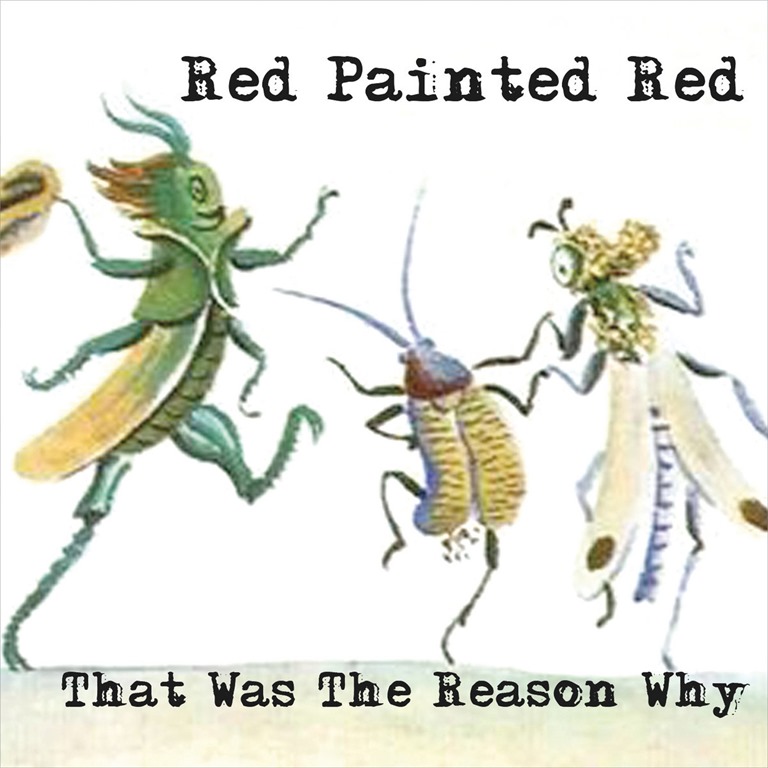
My copy of That Was the Reason Why was accompanied by a stack of wonderful postcards for a start: a strange array of scenes printed on thick card with a matte finish they’re fantastic. And so is the CD’s tri-fold packaging, which includes the full album lyrics, which I read through as I’m listening to the album. Yeah, yeah, I’m old – at least according so some people. But yes, I grew up with physical media and am comfortable with that as I read the contents of the truly beautiful sleeve. This is what people who don’t do, and have never done, physical media are missing out on. The fact is that music is, or at least is at its best, a multi-sensory, inter-dimensional experience. I took this for granted when I was younger. I’d go to record shops in town and but records and tapes, and later CDs, and spend hours looking at the artwork and pouring over the lyric sheets.

Starting with beeping keytones and with an ominous keyboard score, ‘Human Condition’ is dark and dense and builds a palpable tension as the glacial robotic vocals enunciate the stark declarations of ‘Self-mutilator. Mother. Arsonist. Materialist. Abuser. Assassin. Scientist. Charmer. Harmer. Narcissist. Artist. Redeemer. Explorer of the fauna’ on a loop that becomes more chilling with each cycle. Creepy is the word, and the bass and drums build as the track progresses, along with the extraneous noise that sits behind the nagging motif.

‘Astronauts’ cuts a sound collage which overlays a strolling, bass-led groove that’s almost proggy, and over that, Yew spins semi-narrative lyrics with cool detachment.

That Was the Reason Why is an unusual blend of experimentalism, cut-ups, collaging, and trippiness, which incorporates elements of a range of genres but belongs to none. The synthiness of the sultry ‘Come to Me’ is almost Vangellis-like, while ‘Knife’ is sparse, atmospheric electronica that’s oddly reminiscent of Kate Bush, at least in Yew’s delivery, and it’s magnificently melodic and dreamy in a melancholic sort of a way, and ‘Silence’ brings discord, abrasion and snarling zombie backing vocals tearing through a hybrid post-punk drone that sounds like a collision between The Doors and Toyah. ‘Dances’ is altogether weightier, and brings hints of Swans circa Children of God. But for all of its diversity and divergence, there is a strong homogeneity to the album as a whole, and it works well.

Samples of narrative and dialogue, and snippets of all sorts come together to conjure a disorientating reflection of the world and somewhere beyond – sometimes exterior, sometimes interior, bringing inner space and outer space into the same frame. Breathy, ethereal, yet tense and claustrophobic, That Was the Reason Why is a dialogue of inner turmoil, an exploration of liminal spaces, and an unstintingly intriguing and unusual work.

AA

a2407616562_10

Human Worth – 13th October 2023

Christopher Nosnibor

From the moment Modern Technology blasted in with their eponymous debut EP, simultaneously launching the Human Worth label, it was clear that they were special. The duo made the most fucking incredible, low-slung, dense mean-ass noise going. The lyrics were social, political, and sharp, paired down to stark one-line declarations dissecting with absolute precision the fucked-up situation in which we find ourselves. And with a percentage of proceeds of every Human Worth release going to charity, they’ve put their money where their mouth is. It’s not done in some crass, virtue-signalling way: this is their model, and they just get on and do it. And through Human Worth they’ve released some – no, many – absolutely incredible records, rapidly establishing HW as purveyors of quality product with a keen ear for quality noise. In an increasingly fragmented and challenging musical market, the trick for any label is to find a niche and excel within it. And that’s precisely what these guys have done.

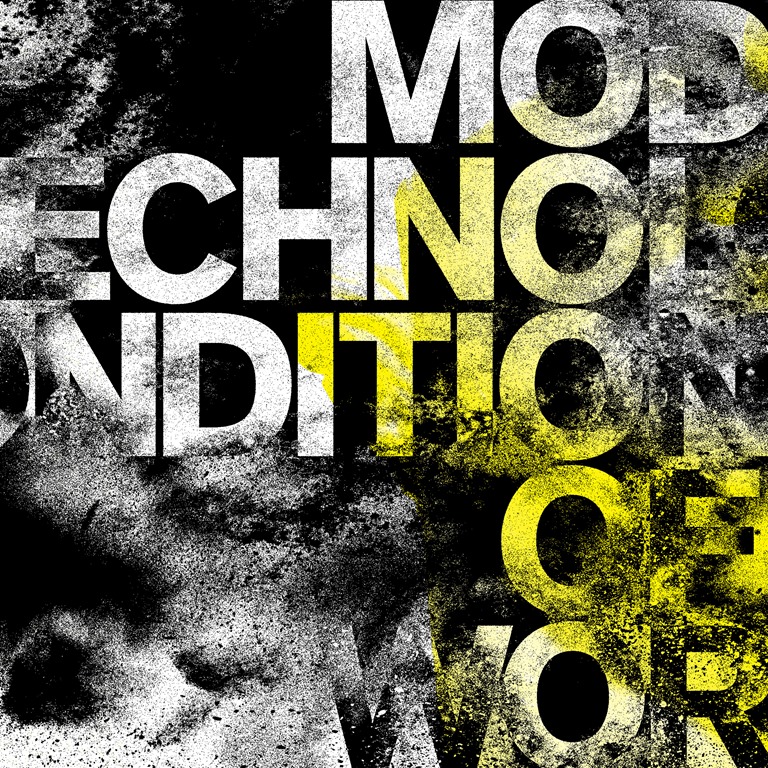
And all the while, as a band, Modern Technology just get better and better. Any concerns that they had said all they had to say following the EP and debut album Service Provider (as if there ever were any!) are allayed with the arrival of Conditions of Worth.

Lead single ‘Dead Air’ opens it up with dense, grinding anguish. Chris Clarke’s bass and vocals seem to have got heavier. Then again, so does Owen Gildersleeve’s drumming. But it’s more than just brutal abrasion. In the mid-track breakdown, things go clean and the tension in that picked bass note is enough to spasm the muscles and clench the brain. It’s brutal start to a brutal album.

‘Lurid Machines’ begins in a squall of feedback and wracked, anguished vocals, and it’s harrowing, the sound of pain. The lyrics are comparatively abstract, and all the more powerful for it. Written out in all block caps, they’re in your face but wide open to interpretation and elicit the conjuring of mental images:

WHY ARE THEY SO ALONE?

THE LIES THEY ALL SHARE

LET GO

INSIDE NOTHING GLOWS

BENEATH A SHADOWED PHONE

The drums and bass crawl in and grind out a low, slow dirge, Clarke’s vocals are down in the mix and you feel yourself being dragged into a chasm of darkness.

These are harrowing times, and if the pandemic seemed like a living nightmare, it seems it was only the preface. The ‘new normal’ is not the utopia some commentators suggested it may be. For a moment, it looked as though we would achieve the golden goal of the work/life balance, that we may abandon the commute and save hours a week for ourselves and slash our carbon emissions in the process. But no. Fuck that. Get back to the office, tough shit that fuel prices are rocketing and bollocks to the anxiety you developed in lockdown and bollocks to the environment because power trumps everything. Government power, corporate power, media power… we are all fucked and have no hope of breaking this. And this is the backdrop to Conditions of Worth.

They pick up the pace and start ‘Salvation’ with an uncharacteristically uptempo stoner rock vibe, but around the midpoint they flip things, slowing the pace and opening up towering cathedrals of sound as a backdrop to painting a stark depiction of life on earth.

WIDESPREAD

FAMINE

WIDESPREAD

CONFLICT

WIDESPREAD

PANIC

WIDESPREAD

SHADOW

The song ends with just a spare, fragile but earthy bass that calls to mind Neurosis and Kowloon walled City. It’s this loamy, organic texture which defines the altogether more minimal ‘The Space Between’, the first of the album’s two longer pieces, with the second being the ten-minute title track. It’s here that their evolution is perhaps most evident, as they stretch the parameters of their compositions to forge such megalithic works and really push the limits of their two-piece arrangement. In contrast, there’s the super-concise ‘Fully Detached’, , and the last track, ‘ Believieer’, which are absolute hardcore ragers, clocking in with short running times, the former just making a minute and fourteen seconds. And the variety on display here only adds to the album’s impact. While each track hits hard, the overall impact is obliterating.

They crank up the volume and the shades of distortion in the explosive choruses of ‘Lane Control’ – because you can never have too many effects when it comes to bass played like guitar and blasting screaming noise to articulate feelings, and as for the title track… it’s an absolute beast, with heavy hints of latter-day Killing Joke in the mix as they flay mercilessly at a pulverising riff. The noise builds and the vocals sink beneath it all and you’re left feeling dazed.

But more than that, there’s something about the production on Conditions of Worth that’s deeply affecting. There’s a skull-crushing sonic density, but also simultaneously, remarkable separation and sonic clarity. These elements only make it his harder.

Conditions of Worth is more than just heavy. It leaves you feeling hollowed out, drained, weak. This is life, and this album is the perfect articulation.

AA

HW031_ModernTechnology_ConditionsOfWorth_CoverArtwork