Archive for the ‘Albums’ Category

1st March 2024

Christopher Nosnibor

Joe Solo is a man with a message. Through tireless touring, relentless releases, and devoting endless toil to the cause, he has established himself as a strong and singular voice for not only the working classes, but for social equality, fairness, and a proud advocate of socialism. He sings songs of solidarity, without resorting to lumpen sloganeering, penning protest songs which are bursting with humanity – political without being overtly mired in politics. He’s also staunchly DIY, plugging away at making music from his shed, from where he also hosted a radio show for a number of years.

The biggest obstacle facing any DIY artist is actually reaching an audience: the algorithms of social media don’t exactly favour the little guy, and so for his latest album, Sledgehammer Songs, he’s gone all-out on engaging his friends / fans on Facebook to help spread the word – and it’s paid off, with pre-sales sufficient to necessitate the production of more CDs and a big run on the vinyl, not to mention the wealth of merch. And why this album, and why now?

Well, first, it’s so easy to get stuck in the cycle of record, release, tour, often to returns which are plateaued or even more dispiriting, and second, Sledgehammer Songs is a significant work. And because Sledgehammer Songs is very much an album which is about collectivism and community, and features a number of likeminded singers – notably Rebekah Findlay, who features on several songs, as well as York’s Boss Caine, Jess Silk, Carol Hodges, and some community choirs, too.

As Joe’s notes on BandCamp explain, ‘This is an album about music and its importance, not only to the political struggle, but to our own sense of who we are. It is both personal and protest.’ Joe’s no middle-class muso lecturing on working-class issues: he squeezes in music-making around a dayjob repairing washing machines, and he knows what it is to grind out a living to support his family, and often recounts conversations with the people he encounters in his work. Real people, real lives. Real struggle. And so, when he speaks, he speaks for both himself and for the people, and does so truly from the heart.

This very much comes through in the songs themselves. It’s a set of acoustic-led songs with simple structures, some augmented with harmonica, there are hints of The Clash, hints of Bob Dylan, slivers of Billy Bragg, and Solo sings with an unashamedly northern accent, and his voice is melodic, gentle, but he’s capable of bringing some throat for emphasis when it’s called for. ‘The Last Miner’, which adds a folksy violin and the voices of The Hatfield Brigade for a lilting sing-song tune which balances melancholy and positivity.

‘A Better Way’, released ahead of the album, encapsulates the sound and spirit of Sledgehammer Songs. It’s a depiction of the everyday realities of life in Brexit Britain, from nurses in the food banks to the diminishing spending power of wages under rocketing inflation, social division and inequality, and each line a call and response met with the refrain ‘there has to be a better way’, and while it’s a bleak picture, the sentiment is positive, unifying.

The title track with Boss Caine and Rebekah Findlay brings folksy Americana, and a celebration of the power of music, while on ‘City of Sanctuary’, the message is simple, but effective: ‘If you’re a refugee, you’re alright by me’. Listening to Sledgehammer Songs reminds us just how bad a state we’re in, where we have members of parliament saying that asylum seekers should ‘fuck off back to France’ and demonising the poor and disabled in the most shamefully dehumanising ways – led by a multi-millionaire prime minister who’s so far removed from the realities of everyday living that he doesn’t know how to fuel a car and pay at the pump. But despite it all, instead of wallowing in the endless shit – the likes of which is floating along our rivers and washing up on beaches around our sorry island – everything about this album is so direct, vibrant, real, and uplifting that it restores faith, and brings hope in the human spirit. All is not lost yet.

AA

a3482388156_10

Cruel Nature Recordings – 23rd February 2024

Christopher Nosnibor

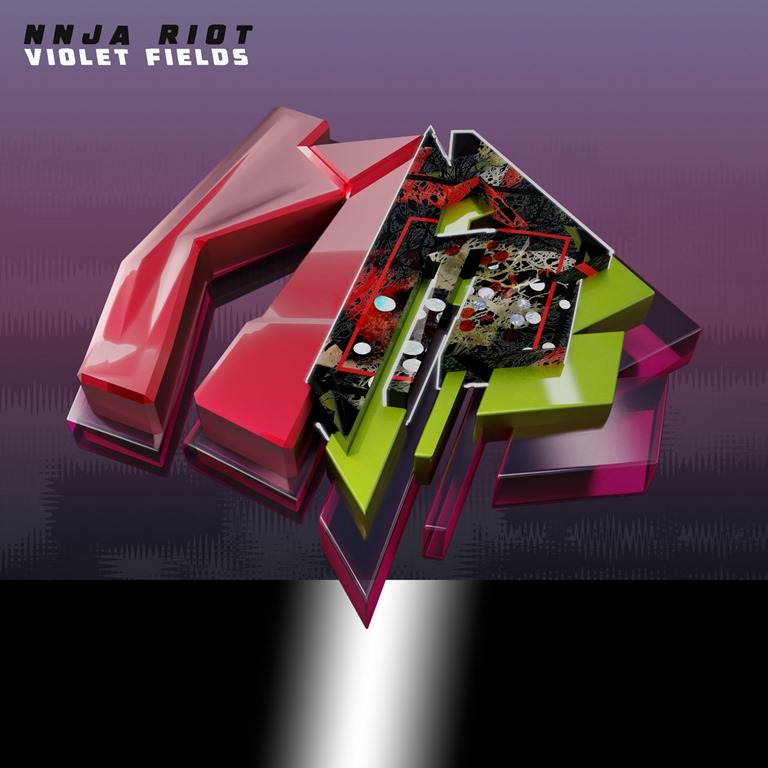
Nnja Riot is the solo project of Lisa McKendrick, who also happens to be one half of experimental electronic noise duo Isn’tses, with Tim Drage, who makes serious noise as Cementemental.

It’s a small world, especially in circles of noise and experimental electronics, and so it is that a few years ago, I paired with Tim for a one-off collaborative set in London at the bottom of a bill curated by Human Worth, with the mighty Modern Technology headlining. I lost my hearing in one ear before the set due to some congestion, and by the end, I’d lost my voice, too. Somewhere along the way, I’m convinced I’ve crossed paths with Isn’tses, too, but can’t find the evidence at this moment in time.

Anyway, my needless digression brings me to the point of observation that their individual projects are quite different from one another, and their collaborative output. This is ultimately a good thing, because while algorithms which have seemingly replaced the music press in making recommendations of the ‘if you liked listening to this, you’ll like this’ ilk, it ain’t necessarily so. Because algorithms don’t understand art, or the fact that an artist’s output may be widely varied.

And so it is that as Nnja Riot, Lisa takes a much more songwriterly approach to things, and Violet Fields contains seven songs which can be described broadly as stark industrial electropop. ‘Horror Heart’ brings all of the elements in together to raise the curtains on the album: understated verses, with a thumping heartbeat bass beneath a delicate vocal bathed in reverb, are suddenly blown away in a wave of noise and monotone robotics with whipcracking synthetic snares cutting through the murk with some harsh treble.

‘The Evolve’ is a low, slow, dark pulsating grind which swells to a blistering ruckus of bubbling, broiling eruption of glitching electronic froth, and things get mangled fast and hard. Nnja Riot is indeed an appropriate moniker: the noise grows and takes over by stealth, as if from nowhere: one minute things are pretty mellow, the next, it’s all going off and you’re being carried away on a sonic tidal wave.

The album’s longest track, ‘Dark Assassination’, stretches beyond the seven-minute mark, and with a stuttering, beat hammering like a palpating heart in a state of fibrillation against the ribcage, it’s creates a muscle-tightening tension which is uncomfortable. The vocals are disconcerting, sounding as they do detached, off-key, non-melodic. Desperate drones bend and warp in the background, adding layers of dissonance and discomfort.

Everywhere across Violet Fields, there are subtle but essential incidental details, little lines of melody which ripple and fade. The title track is hazy, sedated, spaced-out, with melodic elements juxtaposed with swerving sci-fi noise which threatens to drown out the erratic beats and she cuts loose to another level of intensity with the vocal delivery: fuzzed with distortion, there’s a outflowing from the innermost which pours into the swirling wash of multi-faceted noise.

Violet Fields crackles and fizzes, often promising structures which crumble and evaporate and leave the listener feeling a little lost, grasping for something uncertain and just beyond reach. It’s this sense of vagueness which remains after the grainy ‘Musical Fix’ and the ephemeral drift of ‘Slow Release’, a mere fragment of a song which carries a spiritual richness on a ritual drumbeat before fading. There’s a sense that hearing Violet Fields and fully grasping it are not one and the same, and it feels that however long one spends engaging with it, there will always be depths and layers of implicit meaning that exist beyond the realms of conception. You wave a feeble hand, desperate to clutch and cling, but it’s gone. It’s gone.

AA

a2182947288_10

7CD Box-set PNL Records/Audiographic Records – 9th February 2024

Christopher Nosnibor

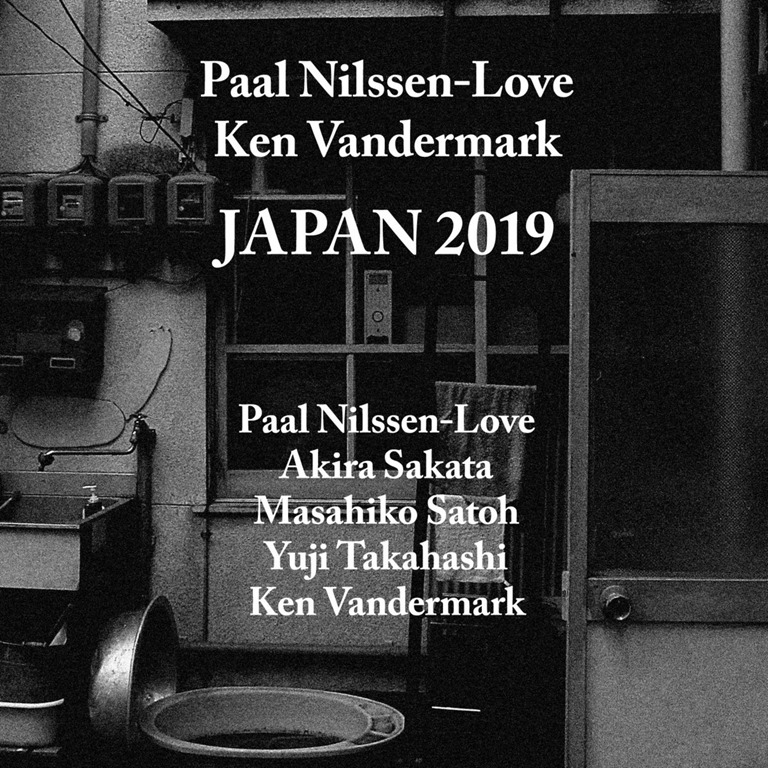
It may be a way off Throbbing Gristle’s 24 Hours box set or Kenji Siratori’s 12-disc Merzbomb set, but seven hour-long CDs culled from live recordings from a 16-date tour of Japan in 2019 is a huge, huge thing to be faced with. It’s extravagant, indulgent, and frankly excessive, but a boon for fans – at least the really hardcore ones with an obsessive bent.

This is, of course, a document – and a painstakingly detailed one that that. One may question the need to release recordings of almost half the dates of a single tour, but but when improvisational artists play, no two sets are alike, so there was never any danger that this would feature seven discs with the same set played as a carbon copy. But what’s more, this particular tour was noteworthy for introducing new collaborations with legendary Japanese musicians: Akira Sakata (reeds/voice), Masahiko Satoh (piano), and Yuji Takahashi (piano).

As the accompanying notes outline, ‘The group is known for its creative intensity, that constructs and deconstructs material with utmost freedom and spontaneity, and which has been documented on 11 albums since its inception. The addition of such incredible musicians from Japan only heightens the kinetic nature of their playing and the speed in the exchange of musical ideas documented with this collection.’ And this box set, limited to 500 copies – which while not massive, isn’t exactly a tiny run, and as such indicates the kind of fan-base they have, not only in terms of size but also devotion – is being released to coincide with their next tour of Japan.

Each disc features a set performed by a different permutation of players, bookended by sets by Paal Nilssen-Love / Ken Vandermark, with all the variants of the duo with the addition of one to three Japanese collaborators covered across the span of the seven discs.

Each disc is split differently, demonstrating just how different each set was. The first couple of discs, featuring Paal Nilssen-Love / Ken Vandermark and Paal Nilssen-Love / Yuji Takahashi / Ken Vandermark respectively, documents the performance on 4 December 2019 and contain a couple of pieces running for around half an hour and a couple more which run to the ten to fifteen-minute region. The next night’s performance couldn’t be more different, with the first two moments running for forty and thirty minutes respectively, followed by a further nineteen-minute behemoth.

I say it couldn’t be more different, but of course, all four sets are built around some epic jazz workouts which aren’t always easy on the ear – in fact, quite the opposite, as anyone familiar with the work around the Paal Nilssen-Love axis would reasonably expect.

Japan 2019, then, contains a lot of wandering, often straining, discordant, and manic sax, which runs every whichway atop thunderous arrhythmic percussion that clatters and thumps its way stutteringly, yet confidently, all over the place.

My appreciation of this type of brainbending jazzery has evolved over the last few years from a baseline of zero to quite digging its bold adventurousness and stubborn refusal to be shaped into anything remotely structured or normal, pushed outward by an immense respect for the way improv performers are capable of bouncing off one another with such intuition that they sound incredibly well-rehearsed. That’s real musicianship. But it doesn’t mean that it’s listenable all the time, or even half the time. And then there’s the fact that this release is seven discs: that’s around seven hours, or a full working day – of warped sax work and percussion which rattles and clatters all over and it’s still difficult to process, to contextualise. At times, it’s a frothing frenzy of energy; at other times, we hear the performers pull things back and create not only a space that’s broad, but allows for a leisurely stroll around the sonic geometry of their interplay, and as such facilitates broad exploration.

There’s simply so much of this that it’s easy to get lost and disorientated in the labyrinthine tunnels which twist and turn endlessly.

Ultimately, a Paal Nilssen-Love & Ken Vandermark album is the jazz equivalent of an absolute riot – and with this one spanning seven discs, it’s more of a war than a battle, and perhaps best digested in smaller doses.

AA

a3844906089_10

Hallow Ground – 7th February 2024

Christopher Nosnibor

Silent movies provide a perfect inspiration for musical scores: unencumbered not only by pre-existing scores, but also dialogue or incidental sound, they offer a completely blank canvas and space for musicians to fully explore – and articulate – the mood of the movie, the moments of drama, to become both immersed in and enhance, even create, atmosphere.

Following the split of Siouxsie and the Banshees in 1996, Steven Severin devoted much time to writing scores for old movies, and performing them as live soundtracks in movie theatres, and I was fortunate to catch him in around 2012 when touring Carl Theodor Dreyer’s 1932 Vampyr. It was a powerful and haunting experience, and one which clearly brought new dimensions to a very old film.

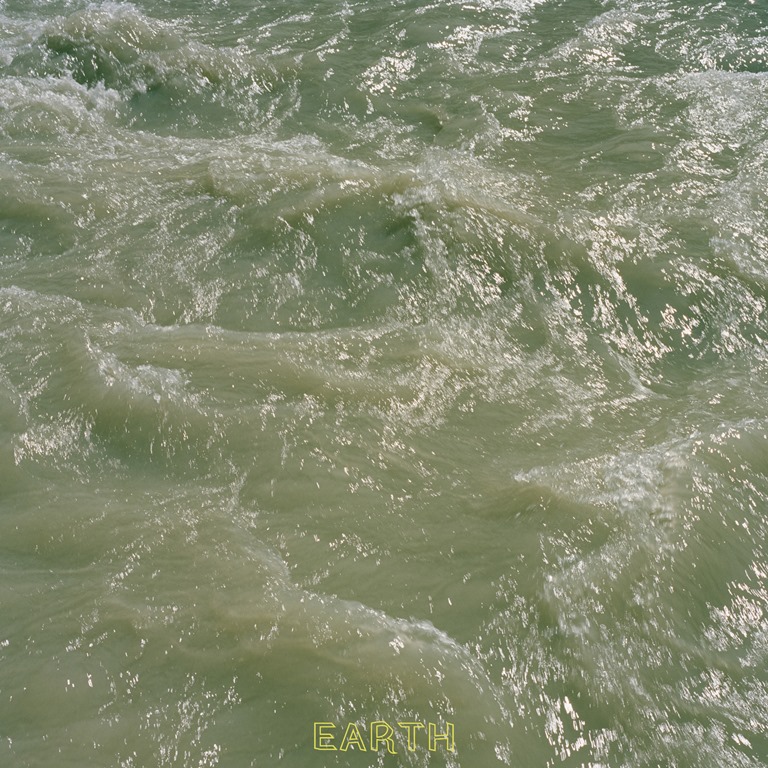
In the same vein, Musique Infinie – the collaborative project of Manuel Oberholzer a.k.a. Feldermelder and Noémi Büchi – present an improvised score for Alexander Dovzhenko’s groundbreaking 1930 silent movie Zemlya (Earth) created for the 24th edition of the VIDEOEX festival for experimental film.

For those unfamiliar – such as myself, the crib notes inform that ‘Frequently cited as a masterpiece of early 20th century filmmaking, the movie deals with the collectivisation of Ukraine’s agriculture.’

Now, the movie clearly holds up on its own to be so revered and still revisited almost a century on, but what of the soundtrack? How does it hold up without the visuals which inspired it?

The soundtrack is divided into two movements of roughly similar duration – ‘Creation’ (14:25) and ‘Destruction’ (12:54). It begins with big, bold, sweeping symphonia, synthesised choral soarings atop majestic, broad-sweeping synth tones. There is a palpable sense of grandeur, and with deep string sounds resonating low beneath big, emphatic surging drones, this feels immense and so strongly cinematic that it’s hard not to be caught up in the tide. A sudden droning downturn marks a temporary change of mood before we’re brought out into calmer waters and begin to regain our breath around the five-minute mark. Robotic, industrial glops and bleeps undulate and oscillate, cresting through the smooth surface. Over time, the piece transitions between organic-sounding orchestral manoeuvres to altogether more space-age sounding synthscapes, before fading rapidly at quite an interesting intersection.

‘Destruction’ – as one might well expect – steps up the drama and the dynamics, but perhaps less expectedly becomes more overtly electronic, with stuttering, glitching disturbances and cold, dark waves blasting in, bending and warping. At times haunting, disconsolate, others foreboding and unsettling, this is certainly the more challenging half of the album. But on the one hand, while it’s more exciting, in some respects, it’s also less fulfilling. Partly, it’s because of the way in which the organic-sounding strings rub against the more overtly electronic sounds, and as much as this juxtaposition and interplay is essential to the compositional form, it sometimes feels like a clash whereby the pair are seeking to achieve two separate ends. Given its improvised nature, this is perhaps to be expected, and the overall flow of the album as a whole is marked by moments of convergence and divergence.

There’s also the nagging sense of just how contemporary this feels in contrast to the visuals the sound is designed to accompany, although without being able to observe the intended setting, it’s difficult to fairly judge the level of success here.

One could – and probably should – see the film, and should also watch it with this accompanying it, as intended – but that isn’t this release, which must be judged on its audio content alone. And taken apart, in isolation, Earth is a stimulating and dynamic work, and one which demonstrates that Musique Infinie aren’t afraid to test themselves and to test boundaries, and to create a powerful and dramatic listening experience.

AA

HG2401_front

Incunabula Media – 28th January 2024

Christopher Nosnibor

First new music in twenty years. Crikey. This seems to be becoming a thing: collaborators reconvene after a really, really long time. Sometimes, it’s to the frothing enthusiasm of fans flooding out of the woodwork, as in the case of Khanate, sometimes, rather less so, in the case of a number of recently reconvened acts, including Photographed By Lightning. There ought to be some fanfare, of course, but that’s now how it goes for acts on the fringes. And PBL are fringe, niche, underground, and for all of the right reasons. Photographed by Lightning is essentially a side project for aa couple of guys who have countless projects on the go at any given time. Consisting of Syd Howells – words and music, vocals and instruments, and D M Mitchell – music, instruments, painting – the duo make noise, they do drone, they do weird shit, and NO, Not Now, never reinforces this with the addition of some heavy texture.

There is something strongly emphatic about the title, that solid ‘NO’ like a foot-stomping cry of dissent. No! Not now… not ever is certainly definitive. Prematurely perhaps. Maybe: let’s discuss. Whatever happened to ‘never say never?’ Perhaps it depends on what one is saying ‘never’ to – although it seems that the things which should never come to pass, and never should again, do, and do so again, and again, with depressing predictability. If Piers Morgan was offering me a bet, I’d have probably gone with WW3 being more likely than a new album by Photographed by Lightning. But it seems the recent reissues of their previous work may have been something of a catalyst for this rekindling. And if you’ve heard those previous albums, you’ll be buckling on for a weird ride, and recent single video for ‘Hands of Humans’  gives an idea of what to expect:.

The album starts as strange as it means to go on, with ‘Act Like Nero’, a curious collage of woozy bulbous bass, percussion that sounds like the clanking of cutlery and weird, warped, ghostly vocals which drift through waves of reverb, before ‘Dead Sparrow’ arrives sounding like a Bauhaus demo or on a tape that’s been stretched and is spooling at one-and-a-half speed, or Brian Eno’s ‘Baby’s on Fire’ and Metal Machine Music being played simultaneously and captured on a condenser mic. The experience isn’t dissimilar to the first time I heard My Bloody Valentine’s Loveless, wondering if the record was warped. The vocals are twisted, and from among the polytonal strains of mangled guitar, only snippets of lyrics are discernible: ‘follow your heart / follow the dream’; ‘static in my head’: they feel incongruous and disjointed, only adding to the discombobulating effect.

Howell’s words are poetic, quirky, often abstract or otherwise seemingly stream-of-consciousness – at least when they’re audible amidst the sonic maelstrom – occasionally pithy and unexpected, with lines like ‘My social circle needs a transplant / and the donor ain’t you’.

Strolling basslines wander around most of the compositions, but they’re jerky, breaking the groove and creating tiny, nagging knots of awkwardness. NO, Not Now, never does seem to exist to challenge the listener, by needling away with relentless pokes and occasional punches of uncomfortableness reigning in from all sides, sculpted from discord, disjunction, and disparity. ‘Cantilever’ is exemplary, finding the pair making a foray onto more overtly dance-orientated territory – but doing so in a fashion reminiscent of some of The Fall’s more experimental efforts (I’m thinking ‘Mollusc in Tyrol’ from Seminal Live and the like).

Elsewhere, ‘I Wish I Could be Sure’ is theatrical, dramatic, gothic, and unsettling, a seething morass of wailing feedback and stuttering beats which eventually coalesce into a wonky motoric groove, amidst all of which Howells pulls at every psychological sinew to wrestle with his unease with himself. It’s the darkest, swampiest not-quite dance cut, and ‘Streel Echoes’ is a straight-up what-the-fuck splat of cheesy 80s synths and vocals that veer between Bowie on Outside and semi-spoken word, with more busy, chubby, but not-quite-tight bass bloomphing and bouncing about. Yes, it’s necessary to invent words to convey the experience.

The album’s final track, the seven-minute ‘Some One Thing’ is a whirling fairground nightmare of noise, which sees the krautrock-inspired repetition of a whipcracking snare blast and thudding bass yield to a whorling barrage of noise and a super-mellow-piano, while Howells achieves peak atonality in his vocal delivery. While many albums go out on an anthemic high, it feels as if the cogs are winding down and everything is slowly disintegrating as NO, Not Now, never drags its way to its conclusion. It seems fitting. With NO, Not Now, never, Photographed by Lightning seem to have gone out of their way to challenge every notion of how an album should hang together, what music should do, and to render the most uncompromising and uncomfortable aural experience, in a fashion which places them firmly within the lineage of Throbbing Gristle. NO, Not Now, never is an artistic triumph, a work created for its own ends and with no mind for audience or critical reception. And for that, it deserves applause. It’s a good album. Variable, difficult, and purely for the art.

AA

a3154678567_10

Dret Skivor – 2nd February 2024

Christopher Nosnibor

Nostalgia sucks. On so many levels, nostalgia sucks. It’s something which looms a longer, darker shadow over life with ever years that passes, as every memory recedes further into the past until eventually it tips over the horizon, beyond sight, to a distance whereby its very happening takes on a dream-like quality and you begin to question if the even was real or imaginary, a myth which has grown from the creeping spores of hazy recollection.

I was probably ahead of the curve when I began feeling pangs of nostalgia on moving to secondary school in 1987. Nostalgia wasn’t big business then, and didn’t even strike me as something that so many people felt deep pangs of back then, although perhaps shows like The Golden Oldie Picture Show which I would often watch with my parents after coming home from Cubs should have given me a clue as to how adults mire themselves in their past. It was on reaching my thirties when I began to separate from my peers who constantly bemoaned the state of music, now there was no good new music, how it had all turned to shit since they left school.

Today, I took myself for a quiet pint, only to find myself eavesdropping inadvertently on a couple of old bastards complaining how there’s no proper music anymore, how it’s all 70s and 80s bands which headline Glastonbury and it’s all rap like 10-bit and one began spouting on how he saw Dave Grohl’s band, Metallica, on TV and wasn’t into it. Then they raved about Pink Floyd and The Eagles and now awesome they are, and how their songs are ‘minutes, minutes long… And then there’s a guitar solo. And Dire Straits… and how Blondie’s career ended with Parallel Lines, but they did this comeback song, like Duran Duran. I wished I was deaf, and congratulated myself for not being so painfully moored to the past – or so ill-informed.

But for all of this, I feel a pang of sadness on the arrival of a new Legion of Swine release. I miss Dave Procter’s presence in the UK for a start, surely one of Brexit’s biggest losses, at least on the underground music scene. I miss his crazy noise shows, particularly back when he would don a latex pig’s head and lab coat to crank out harsh noise. I have a particularly fond memory of our two collaborations, but especially the room-clearing effort where I yelled like a maniac as he ambulated the venue with a portable speaker emitting screeds of feedback in the middle of the afternoon.

Beyond this particularly personal context, of course, the latest offering from Legion of Swine is by no means a nostalgic work, although it does explore wibbly analogue synth and lasery sounds which hark back to the early 80s, when primitive synths were becoming widely available. But then, it equally passes nods to early Tangerine Dream, and to the bubbling pink noise and synthy waves of Throbbing Gristle early Whitehouse. But, on balance, the listening experience alone does not evoke nostalgia. What the hovering hums do evoke is a sense of awkwardness, if difficulty.

Legion of Swine’s output has never been about commercial success, but noise for the sake of simply making. Art as it should be. It it’s for the benefit of Legion of Swine first and foremost, for whom it’s entertainment. It’s for the benefit of an audience as a secondary concern, and the number of people who are likely to be entertained by this is few. But it’s a storming album, which really explores tones and texture. Consisting of a tow longform tracks each with a running time around twenty minutes, it’s an evolutionary piece, and within each continuous composition, the various segments flow from one to the next.

It reminds us of the fundamental difference between albums made up of ‘songs’ and shorter pieces and longform works, in that the former can contain ideas and concepts in a compartmentalised way, with no necessary correspondence between them, while the latter is a journey, and requires an altogether different level of focus and concentration in order for it to work as such. Gloopy alien soundscapes and long, low, ominous drones are rent with laser blasts and trickling ominous electronics worthy of some vintage sci-fi works, and ‘jag hör röster’ is a lot less overtly noise-orientated than previous Legion of Swine releases and live outings, sitting very much within the domain of dark ambience rather than abrasive noise. But it’s well-executed and with occasional blasts of overloading, needles-into-the-red distorting drone, it’s not as mellow as all that, with skronking feedback and earwax-vibrating buzzing and an array of organ-vibrating oscillations pouring their way into your ears. ‘hör du röster?’ is absolutely head-melting thick, buzzing noise abrasion all the way, a monstrous wall of distorted drone amped up to the absolute max, with surging, sloshing swells of dense analogue noise, and a relentless barrage at that.

Uncomfortable as always, under ytan ligger nåt is one hell of a racket. All hail the Swine!

AA

a3325660179_10

Not Applicable – 16th February 2024

Christopher Nosnibor

What we’re given to expect from this three-way collaboration is ‘an album of explorative, freely improvised electroacoustic music by an acclaimed trio of acclaimed genre-defying musicians’. I can’t help but blame the music press – as was, rather than the broken skeleton of what remains of the music press – and streaming algorithms for the obsession with genre. One could probably take it as far back as to the 50s when the press was all over this shocking ‘Beatnik’ counterculture, but to consider more relevant and recent history, ever since the ‘goth’ tag was applied to a fairly disparate selection of post-punk bands – and their fans – categorisation has been the method by which to both shortcut detailed analysis and to market acts. The groupings rarely make sense, or at least never did to me. For example, I loved Nirvana, but had absolutely no interest in, say, Soundgarden or Pearl Jam, who lacked ant of the elements I loved about Nirvana, and to my ear weren’t especially grungy. Bauhaus and the Sisters of Mercy have nothing in common beyond there being an arch, art aspect to their work, and the idea that both Throbbing Gristle and Ministry are ‘Industrial’ is absurd (and while I get that ‘industrial metal’ may be the distinction when considering Ministry, Pitch Shifter, etc,. it’s never rendered any more clear than when the term ‘hardcore’ is used. Many acts claim to be ‘genre defying’, but so few are. That said, the very function of the avant-garde is to defy genre, to smash preconceptions, to push boundaries, to do something different. In the Gloaming, remarkably, is something very different, and is truly ‘genre defying’.

It’s often intriguing to see just what players of such an unusual selection of instruments will produce when they come together and set out with the primary purpose of seeing what happens. Lothar Ohlmeier’s bass clarinet, Isambard Khroustaliov’s electronics, and Rudi Fischerlehner’s drums make for an interesting lineup, and sometimes, even the most experienced musicians will come together and create sound, but it doesn’t really gel. This is most certainly not one of those instances.

The album contains six pieces, and they each explore subtly different musical terrain, seemingly with all participants working on the understanding that less is more. There is a lot of space in which they all breathe and step back from soundmaking to allow the atmosphere to evolve. While the bass clarinet clearly has jazz connotations, this isn’t an overtly jazz album in any sense.

‘Leaf Silhouettes’ is a celebration of discord and dissonance, as clattering drum rattle like bin lids blown down an alleyway in a gale, the squelching electronic sounds conjuring an eeriness amidst seemingly random toots, while ‘Out to Dry’ has an almost sixties sci-fi feel, with hints of the BBC Radiophonic Workshop about the alien ambience, where the electronics take the lead, but remain restrained, with the result being sparse and atmospheric.

If any one of the pieces does have a more avant-jazz feel, it’s the nine-minute ‘Violet Weeds’, where the clarinet tootles and hoots every which way, spreading like tendrils over the bibbling synths. The percussion remains noteworthy for its restraint, as it does over the course of the album. And if ‘End Zone’ employs the same elements, the mood is quite different by virtue of the difference in balance of its instruments. It is, in the main, a subdued, understated piece, but whistles of feedback and extraneous bleeps bringing extra dimensions..

The final piece, ‘Pixel Head’ is a ten-minute monster of a composition, and one which, while spacious, brings so many different ideas and segments that it really does bend the brain.

From the beginning In the Gloaming is a work of intuition, and the interplay between the three musicians is something special.

AA

a1898630103_10

Fucking North Pole Records/Blues For The Red Sun – 16th February 2024

Christopher Nosnibor

One might think that after Anal Cunt, Scraping Foetus Off the Wheel, Rapeman, Cancer Bats, and Dying Fetus, all of the band manes people would find problematic had been exhausted, or otherwise people would have grown immune to blunt shock tactics. Yet it seems that Nordic heavy noise rockers Barren Womb have found a moniker capable of touching a nerve for its poor taste. I’m by no means about to invoke wokeism here, but we do seem to have witnessed an enhanced level of sensitivity in resent years. I can’t ever criticise anyone for calling out of sexism, racism, double standards, or general cuntiness, and wince when I see many of the predominantly right-wing wankers defending ‘free speech’ as a right to be offensive, racially, homophobically, or demeaning the poor or the disabled. But being overtly offensive simply because? Shock still has its place and its merits, and I’m more shocked that people are still shocked than by the shock itself. On balance, Barren Womb likely sits more in the ‘crass’ bracket than the overtly offensive, but it’s perhaps not really my call to make, and I’m here primarily to judge the album on its merits.

They’ve been going since 2011, since when they have ‘been raising both eyebrows and hell with their minimalist approach, earsplitting volume and defiant experimentation’, although it’s only recently that they’ve registered on my radar ahead of the release of fourth album Lizard Lounge, ‘a bombastic slab of modern noise rock in the vein of Daughters, Metz and Viagra Boys, to critical acclaim through Loyal Blood Records in 2020’ – I said of it that it was ‘wild and loud and absolutely hits the spot.’

Their bio informs us that ‘The duo make efficient use of crude dynamics and the power of the riff to hammer their point across’ and that ‘They have played close to 300 shows in the US and Europe so far, sharing stages with among others Entombed A.D., Voivod, Conan, Nomeansno and Årabrot, and have played festivals like SXSW, by:Larm, Tallinn Music Week, Øya and Pstereo.’ Clearly, then, the name has been no significant obstacle to their reaching an audience – and they’ve once again hit the spot with this effort.

Chemical Tardigrade is an absolute beast of an album. ‘McLembas’ blasts out of the traps an explosion of raging overdriven riff-fuelled fury. The barking vocals are pure fire, screaming a stream of references from the Bible to Fight Club and the guitars are lean, strangled, and sinewy before detonating hard enough to collapse buildings. The power of the drums is a real not-so-secret weapon: they’re up in the mix, but also really thick, and dense, with the kick and snare dominating and the cymbals backed off, the result being a full-on percussive pummelling.

If the feel is raw, rowdy punk, there’s also whole lot more to it than lump-headed fist-pumping choruses ‘Bug Out bag’ is more hardcore than grunge, and blasts into full-throttle punk, and ‘Campfire Chemist’ comes on like Fugazi playing while the studio’s on fire, before the flames lick at their heels and they ratchet up to the screaming mania of early Pulled Apart by Horses.

They’re not without humour, as titles like ‘D-Beatles’ ‘Dung Lung’, and ‘Batchelor of Puppets’ indicate, the latter, as a single cut, stands out, but it’s a ball-busting blast from beginning to end, with D-Beatles being a raging explosion of frenzied crust punk, marking another of many twists and turns in their expansive palette of mangled noise. It’s hard to credit that just two people can produce quite this much racket. ‘High Fructose Napalm Syrup’ is every bit as explosive and crazed as the title suggests, some hefty minor-key power chords lumbering around some frenetic drumming. They save the hardest and heaviest for the end, with ‘Dung Lung’ going all-out at the front end before surging to a melodic and uplifting climax. And for all the fury, all the weight, all the volume, all the intensity, there’s a sense of fun which filters through the entirety of Chemical Tardigrade, which makes the experience ultimately – and unexpectedly – enjoyable.

AA

039410

25th January 2024

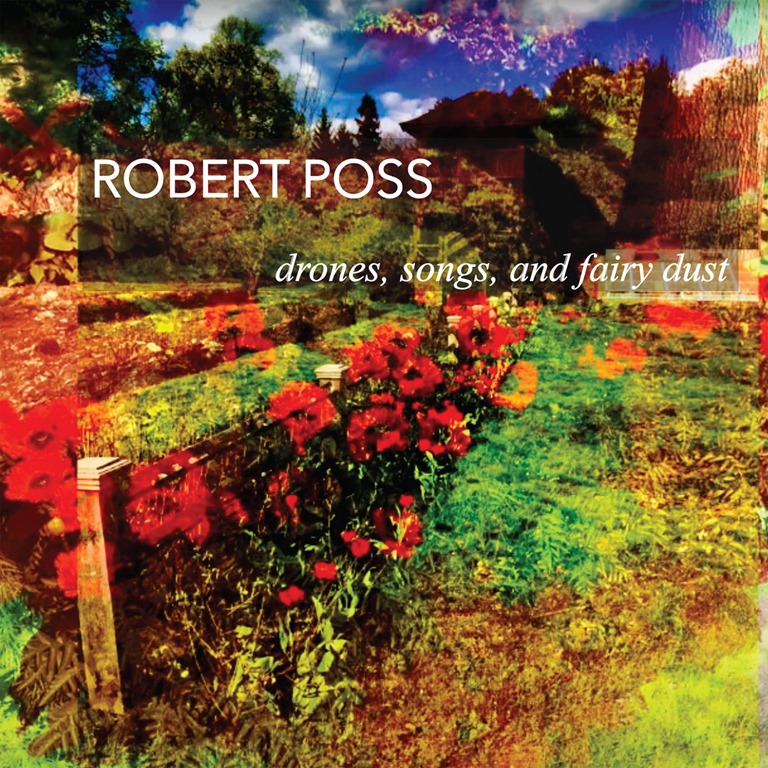
With Band of Susans, active between 1986 and 1996, Robert Poss curved an arc from the New York noise scene towards more of a shoegaze sound. With releases on Blast First and Mute, and featuring a pre-Helmet Page Hamilton on second album, Love Agenda, not to mention a reputation for eardrum-shatteringly loud live performances, the band unquestionably achieved more in terms of influence and cult cred than commercial success (something their final album, Here Comes Success (1995) seemed to acknowledge in its title). But what qualifies as success? Capitalist culture and media tell us that success is a career, promotion, cash, holidays, cruises, bug house big car. But that’s because these are the status symbols capitalism tells us we should aspire to. How about having enough to be ok, a home you like and feel comfortable in, having friends, knowing yourself and being comfortable in your own skin, and having the freedom to do things which give you pleasure? It’s a question of values: what do you value more, time, or money? Status, or the satisfaction of being true to yourself?

There seems to have been a fair bit made of fellow BoS alumni Karen Hagloff’s return to music making in recent years, but not so much about Robert Poss’ sustained output since the band called it a day. But then again, Poss has spent a career being somewhat overlooked and vastly underrated. Both his songwriting and style of playing is quite distinctive and unusual – quirky seems a reasonable adjective, and is certainly not a criticism. The notes on bandcamp note that ‘The release is dedicated to composer/filmmaker/photographer Phill Niblock, a long-time mentor, colleague and friend.’ The timing of this certainly renders this dedication particularly poignant, and also highlights the way in which exponents of avant-gardism feed off one another and evolve one another’s ideas in different directions.

The Niblock connection certainly sheds additional light on Poss’ approach to composition and sound, favouring drones and repetition over rigid verse/chorus structures and progression, and Drones, Songs and Fairy Dust does very much contain, as the title suggests, a miscellany of bits and pieces, ranging from exploratory wanderings to fully-formed songs using conventional ‘rock’ format of guitars, bass, and drums – and on some, there are even vocals, notably the punchy post-punk cut ‘Your Adversary’, which marks a change of style with its murky production and blustery drum machine backing.

The first of these, ‘Secrets, Chapter and Verse’ is a title which could easily be on a Band of Susans release and the song carries that Band of Susans vibe – jangly indie but played loud – and I mean LOUD, with strolling bass running back and forth and up and down beneath the layers of guitar, the vocals low in the mix and serving primarily functional capacity – sonic placeholders.

‘Out of the Fairy Dust’ combines jangling indie and ambient drone and in many respects does carry echoes of ‘Here Comes Success’ – but also Love of Life era Swans – at least until about halfway through where it takes a sudden turn into deeper folk territory. It’s quite a contrast with the deep, ultra-droney sonorous ambience of ‘Foghorn Lullaby’.

Like the epic solo workout that is ‘Hagstrom Fragment’, which comes on like some legs akimbo 90s rock, ‘Skibbereen Drive’ lunges into rock mode, and follows the chord sequence of ‘Flood II’ from The Sister’s of Mercy’s Floodland – and sounds very like it, with its cold synths and crisp drum machine, but without the acoustic guitar detail and lead guitar line. It’s a real contrast to the epic dronescape of ‘Into the Fairy Dust’, on which the drums are a million miles behind the drone as they clatter and roll away, onwards, ever onwards, but also almost entirely submerged in the mix. Elsewhere, with its snarling synth grind, ‘S Romp’ sounds like Suicide doing dirty disco, and ‘Trem 23’ – well, it takes us back to the 23 enigma.

Drones, Songs and Fairy Dust showcases a remarkable diversity of styles, and it’s neither as dry nor as dark as all that, with ‘Imaginary Music On Hold’ presenting a most whimsical feel. As a collection, it never fails to be interesting, or enjoyable, and showcases Poss’ eclecticism and range, and there’s pleasure to be had from listening to a collection of work by an artist who never feels constrained or compelled to confirm to a given genre or mode. It’s something that seems to trouble many people, not least of all labels and critics, that an artist’s creations are based on the pursuit of creative endeavour and interest rather than assigning themselves a category by which they must live. The flipside of this is that it may not feel particularly like an album it its own right, but more like a collection of demos and ideas – and just as the title summarises the contents as three separate elements – Drones, Songs and Fairy Dust – so it feels like it contains the seeds of three separate and distinct projects – a droney one, an indie one, and a dark rock-orientated one. It would be exciting to witness those three projects realised, but what we have here, regardless of future intent, is a document of forward-facing music-making and an artist whose sole priority is doing his own thing. This is, ultimately, the ambition for any artist: to create without concern for commercial matters. And Drones, Songs and Fairy Dust is an exemplary product of creative freedom.

AA

a2882047316_10