Archive for the ‘Albums’ Category

Neurot Records – 22nd April 2016

Christopher Nosnibor

The blurbage: Scott Kelly (Neurosis) and producer/engineer/sonic warlord Sanford Parker (Buried At Sea) are restless. This inquietude has culminated in another collaboration. The two work together in Corrections House, a project that also features the talents of Mike IX Williams of Eyehategod, and Bruce Lamont of Yakuza. While Corrections House seem hell-bent on impersonal bludgeon and unfettered terror, the pair’s latest project, Mirrors For Psychic Warfare by comparison – is far more restrained.

The critique: Restraint is relative, and there’s definitely some noise to be found here, and no shortage of passion. Sonically, however, the maelstrom definitely simmers, with cold-as-ice production tempering the mood. Everything is channelled, focused and chiselled down, distilled into a dense and seemingly impervious sonic slab.

The album’s first track, ‘Oracles Hex’, previously released as a 7” single is representsaative of the sparse yet heavy feel of the work as a complete piece. Against a sparse and disjointed, broken-down folk backdrop drenched in reverb, Kelly’s vocal delivery is reminiscent of Michael Gira. After a slow build, guitars and all kinds of hell break out to forge a murky sonic curtain. It’s a work of slow-building density that requires a degree of patience, but is big on reward.

The 14-minute ‘A Thorn to See’ follows, and marks the album’s pivotal point, a slowly-ascending sonic apex. Built on brooding drones and stark percussion over which monotone vocals intone visions of desolate landscapes, it exists within the same realm of deconstructed rock music as the last two albums by Disappears, before being ultimately devoured in a rising tide of buzzing guitars which all but bury the thunderous percussion.

‘CNN WTZ’ is pure doom, a nine-minute percussion free dirge delivered at a crawl. With crushing powerchords bursting over a rolling piano motif, the final track, the nine-and-a-half-minute ‘43’ is the soundtrack to the apocalypse.

Mirrors for Psychic Warfare is a difficult album, and makes no apologies for the fact. It’s stark, bleak and atmospheric, and offers not a second of solace to the listener. It’s cold music for a cold world. The future offers nothing but a barren wasteland. Mirrors For Psychic Warfare is a musical representation of the soul-crushing emptiness of the now, and of the times to come.

Mirrors of Psychic Warfare


https://bandcamp.com/EmbeddedPlayer/album=2857859844/size=large/bgcol=ffffff/linkcol=0687f5/tracklist=false/artwork=small/track=362898111/transparent=true/


https://mirrorsforpsychicwarfare.bandcamp.com/

Bella Union – 1st April 2016

Christopher Nosnibor

Explosions in the Sky have long been more than merely synonymous with post-millennium post-rock: their early albums effectively set the template for virtually every other band in the field with their delicate guitar work and epic crescendos. It’s been five years since their last album, and ‘The Wilderness’ finds Explosions in exploratory form.

It’s epic, for sure, and it’s also brooding, nuanced, detailed. The title track has all of the standard ingredients and gets the album off to a gentle start. So far, so much business as usual.

But the album as a while feels far from formulaic, and it would be a stretch to align many of the tracks here to any genre other than progressive. There are bold, rumbling pianos and drums that roll like thunder as vast sonic vistas unfurl. But instead of the storm of crescendos, there are expansive near-ambient passages, flickers and bubbles of electronica

Urgent drumming underpins the moody ‘Infinite Orbit’, which actually feels like an intro passage to a latter—day Swans track and is one of a number of shorter tracks that point to a relatively concise album – in fact, only three of the nine pieces here extend past six minutes, with the dark and sombre ‘Logic of a Dream’ proving to be one of the most expansive tracks both in terms of duration and sonic reach.

Perhaps ironically, then, while it does feel like Explosions are striving to tread new ground, in abandoning the trademark dynamics that defined the post-rock genre, they’ve produced an album that lacks any sense of action. It’s pleasant, mellow, even. It doesn’t make you feel anything (yes, when I write ‘you’ I’m projecting my own experience as a listener onto you, the reader, both individually and collectively), and ultimately it’s bland and inessential. It’s a proggy post-rock album in an endless desert of proggy post-rock albums. A wilderness indeed.

Explosions in the Sky - Wilderness


Explosions in the Sky Online

Large Unit – Ana

Posted: 6 April 2016 in Albums
Tags: , ,

PNL Records – 4th April 2016

James Wells

This may be a vehicle for Paal Nilssen-Love, but with an ensemble numbering some 14 musicians, Large Unit is appropriately named. The three pieces, recorded in a single day in August 2015, are long-form constructions, spanning 13, 28 and 17 minutes respectively, and as such, everything about this projects exists on a grand scale, not least of all the sound.

Layer upon layer of percussion provides the backbone over which strolling bass and vast, parping brass booms and squawks which veer wildly between crazed, warped jazz and epic swing. There are tempo-changes galore, and frequently the sound builds into a dizzyingly discordant tumult.

Technically, it’s a work of jazz wizardry, but there are places where it’s rather heavy going.

Large Unit

22nd April 2016

Christopher Nosnibor

When members of Pulled Apart By Horses and God Damn are bigging up your band, you’ve got to be doing something right – if you’re on the market for something gnarly, guitar-led and tripping on the wild side, that is.

‘Rack and Ruin’ picks up where their last EP, Son of the Flies left off, with ‘Lizardbrain’, which features on the latter now appearing on the full-length. It’s everything you’d expect from a band who have a track called ‘Fuck Off Brian Eno’: don’t come looking for anything mellow or ambient or even remotely melodic here. But if you’re after a sonic kick in the nuts, that’s a different matter altogether. Welcome…

A buzzsaw guitar slews in against a low-slung, thunderous bass groove to cut an angular racket on the album’s opener, ‘Pound of Flesh’. Tense, and not without a dash of mania and a cocksure sleaze, it grinds and yelps and chops and before you know it, they’re assailing your cranium with the squalid ‘Say What You Want’. ‘Machinery’, the sole track culled from their Bad Jack & Other Stories is less of a standout and more of a rime contributor to the album’s density and the relentlessness of the assault.

The heavily rhythmic ‘No Way Back’ and ‘Snake Oil’ with its epic trudging beat slow the pace but increase the force of the attack amidst desert guitars and squalling feedback. Elsewhere, ‘The Priest’ is a collision of old-school goth and blistering noise rock. It’s not pretty. It isn’t supposed to be.

The production’s suitably murky, and there are hints of the 90s underground which seems to be re-emerging now, about ‘Rack and Ruin’. Forgotten cult acts like Headcleaner and Jacob’s Mouse collide with elements of Shellac and Gallon Drunk to create a swaggering, big-bollocked mess of noise (as is fitting for an album housed in a sleeve with more cocks and balls than you can count), and as such, they stand alongside contemporaries like Blacklisters.

It isn’t all noise as such – there are some skewed pop moments lurking beneath the sludge – but every track teeters gleefully on the brink of maniacal catastrophe. With guitars set to stun and their sensibilities attuned to the back-catalogue of labels like Sub Pop and Touch ‘n’ Go, Rack and Ruin is nasty indeed. It’s also fucking belting.

Nasty Little Lonely - Rack


Nasty Little Lonely on Bandcamp

Gizeh Records – GZH65DP – 18th March 2016

Christopher Nosnibor

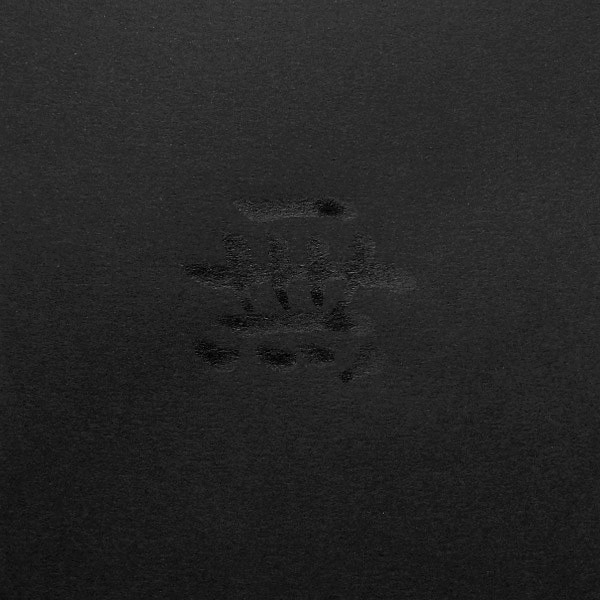
Gizeh is a label which grasps the importance of the complete music experience, and never stint on their packaging. Anyone purchasing their product can feel a tangible sense of both art and artefact, and Anders Brørby’s brooding instrumental album Nihil, the second release in their ‘Dark Peaks’ series, is no exception, housed as it is in a textured gatefold sleeve, the radiating sunburst design raised from the surface, in heavy black ink on a matt black background. How much more black could it be? The answer is none. None more black (the white paper band printed with the artist’s name and album title which much be carefully slid from around the sleeve in order to access the contents notwithstanding).

The presentation provides a suitable indication as to the sonic experience it prefaces. Nihil meaning nothing: while it has, since the 19th Century come to connote a negativity, manifesting as antagonism or rejection through the widespread use of ‘nihilism’, as of and in itself, ‘nihil’, or ‘nothing’ implies an absence. Neither positive or negative, it is simply a lack. Absolute nothing is beyond the human ken, and so, in artistic terms, there is a need to portray nothing, absence, with something. This is something Norwegian composer sound artist Brørby achieves on the 10 pieces which comprise Nihil.

Primarily, the music is dark. There is a lack, an absence, of light, at least in terms of the overall sensation it conveys. Melding elements of drone and dark ambient with more abrasive sounds, the compositions infer an experimental bent which places atmosphere at the fore. The structures are almost subliminal, the shapes of the pieces largely evolve and emerge briefly through a succession of transitions as layers of sound overlap and drift across one another almost imperceptibly. Musical forms are therefore explicitly absent, expounding the concept of ‘nihil’. As such, Nihil is a work of subtlety, and a work which bears theoretical scrutiny, and sits alongside works by the likes of Christian Fennesz, Lawrence English and Tim Hecker.

But subtlety should not be read as a synonym for sedate or tranquil. ‘As Dead as the Stars We Watched at Night’ builds layers of dark noise and swelling drones scrape and torment the nerves, and while the gentle, chimes which ripple in cadence through ‘I Will Always Disappoint You’ offer a glimmer of light and warmth, ‘Put Your Ear to the Ground’ finds a harsh, thick distorted fuzz that obliterates the smooths contrails beneath and accentuates the unrest on which Nihil is constructed. Likewise, the serrated howl of ‘From the Window Above the Lake’ conveys the anguish of emptiness.

Through the medium of sound, Brørby creates a conceptual absence (not to be confused with an absence of concept). There is no message, and Brørby does not purport to convey anything through the work beyond ‘raw atmospheres’. ‘Raw’ implies unfiltered, unadulterated, without manipulation nor refinement, and while this may not be strictly true of Anders Brørby’s creative process, Nihil nevertheless presents itself as being self-contained, a work about absence of anything but the sounds it contains. It is not ‘about’ Anders Brørby, and if anything, the artist is, if not completely absent, then very much hiding in the shadows.

It’s an album that’s best appreciated in a semi-present state, to allow the sounds to slowly wash over the senses and most of all, to be heard without preconceptions or expectations. Because nothing can often leave you with so much more than something.

Anders Brorby - Nihil


https://bandcamp.com/EmbeddedPlayer/album=4022471447/size=large/bgcol=ffffff/linkcol=0687f5/tracklist=false/transparent=true/


Anders Brørby Bandcamp

Neurot Recordings – 25th March 2016

Christopher Nosnibor

Full of Hell seem to be an act who thrive on collaboration, with their previous release, Full of Hell and Merzbow proving to be a magnificent if suitably challenging meeting of strains of noise which nothing if not effective.

Small wonder that the press release states that Neurot Recordings is very pleased to announce a full-length collaborative debut between apocalyptic doom duo, The Body, and grindcore/harsh noise sculptors, Full Of Hell.

I’ll admit that the title is something of an obstacle for me, reminding me as it does of Hole – specifically, ‘Doll Parts’ but the squalling barrage of percussion-led noise that explodes in the first minute of the title track obliterates all reminders of anything other than the need to continue breathing. From the fury emerge grand, mangled powerchords that sweep against a sombre march.

The cover version of the Leonard Cohen track ‘The Butcher’ is a real standout track, despite being barely recognisable in this dank, droning mutant form. But yes, beneath the gut-churning 10bpm sludge and barely audible, Cohen’s barren lyrics are howled and snarled.

The drums are back to the fore on ‘Gerhorwilt’, a thunderous, speaker-smashing tumult combine with tortured, and torturous, vocalisations that barely sound human, while ‘Himmer and Holle’ is a wall of noise that’s the very definition of infernal. Incredibly, the punishment ratchets up another notch or three on the desolate grind of ‘Bottled Um’, and there’s a sense of relief on arriving at the end of the album’s final track, the blackest of black ‘The Little Death’.

That this album is beyond noisy – a pretty relentless assault from beginning to end – is only half the story. The individual tracks display a polarity of pace, with crawling dirges buttressing hundred-mile-an-hour thrashout frenzies. As such, the extremities of the dynamics of tempo are accentuated, hurling the listener back and forth while continually battering the senses with violent sound.

Is it a coincidence it’s being released on Good Friday? Probably not. It does, after all, feel like the sonic equivalent of crucifixion. Hellish, heavy and even more hellish, the day you hear this album is the day you will ache in ways you never imagined possible.

Body   Full of Hell


The Body & Full of Hell at Neurot Recordings

clang records – clang038

James Wells

‘Invisible’ finds Lars Graugaard and Kaisuke Matsuno putting ‘interactive computer’ and electric guitar through their paces, and it’s a very different proposition to Graugaard’s 2015 album ‘Venus’. Instead of carefully structured and sequenced pieces dispersed by moments of quiet delicacy, this album’s five tracks oftentimes make an all-out assault on the senses. The guitars are subject to some heavy processing, yielding treated sounds that sound more synthesised than played, while the computer-generated sounds are like no instrument of any kind.

Clicky, glitchy scratches of sound provide rhythms in lieu of conventional beats, and woozy, subsonic bass notes worm around amidst clustering bursts of noise and frayed static. Howling drones with serrated edges scrape deep sonic ravines, undulating and oscillating before crashing in sonic supernovae.

Having reviewed this album, penned for a late 2015 release, and having been subsequently unable to find details of it online, I’m perplexed. If / when it becomes available, I do recommend finding it and giving it a proper listen. Meanwhile, it seems to be truly invisible.

Quisling Records – 1st April 2016

Christopher Nosnibor

And so the story goes that originally formed by two frustrated drummers, Godzilla Black was the brainchild of two frustrated drummers who came together to release their eponymous debut in 2010. They evidently did something right, catching as they did the attention of Ginger Wildheart, which led to frontman John Cormack contributing vocals to Ginger’s Mutation project alongside members of Napalm Death, Cardiacs and The Fall, which was later released on Mike Patton’s Ipecac Records.

As you may reasonably expect from an ever-mutating project with a crazy wealth of crazy references, there’s a lot going on here. The album’s first track, ‘The Wizard of Ooze’ brings together elements of Kong’s skewed post-Shellac racket and the bombastic bravado and melodies of Faith No More. Sling in some bold brass and it’s one hell of a strange stew, but that’s exactly what Godzilla Black do – they melt multitudinous improbable bits and pieces together to forge something that’s weird, wonderful and rocks like a motherfucker.

The breezy vocal melodies of ‘Take Me To the Countryside’ may carry a psychedelic edge and hints of The Monkees in the verses, but they’re driven by a barrage of beefy guitars and a warped take on the overall production worthy of The Melvins. And we’re still only two tracks in.

‘First Class Flesh’ is just under two minutes of musical mania, the screaming abdabs finally defined sonically, and then there’s ‘Spaghetti’ which is a slice of wild desert blues, Sergio Leone and Queen of the Stone Age stranded together, in fucked up on peyote and hallucinating mirages of who the fuck knows what.

Most bands would have shot their load for ideas long before now, but the rockabilly math-rock frenzy of ‘Polydactyl’ and the crazed, full-throttle attack of ‘The Other White Meat’ (which even manages to reference The Blues Brothers in the midst of a bonkers explosion of raucous brass) more than abundantly show Godzilla Black are a band who are constantly on the brink of rupturing themselves lest they don’t give vent to their creative fermentations. In the hands of lesser artists, such an explosion of divergent musical bits and pieces would be a horrible mess, but they hold it together, and even the shorter tracks – there are a fair few that run between two and three minutes, and a couple are even more brief – sound fully formed, and even focused despite their everything all at once stylings.

It may take a few listens through to really get a proper handle on, but Press the Flesh is a classic example of what you might call ‘warped genius’. Restless, relentless and audacious as fuck, there really is never a dull moment.

Godzilla_Black_album_cover

http://bandcamp.com/EmbeddedPlayer/album=3855894031/size=large/bgcol=ffffff/linkcol=0687f5/tracklist=false/artwork=small/track=3933977863/transparent=true/

Godzilla Black Online

Bronze Rat Records – BR5 – 26th February 2016

Christopher Nosnibor

I’m late to the party here. Lauren Laverne’s already been bigging up this collaboration between Michael J Sheehy and former Dream City Film Club bandmate Alex Vald. I guess that’s the price you pay for having a full-time job that isn’t listening to and playing music, and you don’t have a production team to sift through your promos. I don’t begrudge Lauren getting in first, because I’m pleased to see the latest work by musicians who, in their former incarnation, recorded not one, but two Peel sessions.

Dream City Film Club were band out of time, and the same may be true of United Sounds Of Joy. However, the way in which music is disseminated and received now as opposed to 20 years ago means that outside the mainstream at least, music is more likely to be accepted on its own merits rather than on the basis of prevailing fashions.

There’s a strange polarity at play here: it’s harder than ever to break into the major league to achieve top-flight status and all that comes with that, in the form of international success, wealth and recognition. But the infinite fragmentation of everything beyond the mainstream means that bands can connect with niche-level audiences globally, and aren’t reliant on radio play or support at home to attain a degree of recognition. If there’s any justice, the channels now available will enable United Sounds of Joy to connect with the audience they merit.

Yes, they are an acquired taste. For those unfamiliar with his previous work, Sheehy’s soft, haunted croon comes of a surprise at first, and in this musical context, it’s particularly unusual. It’s simply so rare to hear vocals on what is, in effect, an ambient audio work. Yet with hints of Scott Walker, minus the arch theatrical side, Sheehy’s voice is perfectly suited to the

The music is wispy, vague, hauntingly intangible. Shimmering guitars tremolo in ‘The Sun That Hides a Darker Star, and the monotone spoken word of ‘Dust Veil’ cracks dryly over the sparse bassline and dark, pulsating industrial wasteland conjured by the crunching, mechanical rhythm. ‘Wounded Moon’ has something of a Michael Gira / Angels of Light quality to it, calling to mind the sparse, folkier later works, infused with a slow-burning drone.

It’s a greatly understated work, at times it’s almost sonically subliminal – yet it still succeeds in achieving a most hypnotic effect. And that’s precisely why it warrants exposure, exploration, consideration. By no means an immediate album United Sounds Of Joy is most definitely an intriguing album, built on many layers. It’s not one to hurry, but one to explore.

United Sounds of Joy

United Sounds Of Joy Online

Crónica – Crónica 105 – 8th March 2016

Christopher Nosnibor

It’s not a criticism to state that oftentimes, the material on Roha feels more like a collection of sounds than a succession of actual compositions. There’s a certain randomness about the sounds, which range from clanking, arrhythmic percussive sounds, squeaks, tweets and flutters, groans and drones and distant, barely audible and completely indecipherable speech. There are rhythmic elements, but these are more emergent than overt or focal to the eight pieces. The listener is likely to find themselves pondering the connections between the sounds, or subconsciously creating, ways on which they relate to one another, the ways that certain juxtapositions affect the effect of the individual sounds.

Often delicate, subtle and quiet, if not exactly calming, there are passages which build from nowhere to great sonic density. ‘tuul’ brings great hefts of doomy overdriven noise that could as easily be a sludgy guitar as a synth sound, and is more metal than ambient, and elsewhere, the tropes of traditional folk music drift into the album’s eclectic sonic pallet. Trobollowitsch is something of a magpie, and while it would be a mistake to suggest he takes from a range of sources indiscriminately, there is a very strong sense of organicness and fluidity in the way he treats the material assembled here.

The overarching mood of the album is dark and sombre, with the funereal ‘ssbeat’ sounding a dolorous death knell, but Trobollowitsch manages to avoid creating a work that’s completely oppressive. It’s a form that takes a little acclimatisation, but in its ever-changing nature Roha is an album that deserves exploration.

Roha

Andreas Trobollowitsch Online