Archive for the ‘Albums’ Category

SIGE Records – 1st April 2016

Christopher Nosnibor

How often do you read reviews with the words ‘haunting’, ‘evocative’ and ‘brooding’? I’m as guilty of trotting these terms out as the next hack, and I’ll admit that oftentimes, I feel like a bit of a twat for doing so. Hyperbole doesn’t enthuse me as a writer or a listener. I can’t speak for all reviewers, but I mean them sincerely. I live and breathe music, it’s in my blood and it’s in by brain. Music moves me, and I use it to both reflect and to steer my moods.

But on The World Unseen, Mammifer (Seattle duo Faith Coloccia and Aaron Turner) forge a transcendental listening experience from piano, voice, guitar, Wurlitzer organ, bass synthesizer, tape machines, and effects pedals, and over the course of the album’s eight tracks transport the listener, taking them first inside their own minds, and then heading on a long trip outside.

They’ve not done this without the assistance of some noteworthy collaborators:

Eyvind Kang was responsible for the string arrangements. Geneviève Beaulieu (Menace Ruine) and Joe Preston (Thrones and formerly Melvins, Earth, The Need and High on Fire) make guest appearances on “Domestication of the Ewe pt. III”, contributing additional choral vocals and bass. But The World Unseen is very much about its creators remaining in the long shadows while the expansive music that conjures images of a mythical age which predates human supremacy and instead evokes hills and trees, stands on its own merits.

Soft, subtle vocals drift over carefully-constructed passages of delicate ambience, rolling piano and layer upon layer of considered strings. In places, only the rumble of wind over a microphone is audible. As a sustained rumble, it’s menacing, but heard as wind, it’s the sound of a vast open expanse and somehow strangely liberating.

The World Unseen is a subtly powerful and ultimately moving work. It is without doubt quite definitively ‘haunting’, ‘evocative’ and ‘brooding’. It also speaks to the subconscious self and resonates on an almost subconscious, biological level.

Mamiffer - The World Unseen

Mamiffer Online

Hide & Seek Records – 18th March 2016

Christopher Nosnibor

I’ve been less than complimentary about Department M in the past. They’re a band I feel I ought to like, and, truth be told, really want to like. I very much get – and like – so many of their reference points and influences. I like their sound, overall, and in terms of the component parts. I kinda think their highly stylised image – specifically that of Owen Brinley – is cool, in a way. That doesn’t mean I don’t think the mac and headphones getup is a tad affected – it’s a chronic affectation, in fact, but there’s a sense that Brinley’s homage to the 80s is sincere and very closely studied in its affection.

But for all that, they’ve always felt somehow lacking, the music too controlled, the look too much of a contrivance, the sounds too preoccupied with recreating the vintage. Style, yes, but substance?

As is standard for department M (stylised with a lower case ‘d’ in the latest round of promo), Deep Control has a lot going in its favour, at least on paper, featuring as it does Owen Brinley (ex-Grammatics) and Tommy Davidson (Pulled Apart By Horses), while having been produced by long-term friend James Kenosha, who has a staggering resumé. Again, that’s a fact. It was also mastered by Tom Woodhead, formerly of Forward Russia, at Hippocratic studios, and it looks good. A decent album cover matters, and this works, although it is an unashamed reconstruction of many things 80s.

And I would love to froth at the mouth with enthusiasm for this release, or at least be forced to reconsider my stance. I actually wanted to be wrong, to declare the error of my previous perceptions of the band. But sadly, Deep Control only reinforces everything I find troublesome with department M.

But while their eponymous debut showed clear promise and a bit of edge, Deep Control is the sound of a band slipping into its comfort zone. The album’s tile and many of the tracks imply antagonism and frustration which simply don’t translate in the delivery.

It’s ironic, given the circumstances of the album’s creation. As the press release explains, ‘the lyrical undertow of the album is a discourse on coming to terms with disorders such as Anxiety and OCD whilst living in the sometimes harsh modern worlds of work and play in a Northern city. After years spent in the spin of these facets, there’s the essence of time escaping at speed – you can only sit back and watch the years whirl by.’ Again, I can relate: every landmark birthday I approach is prefaced by abject terror in the face of the ageing process, and I have a handle on stress, anxiety, panic. Despite all of this, Deep Control fails to speak to me.

The album as a whole simply lacks bite. It feels, and sounds, simply too insular to communicate any kind of message. And yet there’s no real sense of inner turmoil either.

The songs are wet, as is their delivery. There’s an eternal threat of breaking out, cutting loose, giving it some nuts, that remains unfulfilled. There’s a moment where the final bars of ‘Bad Formulae’ turn dark, and a shuddering cybergoth groove kicks in that suggests that – it being only the second track – things are going to take a turn for the intense on album number two.

But sadly, it never happens: the Depeche Mode (I very much doubt the band’s initials could be accidental) meets Howard Jones stylings lack any real meat, or sense of direction, and it transpired that Deep Control is tame in comparison to its predecessor.

‘Stress Class’ sounds like an outtake from Black Celebration, and there’s no doubt it’s better than the stuff they played before the start and during the break in the stress class I attended, but then I never dug Norah Jones or Coldplay.

Brinley’s vocals strive toward soul, but lack any guts or character – which pretty much sums up Deep Control as a product.


Department M - Deep

Department M Online

Reveal Records – 11th March 2016

Christopher Nosnibor

Vigils comprises a suite of 11 sparse piano-led compositions. As a unit of work, its pace is predominantly sedate; the strings are subtle, graceful, and the mood is thoughtful, reflective. This is very much Birkin’s objective here, and he describes the album as ‘a soundtrack to the idea of looking back at our present from somewhere in the future’. But Vigils is not an album that cries nostalgia. It does not evoke a sense of longing for a future past. But equally, nor does it soundtrack a sense of guilt or a desire to separate from the part. It evokes the passage of time, of retrospection, of ageing, but without resorting to Instagram filters. Vigils is about time, but doesn’t set out to evoke a specific time as such, and in doing so, transcends time.

In context, ‘Accretions’ is surprisingly spirited and uptempo – that isn’t to go so far as to say it’s pop, but the rippling chords and hooky repeated motifs are accentuated with big chords that imbue the piece with a boldness that romps along in a way which is overtly accessible.

‘Moonbathing’ introduces picked acoustic guitar and harmonious vocals while a violin weaves shades of pastoral folk, while the orchestral chamber music of ‘Atomhog’ is sweet, crisp, and uncluttered in its arrangement.

Birkin explains the concept behind the album its artwork by observing that “Significant human evolution is not fast and loud but slow and quiet. So slow that you almost don’t notice it happening. Except when you look back and see changes after they’ve happened…that’s when you see the giant leaps.” Based in Derbyshire, Birkin formulated the album secluded in his isolated residence in an old mill, itself an artefact from a bygone era repurposed for contemporary living.

And while we – that of course is me speaking on behalf of an assumed section of the population right now – often speak of the unbridled pace of change, in real terms it’s all relative. Mobile phone models and laptops may change faster than you can blink, but that’s only superficial change. Lifestyles, attitudes, the big things, change much more gradually, almost imperceptibly. And indeed, it’s during those imperceptible, gradual changes, that the leaps occur.

I daresay that no-one living in the Industrial Revolution felt as though they were living in a period which would come to mark a pivotal period in human history, just as those living in the inter-war or post-war years we likely too busy simply living to consider the present as a period. Similarly, growing up in the 80s never felt like the dawn of the digital age or late capitalism, and there’s very little obvious difference between pre- and post-millennial life as it goes. But in the present, the eighties feel like another life, the sixties and seventies like historical fictions.

Time is but a construct measured in lived experience, and subtly, subliminally, by implication and by simply side-stepping stylistic trappings of past, present or imagined future, Richard J. Birkin captures all of this in a beautiful, poised and soothing collection of work.


Richard-J-Birkin-Vigils

Richard J. Birkin Online

Room40 – RM474

Christopher Nosnibor

Sometimes, this reviewing business is personal. How can it not be? Surely no-one can get into music reviewing without being a mad rabid fan of music above all else. Sure, some may do it for the ligs, but in a non-paying market, first and foremost, it has to be for the love. Yes, I speak personally here. I’m certainly not in it for the money.

I’ve been a fan of Swans since I was in my teens in the early 90s, after being passed a recording of Children of God. It’s an album which will remain with me forever, for so many reasons, not least of all the juxtaposition of thunderous intensity and elegant beauty. I was quick to seek out – and spend my money on – their back catalogue, with Cop proving to be nothing short of pivotal in my musical education.

But as much as I developed a bewildered admiration for Michael Gira both as a lyricist and an artist in the broader sense, I also came, fairly quickly, to appreciate the guitar playing of Norman Westberg. His playing was stark, minimalist, brutal, and seeing him perform live in the current incarnation of the band only cemented my respect. I can’t think of a guitarist less concerned with heroics, who better appreciates the idiom that less is more. He’s nonchalant, cool, peeling off shuddering chords at infinite decibels and grinding out the same riff for what feels like an eternity requires discipline and appreciation of the bigger picture, but more than anything, it has impact.

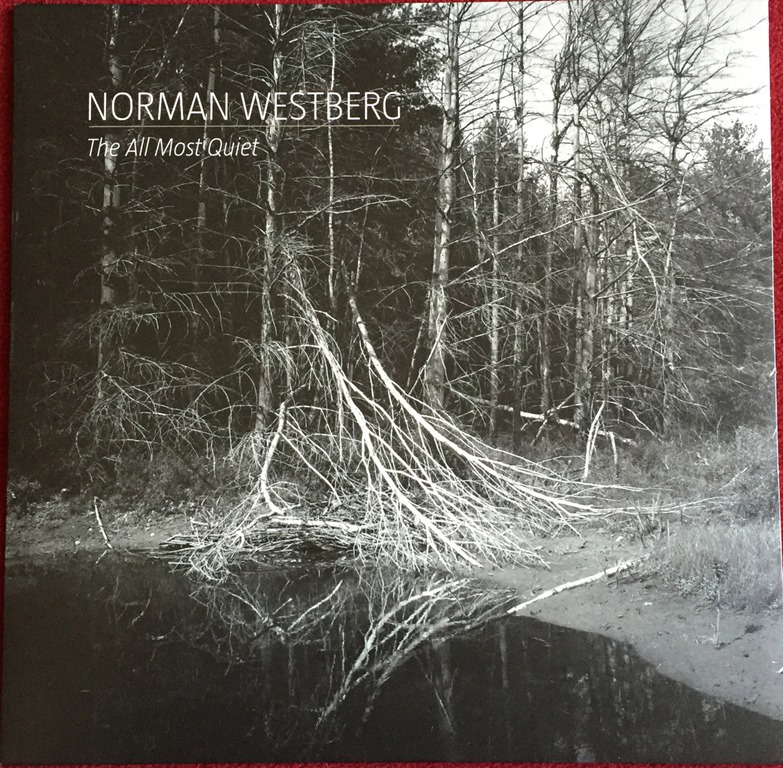
MRI is not about grinding repetitive chord sequences and squalls of feedback, and as such, reveals another side of Westberg’s guitar playing. If anything, listening to MRI has only furthered my appreciation. Building droning ambience from oscillating feedback and eternally sustaining notes which hum and simmer, MRI is subtle, soft and understated.

In fact, MRI is very much a response and intentional counterpoint to the punishingly high-volume output he’s spent much of his career producing. As the press release explains, MRI is the result of Westberg’s encounters with the heavy medical scanning technology following his recognising diminished hearing. “I started to notice a loss of hearing in my right ear,” Westberg explains, “and decided that it was high time that I had it checked out by a professional. The audiologist confirmed the uneven hearing loss and recommended an MRI. The purpose of the MRI was to make sure that there was not something other than my own aural misadventures causing the uneven loss.” Described in the press blurb as ‘a coda to this experience’, and as ‘a collection of reductive rolling guitar pieces that are embedded strongly in the American Minimalism tradition’, MRI was recorded in 2012, and appears here remastered, post-produced and augmented by a brand new piece, ‘Lost Mine’, recorded in 2015 as an echo of the processes that led to the original recordings.

MRI doesn’t sound like a guitar album, but in many ways, that’s one of its great strengths. It’s testament to Norman Westberg’s unconventional approach to playing the instrument, and reasserts his significance. But, perhaps most importantly, it’s a wonderful and extremely soothing sonic experience.

Print


Norman Westberg – MRI at Room 40

Crónica – Crónica 103 – February 2016

Christopher Nosnibor

Simon Whetham has a considerable history of taking sound recordings – often environmental sounds – and working them into something unrecognisable, by means of various sonic and software mutations. Against Nature emerged from an exploration of what Whetham describes as ‘errors and failures’, using ‘badly built microphones, over-burdened amplifiers, motors driven by sound impulses, misbehaving software and objects toppling’ as part of an organic process. The album is in many ways accidental in nature, the end product determined more by the material than the artist. It could be seen, in some respects, as a project of artistic self-erasure. This album may bear Simon Whetham’s name, but his function here is as a conduit, more of an editor than an author of the work.

Against Nature may only contain five tracks, but the tracks are both lengthy and intense. Screeding noise sustains interminably, piercing tones that aren’t drones but something altogether more serrated. Pink noise switches to white noise. Hums crackle, fizz and whizz and gradually build to immense, barrelling walls of noise that suck the listener into an immersion tank of sound. The quieter passages lull the listener’s senses, a gentle breeze and the occasional clanking of what sounds like a yak’s bell evoke almost pastoral images, before once again building sonorous, scraping tension that creeps and swells. Metallic clattering grinds like a cement mixer. Blasts of static and white noise tear through silence.

The five movements of Against Nature are not rhythmic in their formation, and are free of anything one might refer to strictly as percussion. Primarily, it’s a work of tonal exploration, as sounds bend and bow against one another, straining and generating sonic frictions, but beneath it all, there are natural – or unnatural – resonances, pulsations, which form their own subtle rhythms. And these resonate biologically, psychologically, rubbing with and against the brain-waves and gnawing away, prodding the nerve-endings and ultimately working their way under the skin.


Simon Whetham - Against


Simon Whetham Online

Out of context, it could be any extreme noise / power electronics / experimental / industrial crossover. Whistling high-end feedback, tortured, wailing drones, nagging, drilling analogue synth buzzes, pulsations, distortion and distant low-end rumbling provide the tonal span over which sounds of detonating shells, gunfire, panicked voices, and snippets of newscasts and other media are assembled. The piping sounds of Oriental flutes from India and Morocco are interwoven with stuttering electronica and wandering synths which cast dark, ominous shadows of unease.

In context – and ultimately, it’s all about the context – Gaza takes on a truly horrific dimension, a painful and harrowing documentary work. Gaza is in many respects a soundtrack: recorded during operation Protective Edge in July and August 2014, it is the soundtrack to violent and brutal war.

To read the statistics – the estimates of the numbers killed and wounded, the number of homes destroyed and the estimated costs of rebuilding in the wake of this intense period of battle is bewildering, numbing. Over 2,000 Gazans were killed and well over 10,000 wounded during the seven-week spell. More context: the Gaza Strip is 25 miles long, and between 3.7 to 7.5 miles wide, with a total area of 141 square miles. The city of Gaza is home to around 1.85 million Palestinians on some 362 square kilometres: by way of a comparison, Greater Manchester has a population of 2.7 million, in an area spanning493 square miles. The point is, really, that it becomes hard to compute, and ultimately impossible to imagine the reality of the situation, and what it must be like to live with such decimation. The Sky News images of ruins and rubble amidst clouds of dust and drifting sand may be horrific, but just as pictures of houses bombed in the blitz cannot convey the experience, so this type of footage feels distant, unreal, like a film set.

Pharoah Chromium (aka German-Palestinian musician and performer Ghazi Barakat, who took the name from a song of the band Chrome), I read, draws inspiration from diverse sources spanning free jazz, rituals from ancient past and near future, the dream syndicate, science fiction novels and neo-brutalistic architecture. But most importantly, this is an intensely personal work for Barakat, who writes that ‘having close family ties to the region, I felt it was necessary to politicize my work in order to avoid total disillusionment and estrangement from circumstances that, I feel, are a dead end for humanity. My focus on this one subject is not meant to diminish other conflicts and human-made catastrophes in the world. Although this one just happens to take place in the birthplace of monotheistic Judéo-Christianity, the cultural background of all western societies.’

As such, as intensely personal as it is, Gaza is also intensely political. But perhaps even more importantly, it’s an intensely human work. As Barakat explains, ‘Gaza is built around voices and field recordings that are used to express my subjective, emotional and personal involvement with this subject. The found source material is used to construct a chronology of the events… The sounds of the Korg MS 20 noise filter helped intensify the feeling of hysteria ensuing from violent confrontation during a state of war. An electric wind instrument provides the melodic components and the low frequencies that underline the narration on the second part of the piece.’

And this brings into sharp relief the reality of the experience. Listening to the album, you will jump and cower as gunfire and shells rain down. The sheer volume of the explosions and the shots is astounding, a hail of bullets becoming a blanket of eardrum-shattering noise. You find yourself sitting on the edge of your seat, nerves jangling, wondering if your house will still be standing in a moments’ time. There’s no way you can settle or so anything else: this isn’t background or entertainment. There’s no way in the world you could nod off or otherwise sleep through this. And then you realise, this is the reality of life in a war-zone. The idea of actually living in this environment, to an outsider, is beyond comprehension. It’s a sobering thought, to say the least.

Barakat’s commentary is again informative, and chilling: ‘The two sides of this record are about a place like no other on this planet, a city and its surrounding environs living under extraordinary conditions, hermetically sealed from all sides, only accessible through complex procedures and permits, making it is almost as difficult to get in as it is to get out. Like a cross between the Warsaw ghetto and Manhattan as a giant maximum security prison in John Carpenter’s Escape From New York. Every couple of years the Gaza Strip gets its share of bombardments, and since the summer of 2014, its infrastructure has been pulverized almost to the point of no return. The disproportionate use of force and the asymmetric use of military technology on those already living under siege has created a field laboratory for the military industrial complex with the civilian population as its guinea pig. […]’

The locked groove at the end of each side is the engine noise of an Israeli drone in operation, intended to give listeners the experience of the sound of day-to-day life in the Gaza Strip.

It’s a phenomenally powerful work, which brings home the devastating realities of war in a way that’s truly unique. And while I’ve referred to this as a document, effectively a work of sonic reportage, it is, of course, a work of art. On a technical level, its execution is superb. To all intents and purposes, it’s a cut-up, a collage, and the pieces as assembled seamlessly, and achieve maximum impact. And what impact. Gaza is perhaps the most harrowing album I’ve ever heard. This is art on the front lines and behind the lines. All of the doom and crushing metal releases pale to nothing beside this: Gaza really is the sound of hell on earth.

Gaza


http://bandcamp.com/EmbeddedPlayer/album=72821540/size=large/bgcol=ffffff/linkcol=0687f5/tracklist=false/artwork=small/transparent=true/

Pharoah Chromium – Gaza on Bandcamp

Pomperipossa Records – PRLP2 – 16th April 2016

James Wells

An act called drøne can surely only be about one thing, and yes, drøne (Mark Van Hoen, who’s renowned as a solo artist as well as for his work under the Locust moniker, and Mike Harding – no, not the folk singer / comedian known as the ‘Rochdale Cowboy’) are indeed masters of drone. Reversing into the Future contains two tracks, ‘This Strange Life’ I and II, although the digital version masters them as a single continuous track with a running time of some 42:45. Really, how much drone – or drøne – do you need?

Drone-heavy as it may be, ‘reversing into the future’ manages to hold the interest by exploring a wealth of different textures, creating a is a collage consisting of field recordings, short wave radio, and modular synth, assembled seamlessly to forge a journey of electrically-charged dissonance, drones and electronic melodies.

It would be an absurd act of pomposity and pretention to devote 500 words to the transportative effects of the music, just as it would be an exercise in needless intellectual onanism to effuse over the nuances of the way the various textures and tones resonate with and against one another to achieve various effects.

Reversing into the Future is an intriguing album, and one which will resonate in different ways with every listener. It’s dark, it’s ominous, but it’s also uplifting, graceful. For those who respond on a more technical or theoretical level, there are near infinite depths to explore.

Don’t be deceived: Reversing into the Future offers so much more than mere drone.

Drone

Drøne Online

Exile on Mainstream – 18th March 2016

Christopher Nosnibor

‘The only constant is the blackness of the shape. Everything else, including the shape itself, is in a constant state of flux for Black Shape Of Nexus.’ So begins the press release. If it sounds like preposterous hyperbole with a hefty hint of pretention, then think again: it doesn’t even begin to convey the enormity of this dark, dense work which on the surface confirms to all of the conventions of droney doomy stoner sludge metal, but in fact breaks every last one. The imagination of Carrier is astounding.

To get down to brass tacks, there’s heavy, and then there’s HEAVY. And then there’s this, which is all shades of heavy, and more. As the press blurb implies, Black Shape of Nexus are not a band to align themselves or define themselves as any one fixed thing. Never mind the full sprawl of their output, which occupies four previous releases, Carrier could provoke lengthy and heated debates over which section it should be located in at the local record store (if such a thing still existed. But imagine High Fidelity set in a shop devoted to all things alternative, rock and metal. The conversations would run for pages). And that’s cool.

It’s also cool that Black Shape step up and slap a political disclaimer on the front page of their website. They shouldn’t have to, but kudos to them for making it clear that they’re principled about the people they want as their fan-base. The message reads, ‘Note: There are some doom/drone bands out there sympathizing with fascist/racist “views” – we want to make it as clear as possible, that we strongly disagree with such opinions.
B·SON is anti fascist and anti sexist. Thank you for paying attention! Got that? WE’RE ANTIFASCIST YOU NAZI FUCKS!!! EAT SHIT!!!’

It’s depressing that we do live in a world where extreme right views are rife, not only in countercultural circles, but have become almost accepted in corners of mainstream politics. But at least we can be sure that Black Shape are among the good guys, and not just musically. Although, you could argue that musically, they’re the band guys, ‘cause Carrier is creaking under the interminable weight of the devil’s tunes.

(Shape)shifting between styles, ‘Carrier’ explores various manifestations of heaviosity If the idea of a light, vaguely jazzy break for a few bars in the middle of a seven-minute trudge through the most devastatingly cataclysmic doom seems not so much incongruous as eye-bulging crazy, then you’ll be in even more of a spin to learn that it actually works. Yes, opener ‘I Can’t Lift It’ is a belter, and sets the bar high.

The guitars are backed off – and barely present – on the dark ambient pulsations which occupy the first half of ‘Lift Yourself’, before ripping into a dingy crust-punk thrashabout. If you’re struggling to keep up already, quit now: the Melvins to Sabbath sludge of ‘Sand Mountain’ threatens to collapse under the weight of its own riffage before ‘Facepunch Transport Layer’ lunges in to bring a psychedelic twist to the pulverising chug.

It all comes to a colossal, gut-churning head on the mangled doom of ‘Triumph of Death’: 12 minutes of relentless metal. Transitioning from slow-paced doom and cranking up the tempo and the brute force to build to a driving riff, it drives the album home

It’s punishing, but in the best possible way.

bson_carrier_vinyl-album_satz_12inch-5mm.indd


Black Shape of Nexus Online

Humpty Dumpty Records – HMPTY030 – 5th February 2016

James Wells

Sometimes, there is simply no substitute for volume. Marking something of a change of direction from his previous Amute albums, Jérome Deuson has embraced something that could be considered more of a ‘rock’ aesthetic in cranking everything up to 11. But this isn’t a question of indulgence. It’s about the transformative nature of volume. It’s the volume of the sounds which determine the way the notes and tones interact on the pieces on Bending Time in Waves. The dominant instrument is guitar, bathed in reverb and pushed to the max to forge vast cathedrals of sound. You might loosely call it shoegaze, or slacker indie, or simply ‘alternative’, as we did back in the 90s. And there’s very much a 90s feel to Bending Time in Waves, an album capable of the same kind of temporal discoordination as induced by My Bloody Valentine’s Loveless.

Beneath the tumults of guitar, there are some pounding drums, but like everything else, they’re partially obscured, semi-submerged amidst a tidal wave of treble, a screed of overloading sound that fizzes and crackles and fuzzes. Winsome slacker introspections played delicately and ponderously are transformed by the ear-splitting volume, crackles, and pops of cracking transistors and hisses of feedback. Soft swathes of soaring strings cascade in and out again on tsunamis of reverb-soaked guitar. Quiet moments of reflection, hushed and sincere swell outwards exponentially, threatening to obliterate Deuson’s fragile psyche.

It’s disorientating, bewildering, overwhelming. But there are some nice songs to be discovered, underneath it all.

Amute

Amute Online

Ici d’ailleurs – IDA111

Christopher Nosnibor

That some hail Semtex as one of the most influential drum & bass albums of its time is entirely understandable – perhaps more so with two decades to reflect on its groundbreaking achievements. 20 years on, it sounds staggeringly intense.

The album is appropriately named: an aural explosion, it still sounds like nothing else. That they don’t make ‘em like they used to may be true, but then, they never made ‘em like this, ever.

There’s a primitive quality to the recordings, in that the tracks are all drenched in a thick sonic smog. But while the dense layering of the sound adds to its appeal, and its enigma, as you lean closer to strain for the hidden details, the nuance, the very soul of the songs, there’s also a sense that the unusual production conveys intense, ear-splitting, tinnitus-inducing volume. This is one of the album’s major assets, and in many ways, it’s perhaps as well, in that it gives some vindication to Matt Elliott’s devotion to a most basic but equally uncompromising approach to the album’s realisation: as the bio notes, Semtex was mixed ‘with headphones way too loud’, which resulted in the artist suffering permanent hearing loss at around 3 khz.

In some respects, it’s a product of its creation: after all, necessity is the mother of invention, and the material was recorded in a squat which Elliott shared with Matt Jones from Crescent, on a-4 track recorder borrowed from Dave Pearce from Flying Saucer Attack. It’s the sound of long hours spent obsessively channelling creativity, and wrestling with the conundrum presented by a vast concept and ambition countered by limited kit and technology.

The press release is on the money when it reminds us that ‘the result is brutal and uncompromising, and features a mix of noisy ripped up guitars and hectic drum machines’, and that ‘Semtex is the antithesis of electronic dancefloor music . It’s head music, and it’s headfuck music. It juxtaposes dreamy soundscapes with violent sonic assaults, and operates on so many levels, conscious and otherwise.

The original album featured six tracks. This staggeringly comprehensive reissue features a bonus disc containing a further eight, and there’s a download code for additional material giving a total of 29 tracks and some three hours of music, including the 28-minute ‘A Silent Longing’ and 34-minute behemoth ‘Voyager’.

‘Sleep’ starts the album with a squalling dissonant noise that’s sharp and shardy enough to keep even the most chronic narcoleptic awake, assaulting the senses with a nightmarish wall of sound that’s very much geared toward the higher frequencies. Even when pulling back on the aggression, as on ‘Still Life’ and the dreamy drift of ‘Next of Kin’, the tracks are driven by a barrage of percussion, mangled, gnarly and hyped-up industrial-strength beats. The cavernous crawl of ‘Once When I Was An Indian’ marks a change of pace and amps up the atmospherics as it detonates outwards into space in slow motion.

The wealth of bonus material displays manifold different facets of TEF: from the looping motifs of ‘Alarm Song’, which, even with its crunching beats, is more overtly accessible, to the ambient abstractions of ‘Shard’, there’s a lot to explore and digest.

Broadly speaking, the idea of an anniversarial reissue smacks heavily of industry and nostalgia, but this release conforms to neither. It’s certainly not a cheap cash-in with a bunch of b-sides and outtakes to bolster the package. What it is, is a retrospective of sorts, which encourages and facilitates a fresh appraisal of the work in a new context. And it needs to be heard.

Third Eye

The Third Eye Foundation Online