Archive for January, 2026

Dragon’s Eye Recordings – 23rd January 2026

Christopher Nosnibor

The facetious part of me reads the title of this as being a greeting to a pane of glass. I should probably get my coat after such a shameful revelation, but never mind. I’m here with my ears for this complex and detailed release, and will share the standard biographical info to provide much-needed context here:

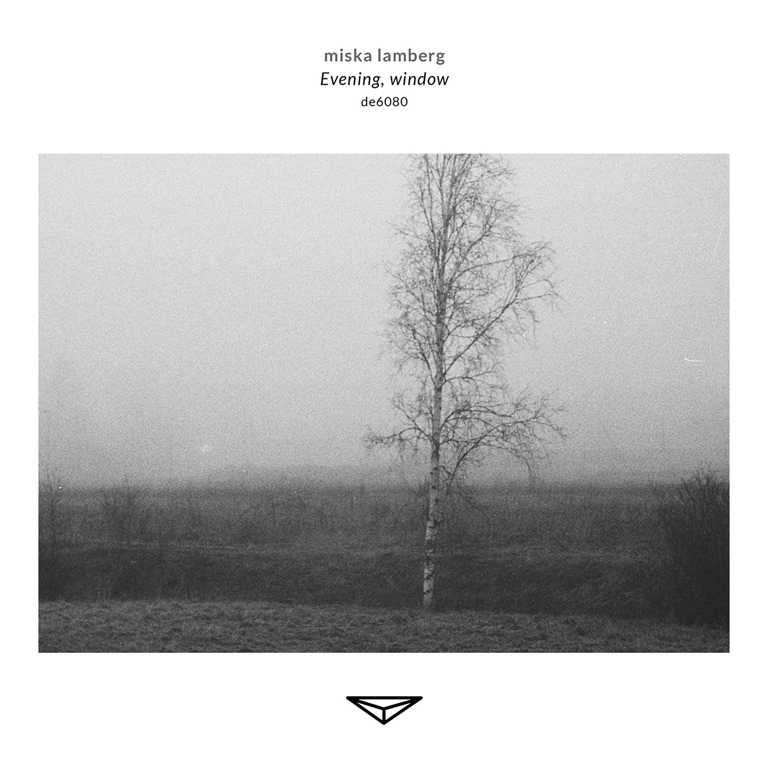
Evening, window is the debut full-length album by Helsinki-based sound artist and ambient composer miska lamberg. Working with intricate field recordings that gather the overlooked moments of daily life – rainfall, distant traffic, animal calls – lamberg threads these textures into compositions that ache with personal memory. On Evening, window, the familiar becomes spectral: fragments of sound blur into melody and mood, capturing the stark melancholy of Nordic winters and the soft violence of remembering.’

The album features some long pieces: four of the six compositions are over eight minutes in duration, and this allows the pieces the appropriate and necessary time to build.

It begins with a metallic clattering. Heavy rain on a tin roof? Perhaps. Then there is a rumble – possibly thunder – but chattering abstract voices and soft, gentle synths drift in a cinematic spatiality and an organ swell gradually comes to dominate as it drifts… Evening, window is a sonic diary of sorts, a compilation of recordings captured in everyday settings as she goes about her life. The nine-minute opener, ‘Half-memories absorb us’ is both immersive and transportative, provoking contemplation. In some respects, the title does more than speak for itself, and also speaks of the way our minds work. And how do our minds work, exactly? Erratically, unpredictably, leaping from one place to another. And we’re thinking one thing while looking at another.

From a certain perspective, Evening, window can be seen to operate within the same field as William Burroughs’ cut-ups, and in particular the tape experiments he made with Iain Sommerville, although the collaging of field recordings and various layers of sound aren’t nearly as extreme here, blending the field recordings and decontextualised samples with carefully-crafted layers of ambience, which maked for a rather more listenable experience. Different objectives through similar intentions, one might say.

There are some haunting, unsettling motifs which cycle through Evening, window: ‘Seeing only faces turned away’ is dark, and listening to the ghostly swathes of ambience which hang dark and heavy is uncomfortable, a repetitive chord sequence conjuring, if not outright fear, then a sense of tremulous trepidation and unease. While Evening, window is a work of lightness and air, it’s also a work of slow, dense weight.

There are children’s’ voices. There are supple strings. At times, the atmosphere is soothing, sedative, but more often than not, there are undercurrents of tension, befitting of a dystopian thriller. Some may consider this to be something of a disconnect from the concept of presenting, or representing, fragments from the everyday life of the artist. But life is strange; the world is strange, and scary.

‘I remember the day the world lost color’ is bleak, barren, conveying the murky gloom of a blanket of fog, while ‘Its monotony is unrelenting’ is the drudgery of life – at least some periods of it – summarised in four words. Anyone who has endured a crap job will likely be able to relate to the sense that life is slipping by while days evaporate trudging through eternal sameness and feeling a sense of helplessness and a loss of identity, a distancing from the self. The sound is muffled, and very little happens over the course of eight minutes of crafted stultification during which the chord sequence of ‘Seeing only faces turned away’ is reprised, only slower, more vague, somehow tireder-sounding. It’s the soundtrack to hauling your living corpse through another dead, empty day – and another, and another, and another.

Evening, window isn’t depressing as such, but it is not light or breezy, and the mood is low and melancholy. It’s a slow, gradually unfurling work which drags heavy on the heart, an album which radiates reflection and low mood. It’s a dose of stark and sad realism, and an album which speaks so far beyond words.

AA
a0509711029_10

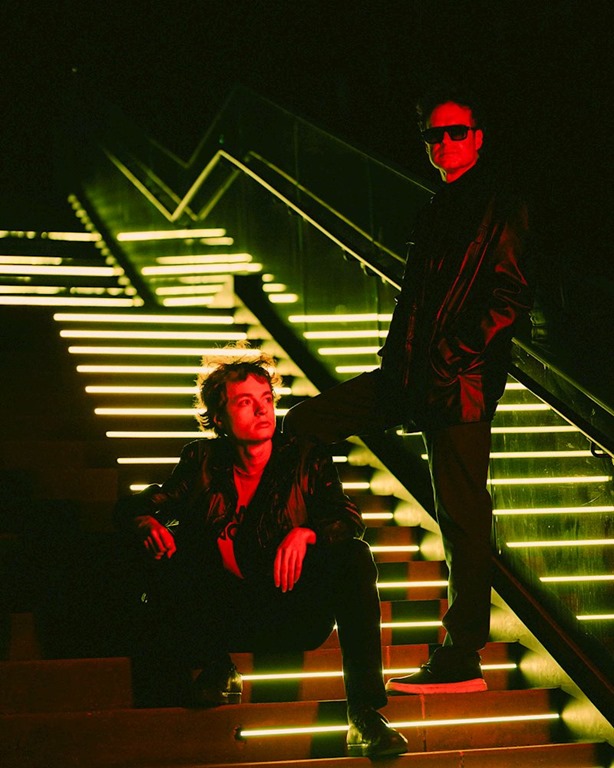
Hunter As a Horse (HAAH) is the South African musician and vocalist Mia van Wyk. Based in the Western Cape, she has spent the last few years self-releasing a diverse series of singles and EPs that combine electronically-focused songs with intense, melancholic lyrics that are given a darkly cinematic production.

Having recently signed to Metropolis Records, the first HAAH single for the label is ’Lighthouse’, an extremely personal song that weaves together mythology and psychology. Inspired by Carl Jung and ‘shadow work’, it is about how only the broken can truly understand each other. “But, one who was broken and is now healed has greater power to lead the broken through the dark night of the soul because they know the territory,” explains van Wyk. “It’s like if someone who died came back to guide the lost back home. I’m ignoring every warning about how you can’t save someone and declaring that I can. It’s about fearlessly challenging somebody else’s demons.”

Seamlessly genre-hopping between alternative, indie, electronic and dream-pop, with diversions into alternative dance and even nu-goth, the songs of HAAH have been described as mysterious, apocalyptic soundtracks for the strange happenings of our time, with the UK newspaper The Guardian commenting: “Brings to mind the mesmerising atmospherics of Lamb and Zero 7. Dark and very lovely indeed.”

The song lyrics of van Wyk are a mystical ride through her strange and synchronicitous life. Deeply authentic, they are inspired by death, addiction, astral visions, CPTSD, melancholia, nostalgia and magical thinking.

Hear ‘Lighthouse’ here:

AA

43ef502c3f2d04dc19a8a51e1fae397b0c880e14

HUNTER AS A HORSE | Mia van Wyk

Damage Control is an electro-industrial music project centred around its current core members Bill Barsby, Richard Thacker and Alex Wise, who are all based in Australia, plus Markus App from Germany. Both Barsby and Thacker are originally from Birmingham, England.

Having collaborated with a number of other like-minded musicians from all over the world on their well received 2017 debut album, Ultranoia, they have repeated the trick for its long-awaited follow-up, Oblivion Grid, a release date for which will be announced shortly. As with the first record, they have also retained the skills of Canadian producer Chris Peterson (Front Line Assembly, Noise Unit, Unit:187) and engineer Greg Reely (Skinny Puppy, Front Line Assembly, Fear Factory).

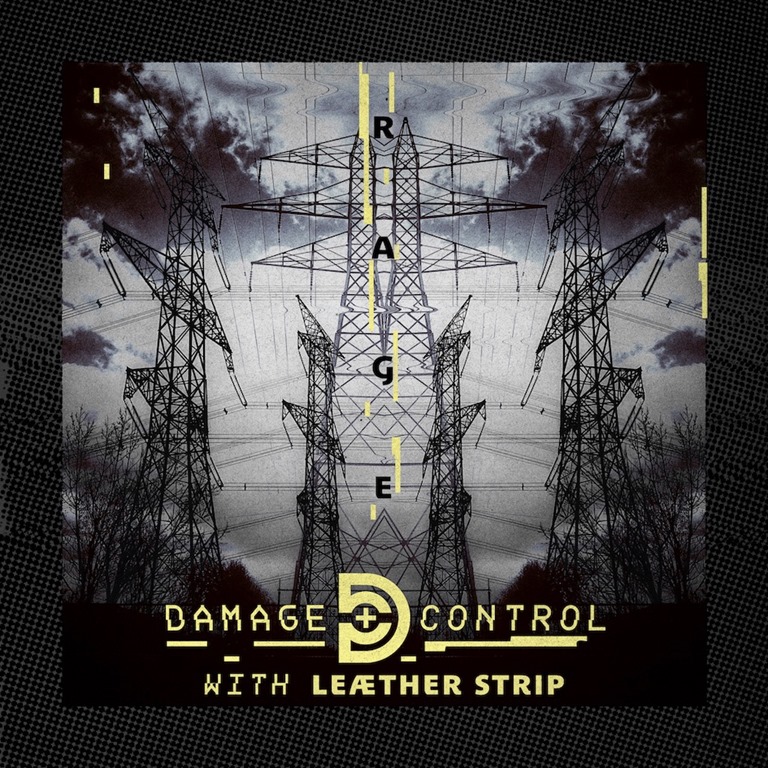
‘Rage’ is released today as the first single from the new album and features the Danish musician Leæther Strip aka Claus Larsen on vocals. “We like working with guest singers and have always loved Leaether Strip since the early ’90s industrial and darkwave club scenes,” states Barsby. “We were curious to hear what the combination of our song, Claus’ vocal and Chris’ production would sound like.”

Peterson adds: “Ever since my first conversations with Bill Barsby over a decade ago that led to the first Damage Control album, I believed in the project and that he was making music from his heart that was something special. This is also the case the second time around and holds true with the artists we were lucky enough to have come on board; we all wanted to help and be a part of it. The result is a wonderful release with a variety of songs that is their best work yet. It is a testament to the creative spirit and joy of making and sharing music that attracted so many valuable contributors to lend their talents over the time it took to realise.”

AA

ee5df87c42ecc5a9a9dc7db13286d99171052477

Kscope – 30th January 2026

Christopher Nosnibor

My parents weren’t really big on music. They had maybe fifty-odd, maybe seventy-five or so albums, and didn’t really seem to listen to many of them when I was growing up in the 80s. Most of those records were old… at least, that was how I perceived them at the time. There was a bunch of Beatles LPs, some Steeleye Span, and the same shit that occupied pretty much every collection at that time, at least for people of a certain age: Tubular Bells, Queen’s Greatest Hits, and Tangerine Dream’s Phaedra. They probably had Oxygene by Jean-Michelle Jarre, too. The 70s and 80s may well have been a boom time for the alternative breaking into the charts, with punk bands and the likes of Killing Joke making it onto Top of the Pops, and it may equally have been the period of peak postmodernism, but living through it then and reflecting on it now, the mainstream cultural dominance was anything but fragmented, and the comparatively limited choices of the time – can you imagine only four television channels, and no Internet? You had to be there, really – meant that there was a huge cultural homogeneity. Everyone watched the same TV shows – with something of an unspoken class division between BBC and ITV – and there was only really Radio 1 and Radio 2, and everyone listened to the radio.

And like most people their age, my parents thought they were hip buying the first Now That’s What I Call Music albums, and my mum would groove while listening to Phil Collins, The Bee Gees and Tina Turner while ironing, records purchased through Britannia Music. I’m not remotely nostalgic for any of this. If anything, my gentle, middle-class upbringing was marred by these experiences because it wasn’t just bland, it was… Look, imagine car journeys to UK holiday destinations in Devon and The Lake District spent listening to Barbara Dixon and Elkie Brooks and 80s Cliff Richard. I love Devon and The Lake District, but the soundtrack to my life as a child was fucking awful, and I feel a certain trauma tripped my life as a consequence. I don’t know if I ever heard Phaedra at home, I just spotted it while flicking through their collection.

Phaedra seems like something of an outlier in the context of such a collection, but it was a huge breakthrough release, the Hot Fuss of 1974. Or something. It spent fifteen weeks in the UK album charts, and achieved six-figure sales.

In context, it was truly a landmark album, famously the first to showcase their seminal sequencer-driven sound, and launched The Berlin School, the foundation of ‘space music’. The fact that it’s been fifty years since the album’s release is unfathomable, but it’s unquestionably appropriate to mark its anniversary. And while the thirty-fifth anniversary brought us Phaedra Revisited – a live performance of the album in its entirety, but reconfigured, retaining the thirty-eight minute duration of the original studio release, but with an abridged rendition of the title track making space for a new composition in the form of ‘Delfi’ at the end.

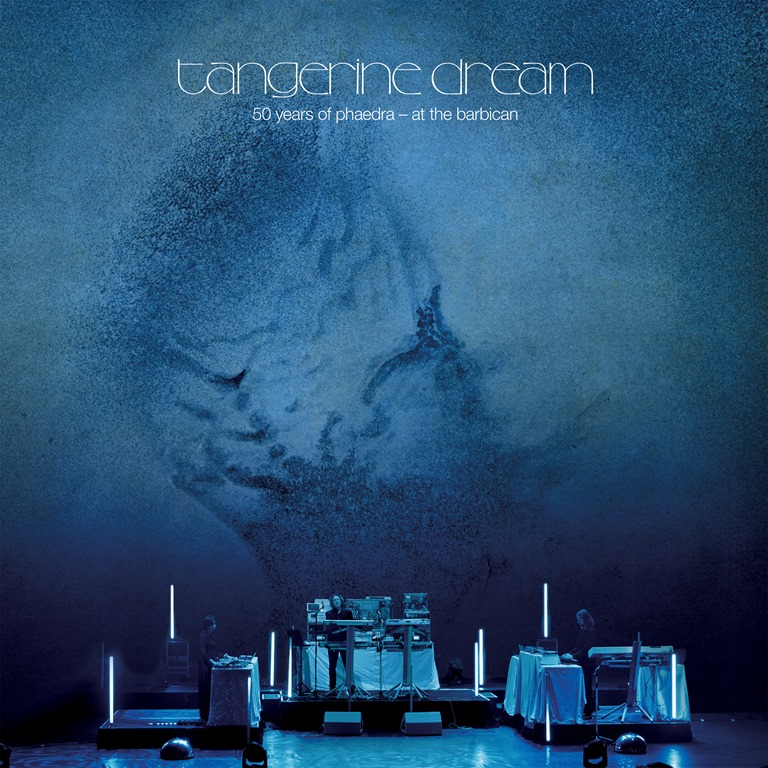
There’s no such sense of limitation when it comes to 50 Years Of Phaedra: At The Barbican – a colossal triple-disc of a commemorative live performance by the current incarnation of the band, consisting of Thorsten Quaeschning, Hoshiko Yamane, and Paul Frick – none of whom played on the studio version.

As the accompanying biographical notes acknowledge, ‘Part of Phaedra’s magic lay in its imperfections: the original sequences were never truly quantised, their timing drifting unpredictably through the Moog’s analogue circuitry. That subtle instability became part of its charm – a human pulse within the machine’ – before going on to explain that ‘it long left current bandleader Thorsten Quaeschning intrigued by what a fully realised version might reveal. Now, fifty years later, Tangerine Dream have revisited the work with the precision that technology once denied them. 50 Years of Phaedra: At the Barbican is the first time Phaedra has been performed fully quantised, each motif beautifully aligned with a crystalline precision previously unheard’.

It’s hard to find fault in either the performance or the fidelity here. It does sound great: there is so much detail, the experience is absolute, a sensory immersion, and that ‘crystalline precision’ means it feels more like an alternative soundtrack to something like Avatar.

The track listing also sees the current iteration move some considerable distance away from the sequencing of the original album: after a brief intro, they play ‘Sequent C’, followed by ‘Movements of a Visionary’, and then ‘Mysterious Semblance at the Strand of Nightmares’. Of these, the first two are substantially longer, the third a couple of minutes shorter. Then they transition away from the original compositions to explore ‘The Hippolytus Session’, a work in eight parts, spanning some forty-odd minutes, but returning to fragments of ‘Phaedra’ in the form of ‘Phaedra 2024’ (and much later, there’s a reprise of sorts with ‘Phaedra 2022’. Hippolytus being the stepson of Phaedra in Greek mythology, there’s a clear trajectory in what they’re doing here – pushing the original concept out and exploring the stated intention of discovering what the album may have been had current technology been available in 1974. The concept is interesting, but in some ways feels like it should exist as a satellite or supplementary work, and as is the case with last year’s monster From Virgin To Quantum Years: Coventry Cathedral, it’s very much one for the more devoted fans, and ones who are accommodating of the fact that this is a different lineup and a different time. It’s nice and all, but it’s by no means an improvement on the original.

AA

AA

frontcover

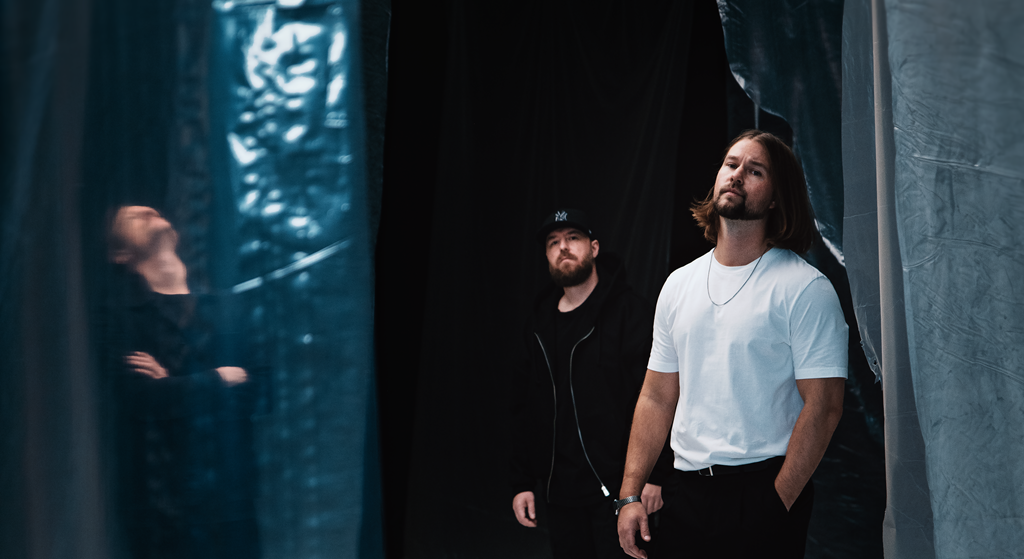
And so they shall return: Port Noir are starting the year not just with their newest single “Noir”, released today, but the band has also announced their 5th album “The Dark We Keep”, to be released May 15th, 2026, via InsideOutMusic. The newest record by the Swedish prog band will include 11 tracks, delivering their signature blend of alternative metal with progressive influences – creating a captivating journey told by powerful arrangements and pure emotions.

‘Noir’ offers a further glimpse of what people can expect of the band’s newest record, being one of the heaviest songs Port Noir have ever released while keeping it true to their dark atmospheric nature and raw emotionality. 

The band comments on the new single:

"’Noir’ taps into the dark and raw energy that signifies the vibe of the new album. We wanted to create something that relentlessly keeps building, like an overwhelming void of light that won’t give in. It’s a lot heavier than anything we’ve released to date, yet there is a sense of sentimentality and solace that guides you through the storm that is ‘Noir’. Lyrically it takes you through a seemingly endless night that bends you to its will. Where bliss and despair make you grasp at anything to get through.”

AA

PN - Promo 3 (Noir) Horizontal

Photo credit: Björn Glasare

Christopher Nosnibor

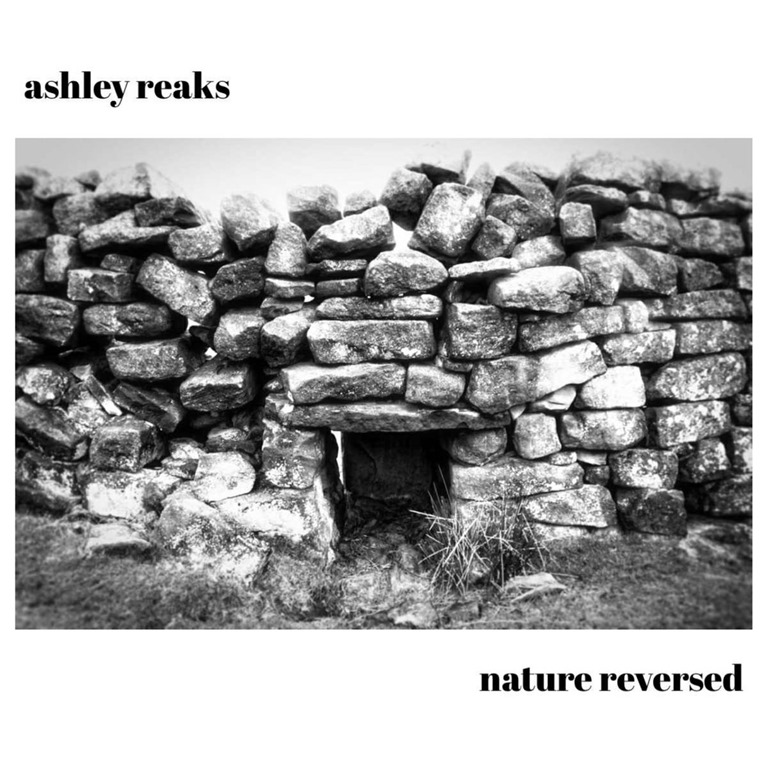
Ashley Reaks is an artist who has very clear creative cycles, releasing, as standard, an album a year, and sometimes two, which make the fallow periods more conspicuous. This is not one of those fallow spells: Nature Reversed arrives just four (dark, cold, wet, gusty, wintery and generally depressing) months after At Night the World Belongs to Me, released at the end of September last year. And it marks something of a shift, and even ventures into the realms of what one might consider a ‘concept album’.

Reaks describes the album as ‘a stark, hallucinatory journey through the Yorkshire Dales and the inherited wounds of a father–son lineage. Mixing messed-up jazz fragments with rural, almost medieval folk textures, the album follows a narrator who must invert his own nature to survive the authoritarian “Old King” and then claw his way back to himself through wildness, shame, desire, and the raw, cyclical violence of the natural world.’ That’s a lot to unpack. If it was the plot for a novel, it would be a twisty-turny work, rich in allusion and haunting imagery – but likely jazz-free. But to compress all of this into nine songs and forty-five minutes… Ambitious would be one word for it.

The album’s first piece, ‘I Don’t Like The Old King’ does very much explore the expansive fields of folk, but through a proggy filter, performed with synths, and underpinned by a strolling bass – somewhat reminiscent of the Bauhaus song ‘Part of the Third Part’, at least at the start – and a beat that both shuffles and swings. It’s the bass that defines ‘We Forage in the Gutters’, going full Jah Wobble in its dubbiness. But at the same time, there’s a sparseness, an introspection which is different here. The elements we’ve come to expect from Reaks are all present and correct, but Nature Reversed takes those elements to another place, and it feels like the freneticism has been turned down in favour of a more focused approach.

As with everything Reaks releases, Nature Reversed is interesting… by which I mean it’s a collage of weirdness that draws together a host of disparate elements. Just as Reaks’ artworks are crazy collages, so his music is relentlessly unpredictable. ‘The Desire to Seduce Euphoria’ is perfectly representative: it brings together some moody, melancholic postpunk, with chiming, reverby guitar… there are some processed vocals and there’s some jazz in the mix… I say ‘some’, but the mid-section is a massive blast of horns, before it careens into a heavy prog synth workout What the fuck IS this? This is no criticism: Reaks relentlessly challenges the borders, and does his own thing.

AA

Nature Reversed gives us all of the conventional Reaks elementsbut the wild jazz is dialled back significantly. He describes it as ‘cut-up jazz, awkward Eastern folk, medieval motifs, old ghosts, and new life pushing through ancient stone walls — music about inheritance, rebellion, and what survives when you break things wide open’, and so it’s no surprise that William Burroughs features in the list of inspirations, ‘ranging from ‘nature poet’ John Clare and William Burroughs to Rip Rig + Panic, Talk Talk, PJ Harvey, Robert Wyatt and Captain Beefheart, Nature Reversed fuses literature, music, and visual art into a chaotic, lyrical, and intimate landscape. Ultimately, it’s a meditation on survival, rebellion, and renewal — the feral life that surges when you break open your origins.’

As is always the case with Reaks’ work, Nature Reversed is a huge intertext, and it would be reasonable to describe him as a classic postmodernist, celebrating and revelling in multitudinous sources, plundering his influences and inspirations openly and emphatically. This feels more restrained, more contemplative, and lyrically there’s a proliferation of images drawn from nature – but then again, there’s no shortage of sharp-edged, darker stuff, as on ‘Picking on the Meat Membranes’, and ‘Swan in a Womb’ brings together post-punk grooving bass, sprawling jazz, glittering prog synths and vocal processing – and this is point of definition for Nature Reversed, really. It’s everything, all at once, but at a sedate pace. Don’t be fooled by the gentler, more introspective sound: Reaks stull pushes experimentalism to the absolute limits, and Nature Reversed is the singular sound of creative freedom.

AA

AA

a0782818268_10

Following the success of their debut single Bad Odour, Hull’s explosive punk outfit Culture Clash return with the dramatic new single Sanitizer inspired by 70s & 80s slasher horror movies like Halloween (1978), Friday the 13th (1980), Basket Case (1982) & Maniac (1990). 

Produced by renowned local indie producer Adam Pattrick & released on Warren Records, the track follows a serial killer called “The Cleaner”, a school janitor who, having been driven mad by years of messy teenagers, kills anyone who doesn’t clean up after themselves. With this song, the band were keen to create something grungier & heavier than their normal punk sound, which was initially inspired by Nirvana’s album Bleach, with songs like Swap meet & Floyd the Barber being a key focus, as well as The Misfits, with its horror-based theme.

Vocalist Kaii states “This song is important to me as it represents a shift in our song writing format. ‘Sanitizer’ takes Culture Clash as a group of vague floating ideas & shoves those ideas into a bag creating a tight concept of what we are as a band & what we want to do – in short, it gave us a sense of direction”.

The video’s a direct homage to various horror movies & follows the band being murdered by The Cleaner for various crimes against cleanliness! The deaths are mainly carried out practically with real fake blood & each is a reference to a different horror movie – Rymer’s death relates to The Evil Dead 2 (1987) with lots of blood, intense camera movements & facial expressions, Freddie’s death is a homage to Psycho (1960) with him being killed in the shower & Kaii’s death is inspired by Death Becomes Her (1992) as he gets a hole cut through his torso.

Comprising of Kaii Boulton (guitar, vocals), Freddie Abbott (bass, guitar, BVs) & James Rymer (drums, BVs), Culture Clash describe themselves as a three-piece noise making machine that mixes various musical influences with a big serving of distortion in a witch’s cauldron, who then serve it up straight to their audience. They focus on mixing many elements from their influences (The Misfits, Green Day, My Chemical Romance, Nirvana, Bikini Kill, Smashing Pumpkins, Weezer, Pixies, The Cure & Talking Heads) to tell a narrative that they hope people will relate to.

According to Kaii, Culture Clash exists as a band because “the sky looked nice one day” & he thought it would make a good album cover! Having spent 30% of an early recording session talking with their producer about Star Wars (a mistake they will not be repeating), this determined group have learnt from their mistakes! Headlining gigs in their local area during 2025, Culture Clash are definitely on the rise. Be sure to keep up ….

AA

Culture Clash

Laptop’s new protest anthem ‘Confused’ explores a fractured America: the disco at the end of the world.

‘Confused’ is the emotional and ideological center of On This Planet and the most definitive song Laptop has ever released. Written in the immediate psychological aftermath of January 6, the track does not recount events so much as diagnose the mental fallout of living inside them. Certainty masquerades as truth, spectacle replaces substance, and fear is recycled as identity. The song captures the disorientation of watching democratic reality fracture in real time, filtered through the eyes of someone glued to the news and overwhelmed by noise. Rather than offering answers, “Confused” leans into the unease. Lyrics like “They claim that they’re abused” and “Not quite the Reichstag fire” anchor the song firmly in the present, while the recurring chant of “The Con” functions less as a slogan than a warning. There is a dry, unsettling irony threaded throughout, a recognition that when everyone sounds convinced, certainty itself becomes the least reliable narrator.

Musically, ‘Confused” is Laptop at their most hypnotic and rhythm-driven. Built on a circular, Afro-influenced groove recalling Fela Kuti’s forward momentum filtered ‘through the nervous minimalism of Talking Heads’ Remain in Light era, the song accumulates tension instead of releasing it. Recorded initially in Valencia and expanded in Nevis, a place the band came to call the inspiration island, the contrast between physical calm and distant chaos sharpens the song’s disquiet. Escape, the song suggests, may be part of the problem. The accompanying video pushes these themes into visual satire. Framed as a CNN-style broadcast, Charlie Hartman appears as an unnervingly composed news anchor delivering chaos with media normalcy, while fragmented correspondents report from vaguely defined locations. Jesse Hartman looms as an ambiguous figure, part tyrant, part media creation, part projection, never fully explained. The result is less parody than mirror, a world where information, performance, and power blur until belief itself feels optional.

AA

Formed in the late ’90s, Laptop released three albums with Island Records with praise from the NME, The Guardian and others for their stylized blend of synth-pop & irony. Now a multi-generational project with Jesse Hartman joined by his son Charlie Hartman, they are not observing the present from a distance. ‘Confused’ is the sound of living inside it — aware of history, aware of danger, and quietly aware that even the people telling us what’s happening may not know what to believe themselves. Yet for all its tension, ‘Confused’ is not humorless. Like much of Laptop’s work, the song is threaded with a dry, unsettling irony — the kind that emerges when reality itself starts to feel absurd.

AA

Laptop

Twilight Music – 28th November 2025

Christopher Nosnibor

I’d apologise for being a little late to this one, but given that Corpus Delicti took some thirty years to reconvene for this, their fourth studio album, I think I can be forgiven. Formed in 1992, they kicked out three albums in quick succession establishing themselves as leading exponents the goth renaissance, or the next wave of goth (which wave is which… is a subject of debate, but that’s perhaps a topic for another time), before departing a short while after the release of Obsessions in 1995. During their time away, they’ve had more compilations released than they had albums, and it seems their popularity has grown significantly during their absence.

Their planned reunion in 2020 was scuppered by the pandemic, but they finally reemerged as a live entity in the spring of 2022 and now, finally – finally – they deliver Liminal. And if you’re into that later goth stuff – from Rosetta Stone to all things Nightbreed – it does everything you’d want it to.

From the outset, Liminal is dark and brooding, with fractal guitars and infinite reverb: ‘Crash’ brings the stark post-punk dynamics of X-Mal Deutschland paired with the soaring theatricality of The Associates, and it’s a work of high drama which evokes Bauhaus at their best. That’s by no means to suggest that it’s derivative, but it’s clear they know their heritage.

They also know how to bring kineticism and range, and how to sequence an album to best effect. ‘Room 36’ comes on like an industrial reimagining of Soft Cell, landing like She Wants Revenge cranked up to eleven, with lasers and guitars set to stun. ‘It All Belongs to You’ channels Bowie, but again via SWR and The Associates – at least vocally: instrumentally, there’s layered synth work and swirling shoegaze guitar all over. But for all the dark, Liminal is a work of magnificently-crafted pop.

‘Under his eye’ is an obvious reference to The Handmaid’s Tale, a book the which has become more resonant in recent times than could have ever been foreseen at the time of its writing and publication in 1985. Led by a rolling piano and augmented with sweeping strings, there’s drama galore. Between the driving guitar buzz and snaking bassline of the super-urgent ‘Chaos’ propelled by lolloping drums, and ‘Fate’, which brings an atmospheric shoegaze aspect to some trad goth stylings, there’s a lot going on here – and they pack in some really sharp hooks and strong choruses.

As an example of modern goth, Liminal brings so much of what’s missing from many recent releases in the same field – broad in range, big on energy, this is how it’s done.

Corpus Delicti are on tour in the UK in February, performing Edinburgh (19th), Newcastle (20th), Leeds (21st), Birmingham (22nd), Portsmouth (24th), Bristol (27th), and London (28th), with dates in Mainland Europe in April. Full details and tickets are available HERE.

AA

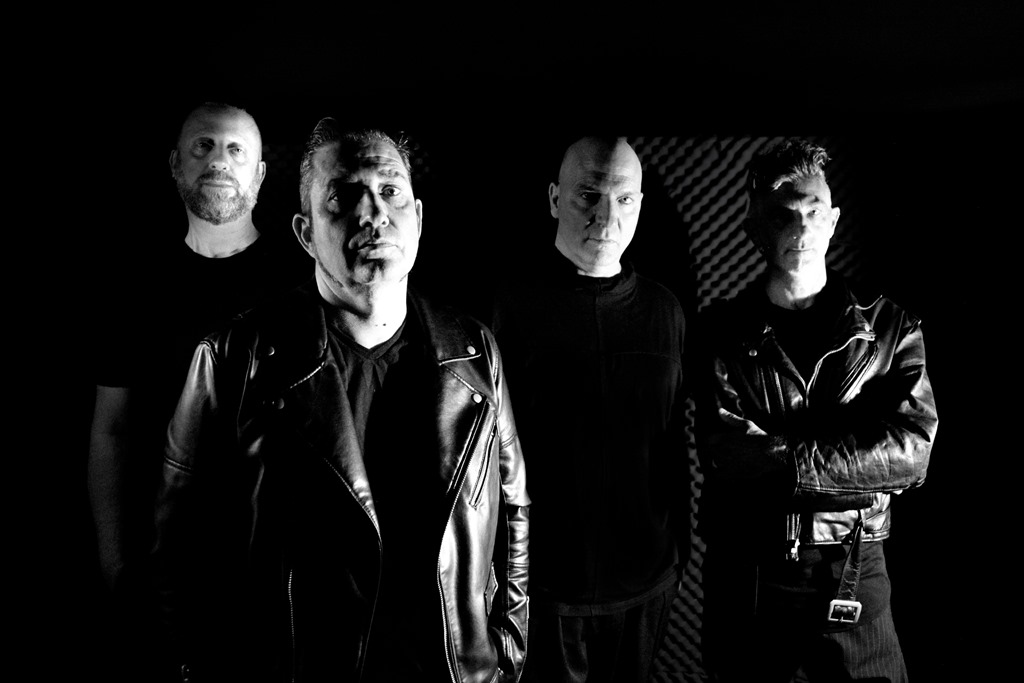
Band image - pic Loreleï J ade

Photo: Lorelei Jade

The Devil’s Door sees And also the trees (AATT) present a quiet storm of an album. At times filmic, poetic and intense, with an undercurrent of dark psychedelia, it follows The Bone Carver (2023) and Mother-of-pearl-Moon (2024) in completing a trilogy of releases by the current line-up of one of the original UK post-punk acts.

The new record features signature AATT tropes that include poetic lyrics, orchestral guitar and soundtrack influenced songs inspired by newsreel, oil paintings and folklore. However, it also adds some surprising instrumentation – including guest violinist Catherine Graindorge – that skews the album towards a soundworld where John Barry meets Béla Bartók.

Ahead of the album, they’ve unveiled a video for the song ‘The Silver Key’. Watch it here:

AA

AATT formed in 1979 in rural Worcestershire, an environment that has provided a constant inspiration to a group whose music has often explored the dark underbelly as well as the beauty of the British countryside. AATT are renowned for their captivating live performances, a unique style of mandolin-like electric guitar, evocative lyrics and dark jazz rhythms – not to mention a creative independence fiercely preserved for over four decades.

The group have a long standing relationship with the Cure and have both played and worked together since the early ’80s. As part of AATT’s 2026 touring schedule, they will be special guests of the Cure for three shows at the Festival de Nîmes in southern France in late July. These will be preceded by early spring dates in Belgium, France and Greece:

7th March  NAMUR (BE) La Nef De L’Eglise Notre Dame D’Harscamp
18th March  TOURCOING (FR) Le Grand Mix
19th March  ANGERS (FR) Joker’s Pub
20th March  LORIENT (FR) Hydrophone
21st March  CHERBOURG (FR) Espace Culturel Buisson
22nd March  PARIS (FR) La Gaité Lyrique
4th April  ATHENS (GR) Death Disco Indoor Festival 2026
24th July  NÎMES (FR) Festival de Nîmes
25th July  NÎMES (FR) Festival de Nîmes
26th July  NÎMES (FR) Festival de Nîmes

Founded by singer Simon Jones and his guitarist brother Justin, AATT have maintained a continuous presence on the post-punk and alternative rock scenes worldwide. The group have released sixteen studio albums to date.

AA

02010dbdd415a34b78e2b3d5d831e14f7ffa7b46