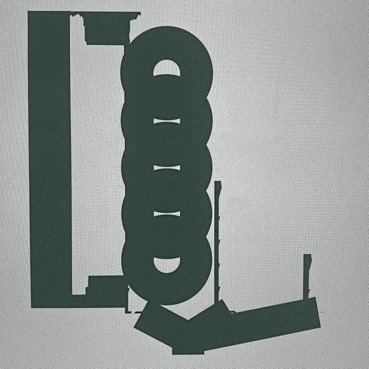
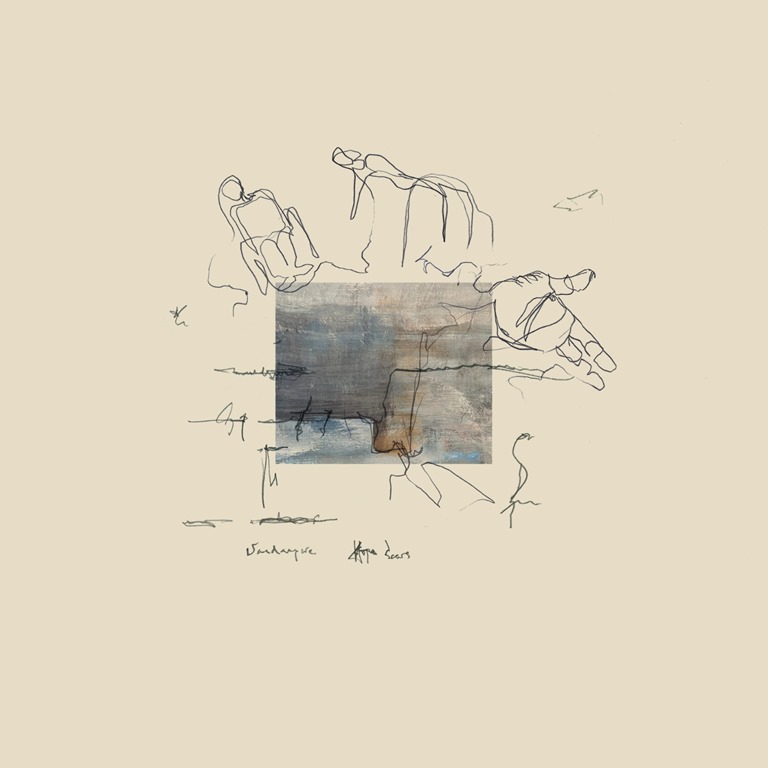
Ivan Pavlov has been releasing music as COH since circa 1997, and in the last twenty-eight years has amassed an immense catalogue which includes some thirty-six albums, often on respected experimental / avant-garde labels like Editions Mego and Raster-Noton. This body of work features a fair number of collaborations. This is his first with ‘the mysterious’ Wladimir Schall, who is no stranger to performing radically overhauled cover versions, not least of all his 2020 release on an endlessly looping cassette with his take on Satie’s Vexations. Suffice it to say, then, that none of the seven pieces on here could be described as ‘straight’ covers. Then again, given the nature of the selected material, how would one go about performing a ‘straight’ cover, and what would be the point, precisely?
As the accompanying notes explain, ‘the two multi-media artists are not content with the mere reinterpretation of their source material, but strive to reimagine it. According to them, the seven pieces on Covers were conceived as “a series of manoeuvres with an ambition to expose the machinery of Music in detail and with utter honesty, without making up for the faults of its traditional instruments or of the compositions themselves.”’
Perhaps the best known and most easily recognisable of the compositions is ‘Merry Christmas Mr Erik’, which opens the album by reworking Ryuichi Sakamoto’s ‘Merry Christmas Mr Lawrence’ as a sparse, almost jazzy work where it’s acoustic guitar which leads before the arrival of piano, which remains at a respectful distance. Not long after, we’re transported into a sparse, foggy trip of piano-led ambience. Perhaps one of the most audacious ‘covers’ is Soii Blanc’, an original COH composition which appeared on IIRON in 2011 – the album which was, in fact, my introduction to the world of COH. This version transforms the sparse electronic piece where experimental synth music meets early industrial grind into a soft piano work that’s as light as a feather but also mysteriously atmospheric through its subtle dissonances which grow with ringing, buzzing tones which gradually disrupt the delicate ripples with digital discord, creating the effect of some form of mechanical breakdown. Then again, ‘Snowflakes’ sees the pair ‘cover’ a ‘non-existent’ original’. It’s evocative: close your eyes and you may well visualise snowfall in your mind’s eye – but then glitches and scrapes cut through the reverie. In the main, it’s subtle, but enough to be disconcerting.
While there’s no clear or specific arc to the album, there is a sense that as it progresses, digital decay and interference gradually erode the graceful atmospheres conjured by piano and acoustic instruments alone – and by the arrival of the final piece, the brief bookend that is ‘Starost ne Radost’ – or ‘Старость не радость’ (joy and sadness), the juxtaposition of scratchy in the vintage sense and scratchy in the ersatz, manipulated digital sense comes to share a meeting and sensation.
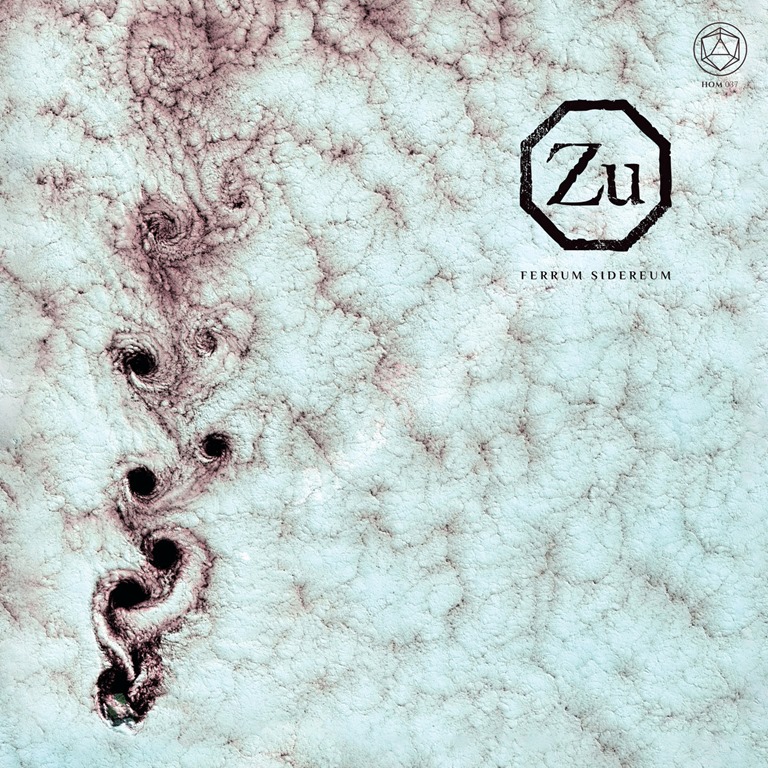
Legendary Italian experimental trio Zu recently announced their return with Ferrum Sidereum (produced by Marc Urselli), a big and bold double album arriving on House of Mythology on the 9th January.
The music combines the complexity of progressive rock, the grit of industrial music, the precision of metal, the spirit and energy of punk, and the freedom of jazz. The result is a sonic journey that is as cerebral as it is visceral, defying easy categorisation while remaining unmistakably Zu.
Today they share the new single and video for ‘Kether’ – about which the band comments,
“Kether is the crown, the halo, the nimbus, the corona. Since it has been symbolically attacked, we symbolically take it back.The golden crown became the sign of kings, but it is a much older and deeper symbol, and it is at anyone’s reach to reactivate the crown.”
Having recently written on the retro qualities of Lowsunday’s latest release, the latest hot landing in my inbox is from another act which is preoccupied with a previous time – and who can blame them? I am painfully aware that old bastards like me constantly bemoan the shitness of the now while reminiscing about the golden era of our youth, and it’s no different from boomers still banging on about The Beatles and the music of the 60s and 70s as if time stopped when they hit thirty or whatever. There is a lot – a LOT – of exciting new music coming out right now, and much of it is pushing boundaries in unexpected directions. I for one will never cease to excited by this. But there is a significant amount of music emerging that draws its primary influences from the eighties and nineties, created by artists who simply cannot be drawn by nostalgia. Falling You are a perfect example.
Metanoia is pitched as being for ‘fans of 1980s 4AD dreampop (This Mortal Coil, Dead Can Dance), ‘90s shoegaze (Slowdive, Lush), or the darkwave / ethereal / ambient-electronic releases of the Projekt label (Love Spirals Downwards, Android Lust). It’s quite a span, but the fact is that this is a release with its inspirational roots well in the past. It pains me to be reminded that 1995 is thirty years ago when it feels like maybe a decade. The cover art of previous releases very much state shoegaze / dreampop, and while this album accompanied by altogether moodier artwork, which may in part serve to reflect the album’s title, it’s nevertheless hazy and evocative at the same time. ‘Hazy and evocative’ would be a fair summary of the album itself, too, and the dreamy / shoegaze elements are countered by some really quite unsettling spells of rather murkier ambience.
It starts strong with the bold swell of steel-stung acoustic guitar and a strong vocal – I’m not talking about a Florene Welch lung-busting bellow, but a controlled and balanced performance that really carries some resonance, and it’s mastered clear and loud… and then things swerve into a more electronic, almost dancy territory. Immediately it’s clear that this is going to be less an album and more a journey, and ‘Demiurge (Momento Eorum)’ immediately affirms this with its spiritual incantations and sonorous, droning rumblings.
‘Alcyone’ is the first of the album’s ten-minute epics, and it uses the time well: that is to say, with shuffling drums, spacious synths and layers of lilting vocals, it’s very much distilled from the essence of The Cocteau Twins, and slowly unfurls with an ethereal grace. A delicately-spun pop song at heart, the extended end section tapers down to a softly droning organ.
While the atmosphere is very much downbeat, downtempo, understated, one thing which is notable is the album’s range: ‘Ari’s Song’ is built around a soft-edged cyclical bass motif, around which piano and synths swirl, mist-like, the drums way in the distance, and even as a disturbance grows toward the end, it’s so far-away sounding, and the song itself, beyond that ever-present bass, barely there, and the same is true of the dank, dark ambient echoes of ‘Inside the Whale’. If ‘Ariadne’ is another shimmering indie tune hazed with fractal electronic ripples, the second ten-minute epic, ‘They Give Me Flowers’ provides a suitable companion piece to ‘Alcyone’, swerving from a brooding country and folk-tinged song with hints of All About Eve, and the album’s final track, ‘Philomena’ effectively completes the triptych, pulsing along gently and dreamily before slowly tapering away to nothingness. It’s a fitting conclusion to an album which at times is so vaporous and vague, it’s barely there – which is precisely the design. But in between the hazy drifts and particle-like waftings, there are some beautifully atmospheric and utterly captivating songs with strong leanings towards the dreamy pop side of indie. In terms of achieving an artistic objective, Falling You have absolutely nailed it with Metanoia.
Swiss death & thrash metal fanatics TOTAL ANNIHILATION unveil the music video ‘Beneath the Cross’ as the final advance single taken from the forthcoming new album Mountains of Madness. Their fourth full-length is slated for release in the band’s 20th anniversary year, on January 16, 2026.
AA
TOTAL ANNIHILATION comment on ‘Beneath the Cross’: “When we wrote this song, the topic of the lyrics was very important to me”, guitarist Jürgen Schmid states. “I felt an urgent need to put this old story back on the table again. This song deals with religions selling hope to their clients in order to manipulating them and filling up their treasuries in the basements of their temples. This one goes out to all those holier-than-thou Christians. There is no paradise! In death there is only darkness – so better take care of your own life and stop telling others what is right or wrong! As a fun fact for all music nerds: The melody that stands out in the middle of ‘Beneath the Cross’ is actually quite old. I wrote this tune at the age of twelve or thirteen and ever since I have been searching for the perfect match to put it in. Here we are – and I am very happy with the result. Hopefully, you will like it too!”
Progressive rock quartet Dhärä return today with their expansive new single ‘A PLACE IN TIME, (the entities, divided)’, offering the next glimpse into their forthcoming full-length album Elemental Four, arriving January 11, 2026.
Known for their immersive instrumental storytelling and dynamic compositions, Dhärä continue to push beyond strict genre boundaries on ‘A PLACE IN TIME, (the entities, divided).’ The track unfolds with patience and atmosphere before erupting into driving rhythms, soaring guitar interplay, and a powerful sense of momentum—highlighting the band’s signature balance between precision, emotion, and scale.
The band shares: “This is the opening of our concept album Elemental Four. ‘A PLACE IN TIME, (the entities, divided)’ introduces many themes that are heard throughout the album. This album is also a concert movie that features five ballerinas who perform modern lyrical dance to the music. Elemental Four is a journey of four entities whose world is shaken by a meteor which threatens their existence. They are separated by a great earthquake, and the only path to saving the planet and themselves is to unify and summon The Conduit, whose power can hopefully vanquish the threat.”
Watch the video for ‘The conduit, A PLACE IN TIME’ here:
Woah, wait. 1999 is more than 25 years ago? Logically, I can grasp this. But the fact that lowsunday have existed for some thirty years and have been dormant since 1999 meaning this is their first material in over twenty-five years is still difficult to comprehend. It does very much seem to be a more common occurrence in recent years that bands who existed comparatively briefly in the 80s or 90s are reuniting and returning with not only new material, but strong new material. It may be a rather different league, but the last thing I expected last year was a new album by the Jesus Lizard, and that my first gig of 2025 would involve David Yow flopping off the stage and directly onto my face in the opening thirty seconds of the set. Lowsunday formed in 1994: the year Kurt Cobain died, the year I started university, the year of my first job as a reviewer. It feels like another lifetime. It probably does for them, too.
It may be pitched as a blurring post-punk, shoegaze, dreampop, and darkwave, and also as being for fan of The Chameleons, ACTORS, The Cure, Modern English, Clan of Xymox, Then Comes Silence, TRAITRS, but that thumping bass groove and pumping mechanoid drum beat on the EP’s opener, ‘Nevver’ is as trad goth as it comes. But the squalling noise that envelops the vocals – swathed in echo and low in the mix and taking direct cues from The Cure circa Faith and Pornography – is something else, a melding of My Bloody Valentine and The Jesus and Mary Chain with a dose of early New Order, Danse Society, and The Chameleons swirling around in there. And out of this swampy post-punk soup cocktail emerges a song of quality which really recreates that early eighties dark groove.
‘Call Silence’ goes straight for the sound of The Cure circa ’83, the singles on Japanese Whispers. And that’s cool: if you’re going to lift from early 80s gothy pop, you could certainly do far worse than ‘Let’s Go to Bed’ and early New Order as an inspiration – the bassline is pure Peter Hook. The production – and the strolling high-fretted bass work – really hits the spot, although it should be perhaps noted that they really do sound like a band born in 1982 rather than 1994. I guess they were retro before their time.
Paired with chiming guitars, it’s the monster snare smash that really leads – and grabs the attention on ‘Soft Capture’, a song that unashamedly draws on Ride and My Bloody Valentine, and pairs that wash of sound and monotone vocals with a drum sound straight from 1984. The fall from favour of the dominant snare feels like a loss, but there’s no time for lamentations as they pile in with another claustrophobic read goth groover in the shape of ‘You Lost Yourself’. Here., I can’t help but feel the vibes of late 90s goth acts like Suspiria and the scene around that time. It’s well-executed, with fractal guitars tripping over pumping drum machines and throbbing bass.
Closing with single cut ‘Love language’ sees the band strive for low-key anthemic with dreamiest and most overtly shoegaze song of the set. With the vocals drowning in a sea of reverb amidst a swirl of guitars, its detachment is its emotional power, perversely enough. And then, unexpectedly, it stops.
Everything about the White EP is simply magnificent – the way the songs are composed and played, the production, the overall feel. And while retro is all the rage – and has been for a while now, since postmodernism has eaten itself and the entire world has collapsed into endless recycling and nostalgia for ersatz reimaginings of golden bygone times. But sometimes a release will appear, seemingly from nowhere, that radiates a rare authenticity, and reaches the part others don’t. Lowsunday’s White EP is one of those.
Born in the shadow of Oxford’s dreaming spires and forged in a haze of down-tuned amplifiers, UK heavyweights Indica Blues return in 2026 with their most ambitious and apocalyptic work to date. Their long-awaited new album, Universal Heat Death, will be released on January 31 via digital platforms and CD, marking the band’s first full-length since their critically acclaimed second album We Are Doomed.
To herald the album’s arrival, Indica Blues unveil their new single ‘The Raven’, a towering slab of blues-soaked doom that captures the band at their most urgent and expansive. Driven by crushing riffs, haunting dual-guitar interplay, and a foreboding atmosphere, the track sets the tone for an album obsessed with collapse, consequence, and the slow grind toward oblivion.
AA
Since forming in 2014, Indica Blues have carved out a formidable reputation as one of the UK’s most compelling psychedelic doom-stoner hybrids, once described as “bong-filling rock that is platinum heavy, but blessed with a melodic sensibility underneath it all.” Their sound, a molten blend of fuzz-drenched blues, doom, sludge, and psychedelic melancholy has earned them devoted fans worldwide and praise from both underground tastemakers and major publications.
Their previous album, We Are Doomed, received 4 stars in Kerrang!, reached No. 4 in the Doom Charts, and proved eerily prophetic: an apocalypse-themed record released just as the first wave of the global pandemic brought the world to a halt.
“We’re looking forward to touring Universal Heat Death*, and hope no cataclysmic world events stop us this time,” laughs bassist Andy Haines.
In the last few years, CD box sets have become quite a thing. And I for one am a real fan. It’s not just about ‘fuck Spotify’ or the realisation that stuff has a tendency to disappear from streaming services at no notice – something true of Netflix and other TV streaming services, too. But, it is a fact that if you don’t have something physically, in some form or another, even if it’s only a digital file, you don’t have it, and you certainly don’t own it. But not all CD box sets are equal, and not all serve the same purpose. Much as I’ve come to appreciate the ’five albums’ sets and the like as instant collection fillers when it comes to acts I’ve previously managed to skip for whatever reason, they’re beyond stingy on bonus material. When it comes to releases for fans, releases like the monster boxes with all B-sides and bonuses galore, such as those by Fields of the Nephilim and The March Violets have been far more exciting.
Industrial Overture: Studio & Live Recordings 1982-1985 is definitely exciting. It’s no simple repackage of the albums, and the chances are most people – even the staunchest fans of Test Dept – don’t own the majority of the material on this one, consisting as it does primarily of scarce material, outtakes, and Peel Sessions.
Industrial Overture: Studio & Live Recordings 1982-1985 consists of 42 tracks across 4 CDs and also available digitally. It’s a document of their earliest, most abrasive period – not that they exactly mellowed in the years after, as perhaps their most commercially successful album, The Unacceptable Face of Freedom (1986) attests, and includes a first ever reissue of the group’s 1983 cassette-only debut album Strength Of Metal In Motion, the classic Ecstasy Under Duress and Atonal & Hamburg albums (both unavailable for over three decades), plus a disc of hitherto unreleased studio recordings that incorporate two sessions recorded for the John Peel show on BBC Radio 1.
As the notes inform, ‘In total, 26 tracks are new to CD and digital formats, of which 12 have never been previously available at all. All contents have been compiled by Test Dept and are newly remastered by Paul Lavigne (Kontrast Mastering)’.
Disc one gives us Strength Of Metal In Motion – a collection of raw live recordings. The first five were recorded at Albany Empire, Deptford, in August ’82, and it’s fucking brutal. Even remastered, it has something of a bootleg sound quality about it, that muddiness that’s particular to 80s recordings. In many respects, this adds to the appeal here. It opens with the dissonant blasts of harping faux-brass blasts of ‘Last Rites’ – heraldic, but askew – before giving way to the pummelling percussion and shouting of ‘Shockwork / Workshock’, which is brief but brutal. ‘Prokofiev’s Dream’ is a full-on assault of clanking percussions with occasional horns, before ‘Drum and Body’ drops a shard of industrial punk noise, with rabid vocals-riding a wave of the most relentlessly aggressive beats. The dark ambience of ‘Death of God’ is nothing short of purgatorial, and showcases a different side of the band. Four more of the thirteen tracks were recorded at Temperance Hall, Newbury, four months earlier, and with samples, synths, and drum machines flashing in all directions, their debt to Cabaret Voltaire is clear there – as is the sense of their future direction. That said, ‘Kindergarten’ is pure Throbbing Gristle, laced with heavy hints of Suicide and the bibbling synths of Whitehouse. But the wayward experimental jazz elements are also strong. Overall, this is the sound of punk in a head-on collision with Throbbing Gristle and drumming that sounds like they’re battering the shit out of sheet metal. Unless you were actually there, one can only imagine what it must have been like to witness any of these early shows.
Ecstacy Under Duress was initially released in 1984 and is another (largely) live compilation consisting of recordings which again were captured in ’82 an ‘83, although this time featuring future debut single ‘Compulsion’. The compositions feel more evolved, and perhaps as a consequence, more honed in their attack. ‘Hunger’ builds to a punishing climax and sets the tone. The aforementioned ‘Compulsion’ is relentless. Samples and crashing percussion dominate the stark industrial landscape, and the intensity of these performances translates well despite the separation of time and medium. I suppose it’s here we can really identify the point at which Test Dept carved a path which departed from their industrial predecessors and peers in their pursuit of the most punishing percussion. Only Einstürzende Neubauten really compare, but even they’re not quite as up-front with the hammering beats, despite their love of sledgehammers and metallic objects. The twelve-minute ‘Efficiency’ takes the percussive assault to a whole other level, leaving the listener feeling pounded, pummelled, bewildered.
The third disc offers some respite by virtue of being studio-based and therefore not having that muffled 80s live sound to the recording – although it’s marginal. ‘Blood and Sweat’ – one of three demos from 1982 – is primitive and raw and very, very drum-orientated: the vocals are relegated to the back of the mix, anguished shouting buried in a barrage of noise. It’s cruel and it’s harsh and it’s heavy, and the demo version of ‘Shockwork’, recorded during the same session is similarly hard on the ear, with its combination of machine-gun drumming and squalling avant-jazz tones.
The two Peel Sessions, recorded in ’82 and ’85 shows a honing of the sound: between the two sessions, they would release their debut album proper, Beating the Retreat, which included contributions from F M Einheit and Genesis P. Orridge, as well as Shoulder to Shoulder, with the striking miners choir, and which would finally see the release of an official studio version of ‘Shockwork’ – another version of which featured in the 1983 Peel Session, which comes on as heavy and mercilessly brutal as Swans on Filth – which was released the same year and channels the pain of life enduring the crushing slog of capitalism.
AA
Of the four discs, this perhaps has the greatest impact, and not just sonically. Atonal, anguished-sounding vocals reverberate vast sonic swamps dominated by the ever-present barrage of industrial-strength percussion. It’s relentless in intensity, and the effect is cumulative. Between the pulverizing six-and-three quarter minute ‘Efficiency’ (which feels in some way to be their answer to Throbbing Gristle’s ‘Discipline’), and the six-and-a-half-minute ‘Red Herrings’ version of ‘Gdansk’, with the disorientating mutter of ‘State of Affairs’ in between, this is a sustained assault that hammers blows from every direction.
AA
Disc four, which contains the Atonal & Hamburg album – released in 1992, but documenting two live performances from 1985 marks a significant shift from the earlier live shows. Containing material drawn predominantly from Beating the Retreat and The Unacceptable Face of Freedom, the punishing volume translates well, and the force is more controlled. There is structure, too, building from dirge-like crawls – again comparable with Swans around this time – quickening the pace and the all-encompassing ferocity of the percussion.
Those familiar will likely already know, but in addition to providing a truly magnificent document of Test Dept at their most uncompromising early best, Industrial Overture shows how they were right at the heart of an emerging zeitgeist spawned in the wake of Throbbing Gristle, as represented by the likes of Neubauten, Cabaret Voltaire, Swans… this was not a scene or a movement, but a disparate array of artists channelling frustration at the dark underside of a time when the charts were dominated by the likes of Duran Duran and Culture Club. In pop culture, the early 80s is presented and remembered as being glitzy, aspirational, fun. But that was not the lived reality of many. Test Dept may have been underground not least of all because their racket was largely unpalatable to the majority. But as Industrial Overture evidences, they were providing the soundtrack of the grim realities of working life, drudgery and trudgery. Essential listening.
Projekt Records artist Lowsunday emerges with their first record comprised of all-new material since 1999, bridging three decades of distinct sonic legacy. The Low Sunday Ghost Machine – White EP delves into emotional isolation, this music laced with a counterbalance of escapism, dreamlike sounds, drones and feedback, with carefully-placed classic song structures with melodic hooks. This is the first of a two-EP series being released via Projekt.
Based in Pittsburgh, Lowsunday is now a duo made up of Shane Sahene (vocals, guitar, synth, bass, drums) and Bobby Spell (bass, guitar, drums), this EP serving as both a reflection and a resurgence. The band also presents their new video for ‘Love Language’.
AA
Blurring the lines between post-punk, shoegaze, dreampop, and darkwave since 1994, Lowsunday brings something new to the music scene, treading sonic waters with screeching guitars and layer upon layer of arsenic-laced melodies, crowned with bittersweet and emotive vocals. From quiet intensity to sweeping sonic landscapes, Lowsunday makes a welcome return with their retro-futurist daydream.
The White EP demonstrates a connection to the band’s history while showcasing a natural expansion that builds upon guitar-driven atmospheres, synth textures, emotive vocals and stripped down drum beats. A confident return to form that explores darker yet more expansive sonic territory, at times, they push atmospheres to the limits of noise and, at more delicate moments, into a dream pop air of deeper melancholia.
Sahene and Spell distill years of sonic exploration and inspiration into this release. Lyrically and sonically, these songs use classic post-punk rhythms and atmospheric layers to express simple, fundamental emotion.
This five-track EP arrives on the trail of the extended 30th anniversary remaster of their debut album Low Sunday Ghost Machine a 2-CD feast recorded at the height of their ascent. The original nine tracks are complemented by a second disc with seven unreleased tracks, remixes and reinterpretations. Projekt also released the 25th anniversary remaster of their sophomore album Elesgiem in 2024.
Society is in a shambles, fascism is in fashion, and the Ultra Heavy Beat remains resolute and resolved to rise up and rip the system! 42 years of conceptual continuity and distinction through diversity, KMFDM are back, declaring themselves the ‘ENEMY’ with their 24th album! It is out on 6th February 2026, two weeks before the band begins a previously announced and almost sold-out European tour.
‘OUBLIETTE’ is out today (12th December) as the first single from ENEMY. From the French word ‘oublier’, meaning ‘to forget’, an oubliette is a dungeon with the only access being via a trapdoor in its ceiling. Perfect constructed from a captor’s perspective, detection and escape are more or less impossible. “A place to be forgotten,” the band simply state. “What nobody sees, nobody knows.”
Kommanded by the songwriting and vocal power of Sascha ‘Käpt’n K’ Konietzko and Lucia Cifarelli, and backed by the percussive onslaught of Andy Selway, KMFDM is now joined by London six-string slinger Tidor Nieddu bringing his own bold and vivid guitar flavours. Having hypnotised audiences on the band’s 40th anniversary tour with her rendition of ‘Professional Killer’, Annabella Konietzko also appears with her own hit-list on the explosive ‘YOÜ’, marking her songwriting debut with the group.
Never a band to take the easy path, ENEMY delivers some of KMFDM’s most stylistically challenging and politically scathing material yet; from the dance/rock melodicism of ‘OUBLIETTE’ to the darkened grooves of ‘CATCH & KILL’, the satirical brute force thrash of ‘OUTERNATIONAL INTERVENTION’ to the vicious and hyperbolic industrial metal of ‘L’ETAT’, and the funky throb of ‘VAMPYR’ to the cheeky dub of ‘STRAY BULLET 2.0’.
KMFDM keeps moving, dancing on the blood-dimmed tide, roaring as a rough beast to make noise against a world that demands the silence of ignorance. Join the Ultra Heavy Beat and make yourself the ENEMY of hypocrisy, discrimination and injustice!