Archive for June, 2025

KHNVM drop the video clip ‘Fetid Eden’ as the first single taken from their new full-length Cosmocrator. The fourth album of the German death metal act with Bangladeshi roots has been scheduled for release on August 29, 2025.

AA

KHNVM comment: “Our new single, ‘Fetid Eden’ is not merely music – but a visceral report from the heart of conflict”, singer and guitarist Obliterator explains. “This track plunges listeners into the brutal aftermath of war, where shattered dreams lie scattered like debris across ravaged landscapes, and the echoes of loss reverberate through the silence. This is a soundscape where the weight of existence is amplified by the relentless machinery of war and every breath is a struggle against the suffocating grip of despair. ‘Fetid Eden’ serves as a stark reminder of the enduring human cost of conflict, a descent into the gore-soaked reality that lies beyond the headlines. As the lead single of our upcoming album, it signals our unflinching commitment to confronting the darkest aspects of the human condition in a world consumed by violence.”

AA

5c75b7d6-62ad-02d8-b566-ab2a9236ee5b

Futura Resistenza –16th June 2025

Christopher Nosnibor

Much of Felix Kubin’s work since the turn of the millennium has involved radio, although film and theatre and other soundtrack works have also been a feature. Der Tanz Aller is one such soundtrack work, which was ‘created for the performance of the same title by the experimental arts collective LIGNA. The group specialized in site-specific, participatory works. Der Tanz Aller is based on Rudolf von Laban’s radical 1920s concept of ‘Bewegungschöre’ (movement choirs), collective dances in public space that aimed to reimagine social order through shared movement.’

The context and objective behind the composition are particularly useful to be aware of when listening to this album in isolation, as Kubin sets out: ‘When the performance group LIGNA approached me in 2012 to compose music for a play based on Rudolf von Laban’s revolutionary kinetic theories and so-called ‘Bewegungschöre’ (movement choirs), I thought of a soundtrack that would be both rhythmically engaging, abstract and mechanical. I knew there would be pre-recorded voices talking about his philosophy and guiding the audience via headphones. So, I had to leave some “air” in the arrangements, allowing the visitors to concentrate on the spoken words, while simultaneously becoming dancers. In LIGNA’s conceptual works – just like Laban’s idea of the movement choirs – the audience members become the performers.’

I shan’t dwell too long on the conceptual aspects here, beyond noting that this predates John Cage’s 4’33” by more than two decades, and while Cage’s silent work was on many levels a quite different proposition, the way in which any sound made by the audience – be it a cough or the shuffling of feet or the creaking of a chair – immediately becomes part of the performance indicates clear common ground. Likewise, William Burroughs’ cut-ups, which invited ‘creative reading’ whereby the engagement of the reader and their experience and perception was integral to their success, arrived some thirty years later. As such, ‘Bewegungschöre’ represent the cutting edge of avant-gardism, belonging to the era which brought us Duchamps’ readymades and – perhaps more pertinently – Tristan Tzara’s directions to make a Dadaist poem.

For the most part, the ‘air’ in the arrangements is apparent: there is space, separation, and while we can only imagine the prerecorded voices talking about Laban’s philosophy through headphones, it’s possible to get a sense of how it would work. But then, occasionally, Kubin’s compositions get father more busy, as on ‘Dämonen der Zerstreuung’, with big band percussion and noodlesome orchestration that’s of a strong jazz persuasion, but has a whole lot happening, and often simultaneously. There’s drama with orchestral strikes, and creeping, urgent glockenspiels that bring a noirish, detective movie feel – not a chase scene, but a cat-and-mouse scenario.

There are some spoken-word passages, in German, as on ‘Raumstunde Vera Skoronel’, accompanied by evolving sonic backdrops, the likes of which I find hard to imagine inspire dancing, but spasmodic twitching and erratic lurching, while the title track is a slice of jerky, and quite insular and intense, Kraftwerkian synth bleepery, and ‘Rotes Lied’ is a perfect exemplar of sparse, spaced-out, glooping, blooping, reverby weirdery with occasional chimes and stuttering shot of snare. There is plenty of air here, as you sit and wonder what exactly is going on?

Who knows? And does it even matter at this point? The percussion builds from all sides, and the nagging away – until suddenly it doesn’t.

The unpredictability of Raumstunde Vera Skoronel is its strength. It is weird, unexplained in many respects, beyond simply the initial onboarding awkwardness. We should probably celebrate this weirdness, this sense of separation. Raumstunde Vera Skoronel is never dull, but always strange and alien – and these are reasons to appreciate it.

AA

AA
RESLP040 front

Brooklyn bruisers Cash Bribe are back with their third EP, Demonomics, dropping June 13, 2025, via Futureless. This marks their first release on the label, and they’ve never sounded louder, sharper, or more furious.

The band is debuting their new single, ‘Bay of Pigs’ ahead of the EP’s release. Guitarist Kirk McGirk explains the inspiration behind the track: “One thing that really gets to me about the world today is how the rich, powerful, and privileged constantly gaslight everyday people—making us believe everything’s fine or that there’s nothing wrong. It’s like they’re pissing on your head and telling you it’s raining. Some folks have a real stake in keeping the rest of us from trusting what we see and feel.”

AA

Cash Bribe

Panurus Productions – 2nd May 2025

Christopher Nosnibor

Northern noisemongers Belk are no strangers to the virtual pages of Aural Aggravation: I personally first caught them live as a duo back in 2021, when I remarked in my review that as fierce as they were, they might benefit from some bass. I could never have imagined just how much. These days, their sound is dominated by some juddering low-end that’s practically arsequake. It’s as if they thought ‘you want some bass, eh, bastard? Here’s some fookin’ bass. BOWWWWWWWMMMM’. They’ve certainly evolved over the last four years – but what that means, in real terms is that they’ve developed methods of making noise that’s even more nasty and gnarly and generally unkind to the eardrums. This is a good thing, and ‘Flayed’, the first of their two contributions to this split release is a beast. It has a definite and undeniable sense of swing to it, a swaggering groove that’s somewhat unexpected. But what is expected – and delivered – is a crashing riot of noise, a juddering wall of distortion, squalling, dirty guitars, drums blasting at a hundred miles an hour and guttural vocals half-submerged by the swirling chaos, with tempo changes galore and simply all hell happening at once inn explosive, brutal frenzy.

‘Cloak of Bile and Oil’ begins a little more gently – and for a moment I’m reminded of the intro to Fudge Tunnel’s ‘Hate Song’, which inevitably bursts into shards of incendiary sludge and squall – and sure enough, so does this, the extended intro giving the deluge of noise even more impact when it finally does arrive. They describe their style as ‘Blackened Leeds Hardcore’ and this must surely be a definitive example of what that means.

Casing are an unknown quantity, and their two contributions are brief – the longest piece is just over two minutes in duration. The sound they offer is certainly no less abrasive or disturbing. There’s nothing to indicate what the initialisms of the song titles actually mean, but the electronic excursion which is ‘L.U.A.N.L.B.’ begins with some rumbling dark ambience, soon rent with the wail of siren-like feedback, before a wall of harsh noise distortion swells like a tsunami and swallows everything. In contrast, ‘D.T.H.D.T.C.’ launches headlong into a gut-churning blast of manic grind, with a nauseating bass churn to rival that of Belk.

What it lacks in duration (the four tracks have a combined running time of less than eight minutes), this release more than makes up in devastating intensity. Mission accomplished.

AA

cover

Human Worth – 6th June 2025

Christopher Nosnibor

Where does the time go? No, really? I’m not just stunned by the fact we’re a week into June already, but the fact that it’s been six years since the last Lower Slaughter album, and nine years since I missed their show in Leeds with Working Man Noise Unit supporting because I was watching Man of Moon play to a nearly empty room across town instead. That’s almost a decade I’ve spent being frustrated by my inability to clone myself, and I find it hard to let these things go.

They’ve undergone some changes since their last outing – changes of the nature which would have terminated, many a band. Their bio traces a raid succession of personnel switches:

Following the departure of long-time vocalist Sinead Young, their surprise return in 2024 saw the remaining former members unveil a new line-up, welcoming James Gardiner to the fold on bass, and with previous bass player Barney Wakefield switching over to vocal duties. Upon Gardiner’s addition, a considerably more expansive sound has emerged, bringing the band’s now recognised output of what the Quietus once referred to as ‘lurching noise-rock’ to new exciting heights, all the while set against an equally more confident and expansive dynamic, reinforced by the chemistry of Graham Hebson and Jon Wood, who remain tighter than ever on drums and guitar respectively.

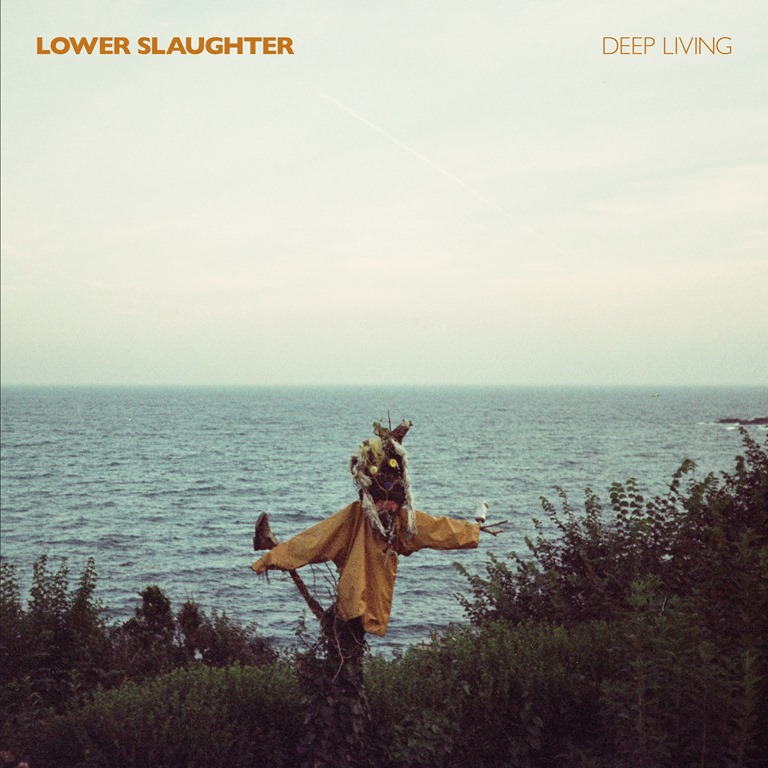
And so seemingly miraculously, they’re still here. Thus, we arrive at Deep Living, a colossal twelve-track document of the new Lower Slaughter, a release of blistering overload dominated by rolling percussion and thick bass. It’s varied, to say the least, and most certainly does not pursue the most obvious or commercial avenues. It was certainly worth the wait, and we’re most grateful that they are still here. And because it’s being released by Human Worth, 10% of all sales proceeds donated to charity The PANDAs Foundation – a trusted support service for families suffering with perinatal mental illness.

After a good couple of minutes of rolling, tom-driven percussion and muted vocals which sit partially submerged beneath a fat, fuzzed out bass ‘Year of the Ox’ suddenly slams the pedals on and erupts and Wakefield roars in anguish, ‘My eyes! My eyes!’. ‘Take a Seat’ is quite different, more overtly mathy, post-punky, and more accessible overall, despite its hell-for-leather pace and wild energy, and there’s a bit on jangle to altogether mellower ‘The Lights Were Not Familiar’ that’s a shade Pavementy – but it’s Pavement as covered by Fugazi. And the guitars sound loud. In fact, everything on Deep Living sounds loud, and what’s more, the recording and mixing work done by Wayne Adams (Petbrick/Big Lad) captures and conveys that it such a way that it feels loud, like you’re in the room with the backline practically in your face. This is nowhere more apparent than on ‘Dear Phantom’, which has something of a Bug-era Dinosaur Jr vibe to it – and the big grungy riff is magnificent. Then halfway through it goes slow, low, and sludgy – and that’s magnificent too.

Balancing melodic hooks and some quite breezy indie / alt-rock with some hefty, heavier and hugely overdriven passages, Deep Living has some range.

The six-and-a-half-minute ‘Memories of the Road’ is a slow-burning epic that builds to a roaring finish, and makes for a standout cut. It’s a trick they repeat on the title track which brings the album to a close.

In between, ‘Hospital Chips’ brings pace and jittery tension via thumping bass and jarring, sinewy guitars, and straight-up punk brawlers ‘The Bridge’ and ‘Motions’. All the range, but it’s the fact there are tunes galore that make Deep Living a cracking album.

AA

Lower Slaughter LP.indd

Christopher Nosnibor

Sure, having Kurt Cobain proclaim his fandom and bringing them on tour as a support act may have helped bring Shonen Knife to a wider audience, but in the Internet age, when it’s much easier to discover bands who aren’t shoved under your nose by pluggers and playlists, it seems probable that they’d have reached the current place on their journey on their own merits.

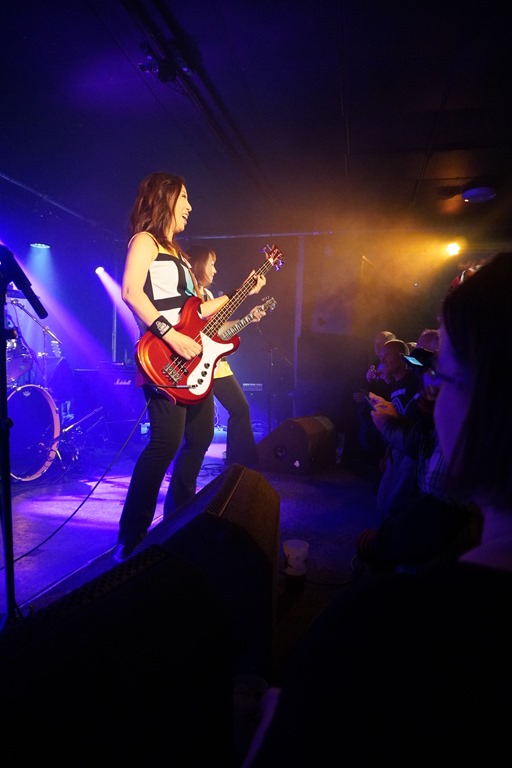
And so it is that the original all-female Japanese pop / punk power trio return to York after quite some time, bringing their ‘Have a Knife Day’ tour to a sold-out Crescent the night after stopping at the legendary Brudenell in Leeds. With the twenty-seven EU / UK tour taking in Hebden Bridge, Manchester, and Sunderland, it’s nice to see the North getting a decent share of shows, and the turnout and response tonight shows it’s appreciated.

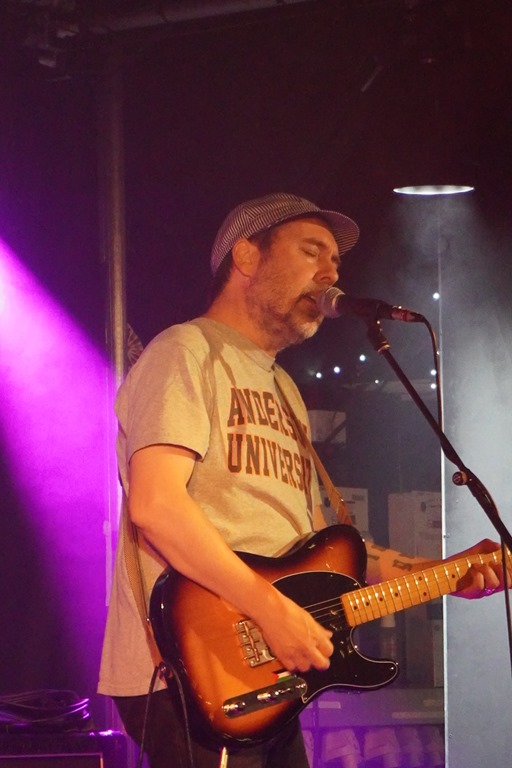
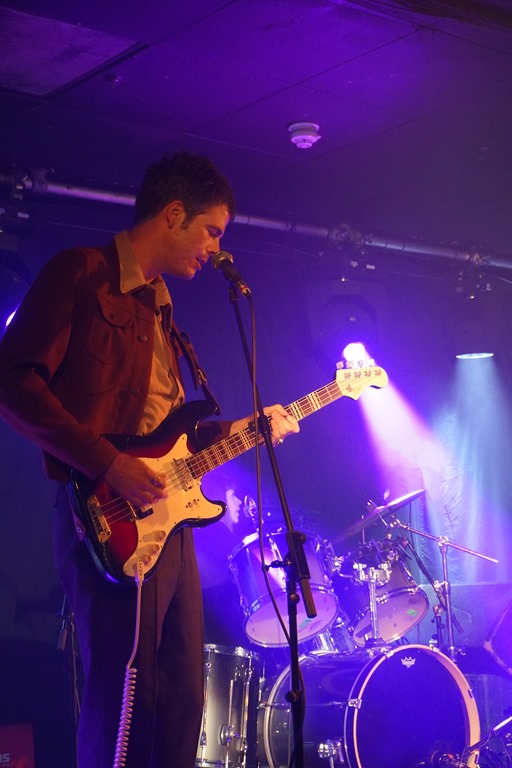
The front bar is busy a good half an hour before the doors open, and local support Speedreaders seem genuinely surprised by the size of the crowd they’re playing to. They’re never the most conversational of acts, with the gaps between songs spent turning up and keeping their eyes to the floor, but their brand of slowcore indie – a significant contrast to the headliners’ uptempo style – is well-received, and deservedly so: they’re tight, and the arrangements are such that there is considerable air between the instruments, The sound is crisp and clear, and their concise set no doubt won some new converts.

 DSC02209DSC02206

Speedreaders

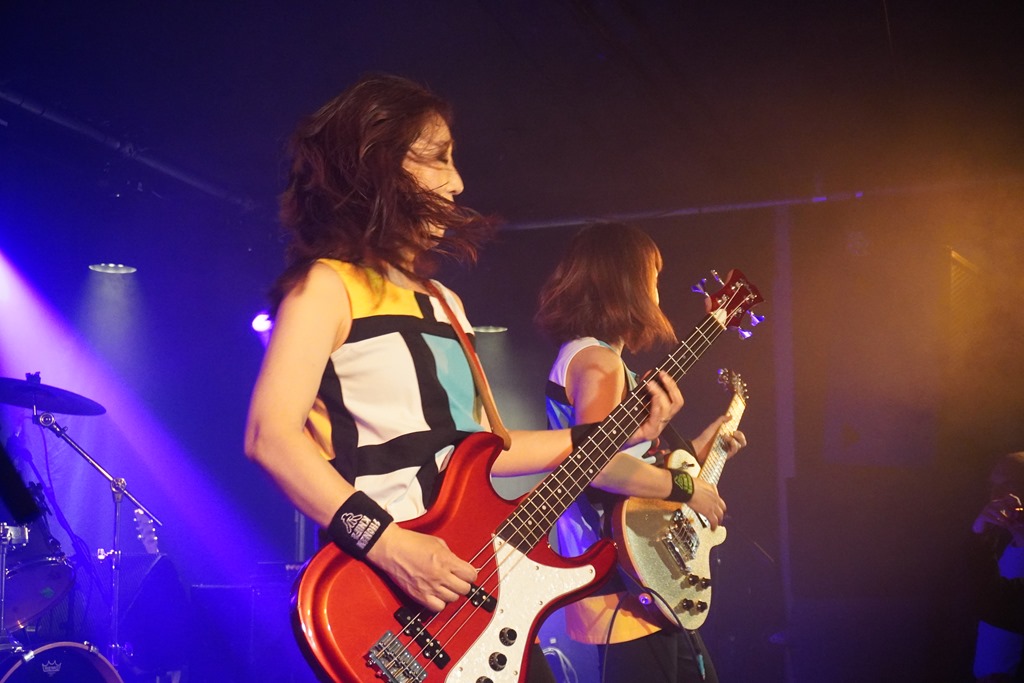
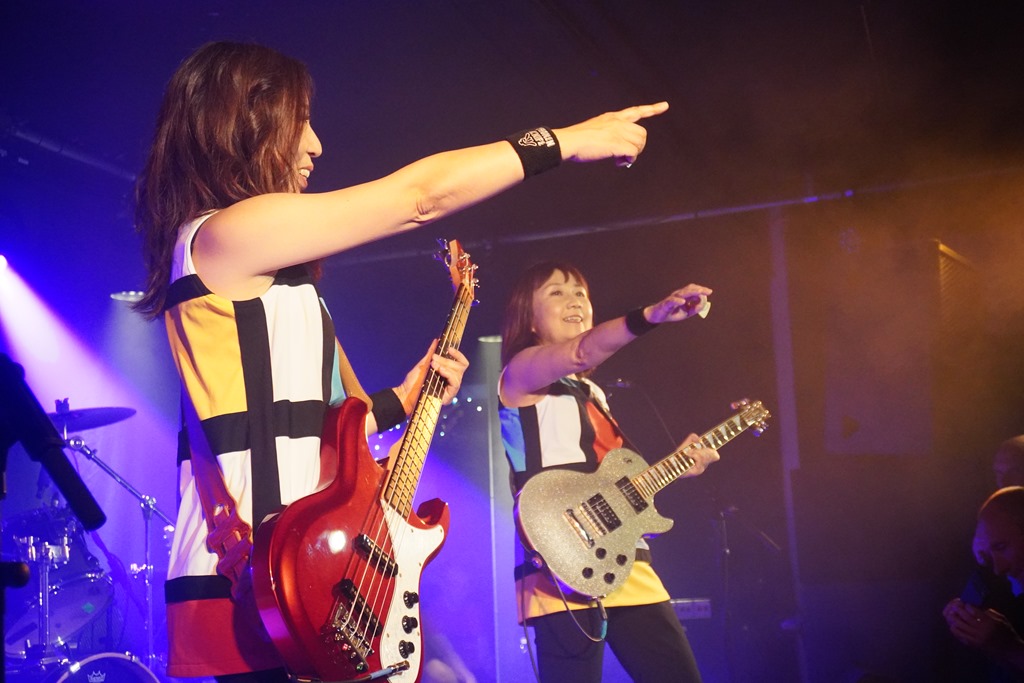
Shonen Knife set up their own kit – drums, the lot, tuning, etc., all wearing their own current tour shirts. One bass pedal, perhaps half a dozen guitar pedals, small amps, there’s nothing fancy about their setup. That’s the essence of punk right there. A tech does come on and make some final checks before they return, T-shirts removed to reveal their co-ordinated colourful stage dresses, and they’re proceed to serve up a set which is pure joy from beginning to end.

For a band that’s been going for nearly forty-five years, their lineup has been consistent for long periods of time, and currently consists of co-founding sisters Naoko and Atsuko Yamano (guitar / vocals and bass / vocals respectively) and singing drummer Risa Kawano, who’s been with the band since 2015. This stability is likely one of the key factors in their tightness as a unit: the songs may not be especially complex, but their played really well – to the extent that it stands out. What also stands out is just how much they look to be enjoying themselves: they smile a lot, and Kawano in particular beams throughout the set, like she’s having the absolute time of her life on every swing of a stick. And that joy is infectious.

DSC02282DSC02251

Shonen Knife

For the uninitiated, Shonen Knife sound like a Japanese female Ramones experiencing a massive sugar rush. Their songs are perfect pop, and revel in the pleasures of ice cream, candy, and cookie dough. They’re the musical equivalent of kawaii drawing, and their stage show is in keeping with this. It’s not just the outfits, but the spangle guitars, the way the harmonies come together, the way the jumps aren’t jumps so much as bunny hops. Yet none of it feels trite or contrived, and it’s never cloying. It’s simply good, clean fun. A couple of times, I find myself thinking of Dogtanian and the Three Muskehounds – and it’s theme tune, that hyperpop energy the likes of which I had never heard before at the time.

DSC02215DSC02212

Shonen Knife

For an hour and a half, I find myself uplifted to a point that I am simply bursting with joy. While they play, everyone is in the moment, transported away from everything: the room is filled with happiness which celebrates simple joys. It’s pure escapism, and absolutely wonderful.

The German dark electro-pop duo Rotersand have announced a new album entitled Don’t Become The Thing You Hated. Out on 8th August via Metropolis Records, it will be their first full length studio record since How Do You Feel Today?, which appeared just a week before the world was forced to shut down in March 2020.

A single from the album entitled ‘Private Firmament (I Fell For You)’ is out today. Explaining its meaning, the band say: “human nature is not binary, but algorhythm induced communication forces us to choose virtual sides to stimulate emotions and click rates. Yes or no, black or white, for or against, one or the other. Ultimately, we sit in our post-fact, post-science, post-truth private firmaments with nothing in common other than the cold light of screens pretending to shine for us. We say, leave the private firmaments and dance with us, with real faces under real stars.”

Don’t Become the Thing You Hated sees the Hamburg based act (comprised of Rascal Nikov and Krischan Jan-Eric Wesenberg) return with an album that is as much a cultural critique as it is a musical statement. In a world increasingly defined by division, alienation and existential anxiety, the duo cast a sharp eye on the psychological toll of our times and issue a warning. The message is clear: in fighting what we oppose, we risk becoming it ourselves.

AA

2ea9f4efecfe81ace6b946625bacbc3385e197fb

Limited Edition 7" Dubplate / DL Blank Records – 13th June 2015

Christopher Nosnibor

Tobias Vethake aka Sicker Man has spent a quarter of a century doing things differently – differently from other artists, and differently in terms of his own sound and approach to making music.

As his bio points out, ‘as our world changed a lot during the last 25 years, so did his music. On his last release, KLOTZ WENZEL VETHAKE, the interaction with other musicians and the political dimension of a musical wake-up call became a main focus… The single „Gravy Train / Hollowed“ marks a new and fresh look at both, his musical history and present. It features Sicker Man’s love for dub, noise and electronic music as well his passion for classical composition and spiritual jazz… ‘Stop The Gravy Train / Hollowed’ feels like a collaboration of Moondog and The Bug’

It certainly does. For these two pieces, Sicker Man has enlisted saxophonist Matze Schinkopf, and

How many ideas is it possible to pack into four and a quarter minutes? With ‘Stop The Gravy Train’, Sicker Man manages more ideas per minute than it’s possible to even begin to count. The piece starts with a low, grinding bass and industrial hums, before the saxamaphones enter the mix, interweaving through and across one another. They trickle smoother, teasing with points and counterpoints, laid-back and mellow over the simmering rhythm section, the bass and the beats building currents beneath. Around the midpoint, the piece makes a change of trajectory, the gentle jazz giving way to something altogether more urgent and driving, locking into a robust groove with low saxophone punching rhythmically and in syncopation with the whip-cracking snare and palpating kick drum.

‘Hollowed’ is different again: a swampy surge of seething electronica, a morass of meshing noise – at least to begin, and then it melts into a rather pleasant swaying jazz work, a clip-clip beat nodding along nicely. Swells of noise bubble and surge, but don’t quite break through, and industrial grooves settle in while the saxes tootle off in different directions, hither and thither to brain-melting effect.

‘Genius’ is a word which is chronically overused and often severely misapplied. Is this a work of genius? Maybe not, but it’s got to be close. There’s no question that it’s wildly inventive, and unexpectedly listenable, while challenging every musical preconception.

AA

a1110512025_10

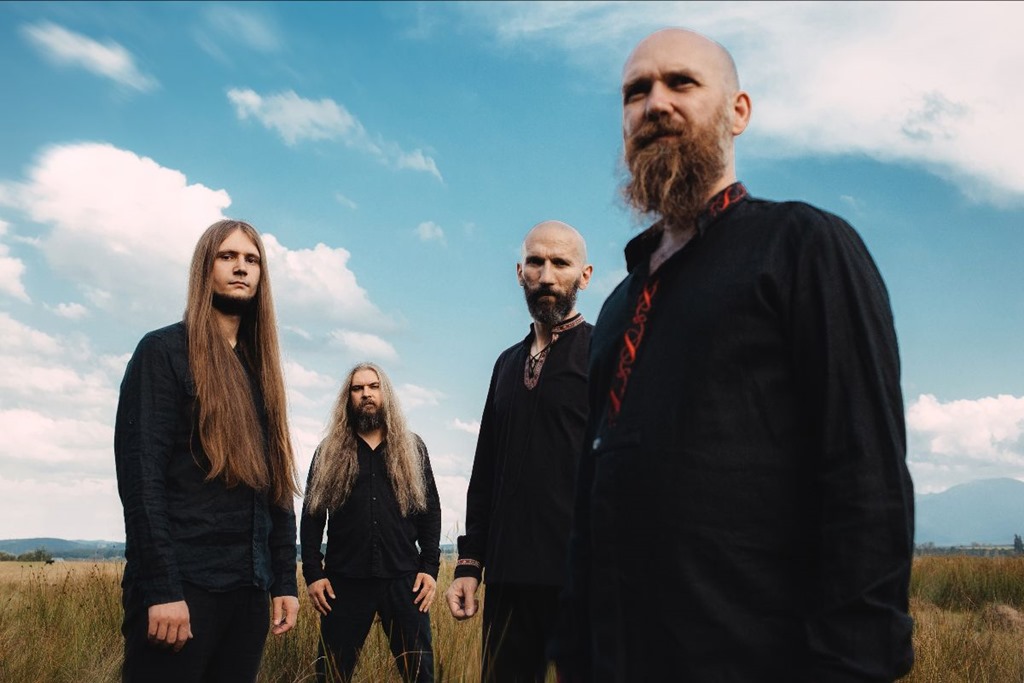
Fascinating metal innovators DORDEDUH have unveiled a new live video for the track ‘Timpul întâilor’, which was recorded during their show at the prestigious ProgPower Europe festival at the Sjiwa in Baarlo, the Netherlands in 2023.

While the Romanians were playing, their compatriot and renowned artist Costin Chioreanu created a live painting at the venue, which was directly inspired by the music. His artistic process was projected onto the backdrop behind the band.

AA

DORDEDUH comment: “First I need to mention that ProgPower is a very special festival with a particularly nice vibe to it”, frontman Edmond “Hupogrammos” Karban writes. “It is very intimate but feels like a big family meeting. There were great shows and great bands, but the afterparty at that castle-like hotel that accommodates both the musicians and the audience is something else entirely. We had a really great time there. Therefore, I am especially glad that we did something special there with our amazing friend of so many years now, Costin Chioreanu. Everybody involved deserves that and we are grateful for this opportunity. This kind of memory, this kind of beautiful moment will stay in our memories. Luckily, this one memory got immortalised for all to see in this video. Hopefully, you will enjoy it, too!”

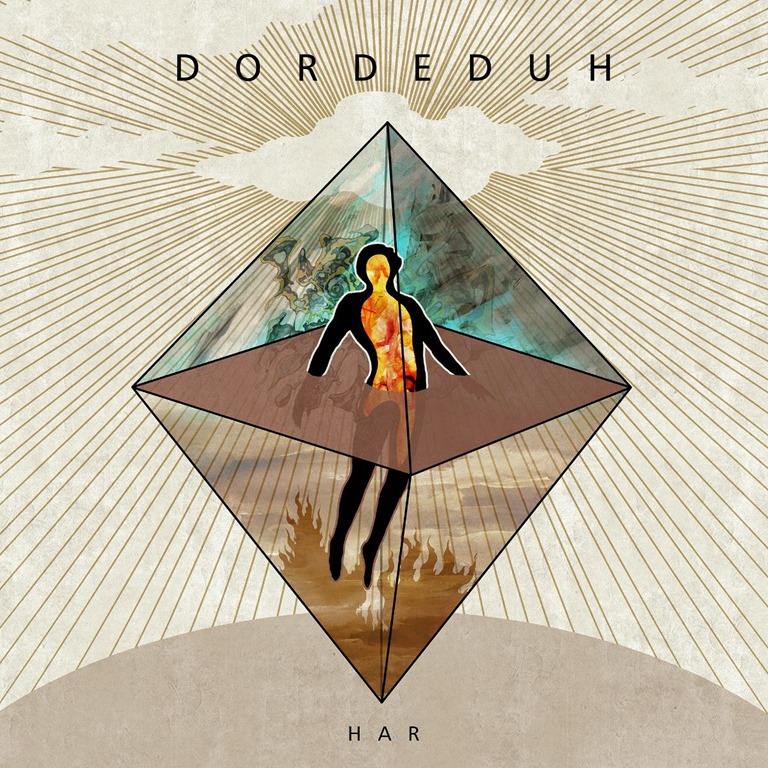
The track ‘Timpul întâilor’ is taken from the album Har.

AA

c6fcaa41-f30d-43ae-80b9-60da4f4c14057efaf133-8ed1-4fa5-8a67-b2d193356ee0

30th May 2025

Christopher Nosnibor

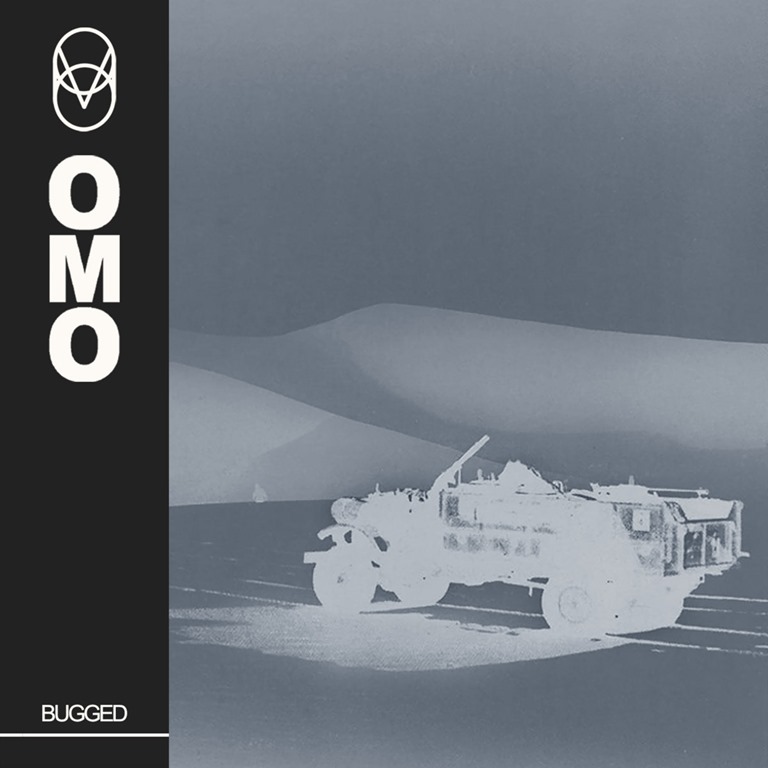
With mainstream music, all you have to do is stay tuned to prominent radio channels, watch TV, let Spotify recommend the next tune, and it lands in your lap. The further away from the mainstream you get, the more it becomes about keeping your ear to the ground, word of mouth, groups and forums – and occasionally, press releases and inboxing. Despite being a fan of a number of the acts involved, I discovered this one quite by fluke via a share in a Facebook group, which announced that ‘OMO DOOM , the Glasgow group who comprise members of Mogwai , The Twilight Sad , Desalvo , Areogramme and Stretchheads put out a new track this week, an intensely claustrophobic cover of a Head of David track – the brilliant late 80s UK Blast First act who everyone seems to have forgotten now’.

I’m perhaps one of the few who not only didn’t forget Head of David, but has a near-complete collection of their releases – and I can tell you it’s taken some years to assemble. While their first album – LP, released on Blast First in 1986, and later reissued as CD in 1990 isn’t too hard to find, and has a buzz around it on account of the fact that Justin Broadrick drummed with the band between leaving Napalm Death and forming Godflesh (although he didn’t actually play on any of their releases apart from their 1987 Peel Session, which features on the nigh-on impossible to find White Elephant compilation), their other releases are like rocking horse shit (as they used to say at record fairs in the 90s.

Their second LP, Dustbowl, which featured ‘Bugged’, was produced by Steve Albini and released in 1988. It’s a belter. While I snagged a vinyl copy in the 90s, I have never yet seen a CD copy in the wild, and it’s never been reissued, either. ‘Bugged’ also appeared on one of the 7” singles in ‘The Devil’s Jukebox’ Blast First 10-disc box set, and that’s hardly common or cheap either.

H.O.D.I.C.A. was a semi-official live album which captured Head of David playing at the ICA in London, delivering a purposefully unlistenable set with the explicit purpose of repelling EMI music execs who were sniffing around, and their final album, Seed State, released in 1991 lacked the same brutal force as its predecessors.

The reason for the history lesson is that they’re largely forgotten because their music is so hard to come by, and because Stephen R. Burroughs has pursued a very different musical trajectory subsequent to their demise, with both Tunnels of Ah and FRAG sounding nothing remotely like HoD.

But if you can hear Dustbowl, it’s aged well, a snarling mess of noise driven by pulverising drums and snarling, grinding bass that tears you in half. And this is where we resume the story, I suppose.

OMO DOOM’s version of ‘Bugged’ is slower, starker, more malevolent and menacing than the original which was ferocious in its unbridled brutality. Here, we get thick synths and punishing drum machines dominating the sound. The bassline is twisted around a way, and sounds for all the world like ‘Shirts’ by Blacklisters, and at around the two-minute mark is slumps into a low-frequency range that’s unsettling to the bowels as well as the ears. This sure as hell brings the dirt. The vocals are rabid. It’s gnarly, alright. Fans of Mogwai and The Twilight Sad and the late, lamented Aerogramme may be drawn to this, but probably won’t like it: it’s the work of a bunch of musicians trying something that’s nothing like their regular work, and it’s unfriendly and inaccessible and noisy and horrible… and of course, I absolutely love it. And maybe it could spearhead a Head of David Renaissance… We can hope.

AA

a2460593698_10