Archive for January, 2025

the Jesus Lizard have just wrapped up their wonderfully received UK and Irish live dates in support of Rack, and it won’t be long before they hit the road again.

The band share a brand new track, ‘Westside’ and the single is only available digitally.

About the track, Duane Denison comments; “’Westside’ goes along with the previous single ‘Cost of Living’ — which was subconsciously influenced by Leonard Bernstein’s "West Side Story" and hence the name. Really."

David Yow adds; "There is a part in ‘Westside’ where the lyrics say, “…give him back his arm”. That was inspired by David Lynch’s Lost Highway, when Robert Blake’s character says, “Give me back my phone.”

Listen to ‘Westside’ here:

AA

TJL0520-DuaneYow-990b6d079e05143c

24th January 2025

Christopher Nosnibor

These are dark days. I feel as if I’ve written words to this effect a lot in recent months and years. It would perhaps be rather too much to expect there to be the sunrise of a new, optimistic dawn breaking over the horizon, but when there is nothing but the glow of flames beneath a pall of smoke on so many very real horizons, any sun on the metaphorical horizon is eclipsed by a billowing pother and clouds of ash. And then, last night, I felt my heart sink yet deeper still as Donald Trump signed away the protection of the Arctic in his quest for ‘liquid gold’, and declared a ‘state of emergency’ over the Mexican border and promised mass-deportations – ‘millions and millions’, being his megalomaniacal mantra, while the man who owns him, the richest man on the planet, who seeks not only world domination, but galactic domination, threw Nazi salutes to a huge crowd of fanatics.

Fighting the urge to assume a foetal position on the hearth rug in front of the fire and stay there for the next four years in the hope there may still be a world after that, I poured a strong winter ale and took some time to sift through my submissions for something that might make suitable listening.

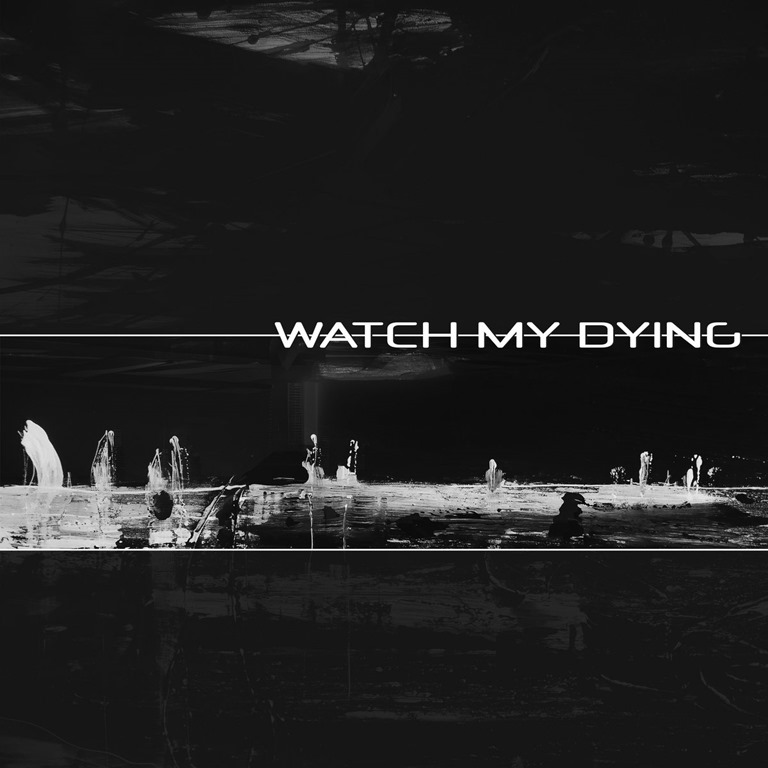
Listening to light music in the face of such darkness and despondency feels inappropriate, somehow, so stumbling upon the latest album by Watch My Dying felt fortuitous. Extreme metal has a way of providing a means of escape, sometimes.

According to their bio, ‘Watch My Dying has been a cornerstone of the Hungarian metal scene for 25 years, a hidden gem for international fans of extreme metal. Formed in 1999 in Hungary, the band quickly became a defining force in extreme tech/groove metal throughout the early 2000s… Known for their philosophical and socio-critical Hungarian lyrics, WMD stands out in the extreme metal genre, with excerpts of their work inspiring novels and poetry in Hungary.’

It’s the title track which opens the album, with a slow, atmospheric build, before heavy, trudging guitars enter the fray, and it’s only in final throes that all fury breaks loose.

While there’s no shortage of archetypally death- and black-metal riffs, WMD forge a claustrophobic atmosphere with chunky, chugging segments, enriched by layers of cold, misty synths, and some thick, nu-metal slabs of overdrive, too: ‘Kopogtatni egy tükrön’ is exemplary. ‘Jobb nap úgysem lehet’ provides an interlude of heavy drone and hypnotic tribal drumming before one of the album’s most accessible tracks, ‘Napköszörű’ crashes in. It’s hardly a party banger, but brings together industrial and metal with a certain theatricality, finished with some impressively technical details – but none of it’s overdone. ‘Minden rendben’ is more aggrotech than anything specifically metal, and it’s a banger.

Egyenes Kerőlő isn’t nearly as dark as a whole as the first few songs suggest, but it’s still plenty heavy and leads the listener on something of a sonic journey. They cram a lot into the eleven tracks, especially when considering that the majority are under four minutes, with three clocking in around the minute mark. It’s certainly varied, and while not all the songs have quite the same appeal – the last track, ‘Utolsó Fejezet’, borders on Eurovision folk – the fact that they’re in no way predictable is a strong plus.

So many technical players are so busy showcasing their skills that they forget the value of songs. This is not the case with Watch My Dying: the groove element is strong, and there are melodies in the mix – just not in the vocals. The end result is more accessible and uplifting than I would ever have imagined. I almost forgot that the world is ending for a good twenty minutes.

AA

a1664588283_10

Institute For Alien Research – 15th January 2025

Christopher Nosnibor

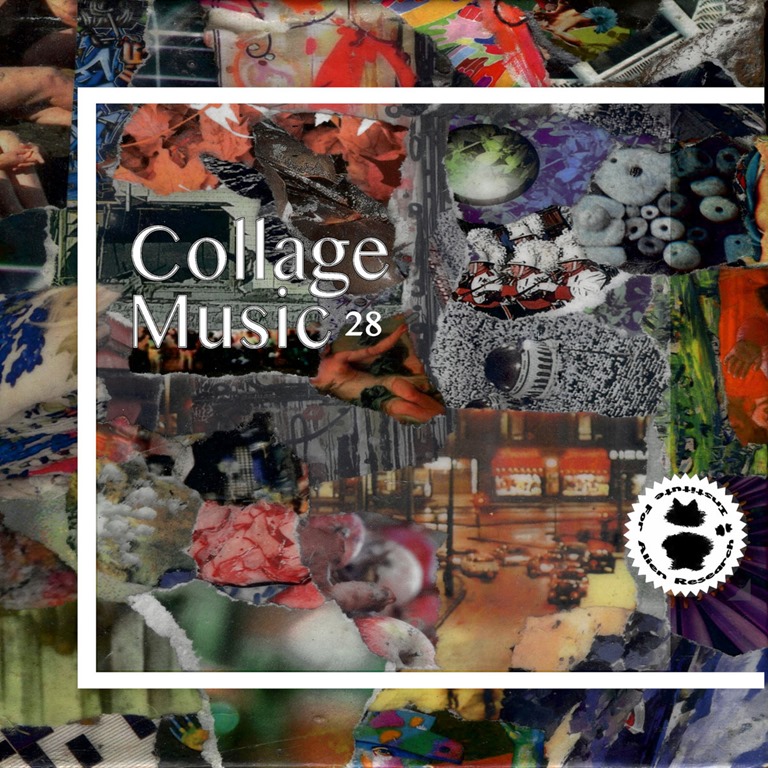
Bath-based microlabel Institute For Alien Research tends to focus on compilation releases, with open submissions, on various themes. One long-running series is Collage Music, each of which features fifteen works, the only stipulation being that their duration is 4:33. Not a second more, and not a second less. They’re not looking for interpretations of John Cage’s seminal work, and as such, the duration is in many ways arbitrary beyond the idea that artists respond to limitations and set parameters in different ways, and as this – the twenty-eighth in the series (as the title indicates) – illustrates the point unequivocally.

With ‘Circumstances’, Support Group ease us in gently with some slightly woozy, echo-soaked, ambience, before Lezet stammer and glitch through a multi-layered slice of abstraction with ‘Colonnades of Fear,’, which may also be ambient, but it far from relaxing, although it’s Robert & Lamy who are the first to venture into much darker territory, with the kind of doomy, drony warped tape and noise experiments that are reminiscent of Throbbing Gristle in places.

The arrival of ‘bruits de la vie’ by samelectronics feels like something of a watershed moment, being the first piece to present big, bold sounds – feedback and immense powerchords, which, instead of feeling heavy or oppressive, open an expanded horizon, to surprisingly uplifting effect. The rough, lo-fi punkiness of ‘Johnny got no respect’ by This is The Utter vs Chelsea comes as a surprise bang in the middle, being the album’s first straight-up guitar-based cut, and it’s a savage semi-cover to boot.

Along the way, there’s a superabundance of weird shit, with collages and field recordings and ethereal haunting soundtrack-like compositions, dark electronica, spaced-out BBC Radiophonic Workshop type soundscapes, and banging dance, courtesy of Sbilts, with ‘Acid Dog’, who mine a vintage techno sound propelled by old-school drum machine sounds. That snare! Samples! It’s a sonic time-machine!

Just as grassroots venues are essential on so many levels, so are labels who put out releases like this. Most of the contents of such compilations is ultra-niche, and will never expand beyond being so – and that’s ok. There is a huge audience with niche tastes who simply aren’t catered for by bigger labels, bigger venues. Most of the acts here are unlikely to ever play to more than twenty-five people, assuming anyone will put them on, and they’re never going to be snapped up by a label which has aspirations of making money. Self-releasing is find, but it’s hard to reach the tiny, fragmented target audience. But a label like Institute For Alien Research, having established a reputation for providing a platform for the full spectrum of experimental electronica and beyond, creates its own niche. It may seem hard to believe when there are maybe a few hundred or so people who are into it, but this really is what the world needs. Capitalism is killing cultural diversity, and it’s killing art.

The fact that Collage Music (28) is a mixed bag is a good thing. It would be all too tempting for the label to be picky, sniffy, selective, and offer up a compilation which is more homogeneous, unified, that presents, ultimately, a curated collection determined by personal taste. And that would have been fine, and entirely their prerogative. But Collage Music (28) is all the better for its wild eclecticism. You might not like all of it – and it would be probably be a bit strange if you did – but in listening to it, there’s a chance you’ll find your eyes are opened to something you didn’t know you would like, and it’s absolutely guaranteed you’ll hear artists you would never have otherwise encountered. So dive in!

AA

a3223356046_10

14th January 2025

Christopher Nosnibor

They only released their debut single on 1st December last year, and here we are, not quite halfway through January and we’re being presented with single number three.

While Argonaut’s track-a-month schedule for their ‘open-ended’ album Songs from the Black Hat, matching only that of The Wedding Present in 1992, seemed like the pinnacle of prolific – not to mention the ultimate advertisement for the DIY approach – three singles in six weeks must surely have the makings of a record (pun partly intended). As of this moment, though, we don’t know what their longer-term aim is, or even if there is one, beyond releasing new songs as soon as they’re ready, and if that is their MO, it’s admirable. Without the need to work to the schedules – or budgets – or a label, their only limitation is their own time and energy.

I had initially noted, following ‘Scarlet’, and ‘Amber’, a theme of colours linking their songs, but perhaps it’s female names. Or perhaps it’s pure coincidence, and they have simply plucked one-word titles to denote their songs.

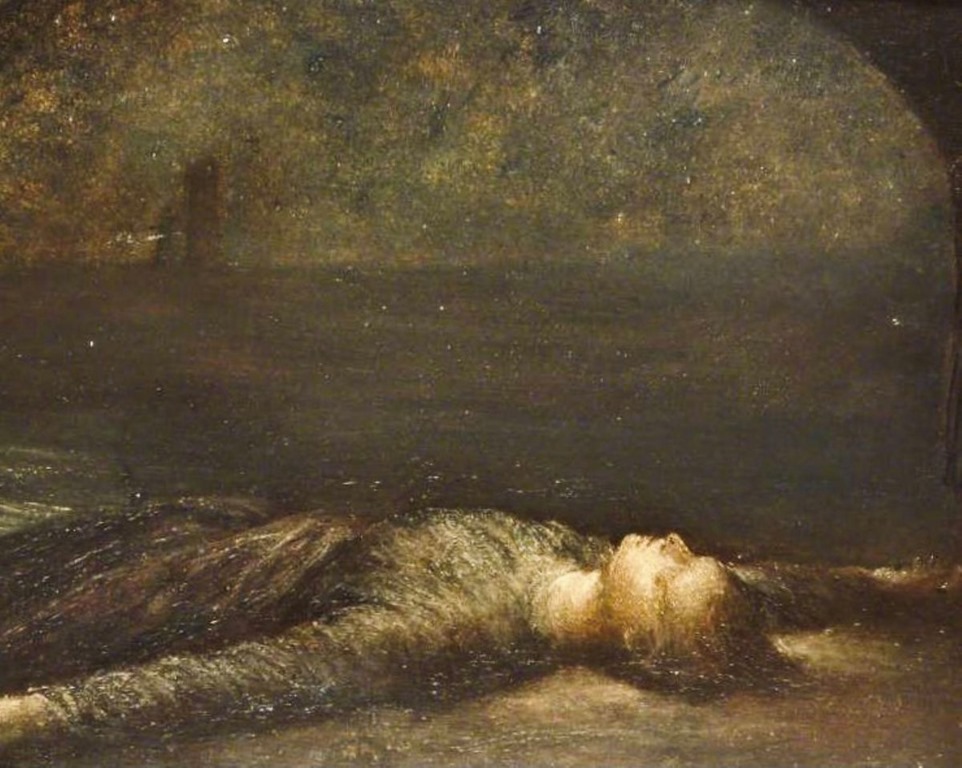
‘Jude’ – which comes with appropriately dramatic artwork, somewhere between swooning gothic drama and pre-Raphaelitism, the source of which I haven’t been able to identify – once again features the voice of poet Monica Wolfe, here whispering, and, as credited, ‘breathing’. These contributions are significant in rendering an atmospheric composition, particularly in the introduction, before the arrival of the piano – of which there are, in fact, two, adding layers to the brooding theatricality of the song, and Stephen Kennedy’s voice.

The feel – particularly in his delivery, with some quavering intonation, and enveloped in a spacious reverb – is very much gothic folk, as he casts introspection, while chasing ghosts.

‘Will the world miss me?’ I whisper

And sigh, as my life drifts away.’

It’s moving, poetic, and powerful, presenting a straight-ahead contemplation on mortality – not in some cheesy ‘romantic’ gothic style, and not in a crass emo way, but a rare sincerity.

Somewhat ironically, in our teens and twenties, we tend to agitate about death, while also treating it with a flippancy, because it’s what happens to old people, but as we grow older, we go out of our way to avoid thinking or talking about it, because as we begin to lose parents, uncles, aunts, and even – increasingly – peers, shit gets more real than we can handle. Invariably, we bury our heads in the sand, shrug off life insurance and toss making wills into the distant future along with pensions, laughing darkly how we never expect to retire anyway.

In the final minute, the song swerves into more electropop territory as the rippling piano combines with a crisp, insistent drum beat. It’s a magical, ethereal moment, which is but fleeting, like dappling sunlight through the branches of trees in a woodland on a breezy day. In many ways, this captures the essence of the song and its sentiment, in its fleeting ephemerality, a metaphor for life itself.

It ends suddenly, with only inaudible whispers fading to the close, and again the metaphor stands. This is perhaps their strongest and deepest release to date, and best absorbed by candlelight, with a large measure of something intoxicating.

AA

a0763472052_10

Mortality Tables – 17th January 2025

Christopher Nosnibor

Given Mortality Tables’ liking for location-based field recordings, Circuits From Soft Frequencies makes for a comfortable fit in their rapidly-expanding catalogue.

As the liner notes explain, Circuits From Soft Frequencies originated ‘as a four-channel sound art installation developed using field recordings from sites around the South East of England.’

‘Drawing on soundtracks taken from 70s minimalist sci-fi films, both the samples used and the overall composition are based on different terrains encountered during Jamie’s field trips, describing huge shingle beaches, swamps and clifftops. The installation which was exhibited at MK Calling in Milton Keynes during the summer of 2024 also consisted of fabricated ‘cymbal speakers’, incorporating sensor-based technology to respond to changes in their environment.’

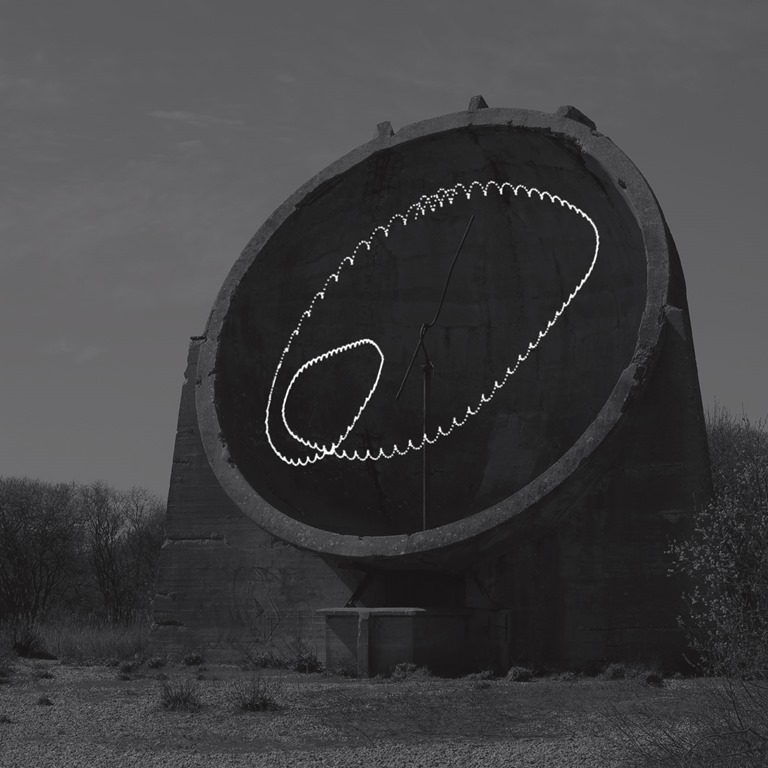
The cover art depicts one of the ‘sound mirrors’ which were constructed at various sites around the UK shortly between the world wars as an experimental early warning system, as a precursor to radar. While there are sound mirrors at two sites in Kent, those at Denge are the most renowned and best preserved, and it was here, one assumes, that the recordings of percussion, ‘incorporating cymbals, bells, gongs and clocks’, took place.

The installation, the notes go on to explain, ‘repurposes four cabinet speakers to transmit sounds collected during field trips to sites featuring [the] huge, concrete sound mirrors’.

This release contains a nineteen-and-a-half-minute recording of the installation, and highly atmospheric it is, too. Ther ticking watch not only keeps time, but gives a sense of tension and urgency which runs fast, in contrast to the long, low, reverby thuds and slow splashes of cymbals. That everything – apart from the watch – sounds somehow dulled, muffled – only adds to the atmosphere. It’s likely that this eerie, swampy echoiness is the product of the location, which features not only the thirty-foot concave ‘ear’ shown on the cover, but a two-hundred foot concrete wall. Images of the site stir the imagination, and one gets the impression to actually be in the presence of these strange-looking objects must be truly awe-inspiring. The sounds which emanate from the speakers while listening to Circuits From Soft Frequencies evoke the same sense of the alien, the otherworldly. Spurs of noise occasionally burst through, interjections of dissonance pulse through the building layers of sonic collage to unsettling effect.

It’s a reminder that often, the most alien and seemingly otherworldly creations are, in fact, man-made – and often connected in some way to war, and mankind’s destructive tendencies. I was struck, not so long ago, by the quite chilling experience of touring the cold war bunker in York – not a place of refuge, but a cramped and claustrophobic subterranean observatory which, in the event of the fulfilment of its purpose, would assure the deaths of its crew.

The sound swells and glitches, scratches and hums, and at times exudes a nightmarish quality that makes your muscles tense and your scalp tighten and crawl. It’s a remarkable piece of work, but one of those where the end comes as something of a relief.

AA

cover

One of Aural Aggro’s favourite bands of recent years, Pound Land have kicked off 2025 with a live album recorded late last year, available at the bargain basement price of Pay What You Like and free to stream.

Their third live release, it captures them almost a year and a half on from Live at New River Studios, which featured an altogether different – and one off – iteration of the band, and on storming form, a mess of feedback, thunderous percussion and dingy bass. The majority of the set is lifted from Mugged, with a full-on rendition of ‘Pistol Shrimp’ and the trudging grind of ‘Power to the People’ bringing the pace to a mid-set crawl. It also provides the first live airing of new song ‘Cunt Do It’, which comes on like The Anti-Nowhere League’s Animal fronting Swans as they tackle a Hawkwind cover.

It’s pretty bloody brutal, and absolutely bloody brilliant.

AA

a3267585524_10

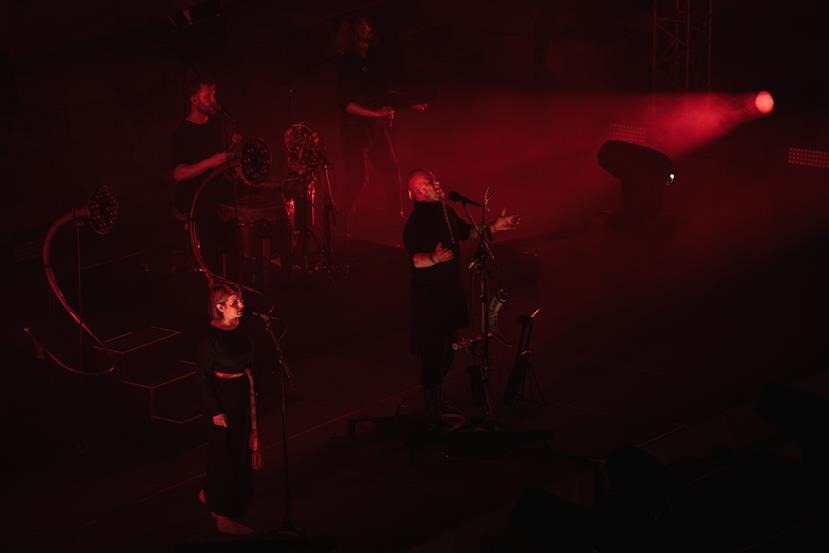
Norwegian world music collective Wardruna release a live video for the song ‘Heimta Thurs’. The video is a part of the band’s Live at the Acropolis show, which will be released on DVD and Blu-Ray alongside Wardruna’s new album Birna on January 24th.

Originating from Wardruna’s debut album Runaljod – Gap var ginnunga, the song ‘Heimta Thurs’ has grown into one of the group’s most iconic songs and a fan favourite. Set against the backdrop of the world heritage site Odeon of Herodes Atticus, Acropolis, the composition and visual experience reach ecstatic new heights.

The connections between the old and ancient, deeply human and natural at the same time can be felt at every live performance of Wardruna, resounding equally on stage and throughout the audience. Live at the Acropolis is a testament to that.

AA

Wardruna_Athens_Show_24-9903cf045104513c

Photo credit: Sebastian LOM

Christopher Nosnibor

I expended a lot of typing extolling the virtues of grass-roots venues last year, and mentioned in my end -of-year summary how a change in personal circumstances had changed my gig-going habits somewhat. And so it was that I picked this one more or less on a whim: after DarkHer’s show on Monday was cancelled due to band illness, I found myself itching to see some live music.

Having been blown away by the Jesus Lizard last week, I figured seeing a band I had no knowledge or expectations of might be a good idea, as there would be less likelihood of disappointment.

A Thursday night in the middle of January is pretty much the ultimate lull in the gig year – ordinarily. So it’s pleasing to see a decent turnout early doors, with surprising mix of studenty types and older men. Grey hair, beards, bald heads… Yes, broadly my demographic now, but more like retirement age than approaching 50. At the opposite end, nerd glasses, mullets, turnups. And all as lanky as hell. Why is everyone under the age of thirty so bloody tall?

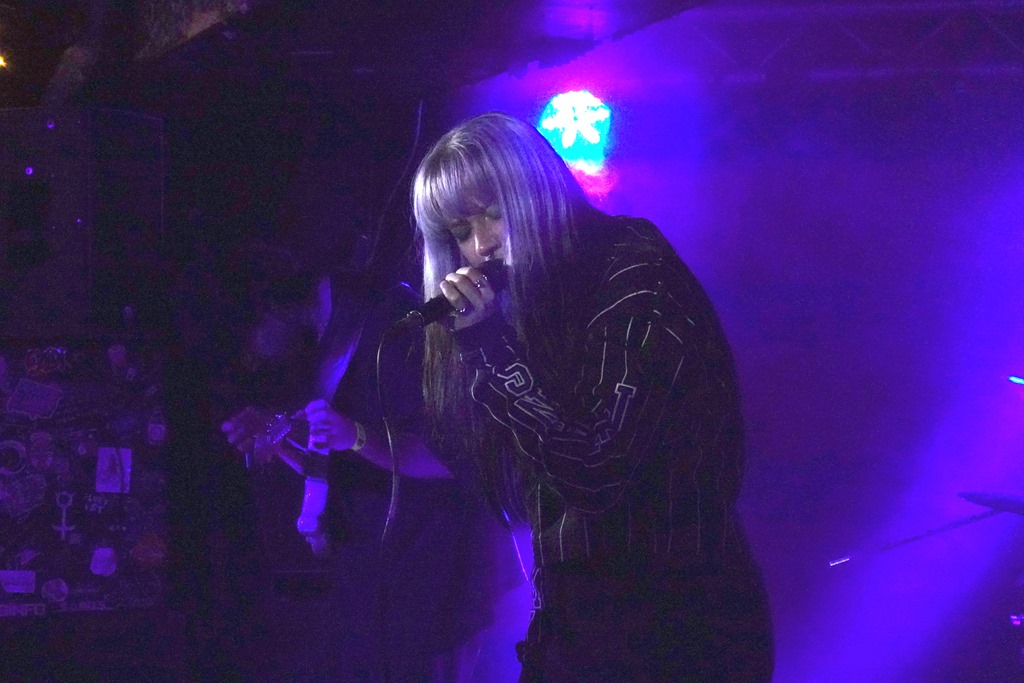
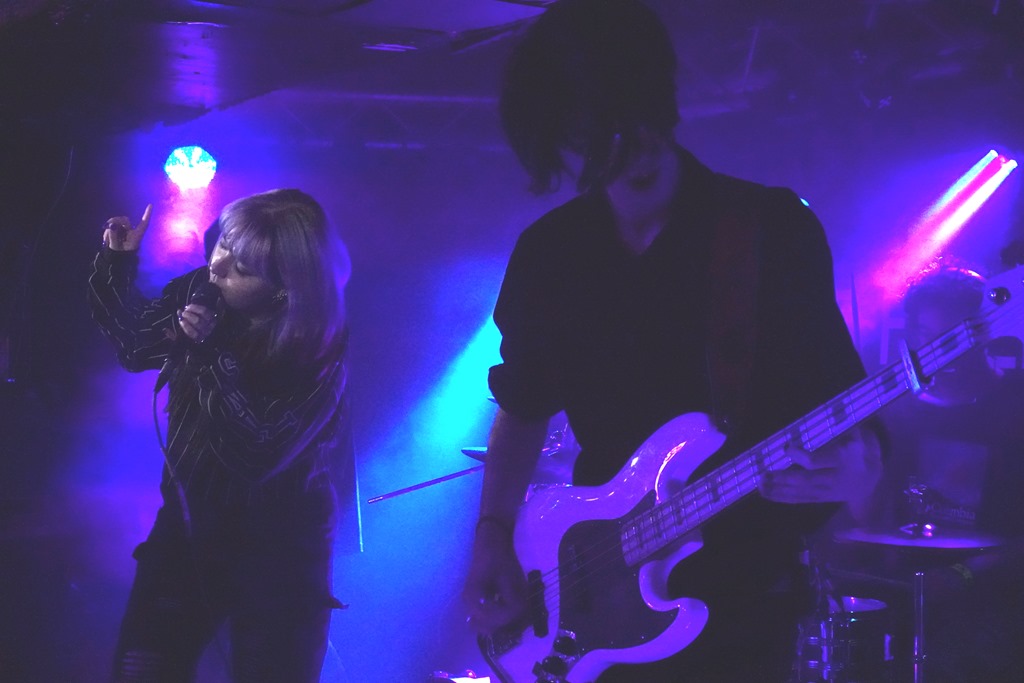
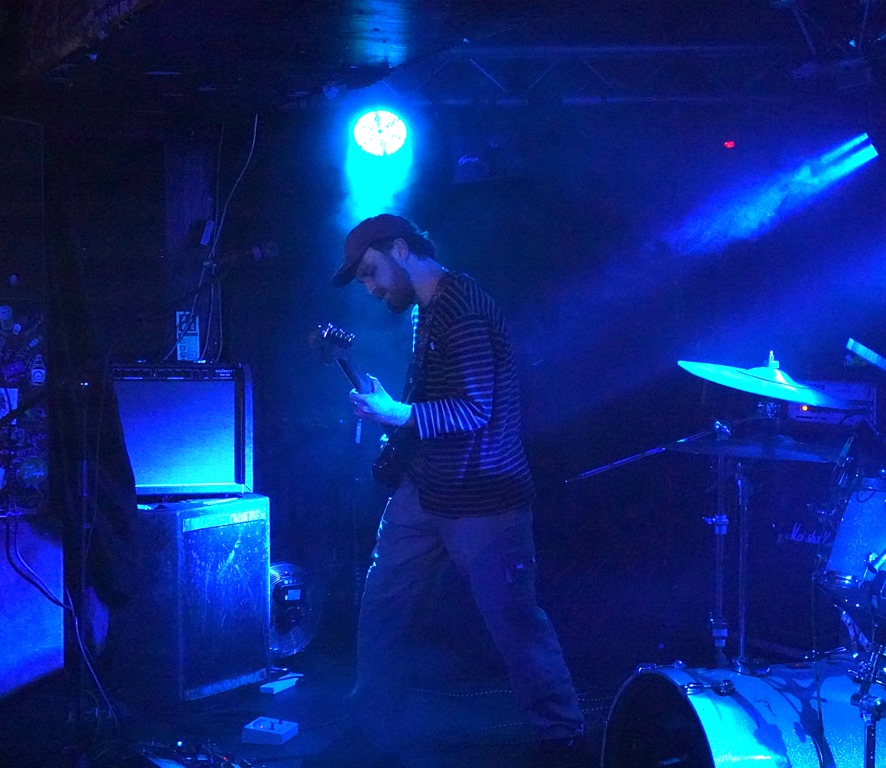
Patience are first up, bring a set of middling alt-rock with a bit of an emo edge and some flash mathy licks. The singer looks a little uncomfortable on stage: she makes rather hesitant moves when not singing, mostly with some small-stepping jogging on the spot. The band have some serious pedal setups for a bottom of the bill band with just a handful of tunes on Spotify. Perhaps partly on account of this, they sound really good. Things fall apart a bit during the last song, with tuning time-outs and false starts, and the bassist, who’s about seven feet tall and using a wireless setup, not content with bouncing and flailing in his own space, repeatedly encroaches on the singer’s space as he crosses the stage and lurches about around the drum kit. It’s a solid enough performance from a band who have no shortage of technical skill or kit, but whose songs are lacking in that all-essential grab which would make them memorable. They have clear potential, though, and I’d be interested to see them in another six months or so.

DSC00848.2DSC00843.2

Patience

Covent’s single, ‘Peace’, released just last week, was the only bit of pre-gig research I managed. Showcasing a proficient grunge-influenced sound, it’s more Bush than Nirvana, but I’d take that over Nickleback any day – and as a consequence, I was rather looking forward to their set.

They have even more pedals than Patience, especially the bassist. And fuck me if he’s not wearing a bloody Nickleback T-shirt. They’re certainly at the more radio-friendly end of grunge, sounding like Language. Sex. Violence. Other? era Stereophonics crossed with Celebrity Skin era Hole – not to mention Smashing Pumpkins. They sound great, mind, and the singer’s voice has a good level of grit and gravel, and when they do really kick it hard, as on ‘Under the Surface’, they move above drive time grunge into heavy-hitting territory. ‘Out of the Blue’ does remind me rather of Weezer, although I can’t put my finger on anything precisely, and they close with ‘Peace’. It’s a sound choice and a strong finish to a thoroughly decent set. I could easily see them playing considerably larger rooms.

DSC00866.2DSC00862.2

Covent

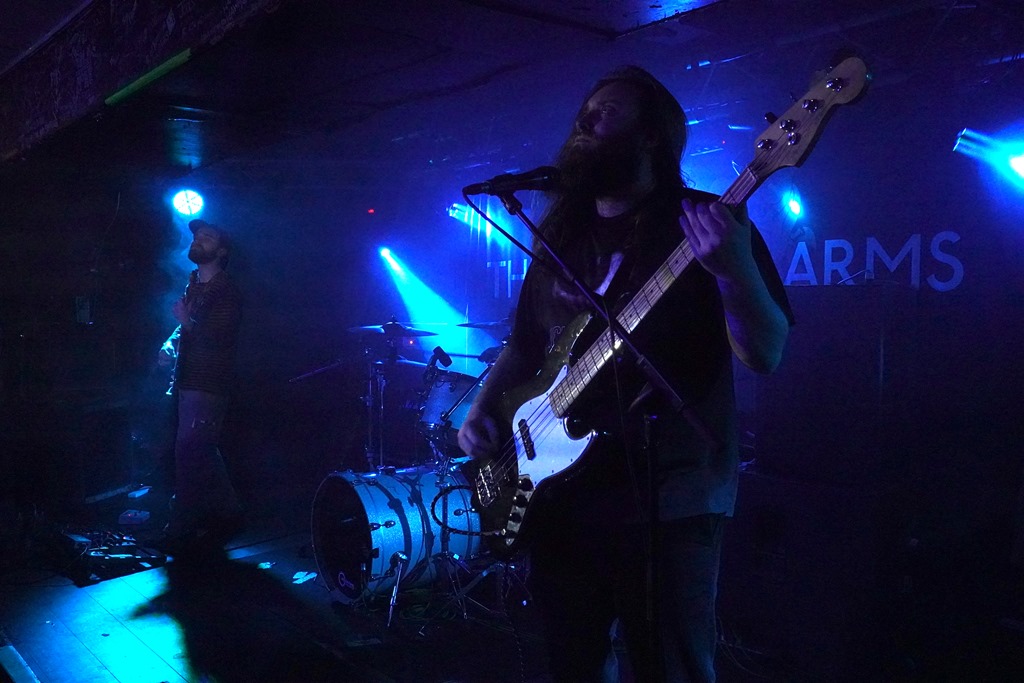
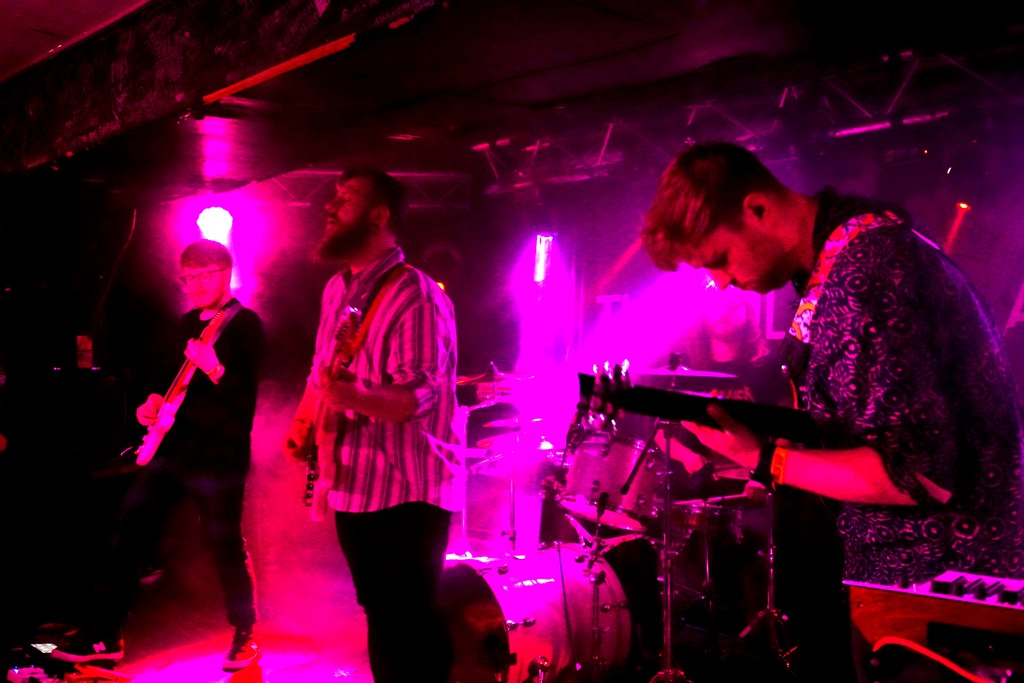
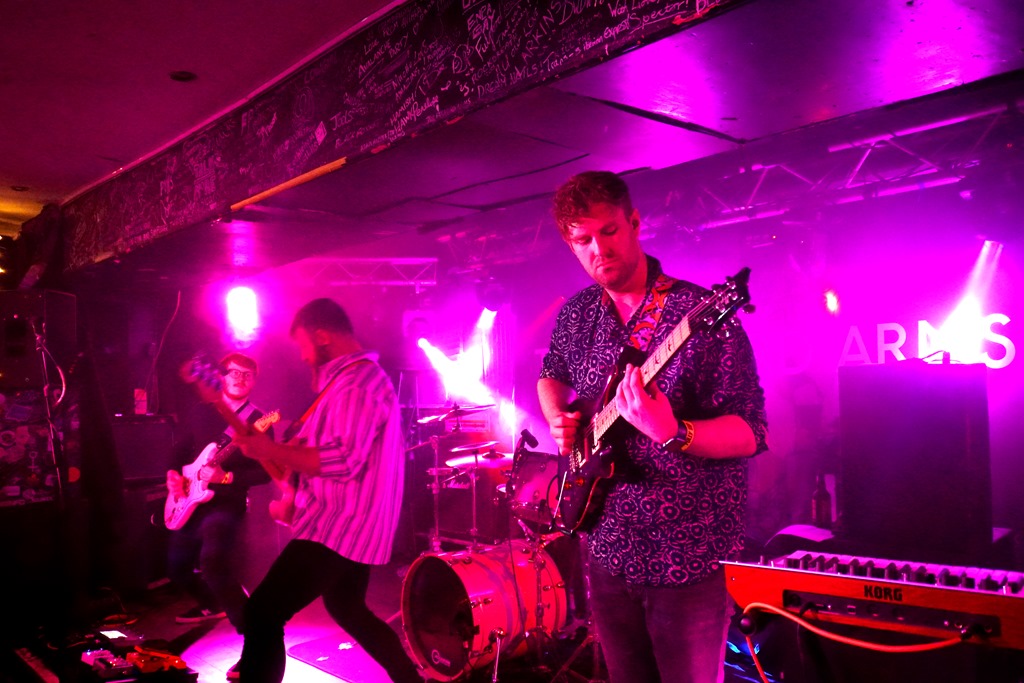
Chonky Dogg demonstrate why it’s worth taking punts on bands, and why grassroots venues are vital. Where else would a local band with no label backing – that is to say, a real band rather than a manufactured one – get to cut their teeth and build a fanbase? There’s been much made of the cutting of the pipeline, how the not-so-slow death of the small venue circuit is starting to choke the development of acts who will be playing arenas and headlining festivals in years to come. Chonky Dogg are never going to be headlining Glastonbury or selling out O2 venues around the country – but given the right exposure, clearly have the potential to play to substantially larger audiences than this.

DSC00919.2DSC00924.2

Chonky Dogg

Theirs is a daft name, but it so happens they’re a great band, strongly reminiscent of And So I Watch You from Afar, another band I discovered by way of a fluke because I went to see maybeshewill – on the basis of hearing a single – while staying in Stirling for a conference. They play noodly, mathy post rock driven by big, big riffs. Their music is complex, yet accessible, richly layered, with some magnificent detail, wonderful guitar interplay, and some dense, crunchy bass. The songs pack some weight and substance. And, they’re as tight as they come: is it really only their third gig? ‘Barbenheimer’ is a blistering riff-fest with soaring lead work, and everything about their performance is perfectly balanced and brilliantly executed. A beautiful proggy neoclassical interlude prefaces the final song, scheduled for single release soon (I think), and it’s a blinder.

I’m going to call it here first while I can: they really are the (Chonky) Dogg’s bollocks.

Aural Aggravation is extremely proud to present a new exclusive video premiere in the shape of ‘Opilione’ by Vomitriste .

We promise work from  the furthest reaches beyond the mainstream, and this is it.

Vomistriste comment: ‘Opilione’ probably represents the darkest corners of Black Abyss Invocation as a whole, encapsulating the claustrophobic anguish and pervasive dread that discolours the entirety of the record. During the recording session, this is where everything ultimately clicked together seamlessly and solidified this new dismal and murky direction of the band. Murmuring words and uttering phrases that shall not be written on top of ever-evolving vortex-esque sonics… It’s apparently possible to scare yourself solely by being who you are and doing what you must.”

‘Opilione’ is dark and nasty – and we love it.

Vomitriste began their aural trek in 2022 by means of crafting colossal, noisy drones and profound dark ambient, and went on to release six albums under that motif during the following two years. While the duo’s visceral output was greeted with open arms by many and their signature sound found new aspects to itself through life shows, midway through 2024 the project came to its natural conclusion. With the aim of putting one last effort out under the moniker, the two musicians decided to instead leave all pre-conceived notions of what the band should be out of their mutual headspace, and begun composing the idea of doing something else entirely with a fresh approach and open mindset. The end result was something unexpected, which left the duo initially perplexed, but soon turned out to be a restart of sorts for the band. The previous records were lumped under the collective title of Droneworks (2022-2024) and now, a new chapter has begun.

Black Abyss Invocation is the first album under this newfound direction, introducing Vomitriste anew as a vessel of grating and pervasive cacophonous dread it was always meant to be. Certain aspects of their previous doings are present, but the seminal orientation across the record lies at the perimeters of black ambient and death industrial, taking elements from black metal and noise and mashing those together with dark ambient and electronics, with the inclusion of ritualistic and trance-inducing, jarring rhythms and waypast ominous atmospheres. The void has opened its maw once more, and instead of balancing on its rim, Vomitriste dove straight into the unknown without hesitation only to emerge from the opposite end speaking a malformed and atrocious language while sporting only motes of resemblance of its past self.

The six songs making up Black Abyss Invocation were created in a single session overnight, and left its creators in awe of what they accidentally stumbled upon. The sonic terrains discovered were nothing sort of hostile and unfathomably haunting, yet the kind that lures you deeper and deeper into its uncharted areas on every passing second. Where once stood a wall signifying the ultimate point of unease and anxiety, now a vast black ocean spread out, beckoning both the band as well as its listeners to wade into it until reaching neck-deep and suddenly being pulled down by something inexplicable and unnamed. Where there once was scarce light, now there is none.

Vomitriste Promo 2