Archive for November, 2024

Brooklyn alternative rock outfit The Giraffes presents their new single ‘Million Year Old Song’, a caustic zipper from their self-released eighth album Cigarette, accompanied by an adventurous video, conceived and directed by Damien Paris, featuring a crass tongue-in-cheek modern depiction of America the wild.

Cigarette is a hypnotic hard-edged psychedelic rock score for our current age of decay and disappointment, fear and fury, idiocy and hope. Previewed by the singles ‘Pipes’ and ‘The Shot’, this long-awaited and loaded 7-track offering is full of surprises, taking new risks with subject matter and composition while maintaining the intensity and dexterity fans know and love. 

Recorded and engineered by Andrew Totolos at Apesauce Studio, this was mixed by Grammy nominated producer Francisco Botero (Matisyahu, Odesza) at the iconic Studio G Brooklyn and by James Dellatacoma (Bill Laswell, Herbie Hancock, TS Monk, John Zorn, Angelique Kidjo) at Bill Laswell’s famed Orange Music Sound Studio.

Since forming in 1996, The Giraffes have been crafting a hedonistic soundtrack that is loud, agile, dangerous, funny, sick, complex and satisfying. Known for their trademark menu of metal-tinged scuzz-rock, The Giraffes offer a tasteful mixture of heavy rock, punk, post-punk, surf and whatever else they find interesting. 
With lead singer Aaron Lazar and guitar maestro Damien Paris as its core, drummer Andrew Totolos provides the locomotive rhythm section with Hannah Moorhead anchoring the bass. This year marks the beginning of a new era for the band, with Moorhead now also contributing backing vocals and songwriting. With the line-up no longer in flux, the focus is now largely on songwriting. 

Aaron Lazar explains the origins of this song: “One of Damien’s most ‘badass’ style cartoon bad guy riffs deserved some extemporizing. The phrase “a million year old song in twenty year old lungs” caused me to remember how I was at that age. The first verse is a picture of that time in my life – the feeling of invincibility along with my backward looking cultural tastes (obsessed with blues explosion and old soul and punk from the 70s). The smoke everywhere at all times. No phone culture. It was a world that kids today would not believe existed.  I wanted to not be a total old man stuck looking back at my youth so I imagined someone my kid’s age hitting 20 and what the world will look like for them for the second verse. This protagonist has the power of youth but in a much more dire world. I believe that the animating spirit of “rock n roll” or whatever is that self-destructive imperative for fun at all costs. Interesting to think of what that will look like later on down the line.  The song remains the same – just the world changes.”

Check the video here:

AA

mail

Mortality Tables – 1st November 2024

Christopher Nosnibor

Spoken word is hard. I know. I’ve done it. I’ve been terrible at it. I’ve witnessed countless others be terrible at it, too. Spoken word is even harder as a prose writer. It’s just so difficult to hold an audience’s attention. This is why spoken word events seem to favour poetry: whether they rhyme or not, poems tend to focus on rhythm and to be brief, rarely longer than aa couple of minutes. And a lot of poets manage to memorise their pieces for performance, and poets who ‘read’ tend to be looked down upon in certain circles. It’s rather harder to memorise and recite a three-page slab of prose, and face buries in pages makes performing and engaging altogether harder. But worst of all, people simply don’t seem to possess the attention span.

Reading prose is hard. A segment of a story may not really work outside if its intended context, and a short story that only takes three minutes to read isn’t going to have much substance.

There’s a huge disconnect here: people listen to audiobooks but struggle with spoken word or anything that isn’t a renowned author or a celebrity voicing an accessible, pot-driven narrative.

William Burroughs told Philippe Mikriammos in an interview in 1984 that ‘many poets are simply lazy prose writers.’ He qualified this by explaining, ‘I can take a page of descriptive prose and break it into lines, as I’ve done in Exterminator!, and then you’ve got a poem.’

It’s true.

Chop your sentences down to phrases.

Cut your phrases down,

Down to their component parts,

Capitalise each line

– unless you’re e e cummings –

And lo,

You have a poem.

Burroughs had the advantage of recording his spoken word pieces and performing segments from his books in the 60s, 70s, 80s, when the medium was still comparatively fresh, and people had attention spans greater than goldfish, and had the additional benefits of a remarkable flair for reading and a truly unique voice. Here in the 2020s, it can be hard to attract – and maintain – any kind of attention with an audience. As I say, I know: I’ve done it, and I’ve been terrible at it. I’ve also been alright at it. I’ve driven people from the room, and considered it an achievement, because it’s infinitely better to have an impact of that nature than for audience members to fall asleep, or worse, forget the performance. The challenge for any spoken-word performer, be it in a live setting or in a studio, is how to grab, and maintain, the attention of any audience.

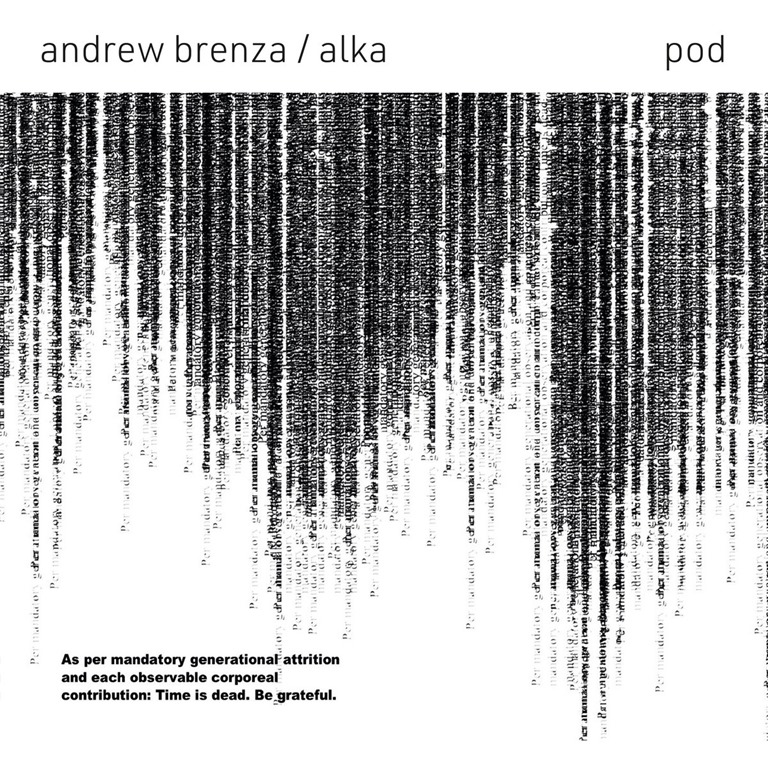
Here, Andrew Brenza reads from his book pod (ghosTTruth, 2023) with accompaniment from sound artist and electronic instrument restorer alka (Vince Clarke’s VeryRecords). Instrumental augmentation is the most obvious and immediate way of grabbing the attention. It transforms a spoken word work into a multimedia project, for a start, and moreover, the moment ‘music’ is involved, a whole new audience – which likely has no interest in spoken word – opens up.

His voice processed with a metallic flanged edge and epic reverb, and against an ominous organ droning ambient hum, Brenza becomes commanding, not to mention eerie in his delivery. This is the fine line all spoken word performers must tread, of course, but here it is felt acutely: The delivery can often overrun the work; style overtakes concept and content.

I find myself drawn into the delivery of pod – the sounds, the delivery. But engrossed in these, the content slips to become secondary, in a way. But perhaps that’s ok. ‘Intermission Meander’ provides a bleapsome interlude, and the narrative segments are vignettes, segmented scenes which are centred around image and concept rather than linear narrative, events, or characters. In this context, this release works. It is not an audiobook, but an audio accompaniment to a book. It’s difficult to absorb, but a successful project.

AA

a0689313884_10

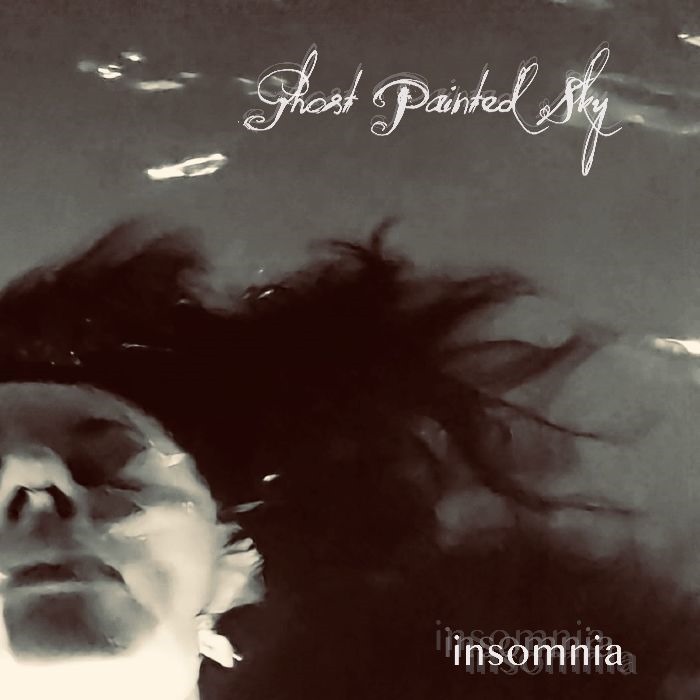
Goth rock/post-punk band, Ghost Painted Sky recently unveiled their latest single, the introspective ‘Insomnia’.

Ghost Painted Sky have always tried to write songs that are true to their own life experiences, while also tapping into something a little more universal. With the new song ‘Insomnia,’ they explore some of the most familiar of common modern plagues: stress and sleeplessness.

Raw, claustrophobic, and perhaps a bit more aggressive than some of their previous material, ‘Insomnia’ is the sound of the night fight against the thousand micro-demons of anxiety that crawl and claw around the edges of peace and sanity.

AA

GHOST PAINTED SKY began as the solo studio project of David Strong, as a way to process some major life changes through songwriting, which resulted in a debut self-titled EP released in 2014. The following year brought a second short EP, The Shadows Breath, and the first live performances.

In 2017, Lisa Wood began contributing vocals with the Scars EP, and then with the first full-length Ghost Painted Sky album, Flightless, released in the summer of 2018. Lisa has since become the second official member of the band and the primary vocalist, continuing through the Ephemeral Wake EP (2021), and a series of singles – of which ‘Insomnia’ is the latest – offering previews of what to expect from the forthcoming second full-length album, Failure Blooms. While David remains the principal songwriter,
Ghost Painted Sky continues to include work with musical collaborators and live band members (including current violin player, Aurora Grabill and guitar player, Michael Boudreau) while continuing the ever-present theme of songwriting as vessel for personal exploration and catharsis.

AA

530ac7b4-f435-7bc8-9d8f-59cd1cb6726d

Intro: Christopher Nosnibor

Interview: John Wisniewski

Images: individually credited, via Foetus.org

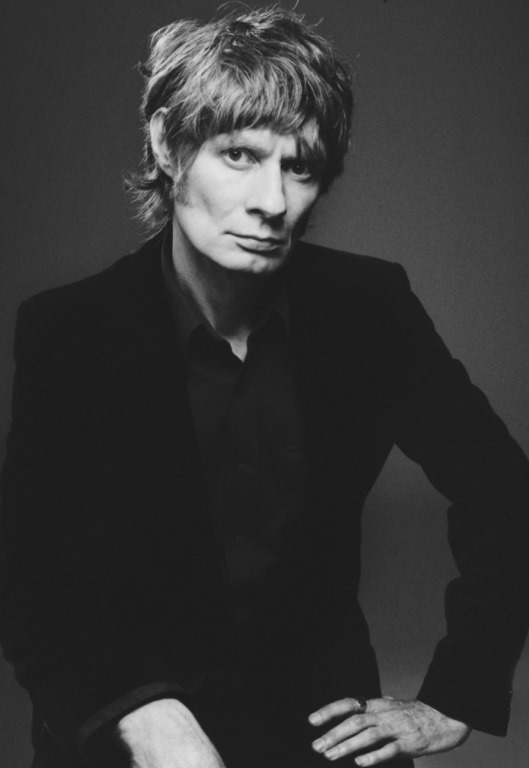
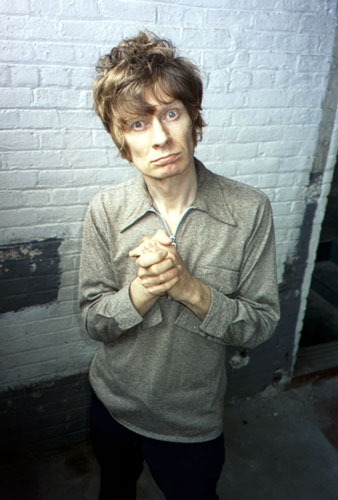
It’s been over forty-five years since Melbourne-born James George Thirlwell washed up on English shores, and having played some keyboards on the album No Cowboys by post-punk act PragVec in 1980, he embarked on what would become a truly remarkable and lifelong musical journey of his own.

Along the way, he’s released no fewer than eleven studio albums under an array of variants of the Foetus moniker, not to mention quite literally dozens of other musical vehicles from big band (Steroid Maximus) to more experimental instrumental work (Manorexia) and almost everything in between, not to mention powerful collaborations with Marc Almond (Flesh Volcano), Jim Coleman (Baby Zizane), Lydia Lunch (Stinkfist), and the late Roli Mosimann (Wiseblood), to name but three of many. And then there are the numerous scores… and yet whatever he turns his hand to, his work has a certain distinctive style, a sense of drama.

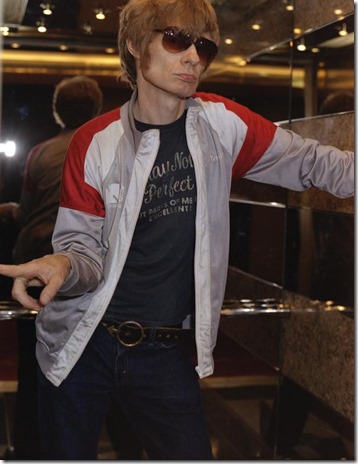
Foetus may have been on hiatus since 2013, but at the age of sixty-four, Thirlwell is showing no signs of slowing down. John Wisniewski managed to catch a window in the man’s relentless schedule to ask about his myriad projects past, present, and future…

JW: Did you formally study music, JG?

JGT: I briefly learned cello and percussion when I was a kid. But I was very slow with sight reading.

Later I just taught myself everything from instruments to recording, programming, scoring etc.

Tell us about your first music project, Foetus. What did you want to present?

The initial catalyst for Foetus was to create something totally by myself, where I played wrote and produced everything, as a reaction to the democracy of playing with other people. I wanted to make the music in my head and the music I wanted to hear. I also wanted to create artifacts, a work of art as a multiple where everyone owned an original. It took me a long time to be able to fully realize what was in my head. I’m still not always successful with that transfer process.

How did the Lydia Lunch collaboration come about?

I knew Lydia’s work and was introduced to her when she moved to London in about 1982 through the Birthday Party. At first she asked me to write her a press bio as I had been writing fanciful bios for the Birthday Party! First I played sax with one of her projects which we toured with in Sweden. Then we started writing songs for something called The Hard Diamond Drill, which was never realized. Then we created Stinkfist and went on to make Immaculate Consumptive. We became involved romantically and moved to NYC together. I was with her until about 1989 / 1990.

Any favorite music artists?

Many favorite artists, it changes daily. I become obsessed with someone for an afternoon. I like to hear new things all the time. I am a cultural sponge. I publish a monthly playlist on my Tumblr blog. https://jgthirlwell.tumblr.com/

What inspires you to create?

Everything. I have so many ideas, it is an infinite renewable resource. I also have a hungry legacy and I have to make sacrifices to its insatiable maw.

Another legendary early collaboration was with Nick Cave. How did that one come about?

The Birthday Party broke up. Nick was looking to work with other people and we were friends. We wrote the music for one song together, which was Wings Off Flies on the first Bad Seeds album. When he came to record that album I went to some sessions, but drifted away as I was in the midst of a big bout of recording of Foetus material, the sessions that became the Hole album. A bit later we had the Immaculate Consumptive project – Oct 1983.

Do you like collaborating with other artists?

I have gotten better at it.
tumblr_lqecdl1bnu1r26hzho1_1280

Photo by Marylene May

What was the experience like working with Marc Almond and Trent Reznor’s material?

Marc is very open minded and works very fast and is excited by music that challenges him and stretches the boundaries of what he has done. So that is stimulating. For Trent I remixed two of his songs, “Wish" and "Mr Self Destruct". I did my work on it, mutating the original material. he wasn’t involved. He liked what I did.

Do you like to work within different genres of music?

You may have noticed one of the hallmarks in my music, is that I combine multiple styles often within one song.

What are you working on now?

New Xordox album Terraform, Venture Bros Volume 3 and Foetus HALT should all be out in 2025.

Also under way are two albums of symphonies for chamber orchestra, and album of soundtracks I have written for Ken Jacobs. An EP with Laura Wolf, a triple box of music I created for sound and art installations. Hopefully another Archer soundtrack album. And much more.

Why do you have so many projects on the go (and how do you manage it)?
I like to work in a lot of styles and on a lot of projects in different forms – solo pieces, ensemble pieces, multi channel, electronic, acoustic, vocal, instrumental. Concert works, classic songs, scoring. I have a lot of ideas to get out of my system. There’s no one project that can harvest everything. There are things that I get out of my system with Foetus which are totally different to the place I am in when I create a sound installation, or a soundtrack,

My projects are usually staggered, which is to say a lot of projects in different states of completion. So I shunt them all along and they get completed in different paces. Then new ones sprout up. I couldn’t just work on one thing.

AA
2009-jgthirlwell-circa-2

Do you ever take time out and what do you do to unwind?
Yes I stop to watch movies, see art and travel. But my work is perpetual motion, I don’t need to unwind from it. I believe in being creative every day. That’s also manifested on ideas I have for visual art, photography etc
>
I’ve read elsewhere that the upcoming Foetus album, as the title alludes, is slated to be your last. What can we expect from it?
Tying up forty five years of Foetus is no mean feat and I have been working on it for seven years. There are parts that make it seem like a continuum and other parts that have never been done in the Foetus context. It’s going to be epic.

AA

Catch up on JG Thirlwell’s output on his Bandcamp page.
2010-jgthirlwell-circa-2

Dret Skivor – 1st November 2024

Christopher Nosnibor

Procter’s been at it again. The only artist I know who can go on tour and play under different guides doing different music – or ‘music’ – depending on the booking. Not that anything he does is commercial or has any kind of mass appeal: it comes down the question of if you’re on the market for harsh noise or something a bit gentler. And how he’s back from one of his excursions, here we have new studio work, which clearly didn’t make the merch table – released in a limited physical edition of just three hand-painted CDs.

One might wonder just how far it might be possible to push the concept of Fibonacci Drone Organ, but since the mathematical Fibonacci sequence is endless, so it would seem are the limits of this project. This particular outing, with a title inspired by Ken Loach, does mark something of a departure for FDO, being less droney and more barrelling bassy murky noise. It’s also more overtly political – nothing new for Dave Procter, but usually something reserved for his other projects.

‘Disenchanted with the state of the fucking world? You’re not alone’ he writes. ‘This is a synthesised reflection of the current state of my brain. I hope it brings you some peace.’

How much peace one can expect from longform tracks entitled ‘war war death death’ and ‘american client state’ it’s hard to really know, but I for one can relate to Proctor finding solace in the cathartic release of creating dense noise. Because there comes a point where words are not enough: indeed, there are no words. In fact, I derive some comfort – small as it is – from this release. It does indicate that the state of Dave’s brain isn’t the best, but with the US election looming and the very real possibility that Trump could become president again, I can’t help but feel a combination of gloom and outright terror. In recent months, as the war in Ukraine has rumbled on, and the hell on earth in Gaza has escalated, and escalated, and escalated, and Israel’s nauseating genocidal mission continues to be funded by the West, it’s felt like a growing weight in the atmosphere. I’ve found myself tense and on edge. Everything is wrong. ‘I find no peace,’ as Thomas Wyatt wrote.

It feels as if the world was waiting for the pandemic to pass, and as if during the successive lockdowns, world leaders were simmering, festering, building their fury to unleash the moment restrictions were listed. Recent years have been painful, and as Procter’s brief notes indicate, there are many of us who are struggling, powerless, as our governments continue to push the line of Israel’s ‘right to defend itself’. No-one would deny that right, but no rational person would agree that a death toll of almost 44,000 – with many tens of thousands of women and children, not to mention other civilians in that figure – is proportional, or merely self-defence. While news outlets do report these figures – which are, it has to be said – beyond nauseating – there is no compassion in the reporting. Deaths are but numbers, the words ‘humanitarian crisis’ but words. The images of smoke and dust and devastation are horrifying, but to actually be in the midst of it, with no safe places to go, as schools and hospitals are targeted, is beyond imagination.

It’s in this context that Procter has created two grey, grating, heaving and ugly tracks, one fifteen minutes in duration, the other over twenty-three.

‘war war death death’ is bleak, and dense. There’s the heavy whip of helicopter blades at the hesitant start of the track, which gradually emerges as a long, wheezing, churning drone, resembling the rumble at the low end of the mechanical grind of the first Suicide album. And this is pretty much all there is. And from this minimal piece emerges a sense of desolation, particularly as the end, which concludes with just rumbling static – and nothing. Devastation. Dust. Annihilation.

‘american client state’ is again, heavy a serrated edged, humming drone that hovers, panning and circulating like a malevolent drone. It’s pitched in the range that really gets under your skin and penetrates the skull, not in an exhilarating way, but instead slowly wears down the spirit, dissolving any sense of motivation. The monotone hum seems to somehow articulate, in ways that words cannot, the sense of powerless I personally feel, and suspect others do, too. There’s something empty in the monotony, not to mention a squirming discomfiture. What can we do?

All digital sales money from this release will go to the Palestinian Medical Relief Society, and while it may be a drop in the ocean, and while what needs to happen is for aid to actually be allowed to be delivered – something which will require an intervention which is long overdue – something, anything, is better than nothing.

Often, there’s a droll humour to Dave Procter’s work, but apart from the title, the higher the monkey climbs, the more you see of his arse is a bleak work, and a depressingly droney as it gets. But it provides an outlet, an expression through which to focus that release, and reminds us that we must hope against hope for better ahead.

AA

a1192190513_10

Innis Orr / UR Audio Visual / Redwig / Bar Marfil – 1st November 2024

Christopher Nosnibor

Glasgow’s Howie Reeve could never be accused of being predictable, or dull. His musical output is eclectic, experimental, and more than that, it’s often spontaneous, energetic, and in-the-moment. His last release, in 2022, was a set of songs created with his (then) ten-year-old son. Before that, there was a live recording of Chassons (that’s Cathy Heyden on alto sax, practice chanter, tin whistle, and Howie Reeve on electric bass) performing at Le Maquis de Varielles, a document which captures ‘Both of us grabbing whatever else is to hand and occasionally ululating.’ This time around, there’s a whole host of accomplices doing more or less the same to lead the listener on a wild ride. Indeed, Leaf in Fog finds Reeve working with a substantial number of friends in order to realise this ambitious and wide-ranging work.

The title – and cover art – carries connotations of the natural world, perhaps a sense of drifting autumnal melancholy, but the actuality is something altogether more jagged, dissonant, tense and disorientation. There is an earthiness to the songs and their performance, but it’s rent with the kind of twists and spasms that tear the fabric like a psychotic episode.

‘Microscopic Liberties’ starts out – and concludes – as a work of ramshackle lo-fi acoustic folk that’s not quite folk but not quite anything else one could pin down as belonging to a specific genre either. In between, there are blasts of howling noise and slanting guitar slaloming askew across a wandering bass groove. There are moments where it goes a bit Pavement, others more They Might be Giants… and it’s only two and a half minutes long. ‘Water Catalyst’ follows immediately, and tosses in elements of prog, neofolk, medieval minstrel folk and jazz.

‘Apotrope’ may be but an interlude with a running time of a minute and twenty seconds, but it’s a sharp honk of straining horn, a fragment of dissonant jazz swirling in an ambience of voices and then some sing-song poetical narrative… it’s hard to keep up. The compositions, the song structures, border on the schizophrenic, or the aural equivalent of Tourette’s, but instead of being unable to hold back the ticks and sputter ‘tits, fuck, cunt, wank’, Reeve can’t leave a song to just drift along comfortably, and it’s always just a matter of time before spasmodic bursts of all hell break loose.

From among chaos, occasionally, moments of quite affecting musicality emerge: the pick and strum opening of ‘Shop Window’ is whimsical and at the same time somehow sad, and continues to be so even when chaos and discord and bleeps and whistles collide like a speeding juggernaut travelling in the wrong carriageway, obliterating the acoustic serenity. ‘Evidence’ begins subtle, slow, a dolorous bass trudging through lugubrious strings and a sparse, simple clip-clop rhythm. The vocals veer between light and lilting and wide-eyed and tense as the instrumentation switches and slides through a succession of unpredictable transitions, before ‘Trouser Tugger’ goes full Trumans Water, but with a more muted, bedsit indie feel, leaving you dazed and bewildered at the end of its clanging, jolting three minutes.

The songs on Leaf in Fog are predominantly folk songs at heart, and the core elements expose moments which are often quite touching and pluck at emotions which are just beyond reach, beyond articulation, obscured, perhaps, by fog, but equally obscured by fret buzz and crackles and crazed strings and horns and an endless array of additions and interruptions.

It would be impossible to pretend that Leaf in Fog is in any way immediate or especially accessible, and the truth is it’s likely simply too much for many. Like Beefheart’s Trout Mask Replica, there’s so much going on its dizzying and difficult, and requires a lot of focus, and energy, to listen to. But Reeve – with more than a little help from his friends – has conjured a bold work, brimming with charm and mysticism, imagination and madness. Venture into the fog and explore, but do tread carefully.

AA

a1513935626_10

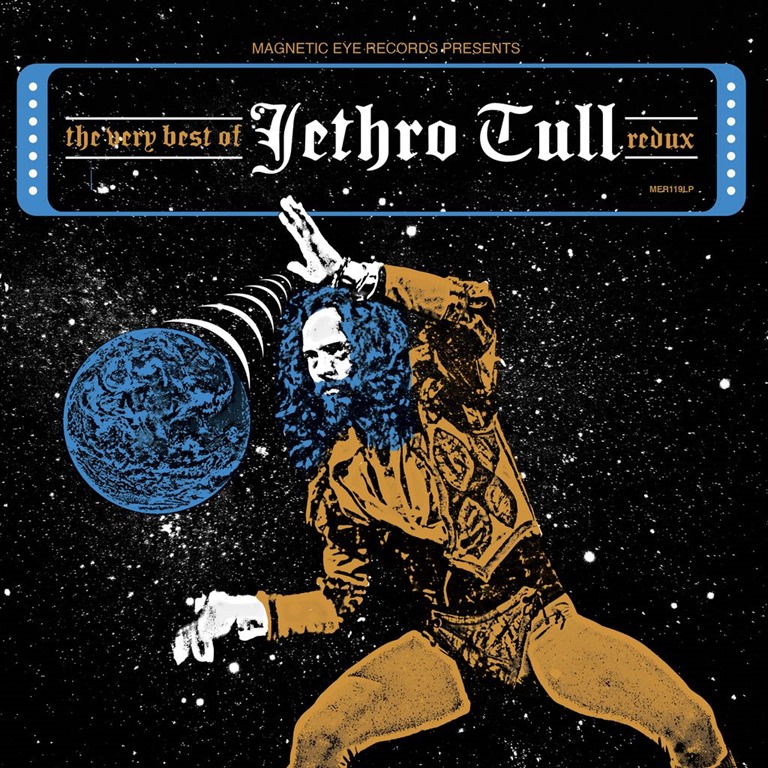
HASHTRONAUT from Mile High City, Colorado have taken that elderly British gentleman Jethro Tull in, roughed him up a bit, and stuck a big spliff in his ruddy face. The American weed-metal four-piece pays due homage on the tribute album Best of Jethro Tull Redux, which will be released parallel to the forthcoming MER Redux Series instalment Aqualung Redux, with their ingeniously crazy rendition of the track ‘Bungle in the Jungle’ from the British rock legends’ seventh full-length "War Child" (1974). Trigger warning: this track includes a flute!

AA

HASHTRONAUT comment: “Our contribution was chosen 100% on name alone”, guitarist Kellen McInerney quips. “Come on, it’s ridiculous! So imagine our surprise once we actually listened to the track… holy &@^¥, this tune rips!! The actual recording of this track was an absolute riot. Imagine Daniel in the vocal booth, trying to scream lyrics like ‘eating their nuts, saving their raisins for Sunday’ with a straight face? Not a chance! Jethro Tull was an ever present influence for the four of us growing up, and we were honored to be able to add a little bit of our own voice to the storied history of what Jethro Tull means to heavy music.”

HASHTRONAUT from Denver, Colorado take the unofficial moniker ‘Mile High City’ for their hometown quite literally – in a weedy sense. Ever since the four-piece emerged with the digital EP "Tidal Waves of Ashen Sky" from the deep stoner metal underground in spring 2022, their musical smoke signals have been noticed even across the Atlantic. Their debut full-length No Return (2024) has been picked up and favourably reviewed by major metal press worldwide. To quote Metal Hammer (DE): “Fans of the genre [stoner metal] should really go for the album, because NO RETURN is ruled by crunchy bass, wah-wah and fuzz pedals, and slurping.” Check out these smoking up and coming newcomers! 

AA

Best_of_Jethro_Tull_Redux_000_album_cover