Archive for November, 2024

Mortality Tables – 29th November 2024

Christopher Nosnibor

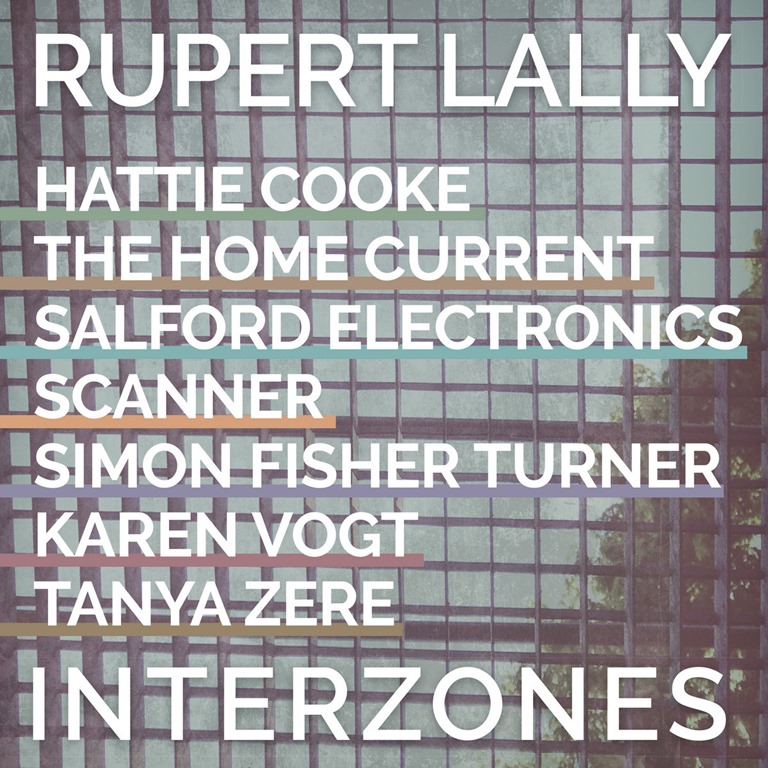
Because life experience creates linguistic associations, for me, it’s impossible to see or hear the word ‘interzone’ without immediately thinking of William S. Burroughs. The title of a collection of short stories and ‘routines’ penned in the mid-1950s, Interzone was the working title of the seminal breakthrough novel Naked Lunch (1959), and the collection, published in 1990 consists of segments which failed to make the final cut. The pieces were written while Burroughs was living in Tangier, something of a haven for expat writers, including, perhaps most notably, Paul Bowles, but also polyartist and true inventor of the cut-up method, Brion Gyson. Burroughs described the city as an ‘interzone’, and it was indeed both an ‘international zone’, as the portmanteau implies, and a space between zones, outside of any single culture or jurisdiction, its administration divided between the US, French, Spanish, and English sectors, where ‘nothing is true, everything is permitted’. Of course, there are numerous other connotations, but this is what I’m bringing in terms of prececeptional baggage to this.

The accompanying notes certainly indicate that the album’s content holds up to these parallel positions: ‘Like its name implies, these are place of transiency. Intermediate places. In-between locations. Melting pots of different people and different ideas, constantly evolving as one thing collides with another, and another, and another.’

The album was initially recorded in 2022 as a solo work, but subsequently scrapped and rerecorded with a different collaborator on each composition. Collaborations do tend to bring out different aspects of an artist, and it should therefore be of no surprise that this suite of nine pieces, recorded between 2022 and 2024 in Switzerland, England, Luxembourg, France and Zimbabwe, is eclectic in its take on electronica.

As the bookending pieces, ‘Entry Visa’ and ‘Exit Visa’ indicate, travel, movement, and transition, are the key themes here. But this is not some pan-cultural pick ‘n’ mix grab-bag, and instead creates an experience which replicates the disorientation of travel. It’s difficult to articulate just how this sonic patchwork works, or quite how the experience feels. It’s not as if it lurches from techno to grunge, to opera, to thrash, and in this respect Lally’s works represent his ‘two inches of ivory’, so to speak. But within the realm of electronica, Interzones covers substantial ground.

‘Play Position’, featuring Salford Electronics, is a sample-packed exploratory work with a prominent beat, which contrasts considerably with the near-ambience of ‘A Stealth Approach’, featuring Scanner; contrasting further, Simon Fisher Turner brings a sort of drawling space-age country aspect to ‘Calmer’, before things take a spin toward out-and-out trance on the title track, and Karen Vogt’s airy, soft vocals on ‘Running Circles’ pull the album gently into hypnotic shoegaze territory. The album continues on this trajectory, sliding deeper into dark, gothy electropop with ‘Ripples’.

The insistent beat and overtly dance style of ‘Exit Visa’ makes for an unexpected change in direction – despite the fact that, by this point, nothing should be truly unexpected. The effect, however, is disorientating, and you find yourself wondering how you came from A to B over the duration of the album. It’s testament to both Lally’s compositional skills and his selection of contributors – as well as the album’s sequencing – that somehow, it flows and the transitions themselves are seamless, which only heightens the sense of moving between spaces with no real sense of how it came to pass. Vitally, Interzones is a subtly detailed work, with hidden depths and moments of genuine beauty.

AA
a2037434320_10

28th November 2024

Christopher Nosnibor

I’ve been bigging up The Bricks for some time now, and I would count myself as a fan from the moment they snared me with their early doors set in January 2022 opening for The Kut and Healthy Junkies.

They’ve always been pretty swift at getting their material recorded, with a four-track demo laid down in the summer of 2021 containing the songs that provided the basis for their early sets. Since then, while ‘Picket Fence’ has largely remained a well-deserved feature of the set, they’ve been busy with new material, with the five-track Reverse Alchemy EP landing in February 2023, and now, with six new cuts, Modern Mirror is their most expansive, and perhaps definitive, statement yet.

It’s clear from their live shows that there’s a musical chemistry between the four of them, but equally, the tightness they demonstrate is the kind that comes from disciplined rehearsal. The fact that they got these six tracks done – even though they are succinct, with only ‘Snake’ exceeding three minutes – in two days is a fair indication of their proficiency. This is particularly important for a band who are strong live, because the challenge is capturing the essence, and the energy of the live sound in the studio. So many solid live acts make a hash of things in the studio, going either one of two ways – either they’ll polish the songs to within an inch of their lives, slicken things off with production to the point that they sound flat and lifeless, or they’ll simply fail to convey the live experience with rushed, muddy recordings that fail to do justice.

Here, the production is just right for the band: with a sound that’s from the heart of the gothier end of late punk – think early Siouxie, Skeletal Family, but also with more overtly punk leanings at times – theirs is the sound of 1979-81, and where so many contemporary exponents go wrong is applying 21st century production values in the studio. So here, we have songs which are fiery, choppy, edgy, and the recordings convey the energy and the raw dynamism, but without sounding rough.

The title track is a solid opener, with an intro that builds, and builds, and builds, then everything bursts into life, a chunky bass groove bursting with nifty runs sits tightly with the uncomplicated drumming and come together to provide a solid backdrop to Gemma’s commanding, full-lunged vocals. ‘What’s real? Does it matter?’ she roars.

It’s another snaking bassline swerving around thundering drums which provides the backbone of ‘A Lie’, where the guitars switch from choppy stutters to full-on thrashabout and it’s all over in under two minutes, a powerful short, sharp shock.

‘Snake’ has become a feature of the set as the slower mid-set breather, and it presents something of a more soulful side – as well as the opportunity for a guitar solo. It feels as if they’ve made the most of the slower tempo to explore more broadly, and it works well. It’s also catchy – in that the chorus grabs you by the balls and squeezes, but not too hard.

There’s almost a psychobilly feel to the full-throttle ‘Contraption’, with its sneering punky putdown, ‘Nice try, you’re boring / Nice try, I’m yawning’.

Lyrically, The Bricks always achieve more with less, with snappy, declarative couplets consisting of the fewest words possible and uncomplicated but effective rhymes. And so it is that the EP closes with ‘Meantime’, another songs that’s well-established and road-tested. ‘Trickle trickle… you’re so fickle’ may well not be TS Elliot or Milton, but it’s all in the delivery, and to hear Gemma belting out the dismissive flick of ‘fickle! FOOL!’ with her immensely commanding voice is enough to wither even the most cocksure and arrogant of bastards. With Guy’s magnificent weaving guitar-line and rock-solid rhythm section, it’s a powerful finale.

The Bricks have always been great, but they’ve never sounded more solid, or more confident than here.

AA

a0081019145_10

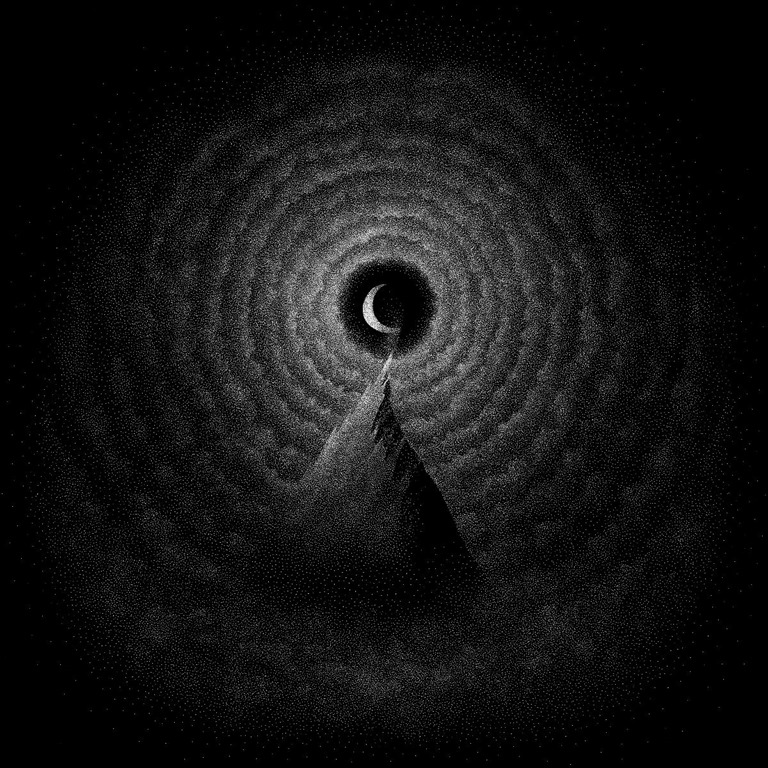
UNREQVITED drop the new lyric video ‘The Antimatter’ as the second single taken from the forthcoming new album A Pathway to the Moon.

UNREQVITED comment: “The next single track, ‘The Antimatter’, is an exploration of chaotic dissonance that transcends the palisade of precedence within its taxonomy”, mastermind 鬼 writes. “A grave tumult that culminates into a disturbed meridian of bedlam and unrest, thereafter dissipating into an apprehensive tranquility as wistful and haunting as a brooding gaze.”

AA

af19ac22-d776-a893-33f9-469695aca701

26th November 2024

Christopher Nosnibor

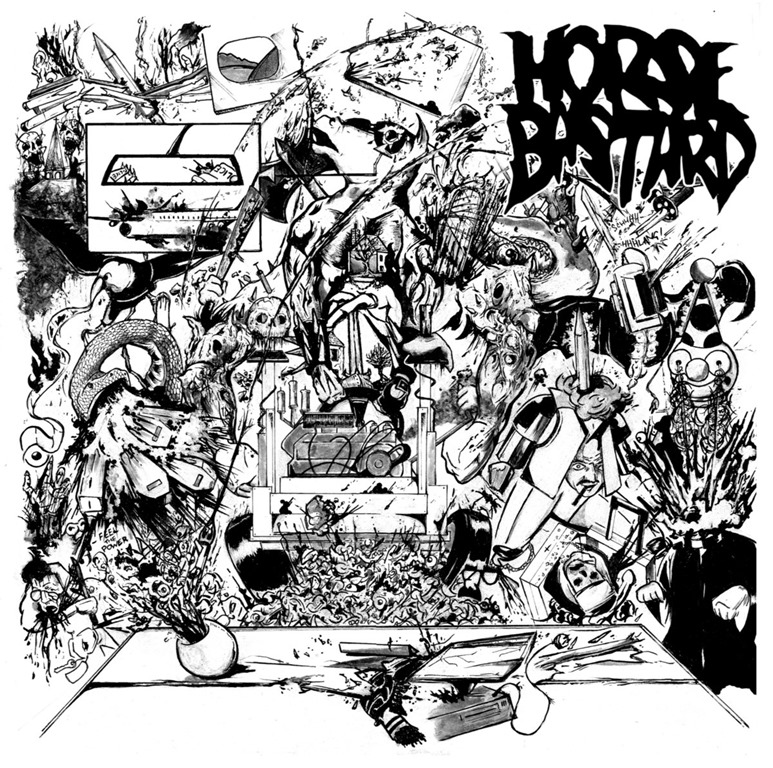
It’s eight and a half years since HORSEBASTARD last made the virtual pages of Aural Aggravation, when I witnessed their explosive set at the now sadly-gone CHUNK in Leeds in May 2016, with fellow equestrian favourers Palehorse (playing their last Leeds show), and the debut performance from future legends Beige Palace, who are also sadly missed). They’ve been going for donkeys, but despite a slew of EPs and split releases, this is their first long-player. Well, the track-list is long, at least, with twenty-eight tracks – but still only with a running time of seventeen minutes.

With the exception of the final track, ‘CORYBANTIC IDIOGLOSSIA’, the songs – or projective noise-vomits – are all around the half-minute mark, and with all of the titles set out in block capitals, it’s almost as hard on the eyes as on the ears. Almost. With titles spanning poor wordplay (‘CHAIRWOLF’, ‘FLIGHT OF THE ALLIGATOR’, ‘OLD TESTAMENTALITY’, ‘IRRELEPHANT’), the nihilistic (‘ANHEDONIA’, ‘MEANS TO A DEAD END’), and the straight-up daft (‘NOT ONCE. NOT TWICE. BUT THRONCE’, ‘INDEED RESUME COMMENCING’), it’s got everything you’d expect from a grindcore album, being a genre that recognises and revels in its absurdity, and while it can be serious, often pretends to be serious instead.

With a high-tuned snare cutting through the barrage of noise that bursts forth at two hundred miles an hour, while the vocals – as much given to screams as guttural growls – set them apart from many other acts. This means that ‘CRACK WASP’ sounds exactly how you’d expect it to, a twenty-nine second of squalling agony which assails the listener from all angles.

Guitars stop, start, stutter and lurch, and everything’s so hard and fast it’s almost impossible to distinguish between a chord change and the next song: they’re packed in with absolutely no gaps in between, resulting in the album being a continuous blur of brutal noise. There are details in the guitar playing, but they all pass so quickly it’s impossible to really register them. There’s something of a formula, in that songs tend to start with a rapid-fire drum fill before all the noise piles in on the back of it. With absolutely no let-up from beginning to end, HORSEBASTARD is a frenetic slab of face-melting ferocity.

AA

a3234403836_10

Enigmatic doom and psychedelic rock duo Lord Sin has released a haunting new video for their track ‘Living Sin,’ taken from their highly anticipated sophomore album Confessions, due for release on December 13th via Larvae Records. The video premiered at Heavy Blog Is Heavy, who praised the band’s ability to capture both the fragility and finality of mortality, stating: “Mysterious duo Lord Sin capture both sides of mortality with their eerie combination of doom and psychedelic rock. Their music is largely improvised and built in layers, the two feeding off the haunted rituals of doom metal and infusing them with the unnerving unpredictability of occult rock.”

‘Living Sin’ perfectly encapsulates the spirit of Confessions — a mesmerizing mix of haunting melodies and deeply atmospheric riffs. Watch the video here:

AA

The band shared their thoughts on ‘Living Sin,’ explaining: “’Living Sin’ depicts a phase in the life of someone close, where, on their deathbed, they confess all their sins to a loved one, burdened by the weight of pressure just before their last breath. This person lived their life like a specter, which is why the album is titled Confessions.”

Formed in 2020, Lord Sin made a powerful debut with Portrait of the Devil (released October 11, 2020, via Miasma of Barbarity Records), which laid the groundwork for the duo’s unique blend of improvisation, doom, and psychedelic dark rock. Now, with Confessions, the band has taken their raw, spontaneous approach to new heights.

The new album was recorded live in March 2021 at Rock’n’Raw Studios in Alfornelos by Bruno Jorge, capturing the visceral energy of Lord Sin’s performances. The raw guitar and drum takes were recorded in a single live session, followed by the addition of bass, guitar, vocals, and keyboards to complete the immersive sound. Mixing and mastering was done by Ricardo Towkuhsh Rodrigues at ERRE Estúdios in September 2022, giving the album a polished yet organic quality that retains the essence of Lord Sin’s gritty, improvisational style.

640e4070-1c75-50ba-0902-6ca0f1c203f4

Sinners Music Records – 3 November 2024

Christopher Nosnibor

The line ‘hell is other people’ comes from the 1944 play ‘No Exit’ by Jean-Paul Sartre, and it’s something that many of us find relatable. Indeed, it’s a line which more or less summarises my world view. One of the few settings I feel comfortable with multiple ‘other people’ (I’m on with one on one or very small groups, at least in moderation) is in a live music setting, because I can choose whether or not to interact, can limit interaction to the brief times between acts, and – and this is significant – the kind of people I find myself sharing a space with tend to be less representative of the general population. Most of us do have ‘our people’; the only trouble is finding them.

Ian J Cole’s latest work is a concept album based on No Exit ‘whereby Three damned souls, Joseph Garcin, Inèz Serrano, and Estelle Rigault, are brought to the same room in Hell and locked inside by a mysterious valet. They had all expected torture devices to punish them for eternity, but instead, find a plain room with no windows, mirrors and permanent strip lighting. They are all afflicted with fused eyelids or Fraser Syndrome where they can’t ever close their eyes and must spent [sic] eternity in this room and in this state.’

The Fraser Syndrome, from which the album takes its title is a rare genetic disorder characterized by fused eyelids.

Sartre seems to have essentially inverted the effects of the condition, but being unable to either open or close one’s eyes is a terrifying prospect. What’s worse: see nothing, or see everything? Cole’s album is based on the latter scenario, and presents a disturbing soundscape from which there is no escape.

The album opens with the immense sixteen-minute opus ‘Frightened of Cliches’, a heady blend of light-night jazz, erratic beats, and swirling ambient tension. There’s very much a filmic, soundtrack quality to it, and over its expansive duration, there are gradual shifts. The beats dissipate, there are creaks and groans like the rusty hinges of big metal doors being swing shut.

‘A Beauty Diamond Lipstick and No Mirror’ plunges deep into dark ambience. There are some synth incidentals to be found, wandering, lost, amidst the murk and the chimes, the muffled samples and layers of distortion and dissonance, but this is not an easy listen. It is, however, an intensely focused and coherent work.

‘Thelema’, created in collaboration with The Wave Prophets’ offers some light, and reintroduces the faux sax synth sound that was a central feature of Cole’s live sets a while back. But that smooth 80s vibe is now twisted into an altogether darker concoction, a conglomeration of sound that’s unsettling – and no more so than on the sparse feedback drone and hum of the eight-minute ‘Night Never Comes’: it’s a restless, uncomfortable space which it occupies, echoes and metallic clanking reverberations reverberating through the slow wailing undulations.

The piano-led ‘Hell is Other People’ is unsettling and chimes and tinkles against minor chords, before the album’s second ‘big’ piece, the twelve-minute ‘Three Damned Souls’ looms large in every way. It’s richly atmospheric, and while the atmosphere may not be overtly gloomy, it certainly is unsettling in places. Echoes and eerie whispers reverberate amidst trilling organs, bleeps and trickling electronica.

The final track, ‘Hell is Dead People’ is a live recording, and in some respects feels a bit bolted-on, but it’s a strong piece – piano-led, atmospheric, with discordant cadences playing throughout. It rounds off a solid and focused work. While concept albums can be a bit corny, or feel somewhat forced, The Fraser Syndrome finds Cole immersing himself in the themes and going deep into the psychologically difficult spaces that the source material necessitates, and the result is a strong suite of compositions, and quite possibly Cole’s strongest and most engaging work to date.

AA

a2119088003_10

26th November 2024

Christopher Nosnibor

Deborah Fialkiewicz has been keeping busy – as usual. Composer of contemporary classical, ambient, and dark noise works both as a solo artist and in various collaborative permutations and guises, she’s back with a new BLOOM release in collaboration with Daniel James Dolby. And it’s a Christmas single.

I’ve never been rabid about Christmas, and the last three years have seen a succession of difficult Christmases for me personally. In December 2021, my wife was diagnosed with stage 4 breast cancer. We weren’t even sure if she would be home for Christmas. She was, but was incredibly weak after three weeks in hospital, and that she was able to sit at the table for Christmas dinner felt like a miracle. We were in shock, and she was clearly unwell. Having made substantial improvements in rebuilding her strength through 2022, she deteriorated with the onset of winter, and again was weak and struggling over Christmas. It still doesn’t seem real that she only had another three weeks. And so Christmas 2023 was the first with just me and my daughter, aged twelve. We made the best of it, but it wasn’t the same. I detail this not for sympathy, but purely for context. It means that while around this time of year it becomes nigh on impossible to avoid festive fervour, with adverts depicting happy couples and radiant nuclear families, all the usual Christmas tunes and an inbox busting with new ones clamouring for coverage, and Facebook friends and work colleagues are dizzy with excitement over getting their decorations up, sorting secret Santa and planning social activities, I’m not feeling much enthusiasm, concerned primarily with getting through it and hoping distant relatives don’t think I’m rude or twatty for not sending cards out for the second year in succession.

When writing about music, I am often – and perhaps increasingly – aware that how we engage with it, how it affects us, is intensely personal and involves multitudinous factors. Sometimes, it’s something as arbitrary as the mood we’re in when we hear a song that will determine our response. And the chances are – and I’m no doubt not alone in this – hearing chirpy tunes when I’m down isn’t going to cheer me up, it’s going to really piss me off, or set me off. It’s impossible to predict. To be safe, I tend to try to avoid Christmas songs, which involves avoiding TV and radio – which is surprisingly easy if you spend large chunks of your time in a small room reviewing obscure music – avoiding shops – manageable – tacky pubs – easy – and ignore review requests for Christmas singles.

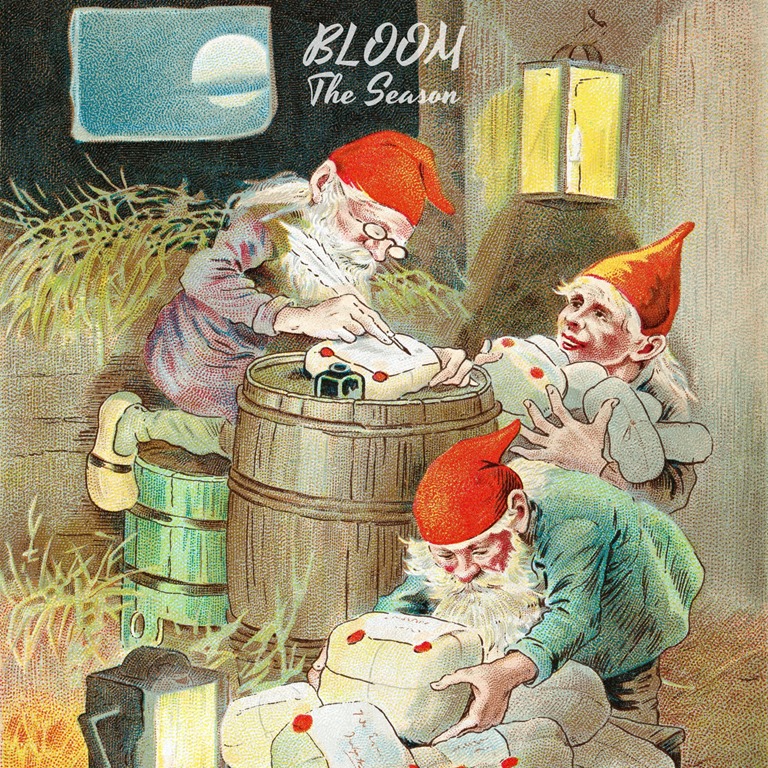
But there is always space for an exception, and Bloom’s ‘The Season’ is it. Deborah may have been posting pics on Facebook of the ‘festive mouse’ in the studio to mark this release, but said mouse is looking over a piece of kit called ‘Psychosis Lab’ made by Resonance Circuits. The cuddly cartoon cover art for this release is misleading, and for that, I am grateful.

It’s five minutes of deep, hefty beats melded to a throbbing industrial synth bass. Atop this thumping dance-orientated rhythm section, there are synths which bring a dark 80s synthpop vibe. In combination, the feel is in the vein of a dance remix of Depeche Mode circa ‘85 or ’86, around the point they began making the transition from bouncy pop toward altogether darker territories. It’s repetitive, hypnotic, pulsating, big on energy. But there are eerie whispers which drift through it all, distant wails like spirits rising from their graves. These haunting echoes are more evocative of Halloween than Christmas – and this is a significant part of the appeal. It’s a curious combination of ethereal mists and hefty, driving dance groove, which is simultaneously uplifting, tense, and enigmatic. It is not schmaltzy, cheesy, twee, or saccharine. It’s the season, alright. The season to be weird, to be unconventional, to accept those darker moods and remember that they will pass. It’s a Christmas anthem for those who aren’t feeling festive. And I will most certainly drink to that.

AA

a3458409831_10

GRÀB unveil the lyric video ‘Kerkermoasta’ (English ‘dungeon keeper’) as the first single taken from their forthcoming new album Kremess (English: ‘funeral feast’’ German ‘Leichenschmaus’). The sophomore full-length of the Bavarian black metal duo has been scheduled for release on February 21, 2025.

GRÀB comment: “Our first advance single ‘Kerkermoasta’ is probably the most in-your-face track of the album”, vocalist and lyricist Grànt states. “It also shows a wide range of basically everything that makes our sound unique. Some parts remind me of the best days of such bands as the Norwegians Gehenna. There is also a dulcimer that introduces the melody, mid-tempo, blast beats, groove, and a slow ending. On the lyrical side the Bavarian word ‘Kerkermoasta’ literally translates to ‘Dungeon Master’. The dungeon keeper in question is the Grim Reaper himself. In other words: Life creates the doorway, death holds the key.”

AA

b152eaeb-80e3-f06f-d922-e2b769f0b6ef

Tsuyukusa Records Tsuyu— 8th November 2024

Christopher Nosnibor

Tomoyoshi Date’s biography makes for an interesting read: he’s described as ‘a physician and musician known for his releases on prominent ambient labels such as 12K (US), LAAPS (France), and QuietDetails (UK)’. There’s much to be said for having a creative outlet which is completely separate from one’s day-job, especially when that day-job carries a degree of responsibility and likely brings with it no small level of stress.

Tomoyoshi Date has gone a step further, though. You couldn’t really call being a musician releasing ambient works on avant-garde microlabels a ‘side-hustle’ – which seems to be all the rage of late, and seems to be something people are proud of and the media love as much as they used to love contestants on Big Brother after they’d left the house, rather than acknowledging that this is a symptom of how capitalist structures are failing so many working-class people: this is more of a parallel career, and presumably Tomoyoshi Date’s ‘professional’ occupation affords the time and space to pursue the ‘other’ career.

Having recently written on how the four-CD box by Dolium, and the near hour-long single track album Leaves never fall in vain by Fear of the Object require a certain time commitment, I’m here in the face of not one, but three albums. Because Piano Trilogy is not a set of three compositions, but three separate works, recorded between 2021 and 2024, which collectively form a trilogy, released as a cassette package in an edition of 150 copies. It’s niche, alright, and as I said, there’s no way this would pay the rent as a primary occupation – which is a shame, but it’s the crappy capitalist world we live in, unfortunately. Were things different, I could write about music all day long and put food on the table.

This trilogy is formed of ‘ 438Hz, As it is, As you are, released by LAAPS and selected as one of Bandcamp’s Best Ambient albums in January 2023; Tata, composed for Silver Gelatin’s exhibit at Tata in Koenji, Tokyo; and Requiem, a piece dedicated in memory of a close friend who passed away too soon’ and ‘All three albums are packaged in special jackets featuring found photographs curated by Silverわ Gelatin and are being released simultaneously.’

An album trilogy released simultaneously is a lot to assimilate, and few, if any, listeners are ever going to listen to these three albums back-to-back, not even Tomoyoshi Date’s biggest fans. But for review purposes, that’s precisely the task I have set myself.

Date is clearly a gifted composer and musician, and it’s certainly no criticism to observe that the music drifts by, lightly and effortlessly. Amidst the piano notes which ripple serenely are stutters and glitches which deviate from the more classically-orientated template and explore more electronic, experimental territories. But Date does so subtly, delicately.

438Hz, As it is, As you are is a most soothing work, consisting of four compositions spanning around half an hour. Drones and slow-turning ambient tones, and birdsong occupy much of the space between piano notes, and the effect is relaxing, like a walk in nature. It’s the shortest of the three, with Tata and Requiem both stretching well beyond forty minutes I duration.

Tata is more ‘pure’ piano, and runs for almost forty-five minutes, while Requiem is sparse and melancholy, and stands apart: a pure piano work, it comprises six pieces, all over five minutes and up to more than eight and a half minutes in length, and rich in low-key melancholy.

These are clearly separate and distinct works, but they’re very much complimentary, and work together as a suite.

0031744212_10

True Blanking – 1st December 2024

Christopher Nosnibor

No-one will be surprised to learn that I spend little to no time listening to mainstream or chart music anymore. I say anymore, as growing up, this was my first access to music, just as it was for anyone else growing up in the 80s. Top of the Pops, the top 40 on a Sunday night on Radio 1, The Chart Show (which even had an ‘indie chart’ rundown)… This was a time when ‘alternative’ bands scored top 40 singles. People of a certain age always hark back to the revelation that was seeing Bowie perform ‘Starman’ on Top of the Pops, and seeing Marc Bolan. For me, I have formative recollections of Killing Joke on Top of The Pops… Divine… The Sisters of Mercy. I didn’t necessarily know what to make of these artists at first, but they made an impression. And after the Top 40 in a Sunday, there was the request show with Annie Nightingale, which played all kinds of stuff… and this was, I suppose, a route which led towards John Peel, reading Melody Maker… Now, to find anything different, outside of the mainstream takes effort – but equally, unless you’re already actively engaging with it, one has to actively seek it. Since The Internet became the dominant medium, terrestrial radio has seen its role and reach significantly diminished.

But from the little contemporary pop I have heard in recent years, I’m acutely aware of how songs have got shorter, how intros are abridged to the point of non-existence, how diving straight into the chorus as soon as possible is the objective. Delayed gratification? Forget it. Build-up? Huh? Albums?

Outside the mainstream, in evermore fragmented circles, artists have been pulling in the opposite direction. Albums designed to be played in sequence, containing songs with long intros and slow buildups are actually in favour.

Fear of the Object’s Leaves never fall in vain is an object which would likely strike fear into the heart of anyone unaccustomed to non-mainstream music. It’s a rumbling, dark ambient work, entirely devoid of beats, and almost of vocals (featuring as it does features the poem “Democracy Destruct” by David Henderson, produced by Kjell Bjørgeengen at Harmolodic Studios in 2003), and contains just the one track, which has a running time of over fifty minutes. There’s no ‘getting to the chorus’ on this epic slab of sonic abstraction.

Leaves never fall in vain, which takes its title from Japanese poet Chori (1739-1778), is a live recording, which documents a concert at Kunstneres Hus (Artists ́House) in Oslo October 2023. It features an expanded lineup, featuring original members Aimeé Theriot on electric cello and Ingar Zach on vibrating membrane/transducers, with the addition of Inga Margrete Aas on double bass. Not that you would know from the sound alone that there is a double bass in the mix – or indeed, any single, specific instruments. The instruments all melt together to create a free-flowing – or, perhaps more accurately, free-trickling – babble of sound, which is simultaneously busy, bubbling, with top-end activity frothing and scraping like a mountain stream, but with long, slow currents of droning mid-range flowing sedately beneath. There are passages where, perhaps, the sonorous tones of the cello are discernible, but in the main, it’s a conglomeration of sounds meshing together – layered, certainly ranging in tone and frequency, with a foam of treble which pressures the top-end of the aural spectrum at times, not to mention the nails-on-a-blackboard incidental scrapes. In places, the interweaving feedback takes on a texture like Metal Machine Music on heavy sedatives, and as much as the interplay between the performers is remarkable, so, it has to be said, is their patience. It takes a certain skill to hold your nerve and play a piece out like this. And the longer they maintain this slow-roiling, minimal-yet-dense drone, punctuated by occasional crackles and rips, the tenser it becomes.

Henderson’s poem arrives in the final minutes, a spoken-word piece which stands, stark, dry, crisp, and clear, and unaccompanied, after the instruments have died away and fallen to silence. It’s a powerful work in its own right, and placed as it is, hits with unanticipated impact. As the silence takes over the space occupied by sound for the best part of an hour, you’re left feeling affected, and somehow altered. The power of Leaves never fall in vain lies in is understatement, its subtlety. But also, its duration is a factor, being as if the entire track was an extended intro to the passage of poetry. Buildup, delayed gratification… alien to the attention-deficit age in which we live, Leaves never fall in vain stands out for existing in another world completely.

True Blanking 04 front