Archive for October, 2024

Peaceville – 1st November 2024

Christopher Nosnibor

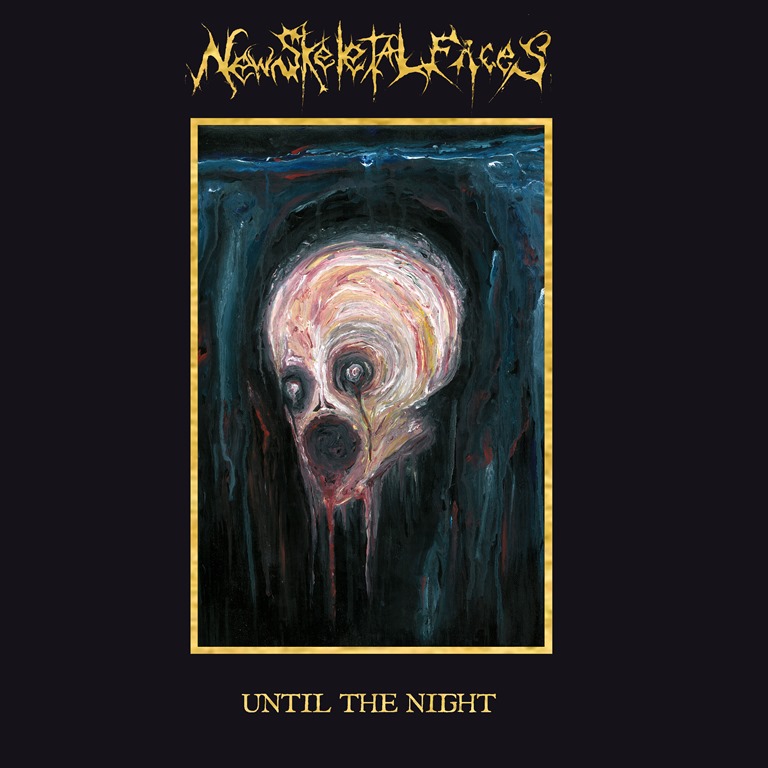
The claim that ‘New Skeletal Faces cast their own black light onto the long dormant corpse of Death Rock, shattering the mirror of modern Heavy Metal into fragments that reflect back a fresh new take on this form of music with an energised & outlandish conviction’ is a bold one. Ominous, menacing, perhaps, or deluded and deranged?

California may be known for its sun and sand, but it has a long history or dark currents which run contra to its popular image, perhaps most notably Charles Manson’s Family being based in The Golden State – which in turn drew Trent Reznor for the recording of The Downward Spiral. In between, Christian Death spawned the proto-goth / nascent death rock sound which, while evolving in parallel to the scene in the north of England, was unique and distinct, and the early eighties saw California home to a thriving hardcore punk scene. I suppose that wherever there is affluence and clean-cut TV slickness, there is bound to be rebellion, a counterculture which stands at odds with it all. No doubt some of these factors drew New Skeletal Faces to California for the recording of Until The Night, the follow-up to 2019’s Celestial Disease.

They proffer an ‘effortless blending of the spirits of old; with the seductive & spellbinding gothic prowess of bands such as Christian Death fused with the raw unbridled energy of early Swedish black metal legend, Bathory to create a bold new statement of intent, in stark contrast to the often overly-refined polish of contemporary metal. Until the Night is, as a result, something more akin to listening to the 1980’s Sunset Strip in an alternate universe from hell.’ For good measure, and to really clarify their position, there’s a cover of Bathory’s ‘Raise The Dead’.

In all, it’s apparent this is destined to be dark from the outset. Across the album’s eight tracks, they paint everything darker shades of black with densely-woven layers of sound. The guitars, while overdriven, are reverby, and quite smooth, and while the riffs take their cues from black metal, there are some overtly gothy licks, and the atmosphere is very much reminiscent of Only Theatre of Pain but with the dial cranked a few notches further over into the ‘metal’ domain for the most part. Then again, the title track, with its thunderous tribal percussion, spindly guitar laced with flange and chorus, and thumping bassline, encapsulates the sound of goth circa 1985, only with shouty vocals which belong more to the hardcore sound of the same time.

Titles such as ‘Ossuary Lust’, ‘Wombs’, and ‘Pagan War’ are fully invested in the trappings of gnarly metal and its themes, but ‘Zeitgeist Suicide’ reflects a self-awareness which may not be immediately obvious.

As I touched on in my recent review of Vessel’s cover of ‘Body and Soul’ by The Sisters of Mercy, while there is a clear interface between goth and metal – even if it does tend to be primarily a one-way street, which finds metal fans embracing goth bands, in particular The Sisters of Mercy and Fields of the Nephilim – its rare to encounter a particularly successful merging of the genres. In the main, goth-metal is cliché and cack. Despite appearances, Until The Night is neither, and is perhaps the most potently-realised stylistic synergy since The End of Mirrors by Alaric in 2016.

AA

Chiming guitars swirl around relentless, barrelling beats on ‘Wombs’, before ‘Zeitgeist Suicide’ leads with a weaving bassline and some fizzy, treble-dominated guitar, and they go at it hard and fast. ‘Enchantment of my Inner Coldness’ brings together vintage goth with a vocal performance that evokes the spirit of Public Image Limited, and in doing so, succeeds in sounding – and feeling – both expansive and claustrophobic at the same time.

Until The Night scratches and drives its way – all the way – to the Bathory cover which drawn the curtain down on this dark, fiery, and furious album. It may well alienate goths, metalheads, and post-punk fans alike, but it feels very much like their loss, being an album strong on songs and confident in its own identity in the way it positions itself uniquely across the genres.

AA
193025

Anyone who has been paying attention will know that the human race is in a perilous position. We inhabit a planet that is overheating and being drained of the resources needed to sustain a healthy balance for the life which exists upon it, while our politicians indulge in pointless regional wars, or blinkered domestic bickering; anything to avoid having to make the unpopular decisions which may help mitigate the effects of humanity’s selfish excesses. We can’t last forever, so what happens after we’re gone?

Williams’ new single is a journey (literally, in the case of its dazzling video) – hard, hyperactive synthetics melt into Duane Eddy guitar licks, before the choirs and orchestras (several of each) join the stampede to a coruscating climax.

The earth will heal just fine without us. That’s what will happen after we’re gone.

AA

e146118021b521fe2c2d4566bbe3a4bba918d565

Mortality Tables – 25th October 2024

Christopher Nosnibor

Some time in the last decade or so, genre distinctions simply exploded to the point of obsolescence. People – many people, and I won’t deny that I’m not immune or above doing so – will spend endless hours quibbling over categories. Is it post-punk or goth? It is doom or stoner doom? Country, or Western? Or both? It does seem that the ever-fragmenting microgenre, once the domain of dance, with its infinite focus on detail, has more recently become a battleground within metal – but then, a friend recently described an act as being ‘Jungle adjacent’ and I felt my brain begin to swim. What I suppose I’m driving at is that artists themselves are breaking out of genre confines and the place we find ourselves now is a point at which anything goes. But listeners – not to mention labels and journalists – or perhaps especially labels and journalists – find themselves clawing desperately to define whatever it is. There have to be benchmarks, touchstones, comparisons. We’re simply not attenuated to music which doesn’t conform to some parameters or others. This is one of a number of reasons that I tend to try to focus my attention on what a work does, what it actually sounds like, the sensations and emotions it elicits and other more tangential provocations – because the way we respond to music tends to be personal, and instinctive, intuitive. One may react immediately, and enthusiastically to a punch in the guts from an overdriven guitar, or may instead feel a greater emotional stirring from something soft and delicate, be it an acoustic guitar, a harp, or a flute. In summation, one’s first instinct is not to assess whether or not those opening bars belong to a specific microgenre, at least when it comes to a ‘blind listening’ experience.

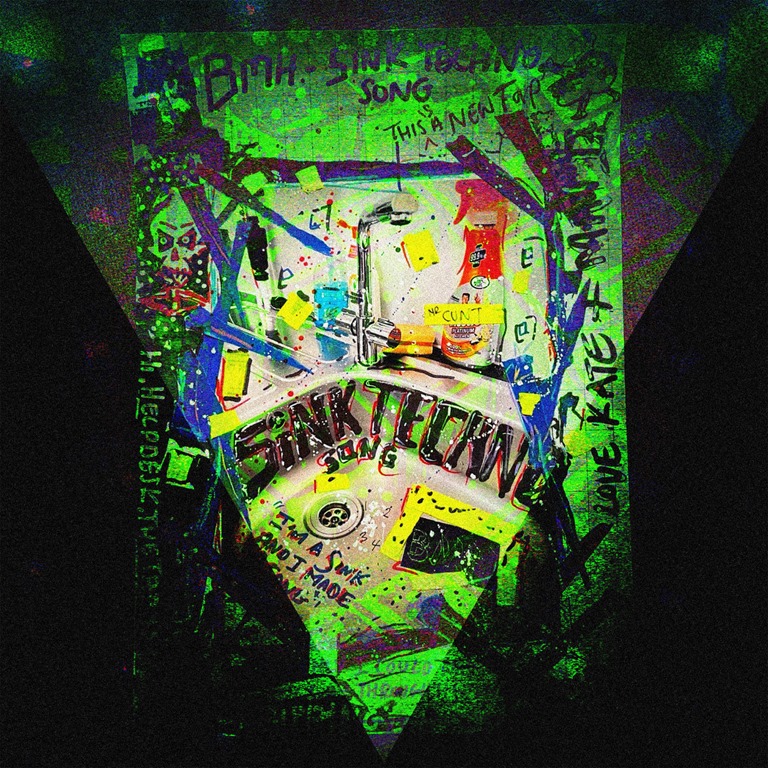
But then there’s always a spoiler, and here I find myself facing a ‘spontaneously-created acoustic punk techno EP made with a dripping tap’. What the hell do you do with that? How do you prepare for listening to something so far beyond the outer limits? Personally, I start by pouring a large vodka, and putting the light off.

The EP features four tracks; two versions of the title track, plus two versions of the longer ‘Water Sink Song’. The former centres around a relentless thudding beat, clearly derived from a dripping tap, with swishing, swashing, gurgling watery noises and other scraping and thumping and crashing incidentals. There’s nothing quite like taking the sounds from one’s surroundings and manipulating them in order to forge new sounds, and new sonic experiences. It’s life, but not was we know it. Or, perhaps it’s too close to life as we know it.

“Matt Jetten and I made the track in the sink at work,” says BMH’s Kate Bosworth. “The tap was leaking and we managed to get to it minutes before the engineer did. The original is in mono, but our mate Stuart Chapman (Terminal Optimism) suggested we ‘do a Beatles’ on it and bring it into stereo by duping and layering and adding effects etc. All in all, the process was very quick.”

‘Water Sink Song (End Dark Train 21st October 2024)’ features a haunting vocal which drifts mistily over a swampy swell and a thick wash of static, as well as more watery sounds, like heavy rain and swashing, glooping, the disconcerting sounds of ingress in a storm. The shuddering electronic rhythms call to mind Suicide, but with an esoteric folk twist; one can almost picture the performance of a pagan ritual at a stone circle in a torrential storm – but then stammering vocals cut through in a rising tide of mains hum and buzzing electricals. Synths buzz and crackle at the fade. The ‘Original’ version (17th October 2024) is more heavy rainfall and water running from a roofs onto gutters – or the sound of a number of men urinating hard onto a corrugated shed roof. Thuds, clatters, clanks, trickles and sprays, a bottle or jar filling at pace; the incidental sounds, the additional layers, are wet and uncomfortable.

It may be that my response is as much coloured – a hazy amber – by my recent experiences of a trip to Castlerigg stone circle in a saturating downpour, and a train journey whereby the train was rammed solid with rowdy football fans, who, unable to make their way to the broken toilets, resorted to urinating in water bottles and Costa coffee cups, which they left on luggage racks and on tables, while cheered on by mates passing more cans of cheap shit lager and a bottle of lager along the carriage.

Jetten’s vocals are breathy, semi-spoken, and there’s a sense that they’ve been recorded quietly in the bedroom of a flat or terrace, trying not to disturb the neighbours. There’s an element of triumph in the tone as Jetten announces the title, as if he’s utterly pumped by the experience – or something seedier.

As an experimental work that encapsulates the DIY ethos, this is a quality example of the kind of weirdness that can only happen independently. It’s perverse, and imaginative, and it’s different. Oh, and all proceeds go to Kidney Cancer UK.

AA

a4195200752_10

Founded in 1994 by the Vancouver, Canada-based duo John Morgan and Tod Law, Unit:187 spent less than a year in their studio and playing live at local clubs before landing a record deal with 21st Circuitry Records. A solid debut album entitled Stillborn followed in 1997, with the promotion for it taking in several west coast tours that gained the band a respectable fanbase throughout North America.

Loaded followed a year later, featuring new band members Jed Simon (guitar) and Byron Stroud (bass) of Strapping Young Lad and produced by that band’s leader (and future prog icon) Devin Townsend. The album yielded instant industrial classics that included the title track and a remix of the song ‘Stillborn’ by Rhys Fulber (a member of Front Line Assembly and the producer of Fear Factory at that time).

The third Unit:187 album, Capital Punishment (2002), utilised the electronic programming and production skills of Chris Peterson (also of Front Line Assembly) on several tracks. Its title song kicked off proceedings with a killer groove and mix by Anthony Valcic (a producer of both Skinny Puppy and Front Line Assembly), the group’s trademark synth riffs, movie samples and driving guitars blazing full-tilt from the start right through to the conclusion of the album.

2010’s Out For Blood saw adjustments to the group line-up, with Chris Peterson becoming a permanent member and guitarist Ross Redhead (Decree) also joining. The album marked a turning point, as they worked tirelessly in the studio to produce raw heavy music that punched fist-first through what they perceived as ‘goth euro-cheese’ by coming up trumps with a solid dose of old-school industrial that hadn’t been heard in years. Mixed by producer Kent ‘hiwatt’ Marshall (another Skinny Puppy cohort), Out For Blood pulled out all the stops to sonically pound eardrums into a memorable pulp, while simultaneously offering its listeners sweet melodies to sing along with long after their sound systems had failed from transistor overload.

Unit:187 singer and frontman Tod Law sadly passed away in 2015, but left a legacy of music that has inspired the band to finally move forward. Now fronted by former backing singer Kerry Vink-Peterson, their upcoming KillCure album continues to pack attitude and punch, albeit with a dancefloor friendly edge. An opening salvo from the record, ‘Dick’, has been made available today as its first single.

Listen here:

AA

a3126642444_10

Legendary Swedish death metallers Centinex unleashed their ‘As You Die’ single, accompanied by a music video. Featuring two brand-new tracks, the single carves out a fresh path for the band, infusing death ‘n’ roll fury while retaining their signature raw, aggressive extremity. These songs provide a glimpse into their highly anticipated 2025 album, set for release via Black Lion Records.

States Centinex bassist Martin Schulman: “Times change and so do Centinex. Our ‘As You Die’ single in a way represents a new beginning for the band, not only by working with new business partners but also by exploring a somewhat new musical direction.

“As previously mentioned, we have always been about not setting boundaries or limiting ourselves, and these two new tracks might be the clearest example of that. Maybe we are getting old or something, dunno… Anyway, let’s fu**ing rock!”

Watch the Video for ‘As You Die,’ here:

AA

Centinex originated in 1990 as a riff-oriented part of the classic Swedish death metal movement and disbanded in 2005 after releasing eight full-length albums. In 2014, they resurfaced, quite surprisingly, and with a refreshed line-up, delivered their celebrated come-back record, Redeeming Filth. The next album was inevitable and didn’t take another decade to assemble. Having released Doomsday Rituals in 2016, the band played a run of shows in Europe and North America, before encapsulating their sheer Swedish brutality on a new offering. Death In Pieces, the long-runner’s third reunion album, brims with a powerful dose of old-school, Stockholm-style death metal, pushing their signature heavy riffing to a new level of intensity. The Pestilence EP followed, representing a slight shift by incorporating old-school thrash influences and marking a new chapter in the band’s history.

Centinex embarked on a headlining European tour from May to July 2024. With their double-track single ‘As You Die’ released digitally on October 25 (and a physical release set for November 8), Centinex is gearing up to release their 12th full-length album in 2025 via Black Lion Records. Catch them live at Athens Extreme Festival on 15 December 2024.

AA

063be186-45b1-c951-f24c-d0c0f6995e1a

Majestic Mountain Records – 1st November 2024

Christopher Nosnibor

It was the single release of their cover of The Sisters of Mercy’s ‘Body and Soul’ which brought me to this album. I’ll not retread the ground I covered in my review of aforementioned cover, other than to note that I was uncommonly impressed by the band’s spin on the track, and shall instead pick up on the point that I was intrigued as to precisely how a cover would fit into the art of a concept album.

In a sense, I find myself back in the 80s, when – before it was possible to stream an album online or otherwise hear it without owning it, unless a mate passed you a tape recorded from their copy – one purchased an album on the strength of a single heard on the radio. It was not all that uncommon that the single was absolutely in no way representative, and you’d feel somewhat duped. Imagine buying Faith by The Cure in the basis of ‘Primary’, for example. You may not necessarily feel duped, but you’d probably struggle to reconcile the single and album experiences, assuming you could lift yourself off the floor to do anything at all by the end of the album. But then, oftentimes – because you probably only bought an album a month, on vinyl or cassette, you’d play it enough times to come to appreciate it anyway. This simply doesn’t happen anymore, and what’s more, the art of the album is one which is criminally undervalued. That isn’t to say I feel in any way duped by The Somnifer: it’s simply that the single, while obviously the most accessible and attention-grabbing track, is not entirely representative.

Taking pause for a moment, there’s that term – ‘concept album’ – which creates immediate obstacles; it can be perceived as self-indulgent, overblown, conceited, arty in the way that implies a superiority, or even just plain wanky. You can largely blame prog for that, but there have been plenty of excessive concept albums in other genres, particularly metal. But I’m not here to prejudge: I am genuinely curious, especially as the single showed considerable promise. So, first things first: what is the concept?

As they set it out, ‘The album captures the different mental stages one can pass through, from feelings of self-empowerment to existential dread. The Somnifer takes listeners on a journey that blends the drama of classic doom (Candlemass, Cathedral), cosmic psych explorations (All Them Witches, King Buffalo), and the aggression of hardcore and crossover scenes, with the timeless instrumental journey of classic heavy metal.’

The title track certainly builds atmosphere, and it’s the kind of brooding, heavy-timbred tones which call to mind Neurosis, interlaced with a hint of the gothic, which draws the listener into the album. The guitar sound is clean, but rich, and earthy, gradually shifting towards a thicker, overdriven sound, but there’s lots of space and separation. This paves the way for the haunting ‘Draining the Labyrinth’, which takes some time before really going all-out on the riffery before ploughing into ‘Rapid Eye Movement’, the first track to really feature vocals prominently. With ethereal backing vocals floating in to balance the almost speechified spoken-word delivery atop a Sabbathesque riff, it’s an interesting blend of elements.

‘Eat The Day’ comes on like Melvins aping Sabbath with an overloading blast of thick, mid-rangey guitar, before the rippling instrumental ‘Delta Waves’ brings softness and respite, starting out a bit Pink Floyd before growing gradually more intense in its playing. ‘Recurring Nightmare’ slams in out of nowhere, snarling, downtuned doom riffing, churning power chords and darkness, replete with dramatic, theatrical vocals and searing lead guitar work. One of the album’s heaviest pieces, is brings the intensity of the sense of being trapped in a nightmare, the repetitive guitar motif recreating that terrifying sense of déjà vu.

In terms of concept, it works well: instead of pursuing some artificially-imposed narrative arc, The Somnifer explores the way in which moods and emotional responses can manifest as rapid and unexpected transitions, which aren’t always provoked by obvious triggers.

‘Image Rehearsal Reaction’ is a towering monolith of a track, a colossal ten-minute stoner/doom exploration that suddenly hits turbo at the mid-point, blasting fierily forward while the guitar solo runs wild. This is where they’re at their most ‘trad 70s metal’ of anywhere on the album, which is impressively diverse, something which the ‘concept’ allows for.

The album in fact closes with ‘Body and Soul’. It’s incongruous in many ways, but it oddly works to conclude a varied and yet consistent and quality album.

AA

a1275374827_10

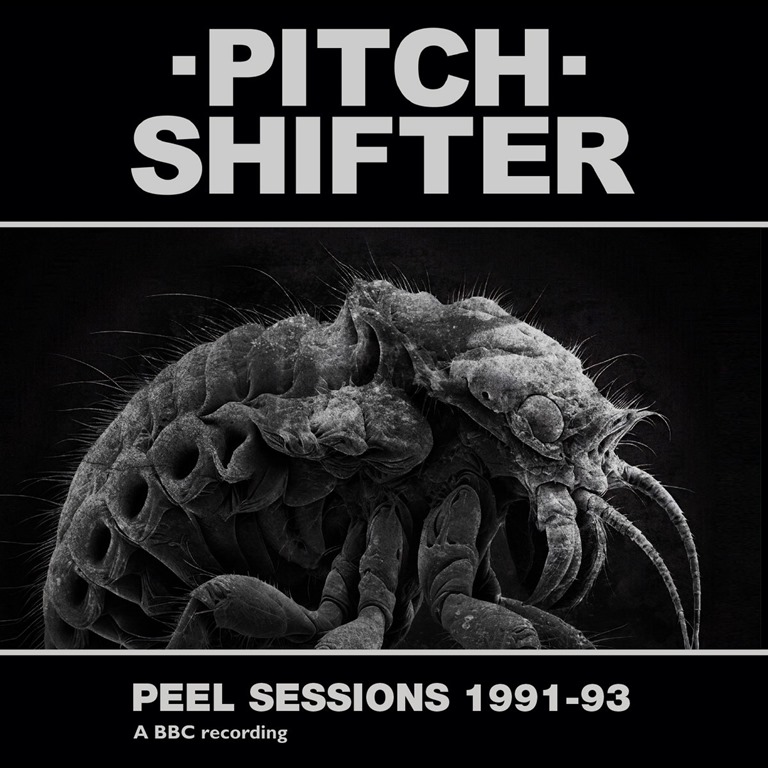
Cold Spring is extremely proud to announce the first ever release of the legendary BBC radio sessions that the seminal Nottingham-formed industrial metal act Pitchshifter recorded for the late, great John Peel in the early 1990s.

These ultra heavy tracks were recorded over two sessions at the iconic BBC Maida Vale Studios on 28th April 1991 and 30th March 1993 and were sourced directly from the BBC Archives (with thanks), with careful remastering for CD and vinyl.

The 1991 session was recorded during the same period that saw the release of the band’s debut album, ‘Industrial’ (Deaf Records/Peaceville), with the 1993 session recorded around the time of its follow-up, ‘Desensitized’ (Earache).

“If you look on your Pitchshifter album sleeves, you will see that we always credited John Peel,” states frontman JS Clayden. “He was instrumental in getting the band out there and often played our music on the radio when no one else dared. The ‘Peel Sessions’ we did were a great honour and every time I met John he was always such a great guy…a legend.”

Founded in 1989, Pitchshifter’s early music can be described as heavy industrial metal, with the band long cited as one of the originators of the self-termed ‘Death Industrial’ genre along with Godflesh. These sessions and their first two albums define that classic period, before the group shifted towards the beat-driven, crossover industrial style that they are best known for.

Ahead of the release, the Peel Session version of ‘Gritter’ can be heard here:

AA

a3964039450_10

Cruel Nature Records – 25th October 2024

Christopher Nosnibor

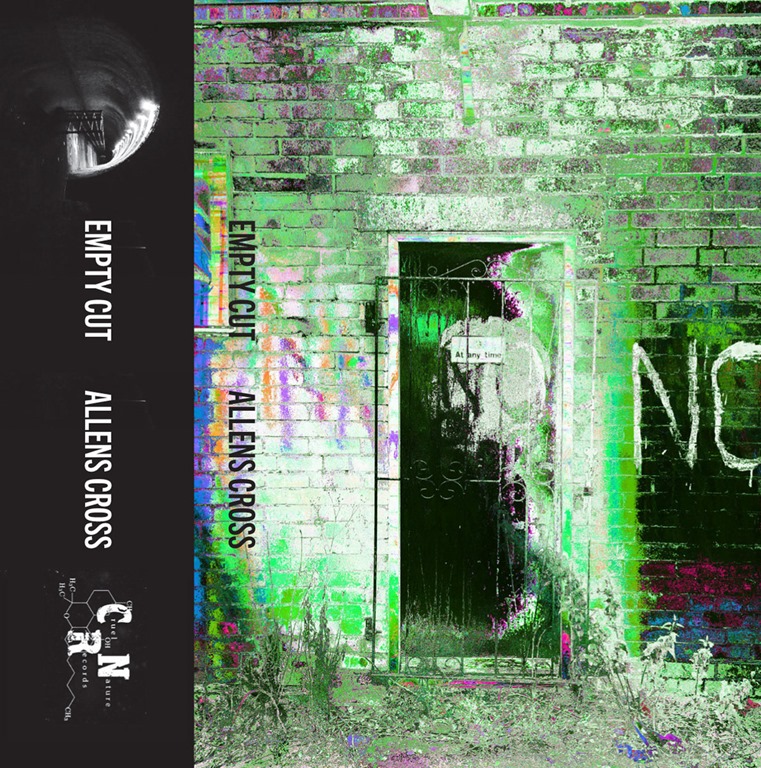
In the debate of nature versus nurture, it’s noteworthy how many artists find themselves influenced in no small way not only by their formative years, but also the place or places where they grew up. There’s an entire thesis to be made from this, but here I make the observation because on Allens Cross, Empty Cut – a duo consisting of Douglas Fielding-Smith and Robert Bollard – have forged a work ‘Inspired by their childhood growing up in Birmingham they blend together all their experience and inspirations to create a noise that holds a heavy solid groove mixed with harsh noise and fuzzed out reverbed bass, topped with psychedelic synths, and chopped and screwed vocals.’

Birmingham, the city which gave us Black Sabbath and UB40, the second largest in England, with a population of over two and a quarter million, and has long been renowned for its diversity, and is a truly multicultural melting-pot. It’s perhaps unsurprising that cities like this – in contrast to so many predominantly white, often middle-class towns – are the source of musical innovation: throw in an element of social deprivation, the frisson of frustration driven by class and cultural disparity, and inevitably, this backdrop will fuel the fires of those with a creative bent.

Allens Cross is exemplary: as the blurbage summarises, ‘mixing together drums, bass, samples, effects and vocals they have created a sound that incorporates punk, hardcore, electronica, jazz, drum’n’bass, experimental-industrial and shoegaze.’ It’s one of those that on paper probably shouldn’t work, but thanks to the dexterity if its creators, works far beyond imagination.

It grinds in on a sample looped and echoed across a dirty bass and slow-building beat… and then everything slides into a doomy, sludgy sonic murk. ‘Bloodline; makes for a dank and difficult opening, five minutes of feedback and dinginess sprawling and lunging this way and that, culminating in a manic howl driven by frantic percussion and driving bass.

‘Fidget’ whips up a howl of feedback against a juddering stop/start bass, and with shouty vocals low in the mix, it brings a quintessential 90s Amphetamine Reptile vibe with a hint of Fudge Tunnel… until things take a detour into dub territory in the mid-section. When the noise blast returns, it hits even harder.

With none of the album’s eight tracks running for less than five minutes and the majority straying beyond six, it feels like there’s an element of slog, of punishment, inbuilt. ‘The Well Beneath’ certainly mines that dark seem of metal that plunges underground, but with the contrast of jazz drumming and some quite nifty bass work, at least until they hit the ‘overload’ pedal and everything blows out with booming distortion.

If ‘Fluff’, by its title sounds cuddly, like a kitten, or a bit throwaway, like that which you’d sweep up from the corner or the room, the reality is quite the opposite: a six-minute seething industrial sprawl, it’s slow-burning, dark and menacing, and a clear choice of lead tune… Not, but then again, with an echo of Eastern promise and a certain ambience, and the strains of feedback a way in the distance, it perhaps is the most accessible cut on the album.

We’re proud to share a video exclusive of ‘Fluff’ here:

AA

Elsewhere, ‘Hymn to Then’ pitches cold synths and rolls of thunder to conjure dark images, a stormy backdrop to an eye-opening hybrid of prog rock, industrial, and krautrock: the result isn’t only epic, but conjures images of Dracula and unseen horrors with its icy atmospherics, while the last track, the eight-minute ‘Shatter’ begins with an eerie take on Celtic folk

Allens Cross is a highly imaginative work, an album that draws together a broad range of styles in a cohesive form. Its impact lands by stealth, building as it does across a range of styles, often creeping under the skin, unexpectedly, to register its effect. Sparse synths laser-cut across distorted, arrhythmic percussive blasts, as a low-level crackle and hum of distortion hovers around the level of the ground. Fractured vocals add to the disorientation, and the experience is uncomfortable. You cower, and will for release, not because it’s bad, but because it’s intentionally claustrophobic, torturous, and so well executed.

This is perhaps a fair summary of Allens Cross as a whole. It is not, by any means, an easy listen. Enjoyable would be a stretch. But it is utterly compelling.

AA

a3947501964_10

It is back! For its 25th anniversary, MESH make their long-time out of print and much sought after second album The Point at Which It Falls Apart available again!

It will be a party! MESH will celebrate this eagerly anticipated reissue with a special show in Dresden, Germany where the UK legends will be joined by BEBORN BETON! "The Show At Which It Falls Apart" will take place at Strasse E on December 14, 2024.

AA

029302bd-5b7b-58cd-7720-262ca3ea754e

MESH comment: “Well, ‘we should do a show to celebrate this re-release’ was just a flippant comment made at a barbecue in August”, vocalist and keyboarder Richard Silverthron explains matter of fact. “Less than an hour later, our tour-manager Jan Winterfeld, who happened to be in earshot of this remark, had actually booked the very venue in Dresden where the iconic chair picture for the ‘TPAWIFA’ front cover was taken! So it’s happening: a one off show with a nostalgic leaning towards this album is going to take place on the 14th of December 2024.”

To introduce the sound of their remastered album MESH treat everybody to a second single. The track ‘This Without You (Fallen Mix)’ is taken from the bonus CD. Hear it here:

AA

1892f0f7-887f-6150-64f4-a3531f478b72

Nocturnal Rainbow Recordings – 4th October 2024

Christopher Nosnibor

Where does the time go? It’s a question one hears people ask often, and I often ask myself the same. Time, it seems, evaporates when you’re busy simply existing, keeping going from one day to the next, working, paying bills, shopping, eating, sleeping. All the things you want to do, but simply never get around to, for one reason or another.

Where does the time go? All too often, I’ll receive an album well in advance of release, and, because of life, and an endless inflow of upcoming releases and other diversions and distractions, I will take a long breath of relief on calculating that I have ages, weeks, before the release date, to listen, process, and digest the work, to write and refine my review, and still be ahead of time. The next thing I know, I’ve reordered my review schedule numerous times, perhaps drafted a few preliminary notes, and the album’s been out for almost a month.

It was only a little over six months ago that I covered Slavin’s seventeenth album, Oolong: Ambient Works.

New Dawns, we’re told ‘exemplifies Slavin’s nonconformity, commitment and expansion to his cultural roots of exploratory music, through early clicks and cuts electronica and instrumental ambient, highlighting an immediacy and necessity for musical independence, through which he hopes to reach attentive new audiences… The album is more than a collection of tracks. a cohesive blending of diverse influences and sounds into a unified experience. A beginning of a journey. As with his previous projects, New Dawns invites listeners to immerse in a unique and tropic sonic world, where the boundaries between acoustic traditional instruments, post leftfield electronica, east and west, are blurred.’

New Dawns comprises sixteen tracks, titled ‘Dawn 1’ to ‘Dawn 16’, each representing, I suppose a new dawn. Each composition is distinctive, and distinct: there is separation, rather than segue, and this very much determines how this feels as an album – in that it feels like an album rather than a single composition sliced into tracks. And as such, there is a sense that each piece, appropriately, starts afresh. And while the overall experience is mellow and broadly ambient, there are solid features which mark the territory, and actual, distinct instruments, too, which punctuate, and, indeed, provide form and structure to the wispy ambient soundscapes: strolling, jazzy double bass, haunting, twangy guitars, piano, irregular beats, and splashing cymbals all feature… to say they feature prominently may be something of an overstatement, but their presence is clear, and in context, powerful.

Just as the sun rises in the east, so the twang and drone of sitars colour some of Slavin’s dawns, and across the span of the sixteen pieces, the sense of mood changes every bit as the sense of geography. Oftentimes, the dawning is gradual, a slow emerging of gentle light, but then, for example, the more percussive ‘dawn 7’ arrives abruptly and unexpectedly, and simultaneously brings with it more overtly electronic vibes which bring together Krautrock and minimal techno. ‘dawn 8’ brings swaggering avant-jazz wrapped in a cloak of prog rock leanings, shrouded in a murky fog of obscurity. ‘dawn 11’ has the kind of murky robotic minimalism of late 70s industrial, hinting at the point where Chris and Cosey would go on to spawn trance.

Its total running time may be under seventy minutes, but New Dawns is an immersive work, and I find myself drawn deeper into the details as it progresses. And those details are abundant. There’s simply too much going on for this to be considered a truly ‘background’ work: zone out for a second, and something else will prod its way to the fore, nagging and needling for attention, before sinking below the surface, to be replaced by something else. Having found myself drawn into the scrapes and drones, the subtle – and not to subtle – details, the album slips by, and so does an hour and a bit. And that, I come to realise, is where the time goes.

AA

a2974132267_10