Archive for May, 2024

Sub Rosa – 24th May 2024

Christopher Nosnibor

Yet another 24 May release… It really does feel as if the world had conspired to release 75% of the years albums on this one day. So I’m still working my way through them. And this release from some known names is not what I was expecting. I can’t recall precisely what it was that I was expecting but certainly not anything as heavy or as percussion-led as this.

They describe SIHR as a ‘sonic manifesto by a post-anything quartet’, a work that offers up ‘new folklore for a devastated planet’. Within these words, there’s a sense of nihilism and gloom, but simultaneously an undercurrent of ‘fuck it’ and of quintessential avant-gardism, the principle ethos of creating anew only being possible from the destruction of that which came before. There’s a sense here that the destruction – the devastation of the planet – clearly isn’t something they’ve chosen, but in the face of apparent futility, they’ve come together to create, perhaps in the hope of a brave new world, or perhaps, more likely, something to be discovered among the ashes and the ruins of society and life as we know it.

The way in which they document their coming together and the creation of SIHR has all the hallmarks of the first stages of developing a mythology, which has the potential, in time, to grow its own legend: ‘The first sonic moves of this eclectic quartet, made in a bunker studio somewhere between Paris and Berlin, urgently took the form of a quest, that of a neo-folklore for troubled times, a music seeping with many kinds of atavism and experimenting in all directions. A fertile no-man’s-land where trance and contemplation, jazz and electronica, acoustics and electricity would merge in a stimulating mystical magma. From the possible emergence of a Babelian language to the shared desire to rediscover music as a ceremonial act, this encounter took place over three days of improvised sound bacchanalia, the phases of which were all recorded by Benoit Bel.’

The first track, ‘Oui-Ja’aa’ is a nine-minute colossus of a cut, drawing together elements of electronica and ‘world’ music with a dash of Krautrock and the sensibility of Suicide, with a throbbing rhythm melting into a hypnotic bubbling sonic cauldron. The tempo twists and seems to quicken as drones and jazz horns warp this way and that as if blown by the wind and everything builds to a frenzy before collapsing, exhausted in the dying moments.

While conjured in a bunker studio, SIHR sounds as if it was improvised around a fire in the middle of a desert while string out in an hallucinogenic haze. I suppose in some respects, the two scenarios bear numerous similarities in terms of their psychological effects: while one setting is a vast expanse of space with a huge sky vista and a distinct absence of other people, so the other, equally devoid of other people, forces the contemplation of the infinite realms of inner space.

‘YouGotALight’ is slow, smoking, soporific, a crawling, sprawling, mellowed-out meditation, before the glitchy whorl of bleeps and jitters that define the sound of ‘OhmShlag (Quake Tango)’ sees things take a very different trajectory at the album’s midpoint. A pulsating, seething miasma of sonic swampiness, punctuated with a metallic tin clatter of a snare that cuts through the murk, it’s like slowly sinking, not only in boggy terrain, but in a mental fog.

‘Babel Cedex’ eliminates the fog and just goes for the mental, beginning as another slow, serpentine, hypnotic exploration before building to a deranged frenzy of frenetic percussion and howling horns and chaotic discord that’s truly brain-melting. Eastern vibes and glitchtronica ripple through the woozy ‘Black Powder’, and you find yourself marvelling and utterly bewildered by the whole experience.

My earlier visions of desert campfires dissipate life vapourising mirages during the second half of the album, and I come to conclude that SIHR is indeed the sound of bunker life: one envisages the collective huddled in semi-darkness, hunched and half-crazed after months below ground in the wake of a global catastrophe, trying to keep it together in the hope of one day being able to return above ground. How will they know when it’s safe, when the coast is clear? Or is this a scenario akin to Philip K. Dick’s The Penultimate Truth?

We live in perilous times, and likely closer to the brink than any of us know or can even compute. In this context, SIHR feels like a document, and a message to future times.

AA
a0579997776_10

First they were Omnibael, then they were Omnibadger, and now Omnibdgr… but under whatever moniker they operate under, they make interesting noise. And for that reason, we’re proud to present ‘The Last Remaining Punk Band’ by Omnibdgr from the forthcoming split release from Omnibdgr and Ye Woodbeast, which you can check out here:

Opening with an atmosphere that feels like a clammy version of the N64 Goldeneye music, Ye Woodbeast and Omnibdgr’s forthcoming split comes with a sense of dread that draws a common thread between the two sides of the 12". Heal Thyself is a murky, dub-inflected pulse that calls out to the dregs of society, and ‘At the Mercy of the Flea’ continues into further depths of nightmarish gloom with voices speaking out from shadowy corners. Track 3, the driving ‘Tony Lazarus’ is a character exploration that straddles psych-rock and desert blues. The textural complexity that Woodbeast fans love is still very much present, but some of the brighter, pop playfulness found on releases like ‘Music to Sink Ships to’ has drifted towards a darker, but tighter, pulse. This works fantastically in tandem with their lyrics which still continue along the band’s "usual obsessions: death, god and all the cunts we hate".

Side 2 is the domain of Omnibdgr. The duo ramps up the dread even more with 4 tracks of drones and gut-punch industrial noise rock. Feverous Earth opens their offering with 3 minutes of subtly textured drone that conjures images of abandoned container ships and space hulks. ‘Heavy Mist Pounded Our Eyes’ is a mechanical array of looping drum-machines, black metal vocals and samples about dopamine – sounding like huge, rusting wheels rotating and grinding. Finally, a discernible human voice (Jase Kester) emerges on ‘The Last Remaining Punk Band’ for a snotty, riff-led assault. The vocals move back into the machine for the final track, which is a relentless wall of drums and murky noise.

If you hadn’t guessed it yet, this is a dark, brooding release that showcases both bands at their bleakest. Within this, though, is a vast array of sonic approaches, smart songwriting and a clever juxtaposition of industrial and human unease. As the release slowly unfurls, the journey remains full of surprises at every turn. Don’t look behind you.

(Words by Nick Potter)

Out on 28th June 2024 via Dead Music Club as a lathe cut 12”.

OMN

“Party doom” riff merchants GURT recently announced their return with their latest, crushing-ist opus yet, Satan Etc. Now they have shared new single ‘Appetite for Construction’, with the band commenting,

“It’s no secret that Gareth is a fan of a famous little building brick, and this song started life as an ode to his favourite hobby, what it ended up as was a twisted tale of an unknown evil, building its twisted world around an unsuspecting people, a legacy of pain!’”

Listen to ‘Appetite for Construction’ now:

AA

thumbnail_Gurt bw-3 credit Mithun Shah

Sweden-based industrial/dark ambient artist ULVTHARM has released his second opus “7 Uthras” on May 3rd via Cyclic Law. The album is available as digisleeve CD (limited to 300 copies), black vinyl (limited to 200 copies), and red & black marbled vinyl (100 copies).

An official video has been released for the song ‘Sinners Will Inherit The Earth’. The video displays a female character – interpreted by the actress Emelina Rosenstielke (Feed) – sitting in a colorless room and in the center of a target painted on the floor. The character, who embodies modern civilization, is apparently afraid of the risks she may incur. Ulvtharm’s arrival on the scene and the subsequent initiation of a ritual reveal the true identity of the character, as well as of our civilization – thirsty for blood and personal success. We are all sinners on this Earth.

Watch it here:

“7 Uthras” is the second release from MZ 412 co-founder Jouni Ollila. Ulvtharm is painting his world as a sprawling, post-apocalyptic industrial wasteland, where humanity clings to survival in the shadows of monolithic factories and decaying cities. Skies choked with ash, and a sun that seldom breaks through the omnipresent smog. Within this landscape, the Seven Uthras exist not as beings of benevolence, but as ancient, god-like entities that emanate from the darkest depths of the earth, commanding forces beyond human comprehension. 7Uthras serves as a sonic gateway to otherworldly realms, offering a glimpse into the abyss that challenges and expands the listener’s perception of the known universe.

The artist masterfully blends the essence of dark industrial soundscapes with layers of mystical ambiance, creating an immersive experience that is both deeply unsettling and profoundly enlightening. This new album is not just an exploration of sound but a journey into the soul of its creator, exploring the chaos and darkness within his imagination. ULVTHARM’s deeper vocal experimentations are weaving a narrative that is both personal and universal. The album’s blend of dark, martial, pulsating rhythms and ambient organic soundscapes invites us to confront the death and ruins of our world. As each track unfolds, we will be drawn deeper into a narrative of chaos and transformation, where the end of one world signifies the birth of another. “7 Uthras” is not just an album; it is a ritualistic journey that seeks to unlock the ancient doors of perception and embrace the darkness as a path to enlightenment. All hail the Serpents, all hail the Seven Uthras!

thumbnail_Ulvtharm Photo

Bearsuit Records – 31st May 2024

Christopher Nosnibor

There was a time – not so long ago – when I would come home from work and struggle to nudge the front door open with my shoulder for the mountain of CDs that had been dropped through my letterbox, along with the occasional ‘sorry we missed you’ card telling me I had a parcel at the depot awaiting collection or to arrange redelivery, and more often than not it would be some vinyl, and all of it promo material for review. I had a box – which was initially a shoebox, but later replaced with something larger – which was my ‘to-review’ box, after the pile kept falling over once it reached an unsustainable height. It was a storage nightmare, and I still have boxes containing quite literally thousands of promo CDs with press releases folded up with them, in boxes in the walk-in cupboard and the end of my office, which is, in truth, too stuffed with boxes of CDs to squeeze more than a toe into, rather than actually walk in.

Working in an office as I did then – rather than at home – I would take a bundle of CDs in a jiffy in my bag, and sit and listen to them as I worked. It beat enduring the often moronic drone of the people around me, and I’d tap out notes which I’d email home to myself to flesh out into full reviews in the evening.

My working method has changed rather since then, and while still working the dayjob, I’ve barely set foot in an office other than the one in the back bedroom of my house since lockdown. I haven’t received stacks of CDs in the post for a similar length of time, if not longer. For all of practical issues around the stacks of CDs, I do kinda miss it, and this is one of the reasons I always get a thrill at the arrival of a disc in the mail from Dave Hillary, who runs Bearsuit Records. The other, and not insignificant reason I always get a thrill at the arrival of a disc in the mail from Dave is that I’m eager to discover what mad genius work the label’s releasing next. I enjoy slipping the disc in the external CD drive I have attached to my laptop and soaking in the strangeness that spills from my speakers: I’m never disappointed.

I love the fact that I still get CDs in the mail, with promo cards and handwritten notes and so on, from Bearsuit, not just because of the joy of the physicality and the personal touch, but because it’s emblematic of the label as an entity. It does what it does, regardless of whatever else is happening, and it releases music the likes of which you simply won’t find anywhere else.

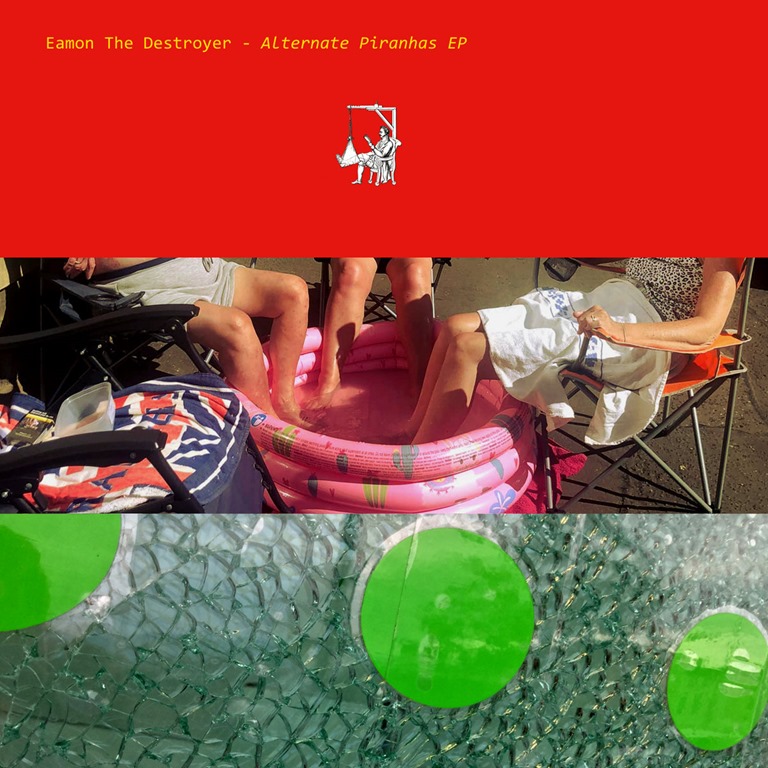
Eamon the Destroyer is a classic case in point. Another typically enigmatic artist in the Bearsuit tradition, Eamon the Destroyer has enjoyed a great run of releases to date. Debut album A Small Blue Car was a work of fuzzy, minimalist , downtempo brilliance. A sad, introspective work, it was unexpectedly touching for something so overtly odd, and follow-up We’ll Be Piranhas pushed further into forging songs that straddled the dreamlike and the nightmarish, a disorientating, discombobulating work that delved deep into the psyche in a way that felt like invisible fingers creeping inside the cranium and directly massaging the brain.

And now we come to the more or less obligatory counterpart release. Instead of the standard and expected remix EP, Alternative Piranhas gives us outtakes alternative takes of tracks from the album. A cynical voice might ask why they didn’t make the album cut, but there are myriad valid reasons: an album need to cohere and sometimes even the best tunes don’t fit with the flow, and similarly, the mood of one take or mix may in fact be better objectively, but not quite sit with the context.

And so it is with the five tracks here. All five appeared on We’ll Be Piranhas. While exactly the same length as its album counterpart, ‘A Pewter Wolf’ presents a quite different mix: the organ is much more boomy, more ‘churchy’ than on the album version, while the guitar sounds, almost buried on the album blurred and hazed out low in the mix, are more up-front and gritty here.

The version of ‘Rope’ on Alternate Piranhas seems to be in a different key, and is much grainer, murkier and messier than the more polished album take, and it’s more abrasive, more aggressive, with the vocals more up-front, and the result is that I found myself hearing thee song anew and soaking in the anger which permeates it, less obviously on the other version, tempered by the more mellow mix.

Overall, the versions on Alternate Piranhas are rougher, less ‘produced’, and it’s not difficult to discern why the versions chosen for the album were the ones they were. The album worked as a cohesive set, with an even, smoothed-out sound – well, in context – but Alternative Piranhas provides an insight into the process, which is never more apparent than on ‘The Choirmaster’. It’s not radically different… but it is different, while the alternative take of ‘My Stars’ is half the length of thee album and feels like a sketched-out demo. But again, it possesses qualities absent from the album version, just as the album version has elements which are absent here, including another five minutes of sound.

Alternate Piranhas feels more overtly rock than its progenitor, and perhaps it is, but above all, it’s a source of enjoyment to revisit these songs from a different perspective.

AA

a4099667252_10

Dawn Of Ashes is a Los Angeles-based group whose very name brings to mind ‘the beginning of the end’. Formed in 2001, DOA have broken ground across multiple genres, from aggrotech/terror EBM to industrial/extreme metal, producing a unique hybrid of dark electro and metal styles. This fusion of terrifying soundscapes with brutal, relentless rhythms forms the foundation for the lyrical themes of founder and frontman Kristof Bathory, which explore concepts of horror, anti-monotheistic religion, misanthropy and the negative aspects from emotional abuse.

DOA have recently issued a new album entitled Reopening The Scars that was preceded by the single ‘Anhedonia’, a video for which has just been made available. Bathory describes the song as “a glimpse into the dark abyss of the subconscious. We are explorers into the often unspoken, dark and cruel reality of mental anguish, torment and depression,” adding that “there are various circles of Hell when it comes to emotional suffering. Depression is a place that can cripple the mind in so many different ways. Anhedonia is the state of depression where nothing matters anymore, and you become paralysed by your own self punishment.”

Reopening The Scars is DOA’s first album for Metropolis Records since returning to their former label home in late 2023. “It is a continuation from our previous album, Scars Of The Broken,” Bathory has previously stated. “It goes down a darker hole into a place where each lyrical topic touches on the struggles of self-destructive behaviour. Pain and suffering dictated the writing process and created the sounds of emotional hell.”

As for the music that DOA is now creating, Bathory concludes that “after all these years dabbling in dark electronic music as well as industrial and extreme metal, we have found a unique style that complements each genre as one. DOA is neither one or the other in a separate category. The music and lyrical content speaks for itself under a form of darkness that fits for all people who enjoy various types of aggressive music. Reopening The Scars defines that in a perfect form.”

Watch the video here:

AA

1eae44ba4b52a02cc01fc0c6f49e1fa4ff00a251

Unsounds – 24th May 2024

Christopher Nosnibor

When it comes to being a music writer, for me, at least, perhaps even more of a buzz than getting advance listens of the most eagerly-anticipated releases is being exposed to music I otherwise wouldn’t have. And the nature of the avant-garde means that you have to be in the know to know. Being introduced to the Unsounds label and the work of Yannis Kyriakides certainly opened my eyes – and more so my ears – to a whole expanse of music I assumed must exist, but would have had no obvious means of locating or accessing while going about my ordinary life before.

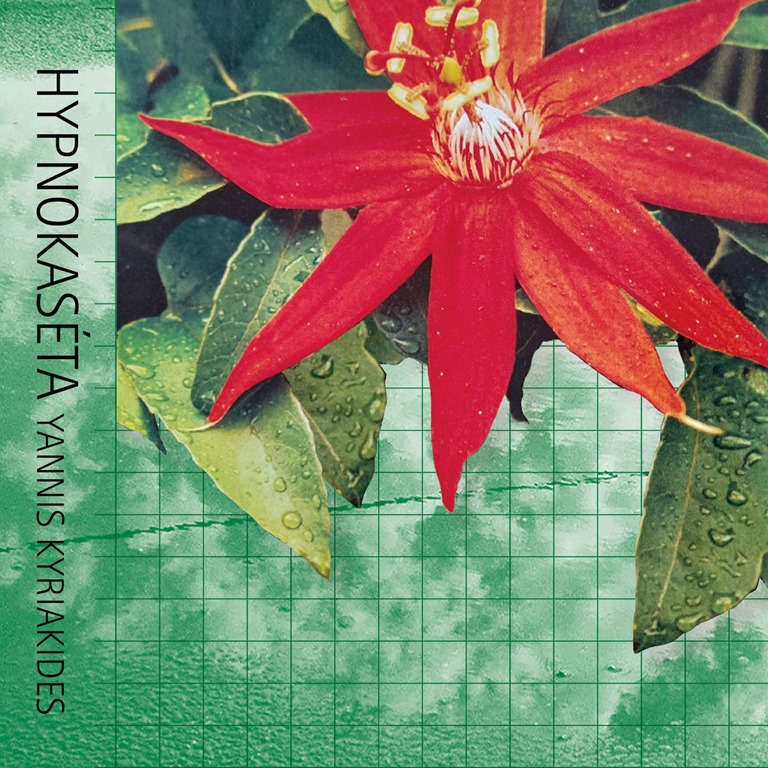
Although I’ve only dipped in and out of Yannis Kyriakides’ output, more as one with a casual interest than a fan per se, his work has never ceased to impress with its range and constant questing for something different, something new, both sonically and methodologically and “Hypnokaséta (2020-2021) is no exception.

Kyriakides’ introductory notes explain both the concept and the practice behind the recording of the album: “Hypnokaséta (2020-2021) is a continuous set of 16 pieces for string quartet, improviser (playing cassettes and any instrument) and live electronics. The source material is based on dreams that I had during the first few months of lockdown, April-June 2020. Accounts of these dreams are encoded in the music that is played by the quartet and also encrypted in the sound textures that surround this.

“The pieces alternate between quartet as the foreground and electronic interludes, where solos or duos underpin the soundscape. The title of the piece (Greek for ‘sleep-cassette’) refers to a theory of dreams proposed by Daniel Dennett, that says that dreams are loaded into consciousness like a cassette tape during the night and played just before waking.”

It’s longtime collaborator Andy Moor who provides the guitar and tape work on these recordings, and together with Kyriakides’ electronics, which move between shuddering skitters and unsettling scratchiness and quite abstract sounds, when juxtaposed with the strings – which span playful to mournful to droning discord.

The sixteen pieces have been mastered as six separate tracks, but they flow as one immense composition in a continuous state of transition. Within each of the six numbered tracks, the individual segued pieces bear titles, with their time markers also noted. The titles present, if not strictly a narrative, then a guide to the theme, the idea, the inspiration.

‘Hypnokaséta I’ comprises ‘The government’s new cultural scheme’, ‘All roads to the airport are blocked’, and ‘Everyone is nervous, everyone is lost’, titles which serve to encapsulate the events and the sensations they engendered within the populace at the strangeness and uncertainty of lockdown.

‘Hypnokaséta III’ is a stunning work of contrasts, containing as it does the gentle, almost light-spirited string-led ‘The reluctant hotel manager’ and the dramatic, jarring ‘She lifts the mountain’, a dark, alien drone brimming with electronic tension that crackles and tweets. The rapid switches in mood and form recall the sudden and wild extremes I experienced myself during this time: it was impossible to keep up with the constant stream of developments in the news, while at the same time entrapped within the confines of the house, where the world outside felt so very far away, while also having to accommodate the changeable and diverse headspaces of friends, family, and colleagues. No-one knew what the fuck was going on, or how to cope.

There was an air of unreality about it all, and at times it became difficult to distinguish between the bewildering nightmarish reality of the wakeful hours and bewildering nightmarish sleep, and in drawing on dreams in the creation of Hypnokaséta (2020-2021), Kyriakides captures the essence of that abstract space forged in the mind where everything blurs. This blurring and abstraction is also reflected in the titles: ‘The concert promoter complains that not much happens in the piece’ sounds like something that could happen in one of those self-reflective semi-anxiety dreams, and ‘Bridges are being dismantled

across the city’ has an apocalyptic sense of separation, while ‘Body swap opera’, ‘Swimming pool synthesis’, and ‘Mutations on an empty grid’ are altogether more surreal in their connotations.

Throughout the album, the lister is jolted from a moment of tranquil reverie by some abrasive thud or rasp, an unexpected spike in volume, and a turn towards an altogether more disquieting atmosphere.

The composition is nuanced, the placing of the switches and transitions perfectly timed to achieve optimal impact, never allowing the listener to truly settle, to relax, to sit back and enjoy, and the moments of tension are indeed tense; but credit must also go to the performers: the strings are played with a keen awareness of the importance of both dynamics and detail, and Moor, in his capacity of ‘improviser’ brings texture and tone delivered with an infallible intuition. The album’s structures may be subtle, almost invisible, but they’re affecting, and as a whole, Hypnokaséta (2020-2021) is an experience which permeates the psyche in unexpected ways.

AA

a2874939530_10

With yet another 24th May release, Philadelphia-based Cathari has released their EP, It Will Hurt the Entire Time You Are Alive, their first studio offering since transitioning into noisecore from doom metal. The EP is available on cassettes and digital.

Vocalist Magdalena Stephens shares: “‘It Will Hurt The Entire Time You Are Alive’ is like a thesis statement for my own sadness and disappointment into adulthood. Every song is about disappointment in its own way, be it with the music scene, the people I used to call friends, or even myself. Growing older has been a bitter and unforgiving experience and I wanted to capture the rage that percolates beneath the surface of my life as I come to find it’s just all disappointment all the way down.”

Hear the EP in full here:

AA

ba2fdbba-941d-013e-892f-fca3765c943f

Prophecy Productions – 17th May 2024

Christopher Nosnibor

While many progressive metal bands are preoccupied with space or fantasy realms or mythology in some form, with San Francisco’s Botanist, the clue’s in the same, and it’s an obsession with species of plant-life which have provided the lyrical focus over the course of eleven previous albums before Paleobotany, which, they say, ‘take[s] us back more than 70 million years to a time when dinosaurs ruled the planet and early forests began to turn to coal. Before the age of giants ended in flames with the apocalyptic impact of the Chicxulub asteroid, some families of plants that still have descendants today also grew much larger.’ Bet you didn’t know that, did you? But then, the title tells is, really: an album about the botany of the Palaeolithic era.

Sonically, Paleobotany is interesting, and is more progressive than it is overtly metal for the most part, perhaps on account of the less conventional instrumentation used by the band, as outlined in their bio, which details how ‘Their music clearly has its foundation anchored in ‘metal’, but instead of 6-string guitars the Americans use 110-string hammered dulcimers. To the confused horror of traditionalists, BOTANIST fit these percussion-stringed folk instruments with magnetic pickups and distort them through various perverse means that range from amplifiers via analogue tape to digital manipulation.’

Perverse seems to be the operative word here. It’s fair to say that this is a band unswayed by trends or popularity. The overall sound is an amalgam of folk and progressive, and it’s highly melodic, too – and not just in the instrumentation. For the most part, the vocals are clean, soaring, tuneful, apart from the occasional foray into growliness, and they sit comfortably atop sweeping layers of cinematic sound, of which ‘Sigillaria; is perfectly exemplary. The bass runs in the closing bars of ‘Archaeamphora’ are more jazz-influenced than anything, and there are some truly black moments, such as ‘Strychnos Electri’, the verses of which are propelled by double-pedal bass beats and a deep growling vocal – but then they’re off on a tuneful trip about ferns with a tuneful piano rolling along in balladic fashion. When they’re heavy, they hit hard in the guts, but much of the album is given to expansive fields of tunefulness.

Their eschewing of all the conventional tropes is admirable and offers and exciting prospect, and while the concept is novel it is quite remarkable that they’ve managed to eke it out this long. At times, it does feel a shade pretentious – it’s certainly a little serious and lofty, with some of the lyrics sounding more like excerpts from essays in journals. This is by no means to denigrate intellectualism in music or anywhere else for that matter. Musically it’s an incredibly complex and accomplished work. It’s just… maybe it’s just a niche I can’t quite connect with.

AA

a0944583200_10

Cruel Nature – 24th May 2024

Christopher Nosnibor

It seems as if every album of the year has been released on this date, May 24th – and by every album of the year, I mean all of the releases have landed at the same time, but also that this album and the other ‘best album’ contenders have all landed simultaneously, too. It’s meant that I’ve been absolutely swamped, and struggling to listen to everything, let alone formulate thoughts and render them coherent – something I fear I struggle with at the best of times.

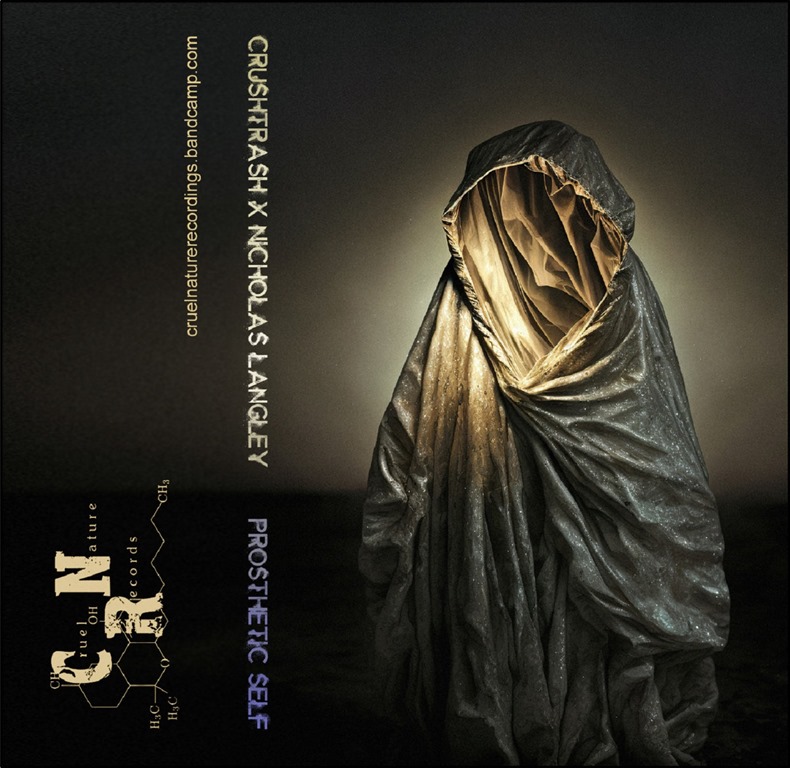
Surveying this release, I learned that ‘Prosthetic Self is a collaboration between CRUSHTRASH & NICHOLAS LANGLEY that seamlessly blends the energy of early ‘80s dark industrial synth pop with the mesmerising allure of ’90s electronica. Drawing inspiration from iconic acts like Coil, The Associates, Depeche Mode, Björk, and Portishead, this album is a sonic journey that transcends time and genre boundaries.’

It does feel as if every electronic act with a dark leaning wants to be Depeche Mode, and every electro-based Industrial act is essentially wanting to be Pretty Hate Machine – era Nine Inch Nails – who in turn sounded a fair bit like Depeche Mode if truth be told. That’s no real criticism, as much as an observation of the extent to which those two acts broke ground and created new templates in the 80s. However, the industrial elements of Prosthetic Self hark back to a time before Nine Inch Nails, and presents a more experimental form.

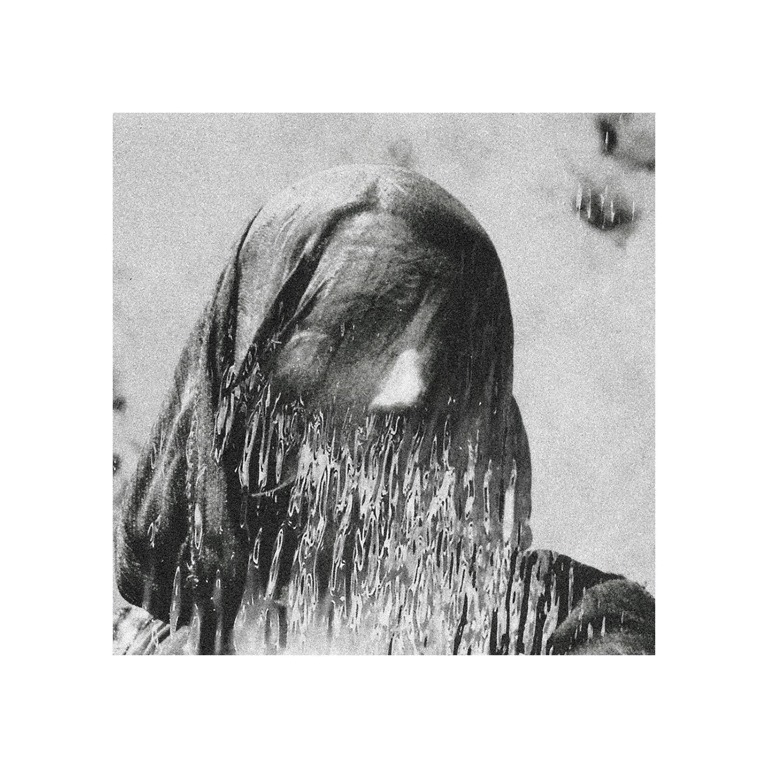
The tile, Prosthetic Self Connotes a sense of falseness, the fake exterior we apply to ourselves in order to deal with people and society. Workplaces – particularly offices – tell us to ‘be ourselves’ at work, while at the same time telling us we need to leave our problems and personal baggage at the door, but at the same time seem incapable of dealing with non-conformity. Well, come on then: what do you want: individuals or clones? Prosthetic Self is an exploratory work which presents a multitude of facets, and it’s a fascinating journey which leads one to the question as to what is real and what is construct, artifice. The cloak, on the cover, with its empty hood feels like a representation, not necessarily for this collaborative project, but the album’s themes, searching for what lies beneath the prosthetic self: is there, indeed, anything at all? Then again, how much here is style, and how much is substance?

There’s certainly a lot of well-studied style on display. ‘Bring Some Change’ is dark but also soulful, and their referencing The Associates hints at the almost operatic stylings of the vocals at times, and against some stark backings prone to some unexpected sonic ruptures and moments of heightened tension and drama, I’m also reminded of Scott Walker.

‘Claustrophobia’ is appropriately-titled. ‘In my dream, something’s wrong, caving in…’ Crushtrash croons with hints of Dave Gahan in his delivery against a slow-moving murky throb. But there’s a really attacking percussive loop that knocks on the top of your skull which makes it tense rather than soothing, and before long, panicked breathing gasps in the darkness, and you’re drawn into the nightmare.

Elsewhere, glitching, knocking beats shuffle and click, and the production really brings these to life in a way that makes you clench your jaw and tense your shoulders. ‘Selective Memory’ has something of a collage structure about the way the sounds are brought together and overlaid, with sampled snippets woven in alongside the bubbling vintage synth sounds.

In places, the kind of retro vibes which permeated 90s trip-hop seep into the shadowy atmospherics, and ‘Subtle Fetish’ comes on like Marc Almond in collaboration with Tricky, spinning lascivious wordplay along the way.

Prosthetic Self creates a lot of atmosphere with minimal arrangements, and they work because of the close attention to detail, the multiple layers of percussion which pulse and snake through spartan synths, more often than not with a simple, repetitive bass overlaid with subtle details, in a fashion which adeptly recreates the sound of the early 80s. In doing so, it recalls a time when so much was new, innovative. Coming at a time when there is so much sameness, and production and mixing has come to be all about the loudness, to hear a set of songs which really concentrate on dynamics and detail, it seems unexpectedly different.

AA

a1438080285_10