Mille Plateaux – 22nd March 2024
Christopher Nosnibor
What’s often fascinating to me as someone who writes about music quite extensively, is to observe the avenues other writers explore, particularly when engaging with music that’s ambient, obscure, or otherwise difficult to take a hold of and to pin down. This fascination is amplified when the music, either by its inherent nature, or by virtue of explanatory words from the artist, has a foundations in a theoretical or conceptual context.
Achim Szepanski has been tasked with a challenge when it comes to the notes to accompany
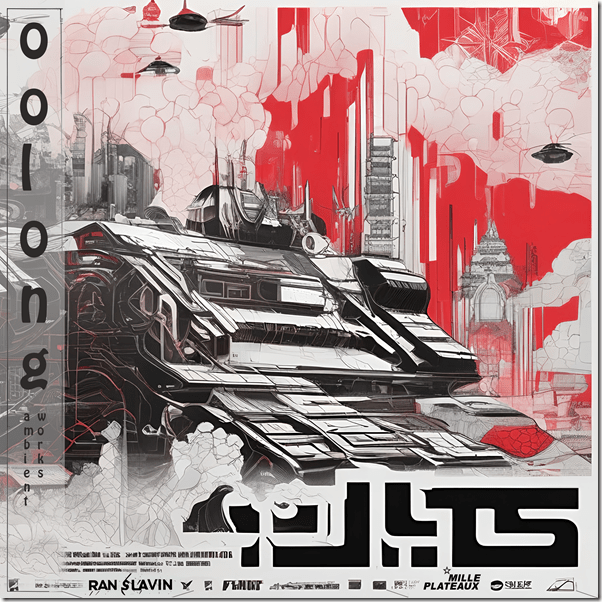
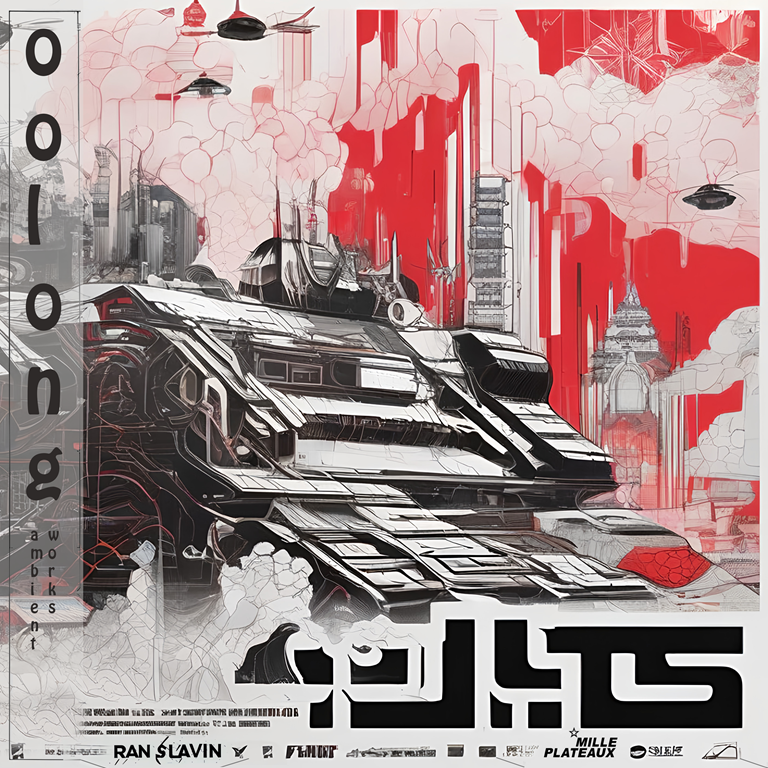
Oolong: Ambient Works, which is the 17th studio album from multi disciplinary artist Ran Slavin, which is pitched as ‘a 74 min drone-ambient-minimal-symphonic infused LP that takes after various teas in the far east.’ To heighten the experience, each track is accompanied by ‘a slow and atmospheric visual journey shot by RS in East Asia and the total can be experienced in total and joined as an immersive 74 minute journey.’
Szepanski helpfully explains the layered meanings in the translations of the word ‘oolong’, and expounds the complex interconnections of tea and dragons through a filter of Felix Guattari (which isn’t entirely surprising, given the label releasing it). He grapples with ‘the minimalist concept of tea architecture’ and the way in which ‘Not only the centripetal, but also the centrifugal orientation of the sound is imaginary.’
While the visuals clearly form an integral pat of the project overall, I shall preserve my focus exclusively on the audio release, and in advance of this draw the distinction between audio created to provide a soundtrack, and visuals created to accompany an audio work, because while Szepanski discusses at length the relationship between the visuals and the tea path and the simultaneous limitations placed on the work by the visuals and their capacity to enhance the experience, Oolong: Ambient Works is an audio release or an ambient persuasion, as the title suggests.
The seventy-four minutes is divided into eight individual pieces, with titles such as ‘Grand Jasmin’ and ‘Assam Jungle; as well as others which are less overtly tea-derived, like the first composition, ‘Time Regained’. It’s fifteen minutes of slow-simmering ambience, the levels of which fluctuate and catch, the glitches rupturing the smooth surface of the soft sonic fabric.
Szepanski makes an important point when he writes ‘It is impossible to know exactly what the individual sounds signify. Sometimes it might be the intention to hear the sounds of nature. But it’s not a question of identifying its source and its effect.’ And so we come to what is, for me, the crux of the ambient listening experience, whereby the source of the sounds is far less significant than what the listener hears. Not even what I hear as a listener, although I can only speak and interpret for myself, and the beauty of this experience is that however much Slavin strives to imbue this work with meaning, it cannot be imposed. Slow pulses bring a rhythmic element to this otherwise abstract piece, which is deeply calming, but occasional warps jolt the listener from their state of tranquillity like a prod.
‘Butterfly of Ninh Binh’ flits by with crackles and scratches by way of disturbance, and the introduction of static and ersatz surface noise to recordings is a curious one, as something which only became a feature with the advent off digital audio. Those who have come to vinyl since the renaissance are less likely to relate, since vinyl is now a plush commodity and not something people leavy lying around or use as a coaster or whatever as was commonplace in the sixties, seventies, eighties. But such interference is integral here: Slavin’s approach to ambience on Oolong is subtly different, and introduces just enough dissonance and discomfort for it to be not entirely comfortable.
The ten-minute ‘Ruby Ceylan’ is soft and ripping repetitive and hypnotic, but something – perhaps the abstract moans, perhaps something else – is just off.
Iroh, in Avatar: The Last Airbender, is a keen advocate of the calming properties of Jasmine tea, and I get a far stronger Jasmine connection from this – the original animates series, that is – than from ‘Grand Jasmin’ here – the album’s shortest track is subtle and soothing, but also marks a change of texture with a thumping beat which echoes away hard and fast beneath its slow-swelling outer layers.
‘Himalayan Flower’ unfurls slowly and with pronounced percussion, before the ten-minute ‘Summer Monsoon’ brings the album’s conclusion. A slow, mesmeric, soporific cloud of ambience passing by, with occasional clangs and abstract interruptions which echo through the drift, this is a real; eyelid-drooper which suggests it’s time to sleep, or time for a coffee.
AA









 Aural Aggravation