Archive for September, 2023

Negative Gain Productions – 8th September 2023

Christopher Nosnibor

It likely seems strange to anyone born in the last thirty years that electronic music as we know it simply wasn’t a thing at one point. If the Seventies saw a slow emergence of new technology in music, it wasn’t until the early 80s that that technology became accessible – that is to say, affordable and more widely available in commercial terms. This was truly revolutionary, and to hear bands like The Human League, Soft Cell, Depeche Mode, all coming through in the charts felt like, well, the dawning of a new era. Which is precisely what it was, and this would evolve in darker directions – as well as dancier, poppier ones – as the decade progressed, and through the 90s, by which time the sense of revolution had become fully assimilated. No-one bealed about the lack of instruments involved in the making of the Utah Saints’ album.

You can see why your traditionalists hated it, of course, and the Musicians Union, too, and this friction did continue into the 90s: as they saw it, drum machines threatened to make drummers obsolete, and if you had a synthesiser which could do bass and lead, both bassists and guitarists would be out of work! It was of course pure knee-jerk, and one wonders to what extent the same is true of the outcry over AI, but on that score only time will tell. As it stands, history had proven that home taping didn’t kill music – no, that would come later with the advent of streaming, and not illegal streaming via Napster and subsequent P2P platforms like Gnutella and Soulseek.

This s the backdrop for the debut album for electronic rock duo, Sonum Unum. Signals From The Sun is, according to their bio, ‘heavily inspired by 80s and 90s eras electronic and synth-pop music. Dark and ominous tones, ambient textures and thumping beats abound while lush, layered vocals soar to epic and cinematic tiers.’

It’s tempting to slide into the easy commentary which maintains the narrative of this being an album with a retro vibe, primarily because it’s true: it’s an amalgamation of two decades of electropop slickly delivered to draw in elements from specific acts, but the entire oeuvre of the timespan, from bolder darker grooves of gothier European dark electro, but also incorporating elements of the emerging case sound, with the quickfire drum builds that pace the way for expansive choruses.

There are times where it feels as if their approach to appropriation – essentially pulping and compressing the very essence of the forms into smooth perfection – results in songs that are simply too generic to have a real sense of character or identity. But then, plough through myriad releases from that time span from acts who either bubbled under or who only had a hit or two, and you’ll find the same is true of the rest of the album tracks. Moreover, to return to the question of sounding ‘retro’ – it feels like an increasingly obsolete concept. More or less everything draws on something precursive, and most of what is starting to be a recycling of a recycling. It’s no longer a case of a seventies or eighties or nineties revival: all of these things now exist in perpetuity. Retro is the new contemporary, and I can’t decide of the seeping sadness I experience listening to it is because of the emotive quality of the songs – which are tightly crafted more than gripping, to the point that they slip past without for a second taking hold – or if it’s because of the way they evoke so much that entirely removed from the songs themselves.

Signals From The Sun is Mr Mister to Depeche Mode via Eurythmics and A-Ha and Nine Inch Nails and Bastille. Slick, anthemic, it seeps nostalgia and has immense commercial appeal if it finds its way to the right channels and outlets.

AA
a3576946630_10

Spartan Records – 7th September 2023

Christopher Nosnibor

Milliseconds featuring Joe Easley (drums) and Eric Axelson (vocals / bass / synth) of The Dismemberment Plan, and Leigh Thompson (guitar / noises / pedal board) of The Vehicle Birth will release their J Robbins-produced debut LP So This Is How It Happens on October 13 via Spartan Records.

After recently premiering the first single ‘Time and Distance’ on Stereogum, the band is now unveiling the second single ‘Fallingwater.’

I have to confess that with so many submissions, I, like many in the ‘industry’ and also the majority of the public in this era of low-attention and time-constrained living, make instant judgements about not only music, but pretty much anything and everything. I’ll read a headline and not bother with the article, or if I do, may only make it through the first paragraph before my opinion is set and I move on. It’s a habit I annoy even myself with, and it’s a relatively recent habit I’ve developed, which I can pretty much pin to the start of the pandemic, in the days before lockdown when I would be checking the same news sites every couple of minutes to see if there were any new developments, for updates on numbers of cases and deaths.

So about ten seconds into ‘Fallingwater’, I’ve already reached the conclusion it’s limp toss, a slightly emo take on pop-punk, with its cleanish guitar sound and sing-song, slightly nasal vocals. But in the time it takes me to process why I don’t like it, I realise that actually, it has qualities I do like. It’s one of those songs that finds its stride as it progresses, and ultimately reveals itself to have more in common with proper 70s punk than the sanitised fully-adult-guys-bouncing-around-and-making-like-they’re-still fifteen-and-represent-the-youth’ punk-pop shit that’s still being released faster than babies are being born around the globe.

Sure, it’s melodic, but it’s got an edge to it, as well as some nifty unexpected changes which indicate some pretty smart songwriting skills, especially as said changes aren’t awkward or jarring. Having revised my position, I decide that maybe this is a song that warrants some coverage, which I might feel like devoting some time to some discourse, even if some of that discourse is around the process of creating that discourse (or deciding against doing so).

Only then, then, do I consider the accompanying notes – because as much as I can find myself drawn by the pitch, I think that what matters ultimately is the music. Great PR won’t make a shit song amazing – although it does seem that some may be blinded by great PR to the extent that some real crap can go massive, even if briefly by generating some kind of mass delusion, but that’s perhaps for another time.

In explaining the song’s inspiration and style, Axelson says, “Musically we felt like we were tapping into Hüsker Dü and The Kinks when writing this. Those chorus chords especially with the high strings ringing out as a drone definitely owes something to Bob Mould, and the riff in seven that separates sections of the song, feels like some early / mid Kinks, or maybe ‘Alex Chilton’ by the Replacements, but in seven. The weird twist comes in the bridge: initially it was just one voice, but in the studio we layered harmonies and it came out a bit Beach Boys, just maybe not as pretty.”

It isn’t, but then, The Beach Boys were just too clean and pretty, too lightweight and sanitised, whereas with ‘Fallingwater’, Milliseconds still bring some bite – more the spirit of ’77 than anything combining the punchy panache of Buzzcocks with the savvy of Wire to make for three and a half minutes of old-school enjoyment.

AA

Milliseconds_01_Col_edit

Photo Credit: Evan Bowles

ant-zen – 16th September 2023

Christopher Nosnbor

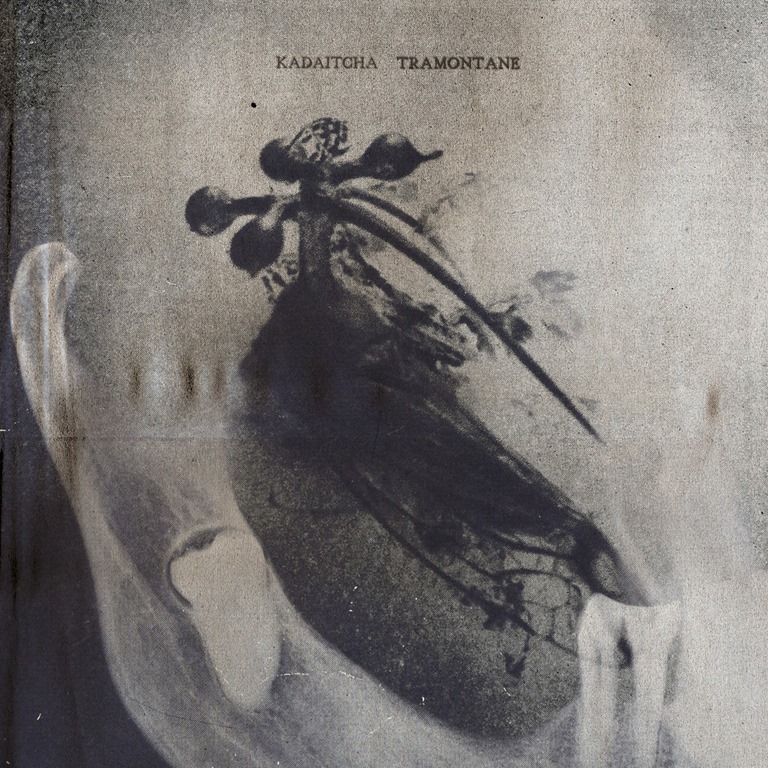
Four years on from Tar, Ukrainian industrial duo Kadaitcha, consisting of Andrii Kozhukhar and Yurii Samson, have overcome many, many challenges to deliver album number five, in the form of Tramontane.

The tracks which appeared on their limited lathe-cut single last year do not appear here, and this is admirable: singles so often tend to be used as launchpads for albums, and it was particularly common in the 80s and 90s that albums would sell on the basis of a couple of singles, but would have next to no other decent tracks. In the days before streaming, this was something that was easy to get away with, since the only way of hearing the album was by buying it, which you would do based on the singles. But then, the risk could be reduced by taking punts using your half price or free options through Britanna Music, or similar. The advent of streaming hasn’t really improved things, though, because now, at least in mainstream circles, the album is essentially obsolete.

But outside the mainstream, the album is thriving, and artists are pushing the format now that the constraints and limitations of physical formats aren’t necessarily dictatorial in determining duration, and there are infinite options for exploration. The single wasn’t so much of a stop-gap release as a standalone document of a period in time. But the key point here is that Tramontane is very much an album, and a work to be approached as such. The notes which accompany the release are almost hallucinatory – not quite Burroughs cut-ups, but fragmented, non-linear, and they serve to articulate the essence of the music contained here. Stylistically, it’s tight and cogent, and there’s a flow to it, too, which begins with the appropriately-titled ‘Intro’, which is precisely that – a short instrumental intro piece which paves the way for the ten heavyweight cuts which follow. But within that coherence, what Tramontane offers is a work which really goes all-out to disrupt and unsettle.

‘Niello’ draws primarily on the sound and style of earlier industrial music, the electronic pioneers of the late 70s and early 80s, the likes of DAF and Cabaret Voltaire, but with its distorted, menacing vocals, there’s an element of the later evolutions of industrial which emerged in the mid 80s. It seems to be that there are very different understandings of industrial, and while Al Jourgensen may be a huge fan of William Burroughs and the music that formed the body of the first wave of Industrial music, namely Throbbing Gristle and also the wild tape loop works of Foetus and the heavy percussion of Test Dept, it’s industrial metal and harsh post-NIN electronica which have come to become synonymous with industrial latterly.

On Tramontane, Kadaitcha have brought the two forms, old and new, together, and the result is discordant, noisy, difficult. And these are its selling points. It feels like a guided tour through the most challenging aspects of Industrial music through its evolution and history.

‘Knife’ is a sparse, oppressive low-end throb pinned down by a dull, thudding, muffled-sounding beat, over which twitching electrical streams flash and flow while monotone vocals are unsettlingly detached. The percussion really dominates on the tempestuous ‘Liars’ and any and all references to Einstürzende Neubauten are entirely appropriate. It’s a thunderous, dense racket where the low end really stands to the fore, but it’s tame in comparison to the dark ‘Offering’: even when it drives out as a heavy and insistent bass riff, it feels unfinished, undercomposed. Yet therein lies its success: it feels organic, and nothing is overdone.

The mangled noise and droning distorted vocal on ‘Fossil’ is pure Throbbing Gristle, a barrelling barrage of blitzkrieg laser synth bleeps and a whole mess of midrange and lower end distortion and dirt, churning, discordant, the monotone vocals almost buried in the tempest of overloading unpleasantness, and ‘Seeds’ is similarly unpleasant and uncomfortable, everything going all out on overdrive.

It all comes together on ‘Insight’: beginning as a gentle, spacious, mellow post-rock guitar-led piece, it soon erupts into a mess of overload akin to Metal Machine Music, only with drums and sinister vocals. It’s got the lot, and as the album enters its final stages, it seems to consolidate the elements of the previous tracks to punch even harder, with the percussion harder, the grinding morass denser and darker.

Perhaps a reflection of the circumstances in which it was created, perhaps a reflection of the times in the world at large, Tramontane is heavy and at times harrowing. The lyrics may not be decipherable for the most part, but the mood requires no translation or interpretation, and Tramontane will crush your soul.

AA

a3600121745_10

Indigo Sparke has released a soaring new single ‘In the Garden,’ co-written by Chairlift’s Patrick Wimberly and produced by Jake Portait (Unknown Mortal Orchestra). The track is accompanied by a gorgeous music video.

The song is arguably Indigo Sparke’s most pop leaning production to date and boasts a big sound. Driving beats, groove laden bass, seductive guitars and what sounds like an actual choir of angels all serve to build this intoxicating sound but it’s Sparke’s beautiful vocal delivery, lyrics, and her gentle invitation toward madness that give this song its euphoric and poignant edge.

Watch the video here:

AA

Indigo

Sonoscopia sonos – 15th September 2023

Christopher Nosnibor

Trobollowitsch is certainly a name that sticks in the mind, and so it was that back in 2016, I penned a piece on Roha by the Austrian Sound artist. At the time, I struggled to really connect with his conceptual compositions.

This latest offering finds him working with Thomas Rohrer, a Swiss musician, who ‘plays the rabeca, (a Brazilian fiddle), and soprano saxophone’, and whose work ‘is largely based on free improvisation, but also engages in a dialogue with traditional Brazilian music.’

The collaboration between the pair actually began in 2017, but they didn’t begin work on any recording until January 2021, when, according to the bio, ‘they embarked on a duo project combining Trobollowitsch’s rotating mechanical turntables equipped with branches, wood and dried leaves with Rohrer’s soprano saxophone, small objects and rabeca… During their collaborative recording process, renowned singer Sainkho Namtchylak from the Tuva region contributed her captivating, versatile voice, which she has used to great effect in a variety of musical genres, including jazz and electronic music.’

Given their diverse background and different modes off operation, this collaboration was always going to be not only eclectic, but a collision of diversity, and the question would always be to what extent do they compliment one another, or otherwise pull in such different directions as to render the work more of a competition than a collaboration? Given that both Trobollowitsch and Rohrer are credited with ‘recomposition’ of several tracks, there’s a sense that this effort is defined, if not by friction as such, then by differences, and a working method which entails dissecting and reconstructing, a restlessness and dissatisfaction.

Crackling static and an electrical hum are the key elements of the title track. It’s somehow both spacious and claustrophobic, and as the sounds rumble and echo around, you feel like your shut right in a small room – more like a walk-in cupboard – as the serrated buzzes and grinding drilling sounds fizz and fret all around, gradually warping and twisting, sometimes ballooning and others shrivelling. Suddenly, I jump. Is that my phone vibrating? No, it’s not, it’s a vibration puncturing the third wall, something that sounds like it’s in the room rather than coming from the speakers, which are by now emanating shrill blasts of feedback.

The sound collaging on this album is something else, leaping into the three-dimensional at the most unexpected moments, and the sounds and textures constantly shifting to forge a work which is more than music, more than sound: this is something you feel, not emotionally or cerebrally, but physically: it makes your fingers tingle and move in a quest to grapple with the details. Sometimes those details are dark and demonic, as on the unsettling ‘Ovaa’. The vocals are rasping, gasping subterranean, subhuman grunts and gasps, strangled cackles that cark and bleat and croak and claw up from the sewers. It’s pure horror.

There are undulating, stuttering low-end bumps, there are hornets the size of buzzards as your car breaks down and your skull slowly crumbles as your brain struggles to process everything… anything. This is a soundtrack to something that simply shouldn’t exist; it’s aa soundtrack to your worst nightmares, as yet unimagined.

The production, the panning, the listening experience of interacting with this in the way it’s intended is terrifying and surprising in equal measure, as tweets and twitters occupy the same space as thunderous thumps and insectoid skitters and metallic scrapes and… there’s a lot going on, and it all makes for in accumulate and intense and really rather difficult sort set – not really of compositions, but largely incoherent audio processes. The accumulations and stacking of the sounds is by no means truly random or haphazard, but their assemblage creates as experience which feels altogether more happenstance. It’s a scrappy, scratchy, stop-start mangling of noise, and at times, it’s scary and strange, at other’s it’s ominous and eerie. It’s unsettling, and difficult to absorb. It’s incredible.

sonos#26A_front

1st September 2023 – Panurus Productions

Christgopher Nosnibor

A couple of years ago, Fading Tapes released Cartographer, an hour-long album divided into four near-equal segments which thoroughly confounded expectations, for it was no ordinary collage of found sounds assembled to charter fields of exploration.

On Rites Of Passage, they promise a work of greater urgency than its predecessor, where ‘sparse percussion forms the pulse of the ceremony, as whistles and less identifiable sounds weave through and over droning amplified strings and effects… The remnants of some post-apocalyptic culture so far removed from the catastrophe that the relics of their past exist only as cyclopean ruins and talismans.’

This is some evocative verbiage, and it’s fitting for such an evocative aural experience. Whether or not it’s music, well, opinions are likely to be divided.

On the subject of division, Rites Of Passage is far less equally divided than its predecessor, featuring two compositions, in the form of the ten-minute ‘Bantu’ and the twenty-seven minute title track. An album of two halves it is not. Harder and harsher than its predecessor it really is.

‘Bantu’ is a warping drift of psychedelic semi-ambient desert-rock with some twisted, twangy guitars stretching overheatedly across a lethargic beat which clatters and clumps lazily. But there’s a trilling recorder or something in the distance and the guitars build to a swirling drone and as the sound swells the drone – the buzz of a loose, downtuned string against a fret – grows. That woodwind… it sure as hell ain’t Jethro Tull.

And then… ‘Rites of Passage’. Epic doesn’t cut it. If Earth 2 was ground zero for heavyweight drone, the last thirty years have seen a large number of acts follow suite. It’s fitting that Earth 2 was released thirty years ago, really, as it provided some useful context. While Sunn 0))) have taken the template of Earth 2 and pushed it to the absolute limit in terms of crushing doom-laden drone, others have expanded on this premise. Sleep’s Dopesmoker may be a landmark release in this timeline but the fact s that there have been so many influential offshoots that it’s not easy to keep track.

But ‘Rites of Passage’ is hypnotic, mesmerising. You find yourself zoning out. Of course you do. You’re supposed to. ‘Rites of Passage’ is a remarkable track which plugs away at a relentless motoric beat for its entire duration. There’s a wall of noise building. Sensurround, now, and an enveloping shell of abstract noise around it, a squall of sound.

Glorious and tense and painful in equal measure Rites Of Passage is one hell of an album: All the guts, all the grit, and all of the weight.

AA

AA

a3793804968_10

Panurus Productions – 6th October 2023

Christopher Nosnibor

Sometimes, you really crave something that’ll not just blow away the cobwebs, but blast a hole in your cranium big enough to pass not only the cobwebs but the entire house. That’s what I found myself craving tonight. Because… well, life. Things which should be simple and straightforward end up being stressful and taking half a day. And such days just spiral and the pressure builds and then someone tells you ‘you need to chill’ – to which ‘you need to fuck off’ seems a reasonable response. Sure, some breathing exercises and a spot of Yoga are all well and good, and I’m not actually averse to doing ‘nice’ things that may help to lower my blood pressure and help avert the risk of an aneurysm or a stroke before I’m fifty, but… but sometimes, before that, you need to release the rage, and some sonic obliteration fulfils the urge to purge. And sometimes, a short, sharp shock is the best therapy.

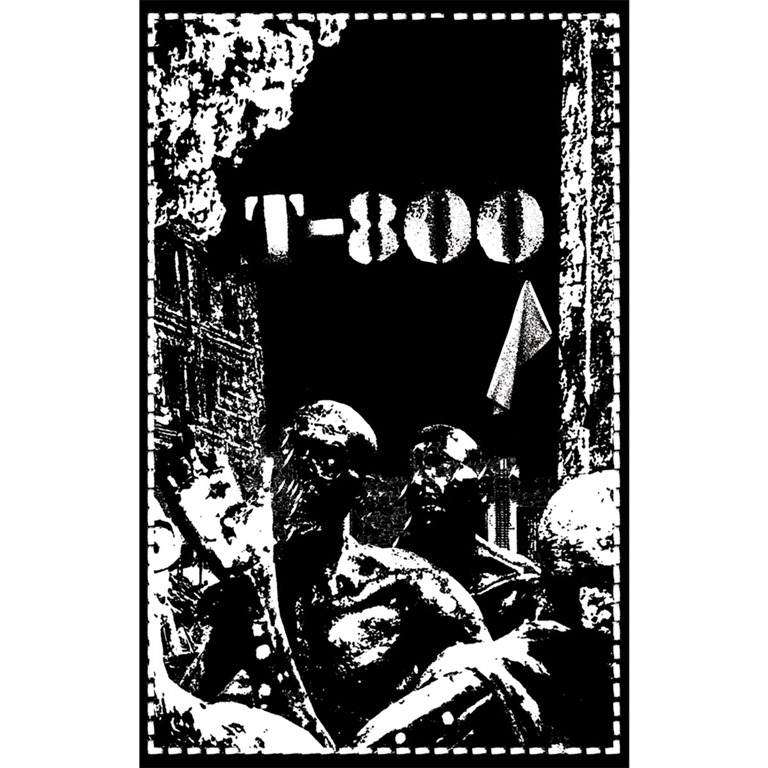
I was sold the second I saw the description of this release, offering up ‘An incendiary explosion from the moment you press play, salvos of chainsaw guitars and fully automatic percussion issue forth at the command of a monstrous and varied vocal delivery. Relentless and efficient, the force of T-800’s delivery is only augmented by their precision, and there is no let up in the twelve minutes this release takes to achieve its destructive aims.’

Twelve minutes? It’s an EP, right? Nope: ten tracks, the longest of which is a minute and thirty-five seconds long. I suppose it might still be an EP, since it would actually fit on a 45rpm 7” single, and I cast my eyes to my beloved 3CD box set, Grind Madness at the BBC, which collects the Peels sessions of the likes of Extreme Noise Terror, Carcass, and Napalm Death and contains about six hundred tracks, including ‘You Suffer Pt 2’, a 15-second recording of the legendary 1-second ‘You Suffer’ which is actually four seconds of noise and eleven seconds of reverb fading.

T-800’s eponymous release is nasty, gnarly, brutal, guttural gargling and crazed shrieking vocals are barely audible beneath barrelling bass, clattering, crashing drums and the most overloading, distorted guitars imaginable. This is proper old-school grindy thrash racket, and make no mistake, it’s fucking savage. The mix is dingy, dirty, and whwwn they do slow it down a bit so everything isn’t a blizzarding blur of overloading distortion played at three hundred miles an hour (look no further than the cruel pounding blast of ‘By Design’ for that), the results are bleak and tense, with the thirty-two second ‘I’ being a slow crushing loop that’s reminiscent of some of Swans’ early offcuts, as featured on the Body to Body, Job to Job, compilation.

‘Perfume Corpse’ is as pretty as it gets in its ruthless dissection of life and all things, from the raw raging of ‘Hacked Mainframe’ to the vitriolic gut-spilling of ‘Orbital Bombardment’, and in closing, ‘II’ feels like the liquefaction of a corpse seeping into the ground. And as it ends, the realisation strikes that twelve minutes is enough. T-800 is furious and filthy, and its execution is spot on. But it tears at your guts and kicks without mercy.

AA

a3875433826_10

Keeping up with their schedule of a single released on the first of each month, Argonaut have pulled ‘Not Motivational’ from the Black Hat.

So when they write ‘September’s single is not motivational,’ they mean it most literally, going on to outline the song as being ‘punk pop protest with a dual vocal assault high on energy and attitude. A catchy diatribe against bad influencers and motivational speakers who aren’t.’

We’ve all seen and heard from these leeches.

Listen to ‘Not Motivational’ here:

AA

a2911471453_10

German post–modern noise rock ensemble ZAHN present their second full–length album Adria, an 80–minute–long journey into the heart of classic European holiday culture. Adria offers a bold escape from your daily life through technicolor transmissions of post–rock, krautrock, dark jazz, noise–rock, post–punk and electronic music. Influenced by the likes of TRANS AM, THE JESUS LIZARD, METZ, THE MELVINS and TORTOISE "Adria" is a compelling soundtrack to a 1980’s anti–utopian road movie!

‘Adria’ was mixed and mastered by Magnus Lindberg (RUSSIAN CIRCLES, CULT OF LUNA) at his Stockholm studio. The cover artwork, based around photographs by Lupus Lindemann(KADAVAR), was designed by Fabian Bremer (RADARE, AUA).

Adria is a testament to the incredible power of this trio and its ability to effortlessly ensnare your attention for the duration of a ten minute–song of purely instrumental music. Over the course of the albums 11 tracks ZAHN emerge as a form of PINK FLOYD of noise rock, relentlessly pushing the envelope on what’s already accomplished while remaining tasteful and tasty at every corner.

In advance of this, they’ve released a video for ‘Apricot’.

The video for ‘Apricot’ was directed by N. Hildebrandt, bringing ZAHN’s unique vision to life. The track was recorded by Peter Voigtmann at Die Mühle Studios, Gyhum, and expertly mixed and mastered by Magnus Lindberg at Redmount Studios, Stockholm.

ZAHN comments: "Being in a band often entails profuse sweating, whether it’s under the stage lights, lifting heavy gear, sitting on a sweltering bus without air conditioning or the anxiety-induced perspiration before a performance. For many rockers, being intoxicated is a vital element of a show. With ZAHN we’re approaching this in a different way – we’re pursuing an altered state of consciousness by pushing ourselves to the limit in a sauna – Apricot is a sober yet sensory and psychedelic sauna experience.”

Watch the video now:

1st September 2023

Christopher Nosnibor

Since I was first introduced to Salvation Jayne, back in 2017, I’ve admired their energy, their punchy, punky rock tunes (unashamedly not ‘alt’ and straight-up kicking arse). But what happens when a band loses a pivotal member, particularly under rather messy circumstances? It’s nothing new, of course: Fleetwood Mac’s career after Peter Green was both longer and more commercially successful, and the same is true Pink Floyd after Syd Barrett’s departure and post-Gabriel Genesis. Roxy Music lost Brian Eno early on, and Marillion enjoyed a lengthy career post-Fish… and so on, from Iron Maiden to, er, Queen. Arguably, some of these lineup shifts have marked changes for the better. Others… maybe not so.

As far as many were concerned, myself included, Salvation Jayne was Chess Smith. Clearly, Salvation Jayne, releasing their first new music since her departure, would disagree, and they’ve forged on and are now clearly facing forwards and evolving. The arrival of Estelle Mey on vocals is swept over briefly in the band bio which announced a change in sound with the new lineup, describing it as ‘intense, dark and dynamic post-punk’.

It crunches in with warping electronics trilling over a murky bass noise that sounds like a bulldozer before slamming in with some serious force, the nagging guitar reminiscent of post-millennium Pitch Shifter and some vaguely nu-metal vibes, but still retaining the powerful pop elements which defined their sound, and it’s certainly a meatier and more aggressive sound they’re showcasing here. Contrasting shouty verses with a more melodic chorus, it’s a tried and tested structural formula, and they really work that dynamic, and it works well.

The layered vocals add unexpected depths and dimensions, and if there are moments where ‘Thirst’ feels crowded, the level of detail means there’s more to explore and it’s an adventure to unravel with subsequent plays and following the initial impact. Yes, Salvation Jayne are back, and they’ve got a big tune here.

AA

Salvation Jayne artwork