Archive for August, 2023

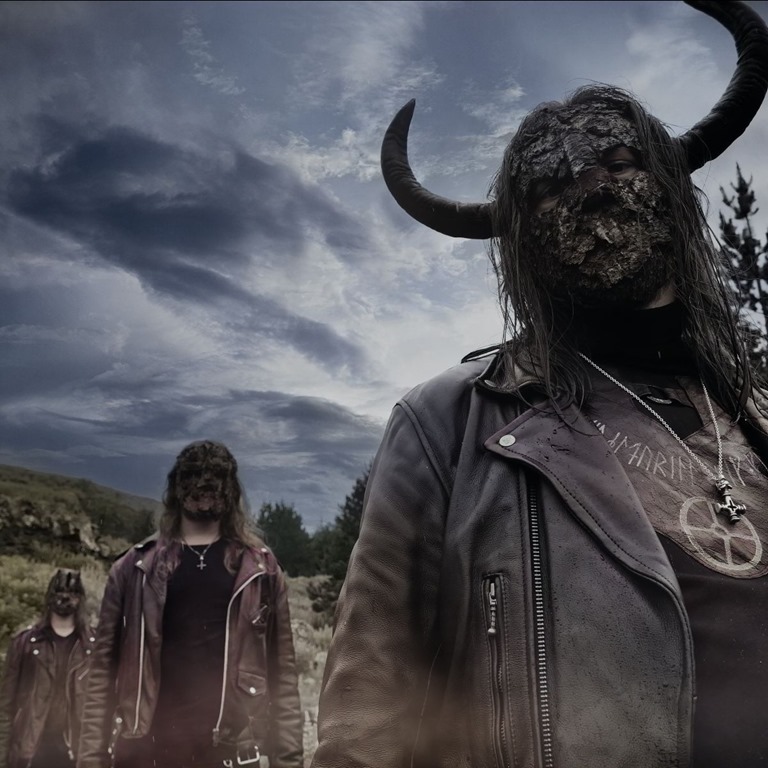
Icelandic metal trio FORTÍÐ reveal the video single ‘Þúsund þjáninga smiður’ (‘A Man of a Thousand Sufferings’), which is taken from the forthcoming full-length Narkissos. Narkissos is slated for release on October 13, 2023.

The video ‘Þúsund þjáninga smiður’ depicts the endless cycle of bloody feuding that lies at the core of most Icelandic sagas and continues with usually less physical violence until today.

Watch it here:

Parallel to Narkissos, a 3CD artbook entitled Völuspá, which is featuring all three albums of the original trilogy will also be released. Each album comes with three bonus tracks and the book includes among other items introductions by Einar "Eldur" Thorberg Guðmundsson and Kári Pálsson as well as all lyrics in original language and English translations.

FORTÍÐ comment: “The title ‘Þúsund þjáninga smiður’ is a play of words, which is derived from the common Icelandic term ‘þúsund þjala smiður’; but instead of referring to a ‘man of a thousand traits’, we have changed it into a ‘man of a thousand sufferings’ here", mastermind Einar Thorberg Guðmundsson writes. "The lyrics are more abstract than the video. They revolve around mankind’s thin outer layer of civilization and the pure animal instinct that lurks beneath the surface. It takes little effort to reveal our true nature. The clear cut story-line of the video shows Icelandic farmers fighting over a piece of land. Such family feuds have been very common in Iceland throughout the centuries and lie at the core of our saga literature. Coincidentally, the farmer that so kindly lent me his fence for this video also had a very rough land dispute with the neighbouring farmer. I cannot go into the details, because it is still an ongoing court case that will hopefully get settled in a more civilized manner than what you see in this video.”

ed2c65bb-042c-bd83-1640-62385f1dd531

Testimony Records – 8th September 2023

Christopher Nosnibor

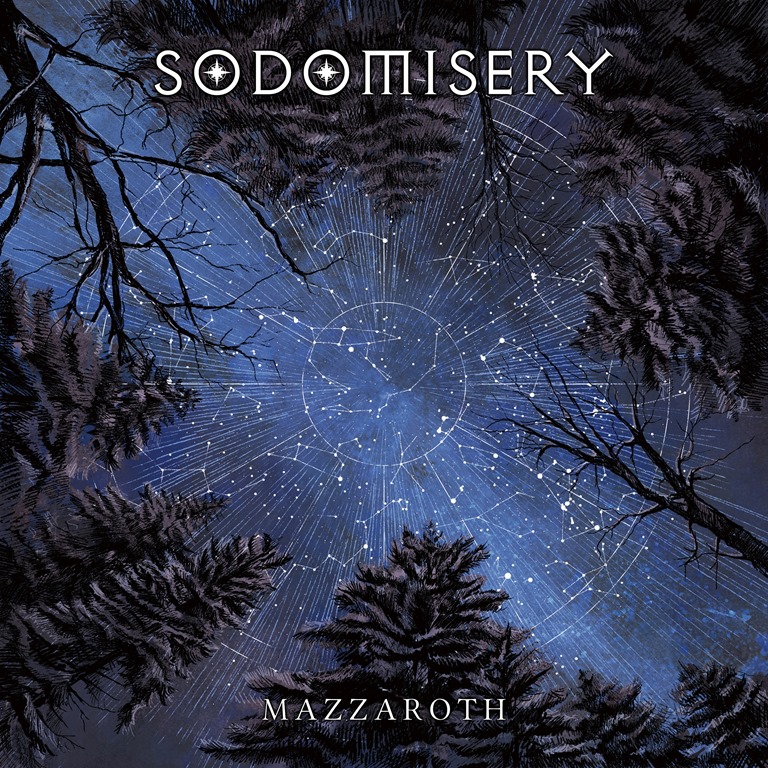
‘We are living in troubled times and it is hardly surprising that this is reflected in any form of art including music. On Mazzaroth, Sodomisery have spun a dark lyrical yarn about mental illness in society, religion, and the struggle of the individual, which is running like a red thread through their sophomore full-length. The Swedish melodic death four-piece are underlining their loosely conceptual approach with a remarkable musical evolution’, says the bio which accompanies this album.

There’s no misery like Sodomisery. At least, that’s what I’ve heard. For reasons I haven’t explored, while society has progressed – and I do mean this broadly and generally, being most aware of the fact that homosexuality and many things more widely accepted remain not only illegal but subject to severe punishments in a large number of countries – the word ‘sodomy’ carries brutal connotations which continue to hold currency in the circles of the

blackest of metal and industrial and power electronics. It’s true that Whitehouse’s Erector (with its blatantly unsubtle ‘cock’ cover) was released in 1981 and things have moved on a bit since then, but how much? Many of these bands are, as far as I can discern, less concerned with contemporary perceptions of anal penetration, whereby in permissive western society, it’s generally accepted regardless of sex or sexuality, and in pornography, it’s more or less considered essential, and more preoccupied with the harsh, perverse connotations of the writings of The Marquis de Sade – one of the few writers whose work still has the capacity to truly shock. And in this context, sodomy connotes the worst of sexual tortures, the infliction of pain, a statement of the ultimate power dynamics. It all seems appropriate given the band’s objectives.

This album had an interesting evolution, too: ‘When all the new tracks were written and pre-produced, SODOMISERY decided to create two versions of the album. One mix included keyboards and orchestration, while the other version had no such additions. After an extensive period of deliberation and many listening sessions, the Swedes decided that the new dimension and cinematic feeling added by the keyboards was exactly what their songs needed.’

Without hearing the two versions side by side, I’m in no position to comment, but the fact of the matter is that the keyboards certainly have not transformed this into some twiddly prog-rock effort: instead said keyboards are low in the mix but serve to fill out the sound with elongated droning tones against the relentless, thunderous fury of frantic fretwork and double-pedal drumwork that’s faster than the eye or ear can process.

There are some moments of such tunefulness that one has to take pause and breathe for a moment. We’re not just talking clean vocals or tuneful; there are moments, albeit brief, of outright pop sandwiched between the furious rage and overloading distortion. But rather than diminish the album’s power, I find myself respecting the band all the more. To have a softer breakdown in a song is one thing: to be so unashamedly clean and crisp and tuneful is bold.

‘Delusion’ balances all of the various elements nicely, coming together to forge a blasting yet grand and graceful dirty monster of a track which even packs in a heroic guitar solo near the end. Juvenile snickering ensues here with ‘A Storm Without Wind’, and I know it’s not funny and the delivery is entirely serious. Not least of all the lung-ripping bass that prefaces the throat-ripping vocals which snarl over guitars which alternate between old samples and snippets stolen from the present.

It feels scary, like being left alone on a platform and staring into the abyss. Any minute and it could retreat, and leave you falling into the void, and on the evidence here, you’d incinerate in seconds. Ultimately, we’re all scared. Mazzaroth is a worthy soundtrack to that fear.

AA

406169

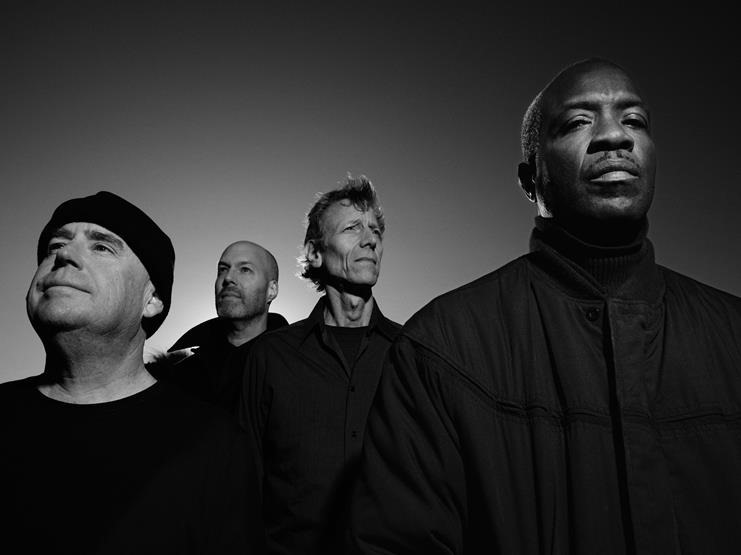
With just over one week to go before their tour commences, Oxbow have shared the video/track ‘The Night The Room Started Burning’- directed by Chris Purdie. The track appears on their new album, Love’s Holiday, out now via Ipecac Recordings.

About the video and track, Eugene S. Robinson says,

“Lyrically it’s a purposeful take on Johnny Hartman’s ‘The Day the World Stopped Turning’ but instead of the power of love to alter our proximal relationships it’s, in my mind, all about the incendiary nature of suchlike love. It fulfils specifically because it fills you with that which burns. And that’s something that absolutely no one slow walks.”

Niko Wenner comments, "I began the music for ‘The Night The Room Started Burning’ on my fathers old folk/classical nylon string guitar, a tune to amuse my young son. My mother played clarinet in high school but it was my father who took me to see my first string quartet concert in Seattle when I was a kid, and who inspired my love for classical music. Including, as an influence heard in this song, baroque period music. “What’s not to like about baroque music? You can dance to it, it’s got a beat!”

Wenner continues, "And you can hear the steady dance rhythm in …Room Burning. And a bit of baroque style in the way the guitar line sounds like two voices in a call and response, first higher “bah bah dee bah dee dee,” and the second, lower, answering the first and going down “BAH BAH BAH.” And of course the choir. The elephant in the room here is the guy, baroque composer J.S. Bach, whose name we should never speak in the same breath as our own, from humility, and respect. Enjoy."

Watch the video here:

AA

UPCOMING TOUR DATES:

Friday, September 01, 2023 UK Glasgow Broadcast
Saturday, September 02, 2023 UK Birmingham Supersonic festival
Sunday, September 03, 2023 UK Leeds Brudenell Social Club
Monday, September 04, 2023 UK Bristol Exchange
Tuesday, September 05, 2023 UK London Studio 9294
Wednesday, September 06, 2023 BE Kortrijk Wilde Westen
Thursday, September 07, 2023 BE Brussels Botanique
Friday, September 08, 2023 NL Nijmegen Merleyn
Saturday, September 09, 2023 LUX Tetange Human’s World festival (free entry)
Sunday, September 10, 2023 DE Bochum Die Trompete
Monday, 11 September 2023 AT Vienna Volkstheatre Rote Bar
Tuesday, 12 September 2023 PL Wroclaw Liverpool
Wednesday, 13 September 2023 PL Warsaw Hydrozagadka
Thursday, 14 September 2023 DE Berlin Roadrunners Paradise
Friday, 15 September 2023 DE Hamburg Hafenklang
Saturday, 16 September 2023 DK Aalborg Lasher fest

US TOUR DATES:

October 20 Philadelphia PA PhilaMOCA

October 21 Portland, ME SPACE

October 22 Brooklyn, NY Elsewhere

November 9 San Francisco, CA Great American Music Hall

November 10 Los Angeles, CA Regent Theatre

November 11 Mesa, AZ Pub Rock

cosmicimg-prod.services.web.outlook

Photo credit: Phil Sharp

nynode intermedia – 7th July 2023

Christopher Nosnibor

Sometimes, a title just captures the imagination. And in some respects, art – be it a book, an album, or a movie, will take one unawares in the same way as a new person. Sometimes, it’s something unexpected at precisely the right time, discovering something you don’t even know you need until it’s there. To select a quote from what may appear to be an unlikely source, ‘just when you least expect it, just what you least expect’, sang The Pet Shop Boys on ‘Love Comes Quickly’. It’s a great line because it so succinctly summarises the unpredictable nature of life, and this wordy title tripped a similar trigger, which, I accept is uniquely personal…. But then, in the personal lies the universal. It must be so true for many that we’ve met the right person, but at the wrong time, for whatever reason.

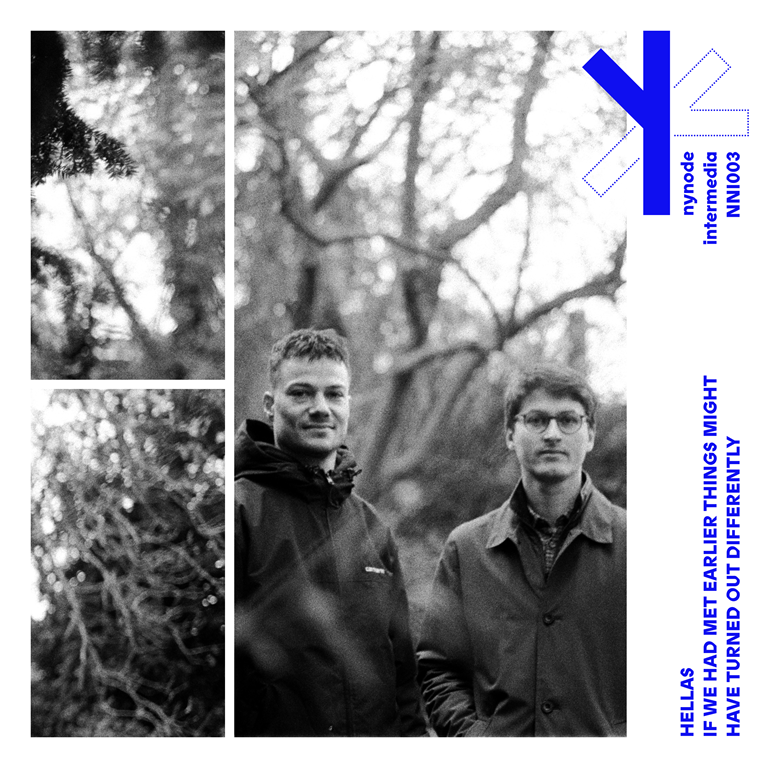
And so it is that I’m spiralling on a chute of reflection, a wall of mirrors inset with faded and distorted memories of people I’ve met and lost along the way as I begin to ease myself into what ultimately proves to be a remarkably diverse album, with deft compositions flitting between retro electronica, sparse techno, trance and shoegazy electrombience – and a lot more besides. Other times, mood-dependent, I may find the perceived lack of identity frustrating, the gentle mellifluousness without any obvious focus nigglesome, but right here, right now, I’m ready to experience transportation. And having emerged from a journey for the artists, If We Had Met Earlier Things Might Have Turned Out Differently feels like a suitable soundtrack.

As the accompanying notes recount, ‘Hours of recorded improvisations were arranged afterwards to slowly shape what would be the new sound of the duo. After three years of experimenting and writing various compositions the album slowly began to unravel itself and took its final form. Eleven unique pieces — deep explorations of sound — that all have their own story to tell are assembled in this collection of snapshots from the past years.’

In some ways, then, If We Had Met Earlier Things Might Have Turned Out Differently is more of a work of sculpture than composition, moulding and shaping the recordings into pieces with form and structure. Rising from a mist of gentle ambience, ‘Arbour’ soars, but is pinned down by a solid martial drum and ambulant, bulbous bass.

Listening to the ominous discordant experimentalism of ‘X’, I reflect on the fact that there was a time I’d have found this boring, just as I’d have cringed at anything remotely jazz-flavoured and sneered at anything overtly dance, before the clattering mess of ‘Techno | Hovestaden’ arrives, chanking and chiming over some ponderous keys, rippling piano, and evolving drones. In the background, as the piano plays mellow chords, there’s a banging tune giving it large way off in the distance, and it’s like hearing a neighbour’s music through your own. It’s irritating, but it’s real: as William Burroughs wrote, ‘life is a cut up’.

‘Ghost’ is suitably eerie, and ‘Shinjuku’ goes all-out tweaking electro, straddling late 90s dance and new age which just shouldn’t work and I should detest, but having lived through this and experienced a somewhat fractious relationship with tunes like ‘The Sun Rising’ and ‘Sadeness Part 1’, I’m rather more at peace with the incorporation of diverse elements to conjure sensations of spaciousness and spirituality, as long as they don’t involve pan pipes. Gotta have limits, y’know. This doesn’t actually sound like these musical forebears, but it feels as if there’s a certain context and progression at play here. The present only exists because of the past.

We’re plunged back into ominous drone territory with ‘Odessa’, and its warping grind which quavers up and down is most unsettling, building to a droning roar that’s hard not to equate to missiles and jets as the oppressive buzz grows louder.

The looming brass and slow, deliberate percussion of the spacious ‘Noon’, as it trickles slowly toward the album’s soft ending, with clattering percussion slowly marking a long wind-down before ‘Tide’ smoothy washes everything away to a smooth, blank state once more.

So what does this say? It says Hellas have conjured a majestic work from – well, who knows what source material? How much of this album came to fruition in the wake of its recording? And how much does it matter? It’s not as it’s an AI work, contentiously bypassing human input: pianist Peter Sabroe and drummer Jeppe Høi Justesen, with the assistance of producer Brian Batz have created something with personality, intricacy, depth. If I’d have heard it ten years ago, I’d have hated it: now… it reaches me. It’s an accomplished work, subtly complex and possessing significant depth. It’s amazing how things can turn out.

AA

NNI003_art

The Helen Scarsdale Agency – 4th August 2023

Christopher Nosnibor

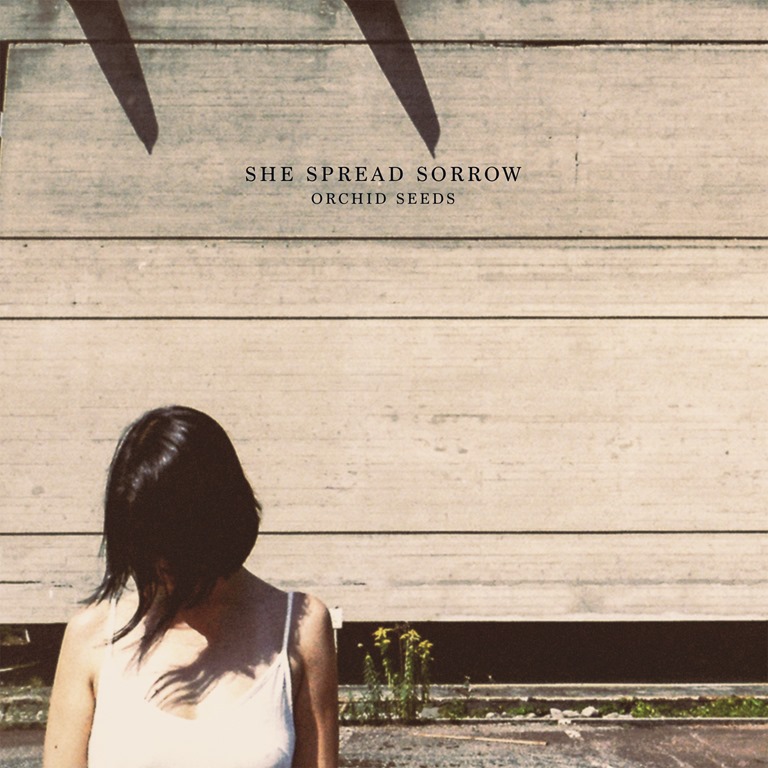
She Spread Sorrow is the musical vehicle for Italian artist Alice Kundalini, and over the course of a number of releases, the majority via Coldspring, she has explored a minimal industrial style, stark yet dense, and characterised by an eerie, whispered vocal delivery.

As the accompanying notes explain, ‘Orchid Seeds was originally published as part of the instantly out of print On Corrosion – a 10 cassette anthology from 2019 that was housed in a handcrafted wooden box and featuring full albums from Kleistwahr, Neutral, Pinkcourtesyphone, Alice Kemp, She Spread Sorrow, G*Park, Relay For Death, Francisco Meirino, Fossil Aerosol Mining Project, and Himukalt. The collection also stood as the 50th release for The Helen Scarsdale Agency, an imprint founded in 2003 and dedicated to post-industrial research, recombinant noise, surrealist demolition, existential vacancy and then some.’

Four years on, it finally gets a standalone release, both digitally and on vinyl.

Kundalini states that the album, “is about 5 different women of my family. Each track is about one of them with their difficult story and strengths. My family is totally destroyed now, no relation between anyone, but in the past there was a strong tradition of women with

interesting personalities.”

And even by the standards of She Spread Sorrow, Orchid Seeds is stark and eerie, dark and unsettling. The reverby, robotic vocals that whisper and moan over the sparse backing of ‘The Solitude in the Giant House’ may set the tone, and with a vintage drum machine thudding and clopping in the background, it has that late 70s vibe – somewhere between Young Marble Giants and cabaret Voltaire.

Things twist into darker territory with ‘Star’ as strains of feedback and grating, serrated synth ripples fizz and crackle beneath her gasping monotone vocal. This is much more reminiscent of Throbbing Gristle. It makes for a tense eight minutes: so often, when acts capable of producing great and heartstopping noise show such restraint as to keep it minimal yet audibly straining, the effect is amplified. This is one such composition; you find yourself moving to the edge of your seat, limbs tensing, waiting for something that never comes.

While the songs are about different people, ‘She Didn’t Care’ and ‘Queen of Guilt’ show opposite aspects of a theme, and perhaps provide some insight into the dynamic of the familial relationships and why they collapsed. The former is built around a stammering beat and hovering, hesitant synthesized organ hum; the sound and overall performance is primitive, immediate, while in contrast, the latter is dominated by a slow, heavy beat defined by a thunderous, reverberating snare, over which a simple synth wanders as echoed vocals drift, fuzzed and breathy and way off in the distance. The effect is some king of industrial dub, and it’s unsettling but not altogether unpleasant, perhaps because it contains stripped-back elements of common pop and dub tropes and so its oddness is countered by a certain stylistic familiarity.

The fifth and final track, ‘The Fortune of Others’, builds through serrated oscillations to grind away for what feels like a slow-throbbing eternity of electronic claustrophobia. It’s important to bear in mind the context: this is an album that’s equal parts narrative and concept, and the execution really pushes the concept to the fore, building the atmospheres of moments missed.

Without more detail – and let’s face it, more detail would likely be unsettling, even potentially traumatic – it’s impossible to determine the full extent of the meaning and also the pain behind the title. But for better or worse, the prospect of taking a firm grasp on the album seems to grow ever further away as it progresses. There is something magnificently and also frustratingly elusive about Orchid Seeds, and however deep you delve, however long you seek it, one suspects it will remain eternally beyond grasp.

AA

HMS050J_front

For this follow-up effort to their 2021 debut album Blacken the Skies, the Terminal formula of industrial glam has been updated with ‘more industrial, more glam.’ Mainman Thomas Mark Anthony also makes a strident case for being his genre’s best wordsmith, weaving grand themes of power, zealotry and corruption via complex rhymes and anthemic choruses. Picking up where its predecessor left off in its excoriation of society’s dangerous hypocrites, the very first line on the new record is “How many guns would Jesus buy?” Plato’s Republic provides the album title and theme – that an unjust society is a doomed society and democracy in itself is no defence against demagogues or tyrants – while Anthony’s sonorous baritone is prominent in the mix as he ponders existential themes of religion and mortality.

Compared to the rapid-fire delivery of Blacken The Skies, the new Terminal songs are wider in breadth and depth as well as longer in duration, while experimental influences are evident in the orchestral-inspired title track and in the hard glam of ‘Don’t Be Taken Alive’, which is believed to be the first industrial blues shuffle. The album includes four instrumentals among its thirteen tracks.

The New Republic is dedicated to the late Metropolis Records label founder Dave Heckman.

The soundtrack to a world unbalanced, reeling, spinning out of control and running out of time, Terminal allies industrial music and glam rock with trace quantities of dark techno, synthpop and raw machine recordings. Each of their songs is a broadside against the atrocities of lost humanity and the devastation of our planet.

Terminal is the work of singer, songwriter and multi-instrumentalist Thomas Mark Anthony. A lifelong anti-apartheid and civil rights activist over a life lived in South Africa, Canada and the United States, Anthony is joined by the US-based Terminal Live Unit for his group’s powerful and confrontational live shows.

Check lead single ‘The Sin of the Sanctified’ here:

AA

a0144423605_10

‘A Cabin In Montana’, the glacial third single from Hexvessel’s Polar Veil album, is a paean to radical environmental advocacy and unflinching nature worship. Speaking to a “deeper sense of belonging” in the wilderness, ‘A Cabin In Montana’ draws from the eternal well of early nocturnal Black Metal, combined with hypnotic ritual chants and hypnotic synths and Hexvessel’s timeless themes of nature mysticism.

Main man Kvohst explains “You should all open this symbolic letter from a cabin in Montana. Step outside and get a deeper sense of meaning. Only then will life begin anew.”  

Watch the new video, suitably cobbled together from vintage footage taken from Canadian adventurer, Tommy Tompkins’ wildlife films of the 1970s:

AA

Polar Veil is released on 22nd September (Svart Records).

Hexvessel live dates:

22.9 YÖ-Talo, Tampere FI

23.9 Amplifest, Portugal

29.9 Suisto, Hämeenlinna FI

30.9 Kuudes Linja, Helsinki FI

6.10  Monari, Kannus FI

7.10  45 Special, Oulu FI

13.10 Dynamo, Turku FI

14.10 Torvi, Lahti FI

11/12/2023  Poznań Klub Pod Minogą PL

12/12/2023  Kraków Zaścianek Club PL

13/12/2023  Warsaw Hydrozagadka Club PL

14/12/2023 Vilnius SODAS2123  LT

15/12/2023  Riga Vagonu Hall LV

16/12/2023  Tallinn Kinomaja EE

AA

YhPCFq-w

Pic: AH

Greek grindcore veterans Head Cleaner (not to be confused with 90s UK noise act Headcleaner) have just shared a music video for a brand new song off their fourth full-length album The Extreme Sound Of Truth, which is set to be released on September 8th via Vinyl Store Gr.

Titled ‘Not Like All Of You’, this music video was directed by Jim Evgenidis.

Watch it here:

Featuring 11 tracks in almost 25 minutes, Head Cleaner waste no time and remain persistent and ferocious throughout. Tracks like ‘Cold Machines’ and ‘Mass Production Dream’ are just two of the album’s most relentlessly devastating, featuring powerful, furious riffs and inhuman, rapid-fire blast beats, while tracks like ‘Not Like All Of You’ and ‘For Tomorrow’s Lesson’ show a more mid-paced stomp, containing intense grooves and crushing riffs while maintaining the same level of severity. Pre-orders are now available here.

Hailing from Thessaloniki, Head Cleaner have been an important part of the city’s extreme underground scene for the last two decades. They have eight official releases to their credit, including three full-length albums and two split albums with well-known bands from the local and European scene. They have shared the stage with some of the most influential bands of the genre, such as Carcass, Extreme Noise Terror, Benediction, Pestilence and many more, while in addition to dozens of live performances in Greece, they have also performed at some of the most extreme European festivals, such as Obscene Extreme in the Czech Republic, Bloodshed in the Netherlands and NRW Death Fest in Germany.

AA

head-cleaner-cover-585x585

Christopher Nosnibor

Stoneflies – Now I am Become Death

This one has landed timely and on trend, with a title quoting J. Robert Oppenheimer, in turn quoting The Bhagavad Gita, a 700-verse Hindu scripture, which contains (in translation) the phrase “Now I am become Death, the destroyer of worlds.” With things potentiaally still on the brink in nuclear terms between Russia and Ukraine, the prospect of global nuclear annihilation stands as likely now as any time as in the early nighties. To take a line from The Psychedelic Furs, ‘get smart: get scared’. And if it’s not nuclear annihilation, it’s climate change… we are all fucked, and the clock is ticking.

And yet…

If Barbenheimer has become a thing, whoop for the resurgence of cinema. Really. This is not an easy time to stay afloat, to keep things together. But… bigger picture. The world is on fire, but instead of funding fixes to climate change, the mega-rich are taking holidays in space. Hawaii will take billions to rebuild, but instead of donating from their spare billions to support it, Musk and Zuckerberg are facing off over a cage fight in the most embarrassing showcase of a machismo pissing duel this millennium. Fuck! This is wrong, so, so wrong.

In the face of this, it figures that black metal and goth and a host of genre forms which emerged from the bleak times of the 80s and early 90s have taken a firm hold on the now. Sure, I’ve mentioned it before, but it clearly needs reiterating: dark times inspire dark music and dark moods, and these are certifiably dark times. Fascism, racism, and oppression, are on the rise. You can’t trust anyone, least of all the government. They’re fucking you, and they have an eye on your escape.

We’re told that ‘Now I am Become Death’ is ‘a powerful and thought-provoking journey through the depths of human emotion and introspection. With hauntingly intense instrumentals and emotionally charged vocals, this track encapsulates the band’s vision of merging extreme metal’s raw power, progressive metal’s experimental arrangements, and psychedelic rock’s mesmerising spirit into a genre-defying sonic experience.’

We’re also told that ‘Their music is an exploration of the human psyche and the complexities of our existence with the new track a journey through the darkest corners of the mind, confronting our fears, and the struggle to emerge with a newfound sense of purpose and strength. ‘Now I am Become Death’ is part of a series of singles, which will be released over the coming months, from upcoming album All Too Human.’

Emerging from a hovering hum and an electrical crackle and darkness visible, a whistle of feedback pierces the eardrum… slowly descending, for a moment ominous and eerie, before the drums and guitars start to build… and then everything kicks in, a monster trudge of overdriven guitars and gasoline gargling vocals.

It’s brutal, pure devastation. ‘Now I am Become Death’ is four and a half minutes of ferocity. From the low, slow, insistent bass and wailing anguish of otherwordly voices before things assimilate into a demented, dark, groove. Where Stoneflies succeeds is in their balance and menace at the same time; the weight isn’t without detail, but the detail doesn’t diminish the weight, making for a tune of massive impact.

AA

Stoneflies artwork

Earth Island Books – July 2023

Christopher Nosnibor

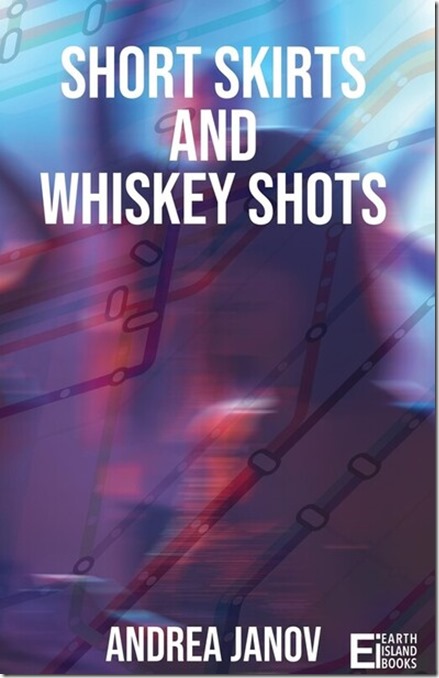
Ordinarily, any book reviews published here on Aural Aggravation are music-related – although admittedly, the inclusion of Stewart Home’s most recent outing, Art School Orgy made it here by virtue of being punk in ethos and published by a record label instead of a conventional publisher. It doesn’t pay to be too prescriptive. And so it is with Short Skirts and Whiskey Shots, the collection of poetry by Andrea Janov, which follows Mix Tapes and Photo Albums, described as ‘a coming-of-age poetry collection about a small town punk rock scene’.

Short Skirts and Whiskey Shots is pitched as a book which ‘captures that liminal part of our lives, that time past adolescence, yet before adulthood.’ It’s not really a book about music. In fact, it’s not remotely a book about music. It’s a book about New York, and a book about finding yourself while being lost in a lifestyle. Yet at the same time, music is there, in the background.

Although the visual formatting and typography (set in a very small font – presumably to maintain the shape of the lines and verses on the pages rather than for cost in this instance) is poetical, the pieces themselves are simple, straightforward prose narrative, and the 24 pieces which make up ‘A Fifth Floor Walk-In’ provide a neat linear scene-setting, sketching succinctly sights and sounds, people and places. The brush strokes are broad, with just the most cursory of details fleshing things out. The titles in this first section are all locations (if ‘7B’ feels rather tenuous compared to ‘10th Street and Avenue B’, we learn later that it’s a bar that plays punk rock), and this theme is continued, albeit less strictly, throughout the book. You couldn’t call it psychogeography, but it does serve to pin each reflection to a place, and sometimes a time, too, and in doing to explores the nature of memory and how places become evocative of moments in time, however fleeting, which reverberate in our recollections further down the line.

Amidst the array of sights, sounds, smells, and the general ambience of chatter and bustling subways, the weather is a prominent and recurring feature of these poems. While we British have a global reputation for our obsession with the weather, it equally seems to be an American thing, particularly when it comes to New York: Ed McBain’s novels always place great emphasis on the heat or the cold or the rain, a s from these readings it does seem as if NY has its own quite specific climate conditions which are an integral part of the experience of life in the city. In these early pieces, she captures the contradictory sense of community – or perhaps scene – and isolation, the distance that comes from living in such densely-packed proximity where people avoid eye contact and rarely even meet their neighbours, let alone reach speaking terms (‘NY, NY’).

As the book progresses, so the pace quickens and the details become less sharply defined, as long shifts in clubs and after-shift drinks melt onto an overall sensation of perpetual movement rather than specifics, and if the backdrop references to punk rock and the Beats on the surface feel somewhat cliché, given that Janov is recounting life in her early 20s finding herself in New York, it’s wholly credible, because it’s simply how it goes: these are the gateways to all things ‘alternative’, a rite of passage, almost. While few here in England use the term ‘punk rock’, its broad meaning in American parlance means it has a universal understanding of music that exists outside of the mainstream. Only a handful of bands are mentioned by name, and if anything, this vagueness imbues the writing with a greater relatability because it ‘despecifies’ and thus broadens the scope for understanding that general musical backdrop.

There are darker moments which remind us of the reason for the book’s subtitle, as in ‘Twenty First and Sixth Avenue, Please’ (the formatting I’m unable to replicate here)

Wake up / Suffocated by the sun / Disoriented and groggy / Chin throbbing / Hand caked in blood

[…]

Stand up. / One shoe on. / Sock in my pocket. / Grope around for other injuries. / No other spot of pain. / No cuts or bruises or contusions. / The chin probably needs stitches. / A skull and crossbones bandage will have to do.

There’s nothing dewy-eyed – and perhaps more significantly and more appealing, nothing dramatic about her narrations of living a life without fear simply because being young and immersed in living life, the risks of walking home through parks at 3am blurry with booze simply weren’t a factor for consideration.

There are a number of scenes and recollections which are replayed in only subtly different ways throughout the collection, but the repetition, rather than being frustrating, recreates the experience of lived memory, how things echo back at us variously, how our minds will return to certain times, certain places.

There’s a melancholy intermingled with fond nostalgia in ‘The East Village’, where on returning she reflects on the process of gentrification: the way the few places which remain have changed.

The sequencing of the poems does have a clear overarching linearity: first, the buzz of arriving and discovering New York, followed by the relentless whirlwind of life, before winding down to a more reflective place on revisiting and remembering. It makes for a short but satisfying work.

(Click on image for link to purchase)
9781739443801-perfect-1