Archive for May, 2023

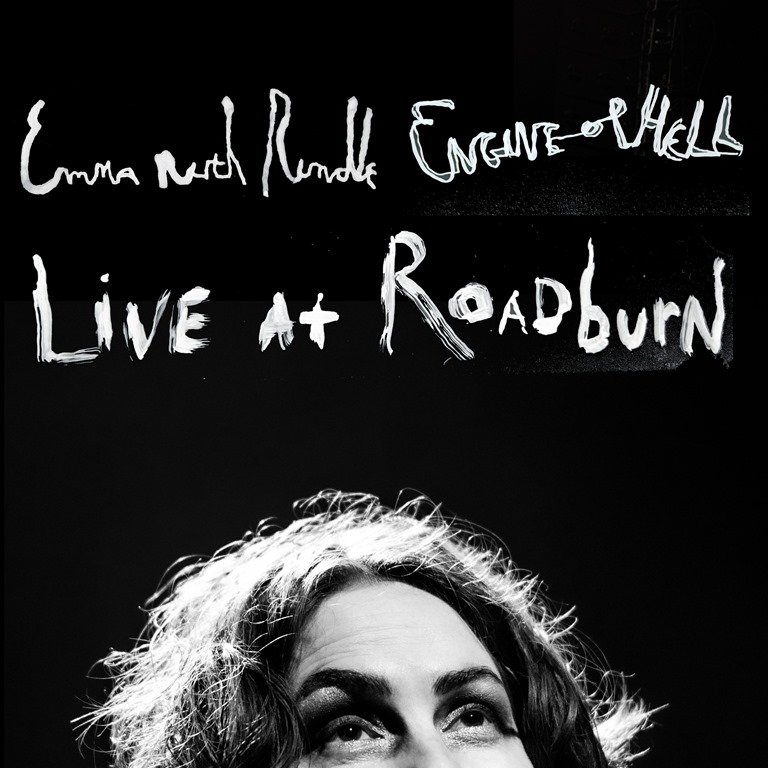
To celebrate and commemorate the ending of Emma Ruth Rundle’s soul-bearing Engine of Hell album cycle, Emma has announced a live album in addition to sharing the final dates of her Engine of Hell tour through the EU. Engine of Hell – Live at Roadburn 2022 will be released on 7th July 2023.

Of the release, Emma says;

“Roadburn has been such an important place for me and my evolution as an artist. The opportunity to perform Engine of Hell in full there in 2022 was the end of something… and the beginning of this whole new chapter in my life and art. I really do feel free in so many ways. I wanted to commemorate and honor the experience by making my Live at Roadburn album my first self release in 13 years.  I will always treasure the Roadburn community”

In anticipation of this release, Emma is sharing ‘Razor’s Edge’ in advance of the live recording; listen below:

ENGINE OF HELL SUMMER SHOWS 2023

Jun 08 – Sideways Festival – Helsinki (FI)
Jun 11 – USF – Bergen (NO) 
Jun 21 Sled Island Music & Arts Festival – Calgary (AB)
w/ special guest William Fowler Collins
July 15  – BOS Festival – Kortrijk (BE)   
July 17 – Kulturkirche – Cologne (DE)  
July 18 – St. Mathäus – Munich (DE)   
July 20  – Electric Castle Festival – Cluj Napoca (RO)
July 21 – Synagogue – Novi Sad (RS)    
July 22 – Mocvara – Zagreb (HR)          
July 24 – Anfiteatro del Venda – Padova (IT)         
July 25 – Porgy & Bess – Wien (AT)
July 26 – St. Barthlmä – Innsbruck (AT)           
July 28 – Magyar Zene Háza – Budapest (HU) 
July 29 – Primate’s Palace – Bratislava (SK)   
July 30 – Lukaskirche – Dresden (DE) 

qGDBCjug

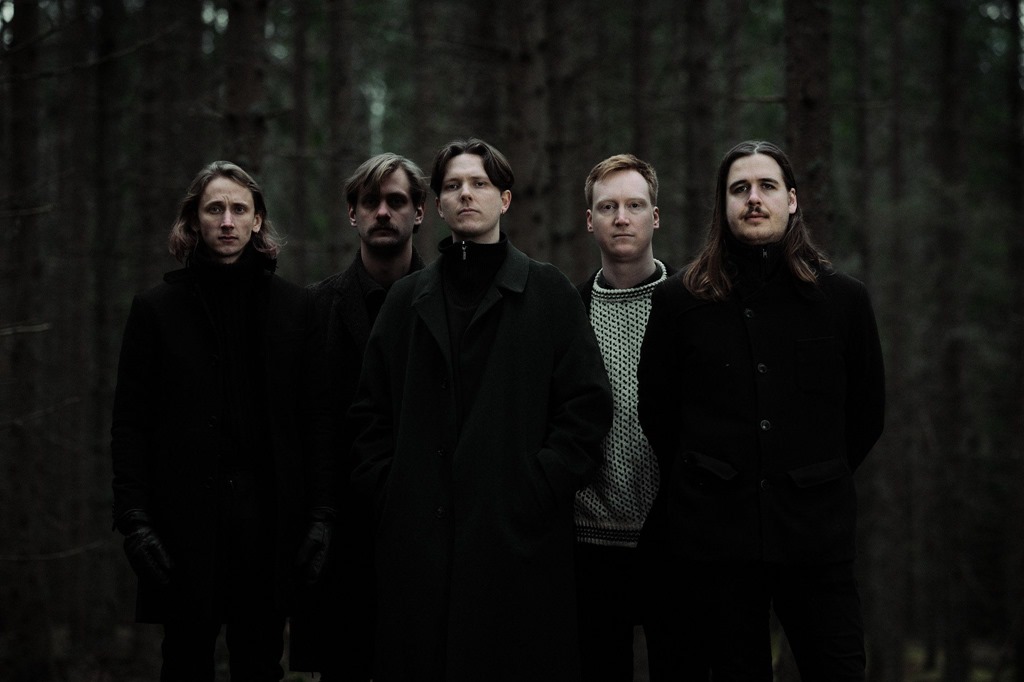
Norwegian progressive rock group AVKRVST will release their debut album The Approbation on 16th June, 2023.  The Approbation is a concept album about a bleak soul who is left solely with his thoughts, isolated on a cabin deep into the dark forests, far away from civilization. The 49 minutes long concept album contains 7 songs, which take the listener though the thoughts of a man struggling towards the acceptance of death, being hauled into the abyss.

Previously released as a single on streaming services, the haunting new video for the album’s second single ‘Arcane Clouds’ is out now and can be seen here:

AA

At the young age of 7 years old, Martin Utby and Simon Bergseth made a pact that they would form a band when they got older. Now, 22 years later they’ve created an album inspired by everything they grew up listening to from Mew, Anekdoten and Porcupine Tree to Opeth, Neal Morse and King Crimson, yet unique in its own right.

The Approbation was written and recorded at a cabin in Alvdal (Norway) during a rainy, cold fall and winter. Simon (composer, guitars, bass and vocals) and Martin (composer, drummer and synths) were later joined by Øystein Aadland on bass/keys, Edvard Seim on guitars and Auver Gaaren on keys.

Sonically, The Approbation is a massive sounding piece of music. It’s everything from lush, melancholy moods to heavy, more aggressive atmospheres capturing the feeling of a cold, gloomy fall – a dark sky, filled with gazing stars above the mist.

v1dpEEsQ

avkrvst – credit Kristian Rangnes

Midira Records – 5th May 2023

Christopher Nosnibor

Aidan Baker is one of those artists whose output is almost impossible to keep pace with – but the more remarkable thing is that for all of this hyperproductivity, the standard of work is of an unstinting quality. Recorded between 2020 and 2022, Engenderine – a double CD – lands almost simultaneously with Trio Not Trio, the first in a series of five albums on Gizeh Records, and just as Baker is gearing up for a tour with Nadja, the ‘ambient doom / dreamsludge, / metalgaze’ duo he is one half of.

To pause for breath for a moment, it’s worth stepping back and running through the context of this, which is worth quoting:

‘The neologism ‘engenderine’ comes from Lydia Yuknavitch’s The Book of Joan, a futuristic/dystopian/cli-fi retelling of the Joan of Arc story, and describes beings partially composed of pure energy capable of manipulating matter who, amongst a largely devolved human population, might be considered post-gender and a new evolutionary step.

‘Other song titles come from phrases and images from Tricia Sullivan’s duology Double Vision and Sound Mind, surrealistic fantasies about the nature of reality and perception and, like The Book of Joan, the possibilities of manipulating those.

‘Musically, the songs on Engenderine began as a series of slowly evolving ambient guitar loops – a bed layer of reality, so to speak – over which were layered bass, drums, and organ parts. These instrumental additions – the trappings of perception, signifiers, metaphorically speaking, our attempts to codify perception – incorporate traditional rock structures and progressions but are stripped down to a sort of somnambulant minimalism that might encourage introspection, a meditative background, uneasy listening, as much as they demand attention.’

It really is extremely uneasy listening. It’s perhaps as well it is, for the larger part, ‘background’, because the two CDs, while only containing eight tracks in all, span almost ninety minutes. We’re not quite in Sunn O))) or latter-day Swans territory, but still…

The first track, ‘Baby Dragon Slaughter’ pitches a long, unchanging organ drone note against a growling doom guitar and stop-start percussion which crashes hard. It’s hypnotic, paralysing, and I can imagine some might toss in a Doors comparison, but that’s only on account of the organ and the slightly trippy vibe, because it’s not only nothing like The Doors, but infinitely better.

If you want comparisons – because pretty much everyone seems to work on the premise that everything sounds like something else and recommendations – mostly algorithmic and based on purchases or streams, depending on the platform, Engenderine sits in the low, slow, doom-drone bracket of Sunn O))) and Earth 2. And this is indeed some ultra-low frequency shit. The first track on Disc 2, ‘Resurrection of the Child Army’ features some melodic, trilling pipe sounds around seven minutes into its nine-and-three-quarter-minutes gloomy, thick humming drone, is something you feel as much as you hear, and it resonates through the intestines and vibrates eternally.

The bass on ‘Calabi Yau Manifestations’ is pure dub, floor-shakingly dense, dark, minimal but quiveringly heavy, and it dominates the erratic drum clatters and rumbling roar of a drone that sounds like a jet engine warming up several miles away. Having experienced jet engines nearby, trust me., this is a good thing, but the rumble is unsettling. And then there’s ‘Dorvay’, which seems to take its cues from The Cure circa Pornography, with its hefty percussion dominating the sound.

Engenderine isn’t an album for a track-by-track, blow-by-blow critique: the tracks melt into one another and it’s an album that needs to be experienced as an album – and in context, that’s a continuous droning hum of murky noise without any clear sense of shape or form.

The second disc feels lower, slower, darker and more difficult: the erratic jazz drum-work on ‘Fear Sculptures’ is difficult to digest and assimilate – but then again, so is Engenderine as a whole. It’s just so much dark and difficult droning to chew on that it leaves you feeling low on energy, sapped, physically and mentally. But this isn’t about entertainment, and artistically, Engenderine is an outstanding exploratory / concept work.

AA
MD136_front

Captivating, glamorous and bold, Belle Scar is a distinctive singer-songwriter, producer and artistic director originally from Montreal but now based in London. Described by the New York Times as “a creature from another dimension, she’s phenomenal,” her dramatic, cinematic music is at times redolent of a Tim Burton film score and at others of a mash-up between Nick Cave, Björk and Portishead.

Scar’s new single, ‘I’ve Been Here Before’, is about the acknowledgement and acceptance of the ‘black dog’ of melancholy. A moody slow-burner, it develops into a superbly arranged epic replete with sumptuous strings and an angelic choir that recalls John Barry and Jean-Claude Vannier. The video for it captures the magic of London at night, with Scar playing the lead role of a wanderer and actor JD Haymer representing her shadow, the clip culminating in a symbolic face-to-face meeting.

Watch the video here:

AA

62a7329535422c57288a9fe5e62507b33dc8fbc8

BELLE SCAR | photo by Ben Wilkin

Cruel Nature Records – 26th May 2023

Christopher Nosnibor

If ever a band could be defined by constant flux and evolution it’s this Derby duo, who began life as Omnibael before becoming the more frivolous-sounding Omnibadger. Working their way through doom-grunge riffery to all-out industrial electronic noise, theirs has been an interesting journey thus far, and one that it would seem is by no means over yet.

So many acts set themselves into a mould and stick to its form for the duration of their career. Some may find a market and thrive in it, but for many, it becomes a trajectory of diminishing returns as they plough the same rut over the course of successive albums, as things become evermore predictable and wearisome, and people lose interest. But then, so many acts make a radical shift and lose a substantial part of their audience in the process. You simply cannot win.

Only, Omnibadger have done things differently: they have spent their career trying to decide who they are, meaning each release has been different, with one release often landing leagues apart from its predecessor. To say that they’ve spent their career deciding may suggest that search is now complete, but that would be a wrong conclusion: that quest continues, and likely will: Omnibager exist to eternally push the boundaries, to seek, to progress, to evolve. There is no linear progression, only expansion.

It all kicks off from the outset with ‘Lick One’, and it gives little away in many respects: it’s a semi-ambient collage of rumbling noise which gives way to tribal percussion, and it’s a confusion of collage that’s difficult to find a hold in. But that’s no criticism: it’s tedious knowing what you’re going got get for the entirety of an album from the first four bars. And this isn’t a ’bars’ album: it’s a hotch-potch sonic soup where rhythm really is not a dominant element, and at times isn’t even present at all.

‘Speeding Ground (Part 1)’ is an epic electronic exploration, stun lasers and gleeps and glops and trilling top-end drones shrill and challenging, like a Star wars scene – and then it goes hypno-prog, a thumping rhythm backing a screeding sheet of noise. And on it goes, thumping and thundering a relentless beat. At Nearly fourteen minutes, it’s a monster.

‘F.I.X.’ slams in some gnarly electro stylings, with undulating synths and insistent, fretful beats twitching away as a backdrop to howling vocals. It’s as if Gnaw Their Tongues and Cabaret Voltaire had bit in a head on collision. There’s no winner here, just a mangled, smoking mess. And as if to reinforce the point, ‘You Never Tell Me What You Think’ crashes in with a nagging bass groove and aa shedload of aggro, and battering away at a simple monotonous grind while the vocals are mixed low in a ton of reverb with the treble cranked to the max, it sound like early Revolting Cocks. Elsewhere, ‘But What I Want Is Not the Most Important Thing Right Now’ spins like an outtake from Pretty Hate Machine, all mangles electronics and gritty guitar.

Clocking in at over ten minutes, final track ‘Equations for a Falling Body’ is the album’s second monolithic piece, and it grinds and scrapes and sheers and saws it way through its duration. Within a couple of minutes, it’s built to a full-throttle racket of discordant electronic chaos, a tempest of noise.

That’s ultimately a reasonable description of Famous Guitar Licks Vol. III (their second album, which is largely guitar-free) overall: audacious, like Throbbing Gristle ironically calling their first (and second) release ‘best of’ and their second album First Annual Report.

By way of a ‘difficult’ second album, with Famous Guitar Licks Vol. III, the only difficulty is for the listener, who is faced with a harsh and challenging listen. But for all of its racket and unpredictable nature, the experience is rewarding, and even enjoyable in a perverse way.

AA

cover

5th May 2023

Christopher Nosnibor

Back in the day – that is the 80s and 90s and the time before YouTube and pretty much all things Internet – bands of a certain status would find their live shows being released first as crappy tapes on market stalls with even crappier photocopied sleeves for £3.50 a pop, and later, on CDs which flooded record fares at £12 a go (and for the bands with a real cult following, the late 880s and early 90s there were heaps of vinyl pressings, too). Most of them sounded terrible, but fans lapped them up because they’d buy anything, especially from a show or tour they’d attended. And it wasn’t always the biggest artists who were the most heavily bootlegged: it tended to be the bands with the most hardcore cult followings, which explains why The Sisters of Mercy were more bootlegged than Prince.

The Internet and YouTube and technology in general has changed things rather, in that anyone with a smartphone can upload footage of a show within seconds of the event, even sharing, say, an unreleased song in real-time. But if the quality of 80s audience recorded live bootlegs was ropey, shaky footage of an artist shot on a mobile phone from the third row while the individual dances, slightly drunk, while being jostled about is infinitely worse.

This is where the self-documenting methodology of acts like Throbbing Gristle are the answer. ‘Beat the bootleggers’ was a slogan I heard in the 90s. I always thought it was fair in principle, but the kind of people who bought the shitty tapes at the market already owned everything on every format, so the idea that they were stealing from the artist seemed questionable. Anyway, some acts made it work for them, with Throbbing Gristle’s 24 Hours box set, which contained tapes of their last twenty-four live shows, making most of the boxes different from one another, being an obvious example.

Live 2022 EP 4 shares two tracks with its recent predecessor, EP 3, namely ‘And She Would Darken the Memory’ and ‘That Summer, At Home I Had Become the Invisible Boy’, both from their debut album and both set staples to this day. There’d be riots if they weren’t. And the point of these EP releases is really for the fans – the hardcore devotees who want to hear the details of the differences of the performances from every show, and I get it: consecutive nights on a tour can sound and feel so different, dependent on so many variables, not least of all venue, location, audience, band. If you’re not convinced, go and watch and compare a band playing Glasgow and Nottingham on consecutive nights.

This EP, recorded in Belfast, is certainly different from its predecessor, recorded in London, not least of all because this is an acoustic set performed by James and Andy alone, and it contains six songs against the four off the last one. Personally, a large part of the appeal of The Twilight Sad is the ear-splitting volume and intensity, but as these versions highlight, they’re a consummate live act.

‘VTR’ is a song that loses none its potency with a stripped-back arrangement, while ‘Last January’ lends itself particularly well to the acoustic treatment with its aching melancholy emanating from every note with poised perfection. Much is often made of the passion behind James Graham’s vocals, but rather less tends to be made of the fact he has a magnificent voice, and it’s never been more apparent than here.

In context, ‘And She Would Darken the Memory’ doesn’t suffer from the absence of the blasting crescendo finale, and the quality of both the songwriting and the musicianship shine through.

AA

a1131340594_10

Reviewed here recently, ‘Save’ is May’s song from Argonaut’s ‘open-ended’ album, Songs from the Black Hat.

The lyrics were inspired by the Thai cave rescue and a genuine primary school comprehension test answer to the question ‘why didn’t Grace Darling save everyone at the same time?’ Clocking in at six and a half minutes, Save is Argonaut channelling nineties indie anthem 12 inch remixes a la MBV and the Telescopes.

They’ve just unveiled a video to accompany it, which you can watch here:

AA

a0955958083_10

Dret Skivor – 5th May 2023

Christopher Nosnibor

The liner notes to Trowser Carrier’s A Flower For My Hoonoo, originally released in some form or another back in 2013, say everything you need to know about Trowser Carrier – the duo consisting of Dave Procter (Voice) and Java Delle (Noise) – and their purpose.

‘Noise and vocal delivery tend to occasionally focus on edgelord taboo subjects. Trowser Carrier are not like that. After 10 years, Trowser Carrier once more ask the following question – why can’t noise be nice? Find the answers amongst harsh noise and insipid words.’

Procter in particular is no stranger to the noise scene, performing as Legion of Swine and Fibonacci Drone Organ, among others, not to mention countless collaborations. and he’s no doubt encountered more than his fare share of edgelords along the way. Like many makers of noise, he’s also a fan, but not incapable of critique and criticism, and not without humour. And as such, A Flower For My Hoonoo is something that you could describe as a humorous act of rebellion – and since noise and all of the serial killer and pervo shit that is often the subject matter of noise that’s designed to shock ‘normal’ society – this is a rebellion against rebellion, an attack on cack cliché, a parody of po-faced posturing.

The result is a collection of pieces that resemble Alan Bennett fronting Whitehouse, and the track titles largely speak for themselves: ‘a nice cup of tea’; ‘this ketchup is nice’; thanks for hoovering’; and ‘I remain you humble servant’ are all representative – and it’s perhaps as well the titles do speak for themselves since most of the actual words are, in true noise fashion, largely inaudible for blasts of intense pink, white, and brown noise layered up with distortion and overloading synth meldown. ‘sausages for supper’ extols the virtues of vegetarian sausages, with lines like ‘my body is a temple… and I don’t eat The Lord’s creatures.’

From the words it is possible to make out, ‘nice’ is probably the word which appears with the most frequency after ‘the’, and the bland lyrical niceness, a porridge-slick spill of pleasantry worse than saccharine sweetness in that it’s a world of magnolia in word form. It’s like being forced to sit in a corporate ‘wellbeing’ room plastered posters of motivational quotes, only instead of pictures of beaches and sunrises as the backdrop, there are images of crashed cars and slaughterhouses as the ear-shredding electronic racket blasts relentlessly. The fact that they’re short bursts – most around the minute mark – doesn’t make it any easier on the ear: if anything, it’s worse, as the stop-start nature of the sonic assault has the same effect as various methods of torture. The ear-shredding blasts are of the bubbling crackling fucked-up analogue kind.

The ‘mix’ versions of the tracks – which double up the sixteen tracks to thirty-two place the vocals up to the fore and back off the noise (which is different), meaning Dave’s sappy words are nauseatingly clear as he gushes gratitude for tine spent washing dishes together and courteous manners.

The contrast between the aural punishment and the fist-clenchingly pleasant banalities of the lyrics is amusing and frustrating in equal measure. Procter utters these grovelingly insipid lines in a blank monotone, often repeating a singe verse twice to fill the minute of noise as it froths and sloshes and foams and bubbles and drives the meter needles to the upper limits of the red.

It’s overtly silly, but does make serious points about the genre trappings and songs lyrics and musical forms more broadly.

AA

a0863767941_10

Bronson Recordings – 26th May 2023

Christopher Nosnibor

90s alt-rock band Come, fronted by Thalia Zedek, provided my route to discovering Live Skull, which she joined in 1987 and took over lead vocal duties. But my curiosity and interest in evolution and lineage led me to pick up cheap vinyl copies of Bringing Home the Bait and Don’t Get Any on You, which, brimming with shouty vocals, scratchy guitars and low-slung bass, could reasonably be described as No-Wave classics.

Somewhat ironically for a band which emerged out of the foment of 80s New York which also spawned Sonic Youth and Swans, the Live Skull reportedly disbanded in 1990 due to sustained lack of commercial success.

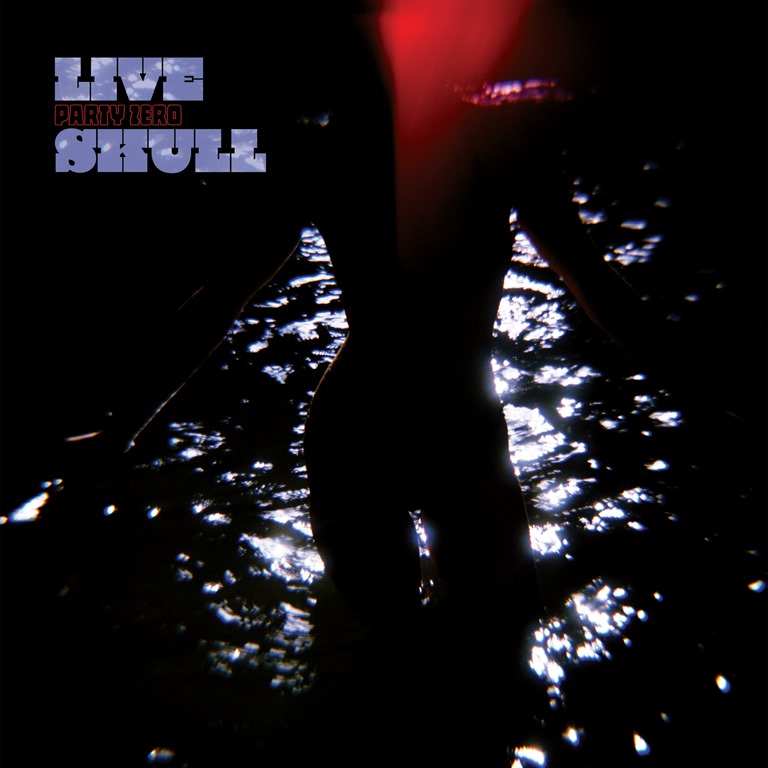
Perspectives change over time, although it was perhaps more of a returning to their original motivations which spurred them to reconvene in 2016, since when they’ve released two albums, with Party Zero being the third, and the seventh studio album of their career.

Delivering an album that’s described as ‘a fiercely political album, in keeping with this politically fierce age’ and ‘timely music, essential, impassioned, angry and beautiful’ founder Mark C. It is a politically fierce age, and now more than any time since the late 70s and early 80s – a period which spawned so many bands who existed as an outlet for frustration and anger and all kinds of difficult and even ugly emotions through nihilistic noise and various forms of confrontation and antagonism.

Sonically, Party Zero isn’t especially nihilistic or noisy, confrontational or antagonistic, but does very much refine these elements and hone the delivery of an almost obsessive focus on corruption, abuse of power, inequality and injustice.

If the sound is rather more polished and widescreen than their 80s releases, the key ingredients are still there, not least of all jagged guitars that blur and crackle with treble and careen into dissonance and discord against big, bold basslines. There’s a palpable sense of urgency to the songs on Party Zero. It may not be their strongest album or their most innovative or distinctive – but it’s an album that’s necessary.

“We’ve been pushed to the edge – how do we claw our way back? That’s been a common theme in Live Skull since the beginning, and so it is now. We’re trying to provoke thought.” There seems to be a rising tide of bands out to achieve these same ends, now, and from a vastly diverse range of stylistic contexts, from the minimal beats and loops of Sleaford Mods to the raging ranting noise-blasts of Benefits via the angular post-punk of I Like Trains. People are pissed off – and they’re frustrated, and scared – and those people in bands are using their platforms to call the bullshit, the fearmongering, the manipulation, the rise of the right and the immorality of governments and multinational companies.

It’s not just the pithy lyrics: ‘Neutralize the Outliers’ sounds like a rabble-rousing protest song, more New Model Army than anything that belies the band’s origins, and it works because it feels necessary, vital.

‘Chords of Inquiry’ plugs away at a simple, spare riff driven by crashing drums, and the drumming is a strong contributor to the album’s dynamic feel, and nowhere more on ‘Mad Kingship’, as they thunder along in a sustained roll. ‘Inside the Exclusion Zone’ is accessible, but driven, choppy, urgent, with a contemporary post-punk feel – think Radio 4’s take on the Gang of Four sound – and the same is true of ‘Turn Up the Static’, with its dubby strolling bass that ambulates through the reverby verses (before the chorus slugs out a mid-tempo fist-pumping holler-along call to arms).

And this is why the surge in protest music is what we need right now. It likely won’t change the world; the chances it won’t change opinions or provoke all that much thought, since most people who are likely to listen to Live Skull are the kind of people who are already in the same camp of political frustration or despair – and that’s ok. What these people – we – need is to know we’re not alone, and to feel a sense of unity and community, and for these feelings of frustration and anger to be articulated by relatable voices. Party Zero does that – and with some solid tunes.

AA

551413

Christopher Nosnibor

‘I’m sorry, I’ve been busy’. We’ve probably all heard it: and most of us have probably spoken the phrase. I’m guilty, too, and hate myself for it. Everyone is fucking busy. Too busy to text, to open a message even, too busy to reply to emails, catch up with friends, too busy to fucking live. What is everyone so busy doing, and why is it that in a time when technology was supposed to make our lives easier, and in supposedly affluent western cultures, people are both fiscally porr and time-poor?

Naturally, I blame the current strain of capitalism: keep everyone too busy to live, to breathe, and too skint, and they’re not going to be protesting, they’re going to be too busy wondering where the next meal is coming from to fuck shit up. After everything, they’ve only got the juice to be ‘busy’ bingeing Netflix or the new season of The Mandalorian.

Admittedly, I have been genuinely busy parenting, publishing stuff, and writing a review a day while battling through an evermore overwhelming volume of submissions, but is that really a reason, or just an excuse? Right now, I’m not sorry either way. I keep myself to myself and I write when I can when I’m not doing laundry or cleaning or paying bills or feeding the cat

Gintas K is always busy, and he’s been having albums released at a ratee beyond that at which I can even download them, let alone listen and digest. And so it is that March and April have seen the release of three – yes, three – albums by the prodigious Lithuanian.

I must have been absolutely nuts to have set myself the task of reviewing all three together. The idea was to soak it all in with an evening of electronica, and report on what I expected to be an immersive experience. But knowing Gintas K’s work over the years, this was, in hindsight, an unlikely outcome. The headline here is that there is no overarching theme, there’ s no evolutionary trajectory, and nothing to really take hold of. But that in itself is K’s selling point: his work is exploratory, varied, sometimes playful, and often difficult.

Resonances, the first of these, ‘was recorded live, using computer, midi keyboard & controller on Autumn 2021’ and has been released by Sloow Tapes in an edition of 70 copies. It spins slow-swirling vortices around hovering hums and low-humming drones over the course of its ten, comparatively short (only a couple extend beyond four minutes), ponderous tracks. It’s perhaps one of his more varied works, both sonically and atmospherically – and Resonances really does explore atmospheres and cavernous swampy echoes.

Resonances

a1449704449_10

Fluxus +/- is a split collaborative release, which finds him working with Kommissar Hjuler Und Frau on a longform track, while a piece by Wolfgang Kindermann & PAAK occupies the other, and what we get here is just shy of eighteen minutes of really weird shit, bubbling swampy noise and loose collage layering of all sorts of snippets and a mish-mash of all kinds of everything that’s not easy to digest.

And then April saw the arrival of Sound & Spaces #2, which is perhaps more Gintas K’s standard fare of bubbling, foamy froth and stuttering, stammering glitch-heavy sonic mayhem. It stutters and scuffs, bleeps and wibbles, and at times sounds like the speakers are shredding, the cones torn and flapping in the blasts of random noise bursts, while at others… well, at times it’s a foaming froth and as others, it’s really not very much at all. The pieces run into one another to create a continuous stream of crackling distortion and bibbling trickles of tweeting and twittering, and while the effect is the most incomprehensible and difficult to digest, it’s by far the most quintessentially K. If it’s what I’d expected, then what this trio of releases demonstrates is that Gintas K continues to defy expectations and to produce work that’s different and diverse.

Sound & Spaces #2

a1377760751_10