Archive for January, 2022

Metropolis Records – 4 February 2022

Christopher Nosnibor

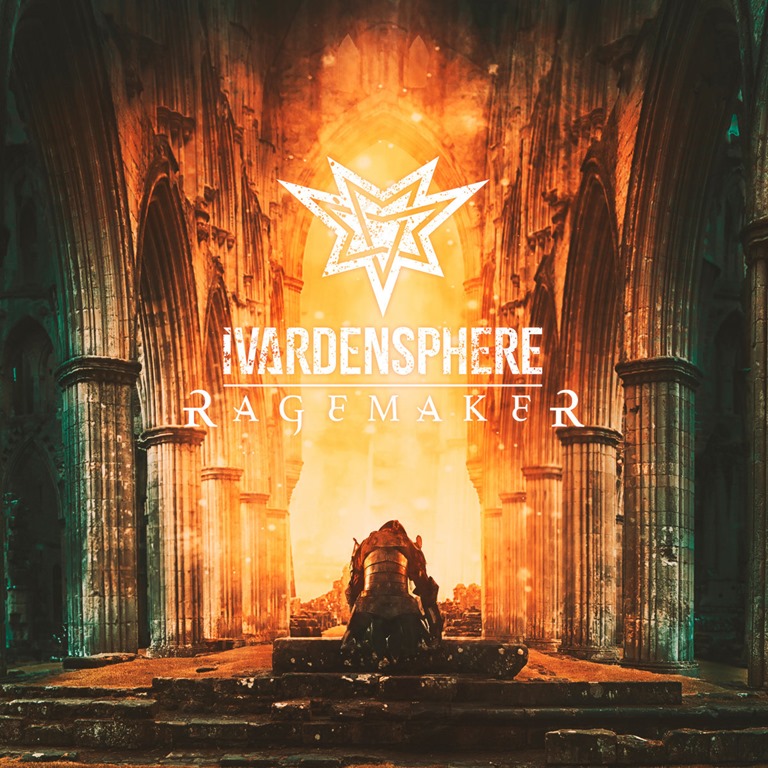
For years, I’ve had the rage. There is, after all plenty in this world, this life, and no doubt beyond, to rage about and against. iVardensphere focus that rage through sound rather than verbally, through an album that articulates darkness and tension through the language of sound.

‘A Whimsical Requiem for the Fey’ is appropriately titled; being a breezy, neoclassical assimilation of light-as-air plucked strings and soft, accessible melody. As such, it does nothing to prepare the listener for the instant plunge into the darkest of depths brough with the growling churn of ‘The Maw’, which features Jesse Thom. But it’s on the title track that the album really hits its stride. Tribal drums dominate a gloomy soundscape, weighted with dense bass tones, but also the portent of soaring vocals. And while the jagged strings add to the tension, the drums simply build and build and batter your very being. This isn’t rage, it’s the unleashing of vengeance via the hammering of the soul.

The individual compositions are each dramatic and powerful in their own right, and the attention not only to the details of the arrangement, but the sequencing of the album stands out, and the ambition is clear without the explanation that this is ‘a sweeping, cinematic album, equally suited as the next evolutionary step of iVardensphere, and as the film score to a post-apocalyptic motion picture.’ It’s dark, stark, and atmospheric, and thunderous rhythms evoke ancient mysticism, and scenes on barren hilltops and sweeping moorlands; tribal rituals, burials, spiritual ceremonies of great import. And there are moments when those rhythms step up, pounding harder and more intensely, so as to be all-encompassing.

As the accompanying notes outline, ‘Traditional percussion from all corners of the world, Taiko, Surdo, djembe, timpani, and more are deftly intermixed with all manner of sourced percussion sounds. Hammers and anvils, slamming doors, even the sound of a dumpster being kicked are sampled and folded into the sonic melange.’ We’re in Neubauten / Test Dept territory here, but there’s a subtlety to so many of the compositions that go beyond these comparisons too: the graceful sweeps of ‘Indomitus’ stray from anything industrial towards progressive / post rock territories, and Seeming’s vocals are almost rock.

The electronic elements are remarkably restrained in the main, with only occasional incursions, such as the bending blasts of bass on ‘Varunastra’ (which features Brittany Bindrim’s vocals); elsewhere, ‘Draconian’ brings the drones, and a low, serrated throbbing. Then, it also brings glitchy danceable beats, which evolve into another crashing assault that batters away relentlessly.

Then there’s the straight-ahead thump ‘n’ grind of ‘Orcus’ and the mournful trudge of ‘The Age of Angels is Over’; these tracks conjure very different atmospheres, but in the way the album unfolds, they develop a sense of significance. If ‘Sisters of the Vipers Womb’, with Brien Hindman’s vocals, seems a little too cliché in its sinister stylings, it sits in the broader context of an expansive and immersive work that has a trajectory through ever-changing moods, and to powerful effect.

AA
a0129874839_10

Almost 30 years since their inception, the members of Engine Kid got together in 2021 to hang out and record new music. The result of which arrived by way of the Special Olympics EP flexi-disc/digital EP, released last December on Southern Lord.

The band has shared a music video for the EP’s second single, ‘Patty : Tania’ alongside a Q&A with Engine Kid’s Greg Anderson.

Watch the video here:

The tracks on the Special Olympics EP are re-workings of old material which were never recorded. The music represents the sonic direction that Engine Kid were heading before they disbanded. With this EP, the band commemorates the joy of playing music together for the first time in 26 years, and pick up where they left off. As Jade Devitt comments, "The musical commitment and connection that we forged in the 90’s has held like a magnet, finally pulling us together after 26 years! The newly recorded songs were dusted off blueprints from our very last practice tapes from the summer of ’95. Now enhanced with experience & age and new arrangements. The Kid flies again."

Earlier this year, the 90’s post-hardcore collective featuring Greg Anderson (Southern Lord label owner, also in Sunn O))), Goatsnake & Thorr’s Hammer) released a 6-LP box set of their career-spanning recordings on colour vinyl LP’s for the first time titled Everything Left Inside (find out more about that here) Engine Kid’s Brian Kraft adds, "Greg, Jade and I spent the summer and fall of 2020 gathering old photos, flyers, artwork and audio rehearsals /remixes/remasters for the Everything Left Inside box set. This remote reunion of the Kid made me realize how important Greg, Jade and Engine Kid was and is in my life. The reconnection led to recording some new material. It felt as if we were continuing right where we left off.”

Engine Kid’s first new material since 1995, the Special Olympics EP’s cover art is a symbolic metaphor about living one’s best life, and with extravagant swagger. The songs themselves continue the band’s “take on the world” attitude with restless, wild energy.

AA

E Kid

Photo Credit: Vaga Bond

Cleopatra Records

Christopher Nosnibor

Well, this is pretty fucking intense. Released to promote the duo’s new album, ‘Hear My Call’ is a beast. The verses are queasy, ominous with a hushed, almost strangulated tension. In contrast, the choruses are utterly pulverizing in their weight and density: there’s nothing hushed about them, and the tension is released in a chthonic snarl. The vocal transition is remarkable, as Lilith gears down an octave at least and flicks from anguished to a raging demon spewing toxic flames from the very bowels of hell. The crossover between electronica and black metal is almost schizophrenic, but Luna 13 render it in such a way that it’s perfect, that switch that happens at an imperceptible trigger lands with eye-popping precision, and the video, directed by Vicente Cordero (Stabbing Westward, Filter, 3TEETH) is a magnificent visual reflection of the music.

For a start, there’s splattered gore galore, as Lilith Bathory sloshes around in a bathtub that’s initially brimming with rose petals but before long it’s a streaming splatterfest where said tub is brimming with blood. She twitchily dials the telephone… and it transpires she’s not calling The Samaritans, but instead she connects on a hotline to Satan, and it cuts, and she’s a roaring, horned demon, and to the side, Dr Luna yanks a huge phallic lever that seemingly drives this whole whorl of chaos that’s blackened beyond black, the sound of scorching incineration.

A lot of so-called ‘occult’ and ‘Satanic’ shit is – well, shit – corny, half-baked, a bit laughable, at least to anyone not already invested, and you wonder how people take so many of these bands seriously. Not so Luna 13: this shit is truly terrifying. There’s no denying that some off the elements are perhaps cliché; masks, blood, and so on and so forth, but it’s all in the execution. Sonically, and visually, they’re full-on, and fearsome.

AA

740148

King Garbage, with their contemporary take on American soul, return today with a new single and a Josh Finck directed video, ‘Busy On A Saturday Night.’ The song is the latest song to be unveiled from their forthcoming album, Heavy Metal Greasy Love, which will be released on April 1st via Ipecac Recordings and is available to pre-order now. Digital pre-orders include downloads of the new single ‘Busy On A Saturday Night’ plus two additional pre-release singles, ‘Piper’ and ‘Peanut Butter Kisses.’

‘Busy On A Saturday Night,’ which is available now on all streaming platforms, draws its inspiration from a magnet on that was on the fridge of King Garbage’s Vic Dimotsis’ great grandmother. “It had a sweaty male stripper pictured on it and said, ‘Everything I want is either taken, or busy on a Saturday night,’” laughs Vic. He adds, “Blurry as a memory on a slinky night out. A Tom Waits-inspired roadster awaits high high heels on a sure fire adventure. Losing articles of clothing to the magnet of the pavement, the band plays on through a duct from another world, and our eyes blur from both lust and disgust. Such motion seems still, as the accelerator and brakes lose meaning. A quiet lonely brunch awakens us from a distant stare.”

Watch the video here:

AA

KG

Photo Credit: Josh Finck

Room40 – 14th January 2022

I know I’m not alone in experiencing the sensation that large parts of my life have been spent wading through treacle. It may be something of a cliché, but it’s a valuable simile for that slow struggle.

Although these are the associations circulating sluggishly in my mind, they have no bearing on the origins of the album’s title, which is, as Cooper himself explains, ‘a soundtrack for an otherwise silent film. The title of the album, and of course the film, is borrowed from my late friend Fred Hardy’s book The Religious Culture of India – Power, Love and Wisdom, considered to be one of the most important books on the subject. In this book Fred wrote,

“In 1835 the historian Macaulay investigated whether there was anything in the traditional Indian systems of learning and education that could be used in the training of native personnel. In fairness to Mr Macaulay, we must remember that those were days long before the writings of a Tolkien or a Mervyn Peake. He came to the devastating conclusion that people who believe in oceans of milk and treacle had nothing to offer to a modern system of education. A straightforward, realistic assessment in an age that believed in science and realism! The effects were far-reaching. Traditional Indian ways of looking at the world were written off as obsolete. India was provided with three universities (Calcutta, Bombay and Madras, founded in 1857) as the hothouses to nurture a custom[1]built, English-speaking Indian intelligentsia. A new age began for India, and two of its inevitable consequences were the demand for independence and the production of atomic bombs and satellites by the post-independent Bhārat.”

This places Oceans of Milk and Treacle in an altogether more academic context, and perhaps, if only a shade, this knowledge does colour my appreciation of the work specifically, an album consisting of nine compositions.

The pieces themselves present a collaged array of sounds, from distant rumbles and clanging hammers, to wind-chimes and static crackles. The clanking windchimes and eerie vocal moans and bleats, which drift amidst a breaking storm on the first piece, ‘A Chart of the Wet Blue Yonder’ contrive to create something quite sinister, and a significant contrast from the playful Jazz frivolities of ‘Boogie Boards and Beach Rubbish’. Oceans of Milk and Treacle is very much an album of contrasts and of strange sounds, combining chillout grooves and collaged field sounds and weirdness, often simultaneously.

It’s one of those albums that packs in so much, it transcends definition or categorisation, for better and worse – because genre distinctions tend to be lazy marketing pitches, and music – or any other artistic medium – should just be. Why can’t a book simply be a book or a story? Why does I have to be crime fiction, a thriller, sci-fi, or otherwise tossed into the netherworld of literary fiction or speculative fiction? And so why can’t an album simply be an oddball amalgamation of all sorts and simply be an album? Electric guitar and Moogs or something tinkle around while something electronic happens in the background to fill the space like crickets scratching, but clearly actually something less natural in origin on the warping, bending array of almost-pleasantness of ‘Tirta Gangga’, a woozy collision of sedated bleeps and chimes that sounds like it’s nodding off near the end – and it’s not an unpleasant experience.

The title tracks goes deeper into jazz territory, but there’s trilling analogue noise humming in the background, and it nags away at the peripheral sense, while on ‘Mono-Hydra’, amidst tweeting birdsong, the musical elements sound warped., bent, as if the tape is stretched and the notes spin off their spindles to spin into strangeness. ‘Under Vertical Sunlight’ brings hectic percussion to the fore, amidst drones and groans, before drifting into abstraction on ‘Toward Great Piles of Masonry’, which sounds like a wander down a city street while the clubs are still open.

Oceans of Milk and Treacle isn’t really a journey, but then what is it? A meandering sonic amble through a succession of sonic spaces and a range of scenarios? Possibly. Whatever it s it’s interesting, and devoid of genre conventions.

AA

a0586186042_10

Darkness treads light as a feather. The voice of despair gently wafts through the air. Delicate pain wrapped in radiant beauty pierces the heart slowly yet without hesitation. The sinister yet beguiling images that DARKHER aka Jayn Maiven paints with her ethereal vocals, guitars, and added strings conjure iridescent cinematic scenes in which it becomes hard to tell whether there lies beauty in darkness or if it is the other way around.

With her sophomore full-length "The Buried Storm", the guitarist, composer, lyricist, and producer has clearly succeeded to even improve the beloved alchemic musical formula that was firmly established on DARKHER’s debut album "Realms" in 2016. Her mostly eerie and at times even outright sinister sonic storytelling comes refined on every level and with sharpened contrasts that reflect the ongoing learning-process of their creator. 

DARKHER were conceived as the sole brainchild and solo-project of Northern English singer and guitarist Jayn Maiven in 2012. The dark and melancholic yet also massively heavy sound on the self-titled debut EP "Darkher" (2013) combined with the distinct vocals of the shy pre-Raphaelite beauty caused an audible buzz – particularly in the doom scene and brought DARKHER a quick record deal, which led to the following EP "The Kingdom Field" (2014) appearing via Prophecy Productions.

Despite not even having an album out, DARKHER were invited to prestigious festivals such as Roadburn in Tilburg, The Netherlands and Prophecy Fest in the Cave of Balve, where the English delivered widely celebrated performances. In 2016, the highly anticipated debut full-length "Realms" was finally released to much praise from critics and fans alike. Press compared DARKHER’s music with a wide range of highly individual acts such as CHELSEA WOLFE, ESBEN AND THE WITCH, SÓLSTAFIR, LOREENA MCKENNITT, and PORTISHEAD.

In the meantime, Jayn’s long-time drummer Christopher Smith, who already contributed to earlier releases, live shows, and again on "The Buried Storm" has been added as permanent member to the line-up of DARKHER.

"The Buried Storm" gives shape to the darkness lurking at the edge of consciousness, hidden from plain sight but patiently biding its time to strike out at the heart. DARKHER have delivered another frightening masterpiece that easily transcends musical boundaries with its broad appeal to friends of dark sounds regardless of genre. "The Buried Storm" captivates its listeners with deceptive sweetness – only to bind them tightly within a thorn-spiked nocturnal beauty forevermore.

Watch ‘Lowly Weep’ here:

AA

Darkher_001_by_ Kathryn_Pogue

Image: Kathryn Pogue

Prog icons The Flower Kings recently announced the release of their 15th studio album By Royal Decree, set for 4th March 2022.  Now, the band are pleased to share the second single from the album ‘A Million Stars’. Watch the video here:

Roine comments: “Never to shy away from simple melody, this is The Flower Kings at their more accessible end, but still with a trademark TFK sound and symphonic textures.”

Flower Kings

Photo Credit: Lilian Forsberg

The band are back at their most creative, flowery and playful – mirroring the 70’s melting pot of folk, symphonic, electronic, jazz, blues, funk & prog. On the new album they have looked for more organic and vintage sounds, still centered around the foundation of drums, bass, guitars and the iconic Hammond, grand piano, mellotron & Moog synthesizers.

The album also sees the return of founding member Michael Stolt, who takes up bass guitar and vocals, alongside the line-up of Mirko DeMaio on drums, Zach Kamins on keyboards, Hasse Fröberg on vocal & guitar and Roine Stolt on vocal & guitars and Jonas Reingold on bass. The band convened in the middle of 2021 at Fenix Studios in Sweden to record through the fully analogue Rupert Neve mixing desk. The album also features beautiful cover art, once again created by Denver-based artist Kevin Sloan.

This year’s tour will also see the band revisiting their early years, performing tracks from ‘Retropolis’, ‘Stardust We Are’, ‘Flower Power’, ‘Space Revolver’ and ‘Back In The World Of Adventures’. This will coincide with the release of newly remastered editions of The Flower Kings albums on CD & Vinyl later in 2022. The first confirmed live dates are as follows:

30th March 2022 – Katalin, Uppsala, Sweden

31st March 2022 – Musikens Hus, Gothenburg, Sweden

1st April 2022 – Södra Teatern, Stockholm, Sweden

1-7th May 2022 – Cruise To The Edge, USA

11th May 2022  – TBA, Quebec City, Canada

12th May 2022  – TBA, Montreal, Canada

14th July 2022  – Rootsfestival, Notodden, Norway

4th Sept 2022  -  HRH Festival , UK

A Place To Bury Strangers have shared ‘I’m Hurt’, the newest single from their anticipated sixth studio album, ‘See Through You’, out February 4th (digital) and March 11th (vinyl) on Dedstrange. Following previous singles ‘Let’s See Each Other’ and ‘Hold On Tight’, the post-punk legends dive headfirst into suffering on today’s dark and explosive ‘I’m Hurt’.

The accompanying video, directed by Chad Crawford Kinkle (Dementer, Jug Face), is the first in a series of ‘See Through You’ videos from horror movie directors hand-selected by A Place To Bury Strangers. Under Kinkle’s frantic and hallucinatory direction, Oliver Ackermann’s expression of relentless liminal terror is transubstantiated into a brutal backwater blood feast. While the flickering, kinetic visuals will be familiar to anyone who has seen the band live, the psychological horror at the heart of ‘I’m Hurt’ is raw. Together, Kinkle and APTBS scramble our collective unconsciousness with scenes of grotesque public freakouts from the outskirts of the subliminal that are tied to a scorned woman’s black magic ritual which conjures up teenage demons on the hunt for revenge.

Watch ‘I’m Hurt’ here:

“‘I’m Hurt’ is the sound of friendship dying. At the time of writing this song, I was going out of my mind dwelling on conflict in my head and beating myself down while trying to rebuild my faith in humanity which is reflected in the actual structure of the song. The drums build with this frustration and a desire to scream with no voice. Listen closely to the vocal phrasing of ‘I’m Hurt’ in the chorus and you can hear the self-doubt and failure I was experiencing at the time,” says Ackermann.

A Place To Bury Stranger’s Oliver Ackermann always brings surprises. The singer and guitarist has been delighting and astonishing audiences for close to two decades, combining post-punk, noise-rock, shoegaze, psychedelia, and avant-garde music in startling and unexpected ways. As the founder of Death By Audio, creator of signal-scrambling stompboxes and visionary instrument effects, he’s exported that excitement and invention to other artists who plug into his gear and blow minds. In concert, A Place To Bury Strangers is nothing short of astounding — a shamanistic experience that bathes listeners in glorious sound, crazed left turns, transcendent vibrations, real-time experiments, brilliant breakthroughs.

And just as many of his peers in the New York City underground seem to be slowing down, Ackermann’s creativity is accelerating. He’s launched his own label – Dedstrange – dedicated to advancing the work of sonic renegades worldwide. He’s also refreshed the group’s line-up, adding Ceremony East Coast’s John Fedowitz on bass and Sandra Fedowitz on drums. Ackermann and John Fedowitz are childhood friends who played together in the legendary Skywave, and the band has never sounded more current, more courageous, or more accessible. 2021’s Hologram EP was the first release from the new line-up – and the first on Dedstrange – and the reaction was ecstatic, with Pitchfork saying that Ackermann had “transcended his gearhead tendencies, gracefully navigating fuzz and feedback loops as well as melodies and hooks”. ‘See-Through You’ pushes things even further. Simply put, it’s an epic, instant classic.

5tqs_20211104APTBSEbruYildiz86650

A PLACE TO BURY STRANGERS 2022 UK/EUROPEAN TOUR DATES – TICKETS ON SALE HERE

Wed 09 March – Hafenklang – Hamburg, Germany  

Thu 10 March – Beatpol – Dresden, Germany

Fri 11 March – Klub Poglos – Warsaw, Poland

Sat 12 March – Futurum – Prague, Czech Republic
Sun 13 March – Randal Club – Bratislava, Slovakia

Mon 14 March – Durer Kert – Budapest, Hungary

Wed 16 March – Control Club – Bucharest, Romania

Thu 17 March – Mixtape5 – Sofia, Bulgaria
Fri 18 March – Eightball – Thessaloniki, Greece

Sat 19 March – Temple – Athens, Greece
Mon 21 March – 25th of May Hall – Skopje, Macedonia

Tue 22 March – Club Drugstore – Belgrade, Serbia

Thu 24 March – Mochvara – Zagreb, Croatia
Fri 25 March – Freakout Club – Bologna, Italy

Sat 26 March – Largo – Rome, Italy
Sun 27 March – Legend Club – Milan, Italy

Tue 29 March – Bogen F – Zurich, Switzeralnd
Wed 30 March – Backstage – Munich, Germany

Thu 31 March – Caves Du Memoir – Martigny, Switzeralnd

Fri 01 April – La Trabendo – Paris, France
Sat 02 April – Lafayette – London, UK
Mon 04 April – Kayka – Antwerp, Belgium
Tue 05 April – Gleis 22 – Munster, Germany
Wed 06 April – Melkweg – Amsterdam, Netherlands

Thu 07 April – Vera- Groningen, Netherlands
Sat 09 April – Hus 7 – Stockholm, Sweden
Sun 10 April – John Dee – Oslo, Norway
Mon 11 April – Pumpehuset – Copenhagen, Denmark

Tue 12 April Hole 44 – Berlin, Germany
Wed 13 April – MTC – Cologne, Germany

Greece has spawned countless instances of criminally underrated music acts in diverse genres ranging from black metal to electronic to avant garde pop music, and the sophomore album of modern progressive metal act Playgrounded titled ‘The death of Death’ is yet another striking example.

“Where did this come from?” you will find yourself wondering, while absorbing the stunning intensity and musical prowess on display. From the perfection of the production and the inherent innovation in defining heaviness by means of not only downtuned guitars, but also elements of electronica are the pillars of an intriguingly idiosyncratic, incredibly mature sound.

Hailing from Greece, but spending most of their time in the Netherlands, the musical pedigree of the members of Playgrounded is quite unprecedented in the metal/rock underground. Main composer and producer Orestis Zafeirou is a graduate from the Institute of Sonology of the Royal Conservatoire of The Hague, a department focused on electronic music education and production research. Additionally, he works in a synth factory. Vocalist and co-producer Stavros Markonis graduated from the Amsterdam conservatoire and is an award-winning composer for film and TV. Bass player Odysseas Zafeiriou and guitar player Michael Kotsirakis both work as computer engineers, while drummer Giorgos Pouliasis is a graduate from the Rotterdam Conservatoire, as well as a drum teacher and a popular session musician in Greece as well as in the Netherlands.

Starting out in 2007, Playgrounded have been together for over 15 years, playing both national and international tours, while also opening for bands like Riverside and even Nine Inch Nails in Amsterdam. Their first EP Athens (2012, Casket Music) portrays an already mature band playing modern prog rock influenced by Tool and Deftones. Their debut full-length In Time With Gravity (2017) shows the band in full flux, experimenting with extended compositions as well as influences from influential contemporary electronic music acts like Modeselektor and Moderat.

Playgrounded’s sophomore album lives up to the aspiration of its lofty album title. The death of Death is music that results from mastery rather than lacklustre exploration and experimentation. The album was recorded at MD Recording Studios by Nikos Michalodimitrakis, long collaborator of Stavros in film productions. Mixing was handled by C.A.Cederberg (Leprous, Shining, and more) in Kristiansand, NO, while the album was mastered by George Tanderø (Madrugada, Satyricon, Jaga Jazzist, and more) in Oslo, NO.

Guitarist Michael Kotsirakis comments on the album’s title track which the band shared today,

"The death of Death" is a study of unity in opposition, a disclosure of contradictory aspects of reality, an expression of their mutual relationship.  For the occasion of sharing this first taste of the album with the world we worked closely with director Dimitris Anagnostou and director of photography Yannis Karabatsos, the duo that we came to know from the award-winning short film Mare Nostrum for which Stavros composed the score.  The director’s idea about a "study of movement" using early cinematography techniques drew inspiration from Orestis’ dialectically composed lyrics and was eventually adapted into the clip’s script. We felt that Karabatsos’ sinister photography was the perfect means to explore the song’s contradictions… black and white, direction and diffusion, alienation and struggle, stillness and life.”

Watch the video for ’The death of Death’ here:

AA

Demonstrating a profound understanding of the glitches they produce, Playgrounded evoke a sense of the uncanny closely related to the cut-up movie fragments of sound artists like the German Orson Hentschel. “We start with dynamic sound design structures, most of the times initiated by Orestis,” explains guitarist Michael Kotsirakis. “We then work in pairs expanding the musical space and creating variations and flourishes. Sometimes the lyrics and vocals will dictate a change in quality, other times it’s one of the instruments. After many ideas are on the table Stavros and Orestis sit together and propose a song structure. After this loop has been repeated over and over we have a very good idea of all the parts. That’s when we hit the rehearsal space and refine the details.”

The result is a collection of songs that reveal Playgrounded as composers in the act of decomposition. The memorable guitar riffs and vocal melodies serve as gateways to a deeper layer of glitchy synth textures and liquid drumming, until the perspective of radical decomposition consumes one whole. “The shortest sound units become extended themes,” explains main composer Orestis Zafeirou. “Steady rhythmical blocks interact with unstable ones. Noise becomes tone and melody. Sonic grains gather to form masses, masses dissolve into a single entity. With every repetition, comes change.”

On The death of Death, Playgrounded analyse and take apart their surroundings, reducing reality to its smallest components, subsequently converting them into sound to create a new platform – a representation of reality from which they build their artistic vision. In essence The death of Death is dialectical, a study of unity in opposition. A disclosure of contradictory aspects of reality, an expression of their mutual relationship. From these contradictions the band manages to construct a brooding world of dark magnificence. The death of Death has the appeal of a film score that slowly starts to haunt you as the movie progresses. The more you listen to it, the more its sublime beauty becomes apparent.

AA

Playgrounded

Room40 – 14th January 2022

Christopher Nosnibor

One of the many wonderful things about music is that it has no limits, and no constraints. There is music to be found in anything and everything, and music can be made my anyone, anywhere, anytime, with anything, or even nothing. Steve Roden’s choice of instrumentation on Oionos is noteworthy for being quite unconventional, as he explains: ‘The audio was built from field recordings and small “poor” objects such as tin whistles, toy harmonicas, and the like. These “instruments” suggested by the museum of musical instruments in Athens, where the proper instruments take up most of the museum, but there is a wonderful display case in the basement with musical toys, religious objects, and other sounding devices not considered musical instruments.’ These instruments and objects combine to conjure a magical, mystical soundscape with overtly musical sounds contrasting with less overtly musical sounds and woven together to create something that occupies a unique sonic space.

In popular western culture, we’ve come to understand only the narrowest of definitions of music, which for many is represented by an album consisting of a number of ‘songs’, bite-size pierces which are tightly structured and subject to conforming to certain parameters, including rhythm, and suchlike. Even many ambient works, which delineate many of those mainstream conventions, are created within limitations; these are compositional factors, imposed by the creators, rather than being significant of true musical limits.

With Oionos, Steve Roden frees the music, presenting a single, continuous piece with a running time of one hour, one minute, and fifty-five seconds. Time was when the CD format placed a time constraint of seventy-two minutes on a release, but technology has evolved, and the duration of this piece feels entirely natural, as if the music has run its course to a satisfying conclusion by the close.

The composition is, in many respects less concerned with time, than with place. As Roden writes on the album ‘Oionos was created for the exhibition The Grand Promenade, in Athens, Greece. The exhibition took place in various archaeological and historical sites in central Athens, creating a situation for contemporary site specific works to be in dialogue with their historical surroundings.’

Although the location was integral to the album’s inspiration, it’s less integral to the listening experience when taken out of the context, and the music featured is, if not necessarily ambient in the most conventional sense, it is very much abstract, and also very much background sounds rather than music one actively listens to. But zoning in and out is a pleasurable experience, which perhaps serves to highlight the multifaceted nature of the sounds. Metallophone-like notes chime and ring, seemingly with an almost random notations and the loosest of rhythms, against a backdrop of scrapes and drones, while sounds like wind gusts and lapping water fill the space in the background. While the different elements conglomerate throughout, by half-listening, one finds oneself becoming aware of them individually at different times, and you find yourself experiencing the recording differently at different times as you tune into and become aware of the different sounds, textures, and tones.

As a whole, Oionos feels like something living and breathing, as if the sounds in combination have taken on a life of their own – and in many senses, they have, and they merge together to form a shifting, pulsating whole. It’s unfamiliar, but not eerie despite its otherness; there is a certain calm that radiates throughout the duration.

AA

a2445050686_10