Archive for September, 2021

Renowned songstress Chelsea Wolfe has revealed two unreleased songs from her Birth of Violence sessions during which she masterfully returned to her folk roots. Her stunning spin on Joni Mitchell’s eminent single, “Woodstock” and the never before heard, “Green Altar” display Wolfe’s experimental approach as she deliberately ties together her discoveries in rich textures and haunting melodies.

Wolfe recounts, “While preparing for the Birth of Violence tour, I was watching a lot of Joni Mitchell videos. A 1966 Canadian performance that I found of hers ended up inspiring the video for my song ‘Highway.’ One night after working on the live set, Ben and I were hanging out and I was just letting the Joni videos roll.. ‘Woodstock’ came on and I started singing along. After that I simply asked Ben if he’d be into covering it with me for the tour, and we just went back into the studio and started working it out. The cover came together quite naturally and it was a treat to play on stage every night. Joni is obviously such a big inspiration to this side of my music, so it felt right to pay tribute to her.”

“‘Green Altar’ is a cherished song that unfortunately didn’t make it onto the album. It’s a love song I wrote after finding out that my dear friends (artist) Bill Crisafi and (designer) Hogan McLaughlin were engaged. I envisioned them getting married in a lush, green outdoor space outside of some majestic castle ruins.”

Wolfe has also shared an official documentary of her 2019 Birth of Violence Tour which unfortunately came to a halt with the onset of the pandemic. The piece is beautifully shot by photographer/director Bobby Cochran who joined Wolfe at the tail end of the North American leg. Cochran documents the show, stage, and captures moments behind the scenes. The two also sat down to discuss the creation of the album, Birth of Violence, about what it’s like being on tour and her rituals.

Wolfe tells, “It’s not my natural inclination to want cameras around when I’m in my head or doing vocal warmups before a show, or when I’m with friends or family backstage, but Bobby asked, and in the spirit of pushing myself to document that era of my musical life, I welcomed him along. Then, after the COVID-19 pandemic hit and I had to fly home from the European acoustic tour before I got to play a single show of it, I was so grateful that he had this footage and was putting it together. I wanted to share this documentary for that reason as well, for those who had tickets to cancelled shows (I love you!), and as a sort of wave goodbye to the time I spent focused on ‘Birth of Violence’, as I’m now making plans for and in the headspace of the next new album.”

“Woodstock” / “Green Altar” and the Birth of Violence 2019 Tour Documentary are available today via Sargent House.

Check the documentary here:

AA

CW

Hallow Ground – 10th September 2021

Christopher Nosnibor

Breathing is important. If this sounds flippant or facetious, well, perhaps it is a little, but there is a more serious undertone. It’s something we do subconsciously, and something we take for granted will just happen as our brain keeps the bellows pumping. We only really notice breathing when something disrupts it, it becomes laboured, or we’ve exercised hard.

And yet the importance and benefits of controlled breathing as part of meditation, for managing anxiety, and for dealing with panic attacks is widely documented and promoted. But even for those who have been taught the techniques, how often do we remember to deploy them at moments of peak crisis? Moreover, beyond those specific settings, breathing properly is something that’s chronically neglected as we slouch over our keyboards, taking short, shallow breaths that fail to fully expand the lungs and oxygenate the blood stream.

The ever-innovative and ever-intriguing Lawrence English’s Hallow Ground debut finds the composer working ‘exclusively with an organ for four compositions that are exercises in »maximal minimalism,« as their creator himself notes in a nod to Charlemagne Palestine, who coined this term.’ The liner notes explain further that ‘While it seems somewhat fitting that those four pieces based on a steady flow of air were conceived and recorded in a situation of accelerated standstill caused by a respiratory disease, the Room40 founder is not so much concerned with capturing the zeitgeist than rather incorporating the spirit of time itself. »It is a record about presence and patience,«’.

Patience is indeed required when listening to Observation of Breath. It stands to reason that there is a concerted focus on elongated, quivering drones, and the first of the four pieces, the ten-minute ‘The Torso’, with its dank, dark rumblings and extraneous interference carries sinister allusions, particularly when reflected upon in context of the album’s cover art. The torso may well house the lungs, the system of breathing, but all too often finds reference in stories of murder and dismemberment, and we’ve all wanted to strip off our own skin at some point, right?

The theme continues its trajectory in the titles of ‘A Binding’ and ‘A Twist’ which follow. These are short pieces, both sparse, droning works that are overtly organ, with the latter in particular taking the form of a gloomy funereal church recital. There’s nothing like a funeral to make you contemplate your breaths, and to consider how many you may have left in your body. Perhaps this is one of the reasons we ignore and avoid thinking about breathing: the moment we notice it, be it short or irregular, we worry, in the same way as we panic about palpitations. To become cognisant is likely to observe an irregularity, a difficulty, in a most fundamental function, and rightly or wrongly, doing so reminds us of our mortality. We hate to be reminded of our mortality: it terrifies us half to death. The irony.

In context, the album’s finale, the twenty-minute title track, which occupies the entirety of the album’s second side, on which all elements of the previous three compositions coalesce and distil into something monumental and epic. Not a lot happens: it’s simply a quavering continuum of sound that undulates and eddies slowly, unfalteringly, less like a stream than a crawling flow of larva. But to go with the flow is to fully engage with the album and its slow-shifting textures. It’s perhaps around halfway through ‘Observation of Breath’ that I finally realise I am becoming aware of my breathing at last. Conscious, I slow it, inhale to full expansion through the nose, hold, then equally slowly release out through the mouth.

Observation of Breath is a well-realised exploration of expansive territory in altogether smaller detail, and one that offers more the more you allow it to become a backdrop.

AA

HG2103_Cover_English_Final_def_def.indd

16th September 2021

Christopher Nosnibor

Instead of submitting to the endless flow of media panic and hunkering down in his house during the pandemic, Stuart Chalmers went rather more off-grid, spending the last year in a camper van, exploring the Pennines and North York Moors.

The Heart Of Nature is the last in the series of the Swarmandal-focused albums, a celebration of nature’s elements, inspired by this period of a closer proximity to nature. Stuart recounts how the experience brought him closer to ‘the natural world and its rhythms/cycles’, and given him ‘a sense that nature can be calm but also intense and full of violent energy’. He goes on to explain that ‘The making of this album through the autumn/winter with the change in weather along with my laptop dying, the heater failing and the van breaking down has been a tough experience,’, adding, ‘it’s been one of the hardest albums for me to finish’.

I’m no advocate of the training mantra ‘no pain, no gain’, but do often find – and I speak from experience here – that the art that emerges from the most challenging of conditions is not only the most satisfying to produce, but so often has the greatest impact and resonance. The heart and soul that goes into a work shines, amplified, in the output.

The six pieces on The Heart Of Nature are based on the elements and raw materials occurring in the natural world: earth, wood, metal, fire, water, air. The first of these, ‘Earth’, powerfully captures the turbulence and variability of nature, and is dominated by a grumbling, rumbling, the shuddering subterranean sound of tectonic displacement, that gradually fades as a slow-picked guitar emerges and a hesitant sun rises over a barren. Scene. Beneath the supple chimes and grating discord and scraping drones that lumber and lurch. It sounds, and feels, immense, something bigger than sound alone, than the artist alone, and it’s an intense and difficult seven minutes that introduces the landscape of the album.

‘Wood’ is more of a collection of found sounds, with animal calls and chattering birds, pattering feet, paired with extraneous sounds and a clattering, clanking beat that’s some way from nature. Things become quite tribal, the metallic chanking speaking more of humankind’s relationship with nature than of nature itself, while ‘Metal’ creeps into dark ambient / industrial territory, with ominous whisps drifting around and the clanking precision – but it’s on ‘Fire’ things intensify, with the crackle of flames yielding to the harsh clatter of industrial percussion. There are hissing surges of sound rushing like gas bursting from ruptured pipes, and it’s not until ‘Water’ that the album introduces some sense of calm following a long journey navigating troubled spaces.

This only highlights the idea behind the album, that of the violent energy of nature. We seem to have idealised nature as that idyllic country setting, as something that merely exists for our wellbeing or profit, and in doing so diminishing the forces of nature – typhoons, cyclones. tsunamis, earthquakes, blizzards, floods. We are in denial somehow over the extent to which we are at nature’s mercy. We build flood defences, structures to prevent longshore drift and the collapse of cliffs, but ultimately, we’re powerless against time and tide.

‘Nature doesn’t need us, but we need nature’, Chalmers remarks, and I can’t help but agree: nature would in fact be better off without us, and the acceleration of climate change is concrete evidence of this. If nature destroys us, it’s because we’ve brought it upon ourselves by fucking with nature – and if one thing is clear, nature will always win. Whatever damage we’ve wrought, it’s simply suicide. The planet will still exist long after we’ve vacated, long after it’s inhabitable by human life. Humanity will eventually go the way of the dinosaurs, but nature will still be here.

The emptiness of the final track, the seven-and-a-half-minute ‘Air’’ is the perfect summary. The wind buffets against everything in its way and sparse notes hang in post-rock drift. It’s a beautiful piece of music, but it’s also sparse and melancholy, and with a certain Western twang, it carries the bleakness of the wild frontiers, reminding us of the adversarial relationship between man and nature, and the need to respect the wonder.

AA

a0127569496_10

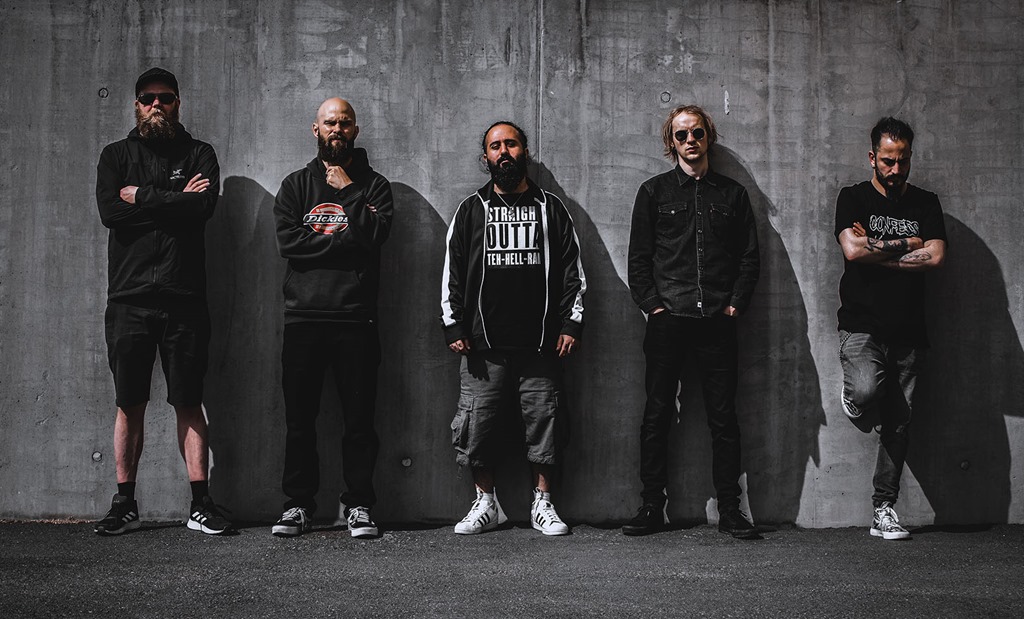
The latest single from Iranian metal band Confess is an anthem of long-awaited retribution. ‘Megalodon’ started simmering in the mind of frontman Nikan Khosravi as a result of his imprisonment by the Iranian government. The down-tuned groove and ravaged vocals bring 90s acts like Korn to mind. But there’s also a modern death metal sound that introduces us to the band’s new direction.

The song was written and recorded in Norway, soon after the founding members earned refugee status. Mastered by Grammy-nominated producer Machine (Lamb of God, Suicide Silence, Miss May I, and many others). ‘Megalodon’ describes the need for justice in the mind of a political prisoner. Being locked up in jail and released on bail, forced to live in obscurity. “Many people think you’re gone, and you don’t exist anymore, and it makes them happy!”, Khosravi explains.

But the beast observes and waits for its day of reckoning. “Like Megalodon, an ancient creature that everyone thinks they are extinct. But there are rumors that they still exist and live in the depth of the ocean.” he continues. When you least expect it the monster can resurface and eat up any massive animal, just to disappear again.

The track is Khosravi’s first experiment with 7 strings. It’s also the band’s first production in the Scandinavian winter. "To me, it has a vibe that reminds me of the environment I live in."

Listen here:

AA

Confess describe themselves as a “five-piece street protest”. Khosravi and Arash Ilkhani (DJ / Sampler) faced arrest and prison in Tehran, following the release of the band’s second album in 2015. Both musicians obtained refugee status in Norway in 2018 and have been playing across the country. They recently opened for Mayhem at Festspillene i Nord.

Released 10thSeptember 2021 via Rexius Records, the single is part of the band’s upcoming album Revenge at All Costs which is due for release in early 2022.

Confess

24th September 2021

Christopher Nosnibor

Pink Turns Blue have been around practically forever, having formed in 1985, and while they may not be widely regarded among the first wave of goth acts, they very much emerged from that milieu as a duo with a drum machine, and what they’ve achieved over so many of their peers while lingering on the peripheries is longevity. Having re-emerged in 2003 after an eight-year hiatus, they’ve continued to mine the classic post-punk seam that’s distinctively theirs, due in no small part to Mic Jogwer’s vocals. And of course, what goes around comes around. Their return in the early years of the new millennium was well-timed, coinciding with the point at which the post-punk renaissance bloomed with the likes of Editors and Interpol breaking through. There were of course countless also-rans, and bands who emerged but failed to fulfil their promise, but nevertheless, time has proven that the style has remained current, and the darker the times, the greater the craving for dark tunes, and this is where Pink Turns Blue really prove to be as contemporary and vital as ever.

Their eleventh album was written, recorded, mixed, and mastered during lockdown in their Berlin studio, and the first thing that strikes about Tainted is just how bleak it is. It’s achingly majestic, it’s magnificent, and possesses some wonderful hooks and choruses, but there’s an all-pervading atmosphere of sadness, of melancholy that’s draped over every beat and radiates from every note. Glimmers of positivity are dampened by an air of resignation, optimism doused with defeat. The next thing that soon becomes apparent is just how consistent the album is. It’s not only all killer, but had a remarkable cohesion. It’s true that that for cohesion you might interpret sameness, and they do operate with a fairly limited sonic palette. One suspect this is at least in part the result of the material being the product of three guys in a studio without any external input or interference.

But working within such limitations places the focus on the songwriting, on the tunes, on the delivery, instead of throwing in all sorts of fancy stuff.

The guitar to opener ‘Not Even Trying’ evokes the into to ‘Severina’ by ‘The Mission’, and it’s got that same solid four-four strike on every beat bassline that Craig Adams made his signature back in the early days of The Sisters of Mercy, and which has become something of a defining feature for so many gothy post-punk bands, and it makes the song an instant grab. ‘I’m not even trying’, Jowger admits blankly, as if admitting defeat from the outset, and setting the pessimistic tone that echoes through single cut ‘There Must Be So Much More’. It’s a song of yearning, of questing, and of determinism, and a song Editors would have likely killed to have penned for one of their first two albums.

This isn’t an album of depression, but the sound of downward-facing defeat, of staring at the ground and wondering where it all went wrong. ‘Never Give Up’ encapsulates the conflict, the inner turmoil of staring emptiness and defeat straight in the face and realising there are only two choices. But to never give up is not a positive thing, merely the stubbornness that comes from not knowing what else to do.

The bass and guitar are melded together in a tunnel of chorus and reverb, and tied to a relentless drum track, and it’s gripping and compelling. ‘Why Not Save the World’ has heavy echoes of mid-80s Depeche Mode and would sit comfortably on a She Wants Revenge album, while ‘I’m Gonna Hold You’ comes on like New Order as covered by A Place to Bury Strangers, with a nagging bass and brittle guitar that grips hard.

Just as Robert Smith can make a skippy pop song sound tear-jerkingly sad, so when Jowger sings of the joys of ‘a new day’, it’s with a wistful melancholy that aches deep and you feel something tug in your chest as you swallow it down, that inexplicable sadness. ‘Listen to the bumble bee’ he sings on ‘Summertime’, and it’s carried a way on a chiming jangle of guitars that are so wistful, while the tone is of deep nostalgia. A perfect sunny day can have its joy marred by the realisation that it isn’t quite as perfect as sunny days of a time gone by, happy, carefree times that will forever be trapped in the memory as magical, but now faded and never to be recreated.

The song structures are comparatively simple and straightforward, and built around repetitive chord sequences and guitar motifs, and there’s nothing fancy about any of the playing – which is absolutely key to the success.

Any fan of Interpol or Editors would do well to explore Tainted – but then again, so would any fan of not only post-punk, but anyone with ears and with a heart and soul. It’s a masterful work in music of the mood. The mood is low, the mood is sad, and this is an album of real depth that speaks and resonates beyond the immediate.

133936

James Wells

Kids Love Surf’s fourth single finds them continue the dreamy shoegaze trajectory of ‘OYO and ‘Moment’, but takes a more overtly electro / pop approach, with a crisp 80s disco drum beat. The chiming guitars may hark back to late 80s / early 90s Cure via vintage shoegaze, but the vocals – bathed in reverb and sculpted with a hint of autotune are clear and soulful, and very much to the fore against the blurred swirl of ambient synths that create a wash of sound.

It’s all pinned together with a nagging bassline that’s integral to the song keeping its shape. As a production work, it’s smooth, and it’s deft: with a solid and definite structure, the catchy chorus is distinct but slows effortlessly. At just three minutes and a half minutes long, it’s succinct – to the point that it makes you want to hit repeat straight away.

A Place To Bury Strangers announce ‘Hologram: Destroyed & Disassembled,’ a Record Store Day Black Friday exclusive out 26th November 26th on Dedstrange. Their Hologram EP is deconstructed and expanded into a 13-track album featuring mind-altering remixes by Daniel Fox of Girl Band, Penelope Isles, Do Nothing, BODEGA, Weeping Icon, Ganser, Grimoose, The Bodies Obtained, bandmates Ceremony East Coast plus Dedstrange label mates Jealous, Data Animal, Plattenbau, and Randy Randall of No Age. Vinyl will be available at your local record store on Black Friday. Visit www.recordstoreday.com for more details.

They’re also sharing a new music video for ‘Playing the Part’ directed by Heather Bickford to celebrate the vinyl release of Hologram.

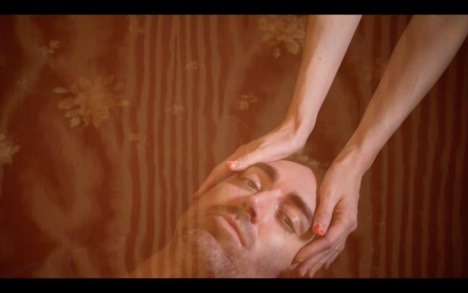
As noisy as they can be, there’s true prettiness in the APTBS sound. Sometimes it’s buried in the hypnotic mixes, and sometimes, it’s right there on the surface. ‘Playing The Part’ is one of the most winsome things the group has ever recorded — it’s got a glorious guitar tone, an active, melodic bass line, and a graceful vocal from Ackermann that could legitimately be called sweet. Director Heather Bickford has matched the song with a video that underscores its beauty, and its strangeness, too. Bickford, who also stars in the clip, shoots Ackermann in a historic house in Flagstaff, Arizona that looks like something out of a reverie: there’s antique wallpaper, stained glass windows, curio cabinets stuffed with bone china, landscape paintings in gilded frames, and velvet drapes over the bed. Microphone in hand, thoroughly bewitched, animated by the enchantment of his surroundings, Ackermann slips into a dream.

Bickford elaborates: “‘Playing the Part’ was shot in Flagstaff, Arizona, on Oliver’s birthday, while Ollie and I were on a little getaway last November. He had actually proposed to me the day before while we were at Zion National Park so we were in a dream-like state of mind. Shot in a historic home, the vintage decor and wallpaper provided the perfect backdrop for the video."

Watch ‘Playing The Part’ here:

A Place To Bury Strangers 2022 North American Tour Dates – Tickets on sale here

Wed. September 15 – New York, NY @ Bowery Ballroom $
Mon. October 11 – New Orleans, LA @ Civic Theatre *
Tue. October 12 – Atlanta, GA @ Buckhead Theatre *
Wed. October 13 – Raleigh, NC @ Ritz *
Thur. October 14 – Washington, DC @ Anthem *
Fri. October 29 – Austin, TX @ Levitation Festival
Tue. February 1 – Philadelphia, PA @ Johnny Brenda’s #
Wed. February 2 – Montreal, QC @ Bar Le Ritz #
Fri. February 4 – Toronto, ON @ Lee’s Palace #
Sat. February 5 – Detroit, MI @ El Club #
Sun. February 6 – Chicago, IL @ Empty Bottle
Mon. February 7 – Milwaukee, WI @ Cactus Club #
Tue. February 8 – Minneapolis, MN @ First Ave. 7th Street Entry #
Fri. February 11 – Seattle, WA @ Neumos %
Sat. February 12 – Portland, OR @ Mississippi Studios %
Sun. February 13 – Vancouver, BC @ Rickshaw Theatre %
Tue. February 15 – San Francisco, CA @ The Chapel %
Wed. February 16 – Los Angeles, CA @ Teragram Ballroom %
Fri. February 18 – San Diego, CA @ Soda Bar %
Sat. February 19 – Tucson, AZ @ Hotel Congress %
Tue. February 22 – Denver, CO @  Larimer Lounge %
Wed. February 23 – Lawrence, KS @ The Bottleneck %
Fri. February 25 – Nashville, TN @ The High Watt %

* with Future Islands
$ with Maxband & Wah Together
# with Glove
% with TV Priest

A Place To Bury Strangers 2022 European Tour Dates – Tickets on sale now

Wed 09 March – Hafenklang – Hamburg, Germany  

Thu 10 March – Beatpol – Dresden, Germany

Fri 11 March – Klub Poglos – Warsaw, Poland

Sat 12 March – Futurum – Prague, Czech Republic
Sun 13 March – Randal Club – Bratislava, Slovakia

Mon 14 March – Durer Kert – Budapest, Hungary

Wed 16 March – Control Club – Bucharest, Romania

Thu 17 March – Mixtape5 – Sofia, Bulgaria
Fri 18 March – Eightball – Thessaloniki, Greece

Sat 19 March – Temple – Athens, Greece
Mon 21 March – 25th of May Hall – Skopje, Macedonia

Tue 22 March – Club Drugstore – Belgrade, Serbia

Thu 24 March – Mochvara – Zagreb, Croatia
Fri 25 March – Freakout Club – Bologna, Italy

Sat 26 March – Largo – Rome, Italy
Sun 27 March – Legend Club – Milan, Italy

Tue 29 March – Bogen F – Zurich, Switzeralnd
Wed 30 March – Backstage – Munich, Germany

Thu 31 March – Caves Du Memoir – Martigny, Switzeralnd

Fri 01 April – La Trabendo – Paris, France
Sat 02 April – Lafayette – London, UK
Mon 04 April – Kayka – Antwerp, Belgium
Tue 05 April – Gleis 22 – Munster, Germany
Wed 06 April – Melkweg – Amsterdam, Netherlands

Thu 07 April – Vera- Groningen, Netherlands
Sat 09 April – Hus 7 – Stockholm, Sweden
Sun 10 April – John Dee – Oslo, Norway
Mon 11 April – Pumpehuset – Copenhagen, Denmark

Tue 12 April Hole 44 – Berlin, Germany
Wed 13 April – MTC – Cologne, Germany

5tqs_PLAYINGTHEPARTVIDEOSTILL

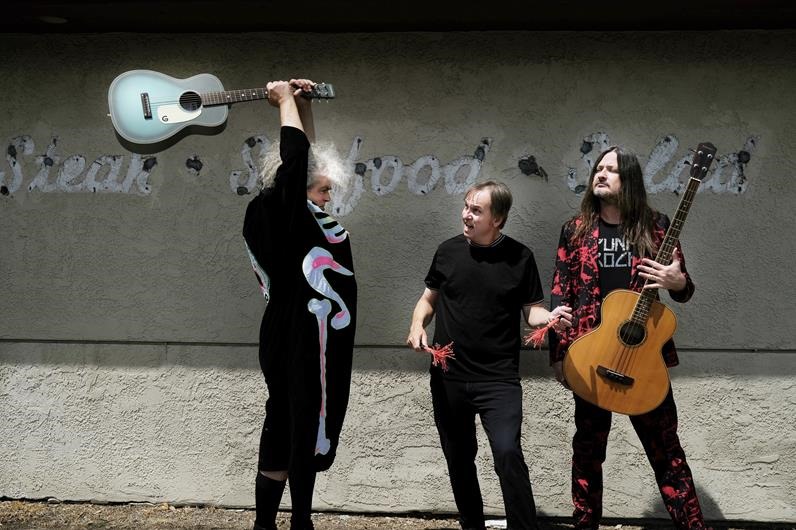
"I wrote ‘Revolve’ on an unplugged electric guitar in a hotel room in San Francisco and it sounded great! Obviously then it wasn’t hard to make an all acoustic version of Revolve work. it’s a great riff" says Buzz Osborne of The Melvins of the latest track to be shared from their forthcoming album, Five Legged Dog (Oct. 15, Ipecac Recordings), which premiered yesterday via Kerrang! and is now streaming on all digital platforms.

The 36-song newly recorded, acoustic collection features a career-spanning collection of songs, from 1987’s Gluey Porch Treatments to 2017’s A Walk With Love & Death, the entire gamut of the legendary band’s catalogue is represented.

Five Legged Dog also features acoustic versions of several rarities from the influential band’s overflowing discography including a cover of Redd Kross’ “Charlie” (from the limited-edition “Escape From LA” single), “Outside Chance,” a Turtles’ cover from the “Slithering Slaughter” single and new interpretations of The Rolling Stones “Sway,” Brainiac’s “Flypaper,” and Fred Neil’s “Everybody’s Talking” (popularised by Harry Nilsson). Butthole Surfer Jeff Pinkus lends his vocals (and banjo) to “Don’t Forget to Breathe” and “Everybody’s Talking.”

“I knew I wanted to do something ridiculously big,” explains Buzz Osborne of the band’s first ever acoustic offering. ”36 songs reimagined by us acoustically is certainly ridiculous but it works. The magic of the songs is still there regardless of it being acoustic. Since we weren’t touring we had the time to do something of this size. I’m very excited about this record. Dale and Steven did a fantastic job on this. I think it’s a very special record. I can’t think of anyone else who’s done something like this.”

Dale Crover noted: “I think people will be surprised that we can do an acoustic version of a song like ‘Night Goat’ without losing any of the heaviness. We also worked hard on the vocal arrangements. People are going to freak out!”

Listen to the acoustic ‘Revolve’ here:

AA

Melv

Photo Credit: Bob Hannam

Karlrecords – 27th August 2021

Christopher Nosnibor

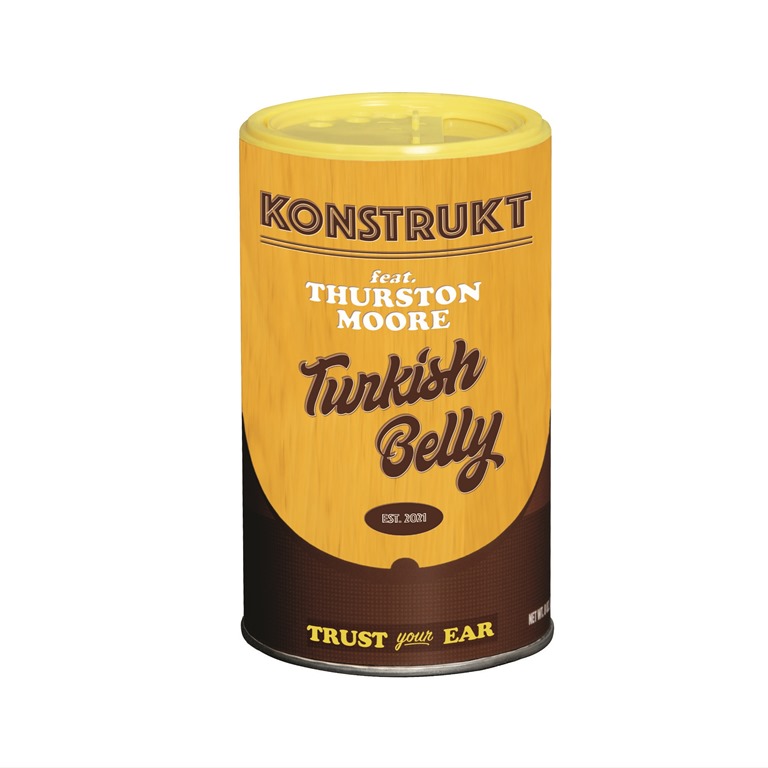
Well this is an interesting one, and it was, admittedly, Thurston Moore’s name that compelled me to give it some ear time. While listening to the first pounding space-rock psychedelic jazz freakout, it dawns on me that this isn’t actually my first meeting with Turkish free form ensemble Konstrukt, and that I was blown away and bewildered by their 2018 collaboration with Keiji Haino, A Philosophy Warping, Little by Little That Way Ahead Lies a Quagmire (Live).

It’s hard to tell what’s going on and who’s doing what on this first piece, especially what Moore brings to the mess of noise that is, ‘Yapayalnız (Gezerler Sokaklarda)’, which sees a motoric rhythm hold steady amidst a vortex of punk-infused chaos until, ultimately, everything collapses. There are some shouted vocals, but they’re muffled and drenched in so much echo that it sounds more like a riot than a performance, and it makes for an eye-popping, headache-inducing ten minutes. The fact that this was recorded live makes you wonder what it must have been like to witness first-hand: on the one hand, it’s exciting, unpredictable, while on the other, it’s vaguely frustrating, because you don’t know where it’s going – or where it will end.

Turkish Belly is the fifth and latest entry in the ongoing series of collaborations between the four-piece ensemble and an array of guests, and it’s certainly experimental and freeform, to the point at which one could question whether there really is much form at all, and it’s extremely difficult to extrapolate precisely what Moore brings to the chaotic party. Perhaps it’s simply another layer of chaos.

‘Kurtadam’ in two parts is very much percussion-dominated and almost hints at the conventions of rock – but it’s only a hint, and more to do with the solid rhythm section than anything else. It does nail a groove, which is welcome, but everything else especially the horns, are all over and flying every whichway.

The final track, the eleven-and-a-half minute ‘Uğultular’ is a braying beast of a tune – if you can call it a tune as such. The deadened drum beats thwack out a damp rhythm amidst a serpentine sway of seeping discord and disarray. There’s murky bass and some wild, reverb-soaked guitar work, and the whole thing lumbers and lurches, bleats and brays blindly. Wordless vocals growl and grunt amidst a buzz and a howl that yawns and churns and crawls its way to conclusion.

The audience’s applause and cheers after jolt the listener back to reality, and the fact that this a document of a live performance. Maybe you had to be there to fully appreciate it, as it seems those present on the night very much did, but on record, it’s interesting, but at times a bit of a slog.

AA

KR084_front

Christopher Nosnibor

Last week, there was a brief buzz around the Internet observing that on 1st September 2021, 1980 was as far away as the start of World War 2 was in 1980. It’s one of those startling perspective moments that takes some computing. Being five in 1980, WW2 felt like ancient history, despite the fact my father was born before the end of the war. To me, the music of the 1980s still feels comparatively recent, and I can recall events from the 80s – The Falklands War, for example – with remarkable clarity. And yet I have colleagues who are adults who weren’t even born until the late 90s, who feel the music of the 80s is as relevant to them as I find most music of the 50s and 60s.

It seems crazy to think, then, that The Sisters of Mercy’s last studio album was released a few months before their tenth anniversary shows in Leeds in February 1991, and now, here we are, belatedly marking their fortieth year in existence. Not that no new album means no new material: they may still play a lot of old favourites, but The Sisters are by no means a heritage band (seemingly to the annoyance of some of their older fans who lament the fact they don’t still sound like it’s 1985).

This trio of dates sees a different support act each night, and if the return of previous recent supports AA Williams and I Like Trains makes perfect sense, Jesus Jones being tonight’s openers seemed like an odd choice.

The last time I saw Jesus Jones was supporting The Cure as part of Radio 1’s Great British Music Weekend in December 91. I’d never really been a fan, and the highlight of their set for me was the dreadlocked guitarist falling off the stage. Still, they were fun enough, and the same is true thirty years later. As they kick off with the indie rave bleepfest of ‘Zeros and Ones’ I’m immediately reminded that while the guitar sound was alright, they were just too melodic and lacking in nuts for my taste. ‘Right Here, Right Now’, with its baggy beat sounds both dated and a bit thin. Bassist Al Doughty throws Peter Hook shapes, while Ian baker nominally plays keyboards, spending most of the set charging around the stage and lurching his keyboard around on its stand. It was annoying back in the 90s, and it’s perhaps even more annoying now. Interestingly, for a band with a lot of hits, they tend to focus more on material from the rather edgier first album, with ‘Info Freako’ being a clear set highlight.

DSC_0261

Jesus Jones

There’s some grand JG Thirlwell-style style dramatic orchestral ambient cross played over the PA between bands, and with lights moving a curtain suspended from the incredibly high ceiling, the sense of theatre, and of occasion, are considerable, not least of all the nod to the band’s legendary ‘Wake’ performance at the Royal Albert Hall in 1985. Tonight, the curtain comes down rather than up to reveal the band in positions, from which they step forward and positively burst into ‘But Genevieve’. It’s immediately apparent that the three of them have been itching to get out to do this, and the rare level of energy Eldritch had shown on the last tour, just days before lockdown in March 2020 is exceeded here. Effusing welcomes and greetings with unbridled enthusiasm. It’s uncharacteristic to say the least, but it’s a joyous reunion that’s massively appreciated by the gathered crowd, which spans a notable demographic, including a lot of people, both male and female, who were probably barely born around the time of the twentieth anniversary show, let alone the tenth. And why not? For all the ‘goth’ copyists who’ve emerged through the years, there is only one Sisters.

They’re straight into ‘Ribbons’, and it’s stonking, delivered with real zeal, before steaming into a full-throttle ‘Crash and Burn’, which has long been a standout among the post-studio year. If tonight’s set list is remarkably similar to that of the Leeds show last year, it’s hard to find fault in the song selection: there will always be songs that would have bene nice to hear – ‘Better Reptile’, for example, or, indeed anything from the Reptile House EP, but you have to hand it to The Sisters for remaining true to their lack of compromise. Any other band with their catalogue would have dug up ‘Body Electric’ and more earlier songs for a truly career-spanning set to mark the occasion. But that simply isn’t how they work. Deal with it, or don’t.

DSC_0278DSC_0288

The Sisters of Mercy

Being the first night, a few minor slips were probably to be expected – there were missed cues for both guitarists, wrong chords and wrong lyrics, but these were all part of the buzz: for so many years, The Sisters have been accused of going through the motions or otherwise playing safe. Tonight, they’re giving it everything and more. That it’s not always pitch-perfect is part of the appeal, and reminds of the Sisters of old, with a particularly interesting / old style vocal performance on ‘No Time to Cry’, a song Eldritch has always seemed to struggle with by writing lyrical lines too long without a pause for breath. He does, however, manage occasional sups from a bottle of something that most certainly isn’t water between songs and sometimes verses, and this seems to keep him buoyant and energised.

After blasting through strong renditions of ‘Alice, ‘Dominion / Mother Russia’ and a brooding ‘Show Me’, Andrew gets to take a break – and no doubt have a quick fag – while the guitarists get to play rock gods and race about the stage as they showcase a new instrumental.

‘Marian’ and ‘First and Last and Always’ are dispatched at pace, before Dylan switches to acoustic guitar for ‘Black Sail’. ‘When I’m ready, motherfucker!’ Eldritch admonishes him as he strikes the first chords prematurely, but it’s good-natured banter, and it’s a strong rendition. I’m vaguely amused by the prospect that this was written while Eldritch was loafing around watching Netflix’s airing of the raunchy pirate series prequel to Treasure Island. Heave away, indeed. It’s followed by a personal favourite of mine, ‘I Was Wrong’. Eldritch was always a deft lyricist, and ‘I can love my fellow man / but I’m damned if I’ll love yours’ is a classic.

DSC_0275

The Sisters of Mercy

It paves the way for a truly searing rendition of ‘Flood II’, with ben Christo’s guitar blistering and burning from the very first howls of feedback, and Eldritch again finds his full voice. He may not hit all the right notes on a technical level, but is unquestionably at his best when he just fucking goes for it and sings up instead of mumbling and growling. So, to be clear to the detractors: missed notes and off-key but performed with passion beats grumbling low in the mix while trying to hold the tune. That said, his voice sounds stronger now than at any point on the last decade or more, and it seems fair to say the Sisters aren’t done yet.

After the first encore of a mesmerising ‘Neverland (A Fragment)’ and the throwaway, truncated ‘Lucretia’, I’m forced to skip for a train back to York, missing the second encore – but I’ve left happy. We can’t realistically expect as fiftieth anniversary show, but for the time being, it’s a joy to see The Sisters of Mercy emerging from lockdown energised and sounding solid.