Having been impressed by the Kutin / Kindlinger / Kubisch / Godoy collaboration, Decomposition I-III, released on Austrian label Ventil Records, I was eager to get my lugs around Manuell Knapp’s latest offering, which purports to see the Vienna/Tokyo based artist depart from his ‘analogue home-turf to go exploring in the digital fields’. None of this forewarns of the fact that he pours napalm over every last inch of every field in a five-hundred-mile radius and hurls an incendiary missile straight into the middle of it just a few moments into this devastating album.
There’s something stark and straightforward about the track listing for this release: AZOTH Side A and AZOTH Side B. In a way, it gives the listener a blank frame in which to place the music, and equally, it gives nothing away.
The synthesised plucked chimes follow warped Kyoto motifs, while explosions blast all around. The contrast between tranquil folk tropes and the sound of a war raging makes for an unusual and unsettling experience. Gradually, the notes become increasingly dissonant until, before long, all semblance of musicality is obliterated in an ear-splitting wall of noise and rubble. From the wreckage emerges dark, chthonic drones, monstrous, alien sighs, which tear from a whisper to a scream. It’s fucking brutal. Brief moments of tinkling synths taunt the listener with the prospect of respite before the next merciless, neuron-melting assault. Brief moments occur where the noise and the fear chords emerge simultaneously, inviting comparisons to Prurient, but for the most part, AZOTH is the kind of atomizing noise attack that’s Merzbow’s trademark.
Knapp certainly grasps the power of frequency – and volume – and uses the two in combination to achieve optimal sonic torture. When it comes to overloading sonic noise, just when it seems impossible to push the circuitry any further, Knapp tweaks it a bit more, amping up the shrieking blast of noise to levels beyond madness, pummelling the listener from every angle with snarling bass noise competing with a shrill, jagged, high-end squall. While many noise recordings are generic or plain lacking in imagination – Harsh Noise Wall being a particularly dire example of how derivative noise-related subgenres can be, and the moribund nature of concept music centred around a weak, one-dimensional concept, Knapp is attuned to the importance of dynamics and textural variation.
Knapp also knows about art and exploitation: the vinyl version is released in an edition of just 15 copies, each with unique, hand-painted art, and comes with a price tag of €666. Amusing in an ionic way, it’s worth noting that at the time of writing, only five copies remain. This is the kind of release that won’t have broad appeal, or, indeed, much appeal at all in he scheme of things, but will always attract some truly fanatical devotees – and speculative purchasers with cash to burn. But in all seriousness, viewed from a broader perspective beyond merely sound, AZOTH is a work of art. And, ultimately, the sound is art too. It is, of course art, of a challenging, avant-garde nature, rather than of the entertaining, accessible, poster and postcard reproduction variety.
Side 2 marks a change of tone and begins with rumbling, dark ambience and hints at being something of a counterpoint to Side 1. The low, ominous drones eddy bleakly around in a tense, turbulent atmosphere. And then the screeding feedback tears through, while a growling drone worthy of Sunn O))) blasts beneath, and in an instant, everything is fucked. Total aural annihilation ensues amidst an avalanche of flanged laser bomb detonations fire in all directions: it’s bewildering, overwhelming.
The totality of the blitz is all-encompassing. AZOTH is about as uncompromising as can be.
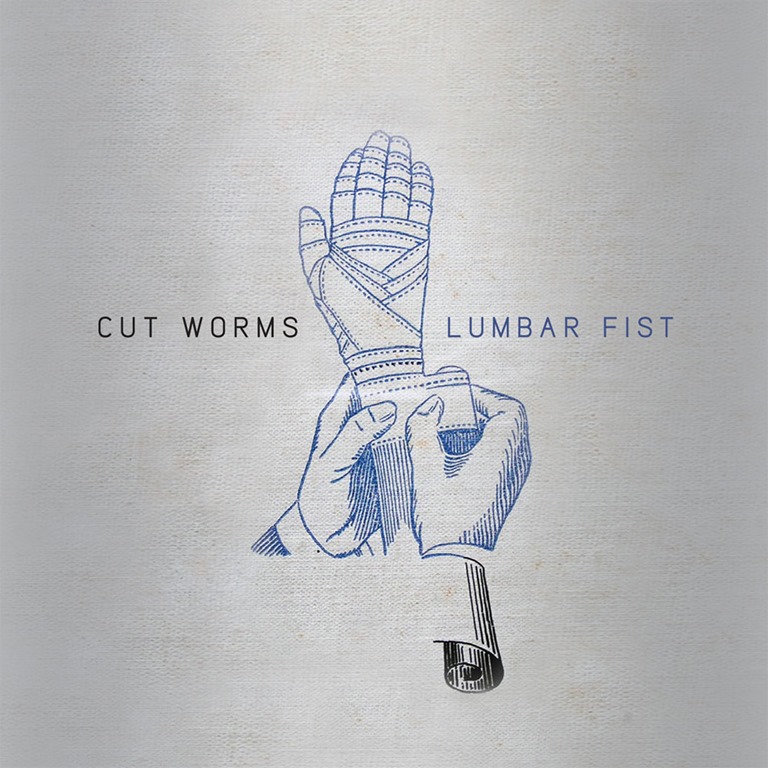
It begins with a long, low, ominous hum. The movement is so gradual as to be barely perceptible. Slowly, so slowly, it grows, swells, and turns, its density, depth and texture shifting, microtonal layers emerge and fade. Dolorous chimes ring and resonate in the sonic mist. The individual tracks are segued together to form an extended, evolutionary work. Brooding strings strike and organs waver on ‘Stone Ether’, and over the course of the album, Cut Worms stalls time to create space and distance, ethereal soundscapes drift, soft, sculpted, immersive.
The forms and structures are as subtle, fleeting and inscrutable as the infiniteness of space and the existence of dark matter. Equally, the origins of the sounds which fill the album seem wholly removed from one another: Lumbar Fist is an electroacoustic work, created with live generated and processed sounds, without any prefabricated beats or loops, and as such, the process entails considerably more than the all-too-common mechanical laptop machinations of ambient works.
Richard Van Kruysdijk – the man who alone is Cut Worms (and what an evocative moniker that is… not that the album title’s far behind) has spent a long time honing his craft, and Lumbar Fist stands alongside artists like Tim Hecker, Oren Ambarchi, Glenn Branca, Stephan Mathieu, Will Guthrie and Jim O’Rourke not just as an exemplar, but an outstanding example of atmospheric, drone-orientated ambience.
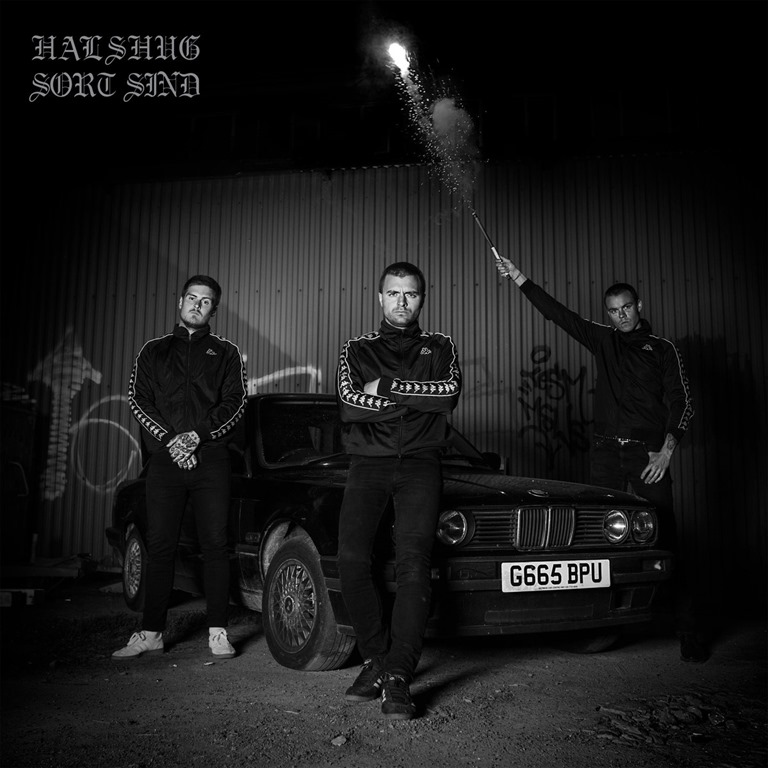
There’s something rotten in the state of Denmark, and Halshug are the band to soundrack everything that’s rotten, bleak and uncomfortable in their native country. From the pleading, agonised screams and tears of a man being tortured, to the last howl of feedback, Sort Sind is a merciless and brutal album. Beneath the deluge of power chords, a mess of overdriven, serrated metal churn, the welter of thunderous, hell-for-leather drumming and dense, chugging bass, there are actual hooks and choruses to be found – but not many, and this statement should not be read that this is by any means a pop album, or that’s it’s accessible or easy going. It really isn’t.
The vocals sound as if they’ve been cloned from Lemmy’s DNA, and this hoarse-throated roar leads the power trio through nine abrasive tracks. The Mötörhead comparison carries into the music, too: like Mötörhead, Halshug (trans. ‘decapitate’) combine punk and metal to create something harder, heavier, faster and more attacking, without resorting to the clichés of either genre.
The album’s title translates as ‘Dark Mind’, and the themes of substance abuse, parental neglect and growing up in deprived areas of Denmark dominate the album. With track names translate to ‘Scum’, ‘Violence’, ‘Defeat’ and ‘Lonesome Death’, it’s a fitting title for an album fuelled by rage and frustration, delivered with an energy that’s pure catharsis.
Recorded live, produced and mixed at Ballade Studios in Copenhagen by Lasse Ballade, who also produced and mixed Blodets Bånd, Sort Sind is bursting with rawness and immediacy the music demands.
It’s perhaps due to the formulaic nature of television dramas that a certain type of orchestral music has become almost a signifier for rolling countryside, and people in bouffy dresses and full skirts or frock coats and hats riding horses, brawling in taverns and battling high seas, or otherwise taking the and bidding one another ‘good day’. Such pieces are then played, ad infinitum, on commercial classical radio as exemplars of contemporary classical music. It’s by no means the fault of the composers or musicians: it’s inevitable in the arts that commissions and funded projects will determine the outlets of their work.
The medium isn’t always the message, though, and while the pieces featured here are largely products of specific commissions, Claire M Singer’s work retains a strong focus on her own compositional interests: (quote from press). Imposing strings, bold and evocative sweep and arc through ‘A Different Place,’ as rousing percussion drums a rolling, thunderous tattoo. ‘Ceo’ is an altogether sparser composition which casts a more gloomy atmosphere, and the title track is an extended meditation on the album’s theme (‘Solas’ translates as ‘light’ from the Gaelic) and Singer’s instruments of choice. The organ’s majestic grandeur is very much brought to the fore, and resonates on a deep, subconscious level.
The slow-building sweep of ‘Eilean’ is gentle yet at the same time subtly stirring, flowing into the humming swell of the solo organ piece of ‘Wrangham’. Disc two contains just one track, ‘The Molendiner’, co-commissioned by Glasgow art gallery The Civic Room and Union Chapel, London, which spans twenty-six minutes. Centred around ‘the precise control of wind though the pipes’ of the organ, it utilises various organ types to create a vast sonic expanse, which hangs, drawing out an immense mid-tone humming drone. This probably doesn’t sound like the greatest advocation, but trust me, it’s subtly powerful, and as a whole, Solas is a moving collection of works.
This one’s taken a while to reach me, but I’m pleased it finally has. Decomposition I-III is a collaborative work between Peter Kutin and Florian Kidlinger which is designed to ‘lead the listener through three territories antagonistic to human life,’ Antagonism is something of a dominant theme here: Decomposition I-III is an album based on field recordings, which simultaneously sets out to ‘leave the now moribund category of “field recordings” behind’. Antagonistic but perhaps justified: how many more albums of birdsong and marketplaces, rippling tides and passing cars does the world really need in order to be brought into closer proximity with a sense of environment?
Decomposition I-III takes unusual locations – to say the least – and scrutinises them from the most oblique and often microscopic perspectives. And when an object – or a sound – is viewed from microscopically close range, the viewer’s perspective is altered. Something small or quiet becomes immense and excruciatingly loud. And so, Decomposition I-III is presented as an album which is ‘radical and merciless, estranged and aggressive yet still poetic… a bizarre narration.’ If the notion of an albums based on field recordings being ‘radical’ or ‘merciless’, let alone ‘aggressive’ seems a bit far out, you should probably listen to this before passing judgement.
‘Absence’ evokes the experience of standing on top of a mountain in a gale. The wind roars and buffets. Corrugated metal roofs bend and creak and scrape and clatter. Demons howl and shriek in the darkness as half-tunes warp and twist out of shape. The tempest abates, leaving a dull rumble and extraneous clanks which reverberate ominously. The origin of these sounds? The internal mechanisms of a telescope during the calibration process. All of a sudden, a full-on white noise roar blasts out: the Pacific Ocean, in full force. From within the barrelling wall of noise, layers of sound and other incidentals filter through.
‘Introspections’ represents a change of tone, but again takes an unusual slat on its utilisation of sound. The harshness of winter conditions is magnified in snow-blinding sharpness at the start, as the crunch of boots trudging through thick, ice-crusted snow. The footsteps halt, and only the sound of dripping water in a cave and a dull, distant roar hangs heavy in the dank atmosphere. Slowly, the sounds shift, a ringing hum and the crackle of broken glass, or ice, contrast starkly with one another. The sinister tones are uncomfortable and unsettling.
‘Illusion’ is so quiet at first as to be barely present, before a mid-range hum thuds in, a thick, abrasive, multitonal, jagged wave throbs and scrapes. Shifting, drilling, buzzing and vibrating, pulsating and throbbing and rattling, clattering, battering, beeping, rolling and scratching, it needles at the senses.
While sonically, the three experimental pieces are well-suited to vinyl, the fact the first track, ‘Absence’ is split over the first two sides is something of an impedance to the flow. I’m not averse to getting off my arse and turning over a platter, but it’s a chew when a track’s cut in the middle. So, in a way, I’m also pleased to experience the album in its digital form, which is still mastered as four separate tracks. Decomposition I-III is an album best taken in a single sitting – not because it’s easy, but because the full impact and resonance of the deep-delving sonic excavations have the greatest impact when digested in this fashion.
Le Butcherettes, who are in the midst of a European tour, have unveiled the Omar Rodriguez-Lopez directed video for “My Mallely”, which appeared on their 2015 album, A Raw Youth (Ipecac Recordings).
The video was filmed in the contrasting locations of New York City and the ruins of Juárez Mexico, in a neighbourhood and cinema that was a casualty of the 2008-2013 war. Teri Gender Bender offers context to the video: "The juxtaposition of the video’s setting, place and time is a roller coaster of emotional history. Juárez. A lost city re-emerging. New York City. Feeling lost in a city that has been emerging. The duality is a constant in every feeling and way. No matter where you are, one absorbs their surroundings and grows within the chaotic element. That to me is the beauty of survivalism."
Watch the video here. Full list of tour dates below.
LE BUTCHERETTES TOUR DATES: October 7 Zurich, Switzerland Dynamo October 8 Milan, Italy Tunnel October 10 Valencia, Spain Loco Club October 11 Madrid, Spain El Sol October 12 Barcelona, Spain Sidecare October 14 London, UK The Black Heart (appearance at Rough Trade East @ 1pm) October 15 Coventry, UK Kasbah October 16 Birmingham, UK Hare & Hounds October 17 Cardiff, UK CLWB ifor Bach October 19 Dublin, Ireland The Workman’s Club October 20 Belfast, UK Black Box October 21 Glasgow, UK King Tut’s October 22 Manchester, UK Night & Day
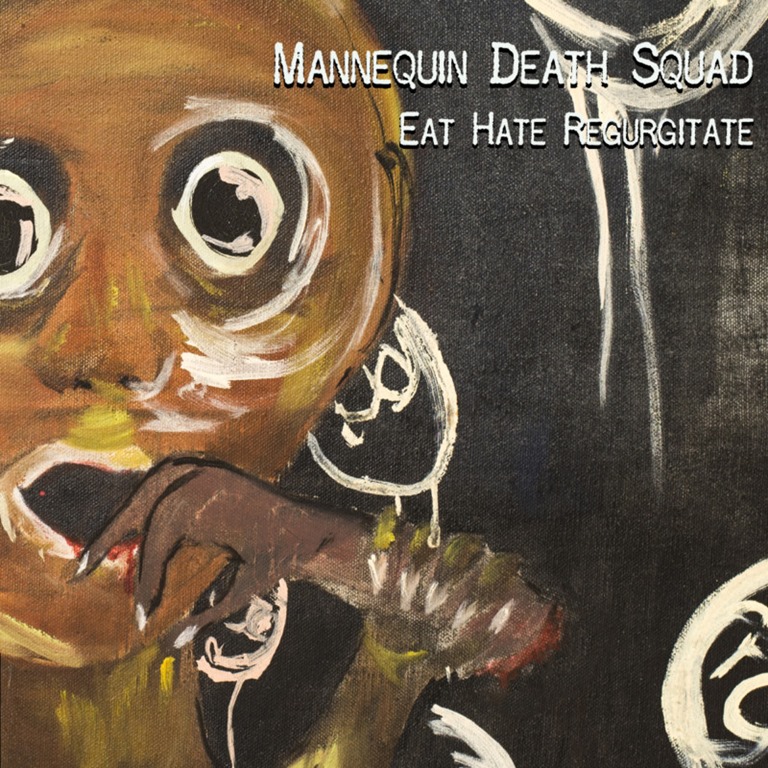
Doing what I do, I get to hear a lot of music. I’m talking 30 or so CDs in the mail each week, and at least twice that in terms of emails offering downloads and streams. It might sound glamourous, but actually, with time, it gets increasingly dull. So many dull, derivative bands, all being hailed by their PR and labels or themselves as the next big thing, the most exciting band to emerge in a decade or whatever. On first hearing ‘Sick’ by Mannequin Death Squad, I found myself getting properly excited for the first time in a while.
On meeting the Australian duo, consisting of Daniel Cohn and Elena Velinsky – who surely have one of the best band names around – just before their gig at Santiago in Leeds, as main support to Hora Douse, I was immediately struck not only by how down to earth and thoroughly pleasant the duo are, but by their insuppressible enthusiasm and the fact they’re so genuine. We meet in the downstairs bar of the little venue and sit around a table. The idea is that I’ll do a five to ten-minute quick-fire Q&A, but we end up chatting and talking around stuff instead. El is the ultimate rock chick, sporting a faded Led Zep T-shirt, shades perched on top of her head, and immediately I get a sense that these people were born to do this. They may be about to play to room with a capacity of 100 or so, which looks and feels like someone’s living room, but they’re rock stars irrespective of sales or fanbase. That said, on the strength of tonight’s outing and their Eat Hate Regurgitate mini-album, they won’t be playing venues of this size for long.
I ask them how their first trip to the UK as a touring band has gone so far.
‘Good,’ they both reply without hesitation. ‘I think the Adelphi’s probably been our favourite show so far,’ El expands. ‘It’s a cool, real, dirty venue…’
‘…and a big community,’ Dan adds.
I’ll admit I’m slightly surprised, but then, Hull is a surprising place. It’s not the first place that springs to mind when you’re listing cities with buzzing music scenes, but as the City of Culture for 2017, there does seem to be a lot going on there these days.
‘It’s amazing. It’s a lot like the scene back home in Newcastle,’ Dan says. ‘It’s got a strong community, and big bands…’
‘Everyone takes care of each other, and likes each other’s music and supports each other, it’s cool’ El adds.
They’re archetypal Australians, in many ways: they’re paid back, and say ‘cool’ and ‘awesome’ a lot. They also finish one another’s sentences in a way which shows a real synchronisation and intuition, and I feel that I’m witnessing the key to their music-making in action.
They’ve been equally impressed by the reception of their shows in London, and in Brighton, at the Hope and Ruin. Their tour has certainly taken them to some of the country’s less obvious cities and venues: not only Hull, but also Scunthorpe… Still, that gig (along with a second Hull date) was supporting Slaves, which a big deal and remarkable exposure for a band with only two singles to their credit. I’m eager to find out about how they scored that slot on their very first trip.
‘We had a gig booked in Scunthorpe, at the Café independent, which clashed with theirs,’ Dan begins
‘…so they wanted to book it,’ chops in El.
‘They listened to our music and they liked it, so they asked us…’ and being rather a music-starved backwater, the show went down particularly well, ‘They really appreciate musos coming up that way. I think it’s like an ego thing for those big cities that are really highly rated with music, that people take it for granted, and then at the other end of the spectrum, you go to small towns and everyone makes the most of it.’
How have you found UK audiences have differed from audiences at home?
‘They’re pretty similar,’ El observes.
‘We were getting a good response in Melbourne just before we left,’ adds Dan. ‘We’re a relatively new band, kinda like a year of playing gigs, but we’re getting really good responses here, probably even a bit better.’
‘We’ve got a lot of our friends back home, so it’ always going to be a good response,’ El says with a laugh.
It’s a fair observation: the test of any band is how they go down when playing to strangers and non-fans. The reactions of audiences on this tour indicates it’s a test they have nothing to worry about. El talks about the number of people going up them to compliment them on their sets – particularly the diversity of their style – afterwards, which is gratifying.
‘We’ve got a good mix of songs in there, there’s only two of us, and people seem to like them all differently, evenly.
They certainly do have a good mix: the band pitch themselves as existing in the space between The Melvins and Taylor Swift, which I suppose is a fair summary of their balancing sludgy riffs and magnificent pop melodies. Are their individual tastes conflicting or simply diverse?
El laughs. ‘Well, actually, I listen… he’s like the heavier guy, but I do heavy too, but he actually loves ‘Shake it Off’, and I like Melvins, but we both like Melvins, and we both like I all sorts. We listen to things that are heavy and poppy.’
‘We listen to absolutely everything,’ Dan confirms. ‘It helps to break the monotony of one genre.’
‘Slaves are awesome, because they’re so heavy, but when you look, they’ve got really catchy, poppy choruses,’ says El.
Dan feels compelled to explain the Taylor Swift thing in more detail: ‘The Taylor Swift thing came from when we were backpacking in Thailand and we went and did karaoke, and I absolutely smashed that ‘Shake it Off’ song…. Terribly’, he adds at El’s prompt.
They throw an eclectic and quite unexpected mix of acts into the ring when listing other artists they listen to: (Led) Zeppelin, (Pink) Floyd, Breeders, Hole, Marilyn Manson… ‘Going back to my roots, I used to be a thrash metalhead,’ Dan adds, and we love grunge. But we love pop as well. I’ll like something completely left of centre and not be embarrassed to say it.’
England has a strange perception of Australia, filtered through Neighbours and Home and Away, and internationally, Australia has been represented by the likes of Kylie and Savage Garden. How do you reconcile that with the actuality of bands like yourselves and, say, DZ Deathrays? I imagine they, and you, are more representative of what’s actually going on…
‘For sure!’ Dan says.
El gives some cultural context: ‘Neighbours and stuff is for, like, stay at home mums, I mean, you can watch it, it’s a good show and all, but…’
Dan: ‘The whole country’s obsessed with AC/DC still, but…’
El: ‘…we’ve got this whole buzzing music scene in Melbourne, we just keep going to gigs and there are so many awesome bands…’
Dan: ‘It’s an amazingly diverse scene in Melbourne. You can find anything in there: there’s an underground punk scene where everyone’s playing in squat houses that no-one knows about, you have to know somebody, there’s this rock scene that’s happening in all the bars, and little grunge scenes…’
Do you think, in your experience, that music scenes have fragmented and that there’s more underground than there ever was but you really have to seek it out?
‘Yeah’, they reply in unison.
Dan: ‘There are so many venues in Melbourne, that you’re spoiled for choice. There’s this avant-garde thing happening…’
El: ‘There’s a good gig guide, and if you go on the gig guide in Melbourne, you can just see all these bands, and you can just choose one and go and I’ll always be pretty cool.’
Dan: ‘There’s always something on. We’ve been all around Europe and we’ve tried to catch gigs, and haven’t really taped into the underground bands, but we came here and playing in Hull, and there are all these good bands. We went back to the same venue the next night and have drinks at the Adelphi, and all the bands are great. It reminds us of back home in Melbourne, there’s talent everywhere.’
I suggest that in terms of getting bands to an audience outside their local catchment, the Internet, far from killing the music industry, has simply made it different, particularly where small bands are concerned.
El concurs. ‘I think it’s made the game more creative,’ she says. ‘And we certainly have more access to bands.’
Do you consider yourselves primarily a live band? How do you enjoy the studio work?
‘’Cause we’re really new,’ El says, her voice going up at ‘new’, ‘we’ve only done one studio session, for the EP, so we’ve played live more. But we love both. I think you have to play live if you’re recording an album, that’s the fun part.’
‘We love all aspects,’ Dan adds. ‘Our favourite thing is to record a song, listen to it back, and change it, and experiment, but then, there’s nothing like playing a show, either. But even promoting can be fun, putting so many different mediums of art into it.’
They’ve certainly been creative with their own promotion. ‘Sick’ was a hell of a debut, and the video is fucking brilliant. How did the ‘zombie’ video come about?
El: ‘Well, we had a different idea, and it kind of failed… and then we came up with this idea really quickly, ‘cause the lyrics are “cigarettes and soda pop” and we wanted to pretend that it’s really easy to sell something like that…’
Dan: ‘It’s a bit of stab at consumerism in a way, and how everyone’s pretty easily manipulated by branding. It goes for everything, where you like stuff because you’re told to like something: don’t be a sheep and figure it out for yourself.’
El: ‘And then we came up with the branding thing, like a stamp…’
Dan: ‘It wasn’t supposed to be zombies, but kinda just escalated really quickly, and it worked.’
El: ‘It was fun, a lot of fun. My brother directed that one.’
So you’ve got elements of social commentary and criticism in there, and there’s a certain venom and angst in your songs. Are you angry? Or is the music just a release?
El takes a moment to consider this. ‘I think it’s more… it’s fun. It is fun, yeah!’
‘From my side, it’s pretty much all expression,’ Dan says. ‘We like just getting in a rehearsal space and just jamming songs, and it’s good fun: you’ve got good vibes going round…’
El again: ‘We’ve got older songs that I wrote where I was upset about something, as well, and then you put them in, and it’s sort of attitude behind it…’
Dan: ‘Lyrically, usually there’s a lot to be said…’
‘Yeah, it’s definitely a release,’ El concludes.
That release is clearly apparent in the medium of the live show. They explain how they like to layer things up, with bass tracks and additional guitars to create a full band sound, something which isn’t possible on stage, however much instrument-swapping they engage in. Still, this gives the live sound an immediacy and when cranked up loud, it works a treat. And, of course, such multi-instrumental capabilities afford them a lot more flexibility than the average two-piece. How do you decide who plays what on which track?
‘It’s kinda like who writes the guitar part does guitar and sings’ El explains. ‘And then if I have an old song, I’ll bring it in and if he has one, he’ll bring it in, and I’m like “right then, I’m drumming for this song”. We work together to make the song, though. We try to make it equal, but at the moment, I’m doing more guitar than him, so he’s going to get at some writing.’
‘That’s our opposite instruments, too’, says Dan.
‘I’m originally a drummer,’ El confirms.
‘I’ve only been drumming for about a year,’ Dan admits. ‘El smashes it on drums. It’s good to mix it up.’
So, finally, the burning question: when can we expect an album proper?
Dan hesitates. Can they say?
El steps in: ‘We’re going back to Australia – ‘cause we have to, and we’ve got gigs set up after this tour – and the we’re going to start writing. We’ve actually already got about half the album done…’
‘…about six tracks,’ Dan confirms.
El: ‘…yeah, about six tracks, so we only need a few more. So once we get back, we’re going to save up money to actually do the album. We might even try to do a Kickstarter.’
Dan: ‘Yeah, maybe.’
El: ‘Yeah, I think an album by the end of the year.’
Dan: ‘Hopefully, next time we come here we’ll be promoting it.’
Here’s very much hoping. Meanwhile, the mini-album Eat Hate Regurgitate is a blistering five tracker, and it’s out on October 7th through Integrity Records.
Sometime, somewhere, I read an interview with either one of the members of Throbbing Gristle or Suicide, which hours of research have resulted in endless dead-ends, who said words to the effect that it you stick around long enough, even the most outsider bands come to be appreciated and regarded. This was in the years before the pre-reformation age, in which bands who were moderately successful first time around have earned major payola pedalling the nostalgia circuit without feeling the need to flex any kind of creative muscles. Old-school punk bands, 80s pop and 90s indie bands are all guilty of this, and I’ve no time for their nostalgia schtick.
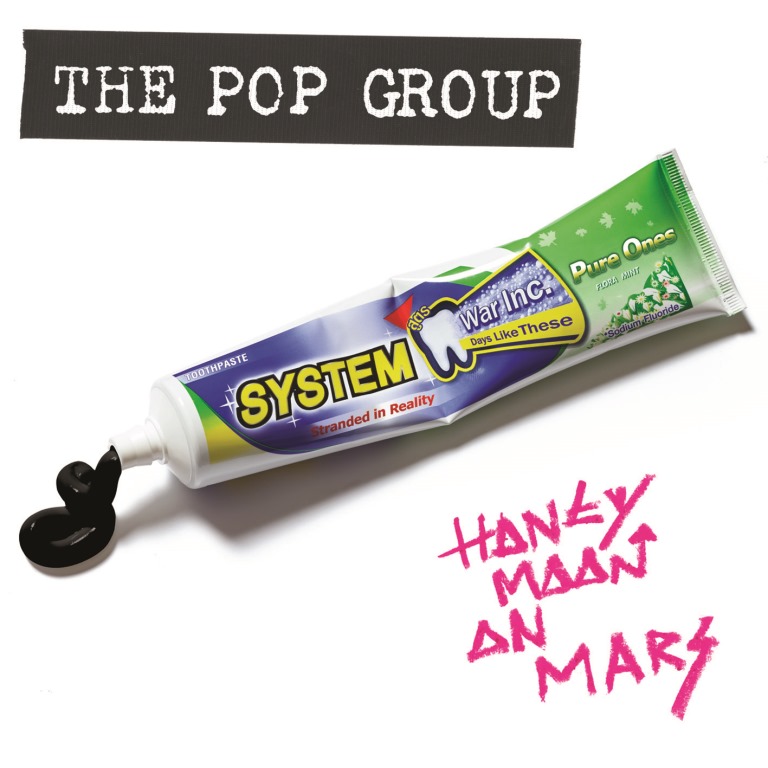
The Pop Group, having called it a day in 1981, didn’t stick around to watch their legacy grow. But in their absence, which lasted until 2010, the retrospective appreciation of their two albums definitely grew and they earned the reputation as a seminal act of the post-punk era, and listening to them now (something that’s altogether easier to do since the recent reissues) it’s not hard to hear why: they still sound radical and far out after all this time. It wasn’t until 2015 that they actually graced us with new material, and Citizen Zombie’s largely positive yet still mixed reviews showed that they remain a band out of time, even in an era when you might think they’ve been assimilated, processed and accommodated.
Remarkably, given that it’s a phase-two difficult second album for a band who formed almost forty years ago, Honeymoon on Mars represents something of a jump for the band, in that it’s even less accessible and, at the same time, even fucking better. The grafting dub/funk grooves which define the band’s sound, and always have, are still present, and Mark Stewart’s vocals are manic as ever: there’s nothing for longstanding fans to worry about there. But the band fully explore their experimental bent here, making for a challenging and, in places, disorientating work, which is uncomfortable, dissonant and often weird. In short, it’s a proper Pop Group album, without a single hint of sell-out.
It opens with ‘Instant Halo’, a track built around stop/start guitars so choppy they could overturn a cruise ship. ‘I’m going on a desperate journey’, Mark Stewart howls spasmodically. ‘Pure Ones’ sounds like a drug-fuelled collaboration between David Bowie and Gang of Four. ‘Days Like These’ is a full-on weird-out, echo-riddled vocals bouncing in all directions over a low, low, trolling dubby bass. ‘Who bought your silence / who enslaved your mind?’ Mark wheezes over a tense groove on the wired early 90’s Fall meets Talking Heads with both on steroids ‘Zipperface’, proving they’ve lost none of their confrontational, socio-political edge.
Observing the grim parallels with England 2016 and England in the early years of Thatcher may not be particularly revelatory, but it’s pertinent: these are dark ties, politically, socially, and culturally, and we are, undoubtedly witnessing the emergence of a true new wave of New Wave (not some pastiche of New Wave as was heralded in the early 90s under the NWONW music-press orchestrated hype). And spearheading this resurgence of bleak music for bleak times, the progenitors of the first movement have suddenly become as relevant as they ever were. And at the front of the line, you’ll find The Pop Group. Honeymoon on Mars is a vital, energetic, splenetic, and essential album of our times.
Swans have shared an edit of the closing track on their latest album, The Glowing Man – out now on Mute / Young God (N America) – ahead of the start of their European tour in October 2016.
Listen to ‘Finally, Peace’ (edit) here:
‘Finally, Peace’, described by Michael Gira as a "farewell", sees Jennifer Gira join him on a double vocal track, an uplifting finale for the last album in Swans’ current incarnation. The song was described by The Arts Desk as "…redemptive and uplifting" and by The Quietus as "…optimistic" while The Line of Best Fit said, "…on closer "Finally, Peace", Swans bow out with a knowing nod to the innate vanity of the physical and fleeting."
Swans embark on the European leg of their mammoth world tour next month and return to the UK for a series of shows including two SOLD OUT performances at the Islington Assembly Hall on October 13 and 14. Anna von Hausswolf is Swans’ very special guest on the European dates, full details below:
SWANS EUROPEAN TOUR
6 Oct – Brussels BE, Orangerie Botanique
7 Oct – Eindhoven NL, De Effenaar
8 Oct – Brighton UK, Concorde 2 – SOLD OUT
9 Oct – Manchester UK, 02 Ritz
11 Oct – Glasgow UK, Oran Mor
12 Oct – Newcastle Upon Tyne UK, Northumbria University
13 Oct – London UK, Islington Assembly Hall – SOLD OUT
14 Oct – London UK, Islington Assembly Hall – SOLD OUT
15 Oct – Reims FR, La Cartonnerie
17 Oct – Hamburg DE, Kampnagel
18 Oct – Berlin DE, Huxleys Neue Welt
19 Oct – Prague CZ, Divaldo ARCHA Theatre
21 Oct – Budapest HU, A38 Ship
22 Oct – Vienna AT, Arena Big Hall
23 Oct – Graz AT, Orpheum Extra
25 Oct – Ljubljana SL, Kino Kiska Centre for Urban Culture
Crippled Black Phoenix have revealed the second track from their forthcoming album Bronze. The UK dark progressive rockers will release their stunning new full-length on November 4th.
New track ‘Winning A Losing Battle’ can be streamed here:
Justin Greavescomments: “Some songs depart from my mind into reality without consent. ‘Winning A Losing Battle’ is one of those. The track just barged itself into the world. It is also one of the musically unconventional Crippled Black Phoenix style of songs that keep appearing on our albums. The title says it all. We have been through a lot of adversity as a band in these past two years and even though it seemed that all is doomed at times – I/we never gave up or gave in. We just say ‘screw you’ to the people and forces that tried to bring us down. Crippled Black Phoenix win, and always will.”




 Aural Aggravation